A new lawsuit by Democratic state officials Tuesday seeks to uncork emergency money to help tens of millions of Americans keep buying food for their families after federal SNAP funding is expected to run dry Saturday due to the U.S. government shutdown.
The Supplemental Nutrition Assistance Program, or SNAP, helps about one in eight Americans buy groceries. A halt to SNAP benefits would leave a gaping hole in the country's safety net. Vulnerable families could see federal money dry up soon for some other programs, as well — from certain Head Start preschool programs to aid for mothers to care for their newborns through the Special Supplemental Nutrition Program for Women, Infants, and Children, known as WIC.
Here’s a look at the situation.
Tuesday’s legal filing from attorneys general from 22 states and the District of Columbia, plus three governors, focuses on a federal contingency fund with roughly $5 billion in it – enough to pay for the benefits for more than half a month. The officials also say the federal government could use money from a separate $23 billion fund to cover benefits.
President Donald Trump's Department of Agriculture said in September that its shutdown plan included using the $5 billion to keep SNAP running. But in a memo last week, it said that it couldn’t legally use it that way. The memo also said the $23 billion is supporting other programs during the shutdown and that shouldn't be jeopardized.
The Democratic officials contend the administration is legally required to keep benefits going as long as it has funding.
The agency said SNAP debit cards beneficiaries use to buy groceries will not be reloaded as of Nov. 1.
With their own coalition, 19 Republican state attorneys general sent Democratic U.S. Senate Minority Leader Chuck Schumer a letter Tuesday urging passage of a “clean continuing resolution” to keep funding SNAP benefits.
Most SNAP participants are families with children, more than 1 in 3 include older adults or someone with a disability, and close to 2 in 5 are households where someone is employed. Most have incomes below the poverty line, about $32,000 for a family of four, according to the Center on Budget and Policy Priorities. The USDA says nearly 16 million children received SNAP benefits in 2023.
The average monthly benefit is $187 per person.
Beneficiaries say that without the aid, they’ll be forced to choose between buying food and paying other bills. Food banks are preparing for a spike in demand that they’ll have to navigate with decreased federal aid themselves.
Not everyone receives their SNAP benefits on the first day of the month, though many beneficiaries get them early in the month, with some differences by state.
States expect retailers will be able to accept cards with balances on them.
State governments controlled by both Democrats and Republicans are scrambling to help recipients. But several say they don’t have the technical ability to fund the regular benefits.
Officials in Louisiana, Vermont, Virginia and Rhode Island have pledged to provide some type of backup food aid for recipients. The USDA says states won’t be reimbursed.
More funding for food banks and pantries is planned in states including New Hampshire, Minnesota, California, New Mexico, Connecticut, New York, Rhode Island and West Virginia.
Rhode Island Democratic Gov. Dan McKee announced a plan Tuesday to funnel $6 million in Temporary Assistance for Needy Families reserves to TANF recipients who also receive SNAP benefits. He acknowledged that the plan using the federal welfare program would help only 60,000 of the state’s 145,000 SNAP recipients. McKee also said the state would use $200,000 to boost food banks.
Virginia Republican Gov. Glenn Youngkin said the state would create a new system to load EBT cards weekly for SNAP recipients, and also forward $1 million to food banks.
South Carolina Gov. Henry McMaster, a Republican, said the state is opening a nonprofit fund typically used for disasters to give grants to food banks. But it needs immediate donations. Last year, it raised $6 million for Hurricane Helene relief. More than $100 million in SNAP benefits are delivered monthly in South Carolina.
West Virginia likewise has launched a donation drive for food banks, with up to $13 million in state matching money.
A Pennsylvania budget stalemate has held up more than $25 million in aid to food banks. Democratic lawmakers are pushing for $60 million in emergency aid for food banks and Meals on Wheels programs.
In Oklahoma, the Cherokee Nation made $6.75 million emergency relief funding available from its strategic reserves to help with direct payments to tribal citizens currently receiving SNAP benefits and grants to food banks and similar nonprofits within its reservation.
On the West Coast, Washington state said it would send nearly $2.2 million a week to food banks starting Nov. 3 if a deal to end the shutdown is not made by then.
Some states have called on National Guard troops to help distribute food at pantries and centers should SNAP benefits pause, including California and West Virginia, and South Carolina's State Guard. But at least some California food banks say they don’t want National Guard members’ help, fearing the Trump administration’s use of those troops in mass deportation efforts could scare vulnerable residents from seeking food.
More than 130 Head Start preschool programs won’t receive their annual federal grants on Nov. 1 if the government remains shut down, according to the National Head Start Association.
Centers are scrambling to assess how long they can stay open, since nearly all their funding is federal. Head Start provides education and child care for the nation’s neediest preschoolers.
With new grants on hold, a half dozen Head Start programs have already missed federal disbursements they were expecting Oct. 1 but have stayed open with fast-dwindling reserves or with help from local governments. All told, more than 65,000 seats at Head Start programs nationwide could be affected.
Another food aid program supporting millions of low-income mothers and young children already received an infusion to keep the program open through October. But states say that money could run out as early as Nov. 8.
The Special Supplemental Nutrition Program for Women, Infants and Children helps more than 6 million low-income mothers, young children and expectant parents purchase nutritious staples such as fruits and vegetables, low-fat milk and infant formula.
The program, known as WIC, risked running out of money in October because of the shutdown. The Trump administration reassigned $300 million to keep it afloat, but only for a few weeks.
Mattise reported from Nashville, Tennessee. Mulvihill reported from Haddonfield, New Jersey. Contributors include Jeffrey Collins in West Columbia, South Carolina; Margery Beck in Omaha, Nebraska; John Raby in Charleston, West Virginia; Kimberlee Kruesi in Providence, Rhode Island; and Sean Murphy in Oklahoma City, Oklahoma.
This version corrects the day of the South Carolina governor's announcement to Tuesday.
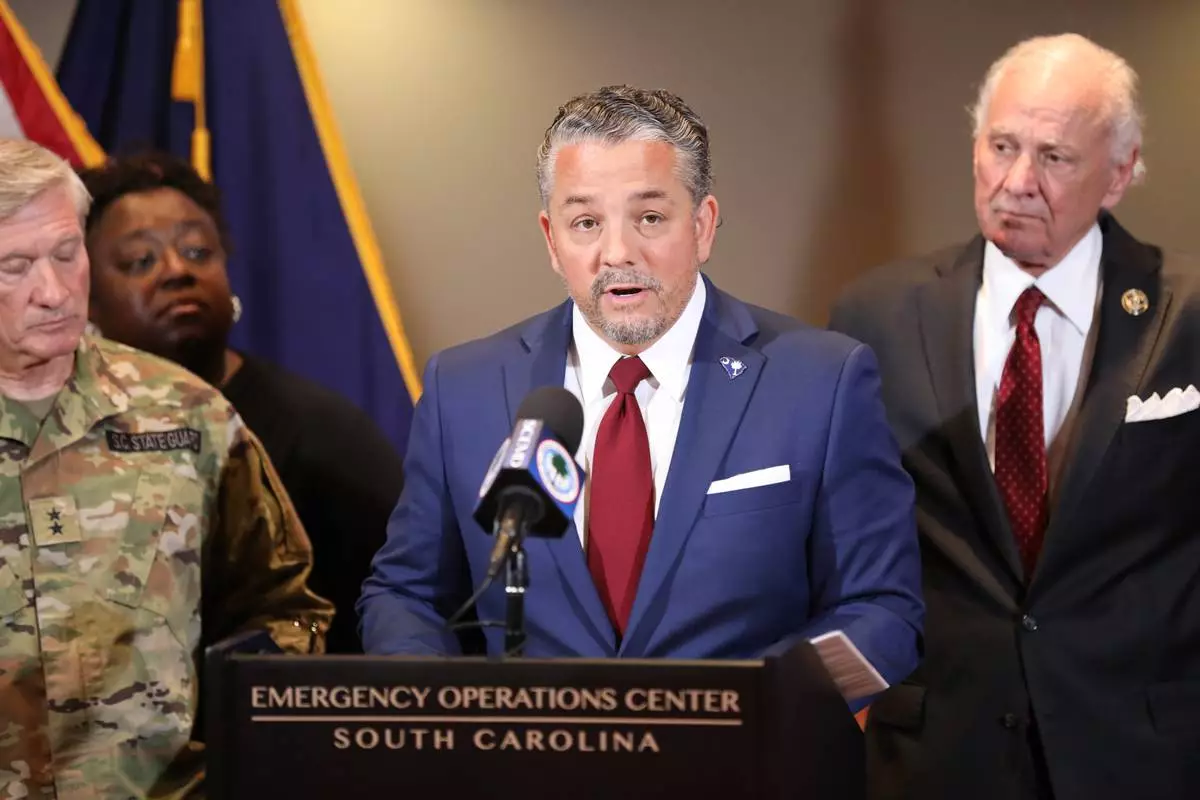
South Carolina Department of Social Services Director Tony Catone talks about the state's plans to deal with the suspension of SNAP benefits at a news conference on Tuesday, Oct. 28, 2025, in West Columbia, S.C. (AP Photo/Jeffrey Collins)
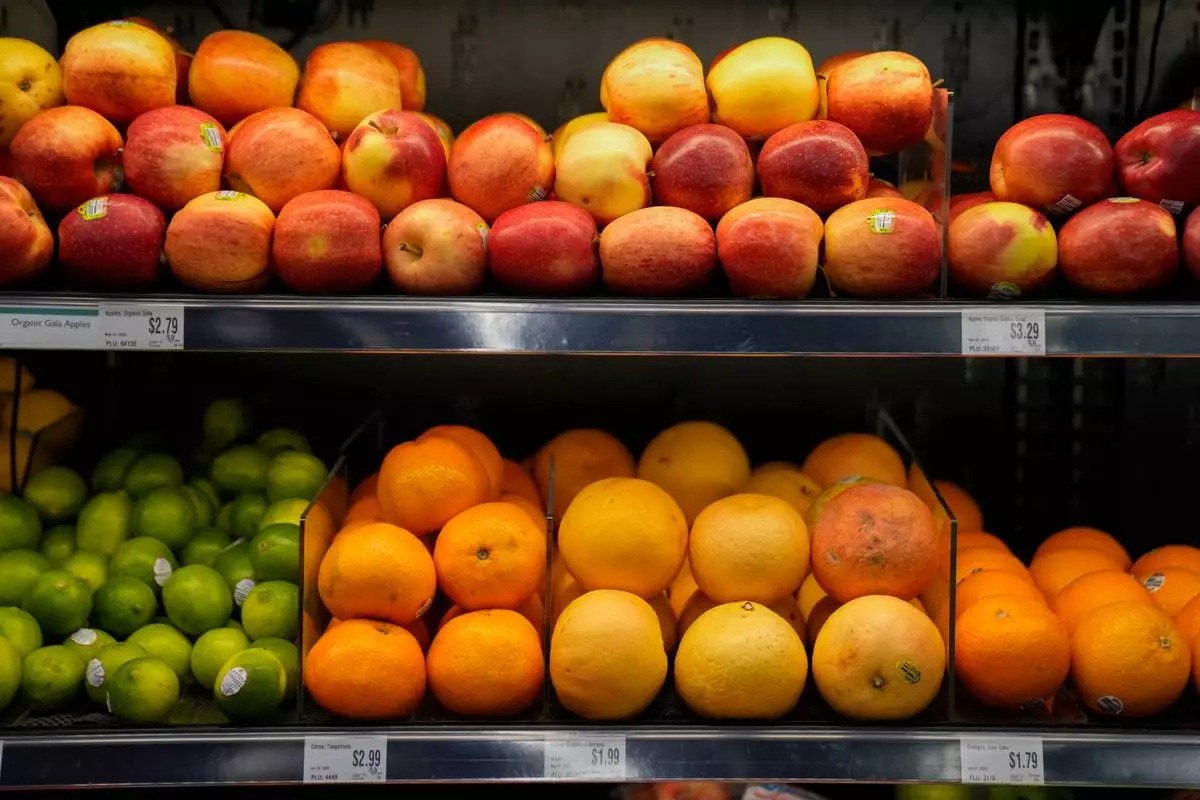
Produce, which is covered by the USDA Supplemental Nutrition Assistance Program (SNAP), is displayed for sale at Wild Onion Market, Monday, Oct. 27, 2025, in Chicago. (AP Photo/Erin Hooley)
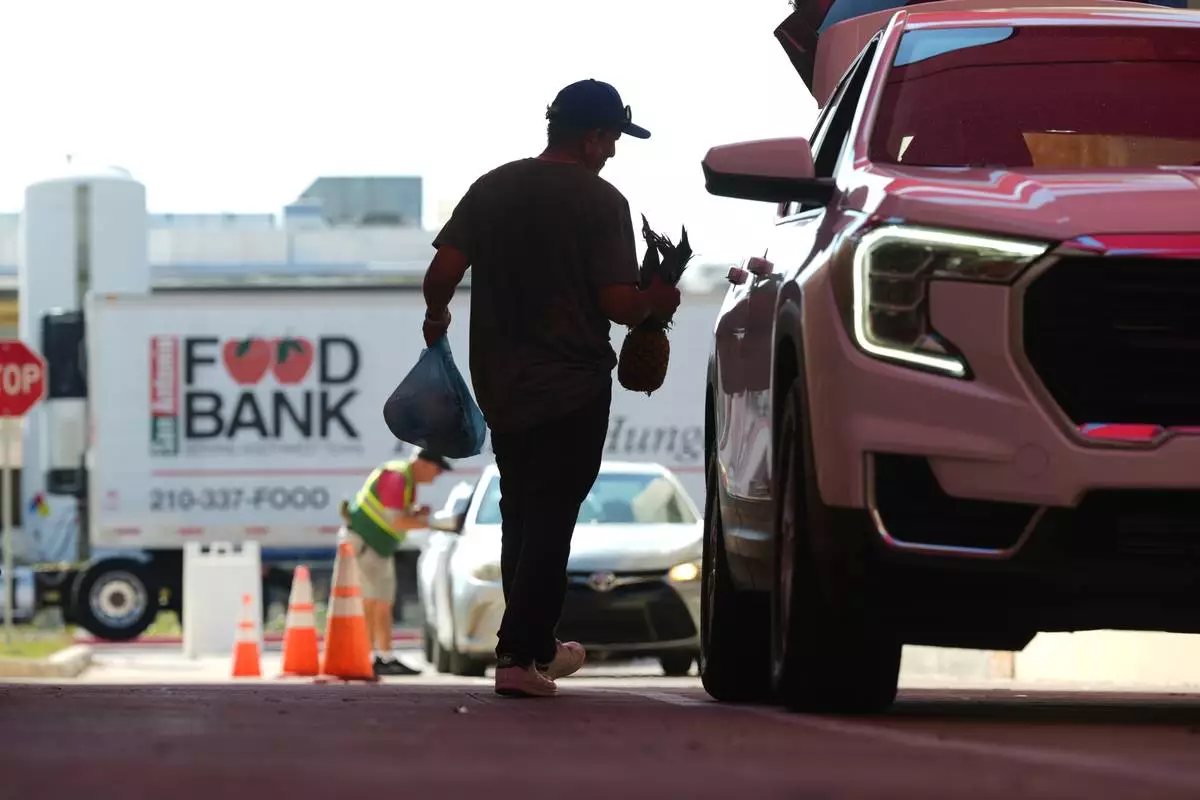
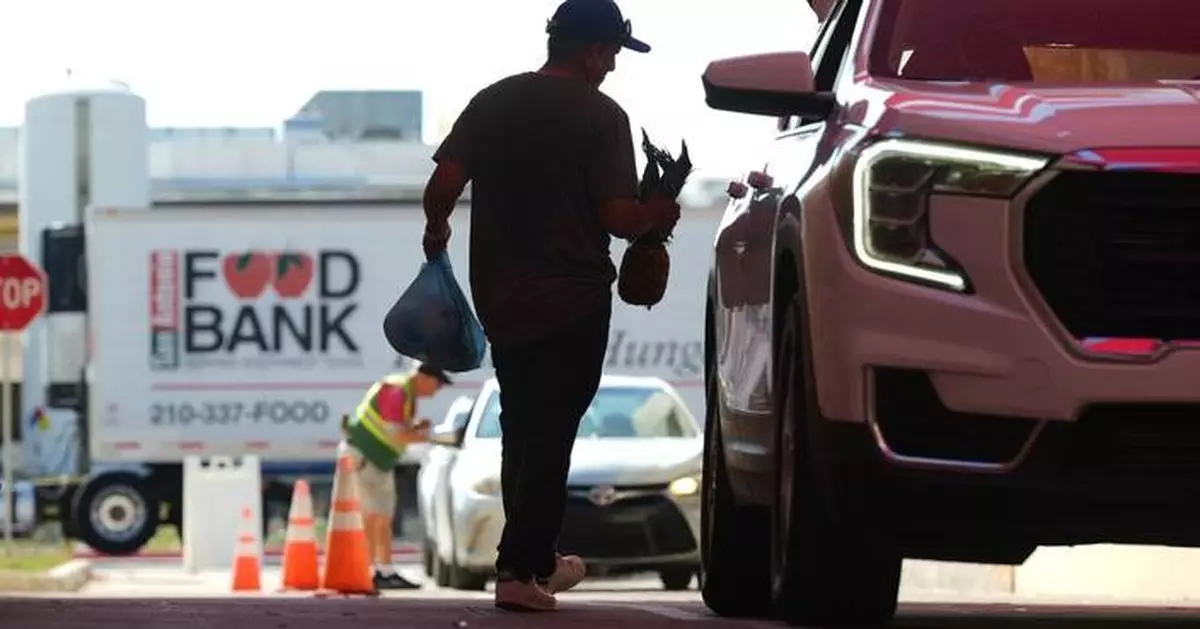
Volunteer Joel Hernandez helps load a vehicle during a food distribution targeting federal employee households affected by the federal shutdown as well as SNAP recipients, Monday, Oct. 27, 2025, in San Antonio. (AP Photo/Eric Gay)