Skip to Content Facebook Feature Image

Melissa is a beast among a string of monster Atlantic storms. Scientists explain

News

Melissa is a beast among a string of monster Atlantic storms. Scientists explain
News

News

Melissa is a beast among a string of monster Atlantic storms. Scientists explain

2025-10-29 08:29 Last Updated At:08:41

Hurricane Melissa, which struck Jamaica with record-tying 185 mph winds Tuesday, was a beast that stood out as extreme even in a record number of monster storms spawned over the last decade in a superheated Atlantic Ocean.

Melissa somehow shook off at least three different meteorological conditions that normally weaken major hurricanes and was still gaining power as it hit, scientists said, a bit amazed.

More Images
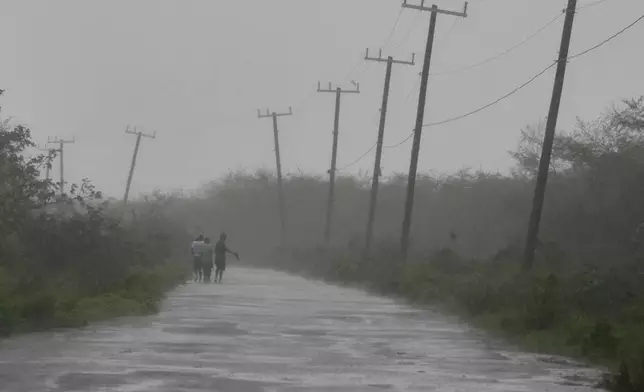
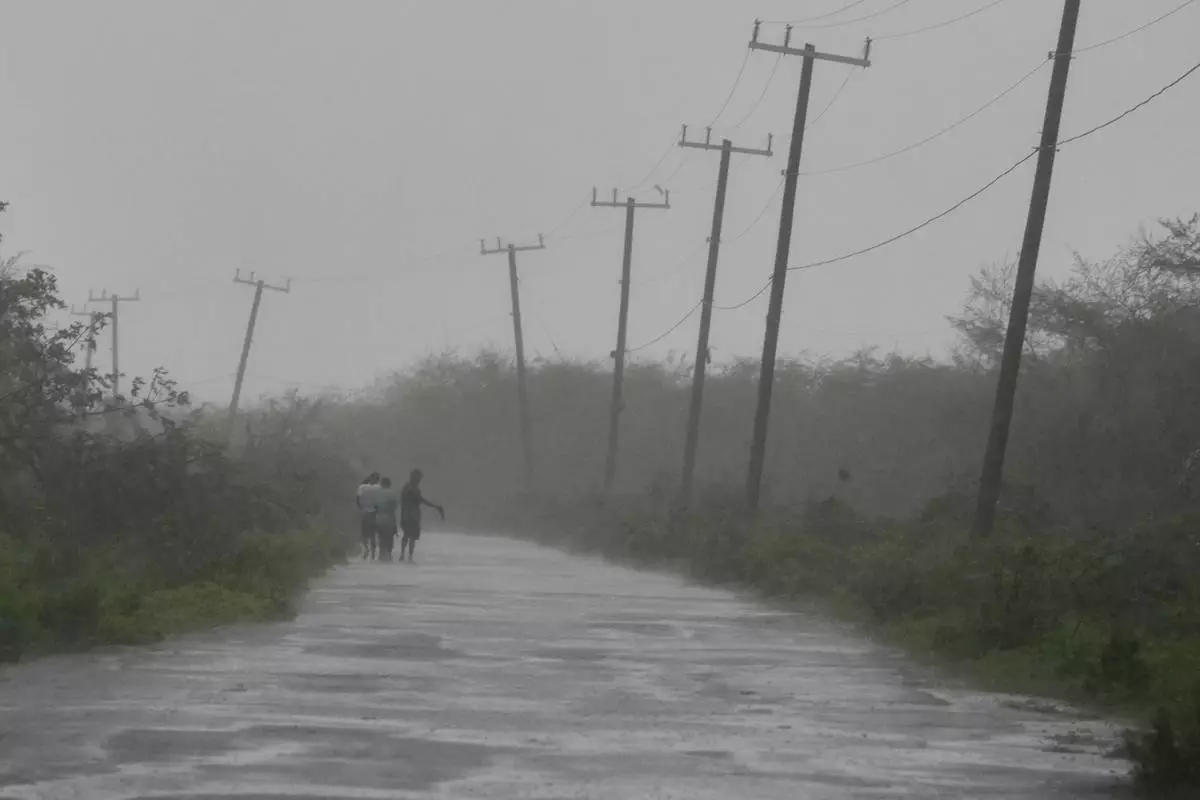
People walk along a road during the passing of Hurricane Melissa in Rocky Point, Jamaica, Tuesday, Oct. 28, 2025. (AP Photo/Matias Delacroix)
People walk along a road during the passing of Hurricane Melissa in Rocky Point, Jamaica, Tuesday, Oct. 28, 2025. (AP Photo/Matias Delacroix)

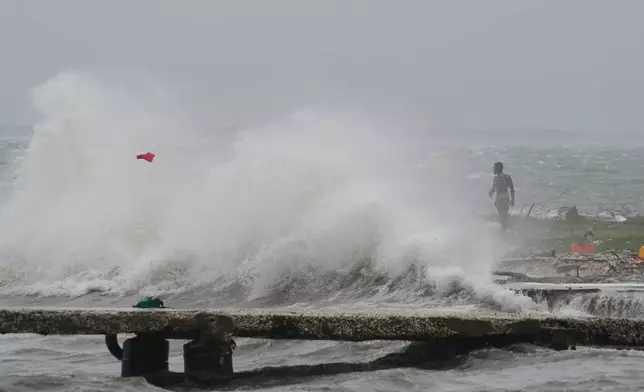
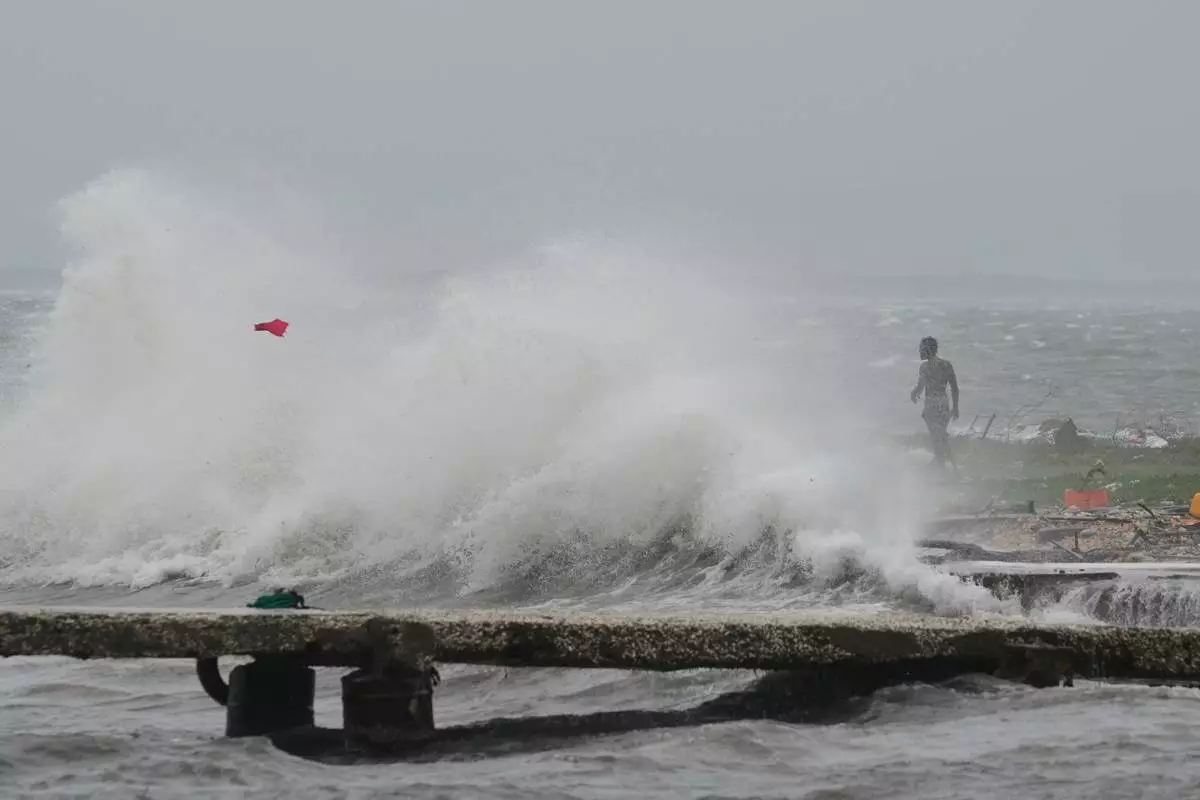
Waves splash in Kingston, Jamaica, as Hurricane Melissa approaches, Tuesday, Oct. 28, 2025. (AP Photo/Matias Delacroix)
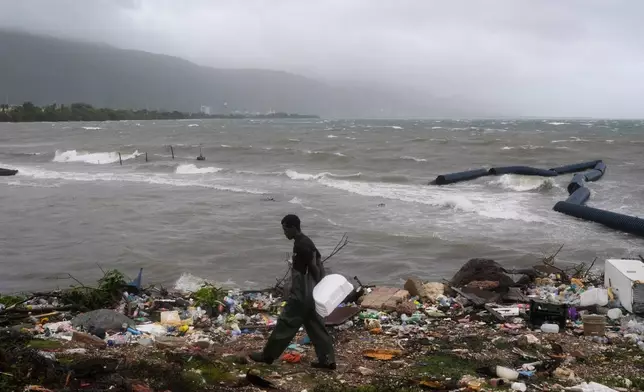
Waves splash in Kingston, Jamaica, as Hurricane Melissa approaches, Tuesday, Oct. 28, 2025. (AP Photo/Matias Delacroix)

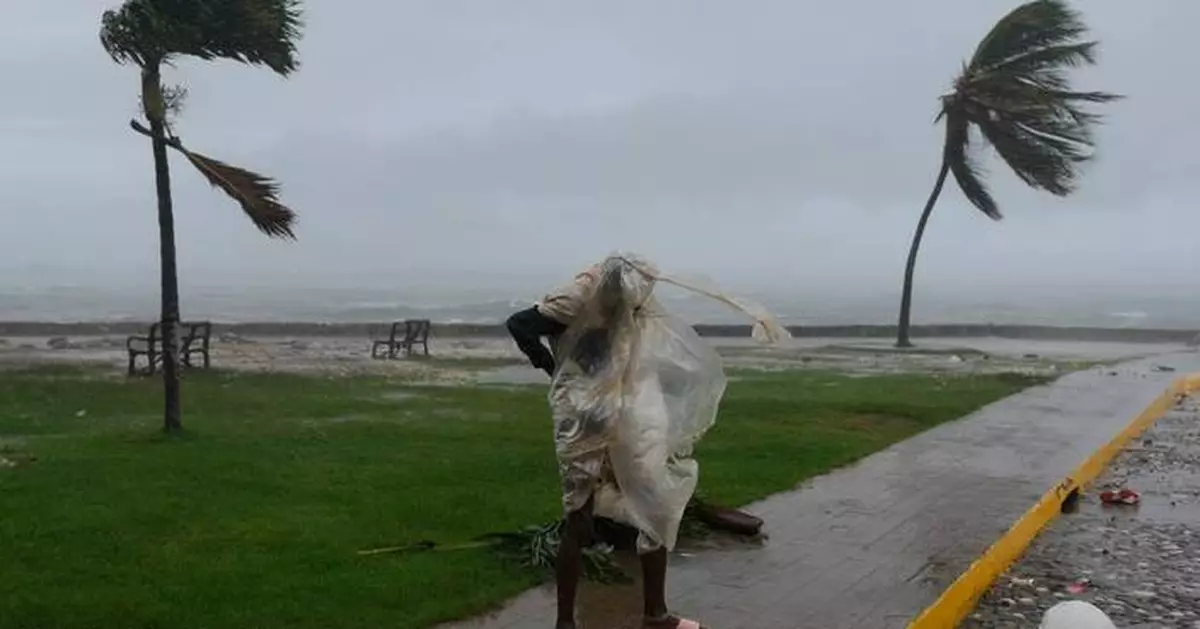
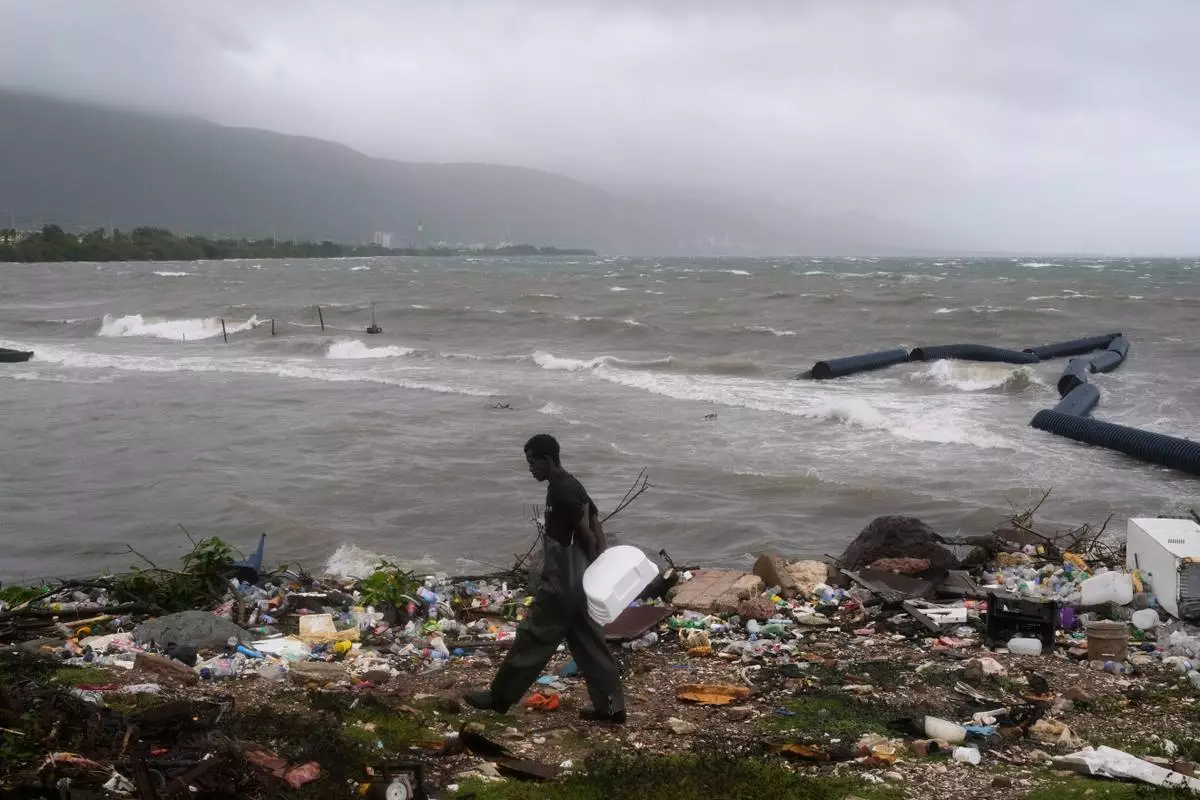
A man walks along the coastline during the passing of Hurricane Melissa in Kingston, Jamaica, Tuesday, Oct. 28, 2025. (AP Photo/Matias Delacroix)
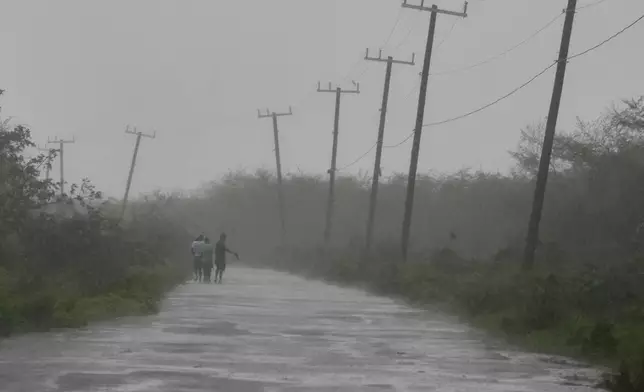
A man walks along the coastline during the passing of Hurricane Melissa in Kingston, Jamaica, Tuesday, Oct. 28, 2025. (AP Photo/Matias Delacroix)

People walk along a road during the passing of Hurricane Melissa in Rocky Point, Jamaica, Tuesday, Oct. 28, 2025. (AP Photo/Matias Delacroix)
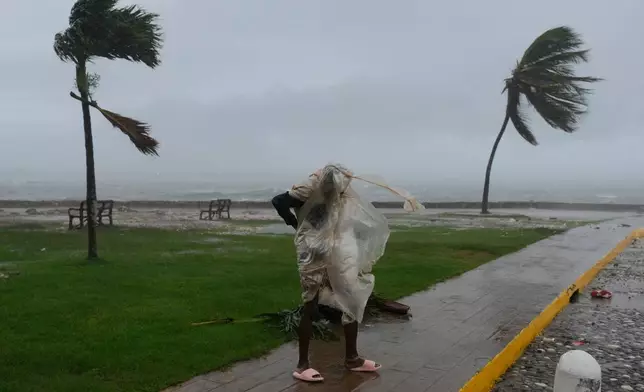
People walk along a road during the passing of Hurricane Melissa in Rocky Point, Jamaica, Tuesday, Oct. 28, 2025. (AP Photo/Matias Delacroix)

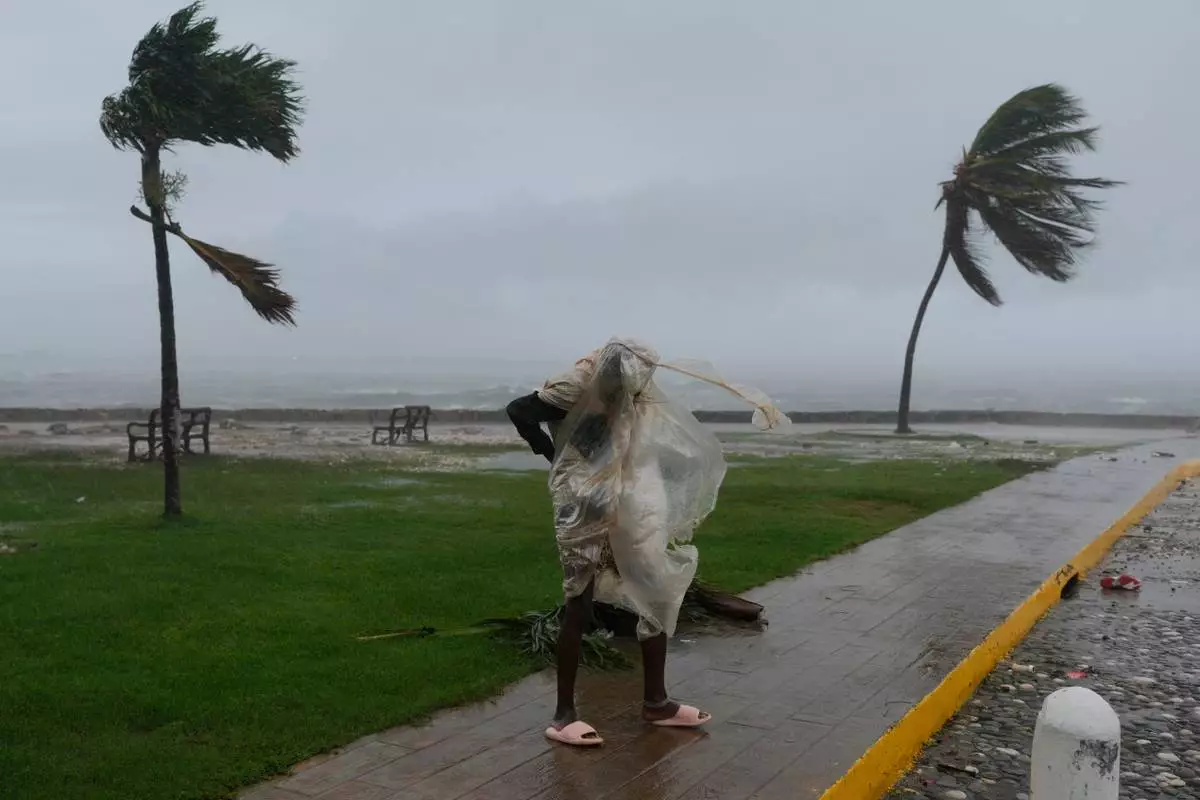
A man walks in Kingston, Jamaica, as Hurricane Melissa approaches, Tuesday, Oct. 28, 2025. (AP Photo/Matias Delacroix)

A man walks in Kingston, Jamaica, as Hurricane Melissa approaches, Tuesday, Oct. 28, 2025. (AP Photo/Matias Delacroix)

And while more storms these days are undergoing rapid intensification — gaining 35 mph in wind speed over 24 hours — Melissa did a lot more than that. It achieved what's called extreme rapid intensification — gaining at least 58 mph over 24 hours. In fact, Melissa turbocharged by about 70 mph during a 24-hour period last week, and had an unusual second round of rapid intensification that spun it up to 175 mph, scientists said.

“It's been a remarkable, just a beast of a storm," Colorado State University hurricane researcher Phil Klotzbach said.

When Melissa came ashore it tied strength records for Atlantic hurricanes making landfall, both in wind speed and barometric pressure, which is a key measurement that meteorologists use, said Klotzbach and University of Miami hurricane researcher Brian McNoldy. The pressure measurement tied the deadly 1935 Labor Day storm in Florida, while the 185 mph wind speed equaled marks set that year and during 2019's Hurricane Dorian. Hurricane Allen reached 190 mph winds in 1980, but not at landfall.

Usually when major hurricanes brew they get so strong that the wind twirling in the center of the storm gets so intense and warm in places that the eyewall needs to grow, so a small one collapses and a bigger one forms. That's called an eyewall replacement cycle, McNoldy said, and it usually weakens the storm at least temporarily.

Melissa showed some signs of being ready to do this, but it never did, McNoldy and Klotzbach said.

Another weird thing is that Melissa sat offshore of mountainous Jamaica for awhile before coming inland. Usually mountains, even on islands, tear up storms, but not Melissa.

“It was next to a big mountainous island and it doesn't even notice it's there,” McNoldy said in amazement.

Warm water is the fuel for hurricanes. The hotter and deeper the water, the more a storm can power up. But when storms sit over one area for awhile — which Melissa did for days on end — it usually brings cold water up from the depths, choking off the fuel a bit. But that didn't happen to Melissa, said Bernadette Woods Placky, chief meteorologist for Climate Central, a combination of scientists and journalists who study climate change.

“It's wild how almost easily this was allowed to just keep venting,” Woods Placky said. “This had enough warm water at such high levels and it just kept going.”

Melissa rapidly intensified during five six-hour periods as it hit the extreme rapid intensification level, McNoldy said. And then it jumped another 35 mph and “that's extraordinary,” he said.

For meteorologists following it “just your stomach would sink as you’d see these updates coming in,” Woods Placky said.

“We were sitting at work on Monday morning with our team and you just saw the numbers just start jumping again, 175. And then again this morning (Tuesday), 185," Woods Placky said.

“It's an explosion,” she said.

One key factor is warm water. McNoldy said some parts of the ocean under Melissa were 2 degrees Celsius (3.6 degrees Fahrenheit) warmer than the long-term average for this time of year.

Climate Central, using scientifically accepted techniques of comparing what's happening now to a fictional world with no human-caused climate change, estimated the role of global warming in Melissa. It said the water was 500 to 700 times more likely to be warmer than normal because of climate change.

A rapid Associated Press analysis of Category 5 hurricanes that brewed, not just hit, in the Atlantic over the past 125 years showed a large recent increase in those top-of-the-scale storms. There have been 13 Category 5 storms from 2016 to 2025, including three this year. Until last year, no other 10-year period even reached double digits. About 29% of the Category 5 hurricanes in the past 125 years have happened since 2016.

McNoldy, Klotzbach and Woods Placky said hurricane records before the modern satellite era are not as reliable because some storms out at sea could have been missed. Measuring systems for strength have also improved and changed, which could be a factor. And there was a period between 2008 and 2015 with no Atlantic Category 5 storms, Klotzbach said.

Still, climate science generally predicts that a warmer world will have more strong storms, even if there aren't necessarily more storms overall, the scientists said.

“We’re seeing a direct connection in attribution science with the temperature in the water and a climate change connection, Woods Placky said. ”And when we see these storms go over this extremely warm water, it is more fuel for these storms to intensify rapidly and push to new levels."

Science Writer Seth Borenstein has covered hurricanes for more than 35 years and has co-authored two books on them. Data journalist M.K. Wildeman contributed from Hartford, Connecticut.

The Associated Press’ climate and environmental coverage receives financial support from multiple private foundations. AP is solely responsible for all content. Find AP’s standards for working with philanthropies, a list of supporters and funded coverage areas at AP.org.
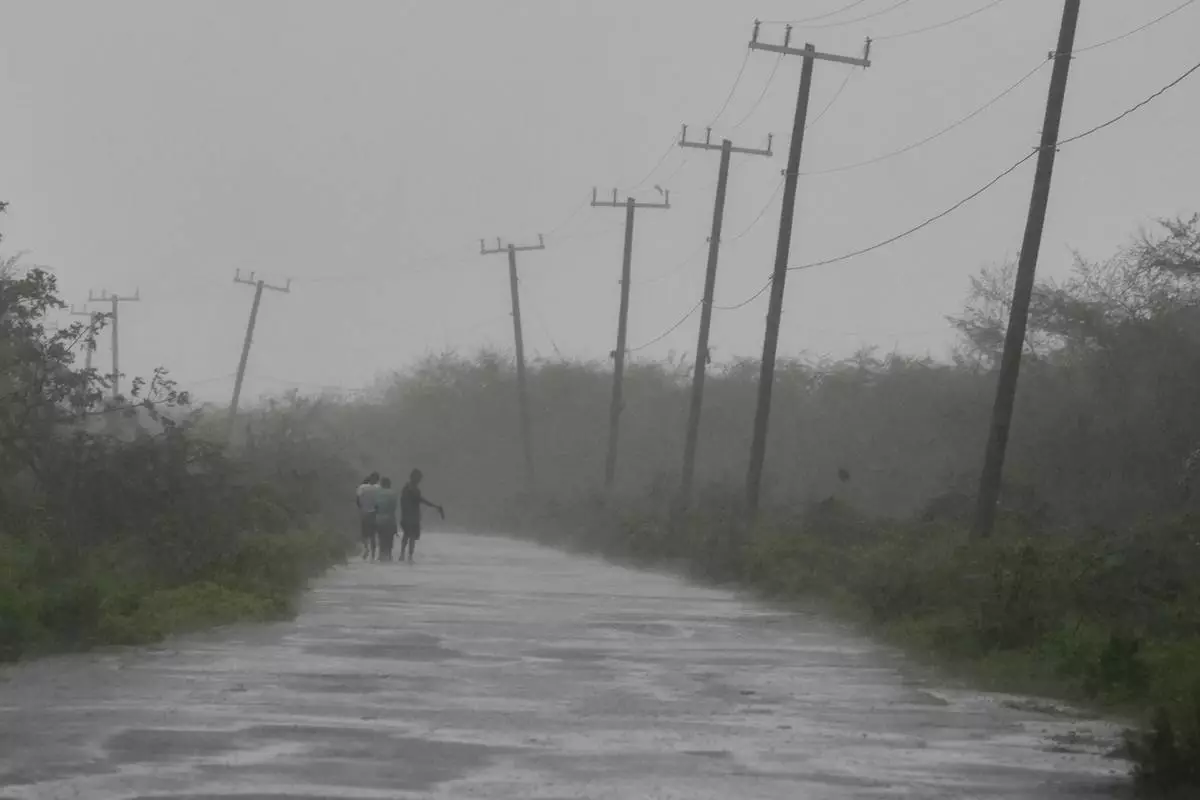
People walk along a road during the passing of Hurricane Melissa in Rocky Point, Jamaica, Tuesday, Oct. 28, 2025. (AP Photo/Matias Delacroix)
People walk along a road during the passing of Hurricane Melissa in Rocky Point, Jamaica, Tuesday, Oct. 28, 2025. (AP Photo/Matias Delacroix)

Waves splash in Kingston, Jamaica, as Hurricane Melissa approaches, Tuesday, Oct. 28, 2025. (AP Photo/Matias Delacroix)
Waves splash in Kingston, Jamaica, as Hurricane Melissa approaches, Tuesday, Oct. 28, 2025. (AP Photo/Matias Delacroix)

A man walks along the coastline during the passing of Hurricane Melissa in Kingston, Jamaica, Tuesday, Oct. 28, 2025. (AP Photo/Matias Delacroix)
A man walks along the coastline during the passing of Hurricane Melissa in Kingston, Jamaica, Tuesday, Oct. 28, 2025. (AP Photo/Matias Delacroix)

People walk along a road during the passing of Hurricane Melissa in Rocky Point, Jamaica, Tuesday, Oct. 28, 2025. (AP Photo/Matias Delacroix)
People walk along a road during the passing of Hurricane Melissa in Rocky Point, Jamaica, Tuesday, Oct. 28, 2025. (AP Photo/Matias Delacroix)

A man walks in Kingston, Jamaica, as Hurricane Melissa approaches, Tuesday, Oct. 28, 2025. (AP Photo/Matias Delacroix)


A man walks in Kingston, Jamaica, as Hurricane Melissa approaches, Tuesday, Oct. 28, 2025. (AP Photo/Matias Delacroix)

MONROE, Wash. (AP) — A blast of arctic air swept south from Canada and spread into parts of the northern U.S. on Saturday, while residents of the Pacific Northwest braced for possible mudslides and levee failures from floodwaters that are expected to be slow to recede.

The catastrophic flooding forced thousands of people to evacuate, including Eddie Wicks and his wife, who live amid sunflowers and Christmas trees on a Washington state farm next to the Snoqualmie River. As they moved their two donkeys to higher ground and their eight goats to their outdoor kitchen, the water began to rise much quicker than anything they had experienced before.

As the water engulfed their home Thursday afternoon, deputies from the King County Sheriff’s Office marine rescue dive unit were able to rescue them and their dog, taking them on a boat the half-mile (800 meters) across their field, which had been transformed into a lake. The rescue was captured on video.

Another round of rain and wind is in store for the region as early as late Sunday, forecasters said.

“Bottom line at this point in time is we’re not done despite the sunny conditions that we have across western Washington at this point,” said Reid Wolcott, a meteorologist with the National Weather Service in Seattle.

“There is yet more still to come in terms of in terms of wind, in terms of rain, in terms in terms of flooding,” he said. “And Washingtonians need to be prepared for additional impacts, additional flooding, tree damage, power outages, etc.”

High winds expected at the end of the weekend and into the first part of week are a concern because the ground is extremely saturated, putting trees at risk of toppling, he said.

In Burlington, a farming community about an hour north of Seattle, the receding floodwaters allowed residents to assess damage and clean up their homes.

Friends and relatives helped empty Argentina Dominguez's home, filling trailers with soaked furniture, ripping carpet and mopping muddy floors.

“I know it’s materialistic stuff, but they were our stuff. It’s really hard. But we’re gonna try our best to like get through it all,” Dominguez said. “We’re just trying to get everything off the floor so we can start over.”

In Snohomish County, Washington, north of Seattle, emergency officials on Saturday led federal, state and local officials on a tour of the devastation.

“It’s obvious that thousands and thousands of Washingtonians and communities all across our state are in the process of digging out, and that’s going to be a challenging process,” Gov. Bob Ferguson said.

“It’s going to be expensive,” he said. “It’s going to be time consuming, and it’s going to be potentially dangerous at times. So I think we’re seeing here in Monroe is what we’re going to be seeing all across the state, and that’s what’s got our focus right now.”

As the Pacific Northwest begins to recover from the deluge, a separate weather system already brought dangerous wind-chill values — the combination of cold air temperatures and wind — to parts of the Upper Midwest.

Shortly before noon Saturday, it was minus 12 degrees Fahrenheit (minus 24 degrees Celsius) in Grand Forks, North Dakota, where the wind-chill value meant that it felt like minus 33 F (minus 36 C), the National Weather Service said.

For big cities like Minneapolis and Chicago, the coldest temperatures were expected late Saturday night into Sunday morning. In the Minneapolis area, low temperatures were expected to drop to around minus 15 F (minus 26 C), by early Sunday morning. Lows in the Chicago area are projected to be around 1 F(minus 17 C) by early Sunday, the weather service said.

The Arctic air mass was expected to continue pushing south and east over the weekend, expanding into Southern states by Sunday.

The National Weather Service on Saturday issued cold weather advisories that stretched as far south as the Alabama state capital city of Montgomery, where temperatures late Sunday night into Monday morning were expected to plummet to around 22 F (minus 6 C). To the east, lows in Savannah, Georgia, were expected to drop to around 24 F (minus 4 C) during the same time period.

The cold weather freezing much of the country came as residents in the Pacific Northwest endure more misery after several days of flooding. Thousands of people have been forced to evacuate towns in the region as an unusually strong atmospheric river dumped a foot (30 centimeters) or more of rain in parts of western and central Washington over several days and swelled rivers, inundating communities and prompting dramatic rescues from rooftops and vehicles.

Many animals were also evacuated as waters raged over horse pastures, barns and farmland. At the peak of evacuations, roughly 170 horses, 140 chickens and 90 goats saved from the floodwaters were being cared for at a county park north of Seattle, said Kara Underwood, division manager of Snohomish County Parks. Most of those animals were still at the park on Saturday, she said.

The record floodwaters slowly receded, but authorities warned that waters will remain high for days, and that there was still danger from potential levee failures or mudslides. There was also the threat of more rain forecast for Sunday. Officials conducted dozens of water rescues as debris and mudslides closed highways and raging torrents washed out roads and bridges.

Associated Press journalists Manuel Valdes in Burlington, Hallie Golden in Seattle and Jeff Martin in Atlanta contributed.

"E-man" Trujillo uses a jet-ski to pull his children in a canoe as the family's horses graze on high ground in near their front door after heavy rains led to historic flooding in the region Saturday, Dec. 13, 2025, in Burlington, Wash. (AP Photo/Lindsey Wasson)

"E-man" Trujillo uses a jet-ski to pull his children in a canoe as the family's horses graze on high ground in near their front door after heavy rains led to historic flooding in the region Saturday, Dec. 13, 2025, in Burlington, Wash. (AP Photo/Lindsey Wasson)

"E-man" Trujillo, center, uses a jet-ski to tow a canoe with his children Liam, 6, far left, Julissa, 15, and Benjamin, 5, third from left, as their horses take refuge on the high ground at their front door after heavy rains led to historic flooding in the region Saturday, Dec. 13, 2025, in Burlington, Wash. (AP Photo/Lindsey Wasson)

"E-man" Trujillo, center, uses a jet-ski to tow a canoe with his children Liam, 6, far left, Julissa, 15, and Benjamin, 5, third from left, as their horses take refuge on the high ground at their front door after heavy rains led to historic flooding in the region Saturday, Dec. 13, 2025, in Burlington, Wash. (AP Photo/Lindsey Wasson)

Floodwater surrounds a home in Burlington, Wash., Saturday, Dec. 13, 2025. (AP Photo/Manuel Valdes)

Floodwater surrounds a home in Burlington, Wash., Saturday, Dec. 13, 2025. (AP Photo/Manuel Valdes)

Men remove a wet carpet from a house damaged by floodwaters in Burlington, Washington, Saturday, Dec. 13, 2025. (AP Photo/Manuel Valdes)

Men remove a wet carpet from a house damaged by floodwaters in Burlington, Washington, Saturday, Dec. 13, 2025. (AP Photo/Manuel Valdes)

Vehicles are partially submerged after heavy rains led to historic flooding in the region, in Burlington, Wash., Saturday, Dec. 13, 2025. (AP Photo/Manuel Valdes)

Vehicles are partially submerged after heavy rains led to historic flooding in the region, in Burlington, Wash., Saturday, Dec. 13, 2025. (AP Photo/Manuel Valdes)

Fracis Tarango mops inside her daughters' home damaged by floodwaters in Burlington, Wash., Saturday, Dec. 13, 2025. (AP Photo/Manuel Valdes)

Fracis Tarango mops inside her daughters' home damaged by floodwaters in Burlington, Wash., Saturday, Dec. 13, 2025. (AP Photo/Manuel Valdes)

A man pushes a truck through a neigbhorhood flooded by the Skagit River on Friday, Dec. 12, 2025, in Burlington. (AP Photo/Stephen Brashear)

A man pushes a truck through a neigbhorhood flooded by the Skagit River on Friday, Dec. 12, 2025, in Burlington. (AP Photo/Stephen Brashear)

An aerial view shows homes surrounded by floodwaters in Snohomish, Wash., Thursday, Dec. 11, 2025. (AP Photo/Stephen Brashear)

An aerial view shows homes surrounded by floodwaters in Snohomish, Wash., Thursday, Dec. 11, 2025. (AP Photo/Stephen Brashear)

Emergency crews, including National Guard soldiers, wort in a neighborhood flooded by the Skagit River on Friday, Dec. 12, 2025, in Burlington, Wash. (AP Photo/Stephen Brashear)

Emergency crews, including National Guard soldiers, wort in a neighborhood flooded by the Skagit River on Friday, Dec. 12, 2025, in Burlington, Wash. (AP Photo/Stephen Brashear)

Recommended Articles