BOGOTA, Colombia (AP) — When rumors spread last week that Venezuela ’s government would free several Colombians being held without trial in Venezuelan prisons, Diana Tique bought a plane ticket to travel to the border between the two countries to meet her brother.
But hopes of reuniting with her sibling vanished a few hours later, when she was informed that Manuel Tique, a 33-year-old humanitarian worker, was not included in the list of 18 Colombian citizens who were freed from Venezuelan jails on Friday.
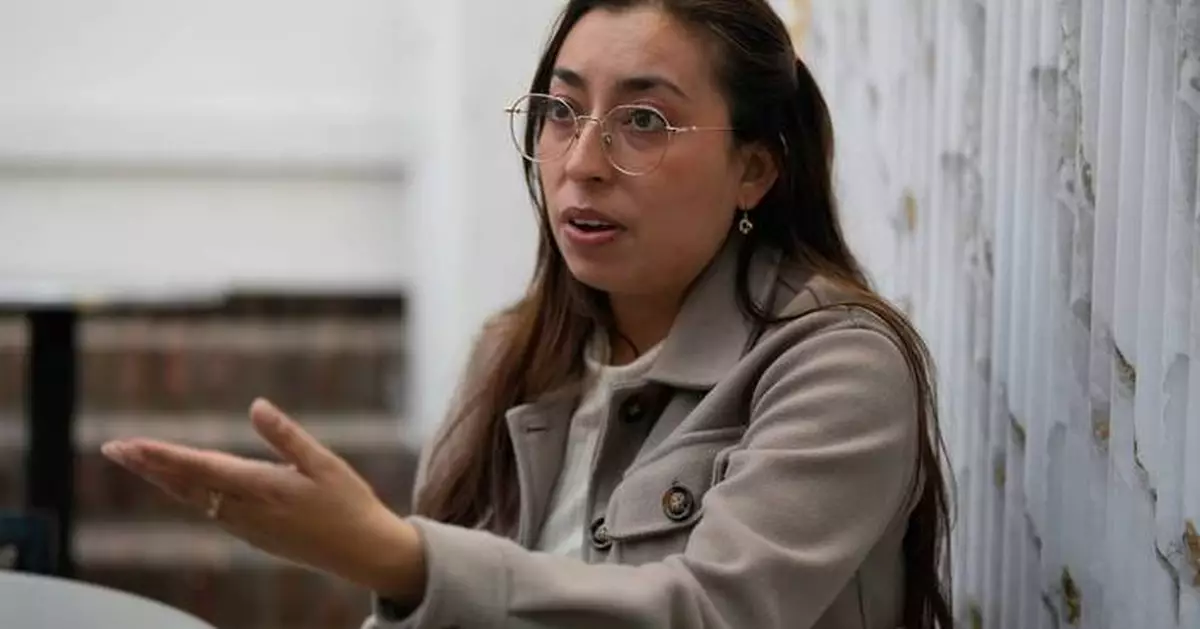
“It was devastating,” Tique told The Associated Press at a coffeeshop in Bogota. “I will not be able to talk to him, and see how he is really doing.” Tique said she has only been allowed two phone calls with her brother since he was detained in Venezuela in September last year.
According to human rights groups in Venezuela and the U.S., there are approximately 80 foreign nationals being held in Venezuela without trial, including citizens of Spain, France, Colombia and the Czech Republic.
New York-based Human Rights Watch says these prisoners are being used as bargaining chips by Venezuela’s government as it tries to get political leverage with countries that have refused to recognize last year’s reelection of President Nicolas Maduro, a vote that the Venezuelan president has been widely accused of stealing.
“These are very grave cases, that underscore the regime’s persecution of foreign nationals” said Martina Rapido Raguzzino, a researcher for the Americas Division at HRW.
Humanitarian groups say that many of the foreign nationals who have been detained in Venezuela entered the country as tourists and were detained at border posts.
Most are now being held in a prison known as Rodeo One, where visits and phone calls are rarely allowed. “We know that in Rodeo One there are conditions that are tantamount to torture” Rapido Raguzzino said.
Manuel Tique was detained on Sept. 14 last year after presenting his passport at a border post in Apure, a large and sparsely populated state in southern Venezuela.
The 33-year-old was working for the Danish Refugee Council, an international non- profit organization that helps displaced populations, and was headed to Venezuela to deliver a workshop to local aid groups on how to monitor food and medicine distribution.
Diana Tique said she was never notified by Venezuelan authorities of her brother’s detention.
But a month after Tique’s arrest, Venezuelan Interior Minister Diosdado Cabello spoke about him in a TV program, where he accused the Colombian and several other foreigners of participating in a plot to overthrow Maduro.
Cabello said that Tique went to Apure to “recruit mercenaries,” a claim his family vigorously denies.
“My brother is not a terrorist” said Diana Tique, adding that he had not traveled outside Colombia before his ill fated trip to Venezuela.
Tique said that she has not been able to find a lawyer who will defend her brother in Venezuela, and requests to visit him have gone unanswered.
She fears that Tique could be sentenced to a lengthy prison term if he is not freed as part of a deal between the governments of Colombia and Venezuela.
Colombia's government has not recognized the results of last year’s election in Venezuela, although its leftist president has strengthened diplomatic ties with Venezuela’s government, and criticized a U.S. naval build up near Venezuela’s shores.
On Friday, Colombia’s Foreign Affairs Ministry said it will continue to hold talks with Venezuela to seek the release of its citizens from Venezuelan prisons. The Venezuelan human rights groups Penal Forum said there are still 20 Colombian nationals jailed in Venezuela without trial.
In July, the United States secured the release of 10 American citizens from Venezuelan prisons through a prisoner swap that included the release of 250 Venezuelan migrants deported by the Trump administration to a notorious prison in El Salvador.
Six Americans were also freed by Venezuela in February after Trump envoy Richard Grenell met with Maduro in a visit that critics said helped the Venezuelan president legitimize his rule, following his widely disputed election las year.
Associated Press writer Jorge Rueda contributed to this report from Caracas, Venezuela
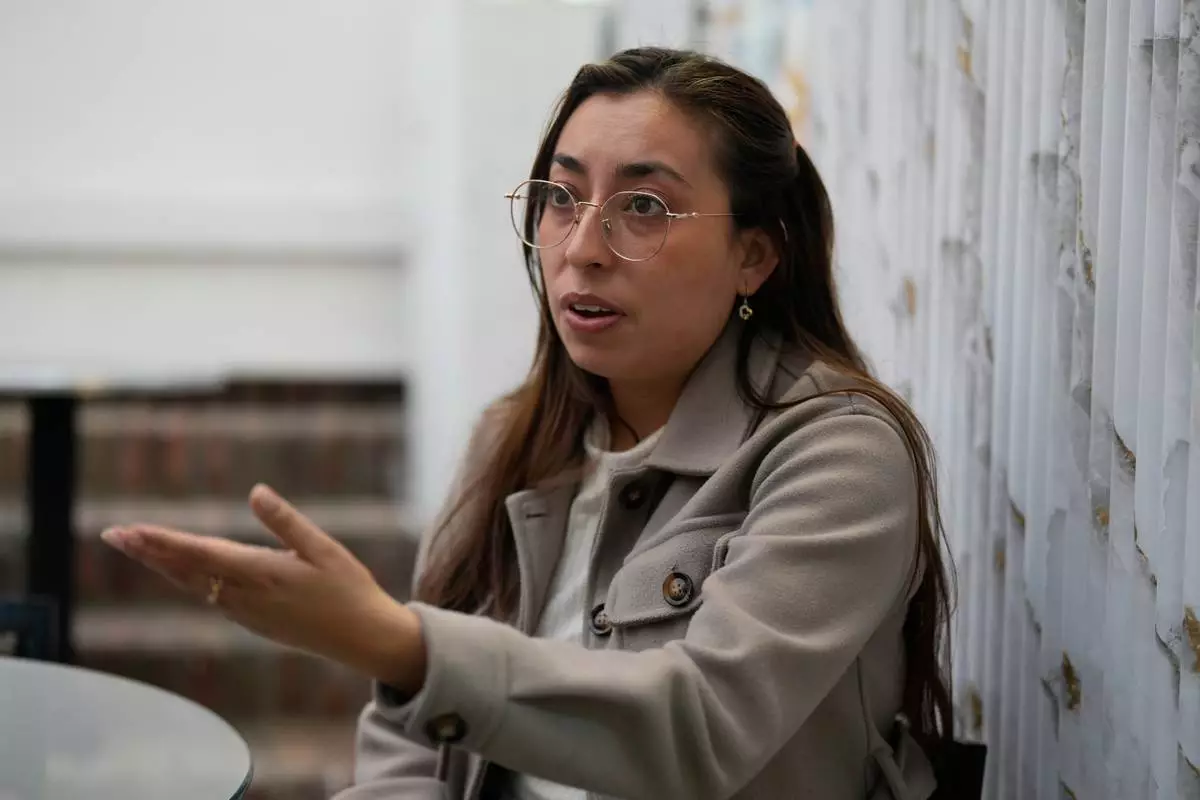
Diana Tique, the sister of Manuel Alejandro Tique who was arrested in Venezuela and is accused of being a mercenary, speaks during an interview in Bogota, Colombia, Monday, Oct. 27, 2025. (AP Photo/Fernando Vergara)
CARACAS, Venezuela (AP) — President Donald Trump is set to meet Thursday at the White House with Venezuelan opposition leader María Corina Machado, whose political party is widely considered to have won 2024 elections rejected by then-President Nicolás Maduro before the United States captured him in an audacious military raid this month.
Less than two weeks after U.S. forces seized Maduro and his wife at a heavily guarded compound in Caracas and brought them to New York to stand trial on drug trafficking charges, Trump will host the Nobel Peace Prize laureate Machado, having already dismissed her credibility to run Venezuela and raised doubts about his stated commitment to backing democratic rule in the country.
“She’s a very nice woman,” Trump told Reuters in an interview about Machado. “I’ve seen her on television. I think we’re just going to talk basics.”
The meeting comes as Trump and his top advisers have signaled their willingness to work with acting President Delcy Rodríguez, who was Maduro’s vice president and along with others in the deposed leader's inner circle remain in charge of day-to-day governmental operations.
Rodríguez herself has adopted a less strident position toward Trump and his “America First” policies toward the Western Hemisphere, saying she plans to continue releasing prisoners detained under Maduro — a move reportedly made at the behest of the Trump administration. Venezuela released several Americans this week.
Trump, a Republican, said Wednesday that he had a “great conversation” with Rodríguez, their first since Maduro was ousted.
“We had a call, a long call. We discussed a lot of things,” Trump told reporters. “And I think we’re getting along very well with Venezuela.”
In endorsing Rodríguez, Trump has sidelined Machado, who has long been a face of resistance in Venezuela. She had sought to cultivate relationships with Trump and key advisers like Secretary of State Marco Rubio among the American right wing in a political gamble to ally herself with the U.S. government. She also intends to have a meeting in the Senate on Thursday afternoon.
Despite her alliance with Republicans, Trump was quick to snub her following Maduro’s capture. Just hours afterward, Trump said of Machado that “it would be very tough for her to be the leader. She doesn’t have the support within or the respect within the country. She’s a very nice woman, but she doesn’t have the respect.”
Machado has steered a careful course to avoid offending Trump, notably after winning last year’s Nobel Peace Prize, which Trump coveted. She has since thanked Trump and offered to share the prize with him, a move that has been rejected by the Nobel Institute.
Machado’s whereabouts have been largely unknown since she went into hiding early last year after being briefly detained in Caracas. She briefly reappeared in Oslo, Norway, in December after her daughter received the Nobel Peace Prize on her behalf.
The industrial engineer and daughter of a steel magnate began challenging the ruling party in 2004, when the nongovernmental organization she co-founded, Súmate, promoted a referendum to recall then-President Hugo Chávez. The initiative failed, and Machado and other Súmate executives were charged with conspiracy.
A year later, she drew the anger of Chávez and his allies again for traveling to Washington to meet President George W. Bush. A photo showing her shaking hands with Bush in the Oval Office lives in the collective memory. Chávez considered Bush an adversary.
Almost two decades later, she marshaled millions of Venezuelans to reject Chávez’s successor, Maduro, for another term in the 2024 election. But ruling party-loyal electoral authorities declared him the winner despite ample credible evidence to the contrary. Ensuing anti-government protests ended in a brutal crackdown by state security forces.
Janetsky reported from Mexico City. AP Diplomatic Writer Matthew Lee in Washington contributed to this report.
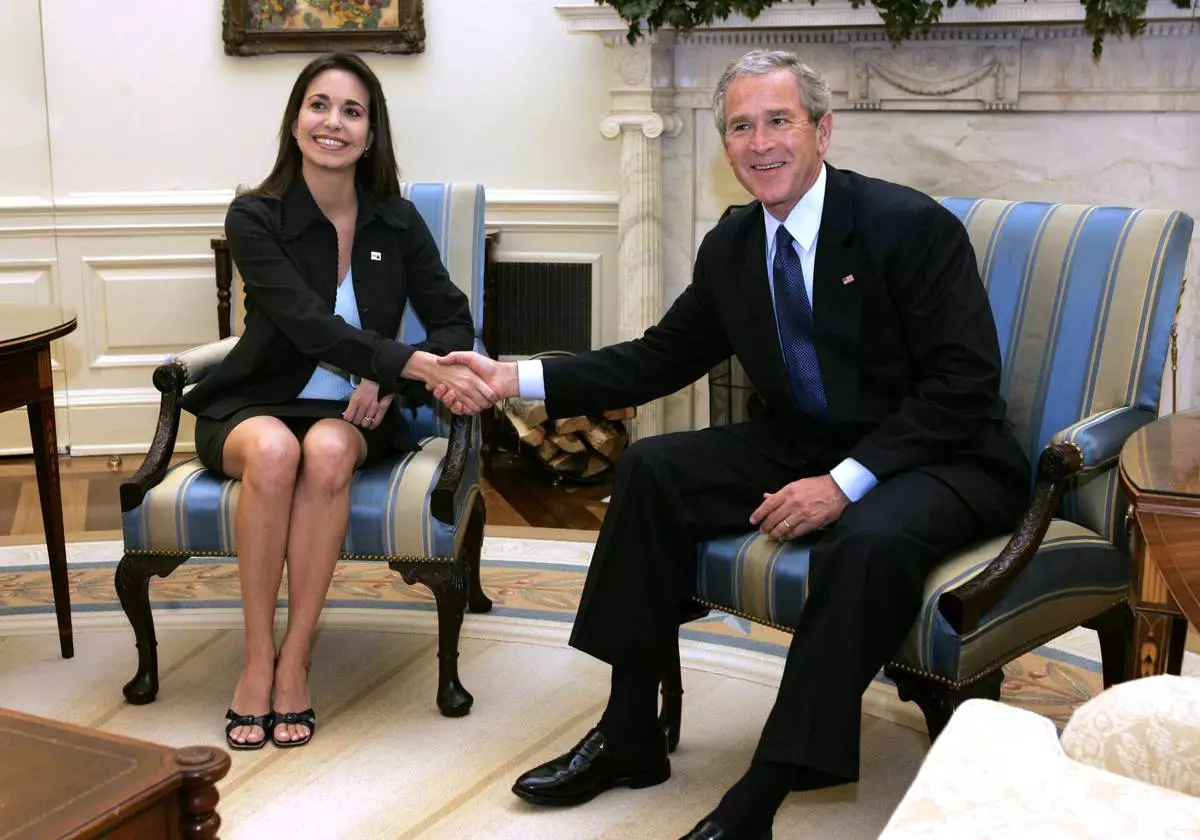
FILE - U.S. President George Bush, right, meets with Maria Corina Machado, executive director of Sumate, a non-governmental organization that defends Venezuelan citizens' political rights, in the Oval Office of the White House, Washington, May 31, 2005. (AP Photo/Charles Dharapak, File)
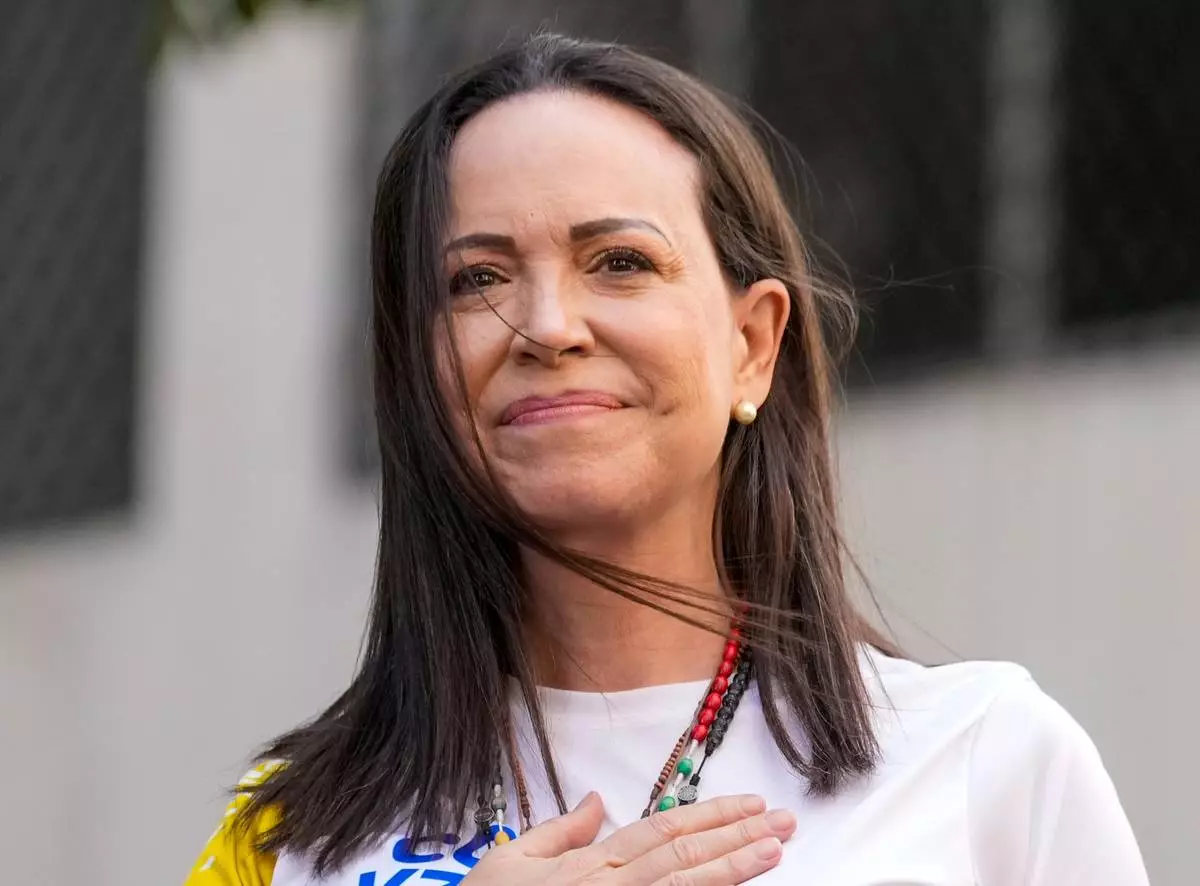
FILE - Opposition leader Maria Corina Machado gestures to supporters during a protest against President Nicolas Maduro the day before his inauguration for a third term, in Caracas, Venezuela, Thursday, Jan. 9, 2025. (AP Photo/Ariana Cubillos, file)