A smart elderly-care robot exhibition, part of the China Media Group's (CMG) Nanny Robot Conference, opened Wednesday in southwest China's Chengdu, unveiling new products aimed at advancing intelligent elderly care.
The two-day exhibition, co-hosted by CMG and CCID Consulting, a research institution under China's Ministry of Industry and Information Technology, focused on the integration of artificial intelligence (AI) and elderly care.
At the opening ceremony of the event, industry experts delved into the latest trends in the smart elderly care industry, with debuts of new elderly care robots garnering widespread attention.
The exhibition features four immersive experience zones that recreate real-life human-robot interactions. These simulated environments cover daily life, fitness, medical consultations, and social activities, delivering a seamless experience across in-home care, community support, medical treatment, and social networking.
"Our team has independently developed a smart food platform that offers diagnostic capabilities before meals, recommendations during meals, analysis after meals, and ingredient traceability. We are dedicated to shaping a better life using digital and intelligent technology," said Zhao Peng, an exhibitor.
"The traditional Chinese medicine robot achieves a fusion of traditional Chinese and Western medicine for home health management, providing daily health services for the elderly," said Gao Lei, another exhibitor.
A stair climber on display helps people with disabilities safely navigate older buildings, replacing the need to be carried by others.
"The stair climber can go up and down 20 times in a six-floor building. Before the debut of this product, disabled individuals had to rely on family members or caregivers to carry them down, which could easily cause secondary harm to them. The introduction of these products is undoubtedly aimed at enabling them to enjoy a better life brought by science and technology," said Wang Yuxiang, an exhibitor.
The event is free and open to the public. It offers a close-up experience of the sci-tech innovations that are revolutionizing elderly care.

Chengdu expo unveils next generation products for smart elderly care
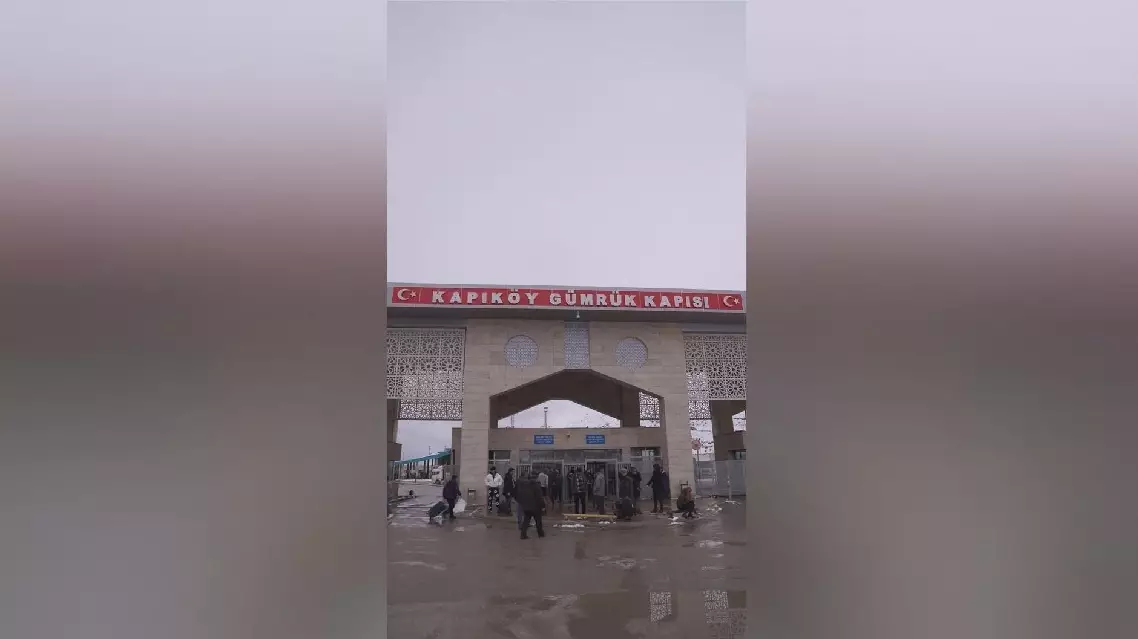
A crossing point on the Türkiye-Iran border is seeing people going in both directions as some flee the conflict in Iran, while others are returning to their homeland with a vow to fight in the war as U.S.-Israel strikes continue to pummel the country.
Nestled in the mountains between Türkiye and Iran, the Kapikoy border crossing has become a key point of entry or exit, especially given the mass flight suspensions and airspace closures as a result of the conflict which erupted on Feb. 28.
Despite the dangers, Akbar, an Iranian who has lived in Germany for 12 years, is one of the many young men who are determined to head home and join the efforts to defend their country.
He said he decided to return immediately after seeing new reports that his hometown of Isfahan in central Iran had been bombed. He vowed to stand by his country until the end. "I want to return to Iran to protect my country. I am willing to give my life for my motherland. For my life and my compatriots, I am willing to give my life. I have no intention of returning to Germany. I will stay in Iran. I will protect my country with my own life. I want the whole world to know Iranians will always steadfastly protect their country," said Akbar.
Other Iranians who had been working in Türkiye said they were prepared to return for the same reason and do whatever they can to protect their homeland.
"Israel and the United States have made a grave mistake. They will pay a price, a heavy one. We will fight to the end to defend Iran," said one of the young men at the border crossing.
But the border point is also seeing a stream of people going in the opposite direction, as many Iranians are passing through here as they seek to flee the constant aerial bombardment by the U.S and Israel.
"We saw many bombs, four bombs, or, I don't know, five bombs. We are very scared, [I'm] with my mom, and we want to go to Türkiye, it's safe there," said Mahir, an Iranian university student.
Mahir also spoke of the trauma brought by the crisis, saying he has barely slept over the past few days, but every time he closes his eyes, all he sees is explosions. He also expressed worries about others who have been left behind, including his best friend, who is still stuck hundreds of kilometers away in the city of Tabriz.
More than 1,330 Iranian civilians, including women and children, have been killed in U.S.-Israeli airstrikes and thousands more injured, Iran's UN ambassador Amir Saeid Iravani said on Friday, while accusing the United States and Israel of deliberately targeting civilians and civilian infrastructure across Iran
U.S.-Israeli strikes continue to pound the capital Tehran and other areas of Iran. Much of the Iranian capital has been shrouded in thick black smoke in recent days after oil depots in surrounding areas were targeted, raising concerns over the impact of pollution and the disruption to fuel supplies.
Since the U.S. and Israel launched large-scale strikes on Iran on Feb. 28, Iran has responded with multiple waves of missile and drone attacks targeting Israel and U.S. assets across the region, hitting many countries in the Gulf.
Some flee, others return to fight as Türkiye-Iran border crossing sees people going in both directions