As the Annual Conference of Financial Street Forum 2025 commenced in Beijing on Monday, one of its parallel sessions was held in Madrid, capital of Spain, on Tuesday local time, focusing on China-Europe economic cooperation.
The satellite forum in Madrid marks the first time the Financial Street Forum has been held in Spain, and its second occurrence in Europe.
Chinese Ambassador to Spain Yao Jing spoke highly of the value of this event.
"So I think that this is a very meaningful and significant [event] -- because China [and the] EU are major business partners [and] economic partners in the global community -- that China and Spain can play a bigger role or a more meaningful role for [in] this China-European cooperation," said the ambassador.
Artificial intelligence (AI) in finance, AI in education, and AI for combating cybercrime emerged as key topics at the forum, yet the central theme connecting all global discussions remained cooperation and collaboration.
"The guests we invited for today's forum can reflect the core theme, which is about how we take advantage of AI in financial services and cross-border investment, facilitating the dialogue and advice among entrepreneurs to boost the economic and trade ties between China and Europe, [and between] China and Spain," said Li Feng, general manager of the Industrial and Commercial Bank of China.
China's recently announced proposal for formulating the 15th Five-Year Plan for national socioeconomic development in the 2026-2030 period emphasizes further opening up, high-quality development, and sustaining the country's role as the engine of global growth. Against this backdrop, discussions in Madrid centered around opportunities for European companies within this new reality.
"The fact that we are having this conversation about the Five-Year Plan [is] something that we would not have like 10 years ago. It is an important milestone. We have to embrace this new multipolar reality. It's part of this geopolitical change that we are witnessing right now. So we have to invite different views, different perspectives to the conversation of designing this future: 'machine AI' reality -- 'machine plus human' reality," said Bernardo Crespo, CEO of Quantum Markethink.
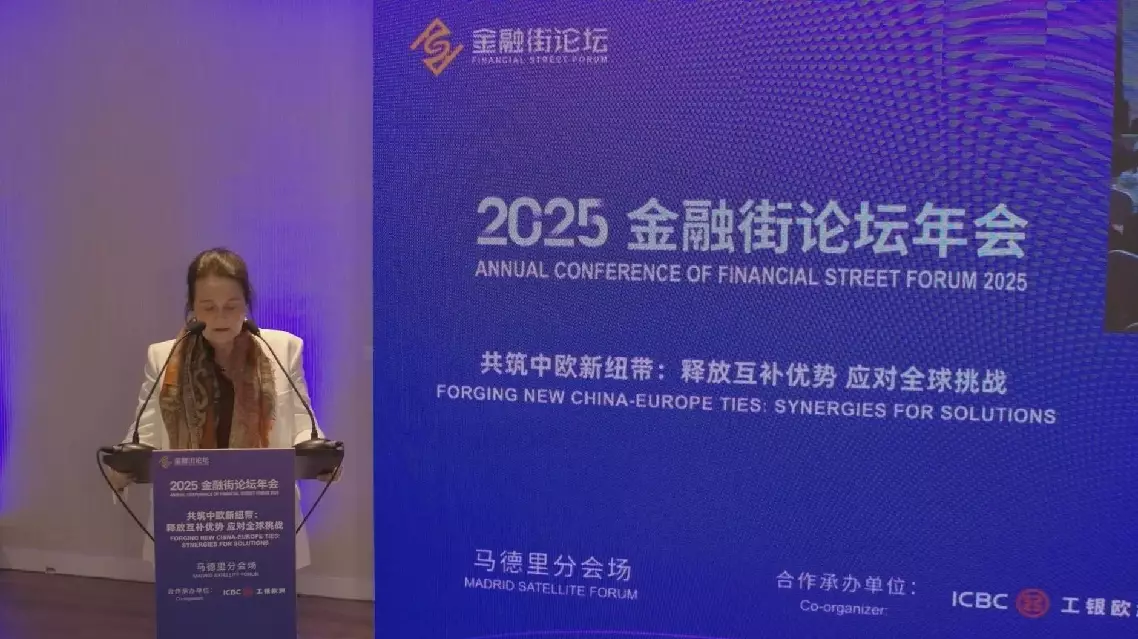
Madrid-China Finance Forum highlights China-Europe cooperation