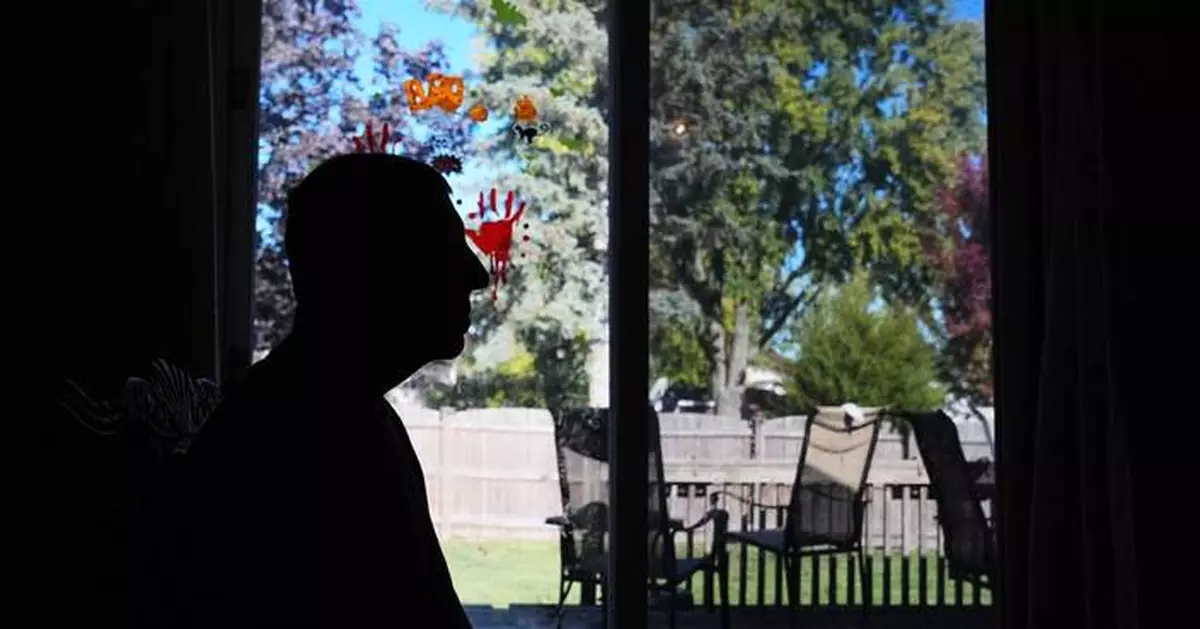
MINOOKA, Ill. (AP) — Bill Swick has a rare degenerative brain disease that inhibits his mobility and speech. Instead of the hassle of traveling an hour to a clinic in downtown Chicago to visit a speech therapist, he has benefited from virtual appointments from the comfort of his home.
But Swick, 53, hasn’t had access to those appointments for the last month.
Click to Gallery

Martha Swick holds papers of study guide as she asked questions to her husband Bill Swick at their home in Minooka, Ill., Friday, Oct. 24, 2025. (AP Photo/Nam Y. Huh)
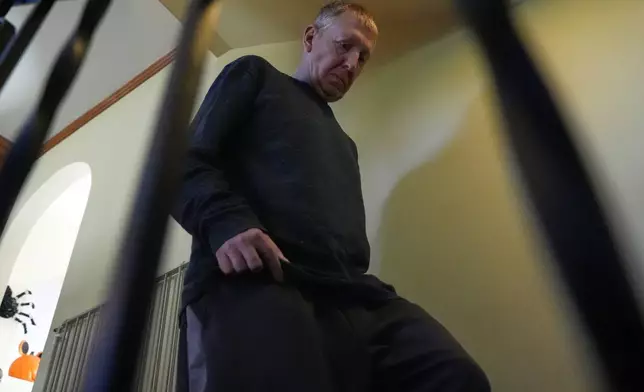
Bill Swick walks down stairs to study with his wife Martha Swick at his home in Minooka, Ill., Friday, Oct. 24, 2025. (AP Photo/Nam Y. Huh)

Martha Swick, left, and her husband Bill Swick look at a photo at their home in Minooka, Ill., Friday, Oct. 24, 2025. (AP Photo/Nam Y. Huh)

Bill Swick, right, studies with his wife Martha Swick at their home in Minooka, Ill., Friday, Oct. 24, 2025. (AP Photo/Nam Y. Huh)

Bill Swick, right, looks around while study with his wife Martha Swick at their home in Minooka, Ill., Friday, Oct. 24, 2025. (AP Photo/Nam Y. Huh)
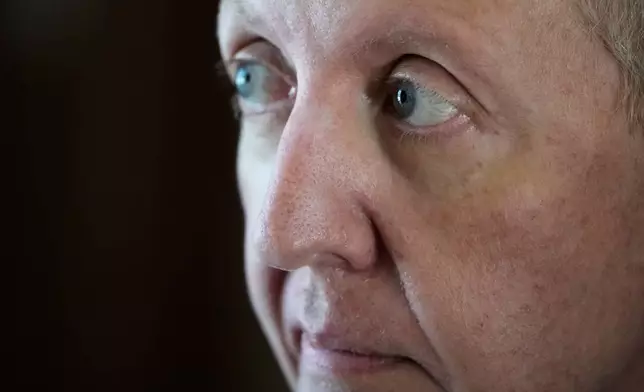
Bill Swick looks at his wife Martha Swick at their home in Minooka, Ill., Friday, Oct. 24, 2025. (AP Photo/Nam Y. Huh)

Bill Swick, bottom hand, points as he studies with his wife Martha Swick at their home in Minooka, Ill., Friday, Oct. 24, 2025. (AP Photo/Nam Y. Huh)

Martha Swick, left, and her husband Bill Swick look at each other at their home in Minooka, Ill., Friday, Oct. 24, 2025. (AP Photo/Nam Y. Huh)
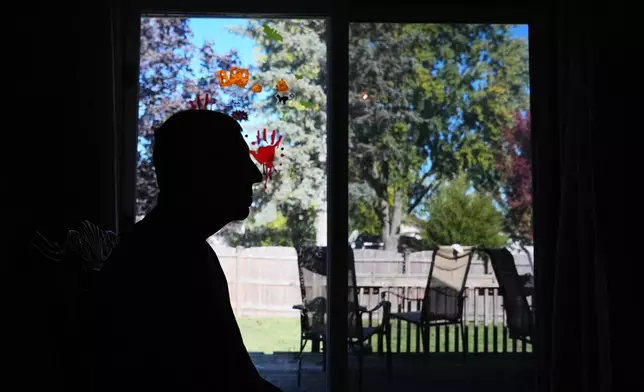
Bill Swick sits on the chair at his home in Minooka, Ill., Friday, Oct. 24, 2025. (AP Photo/Nam Y. Huh)
The federal government shutdown, now in its fifth week, halted funding for the Medicare telehealth program that pays his provider for her services. So, Swick and his wife are practicing old strategies rather than learning new skills to manage his growing difficulties with processing language, connecting words and pacing himself while speaking.
“It’s frustrating because we want to continue with his journey, with his progress,” 45-year-old Martha Swick, a caregiver for her husband since his diagnosis three years ago, said during an interview at their home in Minooka, Illinois. “I try to have all his therapy and everything organized for him, to make his day easier and smoother, and then everything has a hitch, and we have to stop and wait.”
Their experience has become common in recent weeks among the millions of patients with Medicare fee-for-service plans who count on pandemic-era telehealth waivers to attend medical appointments from home.
With Congress unable to agree on a deal to fund the government, the waivers have lapsed, even with support from Republicans and Democrats. As a result, medical providers are deciding whether they can continue offering telehealth services without the guarantee of reimbursement or whether they need to halt virtual visits altogether.
That’s left a patient population of mostly older adults with fewer options to seek specialists or get help when they can’t physically travel far from home.
Swick, whose corticobasal degeneration causes symptoms similar to Parkinson's disease, can’t feed or dress himself anymore and struggles with balance and walking. Add on the logistical nightmare of driving to the city in traffic, and in-person speech therapy appointments aren’t a worthwhile ordeal for him and his wife.
But missing even a few appointments can impede progress for patients with dementia and other degenerative conditions who depend on continuity of care, experts said.
It “feels like you’re taking a step back,” Swick said in the interview.
Before the COVID-19 pandemic, Medicare only paid for virtual medical appointments under narrow circumstances, including in designated rural areas and when patients logged in from eligible sites, like hospitals and clinics.
That changed in 2020, when Trump’s first administration dramatically expanded telehealth coverage in response to the public health emergency. Medicare started reimbursing a wide range of telehealth visits, stripping the geographic requirement, and allowing patients to take calls from their homes.
Congress has routinely extended the telehealth flexibilities and was poised to do so again before their Sept. 30 expiration. But when budget negotiations stalled and the government shut down Oct. 1, the vote never happened, leaving the program temporarily unfunded.
With more than 4 million Medicare fee-for-service beneficiaries using telehealth in the first half of 2025, according to Brown University’s School of Public Health, the pause has had a major impact on an already vulnerable population.
Swick’s speech therapy services are provided by the Chicago-area business Memory and Aphasia Care. Owner Becky Khayum said many of her clients are in different cities and states and sought her therapists out because they specialize in frontal temporal dementias.
“Now suddenly without telehealth services, they do not continue to have the support to participate in those activities that are so important to them,” Khayum said. “The risk is we could see social withdrawal; we could see depression and anxiety increased.”
Virtual visits can also be useful in different areas of medicine. Dr. Faraz Ghoddusi, a family medicine provider in Tigard, Oregon, said he uses telehealth to check in and help his patients manage their conditions, like diabetes and chronic lung disease. He said that in the current Medicare telehealth pause, one of his patients wasn’t having regular check-ins and ended up in the emergency room.
Susan Collins, 73, in Murrieta, California, said Medicare-reimbursed telehealth appointments were a “tremendous relief” to her when she was a full-time caregiver for her late husband, Leo. Before he died last year from progressive supranuclear palsy, a rare brain disorder, she struggled to lift him from his wheelchair in and out of the car for his in-person doctor visits 60 miles from their home.
“He was much safer at home,” Collins said, noting that telehealth was a useful resource when her husband needed a medication or symptom consultation but not a complete physical exam.
The latest guidance from the Centers for Medicare and Medicaid Services does not ban medical providers from providing telehealth services during the lapse – but it stops short of promising they’ll be reimbursed if they do.
In response, providers are deciding whether they can absorb the risk of continuing care without assurance that they’ll be paid for it when the government reopens.
Khayum in Illinois said she had to stop providing telehealth services to Medicare patients because her small business couldn’t handle the volatility of potentially losing out on payments. Ghoddusi, the family medicine provider, said his Oregon practice is honoring telehealth appointments made before Oct. 1 but not scheduling additional ones for Medicare patients until the funding is restored.
Genevieve Richardson, owner of a speech pathology business in Austin, Texas, has stopped providing telehealth services to her Medicare clients who are spread across the country. She has been referring them to outpatient clinics in their areas who can provide stopgap services in person.
Major hospitals are also grappling with whether to provide virtual care to Medicare patients. Dr. Helen Hughes, medical director of the Office of Telemedicine at Johns Hopkins Medicine, said the hospital initially continued the care, but paused scheduling more Medicare telehealth visits as of Oct. 16 as the shutdown continued.
She said the uncertainty surrounding the waivers has been “a total roller coaster.”
The government shutdown is in its fifth week with no clear end on the horizon. Meanwhile, Medicare telehealth flexibilities and a separate Medicare program offering patients hospital-level care at home both remain paused.
Mei Kwong, executive director of the Center for Connected Health Policy, said the simplest solution to renewing the telehealth waivers would be for Congress to vote separately on them.
The hands of federal health care administrators “are kind of tied,” she said. “So, you really do need Congress to act.”
But with lawmakers divided and looking for leverage, hopes for such action are low.
Martha Swick, practicing word exercises with her husband in their home on a recent morning, said if a solution isn’t found soon, “my resource collection is going to run out.”
“I’m just doing what I’m able to at home as a wife and a caregiver,” she said. “But eventually I’m really going to need those appointments to come back.”
Swenson reported from New York.

Martha Swick holds papers of study guide as she asked questions to her husband Bill Swick at their home in Minooka, Ill., Friday, Oct. 24, 2025. (AP Photo/Nam Y. Huh)
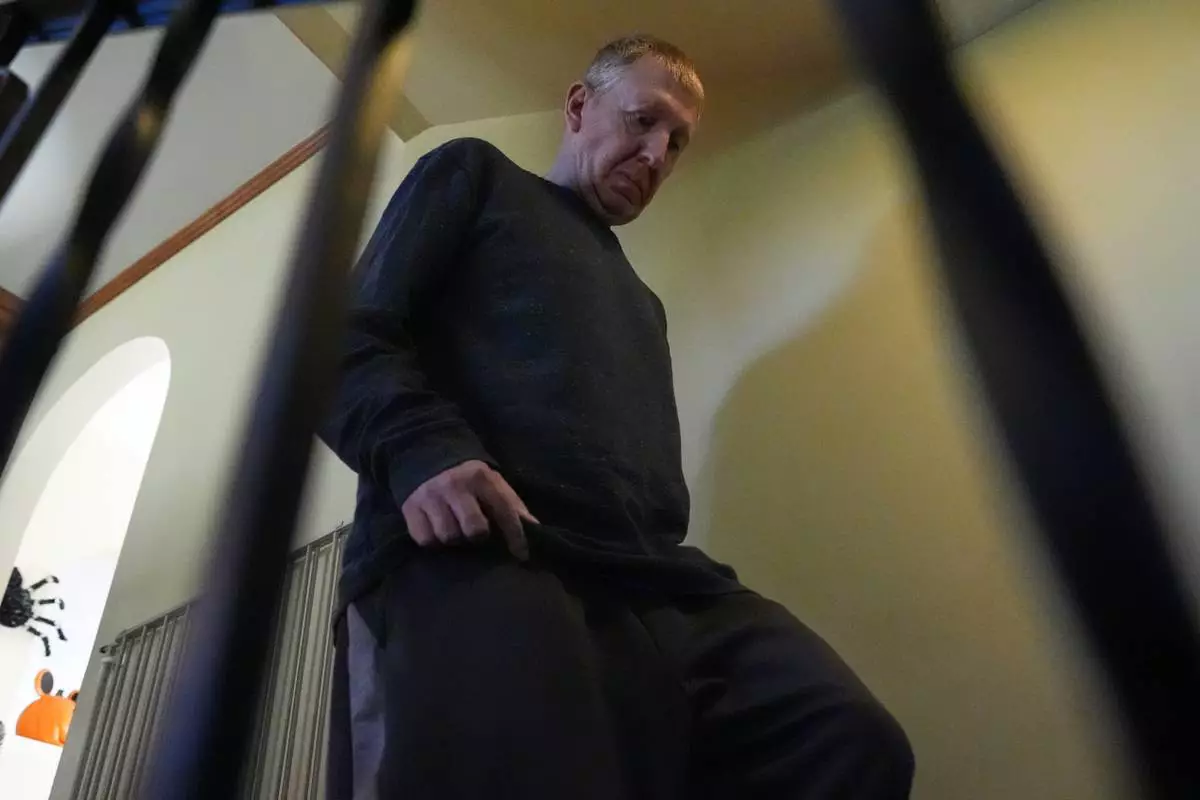
Bill Swick walks down stairs to study with his wife Martha Swick at his home in Minooka, Ill., Friday, Oct. 24, 2025. (AP Photo/Nam Y. Huh)
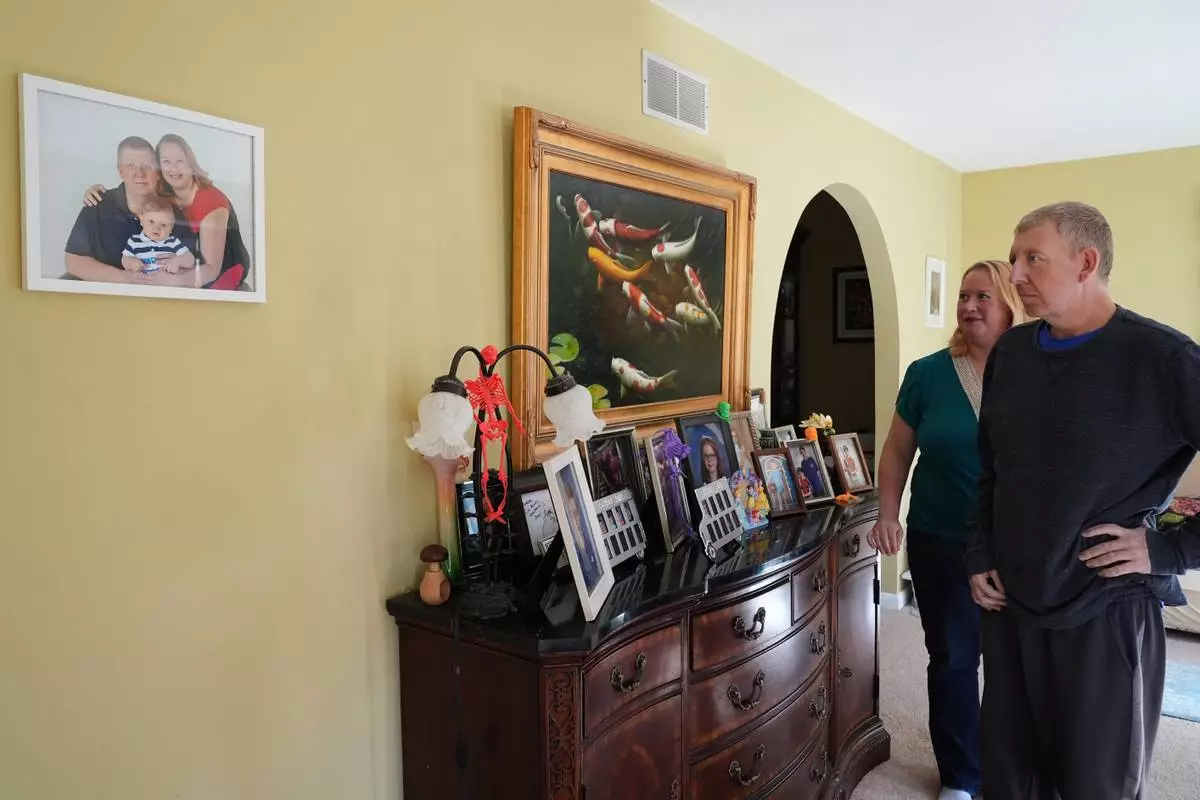
Martha Swick, left, and her husband Bill Swick look at a photo at their home in Minooka, Ill., Friday, Oct. 24, 2025. (AP Photo/Nam Y. Huh)

Bill Swick, right, studies with his wife Martha Swick at their home in Minooka, Ill., Friday, Oct. 24, 2025. (AP Photo/Nam Y. Huh)
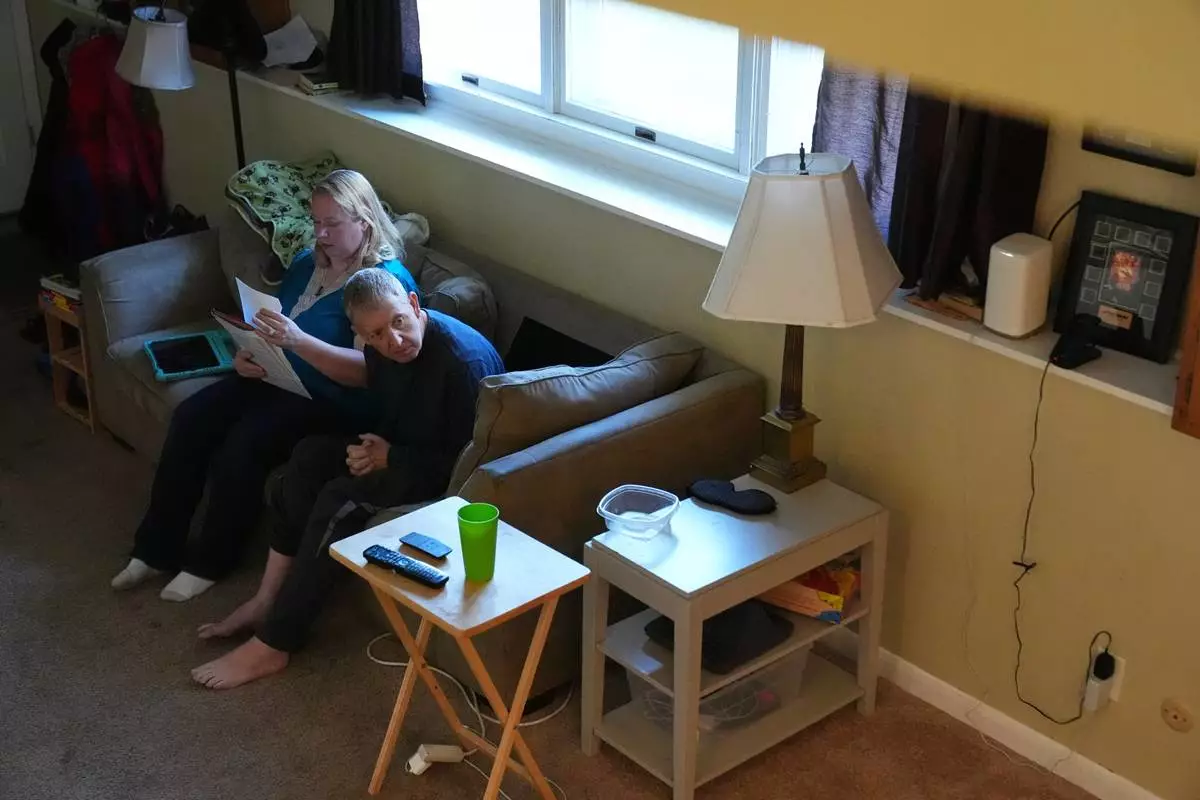
Bill Swick, right, looks around while study with his wife Martha Swick at their home in Minooka, Ill., Friday, Oct. 24, 2025. (AP Photo/Nam Y. Huh)
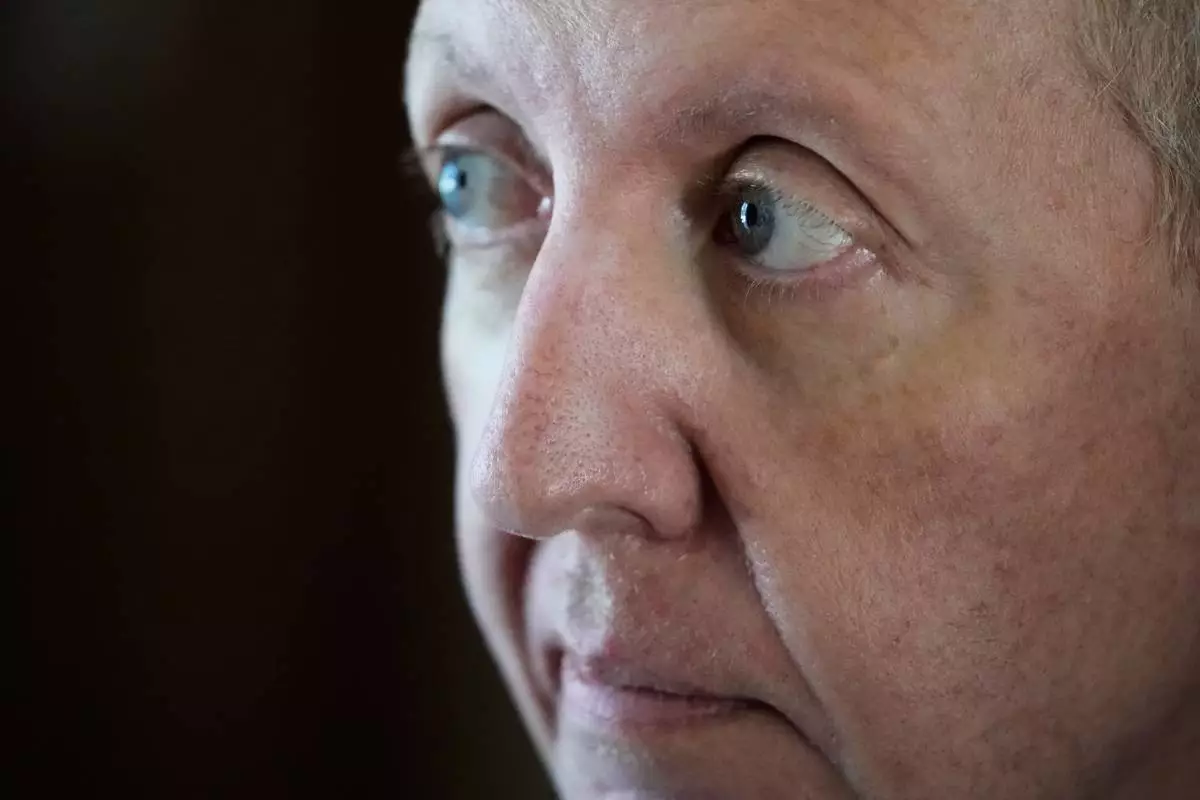
Bill Swick looks at his wife Martha Swick at their home in Minooka, Ill., Friday, Oct. 24, 2025. (AP Photo/Nam Y. Huh)
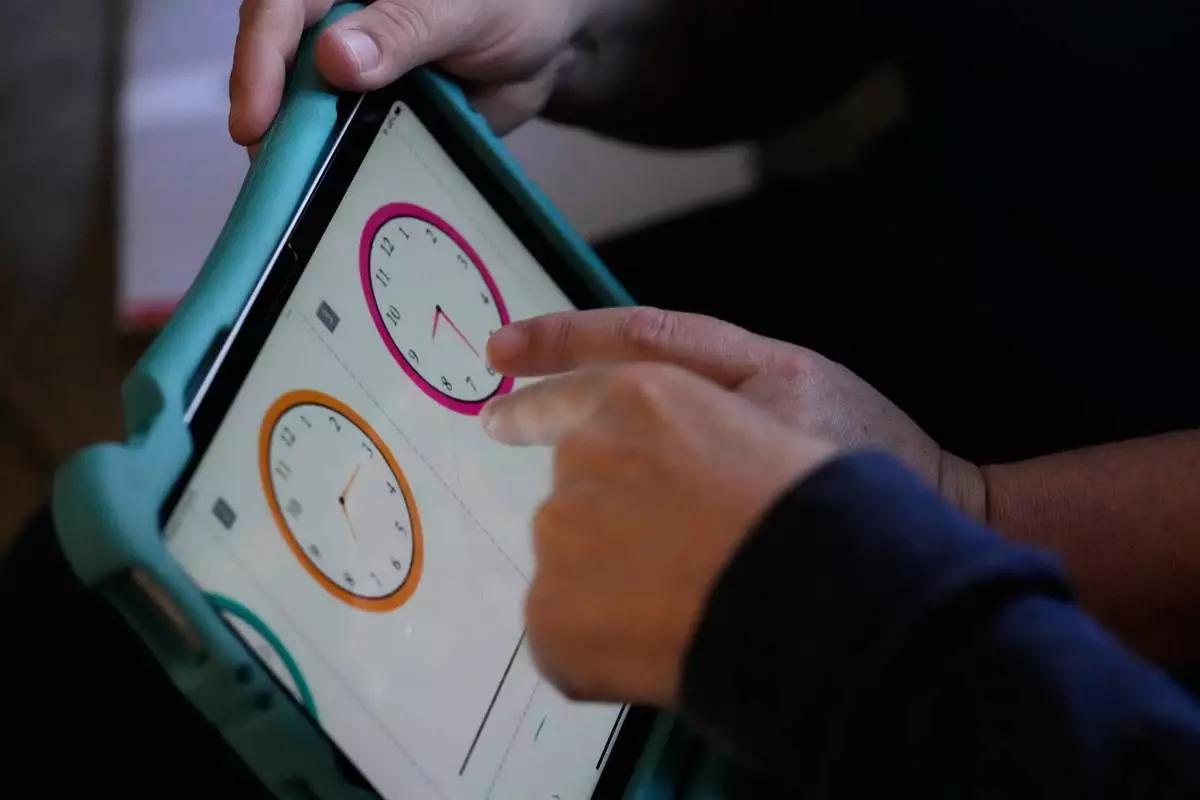
Bill Swick, bottom hand, points as he studies with his wife Martha Swick at their home in Minooka, Ill., Friday, Oct. 24, 2025. (AP Photo/Nam Y. Huh)
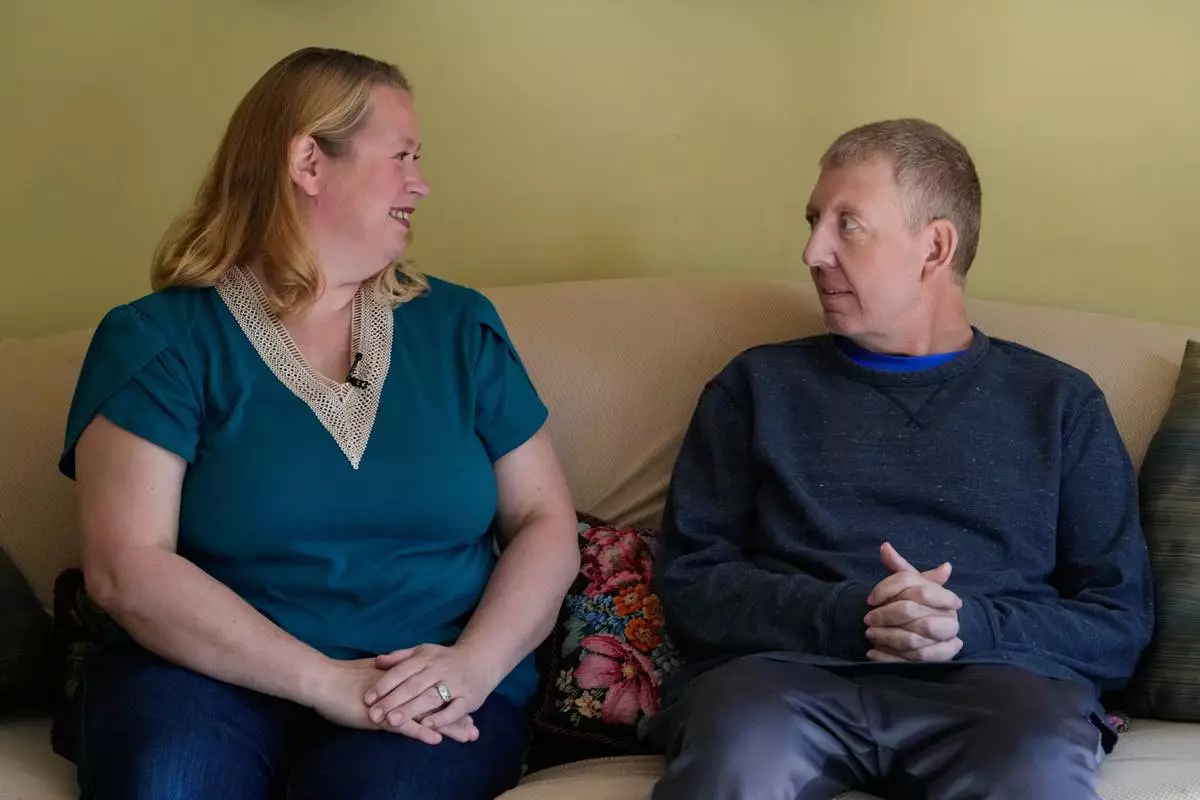
Martha Swick, left, and her husband Bill Swick look at each other at their home in Minooka, Ill., Friday, Oct. 24, 2025. (AP Photo/Nam Y. Huh)
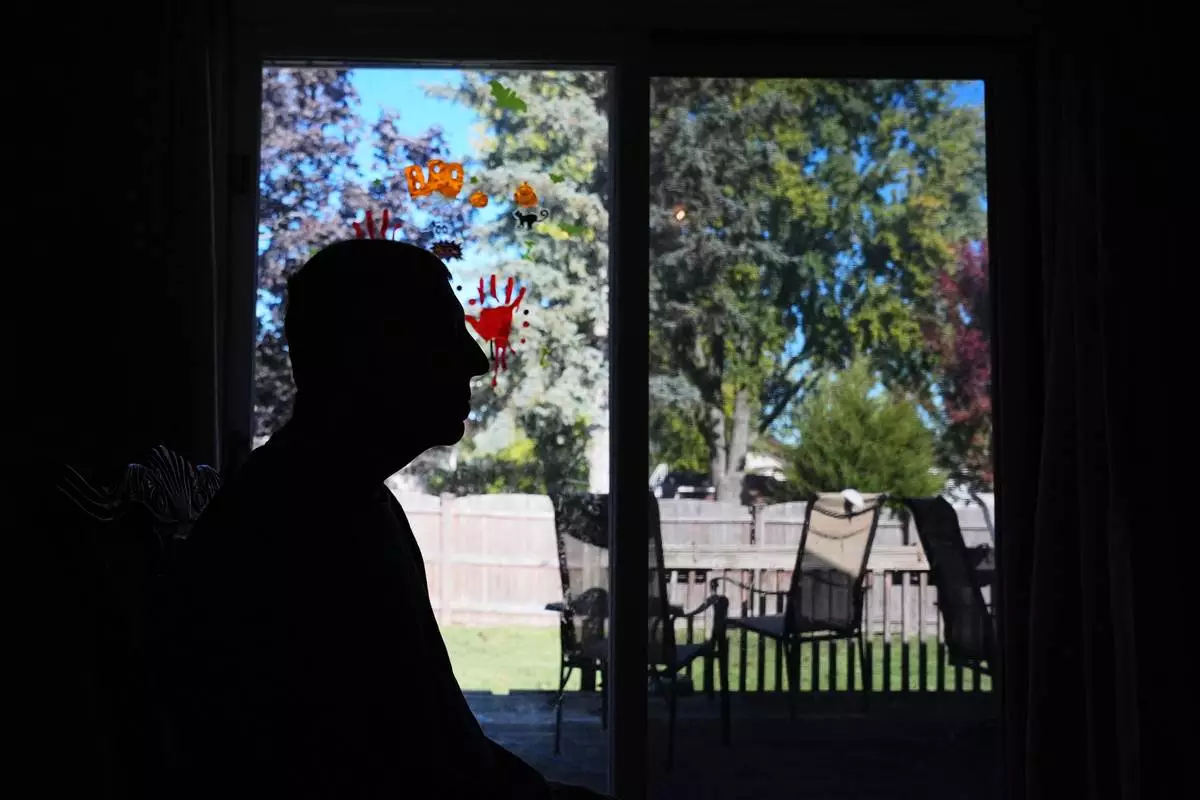
Bill Swick sits on the chair at his home in Minooka, Ill., Friday, Oct. 24, 2025. (AP Photo/Nam Y. Huh)