WORCESTER, Mass. (AP) — Don't be fooled by the fog machine, spooky lights and fake bats: the robotics lab at Worcester Polytechnic Institute lab isn't hosting a Halloween party.
Instead, it’s a testing ground for tiny drones that can be deployed in search and rescue missions even in dark, smoky or stormy conditions.
Click to Gallery
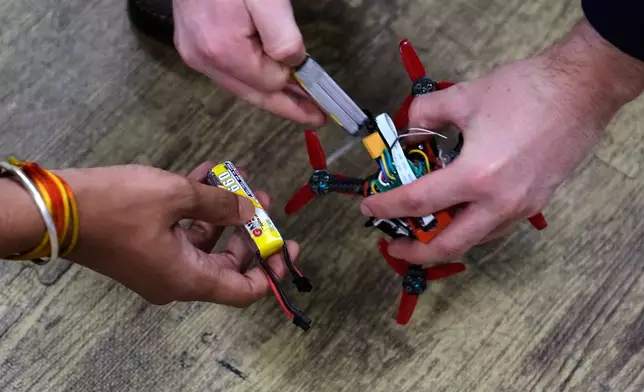
Robotics engineering students change out the battery on a tiny drone at a laboratory at Worcester Polytechnic Institute, Monday, Oct. 20, 2025, in Worcester, Mass. (AP Photo/Charles Krupa)
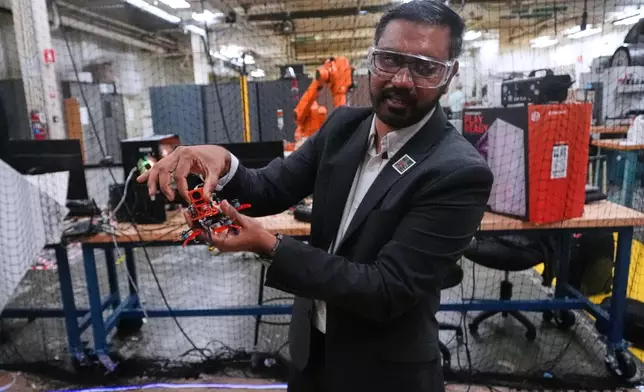
Nitan Sanket, assistant professor of robotics engineering, describes the components on a tiny drone at his lab at Worcester Polytechnic Institute, Monday, Oct. 20, 2025, in Worcester, Mass. (AP Photo/Charles Krupa)
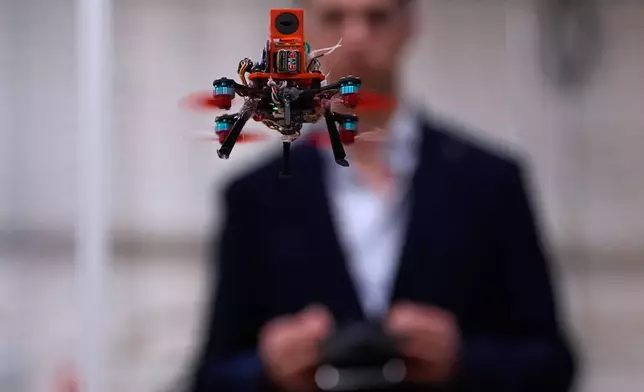
Colin Balfour, a sophomore studying robotics engineering, flies a small drone at a laboratory at the Worcester Polytechnic Institute, Monday, Oct. 20, 2025, in Worcester, Mass. (AP Photo/Charles Krupa)
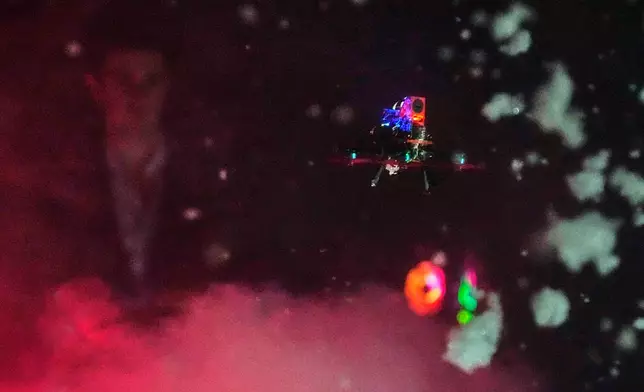
A tiny drone flies through a simulated snowstorm at night at a laboratory at Worcester Polytechnic Institute, Monday, Oct. 20, 2025, in Worcester, Mass. (AP Photo/Charles Krupa)
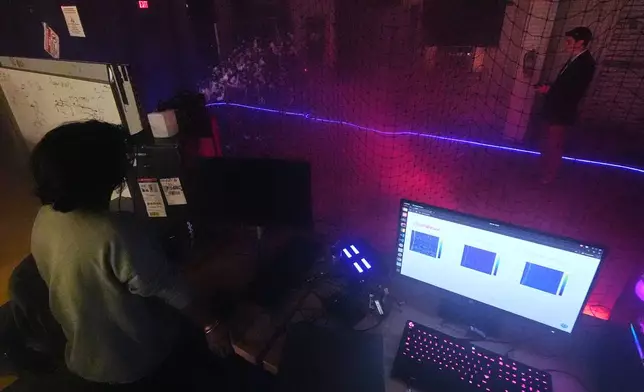
Colin Balfour, a sophomore studying robotics engineering, right, flies a small drone through a simulated snowstorm at night at a laboratory at the Worcester Polytechnic Institute, Monday, Oct. 20, 2025, in Worcester, Mass. (AP Photo/Charles Krupa)
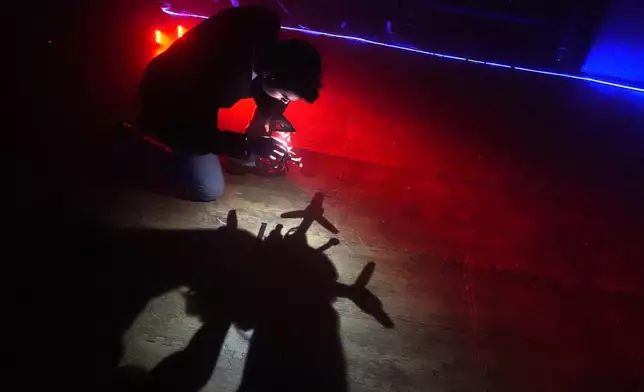
Colin Balfour, a sophomore studying robotics engineering, checks the rotors on a small drone at a laboratory at the Worcester Polytechnic Institute, Monday, Oct. 20, 2025, in Worcester, Mass. (AP Photo/Charles Krupa)
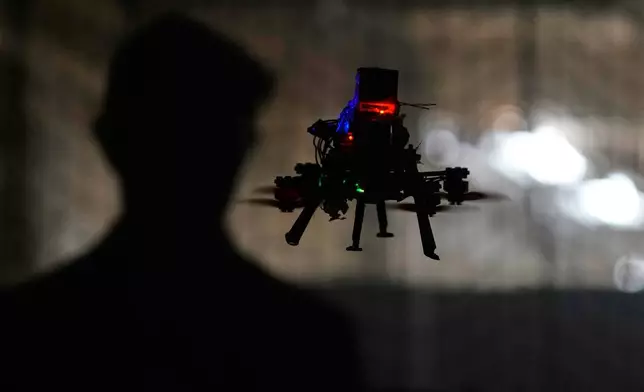
Colin Balfour, a sophomore studying robotics engineering, flies a small drone at a simulated night flight at a laboratory at the Worcester Polytechnic Institute, Monday, Oct. 20, 2025, in Worcester, Mass. (AP Photo/Charles Krupa)
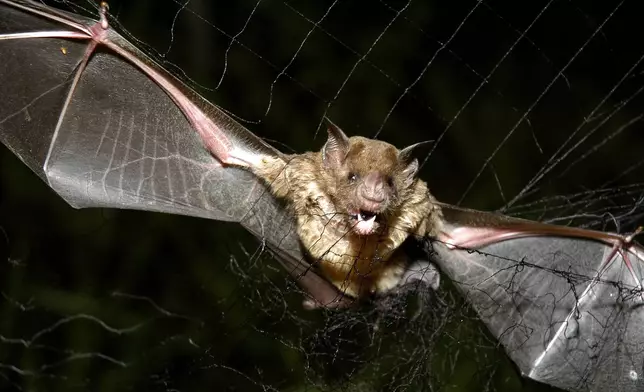
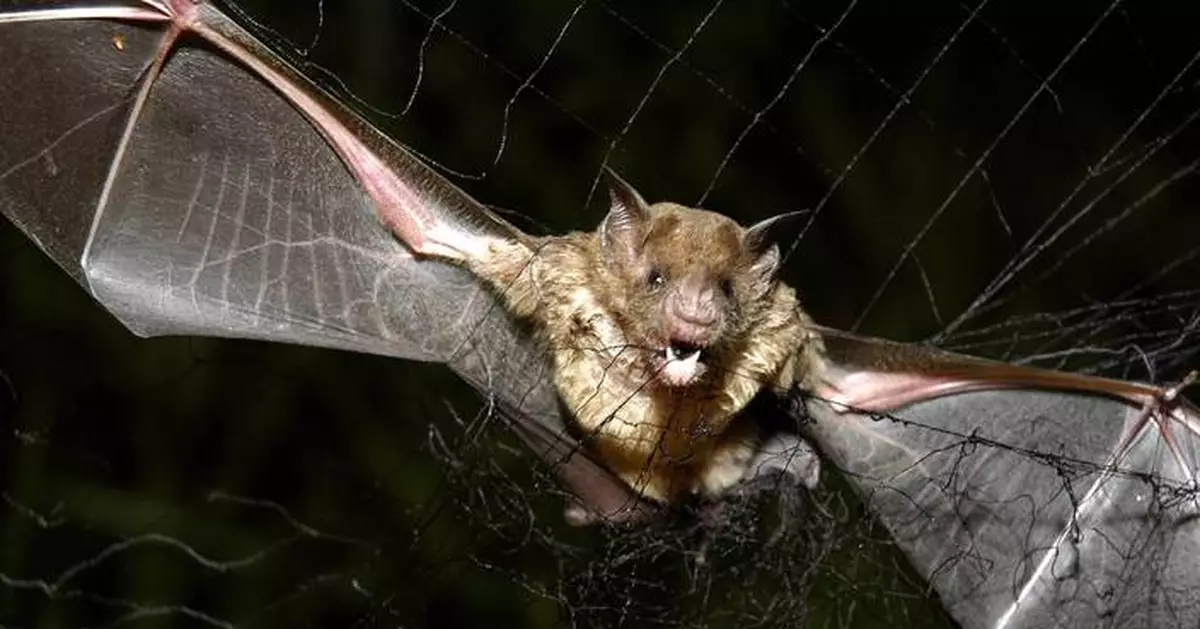
FILE - A vampire bat is caught in a net in Aracy, in the northeast Amazon state of Para, Brazil, on Thursday, Dec. 1, 2005. (AP Photo/Mario Quadros, File)
“We all know that when there’s an earthquake or a tsunami, the first thing that goes down is power lines. A lot of times, it’s at night, and you’re not going to wait until the next morning to go and rescue survivors,” said Nitin Sanket, assistant professor of robotics engineering. “So we started looking at nature. Is there a creature in the world which can actually do this?”
Sanket and his students found their answer in bats and the winged mammal's highly sophisticated ability to echolocate, or navigate via reflected sound. With a National Science Foundation grant, they’re developing small, inexpensive and energy-efficient aerial robots that can be flown where and when current drones can’t operate.
Last month, emergency workers in Pakistan used drones to find people stranded on rooftops by massive floods. In August, a rescue team used a drone to find a California man who got trapped for two days behind a waterfall. And in July, drones helped find a stable route to three mine workers who spent more than 60 hours trapped underground in Canada.
But while drones are becoming more common in search and rescue, Sanket and researchers elsewhere want to move beyond the manually operated individual robots being used today. A key next step is developing aerial robots that can be deployed in swarms and make their own decisions about where to search, said Ryan Williams, an associate professor at Virginia Tech.
“That type of deployment — autonomous drones — that is effectively nil,” he said.
Williams tackled that problem with a recent project that involved programming drones to choose search trajectories in coordination with human searchers. Among other things, his team used historical data from thousands of missing person cases to create a model predicting how someone would behave if lost in the woods.
“And then we used that model to better localize our drones, to search in locations with higher chances of finding someone,” he said.
At WPI, Sanket’s project addresses other limitations of current drones, including their size and perception capabilities.
“Current robots are big, bulky, expensive and cannot work in all sorts of scenarios,” he said.
By contrast, his drone fits in the palm of his hand, is made mostly from inexpensive hobby-grade materials and can operate in the dark. A small ultrasonic sensor, not unlike those used in automatic faucets in public restrooms, mimics bat behavior, sending out a pulse of high-frequency sound and using the echo to detect obstacles in its path.
During a recent demonstration, a student used a remote control to launch the drone in a brightly lit room and then again after turning off all but a faintly glowing red light. As it approached a clear, Plexiglas wall, the drone repeatedly halted and backed away, even with the lights off and with fog and fake snow swirling through the air.
“Currently, search and rescue robots are mainly operational in broad daylight,” Sanket said. “The problem is that search and rescues are dull, dangerous and dirty jobs that happen a lot of times in darkness.”
But development didn’t go completely smoothly. The researchers realized that the noise of the bat robot’s propellers interfered with the ultrasound, requiring 3D printed shells to minimize the interference. They also used artificial intelligence to teach the drone how to filter and interpret sound signals.
Still, there’s a long way to go to match bats, which can contract and compress their muscles to listen only to certain echoes and can detect something as small as a human hair from several meters away.
“Bats are amazing,” Sanket said. “We are nowhere close to what nature has achieved. But the goal is that one day in the future, we will be there and these will be useful for deployment in the wild.”
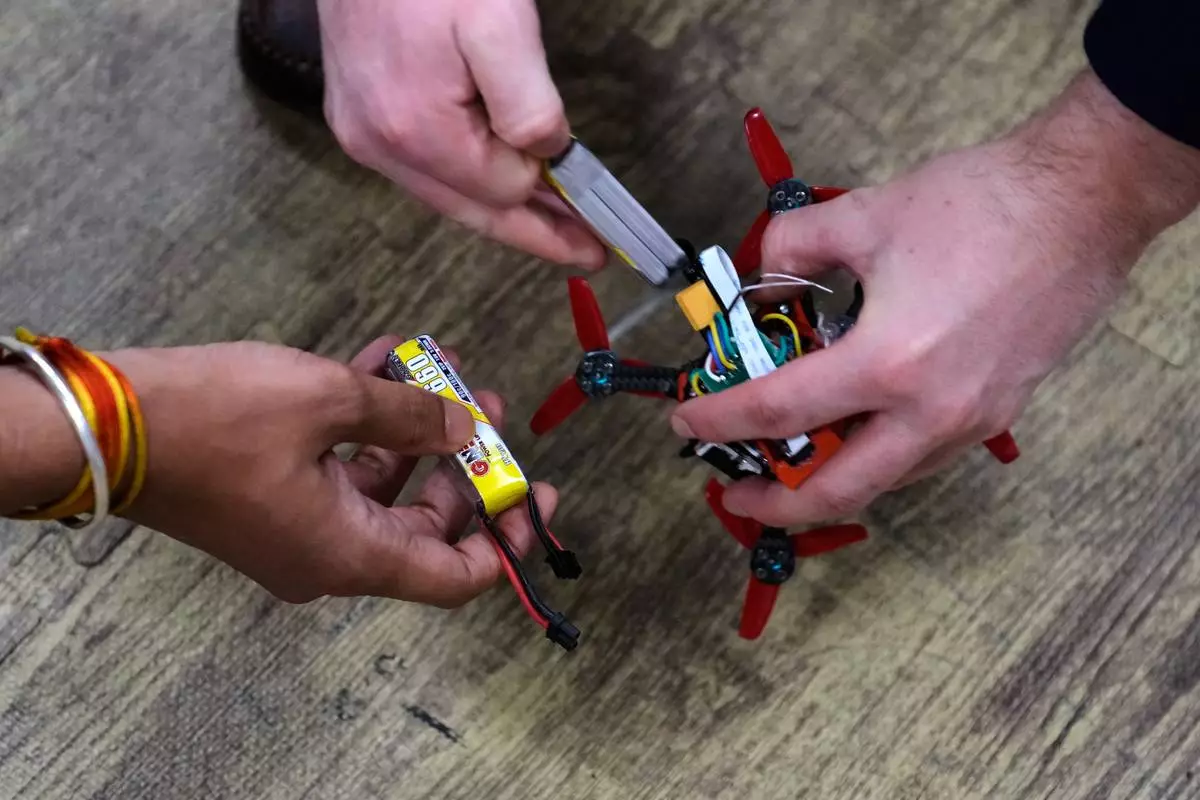
Robotics engineering students change out the battery on a tiny drone at a laboratory at Worcester Polytechnic Institute, Monday, Oct. 20, 2025, in Worcester, Mass. (AP Photo/Charles Krupa)
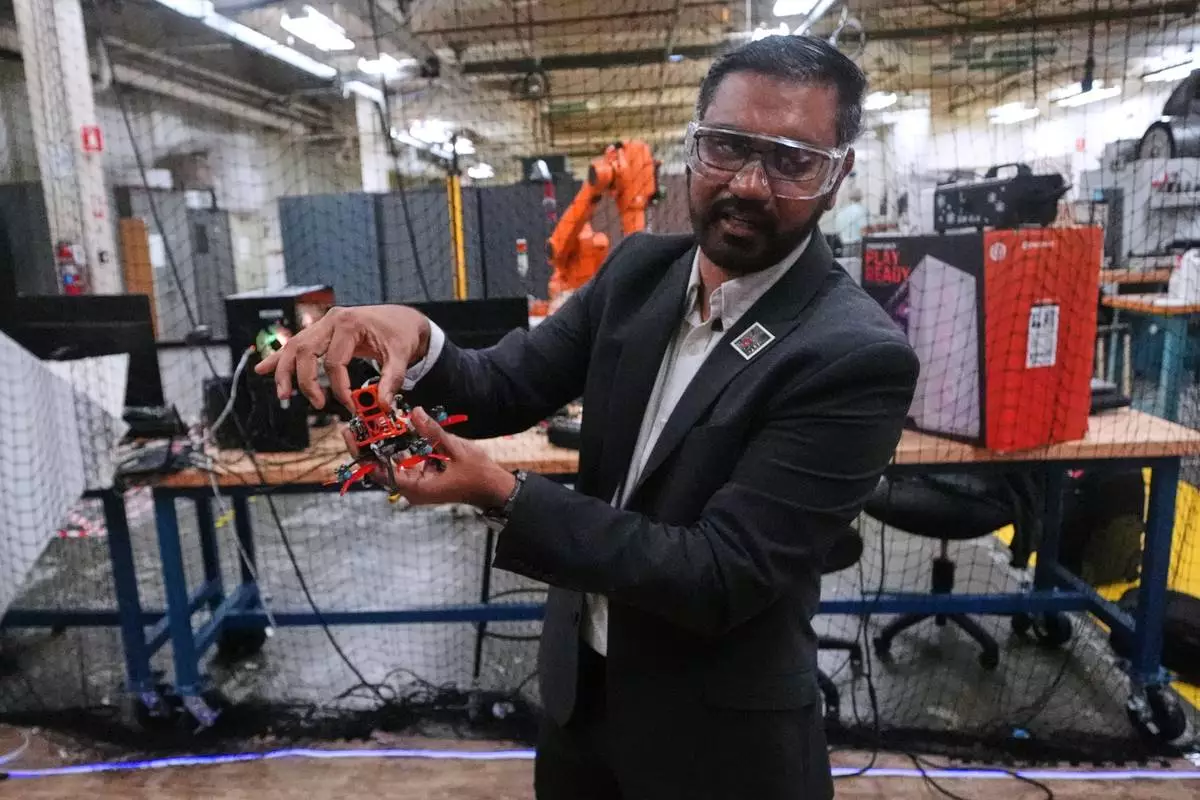
Nitan Sanket, assistant professor of robotics engineering, describes the components on a tiny drone at his lab at Worcester Polytechnic Institute, Monday, Oct. 20, 2025, in Worcester, Mass. (AP Photo/Charles Krupa)
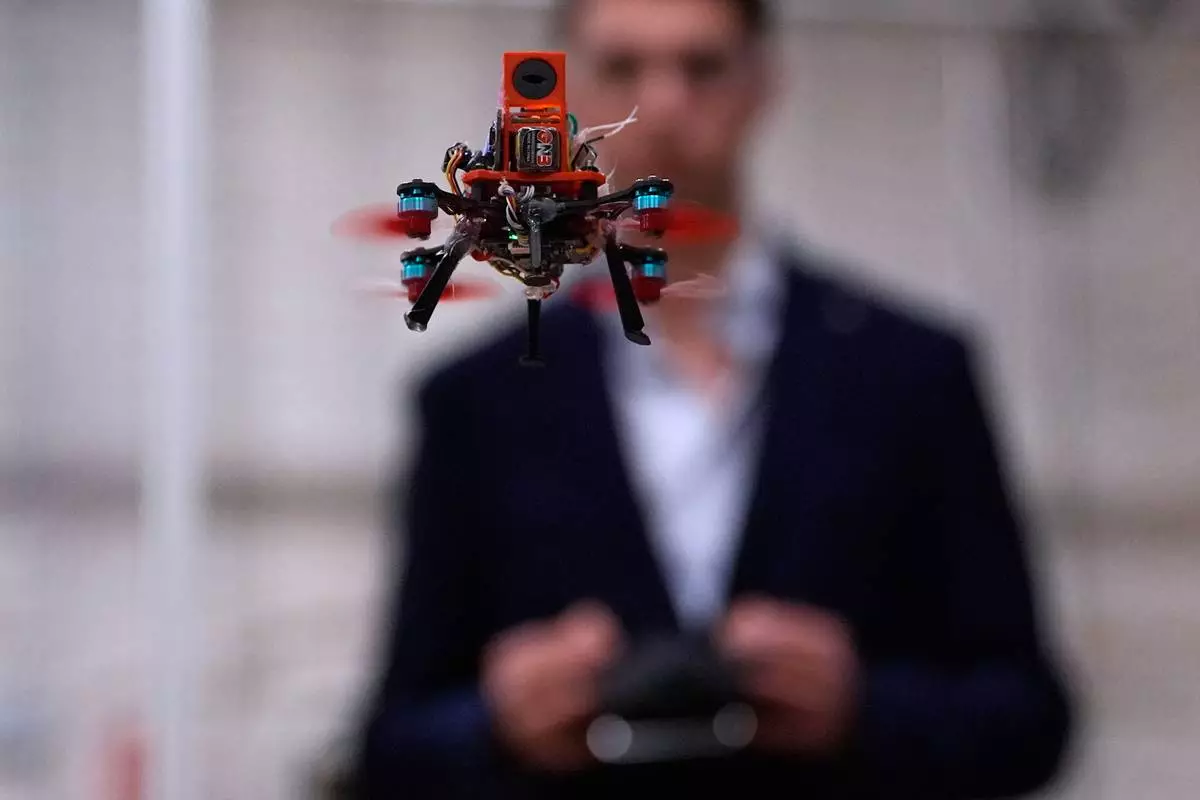
Colin Balfour, a sophomore studying robotics engineering, flies a small drone at a laboratory at the Worcester Polytechnic Institute, Monday, Oct. 20, 2025, in Worcester, Mass. (AP Photo/Charles Krupa)
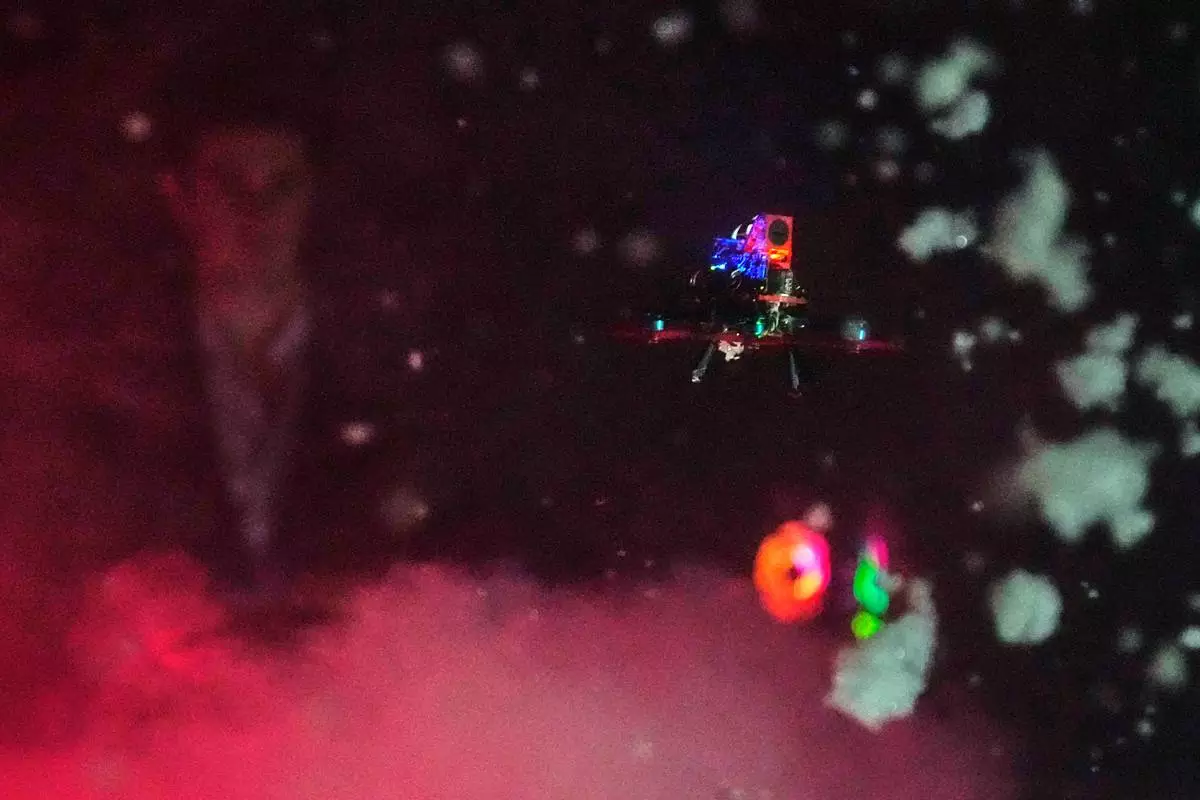
A tiny drone flies through a simulated snowstorm at night at a laboratory at Worcester Polytechnic Institute, Monday, Oct. 20, 2025, in Worcester, Mass. (AP Photo/Charles Krupa)
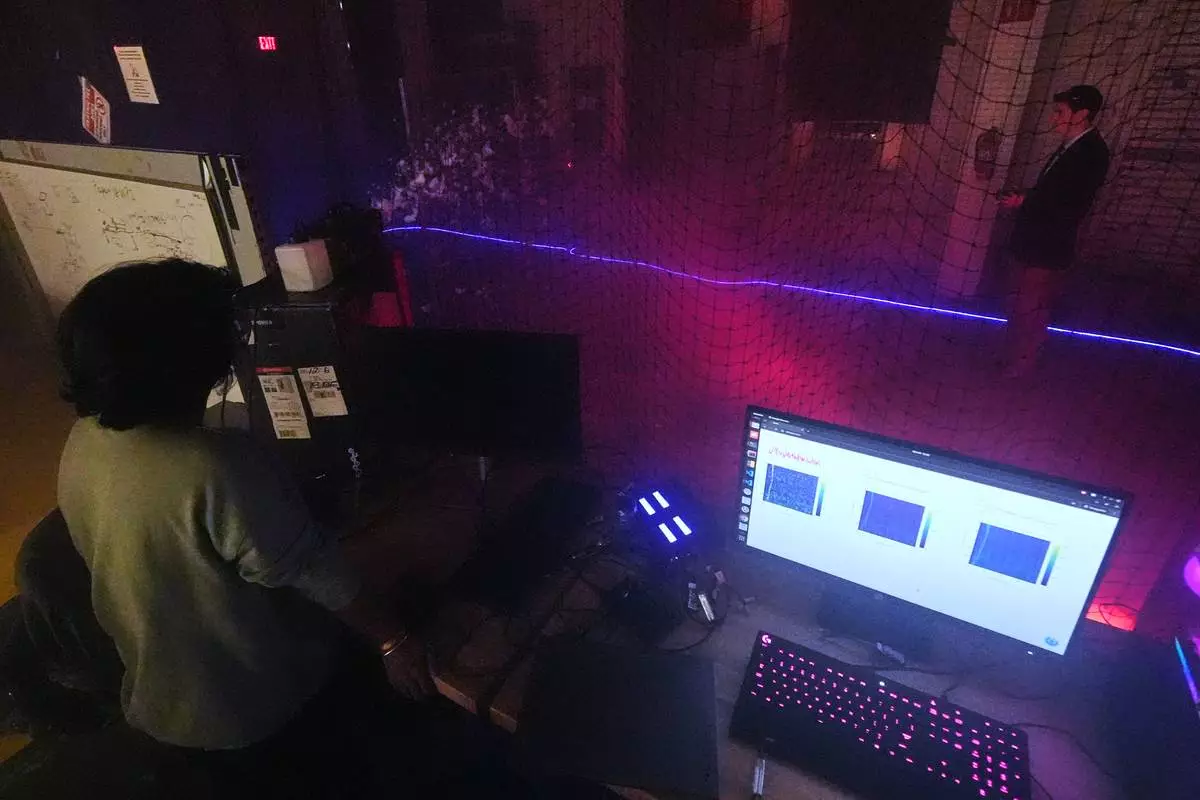
Colin Balfour, a sophomore studying robotics engineering, right, flies a small drone through a simulated snowstorm at night at a laboratory at the Worcester Polytechnic Institute, Monday, Oct. 20, 2025, in Worcester, Mass. (AP Photo/Charles Krupa)
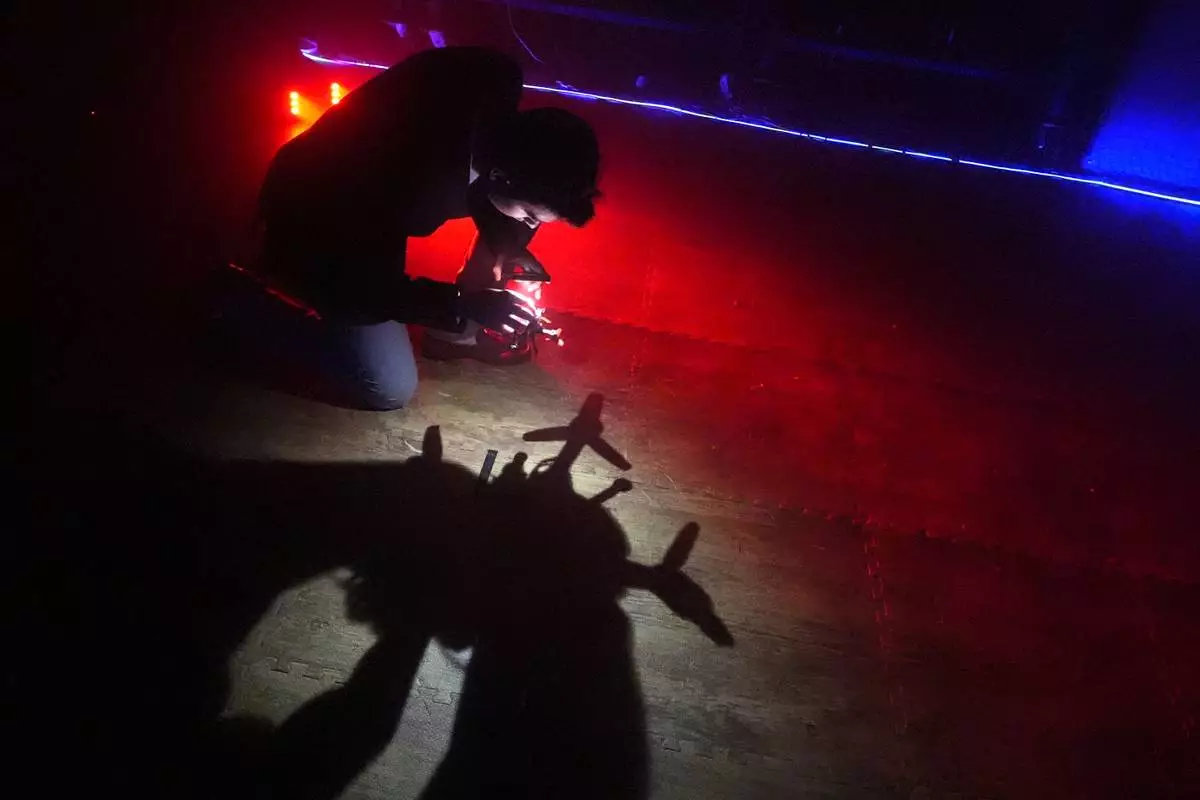
Colin Balfour, a sophomore studying robotics engineering, checks the rotors on a small drone at a laboratory at the Worcester Polytechnic Institute, Monday, Oct. 20, 2025, in Worcester, Mass. (AP Photo/Charles Krupa)
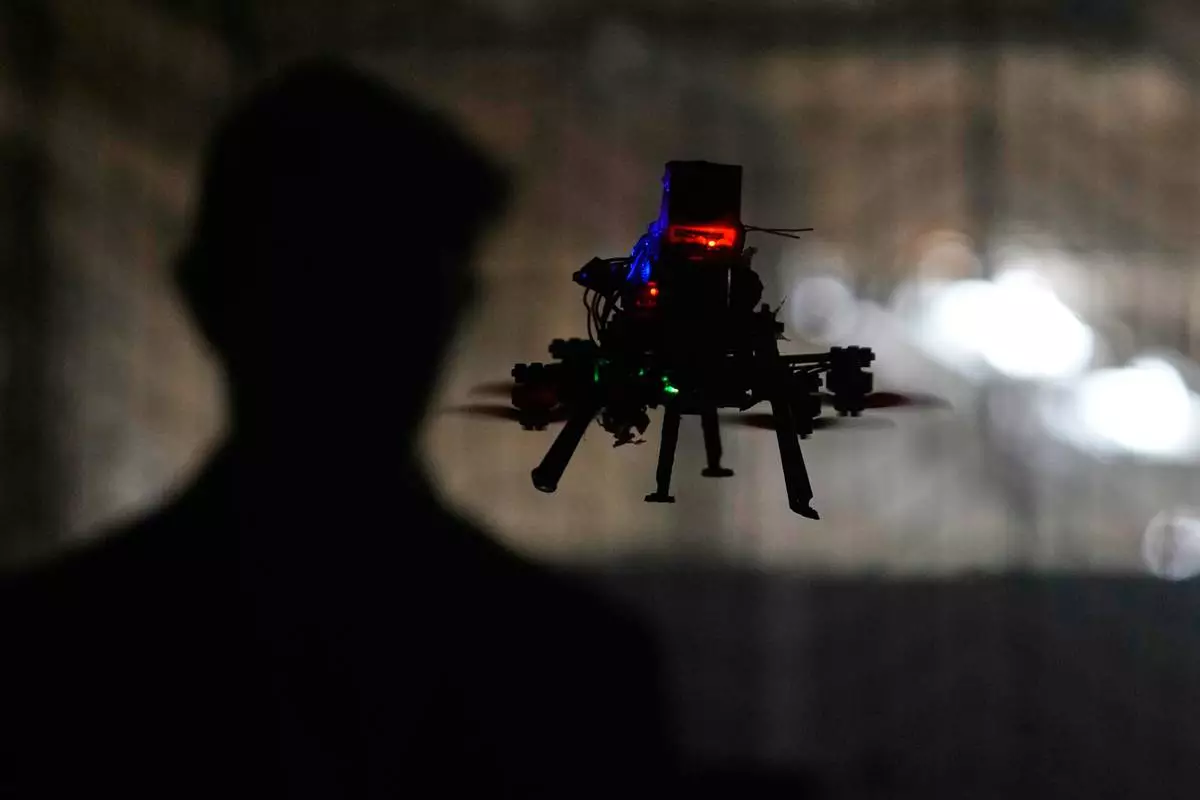
Colin Balfour, a sophomore studying robotics engineering, flies a small drone at a simulated night flight at a laboratory at the Worcester Polytechnic Institute, Monday, Oct. 20, 2025, in Worcester, Mass. (AP Photo/Charles Krupa)
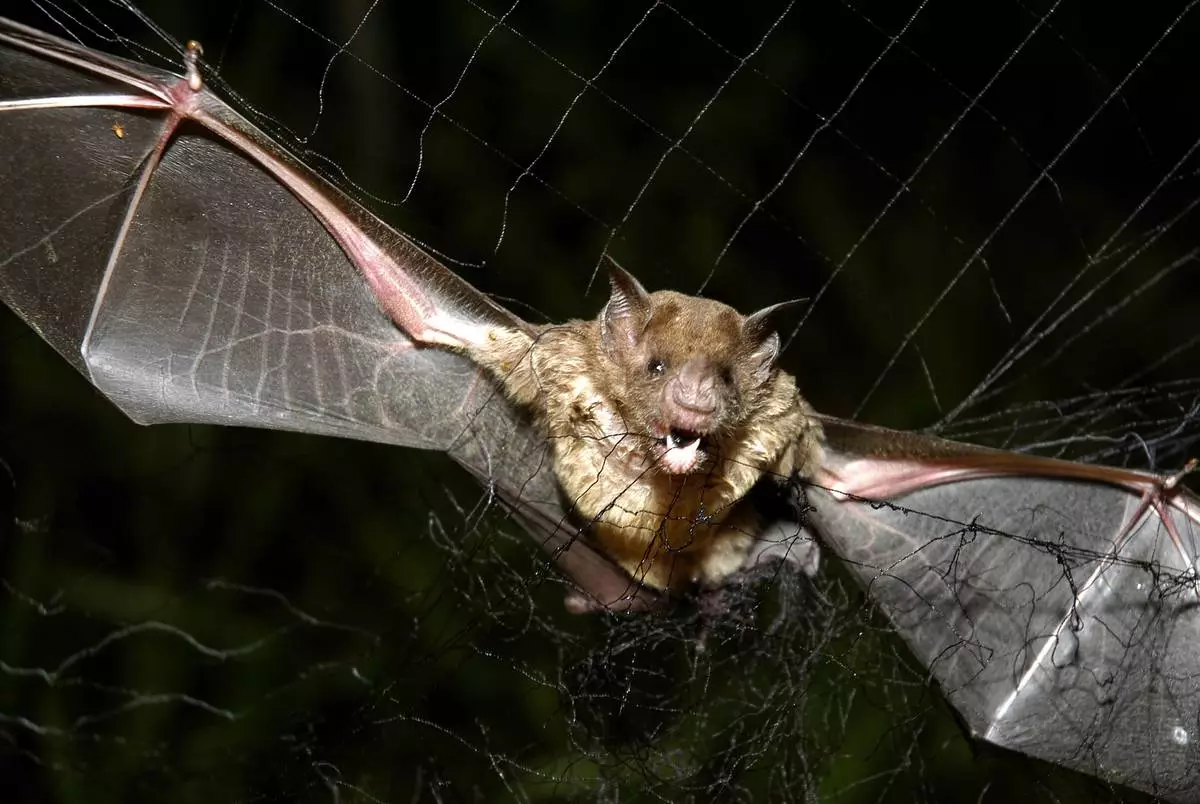
FILE - A vampire bat is caught in a net in Aracy, in the northeast Amazon state of Para, Brazil, on Thursday, Dec. 1, 2005. (AP Photo/Mario Quadros, File)