His right arm strapped tight to protect a damaged shoulder, Edin Džeko raised his left hand holding his phone to film Bosnia-Herzegovina’s late-night team celebrations after beating Italy and qualifying for the World Cup.
The 40-year-old talismanic striker smiled as he led teammates singing in the bar-room party while they wore white t-shirts with the 2026 World Cup logo.
Click to Gallery
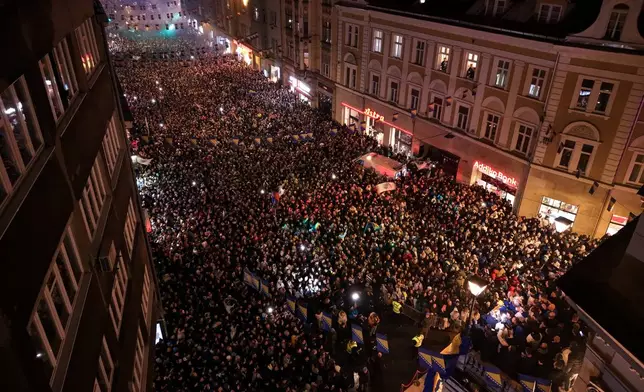
An aerial view shows fans celebrating after the Bosnian national team qualified for the World Cup by winning a penalty shootout against Italy, in Sarajevo, Bosnia, Wednesday, April 1, 2026. (AP Photo/Armin Durgut)
Bosnia's coach Sergej Barbarez is chaired aloft as he celebrates after winning a penalty shootout during the World Cup qualifying playoff final soccer match between Bosnia and Italy in Zenica, Bosnia, Tuesday, March 31, 2026. (AP Photo/Armin Durgut)
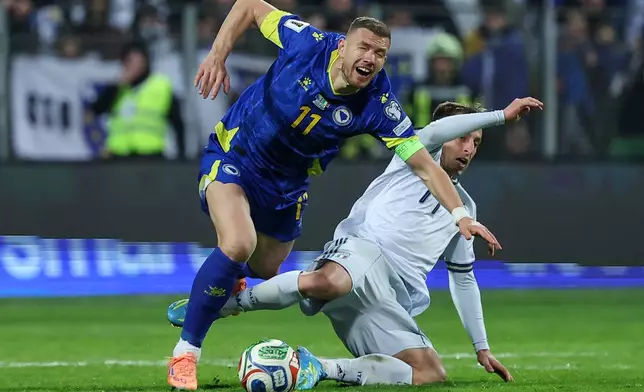
Bosnia's Edin Dzeko, left, is challenged by Italy's Davide Frattesi during the World Cup qualifying playoff final soccer match between Bosnia and Italy in Zenica, Bosnia, Tuesday, March 31, 2026. (AP Photo/Armin Durgut)
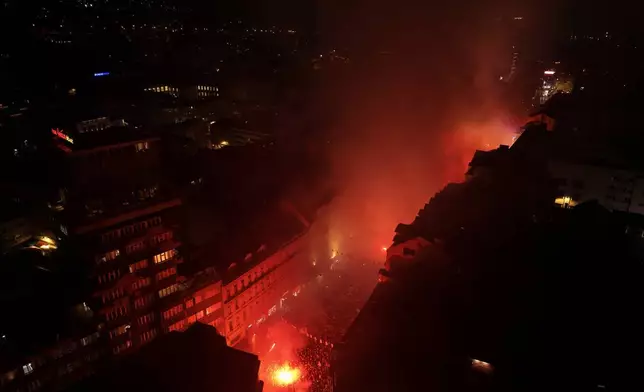
An aerial view shows smoke rising above Sarajevo as soccer fans light flares to welcome the Bosnian national team after qualifying for the World Cup by winning a penalty shootout against Italy, in Sarajevo, Bosnia, Wednesday, April 1, 2026. (AP Photo/Armin Durgut)
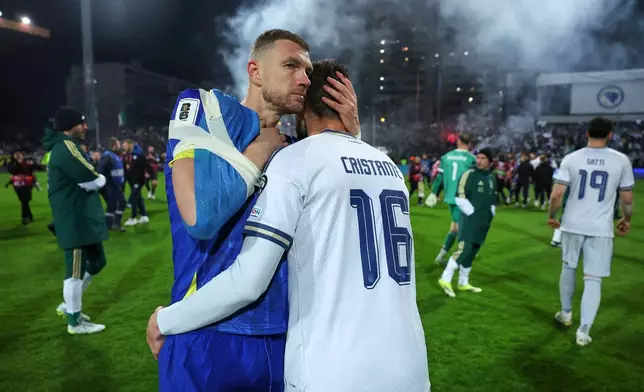
Bosnia's Edin Dzeko, left, greets Italy's Bryan Cristante after a penalty shootout during the World Cup qualifying playoff final soccer match between Bosnia and Italy in Zenica, Bosnia, Tuesday, March 31, 2026. (AP Photo/Armin Durgut)
Džeko’s goals and inspiration have helped take Bosnia to just its second World Cup as an independent soccer nation since the former Yugoslavia broke up in regional wars during his childhood.
Now the player who has so often carried the team on his shoulders faces a race against time to get his shoulder healed before the tournament starts in 10 weeks.
“I hope that it is not a great injury to Edin Džeko and that he will be able to be with us at the World Cup,” Bosnia coach Sergej Barbarez said, “because he does not have much time.”
Džeko was injured right at the end of the 1-1 draw against Italy and couldn't take part in the ensuing penalty shootout, but the fact that he was still on the field through all of extra time was a sign of his leadership. With the very last kick of the game Džeko was advancing with the ball into Italy’s half when taken down by the hacking challenge of Davide Frattesi.
Džeko stayed on the turf getting treatment for his injured shoulder as the final whistle blew and the teams started preparing for the penalty shootout.
Džeko’s six goals in the qualifying campaign, including an 86th-minute equalizer at Wales in the playoffs semifinal last Thursday, had taken Bosnia to the playoff final. And his strong challenge at a cross to the far post helped tee up Haris Tabaković to cancel 10-man Italy’s lead in the 79th on Tuesday.
Then his younger teammates had to pick up the baton and beat Italy’s storied goalkeeper Gianluigi Donnarumma in the shootout.
Bosnia went 4-for-4, while two Italians faltered. The team's final two kicks were scored by Wisconsin-born Esmir Bajraktarević — who played one game for the United States two years ago before FIFA approved his switch to Bosnia — and teenager Kerim Alajbegović.
The combined age of Bajraktarević and Alajbegović is 39, one year less than Džeko.
The 18-year-old Alajbegović was not even born when Džeko made his international debut in July 2007 and began a remarkable run of scoring in 20 straight calendar years for his country.
Džeko watched on his with shoulder strapped when Bajraktarević’s decisive spot-kick sneaked underneath Donnarumma's hands to spark wild celebrations in the loud and intimate Bilino Polje Stadium in Zenica.
After nine seasons playing in Italy, Džeko spent some time commiserating with the losing players, including former teammates at Inter Milan and Roma.
Then he went up into the seats of the main grandstand to meet family and friends as emotion swept the nation.
“What can I say? We saw everything after that last penalty. Great pride,” Bosnia defender Nikola Katić said. “I’ve never cried after a game, I’m 29 years old, and now the tears have started.”
With or without Džeko, Bosnia should have a great opportunity to advance from its World Cup group, after falling short in 2014 in Brazil.
Bosnia opens against co-host Canada on June 12 in Toronto, then faces Switzerland in Los Angeles and finishes against Qatar in Seattle on June 24.
AP soccer: https://apnews.com/hub/soccer
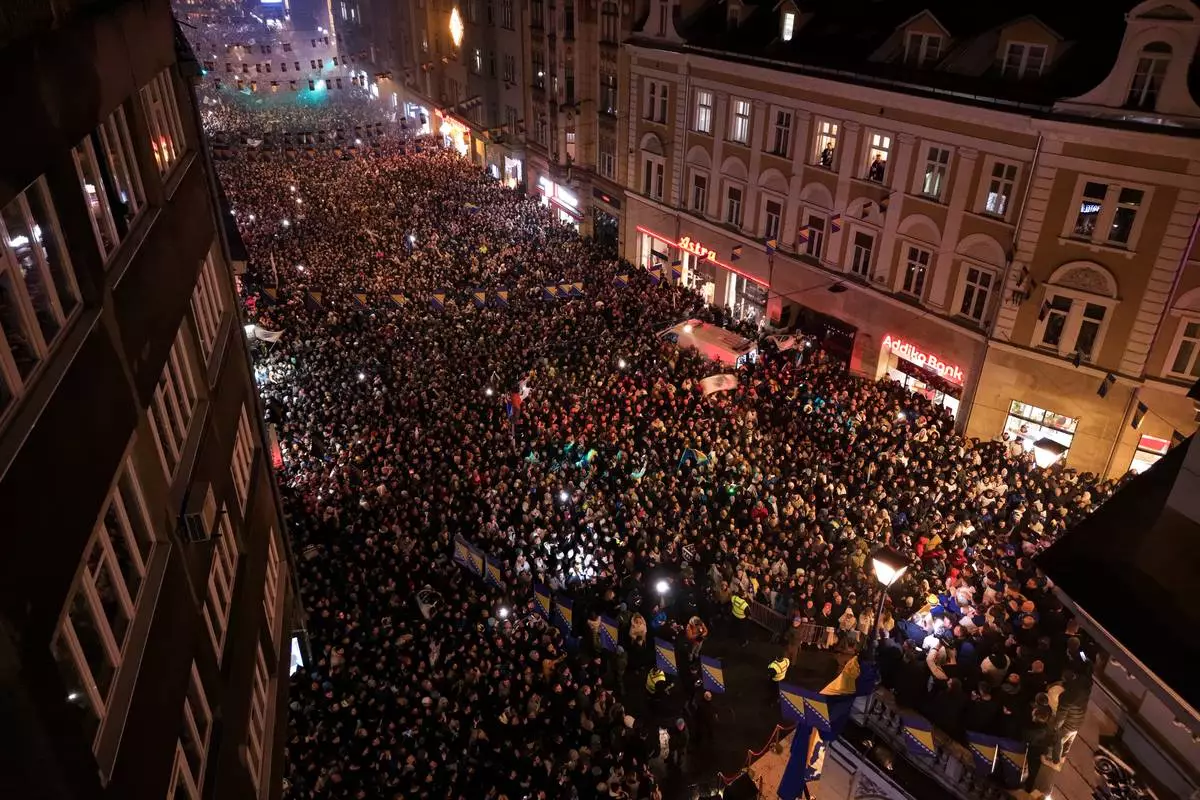
An aerial view shows fans celebrating after the Bosnian national team qualified for the World Cup by winning a penalty shootout against Italy, in Sarajevo, Bosnia, Wednesday, April 1, 2026. (AP Photo/Armin Durgut)

Bosnia's coach Sergej Barbarez is chaired aloft as he celebrates after winning a penalty shootout during the World Cup qualifying playoff final soccer match between Bosnia and Italy in Zenica, Bosnia, Tuesday, March 31, 2026. (AP Photo/Armin Durgut)
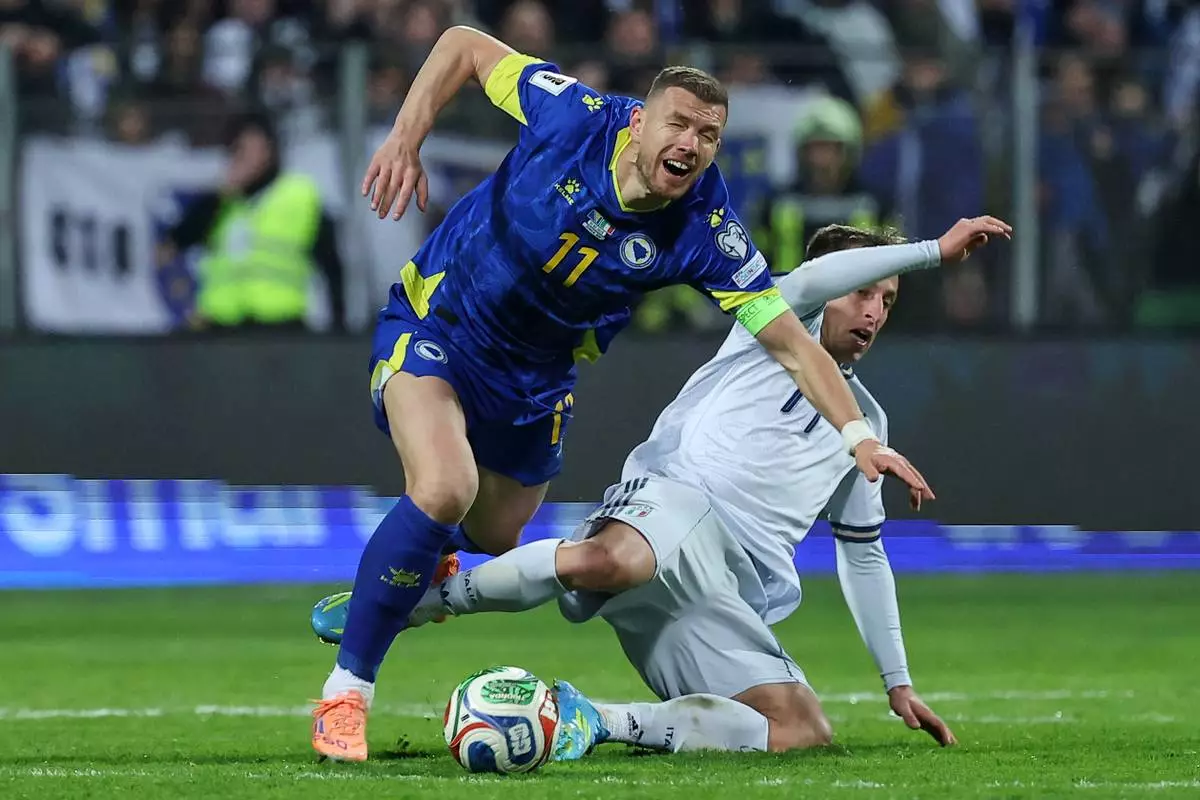
Bosnia's Edin Dzeko, left, is challenged by Italy's Davide Frattesi during the World Cup qualifying playoff final soccer match between Bosnia and Italy in Zenica, Bosnia, Tuesday, March 31, 2026. (AP Photo/Armin Durgut)
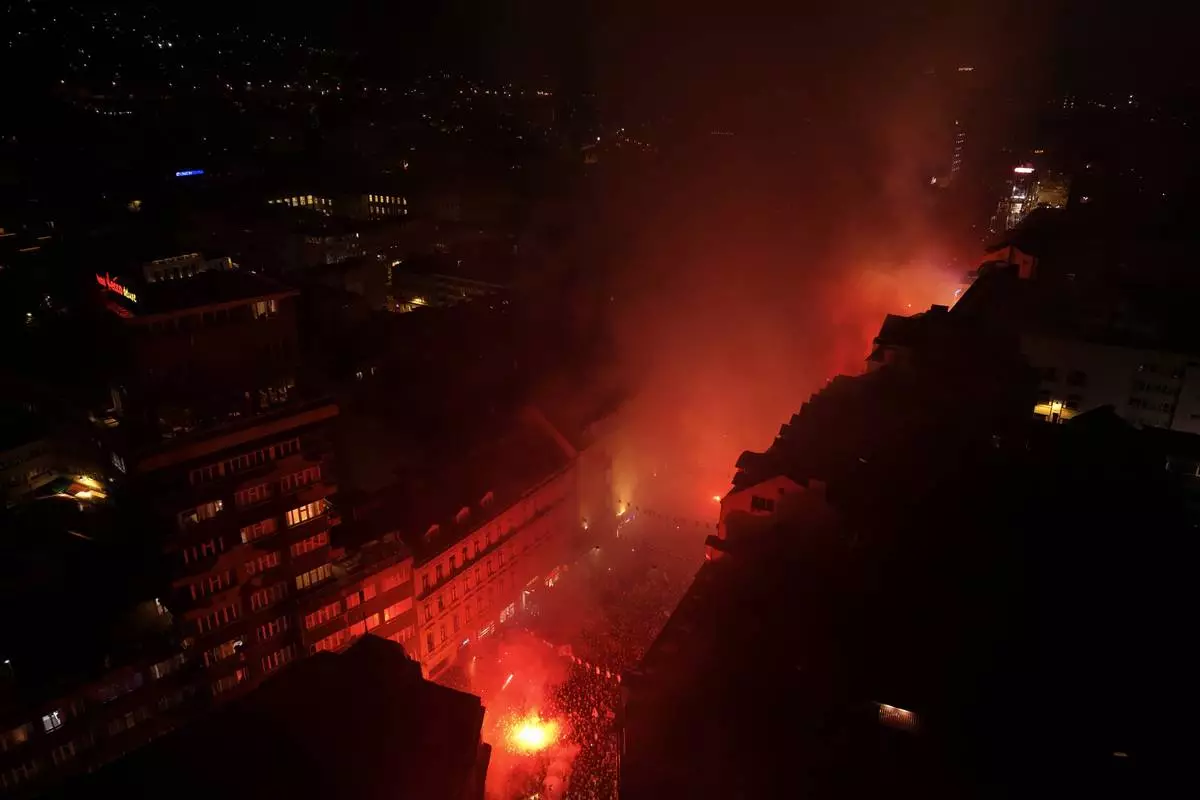
An aerial view shows smoke rising above Sarajevo as soccer fans light flares to welcome the Bosnian national team after qualifying for the World Cup by winning a penalty shootout against Italy, in Sarajevo, Bosnia, Wednesday, April 1, 2026. (AP Photo/Armin Durgut)
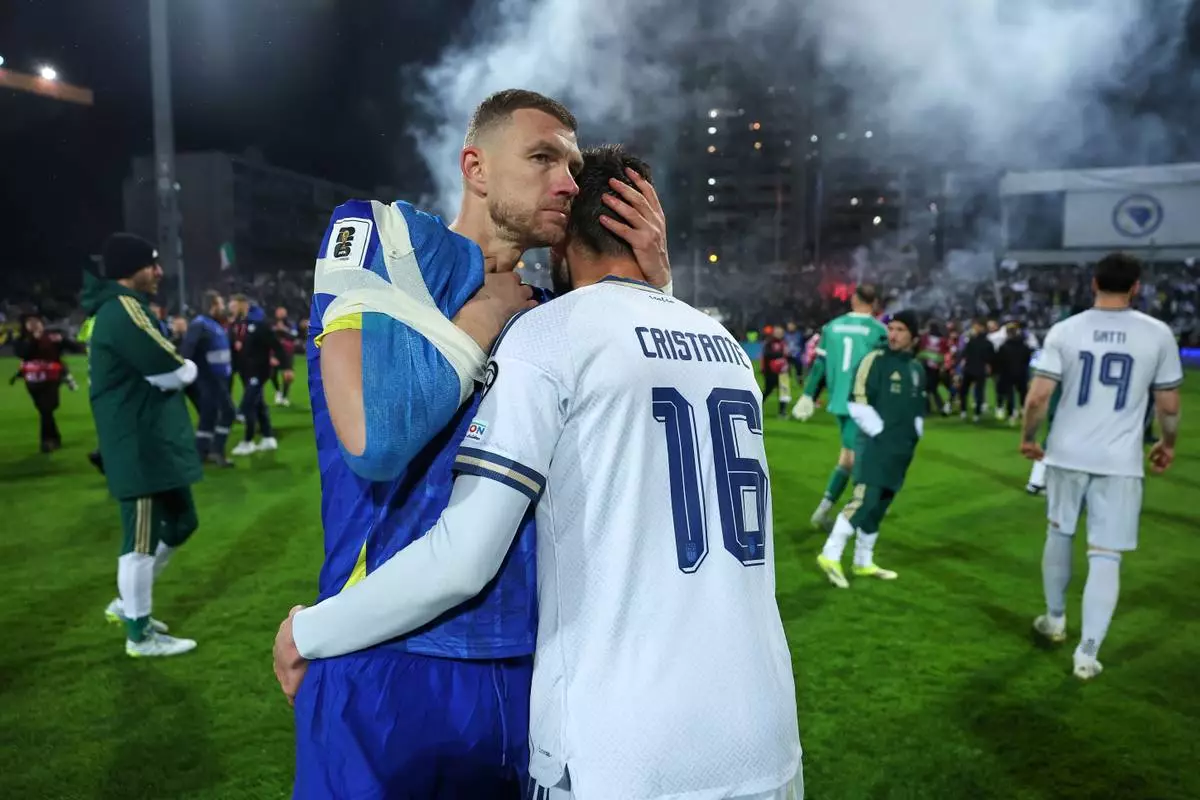
Bosnia's Edin Dzeko, left, greets Italy's Bryan Cristante after a penalty shootout during the World Cup qualifying playoff final soccer match between Bosnia and Italy in Zenica, Bosnia, Tuesday, March 31, 2026. (AP Photo/Armin Durgut)
MREIJEH, Lebanon (AP) — Israel struck Beirut's southern suburbs without warning on Sunday, days after a ceasefire agreement in Washington went into effect and despite a U.S. request not to attack Lebanon 's capital. Lebanon’s state-run national news agency said two people were killed and 11 wounded.
Iran had warned that an attack on Beirut would renew full-scale war across the Mideast, even as Pakistan tries to restart talks between Tehran and Washington. Iran wants a deal to include ending the war in Lebanon.
Iran’s powerful parliament speaker hinted at retaliation. “The (U.S.) naval blockade imposed against the Iranian people, together with Washington’s green light today to the Zionist regime, makes U.S. and Israeli bases and assets in the region legitimate targets,” Mohammad Bagher Qalibaf said on X.
There was no immediate White House comment. A senior U.S. official said “we were not surprised” by the attack in Beirut. The official, who spoke on condition of anonymity due to the sensitivity of the matter, would not say if the U.S. had been given a heads-up on the strike.
The strike hit a residential building, damaging four of its seven floors. An unexploded weapon was found in the rubble.
Israeli Prime Minister Benjamin Netanyahu's office said it was in retaliation for the Iranian-backed Hezbollah militant group firing at northern Israel earlier, and that Israel targeted “command centers” in the sprawling urban neighborhoods.
“We are striking them very hard, and we know that Hezbollah is on the run,” Netanyahu told his Cabinet. Israel's military said “steps were taken to mitigate harm to civilians” including aerial surveillance.
Hezbollah did not immediately claim responsibility for firing at Israel earlier in the day.
Israel on Monday announced it would strike the southern suburbs after Hezbollah claimed attacks in northern Israel, but urgent talks via Washington halted the attacks on the condition that Hezbollah stop targeting Israeli border towns. Lebanon and Israel later renewed a ceasefire agreement in talks that Beirut hopes will end the fighting.
The first such agreement took effect on April 17, days after a 10-minute Israeli bombardment of Beirut killed over 300 people. Israel struck Beirut’s southern suburbs twice following that deal. Israeli strikes over southern Lebanon continue daily, and Israeli forces have seized around a fifth of Lebanon in a ground invasion.
Netanyahu, who faces elections later this year, wants to press ahead with Israel’s offensive until he believes Hezbollah no longer poses a threat.
Hezbollah has scathingly rejected the U.S.-brokered deal and urged Lebanon to end its direct talks with Israel. Instead, it backs Iran’s inclusion of a ceasefire in Lebanon as a condition in negotiations with the U.S.
The fighting threatens efforts to end the Iran war and reopen the Strait of Hormuz, a key transit point for oil and gas and related products like fertilizer. Its closure has jolted the world economy and spiked warnings of hunger in vulnerable regions.
U.S. President Donald Trump, in an interview taped Friday and aired Sunday with NBC's “Meet the Press,” said that “I’d like to see Lebanon have a better life. I’d like to see a more surgical attack on Hezbollah. I think it should be more surgical.”
Trump added that he is “not demanding” that Lebanon be part of the short-term deal to extend the ceasefire in the Iran war.
More than 3,500 people have been killed in Lebanon since the war began March 2 when Hezbollah fired rockets at northern Israel, two days after Israel and the U.S. began attacking Iran. More than 1 million people in Lebanon have been displaced. The fighting has killed at least 31 Israeli soldiers and three civilians.
Lebanon’s army commander, Gen. Rodolphe Haikal, went to Pakistan on Saturday at the invitation of Pakistan’s army chief, who has been involved in mediating talks between the U.S. and Iran. The Lebanese army did not say whether the visit is related to those mediation efforts.
Pakistan’s interior minister was in Tehran on Sunday in a fresh bid to restart negotiations between Iran and the U.S.
Mohsin Naqvi was delivering a message to Iranian Supreme Leader Ayatollah Mojtaba Khamenei from Pakistan’s army chief Field Marshal Asim Munir, according to Iran’s state-run IRNA news agency. There were no details on the message's contents.
Khamenei has not been seen in public since he was named the Islamic Republic’s ruler after his father was killed on Feb. 28, the first day of the war.
Naqvi met with Iranian Interior Minister Eskandar Momeni late Saturday and Foreign Minister Abbas Araghchi on Sunday, according to official Iranian media.
Pakistani authorities have said Islamabad, with support from regional countries including Qatar, Turkey and Egypt, is working to help bridge differences between the United States and Iran.
In Cairo, Egyptian Foreign Minister Bader Abdelatty and Qatari counterpart Sheikh Mohammed bin Abdulrahman Al Thani discussed “proposed elements” of a potential agreement between the U.S. and Iran, the Egyptian foreign ministry said, without details.
Meanwhile, the U.S. military said it shot down two more Iranian drones over the Strait of Hormuz that it said threatened international maritime traffic.
The heaviest fighting ended with a preliminary ceasefire on April 8, but Washington and Tehran have not agreed on a long-term end to the war.
The U.S. military has kept up its blockade on Iranian ports in response to Tehran’s grip on the Strait of Hormuz. Energy prices have spiked, posing political problems for Trump’s Republican Party ahead of midterm congressional elections in November.
Chehayeb reported from Beirut, Magdy from Cairo and Lidman from Tel Aviv, Israel. Associated Press writers Munir Ahmed in Islamabad, Pakistan, Matthew Lee in Washington and Michelle L. Price in Bridgewater, New Jersey, contributed to this report.
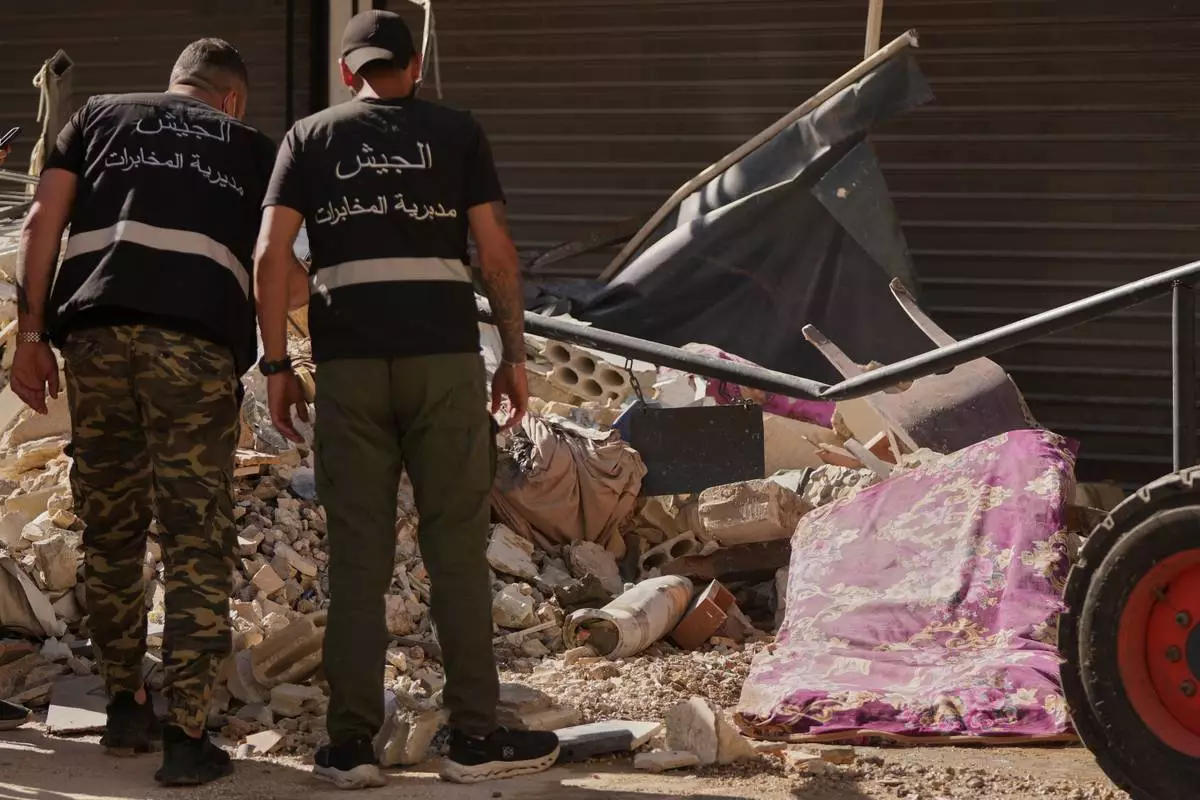
Lebanese intelligence officers look at an unexploded missile, centre, at the site where an Israeli airstrike hit a building in Dahiyeh, Beirut's southern suburb, Lebanon, Sunday, June 7, 2026. (AP Photo/Hassan Ammar)
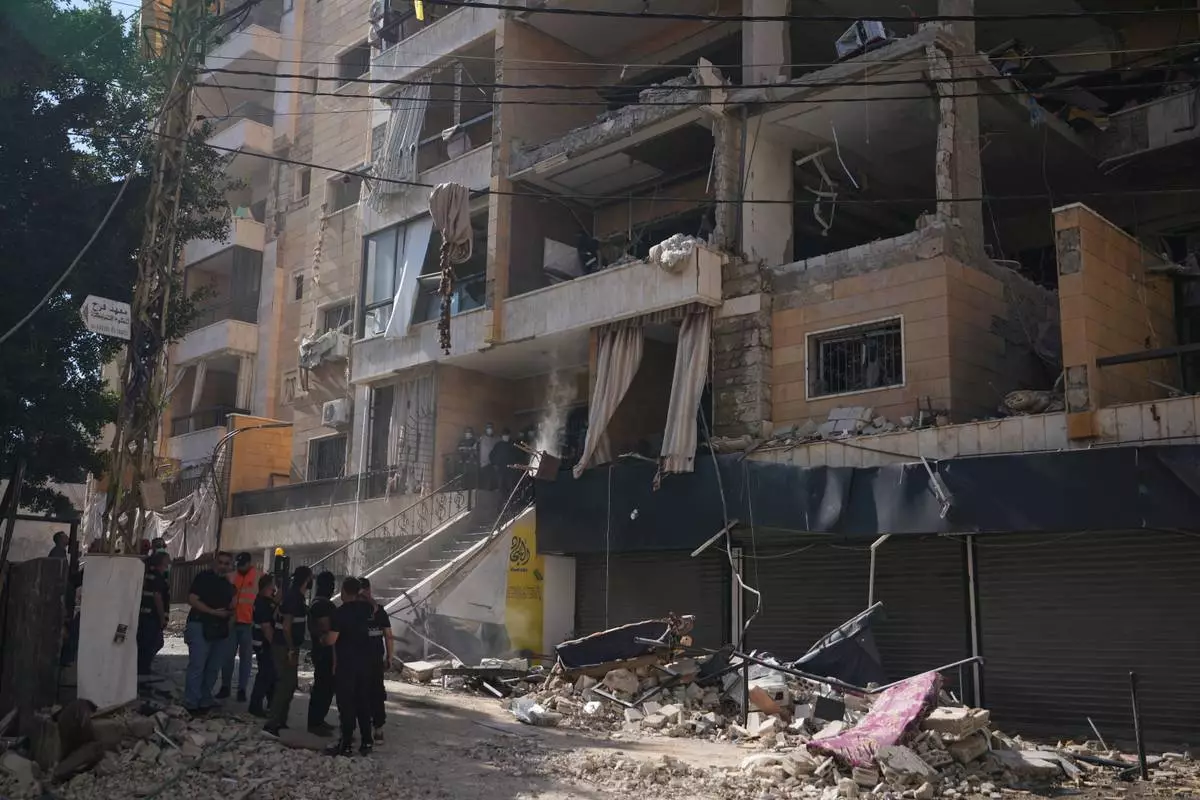
Lebanese security officers gather at the site where an Israeli airstrike hit a building in Dahiyeh, Beirut's southern suburb, Lebanon, Sunday, June 7, 2026. (AP Photo/Hassan Ammar)
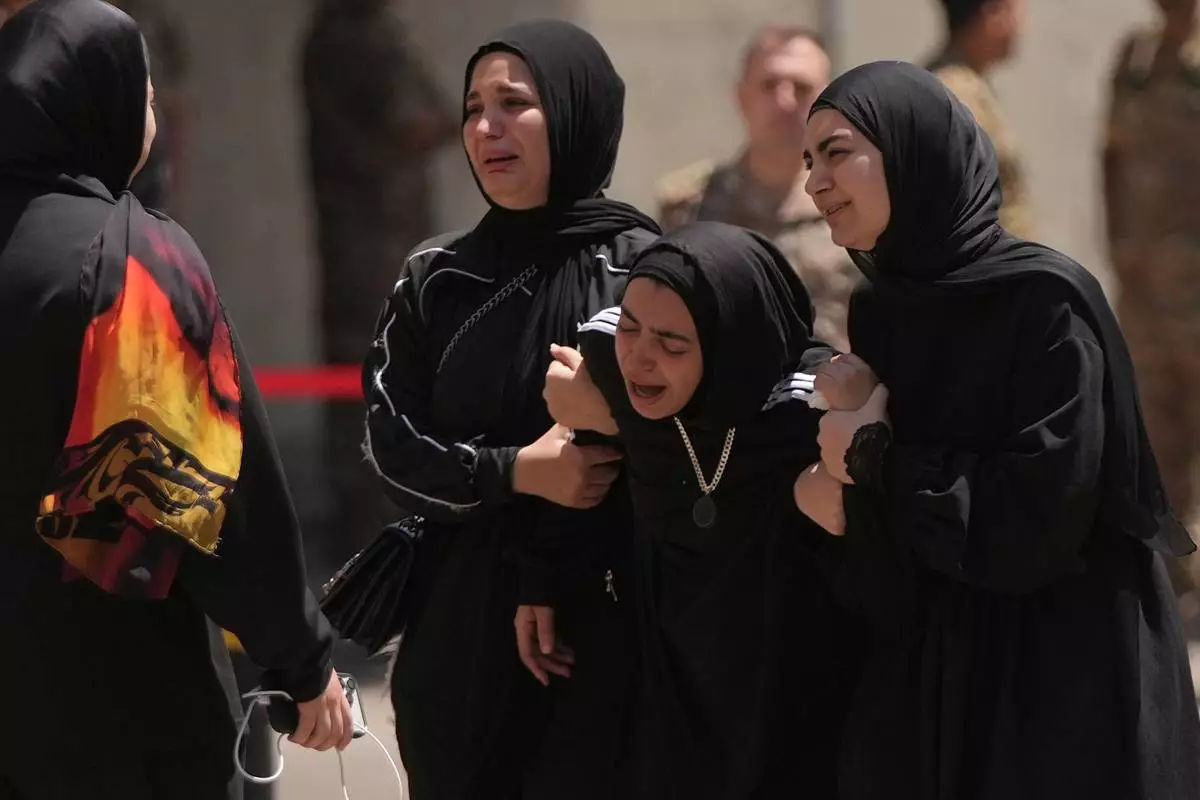
Relatives of the Lebanese soldier Hussein Nazzal, who was killed Saturday in south Lebanon along with a brigadier general and a captain in an Israeli airstrike, mourn during his funeral procession in Beirut, Sunday, June 7, 2026. (AP Photo/Hassan Ammar)
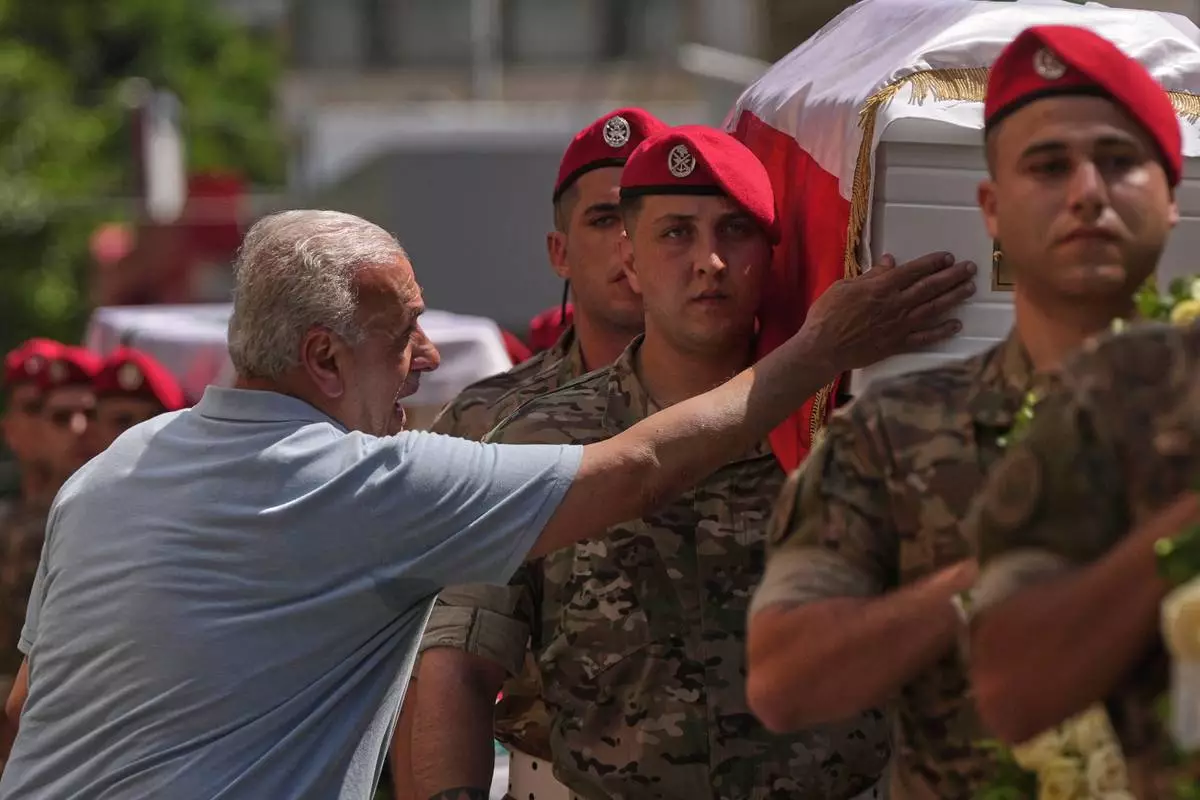
A mourner touches the coffin of the Lebanese army Brig. Gen. Wissam Sabra, who was killed Saturday in south Lebanon along with a captain and a soldier in an Israeli airstrike, during his funeral procession in Beirut, Sunday, June 7, 2026. (AP Photo/Hassan Ammar)
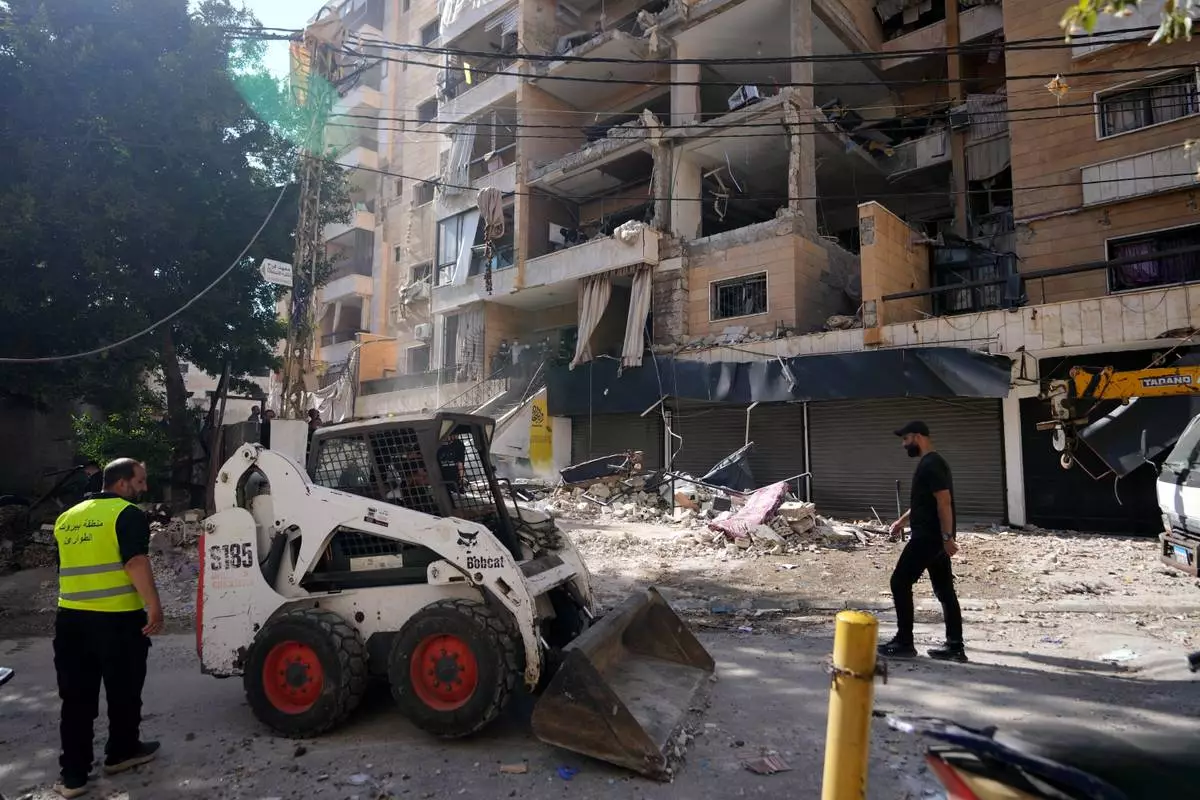
Municipality workers use a skid loader as they remove the rubble of destroyed apartments that where hit by an Israeli airstrike in Dahiyeh, Beirut's southern suburb, Lebanon, Sunday, June 7, 2026. (AP Photo/Hassan Ammar)
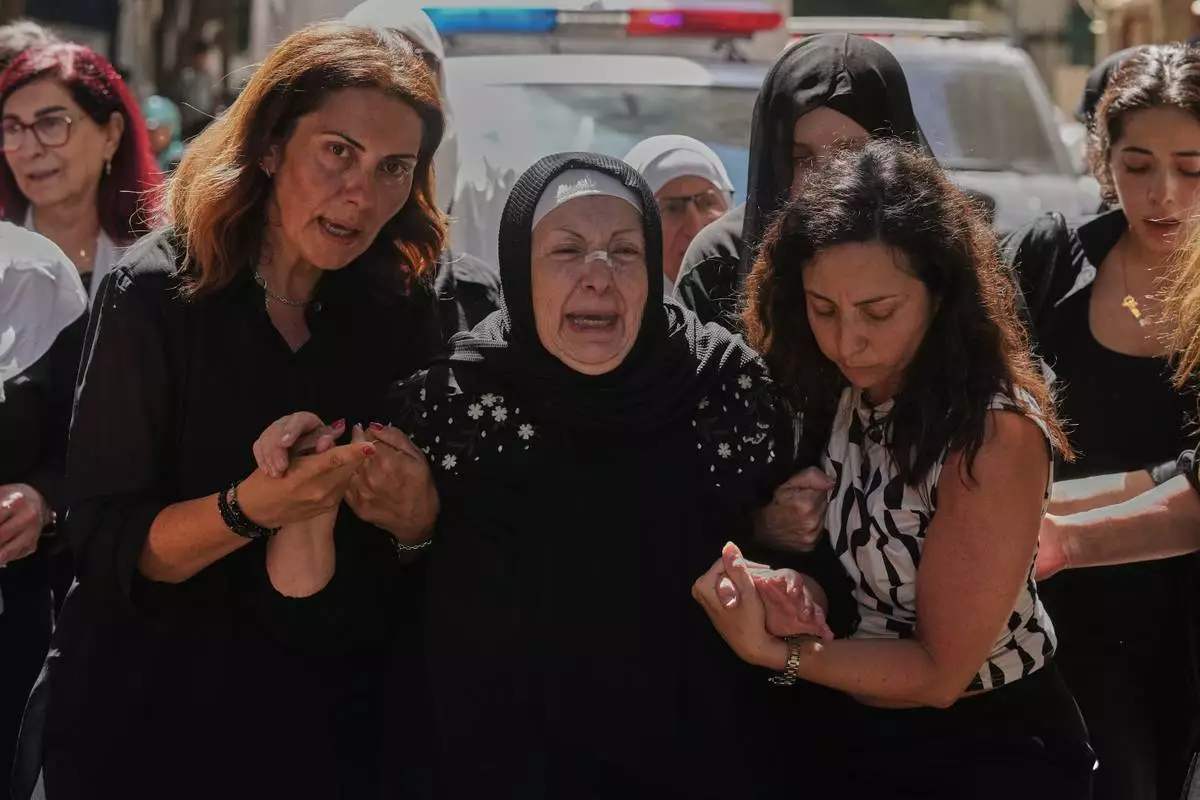
The mother, center, and the wife, left, of the Lebanese Brig. Gen. Wissam Sabra, who was killed Saturday in south Lebanon along with a captain and a soldier in an Israeli airstrike, mourn during his funeral procession in Beirut, Sunday, June 7, 2026. (AP Photo/Hassan Ammar)
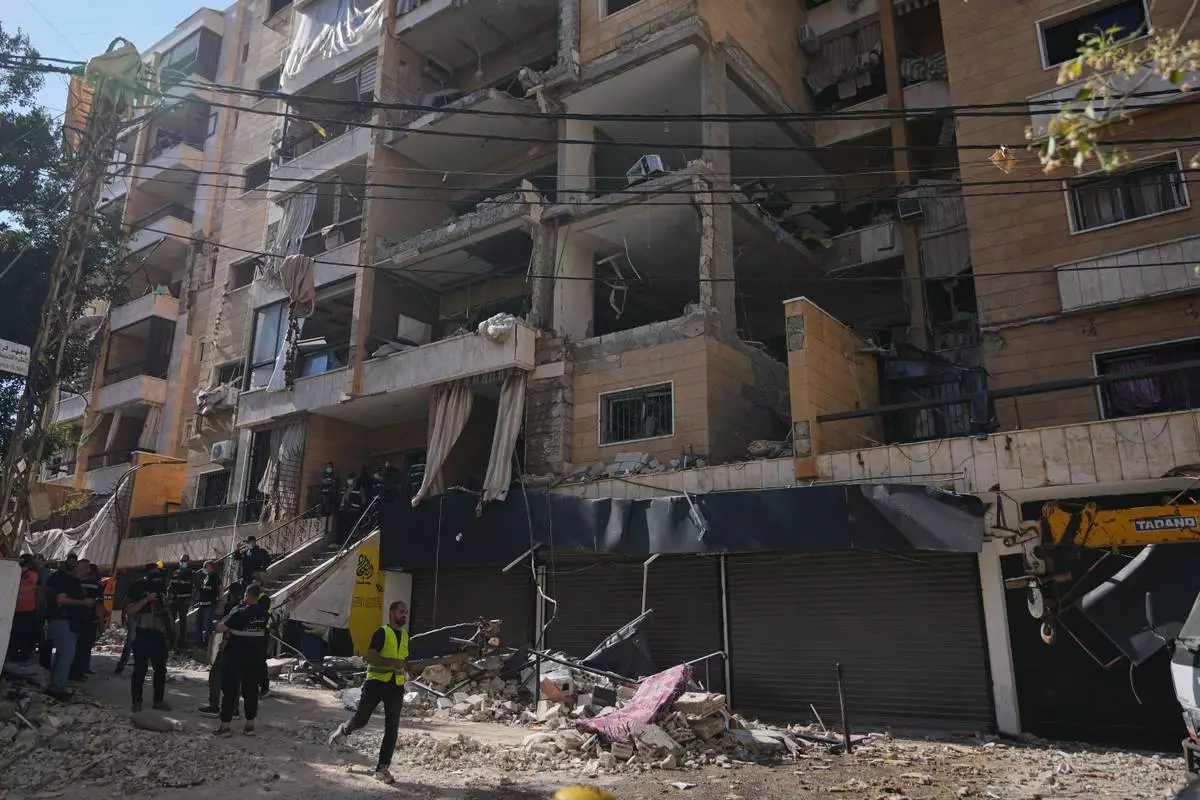
Lebanese security officers gather at the site where an Israeli airstrike hit a building in Dahiyeh, Beirut's southern suburb, Lebanon, Sunday, June 7, 2026. (AP Photo/Hassan Ammar)
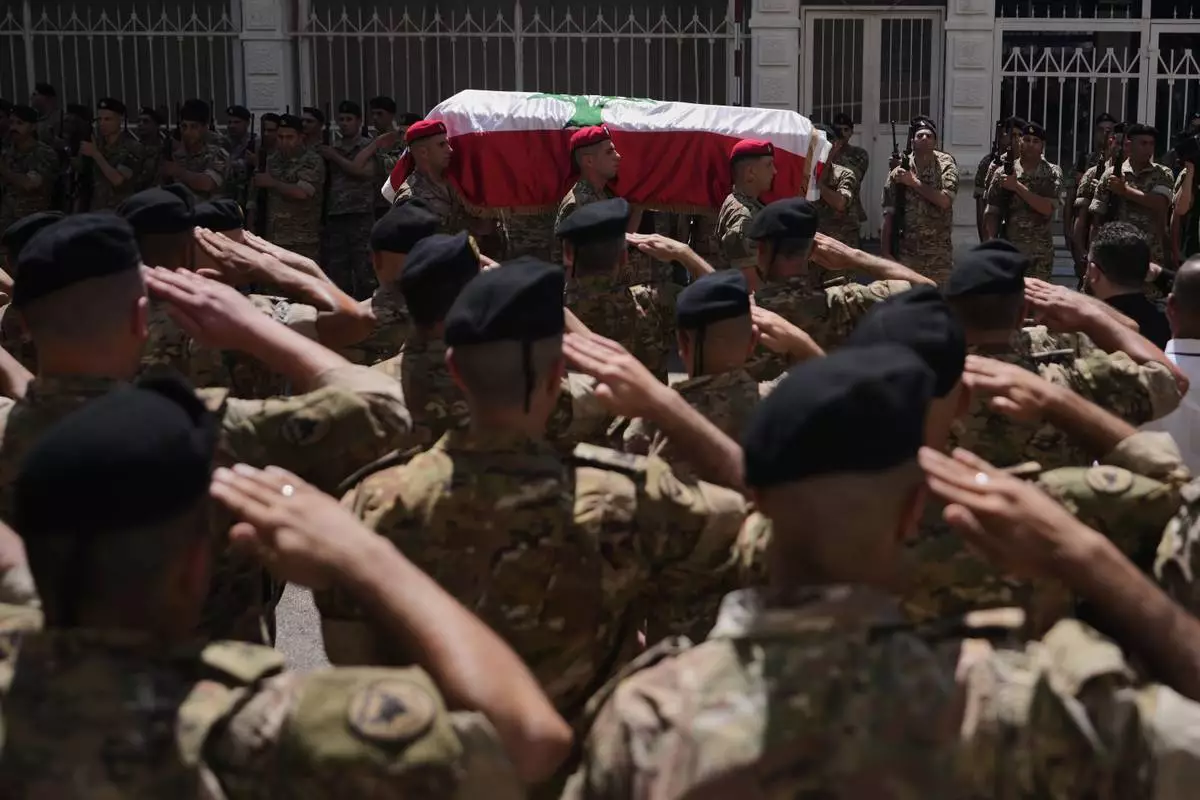
Lebanese army soldiers carry the coffin of Brig. Gen. Wissam Sabra, who was killed Saturday in south Lebanon along with a captain and a soldier in an Israeli airstrike, during his funeral procession in Beirut, Lebanon, Sunday, June 7, 2026. (AP Photo/Hassan Ammar)
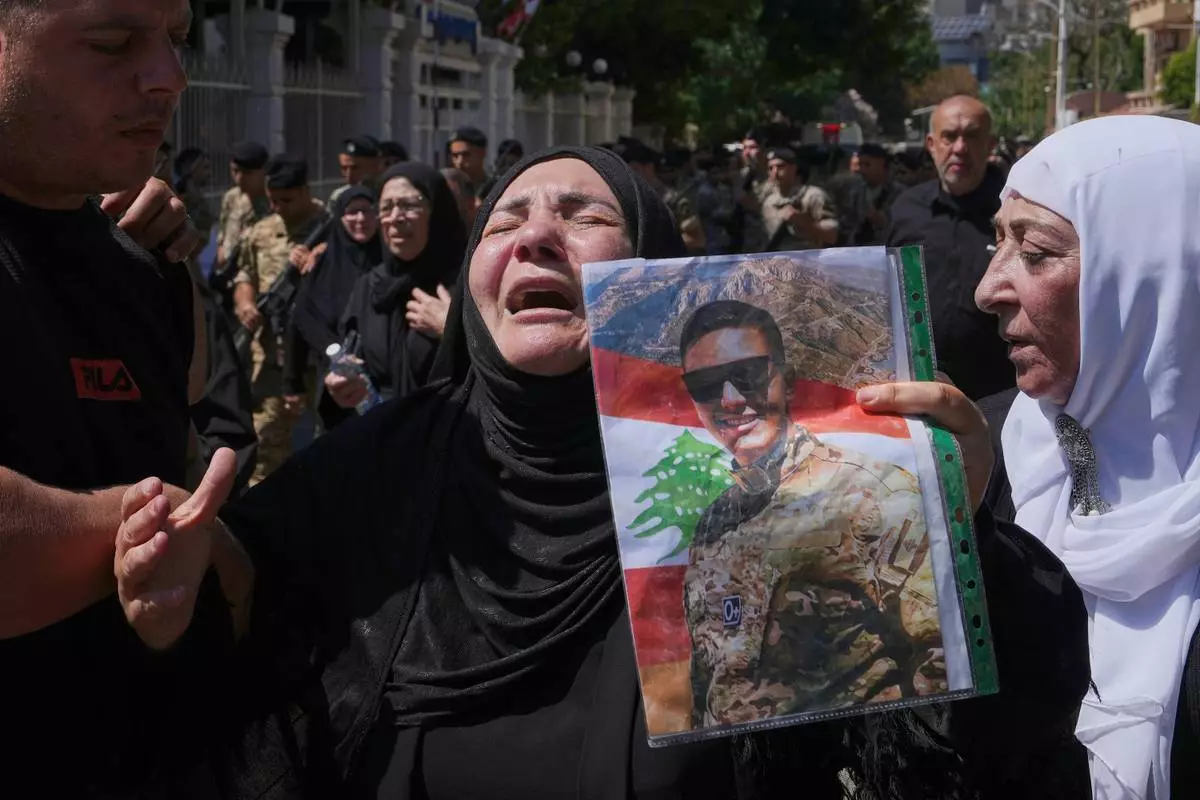
A relative of the Lebanese soldier Hassan Nazzal, who was killed Saturday in south Lebanon along with a brigadier general and a captain in an Israeli airstrike, mourns as she holds his portrait during his funeral procession in Beirut, Sunday, June 7, 2026. (AP Photo/Hassan Ammar)
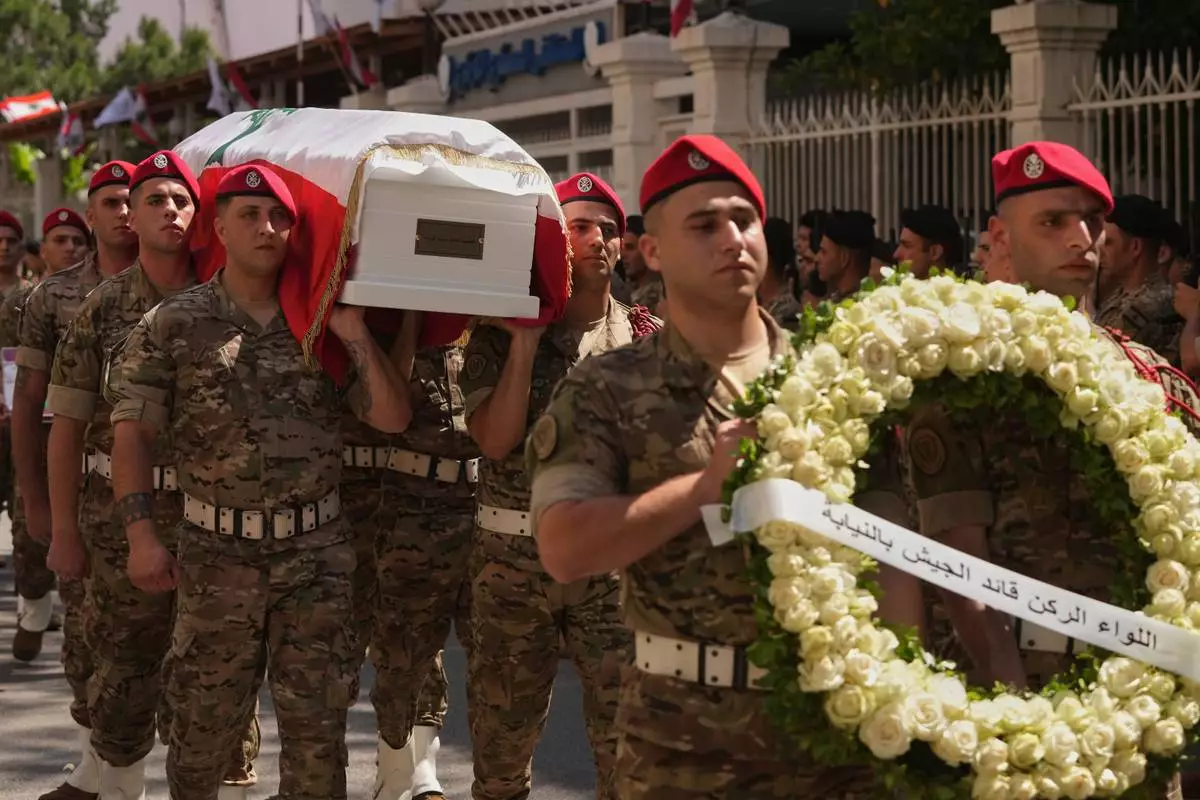
Army soldiers carry the coffin of Brig. Gen. Wissam Sabra, who was killed Saturday in south Lebanon along with a captain and a soldier in an Israeli airstrike, during his funeral procession in Beirut, Sunday, June 7, 2026. (AP Photo/Hassan Ammar)
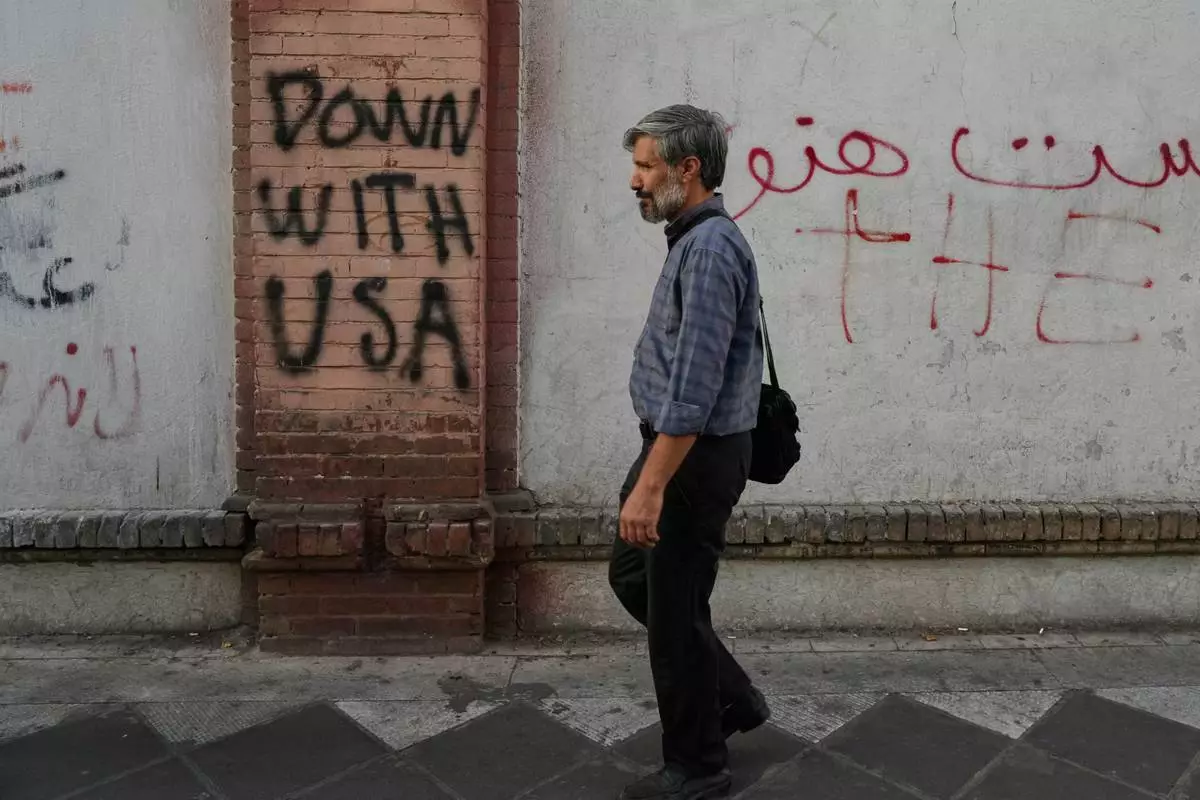
A man walks past anti-U.S. graffiti painted on the wall of the British Embassy in Tehran, Iran, Saturday, June 6, 2026. (AP Photo/Vahid Salemi)
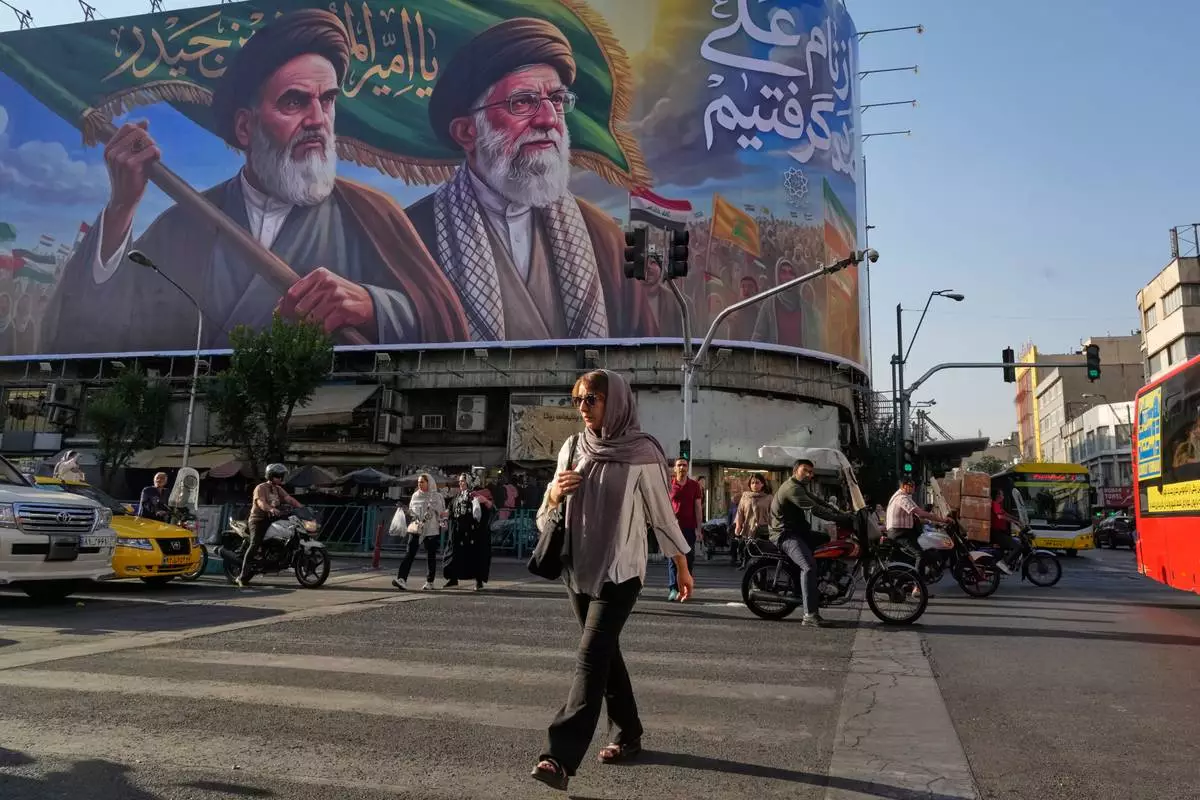
People walk under a banner showing portraits of the late revolutionary founder Ayatollah Khomeini, left, and the slain Supreme Leader Ayatollah Ali Khamenei, who was killed in U.S. and Israeli strikes on Feb. 28, in Tehran, Iran, Saturday, June 6, 2026. (AP Photo/Vahid Salemi)