Skip to Content Facebook Feature Image

Four mice selected to join China's upcoming Shenzhou-21 space mission

China

China

China

Four mice selected to join China's upcoming Shenzhou-21 space mission

2025-10-30 20:02 Last Updated At:20:37

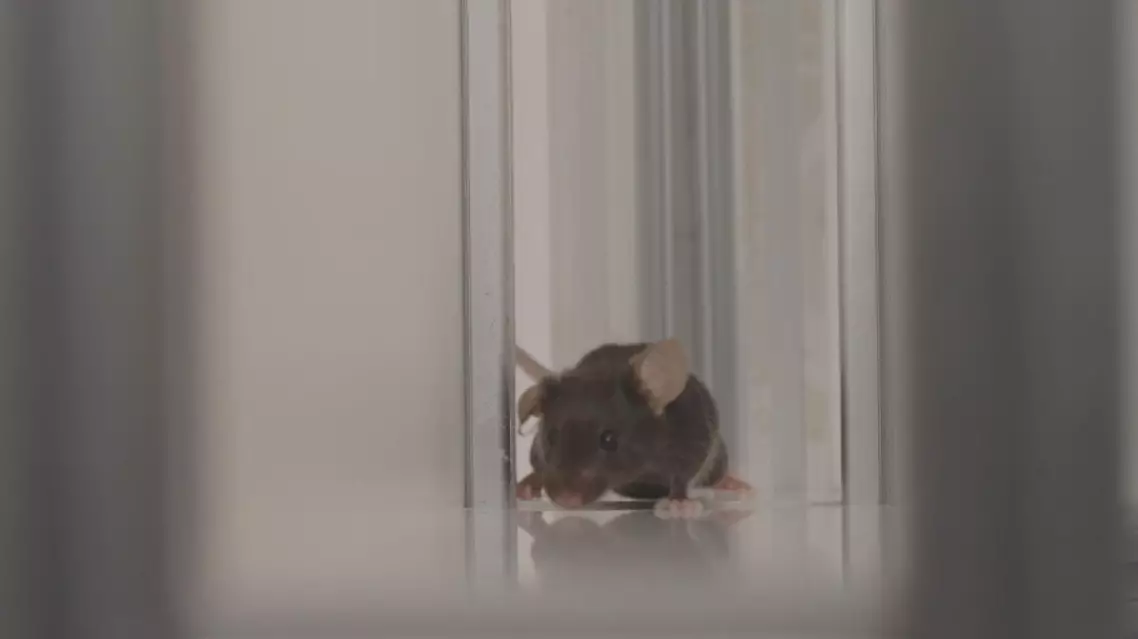
After months of preparation and screening, four specially trained mice - two males and two females - are set to become the first small mammals to enter China's space station.

They will travel aboard the Shenzhou-21 crewed spacecraft on Friday to take part in a pioneering experiment on how living organisms adapt to the challenges of space.

The experiment, titled "Space Animal Strain Screening and Feeding Key Technology Verification," will investigate how small mammals respond to microgravity and other conditions in orbit. For five to seven days, the four mice will live inside a specially designed module on the China Space Station, while scientists monitor their behavior, health, and stress responses in real-time.

The four mice were chosen from a pool of about 300 candidates after more than two months of testing and training. Researchers at the Institute of Zoology, Chinese Academy of Sciences, meticulously evaluated each mouse's physical fitness, reproductive capacity, agility, memory, and spatial awareness.

"We finally selected 48 as backup mice before launch from about 300 mice. In the end, only four mice - two males and two females - will officially go to space. In each round of screening, we eliminated about 10 to 20 percent of the mice," said Wang Yixi, engineer from Laboratory Animal Center, Institute of Zoology, Chinese Academy of Sciences.

Once launched, the mice will travel in a life-support container specially built to protect them during the journey from Earth to orbit. Upon arrival, astronauts will transfer the experimental unit to a dedicated feeding device aboard the space station, where the mice will continue their stay in carefully controlled conditions.

"All the devices are designed to provide suitable living and protection conditions for the mice. The mice are placed in an experimental unit, which is then put into a life-support device during the launch and ascent phase. This ensures that the mice have stable life-support conditions throughout the journey from the ground to the space station. Once in orbit, the experimental unit is removed from the launch life-support device and placed into our feeding device, which provides an even better living environment. During feeding, cameras are used, and we can observe the mice's daily activities and overall state in real time from the ground monitoring hall," said Liu Fangwu, associate researcher from Shanghai Institute of Technical Physics, Chinese Academy of Sciences.
Four mice selected to join China's upcoming Shenzhou-21 space mission

Four mice selected to join China's upcoming Shenzhou-21 space mission

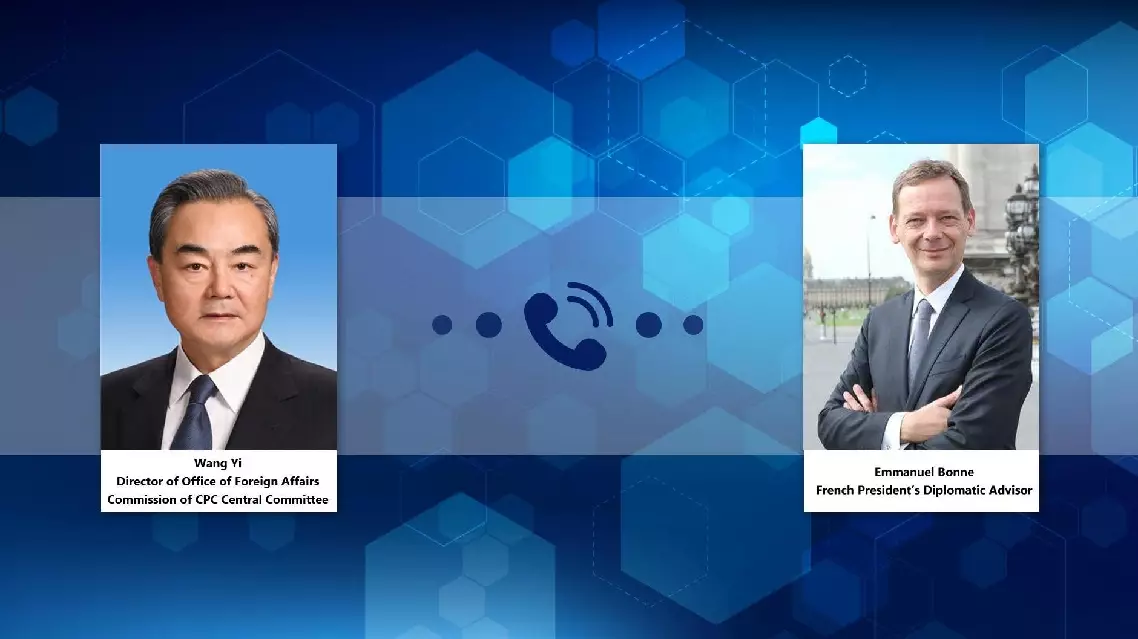
China's top diplomat Wang Yi said on Friday that one of the top priorities at present is to contain the spread of the conflict and prevent further involvement of other countries.

Wang, also a member of the Political Bureau of the Communist Party of China Central Committee and director of the Office of the Central Commission for Foreign Affairs, made the remarks in a phone conversation with Emmanuel Bonne, diplomatic adviser to the French president, at the latter's request.

Wang elaborated on China's position, saying that the current situation in the Middle East is still deteriorating, with the conflict continuing to spread. This has not only undermined the stability of global energy supply but also led to a severe humanitarian crisis.

Resorting to force will not solve the problem, and an unjust war should not be allowed to continue, he said.

In the face of the critical situation, China and France, as permanent members of the UN Security Council, should strengthen strategic communication and coordination, firmly uphold the UN Charter and international law, and prevent the world from regressing to the "law of the jungle," Wang said.

He added that the other two top priorities are for the international community to speak with one voice in calling for an immediate ceasefire and to intensify efforts to advance peace talks, and for the United Nations and the UN Security Council to play their due role in facilitating the early restoration of peace and stability in the region.

Despite the difficulties, dialogue and negotiation remain the right path out of the crisis, Wang said, adding that China and France should work together toward this end.

For his part, Bonne shared his perspectives on the current situation in the Middle East, including developments in Iran and Lebanon.

He said that France and China, as major countries, both support the United Nations, abide by international law, and advocate resolving differences through dialogue.

He said that the two countries should work together to explore solutions and contribute to easing tensions and resuming negotiations.

France is willing to enhance communication and cooperation with China to push for the early achievement of peace and stability in the Middle East, he added.

China's top diplomat urges efforts to prevent escalation in Mideast conflict

China's top diplomat urges efforts to prevent escalation in Mideast conflict

Recommended Articles