WASHINGTON (AP) — Two prominent Republicans on Capitol Hill want the Supreme Court to allow a lawsuit to proceed against tech giant Cisco over allegations that the company’s technology was used to persecute members of the Falun Gong spiritual movement in China.
In a Wednesday letter to the Trump administration’s top Supreme Court litigator, D. John Sauer, Reps. Chris Smith of New Jersey and John Moolenaar of Michigan urged the administration to side with the Falun Gong plaintiffs and press the court to allow the lawsuit to go to trial.
Smith co-chairs the Congressional-Executive Commission on China, while Moolenaar is the chairman of a special China committee set up in the House of Representatives — and both are prominent critics of Beijing's human rights record. The letter cited an AP investigation last month that showed American tech companies to a large degree designed and built China’s surveillance state, saying it “underscore(s) the need to deter American firms from supplying technology to facilitate the CCP’s human rights abuses.”
The decision ultimately rests with the Supreme Court whether to hear the challenge brought by Cisco arguing that U.S. law does not permit such a suit. But as part of considering the case the court sought the views of the solicitor general, who represents the U.S. government's position in oral arguments and proceedings.
The Trump administration's view on the case will also be of interest to the court because Cisco has argued that the case involves U.S. foreign relations and should be dismissed on those grounds. The solicitor general is expected to file a brief later this year or early next year.
“The allegation that an American tech company custom-designed a tool to facilitate the violent persecution of a religious minority by the Chinese Communist Party (CCP) is a serious one,” the two lawmakers wrote in a letter to Sauer. “We believe the Plaintiffs deserve the chance to prove their claims.”
“We have a longstanding commitment to uphold and respect human rights for all people and if the 2023 ruling of the Ninth Circuit Court stands, it opens the floodgates for suits against U.S. corporations merely for legal exports of off-the-shelf goods and services,” said a spokesperson for Cisco.
The case has a long and winding history dating back more than a decade.
In 2008, documents leaked to the press showed Cisco saw the “Golden Shield” as a sales opportunity, quoting a Chinese official calling the Falun Gong an “evil cult.” A Cisco presentation reviewed by AP from the same year said its products could identify over 90% of Falun Gong material on the web.
Other presentations reviewed by AP show that Cisco represented Falun Gong material as a “threat” and built out a national information system to track Falun Gong believers. In 2011, Falun Gong members sued Cisco, alleging the company tailored technology for Beijing that they knew would be used to track, detain and torture believers.
The issue before the Supreme Court is whether an American company can be held liable under two separate laws for aiding and abetting human rights violations. Cisco argues it isn’t liable under those laws, the Alien Tort Statute (ATS) or the Torture Victim Protection Act (TVPA), but a federal appeals court rejected the company's arguments in 2023, allowing the case to continue. Now Cisco is asking the Supreme Court to throw out that ruling and stop the lawsuit.
In recent years, the Supreme Court and presidential administrations of both parties have been skeptical of lawsuits seeking to use U.S. courts as a venue to seek justice over the acts of foreign governments, especially those that took place abroad. In the case of Cisco, the Falun Gong members have argued that a substantial portion of Cisco’s activities involving China took place in the United States.
An AP investigation this week found that the U.S. government across five Republican and Democratic administrations repeatedly allowed and even actively helped American firms to sell technology to Chinese police and surveillance companies, even as activists warned such tools were being used to quash dissent, persecute religious groups and target minorities.
Going into the long-heralded meeting Thursday between leaders Donald Trump and Xi Jinping, the sale of U.S. technology to China has been among the thorniest issues the U.S. faces, with billions of dollars and the future of tech dominance at stake. Trump said after the meeting that China will speak with Silicon Valley chipmaker Nvidia about purchasing their computer chips.
Debate over the sale of technology to China has grown heated, with some arguing for a harder stance.
American companies have pushed back against restrictions, arguing it will push China to develop its own domestic supply and strengthen its position in the global race for leadership in artificial intelligence.
But many national security experts say selling such technology could assist China’s military and intelligence services. The plaintiffs’ lawyers make a similar case, citing Cisco marketing materials in China that promoted routers for use in tanks.
If the Cisco suit is successful, it would signal that American companies can be held liable in some circumstances for abuse of their technologies overseas.
—-
Kang reported from Beijing and Tau reported from Washington. AP writer Mark Sherman contributed to this report from Washington.
—-
Contact AP’s global investigative team at Investigative@ap.org or https://www.ap.org/tips/
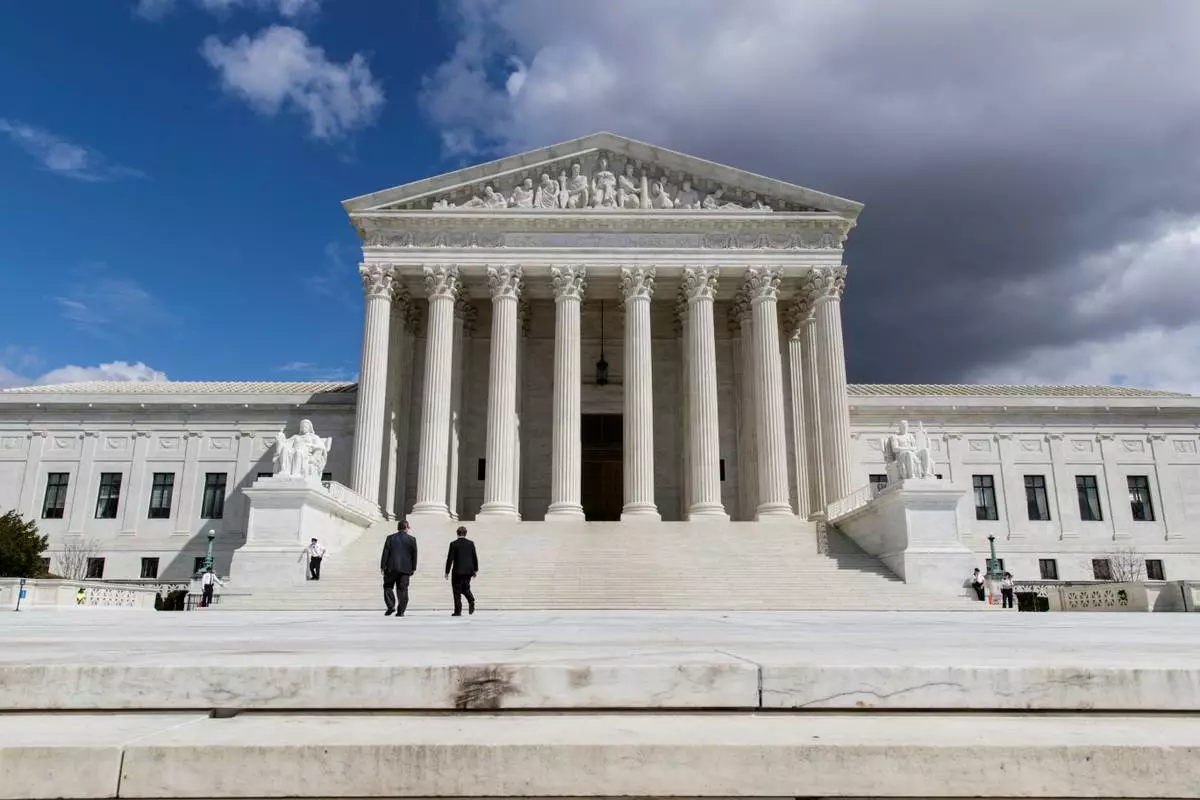
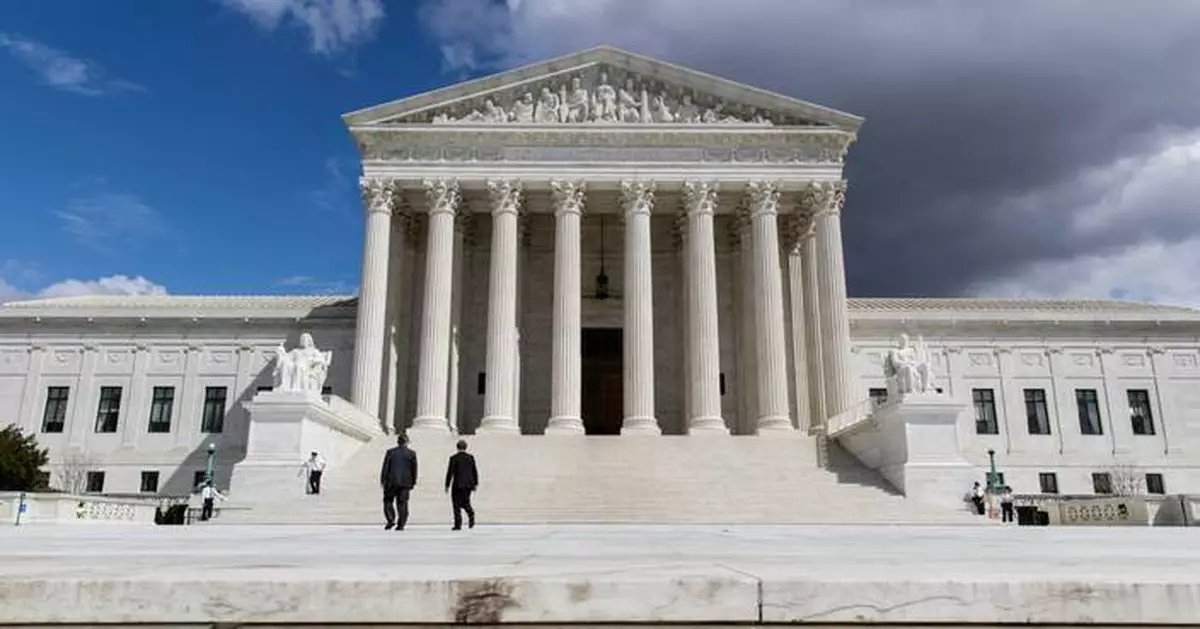
FILE - The Supreme Court Building is seen in Washington on March 28, 2017. (AP Photo/J. Scott Applewhite, File)
U.S. President Donald Trump on Wednesday claimed Iran’s president wanted a ceasefire ahead of his speech to the American people. Trump made the claim on his Truth Social website. Iran’s Foreign Ministry spokesperson said Trump’s remarks were “false and baseless.”
The aircraft carrier USS George H.W. Bush is slated to go to the Middle East along with three destroyers, two U.S. officials said. The carrier strike group consists of more than 6,000 sailors. It comes as thousands of soldiers from the 82nd Airborne Division have also begun arriving in the Middle East, according to two other U.S. officials.
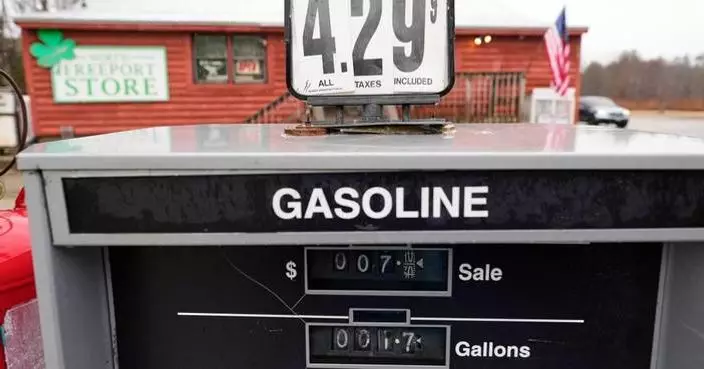
Meanwhile, U.S. gas prices jumped past an average of $4 a gallon for the first time since 2022 on Tuesday, as the Iran war continues to push fuel prices higher worldwide. Analysts say those high fuel costs will trickle into groceries as businesses’ transportation and packaging costs pile up.
Here is the latest:
Iran’s President Masoud Pezeshkian in a message to American people said both confrontation and engagement between Iran and the U.S. are accessible, adding that Iran will endure any aggression by the U.S.
“Today, the world stands at crossroads. Continuing along the path of confrontation is more costly and futile than ever before. The choice between confrontation and engagement is both real and consequential; its outcome will shape the future for generations to come, “ said Pezeshkian. “Throughout its millennia of proud history, Iran has outlasted many aggressors. All that remains of them are tarnished names in history, while Iran endures — resilient, dignified, and proud.”
Pezeshkina did not mention a ceasefire offer last week by President Trump, though he accused Israel of dragging the U.S. into a war against Iran.
“Is it not also the case that America has entered this aggression as a proxy for Israel, influenced and manipulated by that regime? ” asked Pezeshkian.
David Miliband, President of the International Rescue Committee made these remarks during an online briefing with journalists after visiting Lebanon and Syria.
More than one million Lebanese were displaced during the past month in the latest conflict between Israel and the Hezbollah militant group. Israel has issued evacuation orders for large swaths of southern and eastern Lebanon, as well as Beirut’s southern suburbs. Only a small portion of them are staying in government-run public schools turned-shelters, while others stay with family or even in tents on the streets.
“There is nothing like driving in front of the Lebanon yacht club and in front of it are Lebanese in tents who are displaced,” said Miliband, who decried the tiny country’s situation as a “silent emergency that is getting very little attention.”
China on Wednesday said it would stay in “close communication with Pakistan and relevant parties” on the Iran war and “play a constructive role in promoting the end of hostilities.”
It comes a day after China’s foreign minister met Pakistan’s top diplomat in Beijing and said China supported efforts to deescalate tensions.
Chinese Foreign Minister Wang Yi told Pakistani Foreign Minister Ishaq Dar that it would not be an easy task and that China would be “willing to work with Pakistan” to end the “flames of war” as soon as possible and open the “window to peace talks.”
Wang said Pakistan’s efforts were in the interest of all sides, including averting spillover effects, preventing further casualties, stabilizing international energy security and protecting supply chains.
Following their meeting Tuesday, the two governments put forward a five-point proposal, including ceasing hostilities, starting peace talks, protecting civilian targets and reopening the Strait of Hormuz.
NATO is getting defended on a bipartisan basis by Sen. Mitch McConnell, R-Ky., and Sen. Chris Coons, D-Del., ahead of Trump’s address to the nation on Wednesday night.
Trump is expected to criticize NATO members for not joining the U.S. in its war with Iran.
McConnell and Coons said in a joint statement that “NATO is the most successful military alliance in history” and stressed how its members “fought and died,” along with U.S. forces in Afghanistan and Iraq.
“Americans are safer when NATO is strong and united,” the statement said. “The Senate will continue to support the alliance for the peace and protection it provides America, Europe, and the World.”
The National Defense Authorization Act in 2023 has provision that requires a two-thirds approval from the Senate in order to leave NATO or a separate measure by Congress, limiting the president’s ability to do so unilaterally.
Bahrain’s U.N. Ambassador Jamal Alrowaiei accused Iran of “economic terrorism” and violating international law. And he urged adoption of a U.N. resolution that would authorize countries “to use all necessary means” to ensure safe navigation through the Strait of Hormuz, the Gulf and the Gulf of Oman.
He expressed hope at a U.N. news conference that the Security Council will adopt the resolution “as soon as possible,” and as early as Thursday. But Russia, China and France objected to the latest draft, and negotiations were continuing.
Alrowaiei, the Arab representative on the council and its president for April, said Gulf countries had tried “to build bridges of peace with Iran,” and the attacks they were subjected to immediately after the Israeli-U.S. airstrikes on Feb. 28 were “shocking and premeditated.”
He said Bahrain, home to the U.S. Fifth Fleet, has been targeted by 186 missiles and 419 drones and has suffered damage to desalination plants, hotels, the airport and other civilian infrastructure.
AP footage in the Iranian capital of Tehran showed large plumes of smoke billowing over the city on Wednesday afternoon following U.S.- Israeli strikes, as the war in the Middle East completes its first month and strikes on Iran continue unabated.
Also Wednesday, the Israeli military said that it had completed a wave of strikes against “dozens of military infrastructure sites of the Iranian terror regime in the heart of Tehran.”
The president has said one of his primary goals of the war was to stop Iran from getting a nuclear weapon, and he told Reuters on Wednesday that has been achieved, though it isn’t clear how.
Iran’s stockpile of enriched uranium that could potentially be used to build nuclear weapons is believed to be buried under the rubble of a mountain facility that was hit during strikes last June — and that hasn’t changed since the war with Iran began this year. Trump has said the U.S. would move to take the uranium if it reaches a deal with Iran.
But he said Wednesday that the uranium is “so far underground, I don’t care about that.”
“We’ll always be watching it by satellite,” he said.
Trump also said Iran is now “incapable” of developing a nuclear weapon.
Vice President JD Vance has been speaking to intermediaries about Iran as recently as Tuesday and delivered a message that Trump is impatient and that there will be growing pressure on Iranian infrastructure if they don’t make a deal, according to a person familiar with the talks who was not authorized to speak publicly and spoke on condition of anonymity.
Trump directed Vance to communicate privately that he is open to a ceasefire as long as certain demands are met.
The president told Reuters in a telephone interview ahead of his televised address Wednesday night that the U.S. would be finishing its war in Iran soon, but he wouldn’t give a timeline.
“I can’t tell you exactly ... we’re going to be out pretty quickly,” he said.
But once the U.S. leaves, he said “We’ll come back to do spot hits” on targets, as needed.
Almost 4 million barrels of crude oil a day transited the Bab el-Mandeb Strait in March, up from about 3 million barrels the prior month and the highest level since October 2023, maritime data firm Kpler said Wednesday.
The increase came as Saudi Arabia sent crude through a pipeline across its country to the Red Sea port of Yanbu after the virtual closure of the Strait of Hormuz. Saudi Aramco operates the East-West pipeline from the Aqaiq oil processing center near the Persian Gulf to Yanbu. It has enabled the Saudis to maintain some exports blocked by the Hormuz closure, but it lacks the capacity to fully compensate.
Before the war, Yanbu shipped 750,000 to 850,000 barrels a day. Of the crude passing through Bab el-Mandeb in March, 1.75 million barrels a day were loaded there, the data showed.
Most of the remainder transiting the strait in March was Russian oil bound for Asia, Kpler said.
Somalia’s government on Wednesday said it has limited control over fuel pricing, as imports are handled by private companies in a largely liberalized market.
Dahir Shire Mohamed, Minister of Petroleum and Mineral Resources, said prices have surged due to “external shocks,” linking the increase to “regional tensions affecting global supply routes.”
The price per liter has increased from $0.70 to $1.75, marking a 150% increase.
Tanzania’s Energy Ministry on Wednesday announced a 33% increase in fuel prices, attributing it to the conflict in Iran, saying it had affected supply and shipping. The ministry urged Tanzanians to use the available fuel “carefully and efficiently.”
American officials have given mediators “clear assurances” that Iranian Foreign Minister Abbas Araqchi and Parliamentary Speaker Mohammad Baqer Qalibaf won’t be targeted amid ongoing diplomatic efforts to stop the Iran war, according to two regional officials and one person briefed on the matter.
The person briefed said that Pakistan asked Washington to intervene to get Israel to remove the two officials from its hit list.
Israel’s prime minister’s office and the military didn’t respond to request for comment.
The assurances were also given at the request of other regional mediators to facilitate communications with Iran and push for indirect talks, said one of the officials, who is involved in the mediation efforts. All three spoke to The Associated Press on the condition of anonymity because they were not authorized to discuss sensitive diplomatic conversations.
A Gulf diplomat, briefed on the matter, said the U.S. assurances were “crucial” to ensure neither the foreign minister or the speaker or their teams won’t be assassinated. Reuters was the first to report that the two Iranian leaders were removed from a supposed hit list.
The two leaders spoke via phone in a “constructive” conversation, said Alexander Stubb, the Finnish leader.
“We exchanged thoughts on NATO, Ukraine, and Iran,” Stubb wrote in an X post. “It’s good to seek solutions to problems together.”
The call comes as the U.S. president is increasingly venting about allies and what he says is their unwillingness to get involved in the war in Iran, particularly in securing the Strait of Hormuz, prompting him to again talk about the U.S. leaving NATO.
Syrian state television said Wednesday that its crew reporting in the Quneitra Province in southern Syria was targeted by the Israeli military, a claim the military later denied.
A video aired by the station showed a journalist in a press vest falling to the ground following what the person filming said was “a second shelling.”
The Israeli military said the “journalists approached the scene only after the fire had been carried out and were not the target of the activity.” It wasn’t immediately clear what the military was targeting.
A revised draft of Bahrain’s proposal — obtained by The Associated Press — to protect commercial shipping in and around the critical waterway has removed explicit authorization for U.N.-backed military action while retaining language associated with it. A vote on the new draft is expected Thursday, according to a U.N. diplomat who wasn’t authorized to comment about plans not yet made public and spoke on the condition of anonymity.
The original text had been placed under Chapter Seven of the U.N. Charter, which allows the council to authorize actions ranging from sanctions to the use of force. But it faced opposition from Iran’s allies on the Security Council, China and Russia, which are both veto-wielding members. The U.S. and the Gulf countries, including the United Arab Emirates, had been lobbying on behalf of the proposal.
The diplomat said the watered-down language will still be a hard swallow for China and Russia but it’s expected to get the necessary votes to pass the 15-member council.
— Farnoush Amiri
President Trump says he’s strongly considering pulling the United States out of NATO, ratcheting up his criticism of European allies and exposing a wider rift in the trans-Atlantic alliance — this time over the Iran war.
While Trump’s talk of a possible NATO pullout dates back years, the comments to The Telegraph newspaper in the U.K., published Wednesday, were among the clearest and most disparaging yet — suggesting the fracture has deepened perhaps to a point of no return.
Asked whether he would reconsider U.S. membership in the alliance after the conflict in the Middle East ends, Trump replied: “Oh yes, I would say (it’s) beyond reconsideration.”
NATO didn’t provide immediate comment when contacted by The Associated Press.
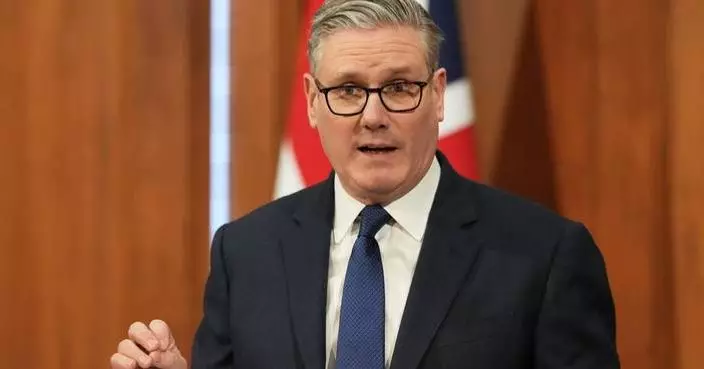
U.K. Prime Minister Keir Starmer said his government was “fully committed to NATO” and called it “the single most effective military alliance the world has ever seen.”
Many European leaders have felt political pressure over the war, which faces opposition in their countries and has sent petroleum prices soaring as Iran has effectively shut the Strait of Hormuz.
▶ Read more
Macron, who held talks with Japanese Prime Minister Sanae Takaichi, said Wednesday they both believe in international law, the international order and the democratic values, adding: “This is why ... we both advocate for a return to peace, a ceasefire, calm, and free passage through the Strait of Hormuz.”
Takaichi said the two leaders agreed on the importance of quickly de-escalating the conflict and to secure the safety of the vital waterway and the stable supply of goods.
“With the international environment increasingly severe, I believe it is especially meaningful for the Japanese and French leaders to deepen our friendship and cooperation,” Takaichi said at a joint news conference at the Akasaka Palace in Tokyo.
The leaders said they also agreed to deepen their cooperation in defense, rare earths development, nuclear energy, space and other areas.
▶ Read more
Shelly Kittleson’s mother, 72-year-old Barb Kittleson, said she last exchanged emails with her daughter Monday. Shelly Kittleson sent photos of herself from Iraq, her mother said.
Barb Kittleson said she heard about the kidnapping from a news report Tuesday and was visited by the FBI at her home in Mount Horeb, Wisconsin, on Tuesday night.
When asked how she felt about the kidnapping she said, “Terrible. Scared. I’ll pray for her.”
She said her hope is for her daughter “not to be hurt and be OK.”
Shelly Kittleson left her home in Wisconsin in 1995, when she was 19 years old, and first headed to Italy where she went to school and worked as a nanny, her mother said. She spent about 10 years in Italy before eventually settling in Iraq, Barb Kittleson said.
Barb Kittleson said she had not seen her daughter in person since 2002 but they exchange emails a couple of times a week, including on Monday when her daughter sent her a couple of pictures.
Should the U.S. decide to send in military forces to secure Iran’s uranium stockpile, it would be a complex, risky and lengthy operation, fraught with radiation and chemical dangers, according to experts and former government officials.
President Trump has offered shifting reasons for the war in Iran but has consistently said a primary objective is ensuring the country will “never have a nuclear weapon.” Less clear is how far he’s willing to go to seize Iran’s nuclear material.
Given the risks of inserting as many as 1,000 specially trained forces into a war zone to remove the stockpile, another option would be a negotiated settlement with Iran that would allow the material to be surrendered and secured without using force.
Iran has 972 pounds (440.9 kilograms) of uranium that’s enriched up to 60% purity, a short, technical step from weapons-grade levels of 90%, according to the International Atomic Energy Agency, the U.N.’s nuclear watchdog agency.
▶ Read more
Sirens sounded across central Israel in multiple rounds within minutes Wednesday afternoon. Associated Press reporters heard loud booms in Tel Aviv as the windows of buildings shook from the reverberations.
Iran’s Foreign Ministry spokesperson, Esmail Baghaei, called Trump’s claim “false and baseless,” according to a report on Iranian state television.
Also, Iran’s paramilitary Revolutionary Guard separately issued a statement saying the Strait of Hormuz “is firmly and decisively under the control” of its forces.
“This strait will not be opened to the enemies of this nation through the ridiculous spectacle by the president of the United States,” it added.
Stocks are climbing worldwide, and oil prices are easing Wednesday as hopes build that the war with Iran could end soon. Some of the moves are tentative, though, after financial markets have already seen similar bouts of optimism get quickly undercut several times.
The S&P 500 rose 0.6% and added to its leap from the day before, which was its best since last spring. That followed even bigger gains for stock markets across Europe and Asia, including an 8.4% surge in South Korea, which were catching up to Wall Street’s rally from Tuesday.
The Dow Jones Industrial Average was up 292 points, or 0.6%, as of 10 a.m. Eastern time, and the Nasdaq composite was 1% higher.
Oil prices also fell back toward $100 per barrel after President Donald Trump said shortly before Wall Street began trading that Iran “has just asked the United States of America for a CEASEFIRE!”
▶ Read more
In addition to gas and oil stuck in the Persian gulf, urgent food aid destined for Sudan and Afghanistan is also facing severe delays, the UN agency for hunger emergencies, World Food Program, warned.
“Think of special nutritious foods required for Sudan,” Corinne Fleischer, WFP director of supply chain, told the AP. “Mothers and children are malnourished and they need this vitamin and mineral enriched food. We produced this in Pakistan as one of the countries. That is now stuck there.”
Fleischer explained that due to the risks of attacks in the southern part of the Red Sea, carriers now have to go all the way down through the Cape of Good Hope in Africa to reach West Africa.
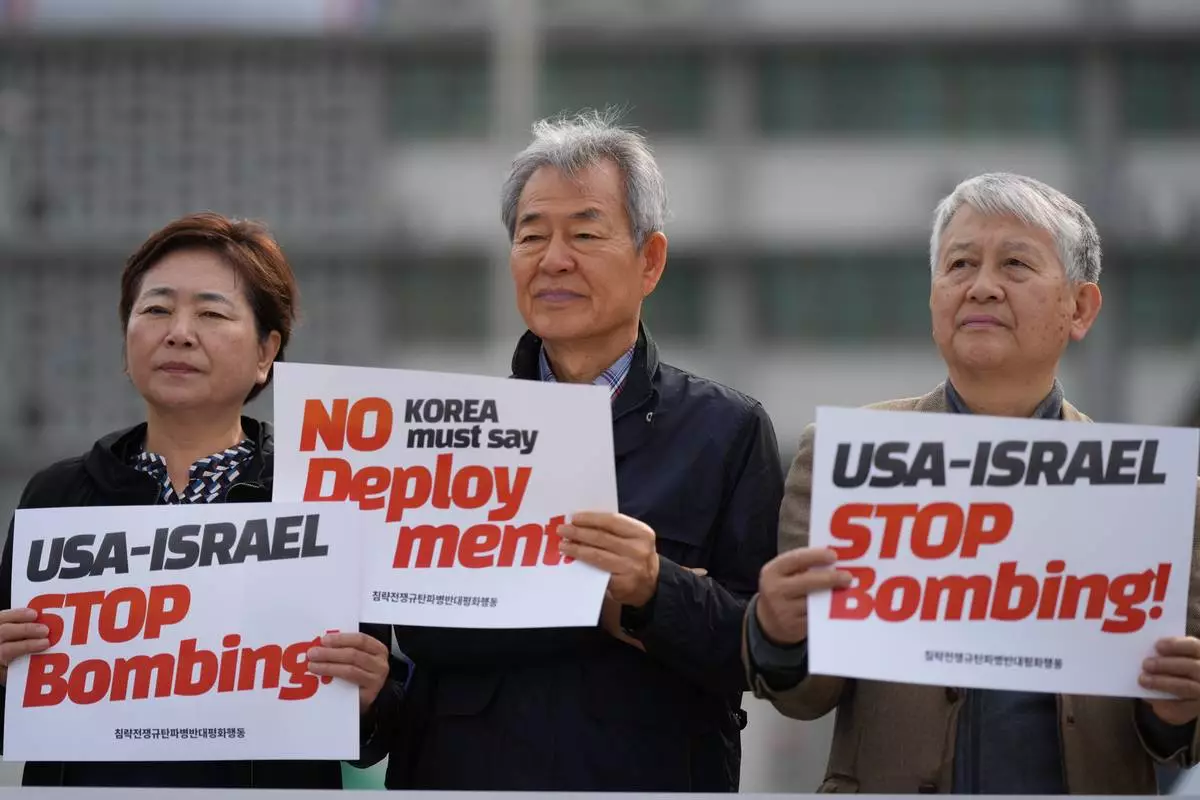
Members of civic groups hold signs against the U.S. and Israel attacks on Iran near the U.S. Embassy in Seoul, South Korea, Wednesday, April 1, 2026. (AP Photo/Lee Jin-man)
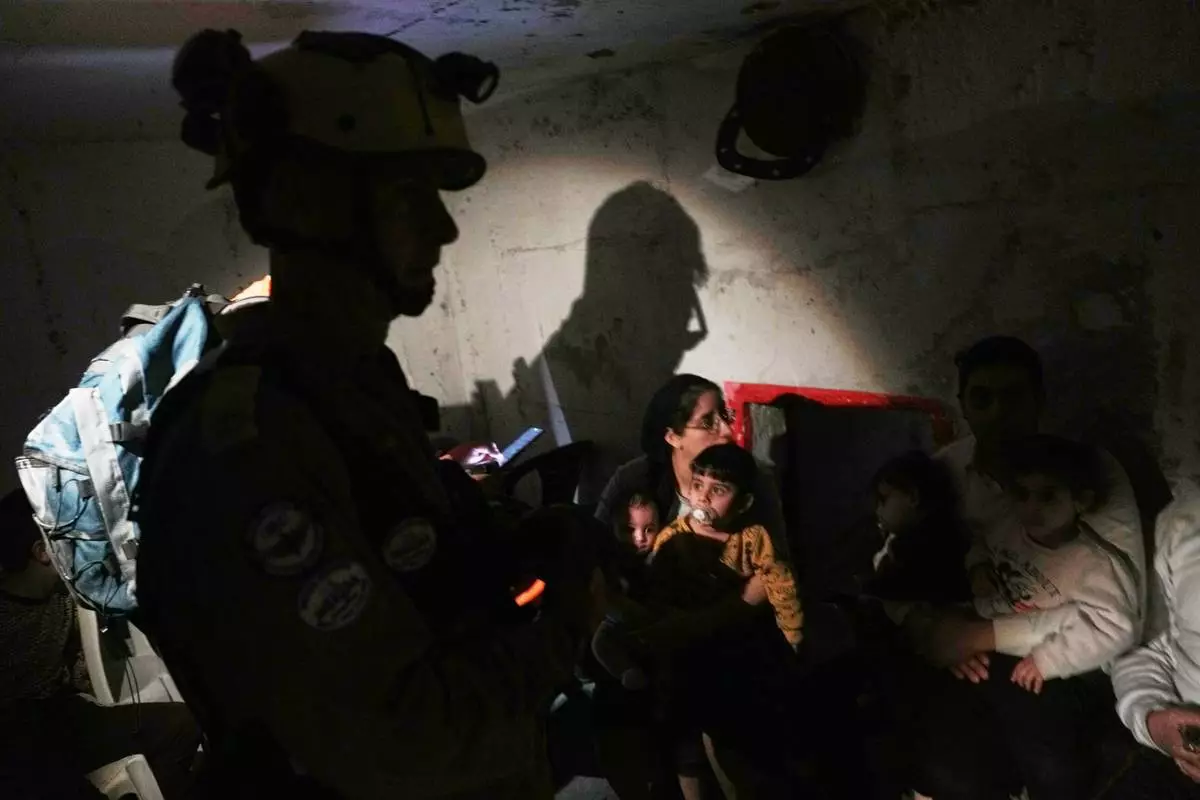
Israel's rescue teams and residents take shelter as sirens sounds next to a site struck by an Iranian missile in Bnei Brak, Wednesday, April 1, 2026. (AP Photo/Oded Balilty)
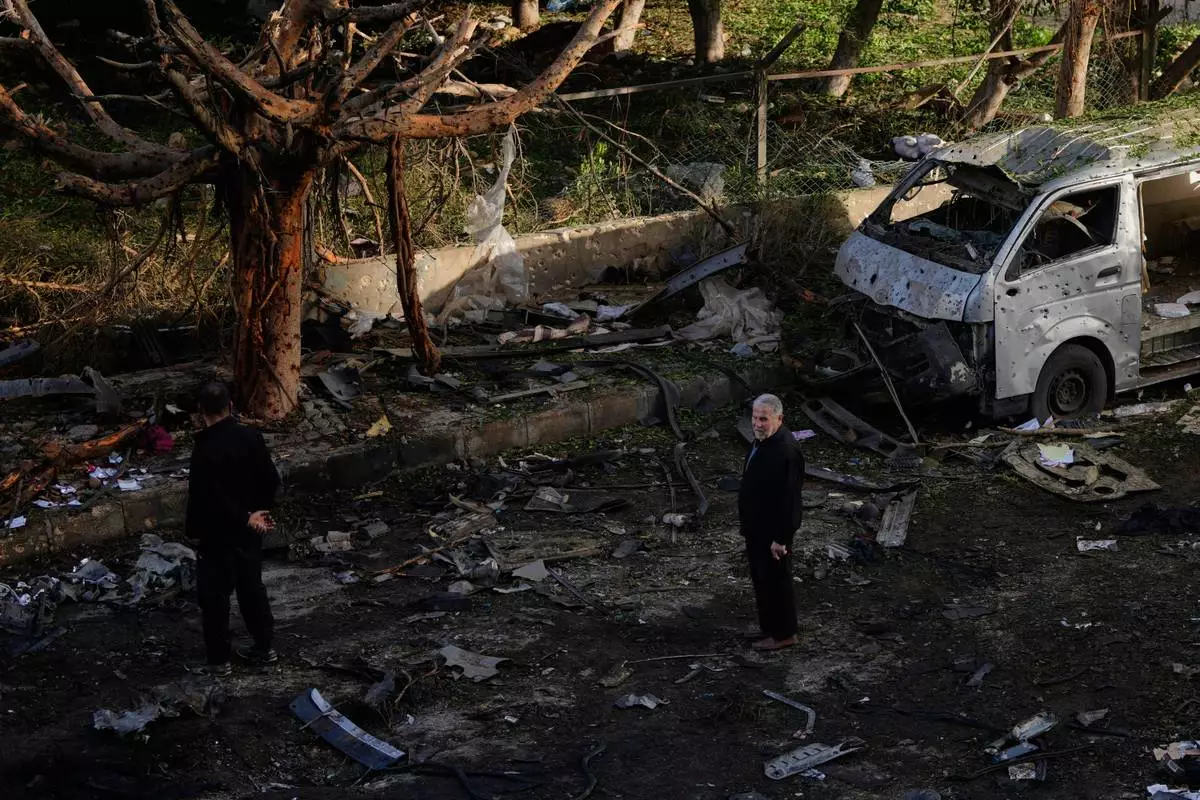
People stand near a damaged van beside scattered debris following an Israeli strike in Beirut, Lebanon, Wednesday, April 1, 2026. (AP Photo/Hassan Ammar)
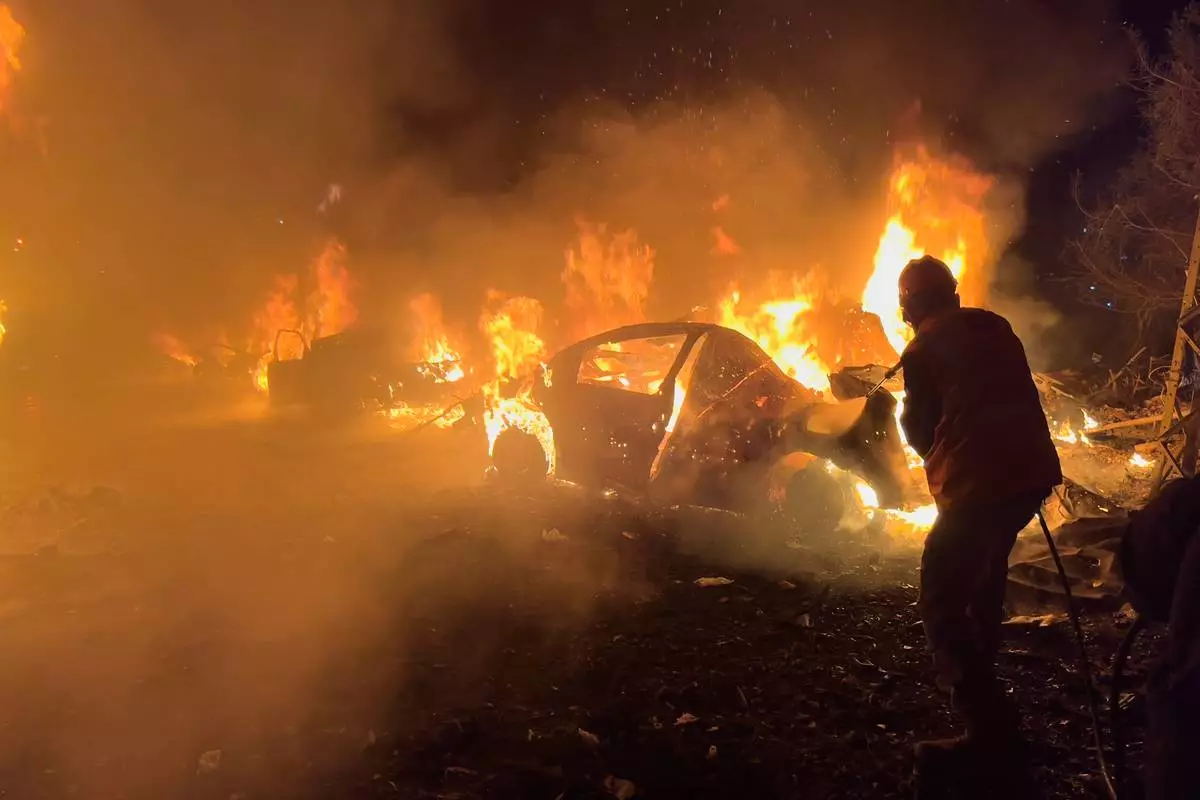
A firefighter extinguishes a car at the site of Israeli airstrikes, in Beirut, Lebanon, Wednesday, April 1, 2026. (AP Photo/Hussein Malla)

Residents and Israeli security forces inspect a site struck by an Iranian missile in Petah Tikva, Israel, Tuesday, March 31, 2026. (AP Photo/Ohad Zwigenberg)
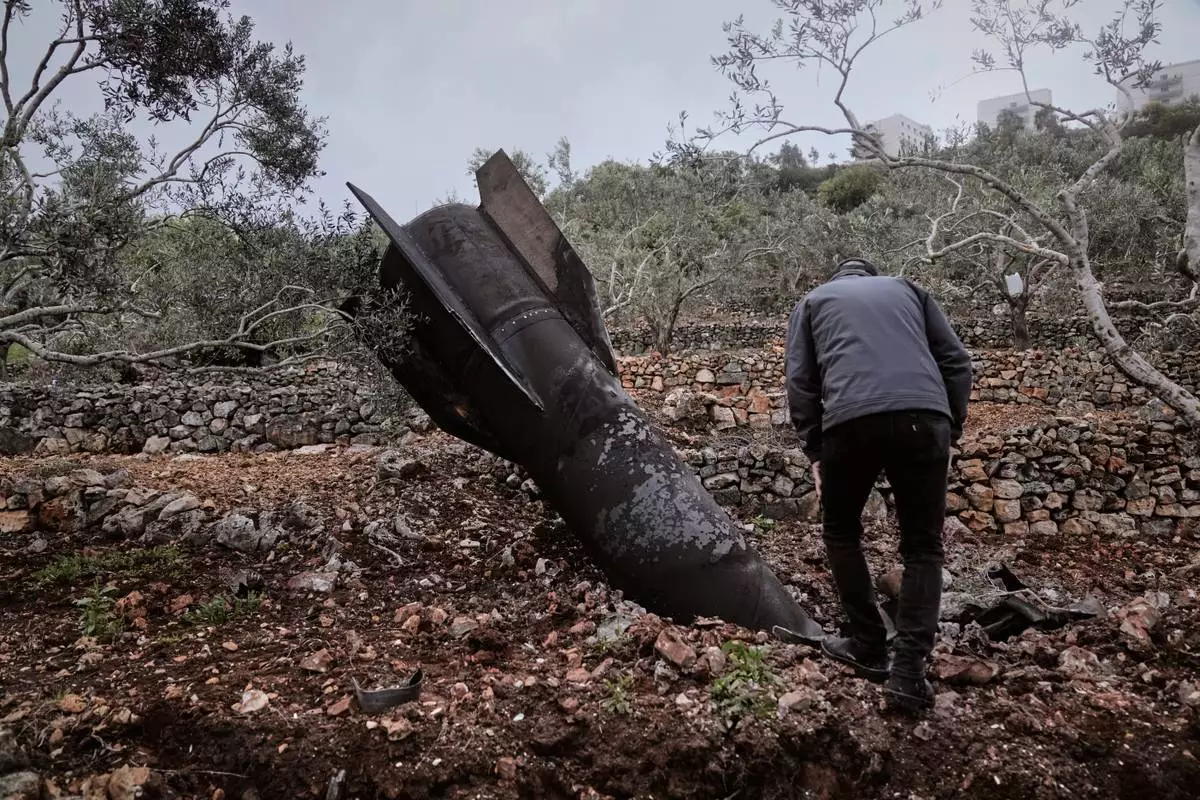
A man inspect the wreckage of an Iranian missile that landed near the West Bank village of Marda, Tuesday, March 31, 2026. (AP Photo/Majdi Mohammed)
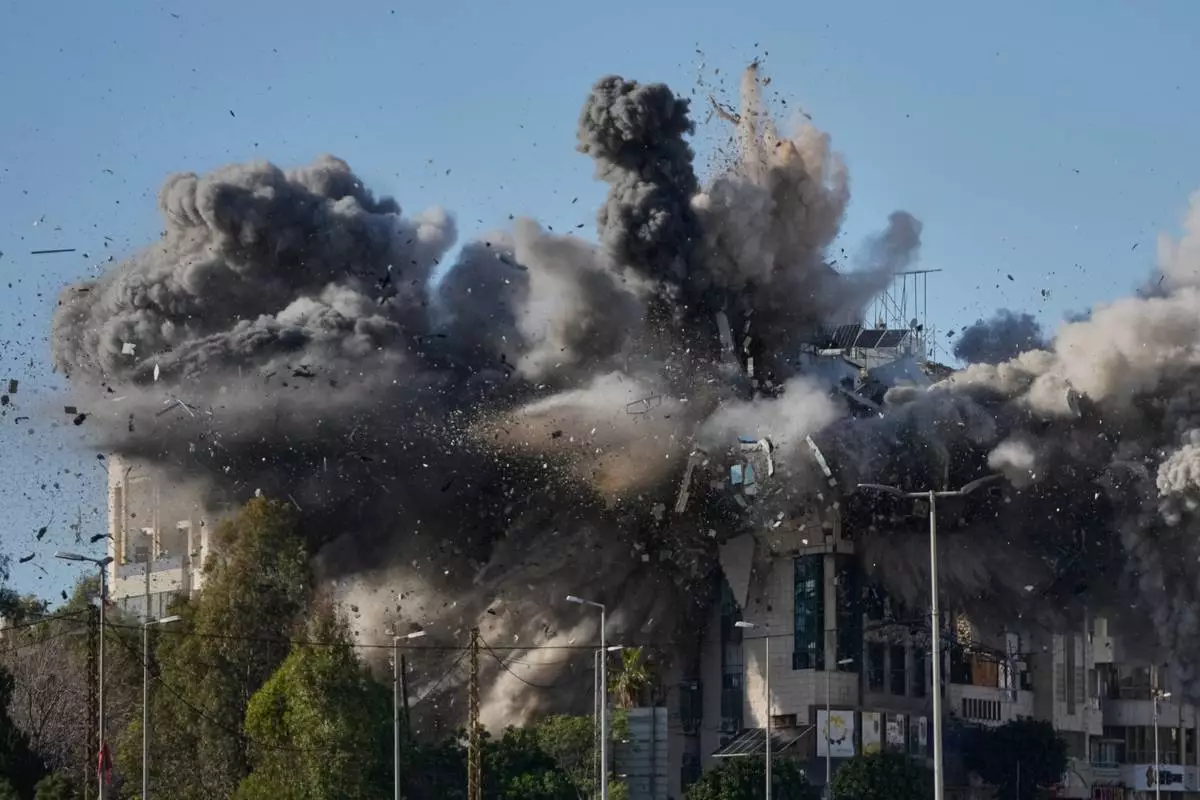
Smoke rises after an Israeli airstrike hits a building near the airport road in Beirut, Lebanon, Tuesday, March 31, 2026. (AP Photo/Hussein Malla)
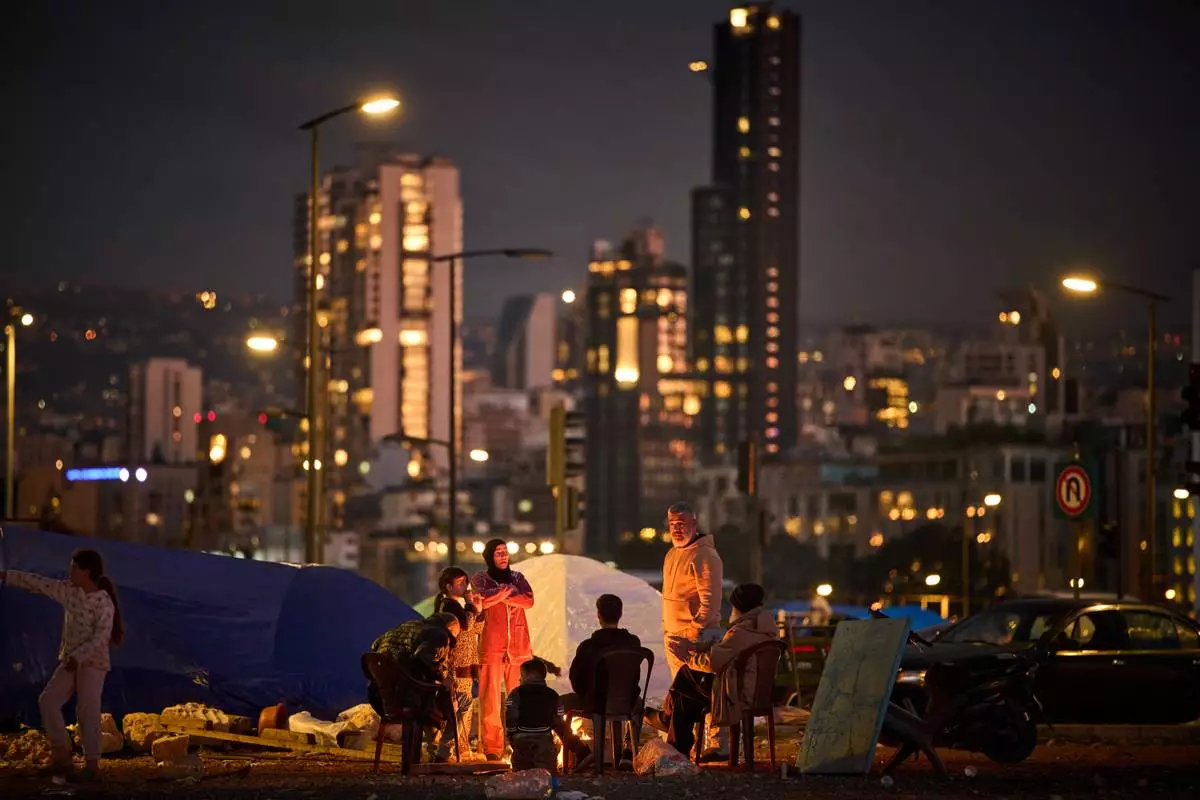
A family who fled Israeli shelling in southern Lebanon warm themselves by a bonfire next to tents used as shelters in Beirut, Lebanon, Tuesday, March 31, 2026. (AP Photo/Emilio Morenatti)