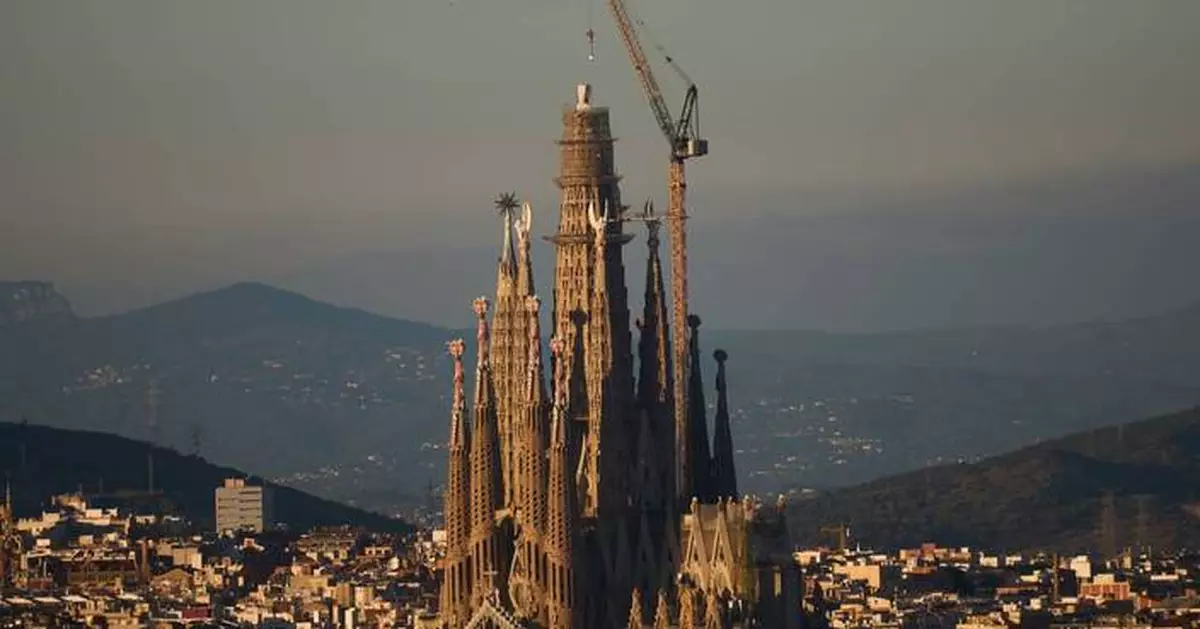
BARCELONA, Spain (AP) — Barcelona’s Sagrada Familia basilica became the world’s tallest church on Thursday after a part of its central tower was lifted into place.
The masterwork of architect Antoni Gaudí now rises to 162.91 meters (534 feet) above the city, the church said in a statement. That barely beats out the tip of the spire of Germany’s Ulmer Münster, which tops out at 161.53 (530 feet) meters.
The Ulmer Münster, a Gothic Lutheran church built between 1543 and 1890, has held the title of the world’s tallest church. That bragging right now gets passed to its Spanish rival. Even though the Sagrada Familia does not claim the title, the numbers are there to compare: it is now just over a meter (3.2 feet) taller than the church in southern Germany.
And the Sagrada Familia is still growing. The central “Tower of Jesus Christ” that is rising from the top of the church will reach 172 meters (564 feet) when it is completed in the coming months.
A crane placed the first part of the tower on top of the nave on Thursday morning.
The first stone of the Sagrada Familia was placed in 1882, but Gaudí never expected it to be completed in his lifetime. Only one of its multiple towers was finished when he died.
Work has sped up over recent decades as the basilica became a major international tourist attraction with people around the world enthralled by Gaudí's unique aesthetic that combines Catholic symbolism and organic forms.
The money from entrance fees is used to fund the ongoing construction. Last year, 4.9 million people paid to visit it, with 15% of those tourists coming from the United States.
Work on the church’s elaborate facades and decorating its interior will continue for several years. It is expected to be completely finished around a decade from now, church officials said earlier this year.
Next year will be the 100th anniversary of the death of Gaudí. The church will hold several events to celebrate his legacy, which includes other stunning buildings in Barcelona and other places in Spain.
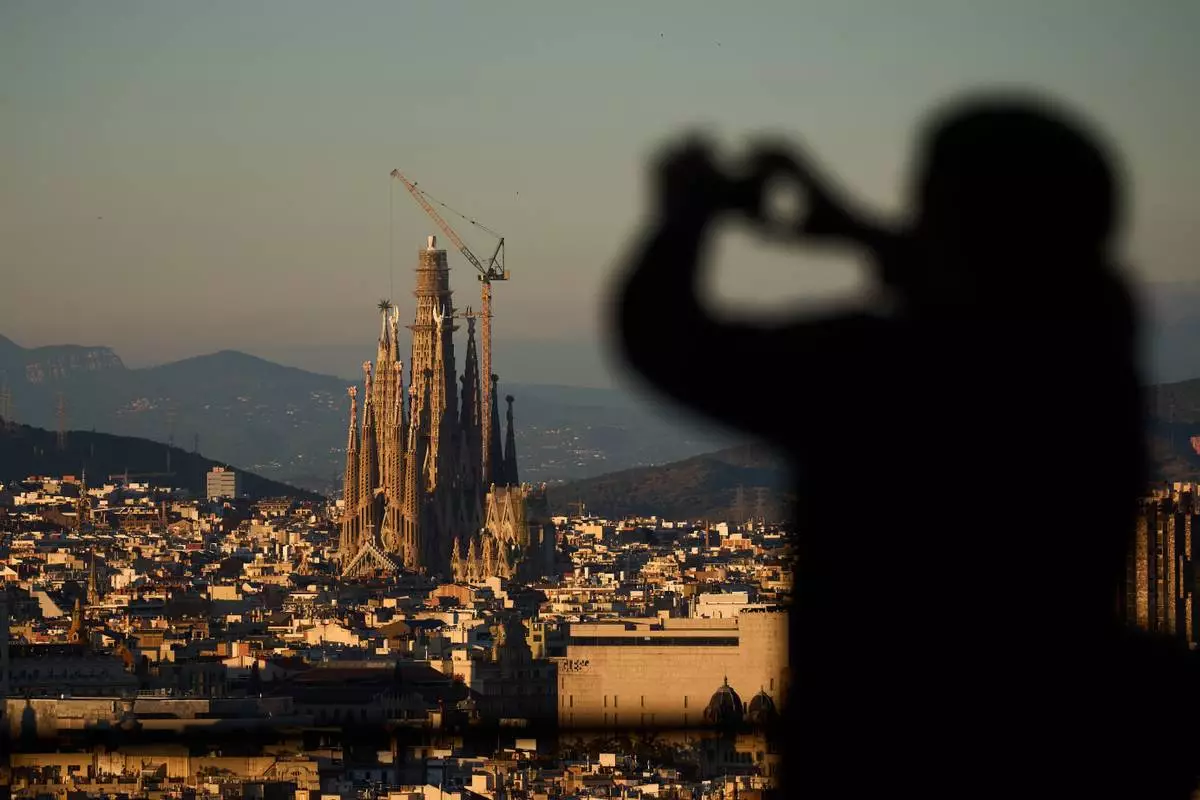
A tourist takes photos at the Sagrada Familia basilica, which became the world's tallest church on Thursday after a section of its central tower was lifted into place, in Barcelona, Spain, Oct. 30, 2025. (AP Photo/Emilio Morenatti)
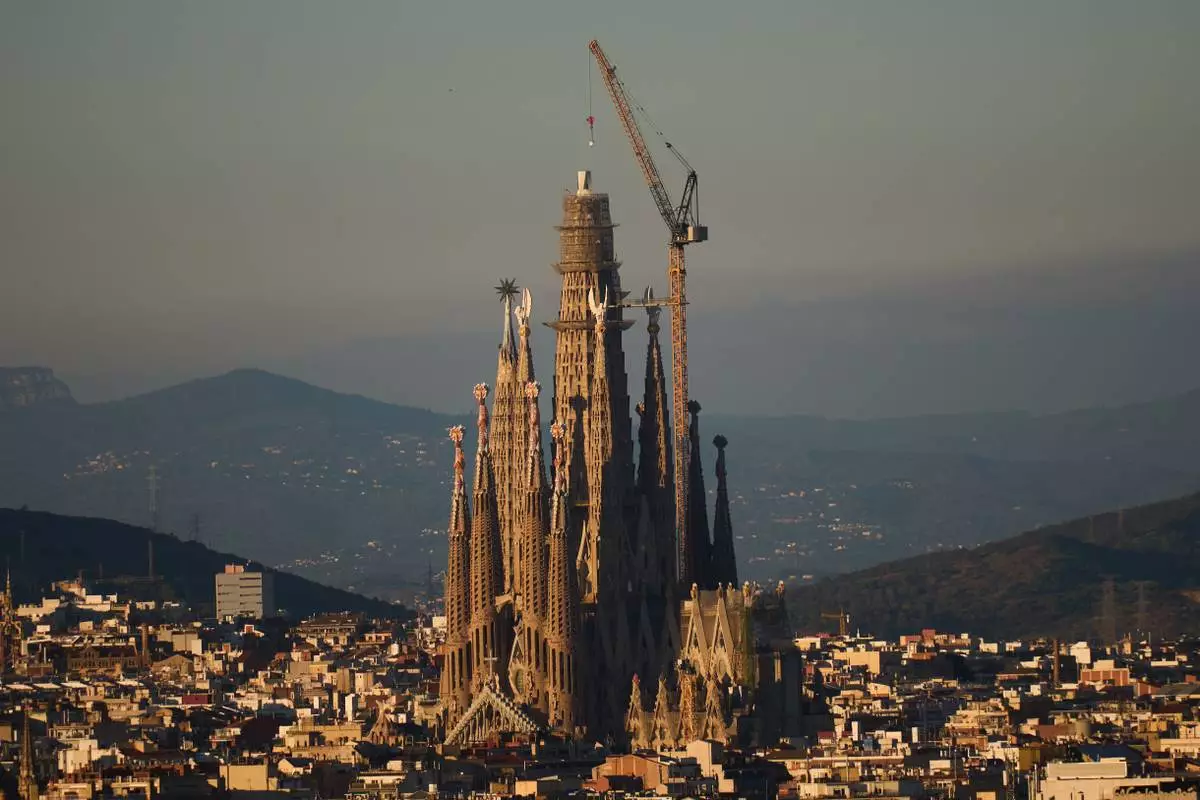
View of the Sagrada Familia basilica, which became the world's tallest church on Thursday after a section of its central tower was lifted into place, in Barcelona, Spain, Oct. 30, 2025. (AP Photo/Emilio Morenatti)
Anthropic is suing the Trump administration, asking federal courts to reverse the Pentagon’s decision designating the artificial intelligence company a “ supply chain risk ” over its refusal to allow unrestricted military use of its technology.
Anthropic filed two separate lawsuits Monday, one in California federal court and another in the federal appeals court in Washington, D.C., each challenging different aspects of the Pentagon’s actions against the company.
The Pentagon last week formally designated the San Francisco tech company a supply chain risk after an unusually public dispute over how its AI chatbot Claude could be used in warfare.
“These actions are unprecedented and unlawful," Anthropic's lawsuit says. "The Constitution does not allow the government to wield its enormous power to punish a company for its protected speech. No federal statute authorizes the actions taken here. Anthropic turns to the judiciary as a last resort to vindicate its rights and halt the Executive’s unlawful campaign of retaliation.”
The Defense Department declined to comment Monday.
Anthropic said it sought to restrict its technology from being used for two high-level usages: mass surveillance of Americans and fully autonomous weapons. Defense Secretary Pete Hegseth and other officials insisted the company must accept “all lawful uses” of Claude and threatened punishment if the company did not comply.
Designating the company a supply chain risk cuts off Anthropic defense work using an authority that was designed to prevent foreign adversaries from harming national security systems. It was the first time the federal government is known to have used the designation against a U.S. company.
President Donald Trump also said he would order federal agencies to stop using Claude, though he gave the Pentagon six months to phase out a product that’s deeply embedded in classified military systems, including those used in the Iran war.
Even as it fights the Pentagon’s actions, Anthropic has sought to convince businesses and other government agencies that the Trump administration’s penalty is a narrow one that only affects military contractors when they are using Claude in work for the Department of Defense.
Making that distinction clear is crucial for the privately held Anthropic because most of its projected $14 billion in revenue this year comes from businesses and government agencies that are using Claude for computer coding and other tasks. More than 500 customers are paying Anthropic at least $1 million annually for Claude, according to investment that had valued the company at $380 billion.

FILE- Secretary of Defense Pete Hegseth, left, and Under Secretary of Defense for Research and Engineering Emil Michael, right, arrive to look at a display of multi-domain autonomous systems in the Pentagon courtyard, Wednesday, July 16, 2025, in Washington. (AP Photo/Julia Demaree Nikhinson, File)
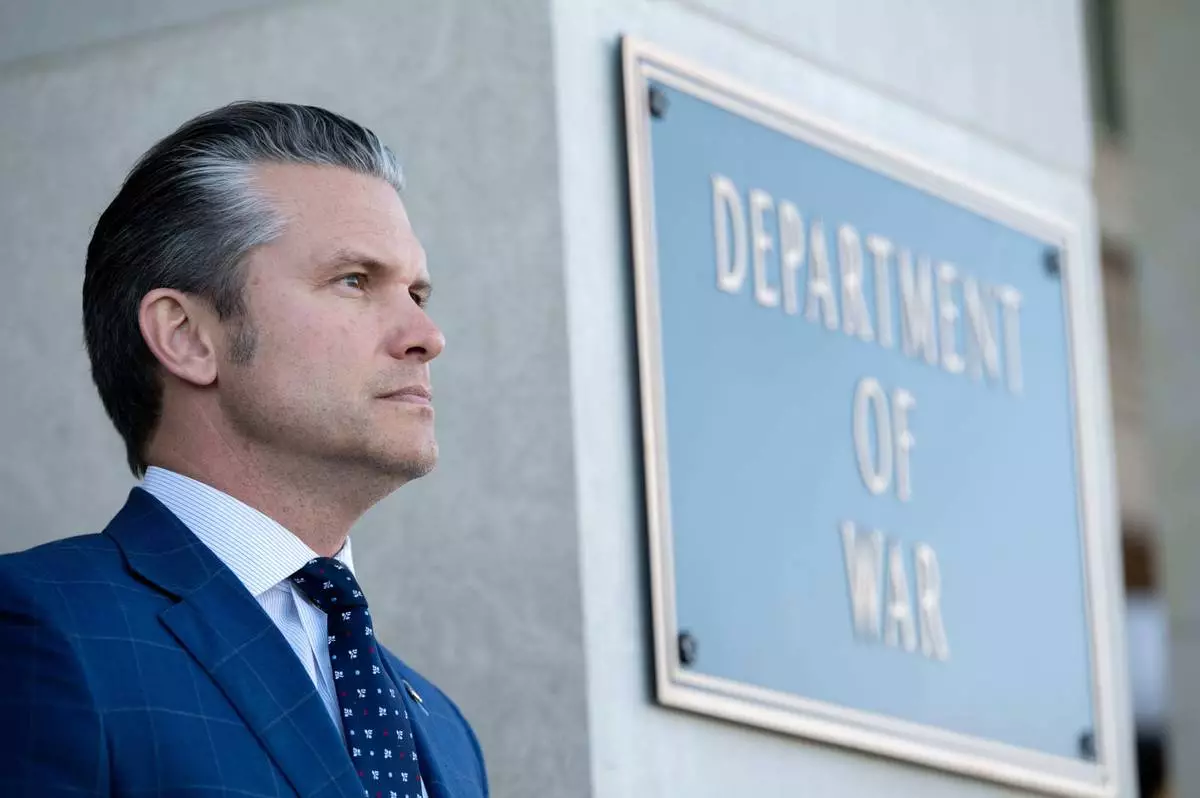
FILE - Defense Secretary Pete Hegseth stands outside the Pentagon during a welcome ceremony for the Japanese defense minister at the Pentagon in Washington, Jan. 15, 2026. (AP Photo/Kevin Wolf, File)
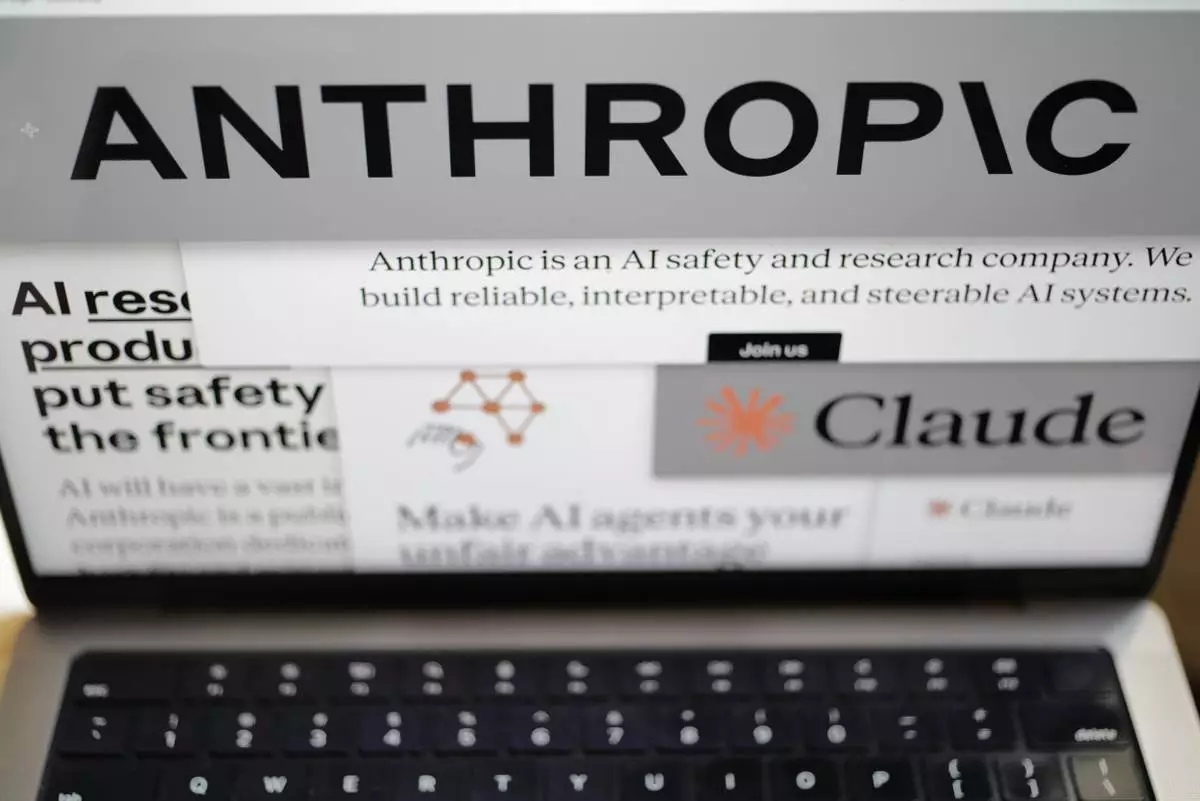
Pages from the Anthropic website and the company's logos are displayed on a computer screen in New York on Thursday, Feb. 26, 2026. (AP Photo/Patrick Sison)