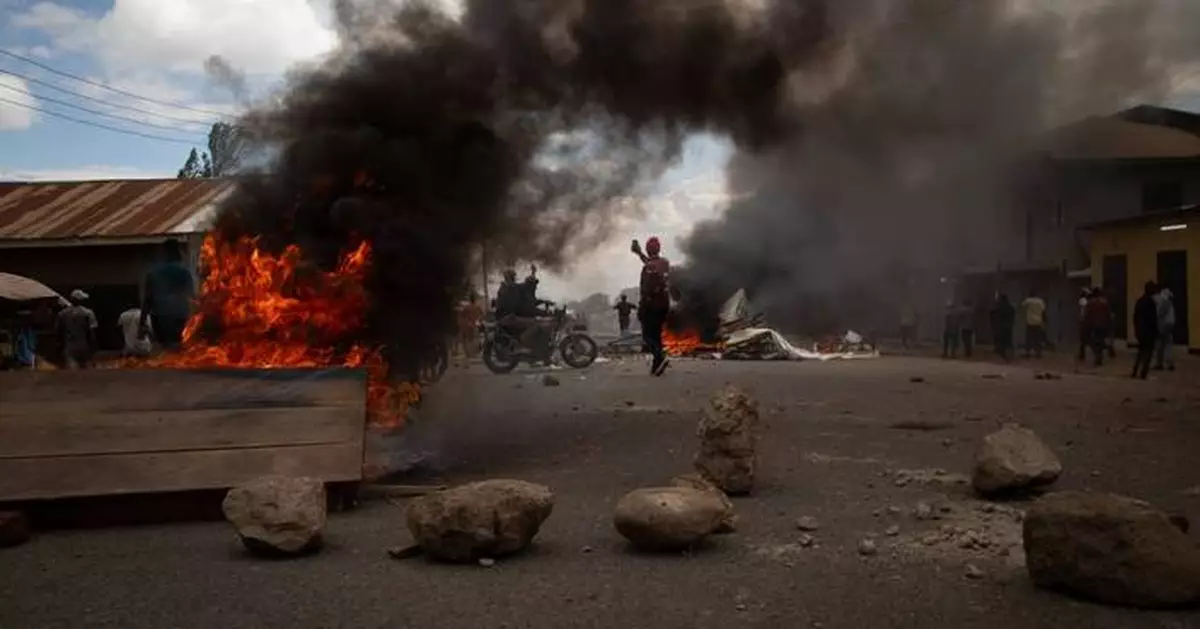
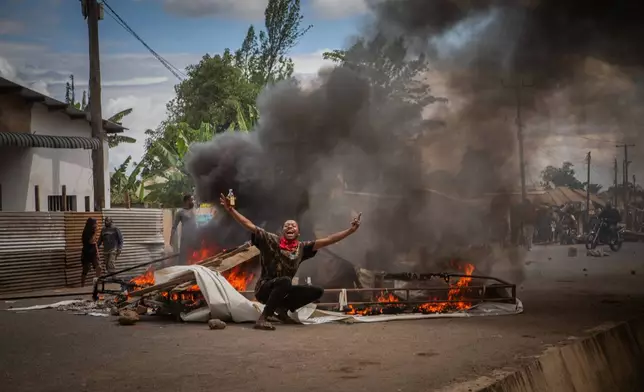
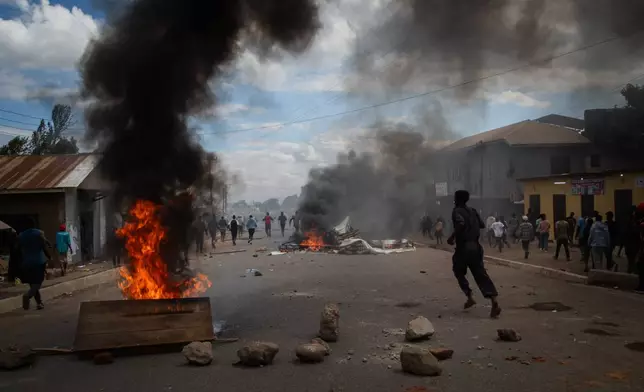
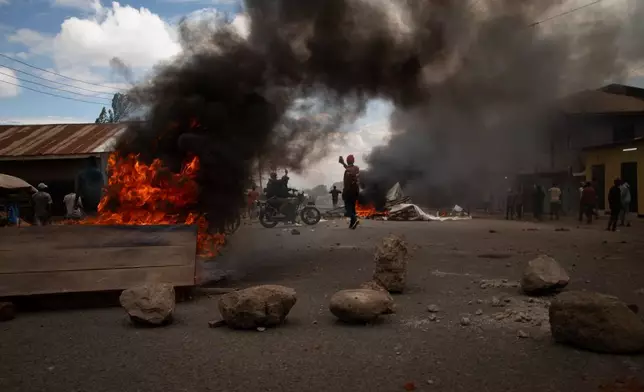
KAMPALA, Uganda (AP) — Protests are spreading in Tanzania as electoral authorities count the votes in a disputed presidential election that rights groups, opposition figures and others say was clouded by a climate of fear in the months leading to election day.
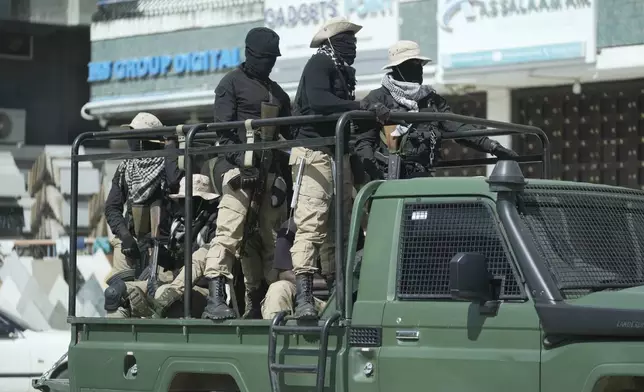
The military has been deployed alongside the police to quell riots in major cities since Wednesday's election. The sight of soldiers patrolling the streets, sporadic gunfire and closed stores is rare in the usually peaceful country that many foreigners visit for its pristine coastal beaches and safari tourism.
Click to Gallery
People protest in the streets of Arusha, Tanzania, on election day Wednesday, Oct. 29, 2025. (AP Photo/str)
People protest in the streets of Arusha, Tanzania, on election day Wednesday, Oct. 29, 2025. (AP Photo/str)
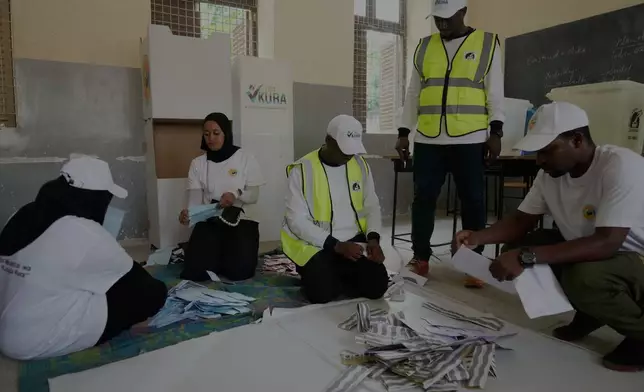
Members of the election commission count votes at Haile Selassie polling station in Zanzibar, Tanzania, Wednesday, Oct. 29, 2025. (AP Photo/Brian Inganga)
Police patrol the streets on election day in Zanzibar, Tanzania, Thursday, Oct. 30, 2025. (AP Photo)
People protest in the streets of Arusha, Tanzania, on election day Wednesday, Oct. 29, 2025. (AP Photo/str)
That’s partly because Tanzania’s first female leader, who has served as president since 2021, has sparked widespread anger for running virtually unopposed after her two main opponents were blocked or prevented from contesting.
President Samia Suluhu Hassan, who seeks five more years as president, ran against 16 candidates from smaller parties. Critics say that’s a coronation, not a contest. Hassan is now the subject of a range of uncharitable cartoons, posted on social media, derided as a dictator and lampooned as being afraid of competition.
Tundu Lissu, leader of the Chadema opposition group, has been jailed for months, charged with treason after he called for electoral reforms that he said were a prerequisite for free and fair elections. Another opposition figure, Luhaga Mpina of the ACT-Wazalendo group, was barred from standing.
At stake for the ruling Chama cha Mapinduzi party, or CCM, is its decades-long grip on power amid the rise of charismatic opposition figures who hope to lead the country toward political change.
The Armed Conflict Location & Event Data, or ACLED, a nonprofit tracking violence and protest movements around the world, describes CCM as the "last of the hegemonic liberation parties,” trying to cling to power by blocking the opposition “through administrative, legal, and extra-legal means.”
The pattern includes enforced disappearances, arbitrary arrests and extrajudicial killings, according to Amnesty International. In June, a United Nations panel of human rights experts cited more than 200 cases of enforced disappearance since 2019, saying they were “alarmed by reports of a pattern of repression” ahead of elections.
Internet access has been on and off since Wednesday as the nation awaits official results.
Tanzania’s president has “overseen an unprecedented crackdown on political opponents,” the International Crisis Group said in its most recent analysis. “The government has curbed freedom of expression, ranging from a ban on X and restrictions on the Tanzanian digital platform JamiiForums to silencing critical voices through intimidation or arrest.”
Local police even appeared to be “conducting so-called online patrols," it said.
The political maneuvering by Tanzanian authorities is unprecedented even in a country where single-party rule has been the norm since the advent of multi-party politics in 1992. Government critics point out that previous leaders tolerated opposition while maintaining a firm grip on power, whereas Hassan is accused of leading with an authoritarian style that defies youth-led democracy movements elsewhere in the region.
In Uganda, the opposition leader Bobi Wine, whose real name is Kyagulanyi Ssentamu, is the leader of what began as the “People Power” movement, which aims for a break with nearly four decades of the same leader. President Yoweri Museveni took his lowest-ever share of the vote in the 2021 election, marking the 43-year-old Wine as a formidable national leader.
In Kenya, young people have been trying to hold President William Ruto accountable over official corruption and his alleged failure to keep campaign promises. Last year and earlier this year, they held demonstrations in the capital Nairobi that were so large and persistent that Ruto deployed the military to restore order.
In Mozambique a year ago, violence erupted in the streets after the opposition figure Venâncio Mondlane brought his supporters to the streets of the capital Maputo following a disputed election.
In Madagascar earlier in October, protests by mostly young people helped overthrow the government of President Andry Rajoelina, who fled the country after an elite group of the military joined crowds protesting water and electricity cuts.
But Tanzania is different, an outlier in the region.
A version of the governing CCM party, which maintains ties with the Communist Party of China, has ruled Tanzania since independence from Britain in 1961, a remarkable streak that Hassan is trying to extend as opposition leaders try to break CCM’s grip on the country.
CCM is fused with the state, effectively in charge of the security apparatus and structured in such a way that new leaders emerge every five or ten years. Hassan herself was able to rise to the presidency as vice president without incident when her predecessor, John Pombe Magufuli, died suddenly after the start of his second term.
The orderly transition sustained Tanzania’s reputation as an oasis of political stability and relative peace, a major reason for CCM’s considerable support, especially among rural voters.
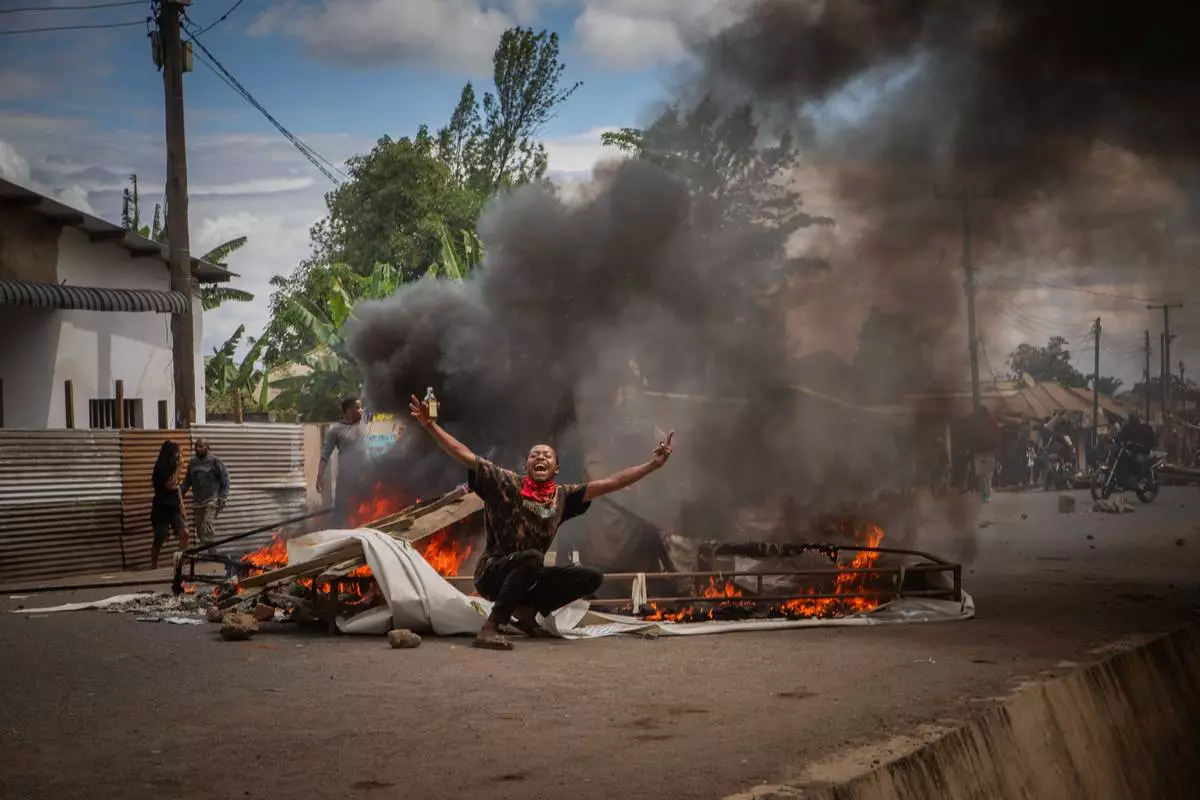
People protest in the streets of Arusha, Tanzania, on election day Wednesday, Oct. 29, 2025. (AP Photo/str)
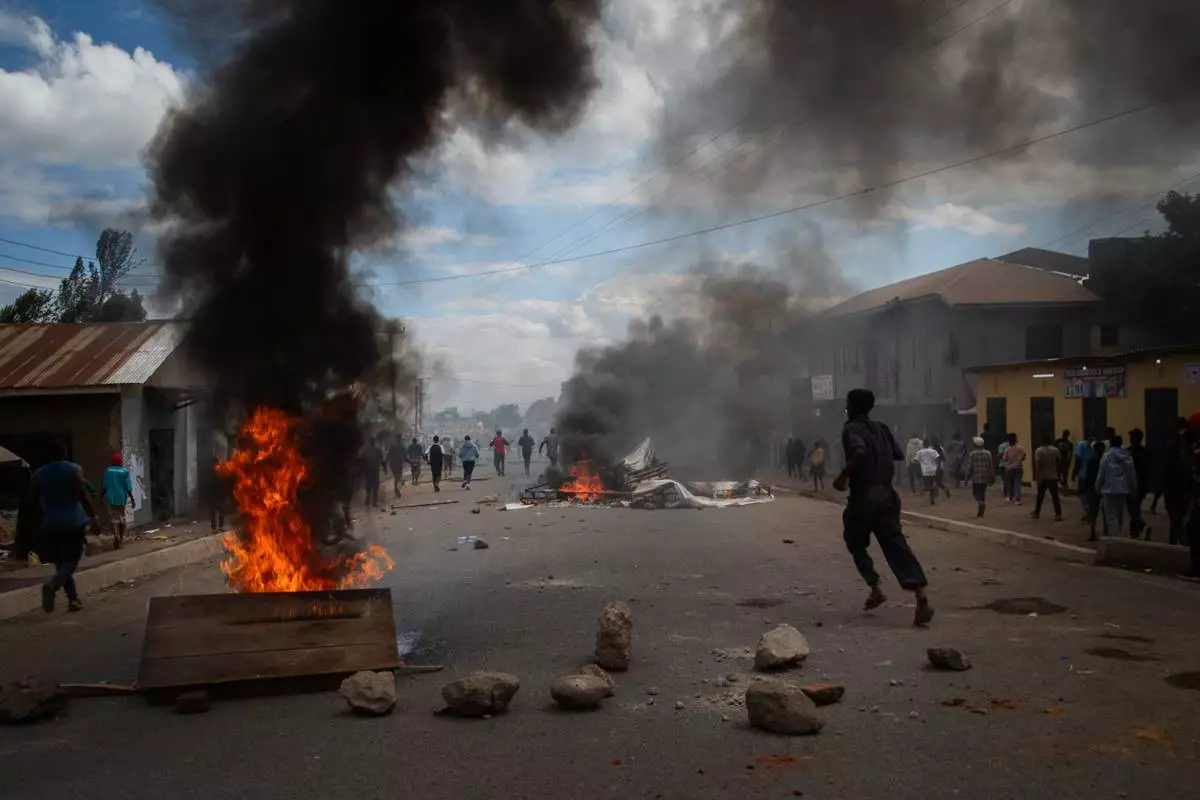
People protest in the streets of Arusha, Tanzania, on election day Wednesday, Oct. 29, 2025. (AP Photo/str)
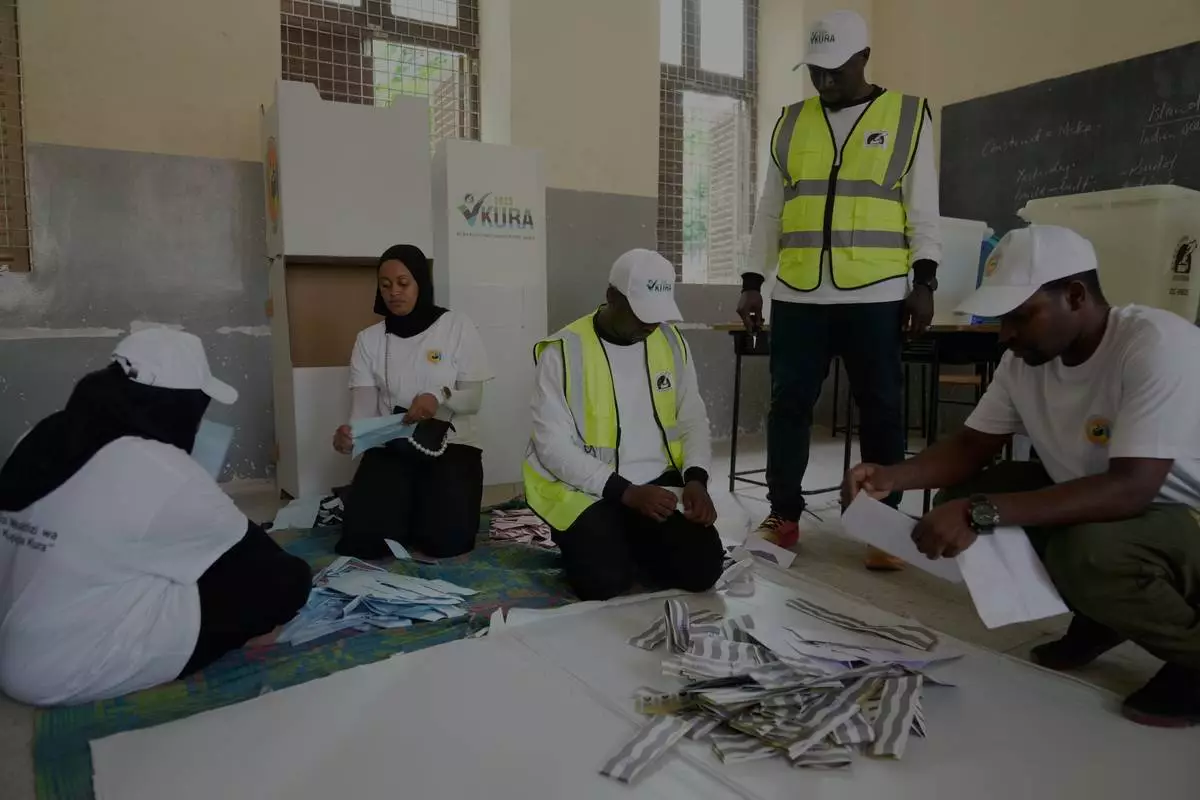
Members of the election commission count votes at Haile Selassie polling station in Zanzibar, Tanzania, Wednesday, Oct. 29, 2025. (AP Photo/Brian Inganga)
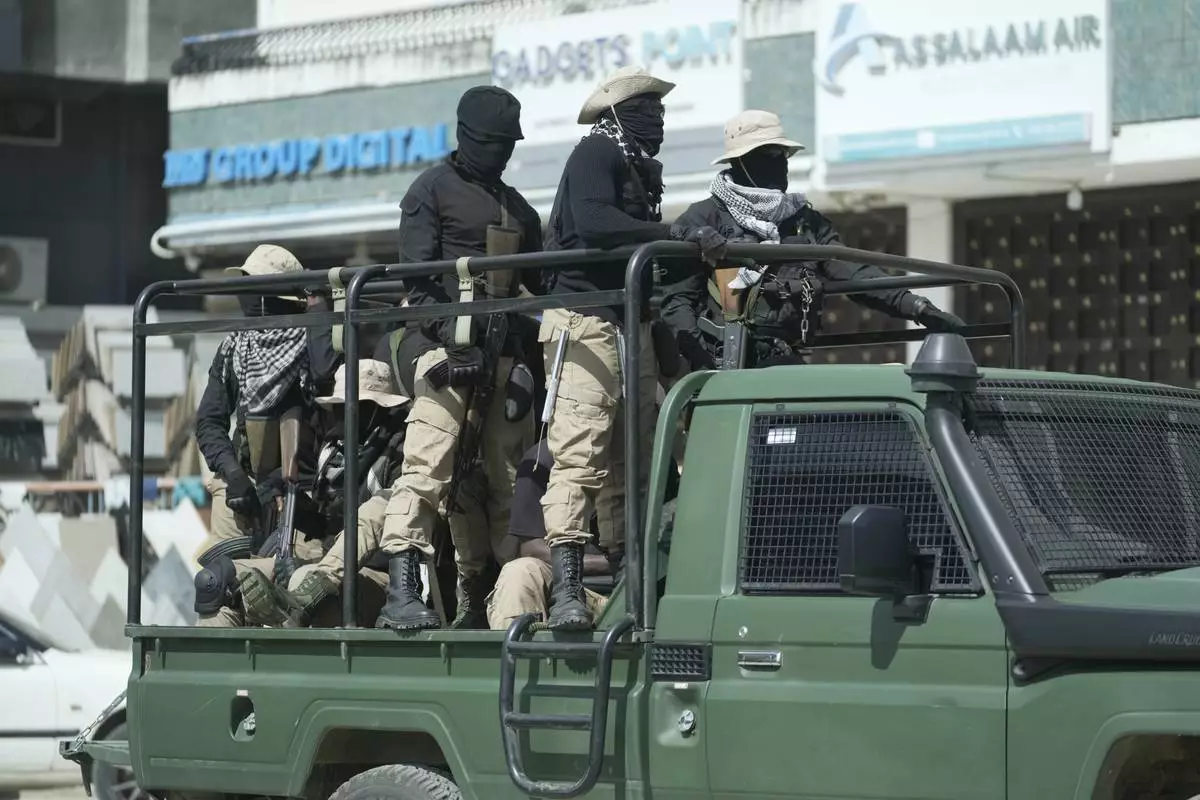
Police patrol the streets on election day in Zanzibar, Tanzania, Thursday, Oct. 30, 2025. (AP Photo)
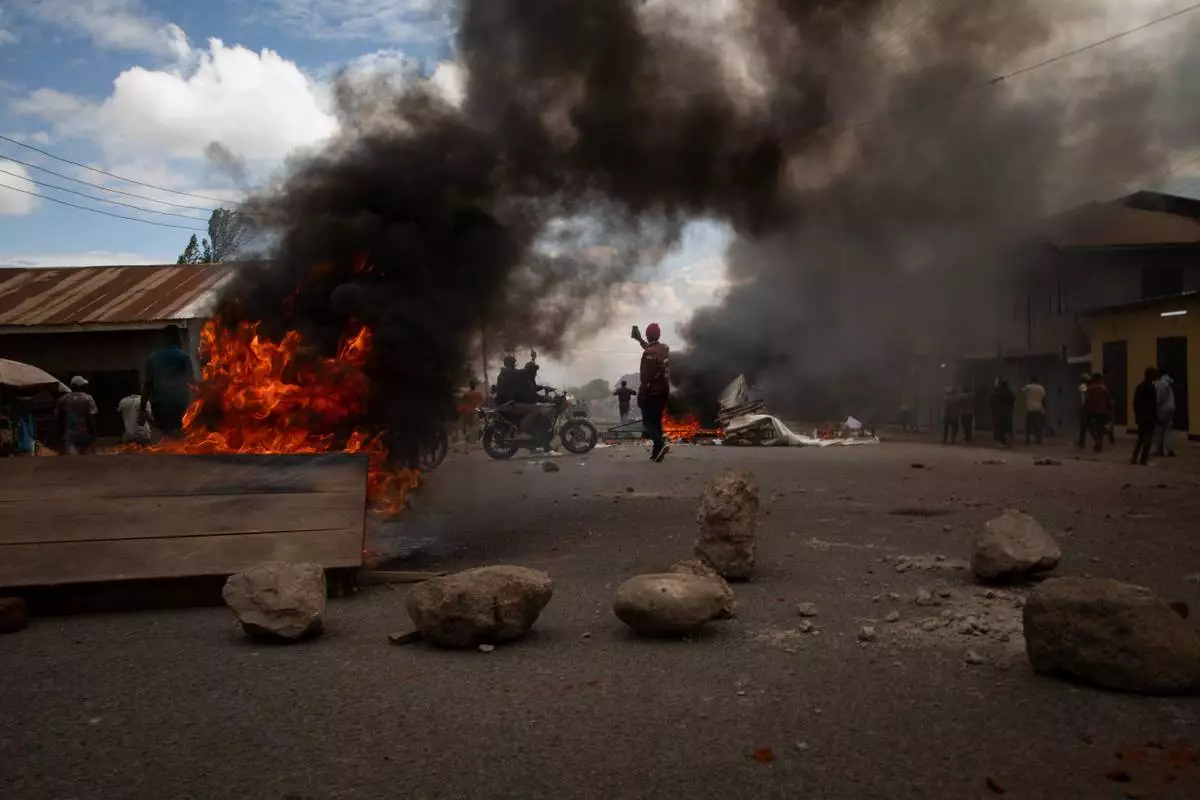
People protest in the streets of Arusha, Tanzania, on election day Wednesday, Oct. 29, 2025. (AP Photo/str)
Iranians on Wednesday struck a defiant tone, celebrating U.S. voters’ rebuke of President Donald Trump in the midterm elections while many in the Middle East waited to see how the results could affect the Iran war.
Concerns about the war, particularly frustration over rising prices for fuel and other goods in the U.S., helped Democrats win control of both chambers of Congress in Tuesday’s vote, a sharp setback for Trump and his Republican Party.
But Iran’s supreme leader, Ayatollah Mojtaba Khamenei, whose father and predecessor was killed in the opening strikes of the war in February, dismissed the prospect of any major change in the U.S. approach to the Islamic Republic.
“If there are still those who harbor even a slight hope for a change in behavior or partisan and factional shifts within the system of domination, or who imagine that by giving concessions to America they can dissuade it from hostility toward the Iranian nation, they are gravely mistaken,” he said on his social media account.
The broader region has been on edge for weeks over the prospect of the U.S. resuming full-scale military operations against Iran. Talks aimed at preventing renewed fighting are continuing, while other U.S. allies in the region urge Washington against resuming a war that began more than eight months ago and has rattled the global economy and devastated Iran.
Israeli Prime Minister Benjamin Netanyahu has reportedly pushed for more strikes, while Trump has alternated between threatening major military action and pushing for a deal.
Iran’s chief negotiator and parliament speaker, Mohammad Bagher Qalibaf, wrote Wednesday on X that “Americans said NO TO WAR, and we endorse this message.” He warned that if the U.S. government ignores the vote for change, “it will learn our NO comes with a Nightmare.”
Despite ceasefire agreements and repeated diplomatic efforts, military confrontations have continued in southern Iran and around the Strait of Hormuz.
Iran’s Foreign Ministry spokesperson said in a social media post that Americans had sent a clear message and warned Washington against ignoring it. If the U.S. continues to ignore reality, the spokesperson said, “the consequences of this grave miscalculation will extend far beyond what you have already witnessed.”
Underscoring the mutual hostility at the heart of the conflict, thousands marched through Tehran on Wednesday at a government-organized demonstration commemorating the anniversary of the 1979 takeover of the U.S. Embassy.
Pro-government demonstrators burned American and Israeli flags and chanted “Death to America” and “Death to Israel.” They displayed effigies of Trump and Netanyahu alongside caricatures of the two leaders.
“Trump has gone too far in everything and that’s one reason for his defeat in the election,” said Hananeh Jahed, a demonstrator.
Zahra Nadiminejad praised Iranian resistance, saying U.S. voters “finally figured out that this is Iran, and they can’t just come in here and do whatever the hell they want.”
“They’ve seen the consequences of the war back home, from skyrocketing gas and food prices to all the devastating effects the war has had on their own country. And whether the Democrats win or the Republicans win, our hostility toward America will never come to an end.”
Nearly three decades ago, Iranian students stormed the U.S. Embassy on Nov. 4, 1979, taking American diplomats and other citizens hostage. Fifty-two Americans were held for 444 days before being released.
The crisis helped cement the rupture between the two countries, which have had no formal diplomatic relations for years.
The United States and Israel launched the war against Iran on Feb. 28, killing the country’s longtime supreme leader, Ayatollah Ali Khamenei, and triggering a conflict that has disrupted global energy markets and shipping through the Strait of Hormuz.
Addressing the demonstrators on Wednesday, Tehran Mayor Alireza Zakani claimed the United States and Israel had suffered a massive defeat, which he said was also reflected in last week's Israeli elections.
“The decisive defeat of the United States and the Zionist regime in recent developments and elections is the result of the Iranian nation’s steadfastness and strength,” Zakani said.
The U.S. elections came just a day after what appeared to be a limited strike on Iranian targets in the crucial Strait of Hormuz waterway, which renewed questions about what might come next.
Iranian state media reported explosions Monday on Qeshm and Hengam islands and near the southern port city of Bandar Abbas. Iranian authorities have not publicly identified the specific sites struck or disclosed the extent of the damage.
The Strait of Hormuz, through which about a fifth of the world’s traded oil and gas transited before the war, has seen repeated Iranian attacks on commercial shipping. Iran has sought to restrict shipping to pressure the U.S. to lift its blockade on Iranian ports.
Iran’s state TV said Wednesday that four oil tankers caught fire after they struck mines on what it described as unauthorized routes.
Back-channel negotiations have continued.
U.S. Vice President JD Vance said Monday that he and Trump “both feel pretty good about the prospects for potentially coming to a negotiated settlement.”
Before the latest strikes, the Trump administration’s last known attacks on Iran were in early September. Thousands of U.S. troops remain in waters off Iran to maintain the naval blockade, aimed at preventing tankers carrying Iranian oil from reaching the global market. Another aircraft carrier and thousands of additional troops are on their way to the Middle East.
Associated Press writers Samy Magdy, Toqa Ezzidin and Aamer Madhani contributed to this report.
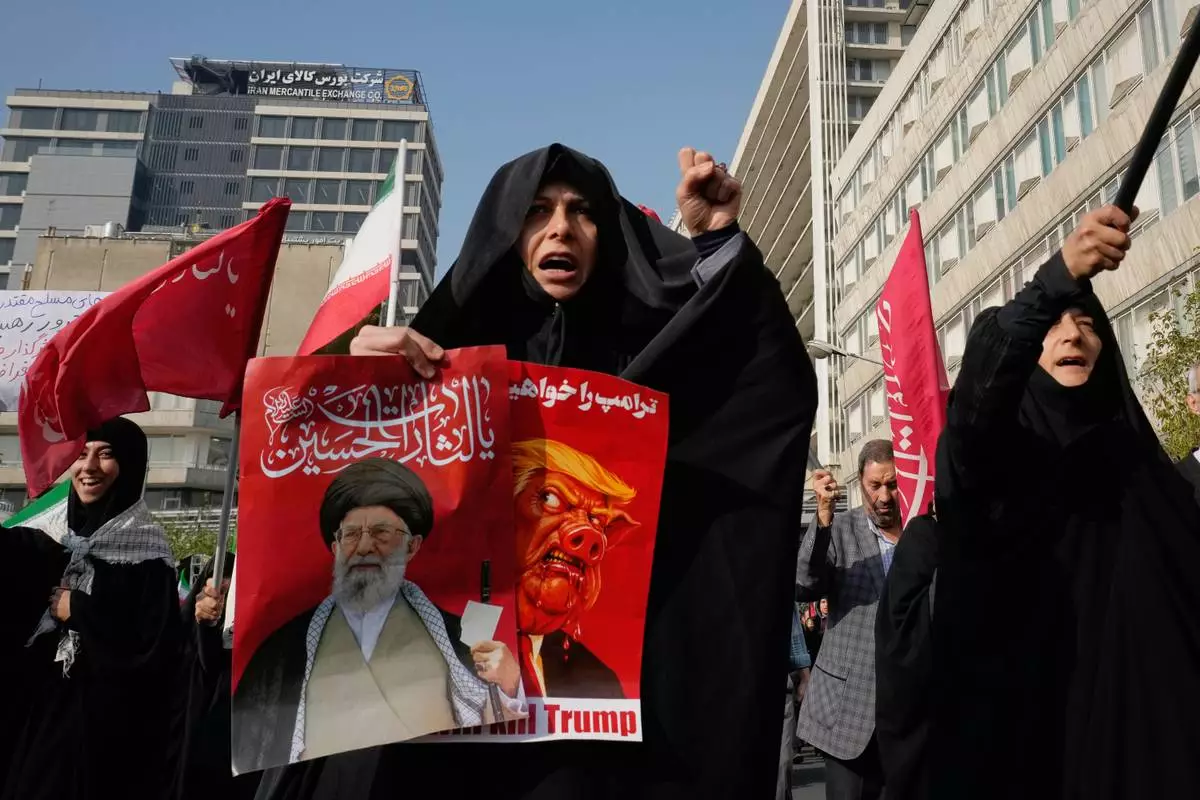
Iranian government supporters raise their fists, one holding a portrait of Iran's late Supreme Leader Ayatollah Ali Khamenei and a caricature of U.S. President Donald Trump, during the annual rally marking the anniversary of the 1979 U.S. Embassy takeover, outside the former embassy in Tehran, Iran, Wednesday, Nov. 4, 2026. (AP Photo/Vahid Salemi)
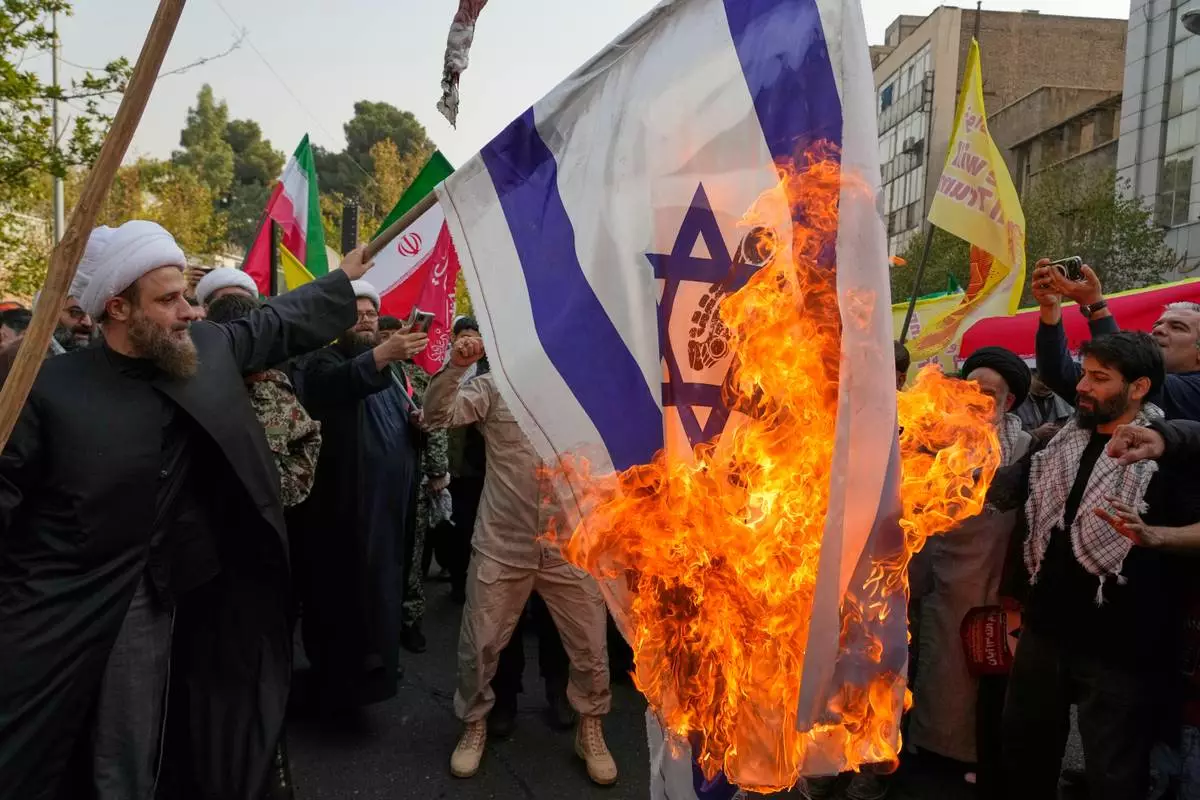
Iranian government supporters burn an Israeli flag during the annual rally marking the anniversary of the 1979 U.S. Embassy takeover, outside the former embassy in Tehran, Iran, Wednesday, Nov. 4, 2026. (AP Photo/Vahid Salemi)
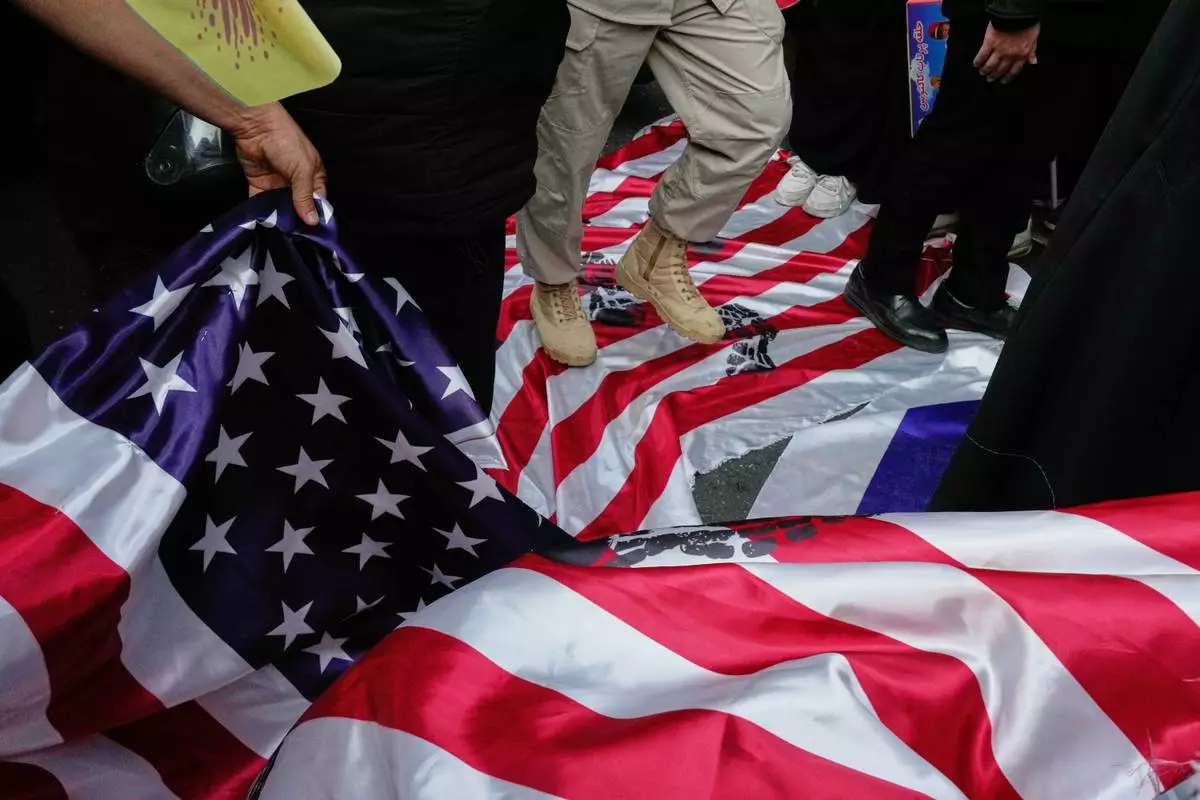
Iranian government supporters step on U.S. and Israeli flags during the annual rally marking the anniversary of the 1979 U.S. Embassy takeover, outside the former embassy in Tehran, Iran, Wednesday, Nov. 4, 2026. (AP Photo/Vahid Salemi)
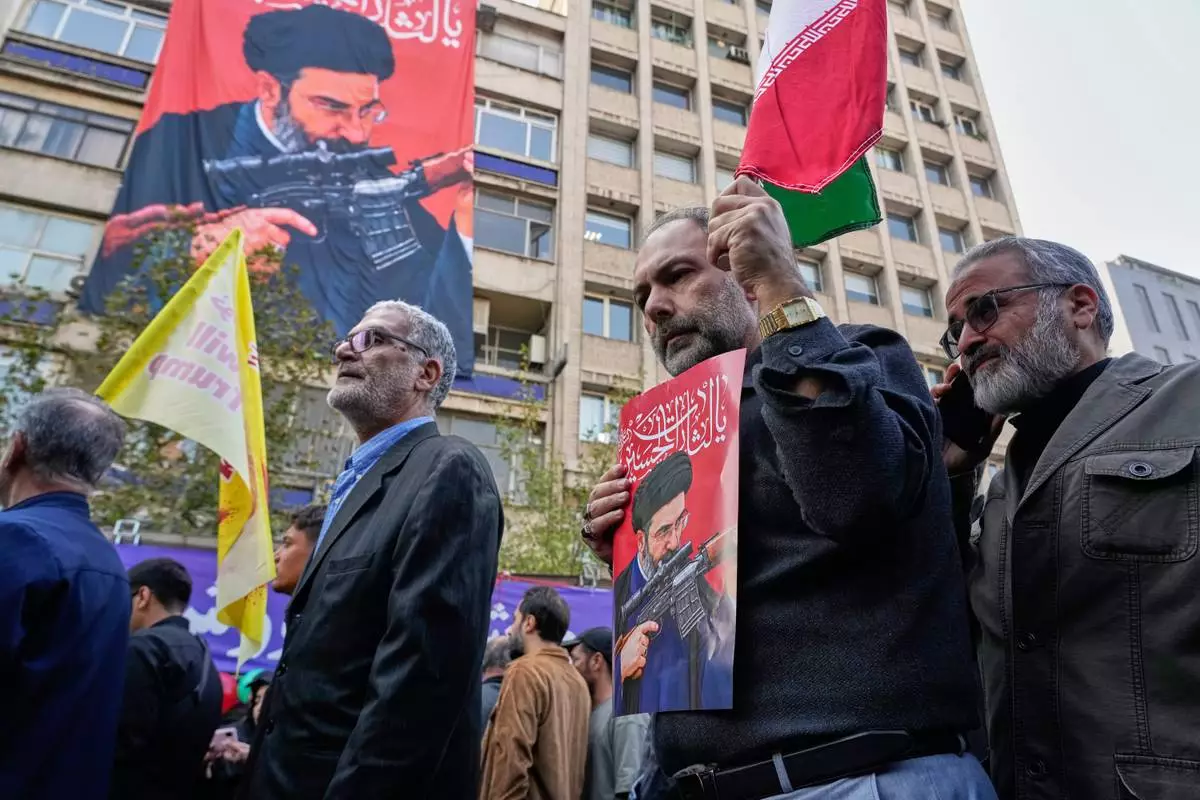
An Iranian government supporter carries an Iranian flag and a poster depicting Iran's Supreme Leader Mojtaba Khamenei with a rifle as he walks beneath a matching banner during the annual rally marking the anniversary of the 1979 U.S. Embassy takeover, outside the former embassy in Tehran, Iran, Wednesday, Nov. 4, 2026. (AP Photo/Vahid Salemi)
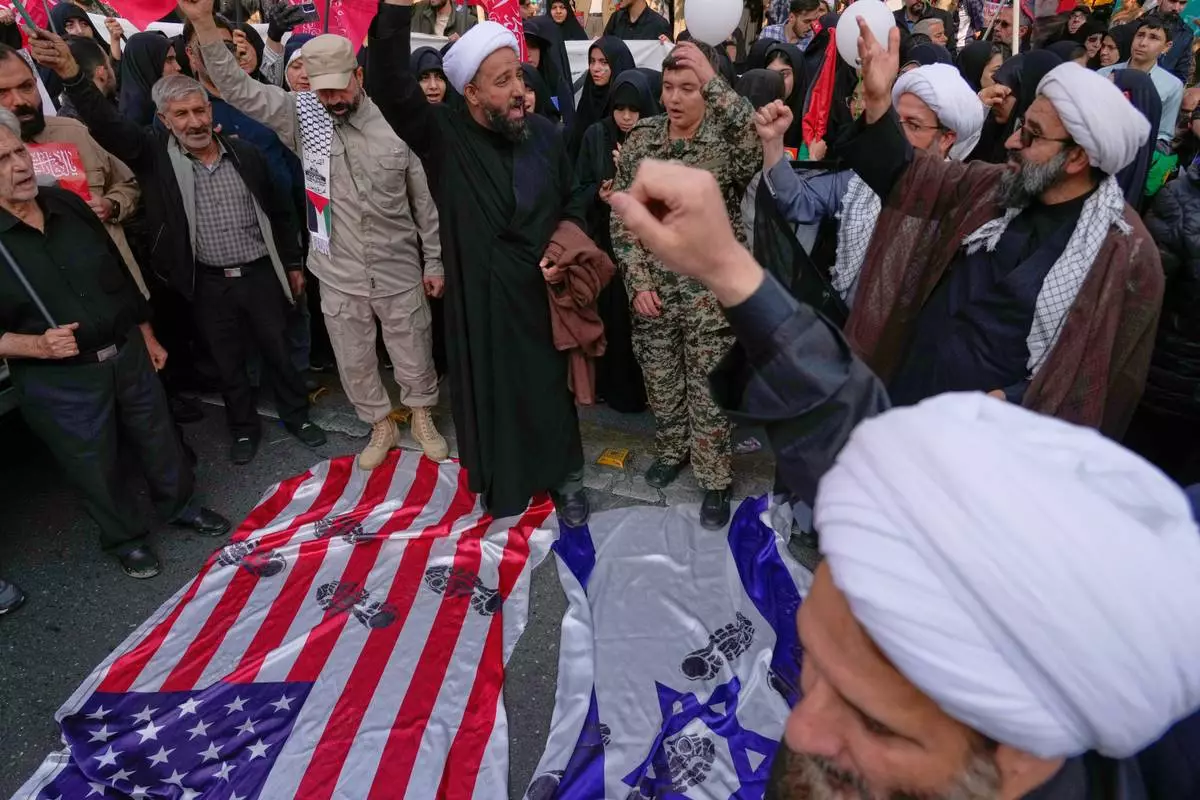
Iranian government supporters, including clerics, raise their fists as they stand on U.S. and Israeli flags during the annual rally marking the anniversary of the 1979 U.S. Embassy takeover, outside the former embassy in Tehran, Iran, Wednesday, Nov. 4, 2026. (AP Photo/Vahid Salemi)
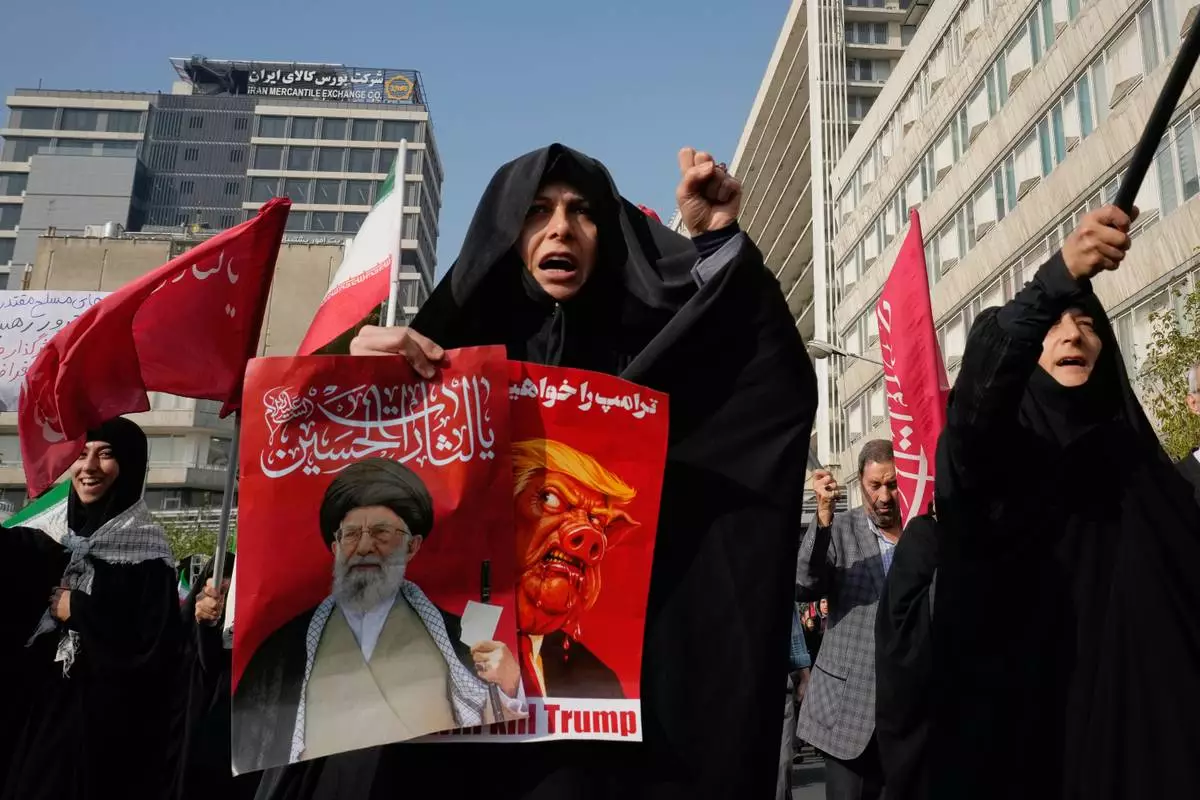
Iranian government supporters raise their fists, one holding a portrait of Iran's late Supreme Leader Ayatollah Ali Khamenei and a caricature of U.S. President Donald Trump, during the annual rally marking the anniversary of the 1979 U.S. Embassy takeover, outside the former embassy in Tehran, Iran, Wednesday, Nov. 4, 2026. (AP Photo/Vahid Salemi)
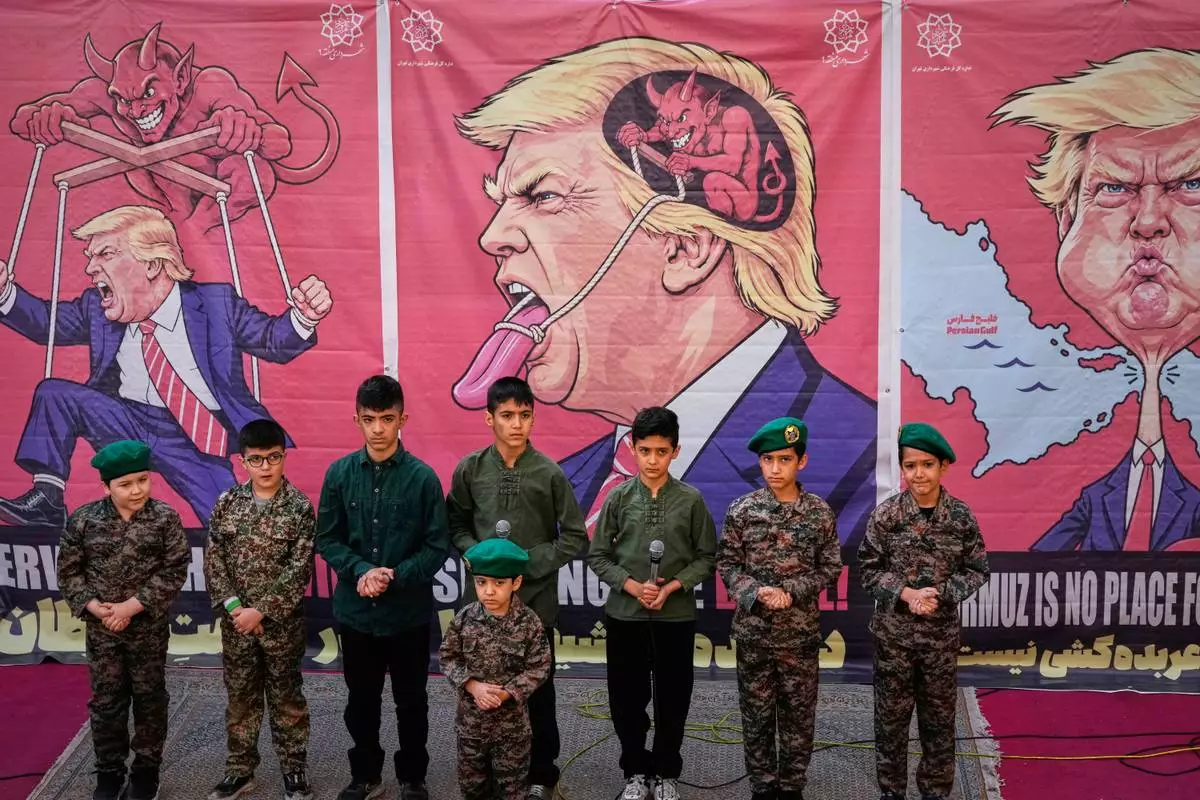
Boys, some wearing camouflage uniforms and green berets, stand in front of caricatures of U.S. President Donald Trump during the annual rally marking the anniversary of the 1979 U.S. Embassy takeover, outside the former embassy in Tehran, Iran, Wednesday, Nov. 4, 2026. (AP Photo/Vahid Salemi)
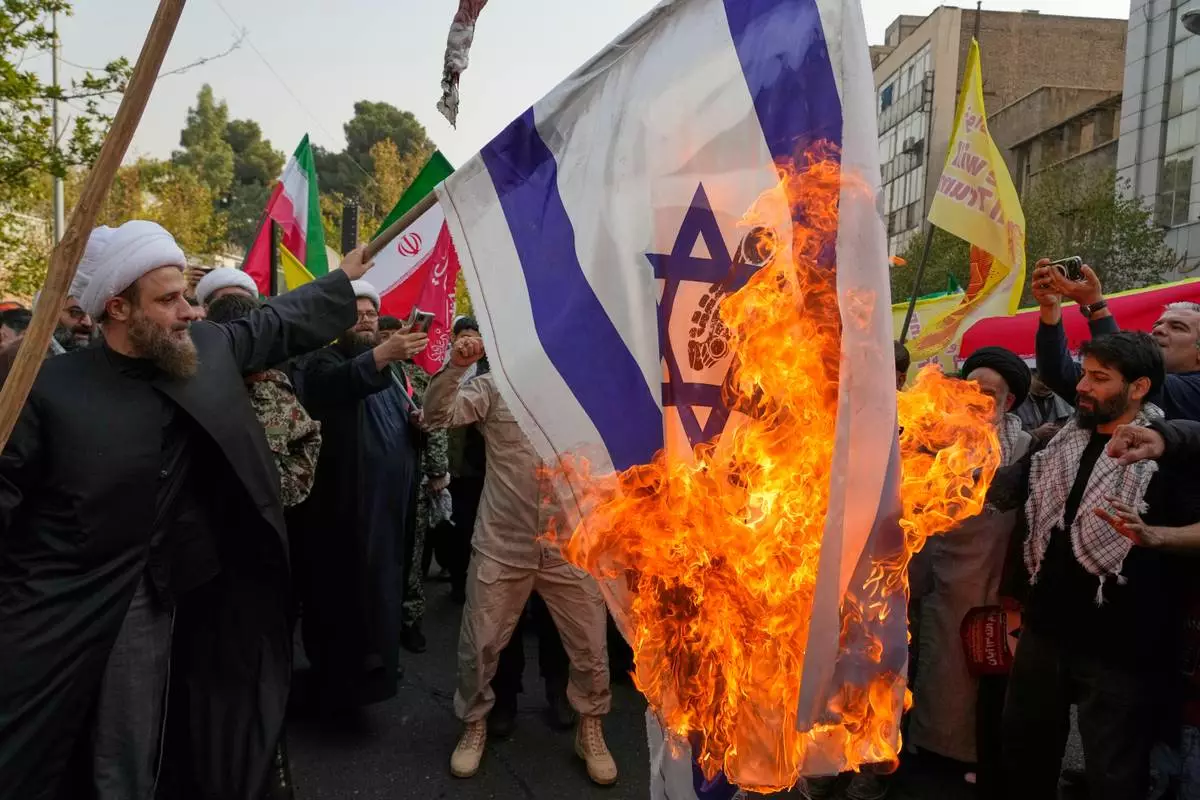
Iranian government supporters burn an Israeli flag during the annual rally marking the anniversary of the 1979 U.S. Embassy takeover, outside the former embassy in Tehran, Iran, Wednesday, Nov. 4, 2026. (AP Photo/Vahid Salemi)
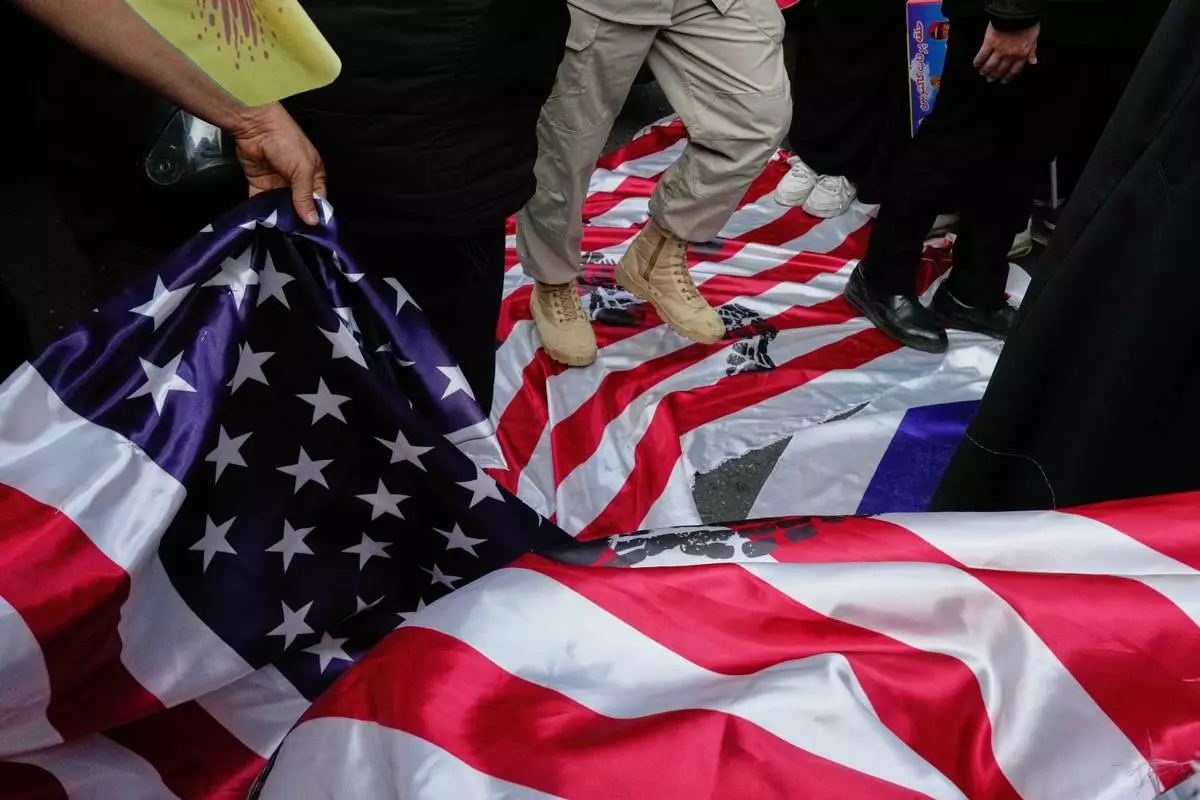
Iranian government supporters step on U.S. and Israeli flags during the annual rally marking the anniversary of the 1979 U.S. Embassy takeover, outside the former embassy in Tehran, Iran, Wednesday, Nov. 4, 2026. (AP Photo/Vahid Salemi)