WASHINGTON (AP) — After more than a decade with Donald Trump at the epicenter of U.S. politics, most voters appear exhausted and exasperated by him, according to The AP Voter Poll, a survey of midterm voters in all 50 states.
The president’s failure to deliver on key promises — most prominently, his vows to tame inflation, which has worsened instead — clearly weighed on his fellow Republicans in Tuesday’s midterm elections for the House and the Senate. The polling shows that voters generally saw Trump as being more focused on his own fortune and gold-leafed existence than their needs.
The president also helped elevate candidates with obvious flaws, amplifying their struggles in an already challenging year. He suggested in a Tuesday evening interview with Fox News Channel that Democrats “fought hard” and that the Republican base “didn’t like the candidates” he had endorsed because some of his picks were not fully loyal to him.
But the poll also contains a serious note of caution for Democrats. Many voters dislike the party — and while Democrats hold an advantage on key issues such as the economy, their edge is relatively slim. About 7 in 10 voters said Congress is not doing enough to provide checks and balances for the president, setting the bar for Democrats who won back the Senate and the House.
It was impossible for GOP candidates to hide from inflation. Voters could see it clearly in their receipts from grocery stores and gasoline stations. The financial blow of an auto repair or a utility bill after a sweltering summer was inescapable. And even in Republican strongholds such as Texas, the drag caused by inflation helped Democrats.
About 2 in 10 Texas voters said inflation had imposed “severe” hardship on them and their family — and about three-quarters of this group backed Democrat James Talarico for the Senate. An additional 6 in 10 voters, roughly, said inflation had led to “moderate” hardship, and Talarico won the majority of these voters, too.
That same pattern repeated in state after state. Nationally, voters who said they were “very concerned” about everyday costs — including groceries, healthcare and gas — overwhelmingly said they voted for the Democratic candidate in their local U.S. House race.
But it wasn’t just the inflation itself that mattered. Voters nationwide pinned the blame on Trump for his tariffs, his war in Iran and his unfulfilled campaign promise two years ago to bring down prices.
Asked about the impact of Trump’s policies, about two-thirds of voters nationwide said they had made the economy worse. And out of this group, about 8 in 10 said they backed the Democratic candidate.
More than half of voters nationally said government corruption was “crucial” for their vote for Congress. That was a little higher than the share who said the cost of living was “crucial,” a striking finding in a year when about 6 in 10 voters said they were personally “very concerned” about the cost of food and groceries.
Meanwhile, despite Republicans’ suggestion that voters cared little about Trump making more than $1 billion last year from meme coins and cryptocurrency, most voters saw Trump as obsessed with his own interests. During his second term, Trump solicited donations from powerful companies to build his desired White House ballroom after having surprised the country by rapidly demolishing what had been the building’s East Wing.
That tenor set at the top spilled over into business deals for his family and other deals by his associates involving pardons and federal policies.
Ultimately, about two-thirds of voters said Trump does not have the right priorities — and the overwhelming majority of these voters supported Democratic House candidates.
For much of the past two years, Trump acted on his own.
Much of the Republican-controlled House and Senate barely objected to his whims. He laid off federal workers, imposed sweeping new tariffs, launched the war with Iran, remodeled Washington in gold paint, threatened the Federal Reserve, the Kennedy Center and the Smithsonian Institution and bullied a bevy of longtime allies.
Voters made it clear that they want more congressional oversight.
About 7 in 10 voters said Congress was not doing enough to provide checks and balances for the presidency, including about 4 in 10 Republicans.
Despite Democrats’ victories, voters did not deliver a ringing endorsement of the party as a whole. Many voters expressed frustration with both parties: On the economy, foreign policy, healthcare, taxes and immigration, roughly 2 in 10 voters said “neither” party was better equipped to handle these issues. An even larger share of voters said neither party would be better at addressing government corruption or artificial intelligence.
Those skeptical voters generally broke for Democrats.
But it wasn’t because the party was overwhelmingly popular. Only about half of voters had a “somewhat” or “strongly” favorable view of the Democratic Party. That was higher than the approximately 4 in 10 who viewed the GOP positively, but not by much. About 2 in 10 voters who supported Democratic candidates had a negative view of the party as a whole.
Instead, in key races, voters seemed to be looking to Democratic candidates for change. In Maine, for instance, most voters who said having a candidate with “the right experience” mattered most to their Senate decision chose Republican incumbent Susan Collins. But more voters cared about bringing about “needed change,” and they favored Democrat Troy Jackson.
Trump endorsed Republicans who turned off voters — and that put areas that were once safely with the GOP at risk.
After Sen. Lindsey Graham of South Carolina died in July, the president chose the late senator’s sister, Darline Graham, to fill his seat. The new Sen. Graham then promptly decided to seek election and struggled on foreign policy questions that were once her brother’s forte.
About 6 in 10 voters in the South Carolina Senate race said she lacked the experience to serve in the Senate.
During the Texas Republican primary, Trump ultimately backed the state’s attorney general, Ken Paxton, over its sitting senator, John Cornyn. Paxton was scandal-ridden and had been impeached but not convicted. About two-thirds of Texas Senate voters said he lacked the character to be a senator.
The president prized loyalty in Republican candidates. That hurt Republican candidates in many states.
In North Carolina, as in several other states, about 6 in 10 voters said the state's Republican Senate nominee, Michael Whatley, was “too supportive” of Trump. They chose former Gov. Roy Cooper, a Democrat, for the Senate instead.
Follow the AP's coverage of the 2026 elections at https://apnews.com/hub/elections.
The AP Voter Poll is a survey of the American electorate conducted by SSRS for The Associated Press, ABC News, CBS News, CNN, FOX News Media, NBC News and Versant. The survey blends probability-based and non-probability-based interviews with registered voters in all 50 states conducted from Oct. 19 to Nov. 3 in Alaska and Oct. 22 to Nov. 3 in all other states. A detailed methodology statement is available. The margin of sampling error is plus or minus 0.6 percentage points for the full sample.
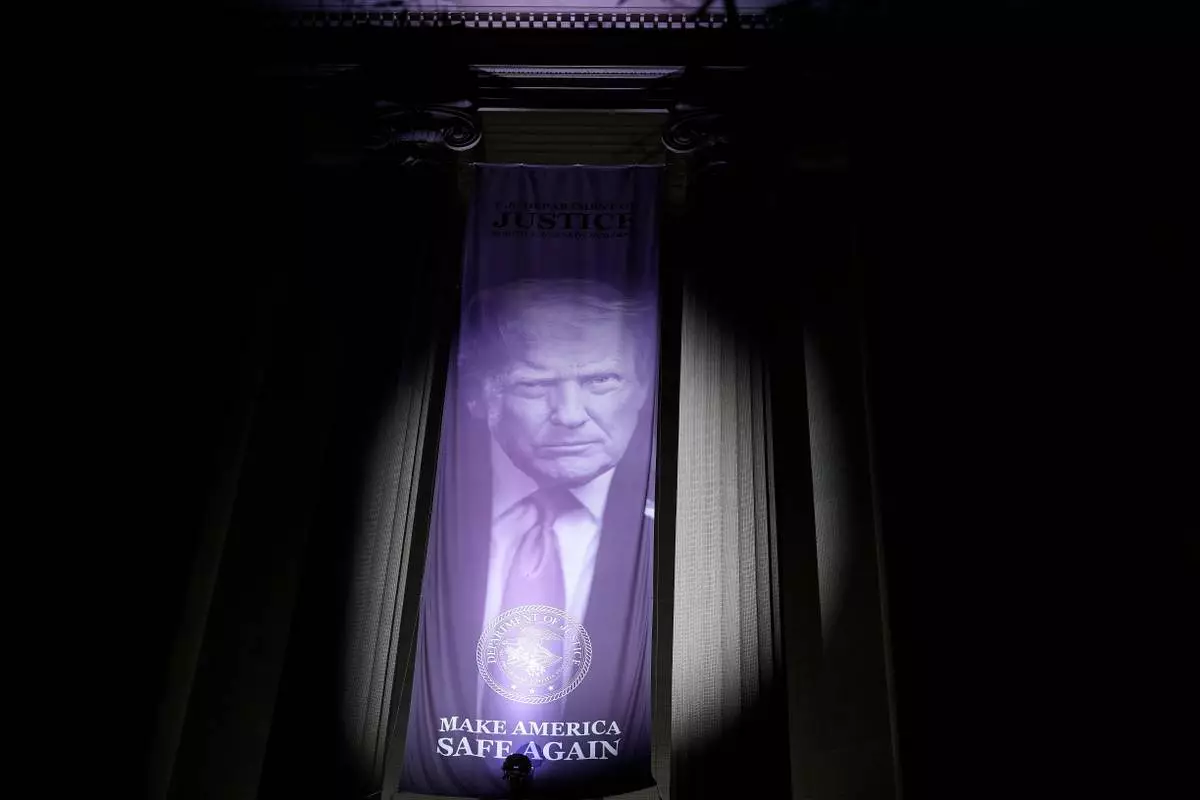
A banner with a portrait of President Donald Trump is seen hung outside the Department of Justice, Tuesday, Nov. 3, 2026. (AP Photo/Pablo Martinez Monsivais)
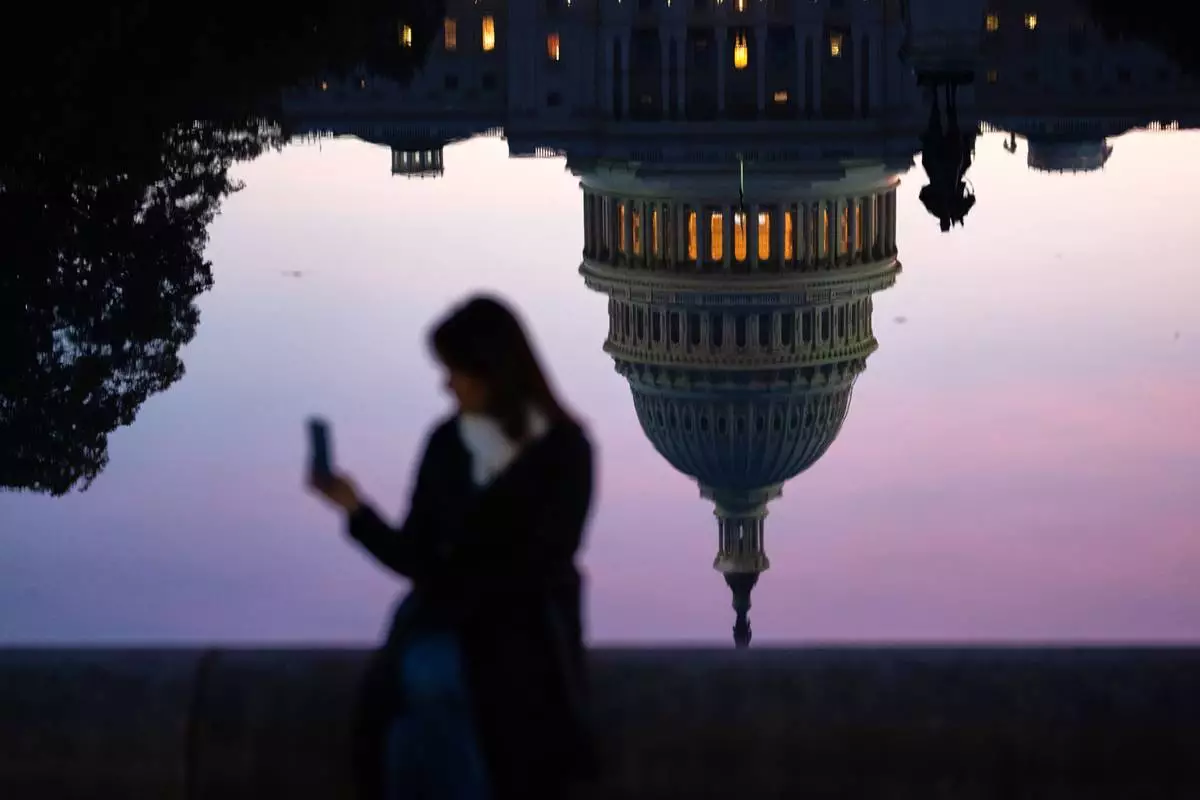
The sun rises behind the U.S. Capitol, as seen reflected in the U.S. Capitol Reflecting Pool, on Election Day, Tuesday, Nov. 3, 2026, in Washington. (AP Photo/Allison Robbert)
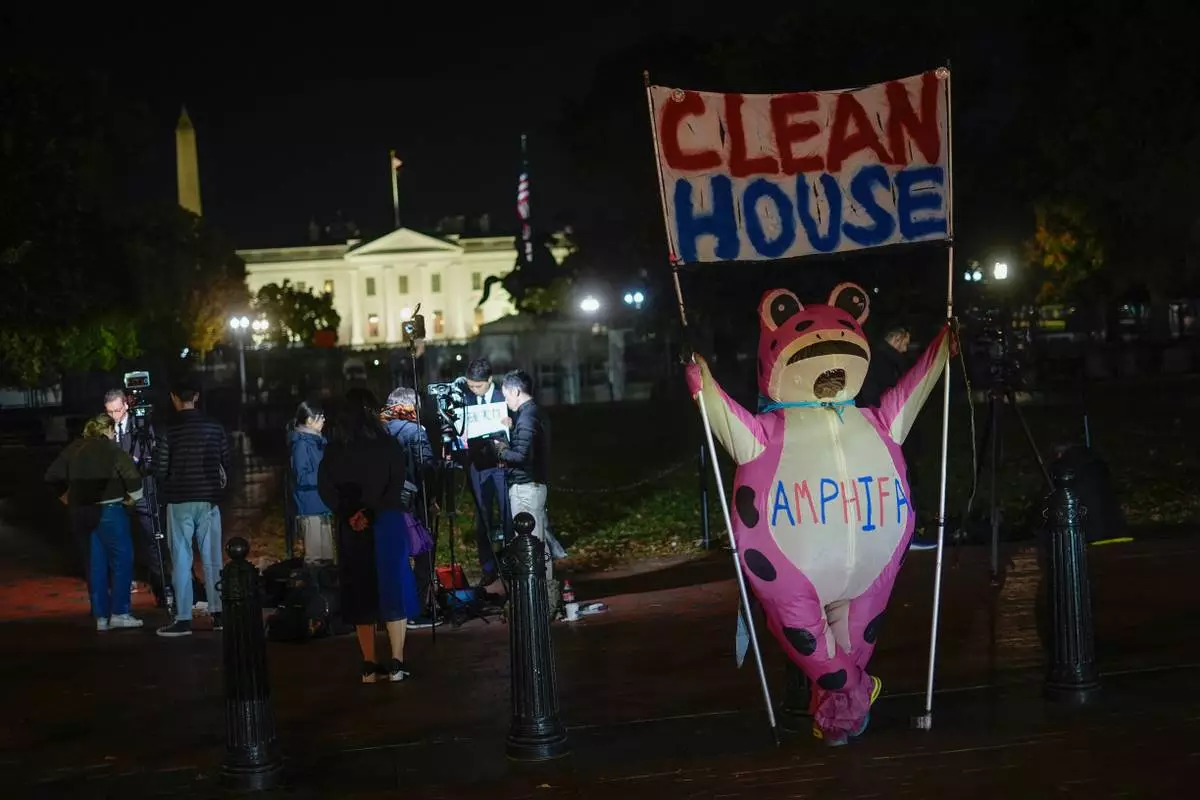
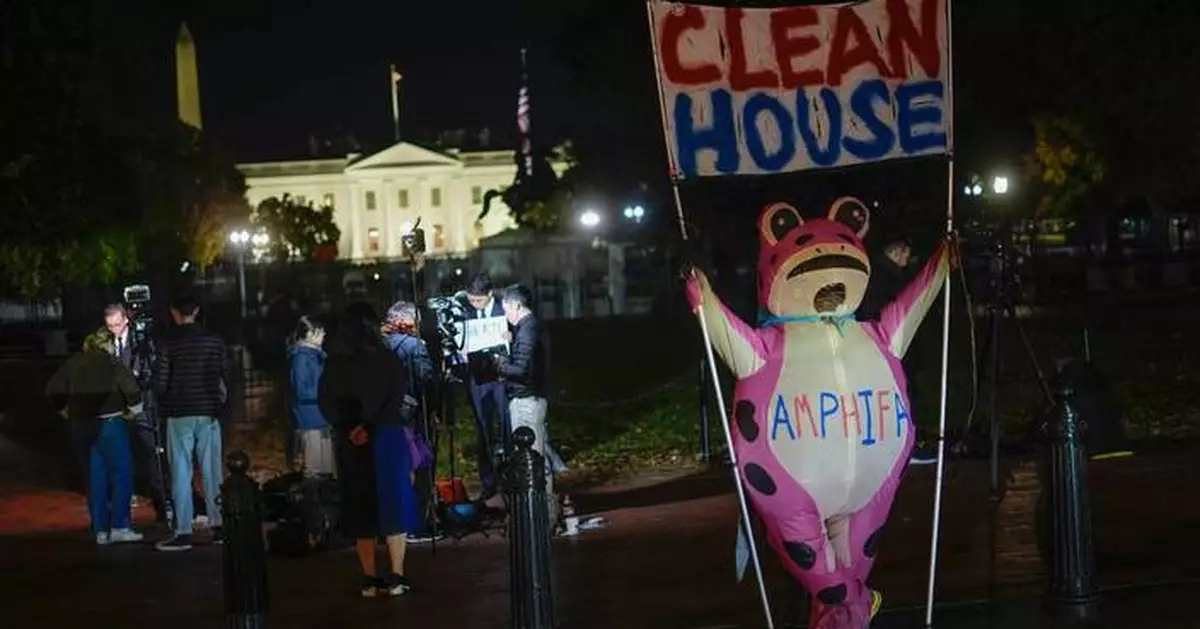
A demonstrator holds up a banner as tourists and a small number of members of the media are seen in Lafayette Park near the White House in Washington, Tuesday, Nov. 3, 2026. (AP Photo/Pablo Martinez Monsivais)
WASHINGTON (AP) — At the urging of President Donald Trump, Republicans in eight states redrew the boundaries of dozens of congressional districts over the past year while angling for an edge that could help them hold onto a slim House majority in a tough midterm election.
Ultimately, it didn't work.
Republicans lost most of the Democratic-held seats they had targeted to flip, lost others they had banked on retaining and got swept out of power by a Democratic surge fueled by voter dissatisfaction with Trump, the economy and the war with Iran.
The Republican redistricting plan fell flat in Alabama, Florida and Texas. It got scuttled by courts in Missouri and then firmly defeated by its voters Tuesday. And it got offset in California, where a retaliatory Democratic redistricting flipped all five of the Republican-held seats it targeted.
“This is a catastrophic rebuke of Donald Trump’s failed effort to gerrymander the country into oblivion to save the U.S. House of Representatives for himself," John Bisognano, president of the National Democratic Redistricting Committee, said Wednesday.
Congressional voting districts typically are redrawn after a census at the start of each decade to account for population changes. But Trump spurred an unusual mid-decade redistricting battle last year when he urged Texas Republicans to reshape U.S. House districts to give the GOP a shot at winning five additional seats in the midterm election.
A cascade of redistricting followed, spurred along in the South by a Supreme Court ruling that weakened federal Voting Rights Act protections for majority Black districts. Republicans hoped their redistricting could net as many as four more seats in Florida, two in Ohio and one each in Alabama, Louisiana, North Carolina and Tennessee.
In all but one of those revamped districts, Trump would have carried over 54% of the vote had they been in place for the 2024 election, according to Associated Press estimates.
“In normal times, that sort of district is relatively safe,” said Justin Levitt, a professor at the Loyola Law School in Los Angeles who runs the “All About Redistricting” website.
But the presumed Republican districts got undercut by shifting viewpoints of Trump. The AP Voter Poll found about 6 in 10 disapprove of how Trump is handling the presidency. Views of Trump’s priorities also were mostly negative.
“If we look across the country, that entire mid-decade redistricting gambit was a complete bust for Republicans,” said Mark Jones, a political science professor at Rice University in Houston.
In Texas, Republicans won just one of the five seats they had targeted to flip. But Democrats flipped two Republican-held districts, putting the GOP at a net loss.
Republicans reconfigured three heavily Latino districts in the Rio Grande Valley, which had shifted toward Trump in 2024, to try to boost their chances of unseating Democratic Reps. Henry Cuellar and Vicente Gonzalez. But both won reelection Tuesday. And Democrats instead unseated Republican Rep. Monica De La Cruz, whose district is sandwiched between theirs.
Though De La Cruz's new district retained the same percentage of Trump-inclined voters as the 2024 version, about 3 in 5 voting-age residents were new — making it harder for her to compete against Democratic challenger Bobby Pulido, a well-known Latin Grammy award winner.
The AP Voter Poll indicates a substantial shift in Hispanics moving away from Republicans compared with Trump’s victory just two years ago. Nationally about one-third of Hispanics say they backed the Republican in their local U.S. House race, while roughly 4 in 10 voted for Trump two years ago.
The new Texas districts were drawn by Adam Kincaid, executive director of the National Republican Redistricting Trust.
“Trying to pick up five seats in Texas, without putting anything else in serious jeopardy, it was a Herculean task,” Kincaid said Wednesday. He added: “It required the trends that we had been seeing over the past several years to continue, and that did not happen.”
Had Republicans not redrawn the Texas districts, however, they likely would have lost even more seats, Kincaid said.
Republicans in Florida tried to tilt four more House seats to the GOP in Trump’s adopted home state. Democratic Rep. Jared Moskowitz was among their targets, but he decided to run anyway in one of the redrawn districts. He won reelection Tuesday.
“I’ve worked across the aisle. I’ve delivered results for my community, and they spent $26 million trying to beat me,” Moskowitz said after his victory in Florida’s 25th Congressional District. “They lit that money on fire tonight.”
He said voters in his new district, like those nationwide, were most concerned about the economy and their ability to afford a good quality of life. But he said that redistricting angered voters, too.
After redistricting, about two-thirds of voting-age residents were new to the district represented by Democratic Rep. Kathy Castor. But she also won reelection. Democrat Pia Dandiya won yet another district -- an open seat in southern Florida — that Republicans had reshaped for an advantage.
In Alabama, a Supreme Court ruling allowed the Republican-led Legislature to revert to what the GOP considered to be a friendlier map. But Democratic Rep. Shomari Figures won reelection anyway, defying Republicans' plans.
Republicans redrew two congressional districts in eastern North Carolina with a goal of unseating Democratic Rep. Don Davis in the 1st Congressional District, which has sent a Black member to Congress for more than 30 years. They made Davis' district a bit more Republican by bringing in thousands of voters from the 3rd Congressional District, held by Republican Rep. Greg Murphy. In exchange, they reassigned thousands of voters in Democratic-leaning areas to Murphy's district.
The ensuing advertising battle for Davis' seat cost well over $50 million, according to the ad-tracking firm AdImpact, ranking among the most expensive House races nationally.
Davis held a slight lead Wednesday, and the race between Murphy and Democratic challenger Raymond Smith was particularly close.
What started as a Republican redistricting effort could become a Democratic redistricting movement ahead of the presidential election.
Maryland voters on Tuesday approved a constitutional amendment that will make it easier for the state's Democratic-led General Assembly to redraw districts to the party's advantage. Democratic proponents, backed by former President Barack Obama, have touted it as a way to “stop Trump.”
Democrats who made gains in numerous state legislatures Tuesday also could use that power for redistricting — most notably in Wisconsin, where districts were tilted toward Republicans. And Democratic lawmakers in New York already have taken an initial step toward congressional redistricting before the 2028 elections.
But the recent midterm redistricting revealed it can be difficult to anticipate voter behavior when trying to gerrymander districts for partisan advantage. That could particularly be the case for the next presidential election, which would be the first in a dozen years without Trump's name atop the ballot, making it hard to know how his supporters would realign behind new candidates.
The midterm election "shows districts aren’t destiny – that if voters actually show up, they can overcome district lines,” Levitt said.
Associated Press writer Bill Barrow contributed to this report.
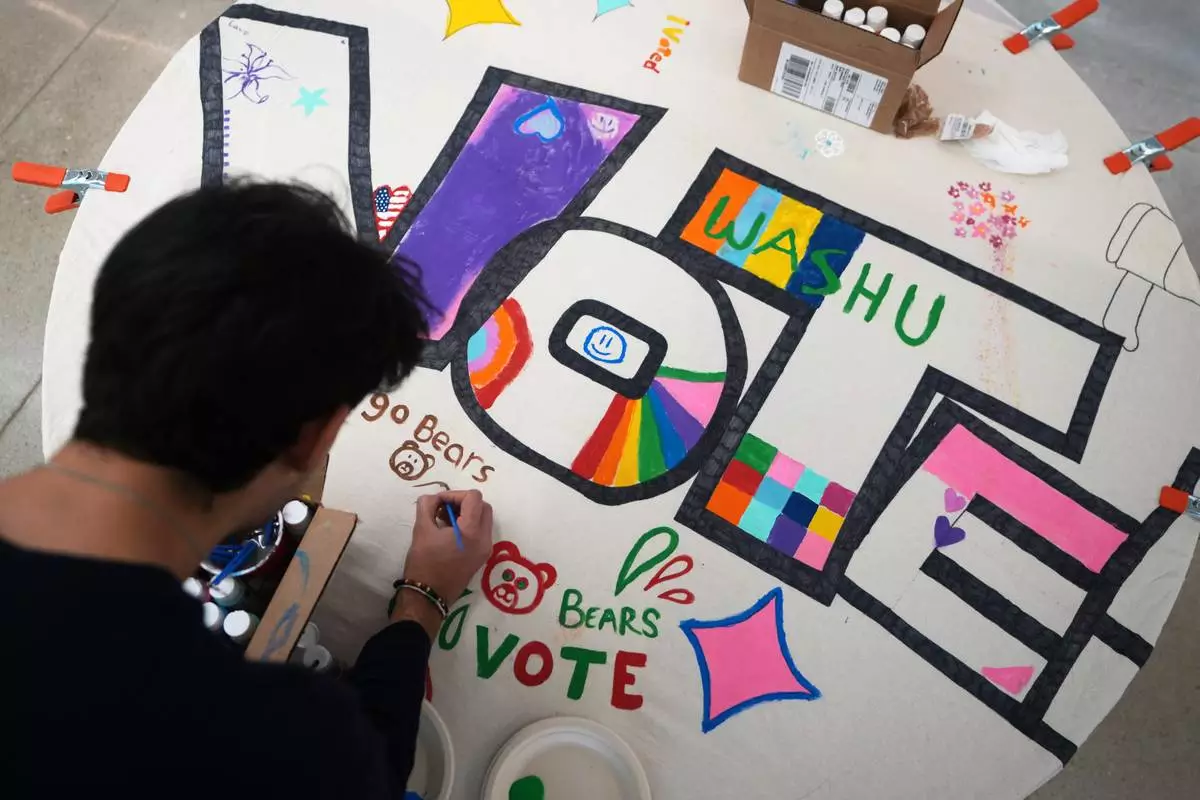
Santiago Rivera paints on a sign outside a polling place after casting his ballot on Election Day during the midterm election Tuesday, Nov. 3, 2026, in Clayton, Mo. (AP Photo/Jeff Roberson)
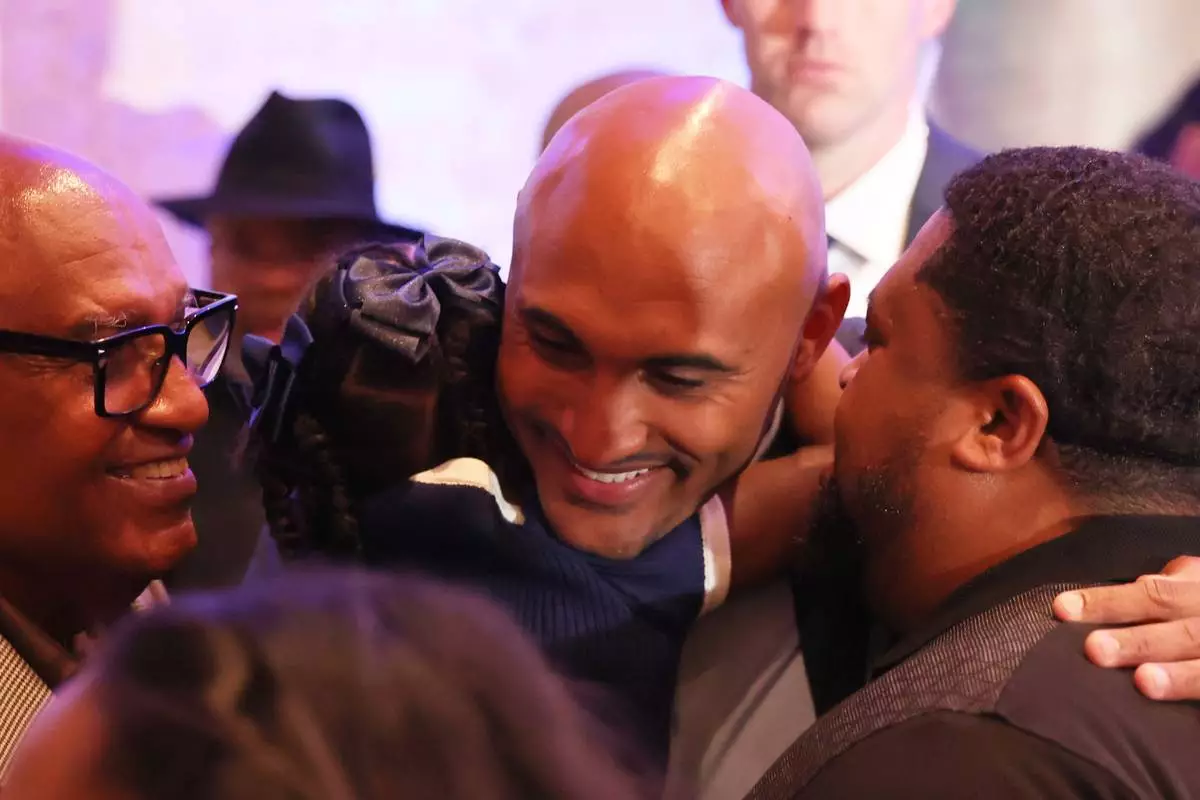
Rep. Shomari Figures, D-Ala., mingles with supporters at an election night event, Tuesday, Nov. 3, 2026, in Montgomery, Ala. (AP Photo/Vasha Hunt)
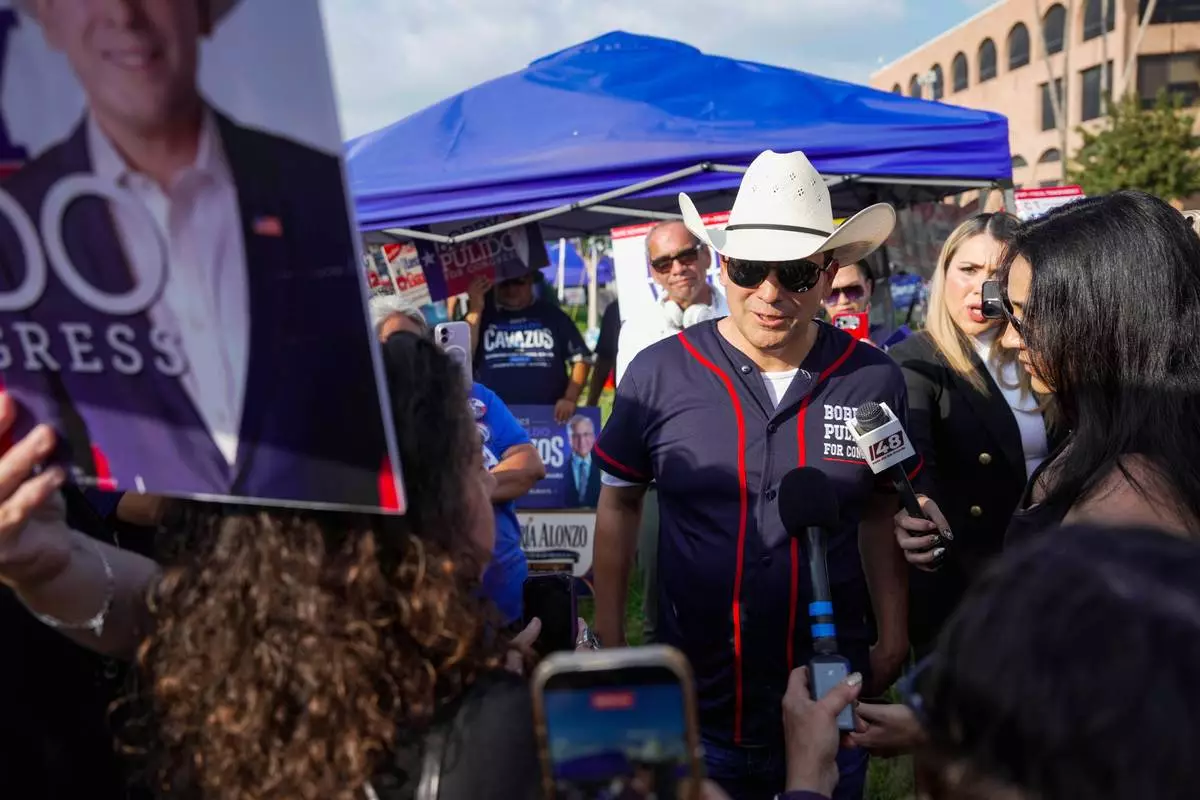
Democratic House candidate Bobby Pulido arrives at a polling location at the University of Texas Rio Grande Valley's Student Academic Center on Election Day, Tuesday, Nov. 3, 2026, in Edinburg, Texas. (Raquel Natalicchio/Houston Chronicle via AP)