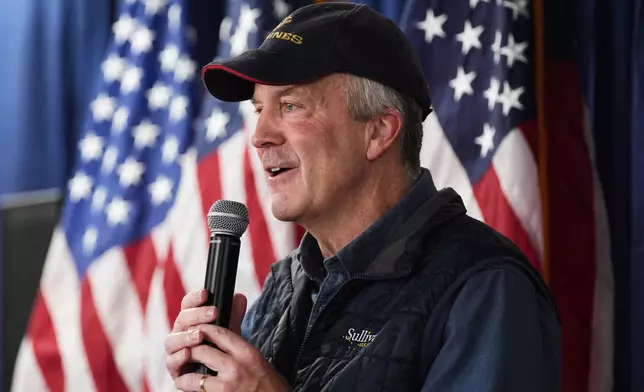
JUNEAU, Alaska (AP) — Alaska’s bitterly fought U.S. Senate race took a tumultuous turn less than two weeks before Election Day, with allegations of partisan tricks to recruit a candidate with the same name as the Republican incumbent, investigations and an effort backed by President Donald Trump to delay certification if two-term Sen. Dan Sullivan loses.
Voters were left sifting through the fallout in a contest headlined by Sullivan and Democrat Mary Peltola, a former U.S. representative. The contest, one of several expected to determine which party gains control of the Senate, brought top Republican officials to Alaska to rally for Sullivan, including Trump, who placed particular focus on a third candidate in the race, retired teacher Dan J. Sullivan. Trump called him “fake” and ordered the Justice Department to sue to block certification, pending an investigation into potential voter confusion.
Click to Gallery
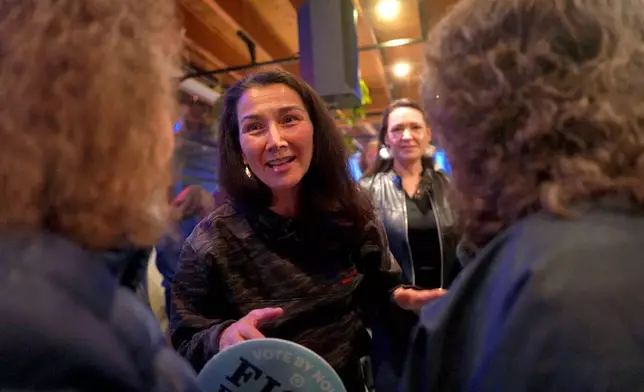
Mary Peltola, center, a Democrat running for Alaska's U.S. Senate seat, speaks with voters during a Get Out the Vote Rally in Fairbanks, Alaska, on Monday, Nov. 2, 2026. (Jack Barnwell/Fairbanks Daily News-Miner via AP)
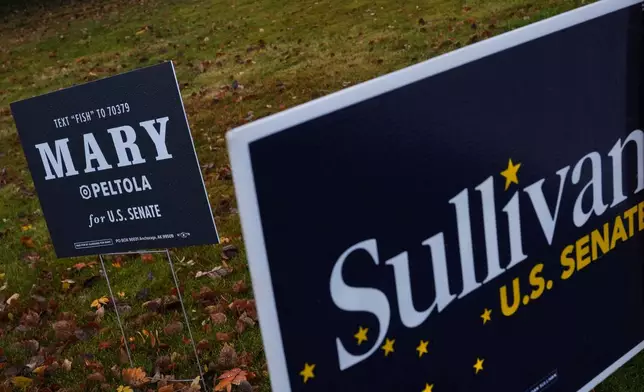
Competing yard signs for Democratic Senate candidate Mary Peltola and Sen. Dan Sullivan, R-Alaska, are seen Saturday, Oct. 31, 2026, in Anchorage, Alaska. (AP Photo/Lindsey Wasson)
Whit sits on the shoulders of father Hayden Anderson-Michaud as he casts his ballot at a polling location open for early voting at the Curtis D. Menard Memorial Sports Center, Sunday, Nov. 1, 2026, in Wasilla, Alaska. (AP Photo/Lindsey Wasson)
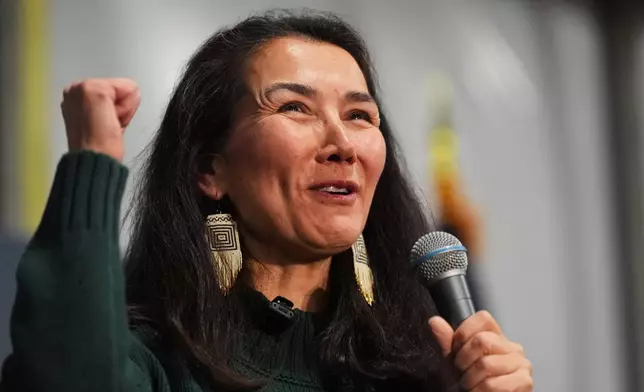
Democratic Senate candidate Mary Peltola speaks to supporters during a campaign rally at the Alaska Aviation Museum, Friday, Oct. 30, 2026, in Anchorage, Alaska. (AP Photo/Lindsey Wasson)
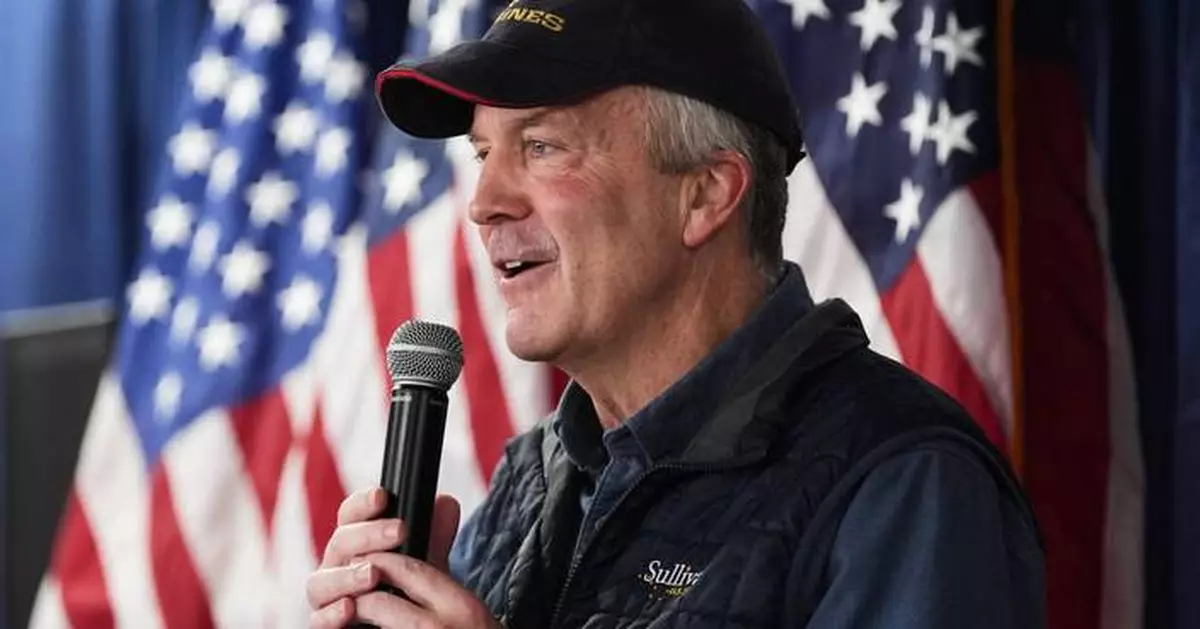
Sen. Dan Sullivan, R-Alaska, speaks during a rally at Ginger's Restaurant, Monday, Nov. 2, 2026, in Soldotna, Alaska. (AP Photo/Lindsey Wasson)
Peltola called the lawsuit “just flagrant, flagrant corruption.” It was dismissed Sunday by a federal judge, prompting a Justice Department appeal.
The candidacy of Dan J. Sullivan, who finished third in the August open primary with 2.5% of the vote and has done almost no campaigning, dominated attention in the final days of the race. The New York Times last week reported that Peltola’s campaign appeared to be involved in efforts to recruit him, breathing new life into suspicions long raised by the incumbent that Dan J. Sullivan was a “sham” candidate intended to confuse voters.
Peltola denied involvement in any such efforts: “I am not interested in tricking voters,” she told supporters.
Dan J. Sullivan, who lives in the small fishing village of Petersburg, previously denied any contact with Peltola’s campaign. He has not returned messages in recent days.
The Justice Department last week confirmed the existence of a criminal investigation, but Alaska U.S. Attorney Michael Heyman would not say what potential crimes authorities were looking into or the targets of their probe. Donors to Dan J. Sullivan’s campaign, many in his hometown, said FBI agents have asked if they felt deceived by the lesser-known Sullivan.
The ballot distinguishes the two as Dan S. Sullivan, Republican and incumbent, and Daniel J. Sullivan Jr., with no party affiliation.
Dylan Wood, who attended a Peltola rally in Juneau last week, said he will always vote for the “most progressive-leaning candidate” in a race and said that’s Peltola.
He said he didn’t know the truth behind the claims surrounding Dan J. Sullivan but worries about government interference in the election.
“The ballot is clearly marked Dan Sullivan, incumbent. If you want to vote for him, you can,” Wood said.
John Delgado, an independent who leans Republican, said Sullivan has done a good job and seems to be a “pretty classy act.”
He said he thought Peltola should bow out of the race.
“If I heard her say that it didn’t happen or ‘I didn’t know nothing about it,’ I would just at that point just think even less of her, because I believe she’d be lying,” he said.
Peltola finished first in the primary, with 49.5% of the vote, followed by the incumbent with 41.4%. The remaining vote was split among 14 other candidates.
The race has drawn a flood of outside cash and an endless barrage of ads. The campaigns of Sullivan and Peltola have each accused the other of spreading lies.
Sullivan’s opponents sought to cast him as a rubber stamp of Trump. He was alongside Trump in late September when the president said South Korea planned to invest about $54 billion in a mega-liquefied natural gas project in Alaska, though South Korean officials said they needed to assess the project’s commercial viability before committing.
The retired Marine emphasized his support of Trump’s signature package of tax breaks, social service cuts and immigration enforcement that passed last year. Sullivan also said he was running on a record that included support for the military. Vice President JD Vance traveled to Alaska to rally support for Sullivan.
Sullivan said Peltola was ineffective when she served in the House and that Trump’s efforts to expand oil and gas development in Alaska were at risk if Democrats regained control of the Senate.
“Alaska is the firewall for freedom for the entire country,” he told supporters.
He characterized as temporary the war in Iran, which has been blamed for spikes in fuel prices felt acutely in remote Alaska communities that rely on diesel for heat and electricity. He said the “forever war is the Democrats’ war against Alaskan energy.”
Peltola tried to turn Trump into a vulnerability for Sullivan during a televised debate, blaming the president’s war in Iran for high fuel prices and the deaths of service members.
She sought to distance herself from national Democrats, saying she would “stand up to anyone,” including members of her party, to further Alaska interests.
“Alaskans who know me know that I’m not liberal or radical,” she said, adding that she wants to work “for the best interest of Alaskans in as nonpartisan of a way as I possibly can.”
She, too, expressed support for additional drilling and said she would be willing to work with Trump to make that happen. She said she worked well with Sullivan as part of Alaska’s three-person congressional delegation and that suggestions otherwise were a “sad shame.”
Alaska has long had an uneasy relationship with the federal government, which owns about 60% of the land within the state. The relationship has been especially fraught under Democratic presidential administrations that have sought to restrict logging, mining and the availability of areas for oil and gas leasing over environmental concerns.
Peltola, who is Yup’ik, highlighted her roots in the state as both sides pushed to present the candidates as authentic voices for Alaskans. Her campaign filled her social media with photos from travels around the state and emphasized issues such as affordability and combating corruption in Washington, D.C.
A winner in the race might not be known for some time. Alaska accepts ballots that are postmarked by Election Day for up to 15 days after the election from overseas voters. That makes Nov. 18 the deadline for final receipt of ballots and when tabulations under the state’s ranked-choice voting system will be done. Under Alaska’s system, rankings come into play if no candidate earns more than 50% of the first-choice votes.
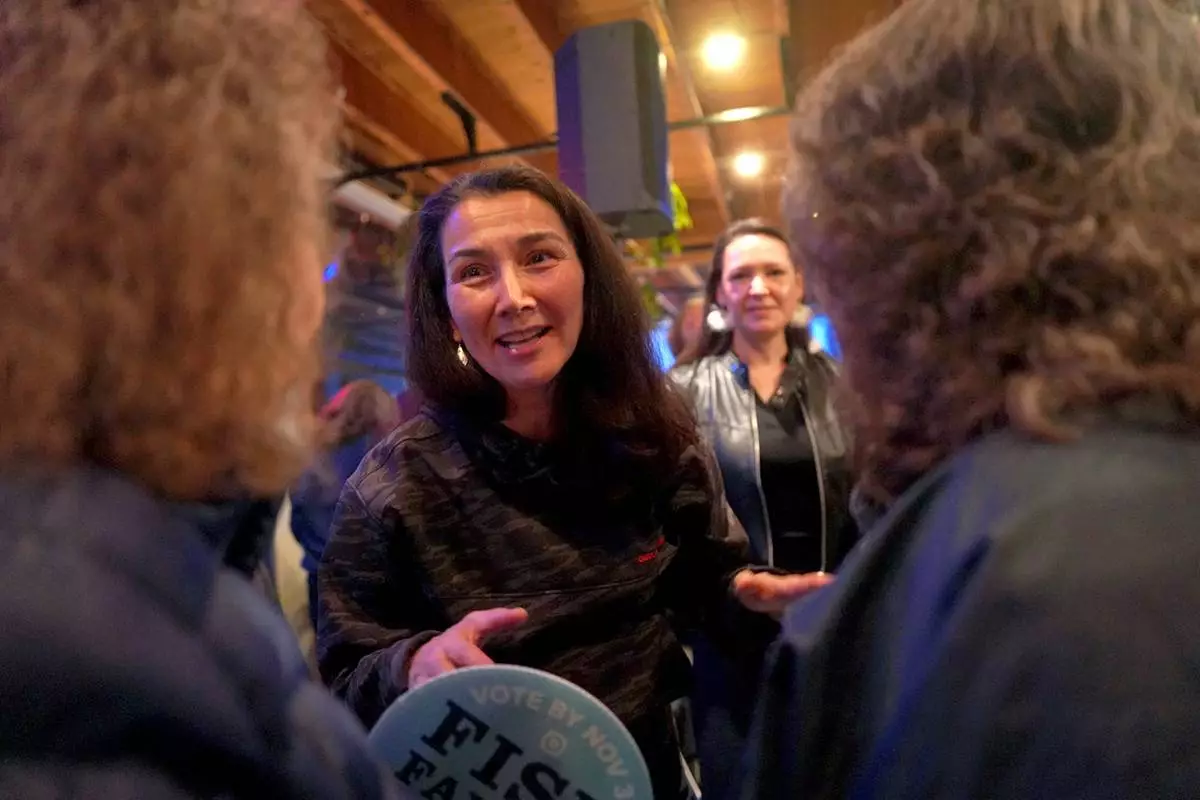
Mary Peltola, center, a Democrat running for Alaska's U.S. Senate seat, speaks with voters during a Get Out the Vote Rally in Fairbanks, Alaska, on Monday, Nov. 2, 2026. (Jack Barnwell/Fairbanks Daily News-Miner via AP)
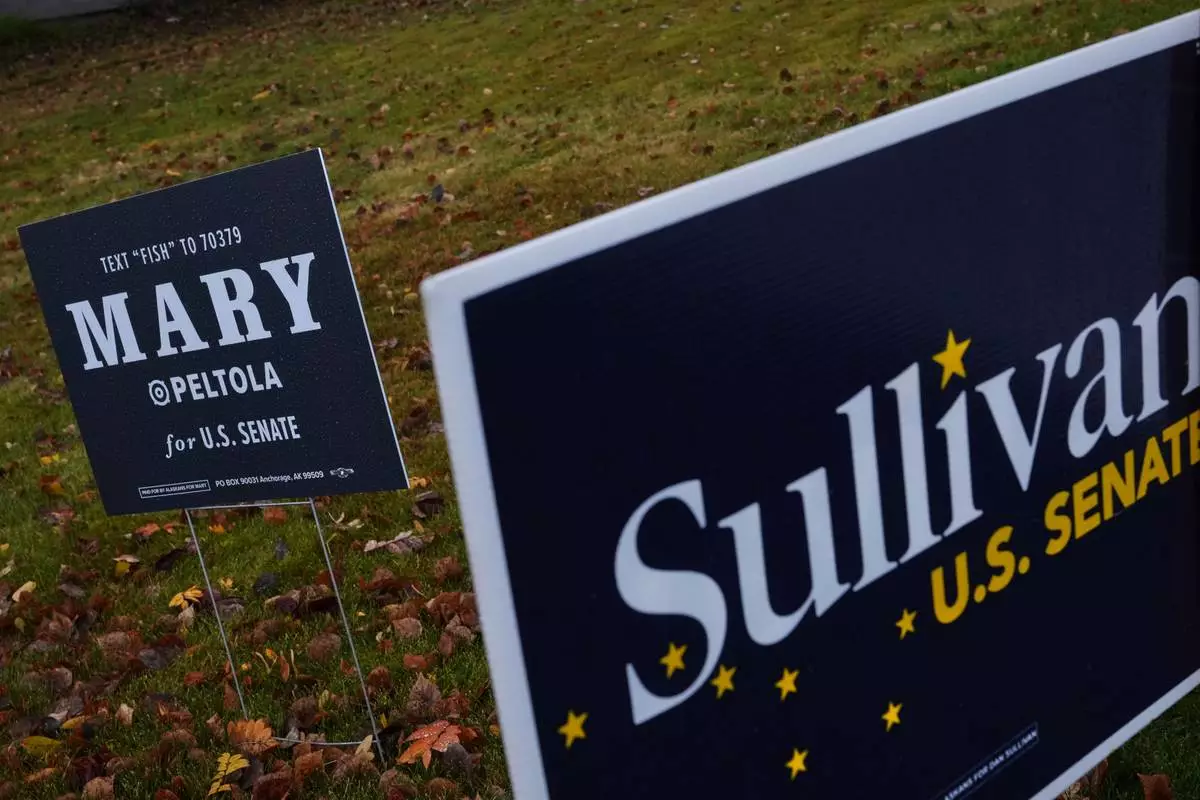
Competing yard signs for Democratic Senate candidate Mary Peltola and Sen. Dan Sullivan, R-Alaska, are seen Saturday, Oct. 31, 2026, in Anchorage, Alaska. (AP Photo/Lindsey Wasson)

Whit sits on the shoulders of father Hayden Anderson-Michaud as he casts his ballot at a polling location open for early voting at the Curtis D. Menard Memorial Sports Center, Sunday, Nov. 1, 2026, in Wasilla, Alaska. (AP Photo/Lindsey Wasson)
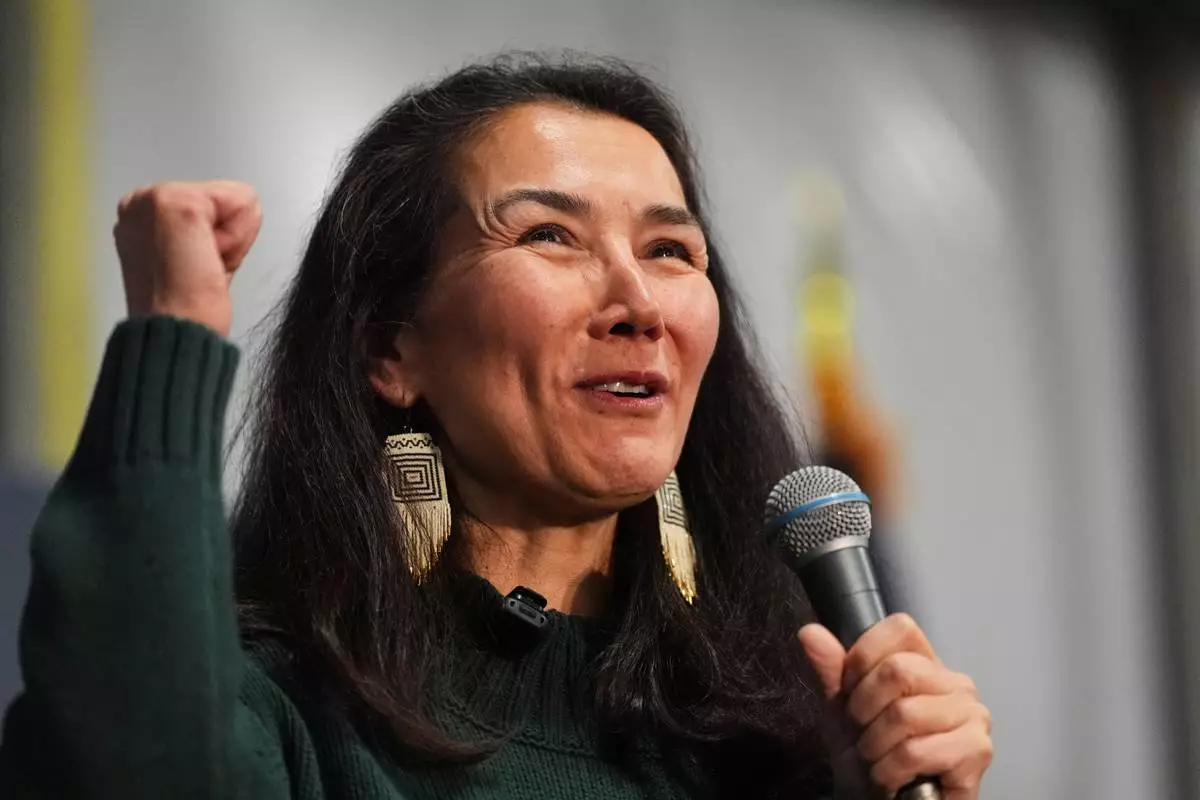
Democratic Senate candidate Mary Peltola speaks to supporters during a campaign rally at the Alaska Aviation Museum, Friday, Oct. 30, 2026, in Anchorage, Alaska. (AP Photo/Lindsey Wasson)
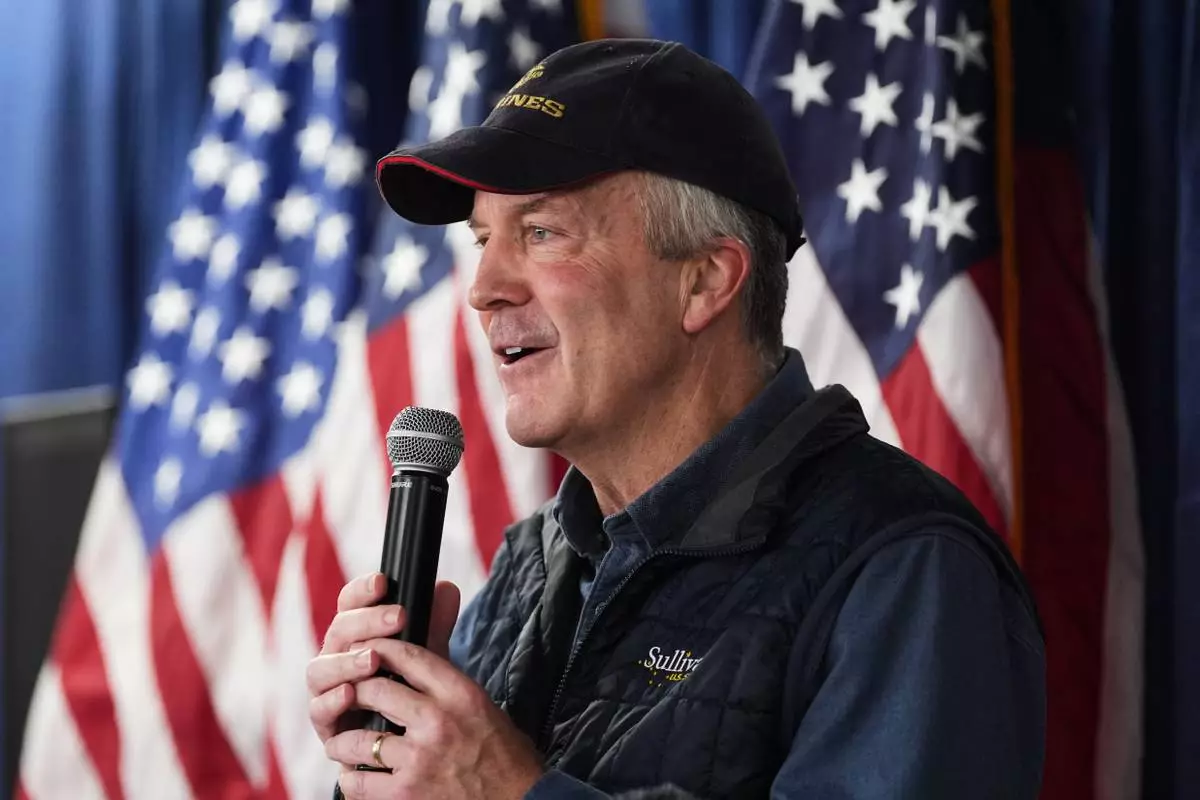
Sen. Dan Sullivan, R-Alaska, speaks during a rally at Ginger's Restaurant, Monday, Nov. 2, 2026, in Soldotna, Alaska. (AP Photo/Lindsey Wasson)
WASHINGTON (AP) — Voters struggling with high prices and angry over an unpopular war with Iran will decide Tuesday whether to drastically shift power in Washington in midterm elections that will serve as a referendum on President Donald Trump's second term.
Democrats were cautiously optimistic as they watched Republicans spend the campaign's final stretch pumping tens of millions of dollars into states and districts that Trump won handily two years ago. They're betting that discontent over Trump’s failure to deliver on his promise to tackle rising costs and perceptions that he has focused more on gilding the nation’s capital than their pain at the pump will depress Republican turnout and drive their own voters to the polls.
Republicans held out hope their money advantage would help stem the tide, but they were bracing to lose control of the U.S. House and fighting to hang onto the U.S. Senate — an outcome that seemed unlikely earlier this year, given a map widely seen as favoring their party.
Margins are tight in both chambers; one or two seats could tip the balance. Democrats need a net gain of four seats in the 100-member Senate to win the majority, and most competitive races are in historically red states. In the 435-member House, they need three.
More than 57 million people had already cast ballots as of Monday, with turnout surpassing the early vote four years ago in many closely watched states.
Trump, whose party has struggled when he's not running to turn out the low-propensity voters who've fueled his victories, has told voters to act as though he's running, even as many Republican candidates have kept their distance.
On Tuesday, he declared in a Fox News Channel interview that “everything's going good” and “inflation is solved” — even though consumer prices rose 3.6% in September from a year earlier, up from 3.4% in August, the Commerce Department reported last week.
“I think the results are going to be better than you think,” Trump said of the elections.
On Tuesday, Mark Barker, of Palm Beach Gardens, Florida, said Trump was top of mind as he voted. “I’ve just been following Trump the whole time. I really think he’s doing an awesome job,” said Barker, noting the president's promise of $5,000 for every U.S. adult if Republicans retain control of Congress, border policy and war in the Middle East. “Everything he's done has been outstanding.”
In Raleigh, North Carolina, 57-year-old librarian James Moore said he voted for Democrats to push back on Trump's big tax breaks and spending cuts bill. “I’m paying more taxes. I’m paying more for my healthcare. I’m paying more for everything,” he said. “We need more representatives in Congress that are going to stand up to Trump.”
Trump's aggressive schedule had stops in the reddest states, including Mississippi, South Carolina and Texas, underscoring his party's challenges.
Trump has made false claims about voting fraud, such as insisting noncitizens are casting ballots en masse. His administration has filed lawsuits in Alaska and California. Democrats fear interference and voter intimidation as his Justice Department threatens to prosecute local election officials.
Polling sites opened early Tuesday along the East Coast, with few disruptions. In New York’s suburban Westchester County, officials said an issue with machines accepting paper ballots was requiring ballots to be placed in emergency bags for later counting but stressed that they would remain secure.
The results will shape the final two years of Trump’s second term after the Republican-controlled Congress acted as a rubber stamp to much of his agenda. While Trump has proven adept at steamrolling efforts to rein him in, Democrats taking control of even one chamber of Congress would open the floodgates to investigations and possible impeachments. Defense Secretary Pete Hegseth and tech titan Elon Musk, a former top Trump adviser, are among possible targets.
An especially strong showing for Democrats would also boost potential presidential candidates, including California Gov. Gavin Newsom, Illinois Gov. JB Pritzker and former Transportation Secretary Pete Buttigieg. It could also complicate the paths of Vice President JD Vance and other Republicans who may be looking to turn their loyalty to Trump into momentum.
Republicans tried to buck historical precedent — a president’s party almost always loses seats during the midterms — with an aggressive redistricting effort aimed at creating a more favorable congressional map. But the plan may fall short as districts drawn in Florida and other states to be safely red may not vote that way.
Other Trump choices could prove costly. In Texas, Trump worked to oust longtime incumbent Sen. John Cornyn in favor of scandal-plagued Attorney General Ken Paxton, setting the stage for an expensive race against Democratic nominee James Talarico, who Democrats hope may help them finally flip the state.
In North Carolina, Sen. Thom Tillis retired after clashing with Trump. The president's chosen replacement, former Republican National Committee Chair Michael Whatley, has struggled to gain traction against the Democrats' candidate, former Gov. Roy Cooper.
“Everything depends on turnout. If we turn out our voters, we win," said Republican National Committee Chairman Joe Gruters.
The vast majority of Republican television ad spending in the general election, 88.1%, was spent in states and districts Trump won in 2024, according to an Associated Press analysis of data from media tracking firm AdImpact. That included more than $850 million on ad reservations in states and districts Trump won by 10 percentage points or more.
Only 35% of U.S. adults approve of Trump's performance as president, according to the most recent polling from The Associated Press-NORC Center for Public Affairs Research. Most blame him for high prices as they struggle to afford gas and groceries.
What was once his strongest issue is no longer: 25% of U.S. adults say they approve of Trump's handling of the economy. Overall, about 7 in 10 say the country is heading in the wrong direction.
“The American people are angry. They want change,” said Rep. Suzan DelBene, chair of the Democratic Congressional Campaign Committee, who said momentum was on her party’s side.
In the Senate, Democrats have been most confident about picking up North Carolina and holding Georgia, where Sen. Jon Ossoff faces Republican Rep. Mike Collins. Other key battlegrounds include Ohio, where Democratic former Sen. Sherrod Brown is challenging Republican Sen. Jon Husted, and Alaska, where the Trump administration filed a lawsuit to block certification of Senate results if Republican incumbent Dan Sullivan loses the race, citing the presence of a second candidate named Dan Sullivan on the ballot.
Republicans hope they can hold seats in Iowa, Kansas and Maine and pick up Michigan, where Mike Rogers faces progressive Abdul El-Sayed — one of a crop of left-wing candidates who prevailed in Democratic primaries. El-Sayed's former primary opponent, Haley Stevens, upended the race by endorsing Rogers, renewing focus on tensions over Israel and the party's direction.
In the House, Republicans try to hang on to their narrow majority, as Democrats aim to flip seats in states Trump repeatedly carried, from Florida to Texas to Iowa.
Beyond Washington, 36 states are electing governors. Democrats hope to take over a majority of statehouses for the first time in two decades. Competitive races include those in heavily populated states such as Texas and Florida, plus reliably red states such as Iowa.
In Ohio, Republican Vivek Ramaswamy’s campaign faced backlash for an ad featuring Democrat Amy Acton’s estranged mother, who lost custody of Acton decades ago after her husband, Acton’s stepfather, was indicted for raping Acton as a child.
Trump’s final two years in office will likely be defined in part by who controls Congress.
House Democratic Leader Hakeem Jeffries of New York, in line to make history as the nation’s first Black speaker of the House if his party sweeps to power, has outlined a 100-day agenda focused on lowering the cost of living and aggressively overseeing the Trump administration.
The Senate could emerge as a key backstop for Trump’s priorities if Republicans retain control or as a new power center for Democrats who could use it to halt presidential nominees and challenge the White House agenda.
The 2026 elections will likely go down as the most expensive in history. Republican committees have dramatically outraised and outspent their Democratic counterparts thanks, in large part, to money from Trump-affiliated groups and Musk. But at the candidate level, Democrats outraised Republican opponents.
Associated Press journalists Aaron Kessler and Ali Swenson in Washington; Cody Jackson in Palm Beach Gardens, Fla.; and Allen Breed in Raleigh, N.C., contributed.
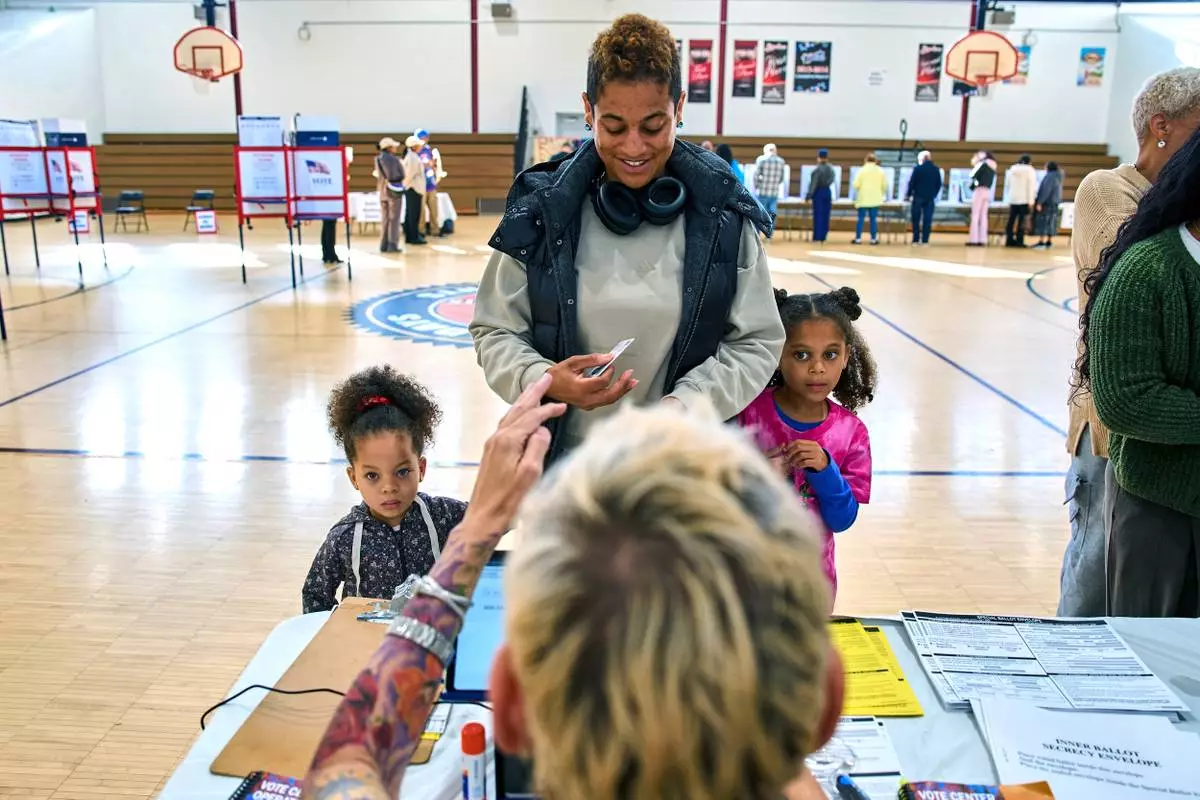
Samantha Pounder, of Washington, confirms her address with a poll worker while voting with her daughters Aya, 3, left, and Sade, 6, at the Emery Heights Community Center, Tuesday Nov. 3, 2026, during the midterm elections in Washington. (AP Photo/Jacquelyn Martin)

People move in line to cast their ballots at the polling place at the League for People with Disabilities in Baltimore on Election Day, Tuesday, Nov. 3, 2026. (AP Photo/Stephanie Scarbrough)

Voters cast their ballots at Public School 321 elementary school in the Brooklyn borough of New York on Election Day, Tuesday, Nov. 3, 2026. (AP Photo/Yuki Iwamura)

A volunteer places a "Vote Here" sign at the Brooklyn Museum in New York on Election Day, Tuesday, Nov. 3, 2026. (AP Photo/Yuki Iwamura)

Voters cast their ballots at the Brooklyn Museum in New York on Election Day, Tuesday, Nov. 3, 2026. (AP Photo/Yuki Iwamura)

A volunteer sorts "I Voted" stickers at the Brooklyn Museum in New York on Election Day, Tuesday, Nov. 3, 2026. (AP Photo/Yuki Iwamura)

A person walks to the City of Arlington South Service Center ahead of the polling place opening on Election Day, Tuesday, Nov. 3, 2026, in Arlington, Texas. (AP Photo/Julio Cortez)
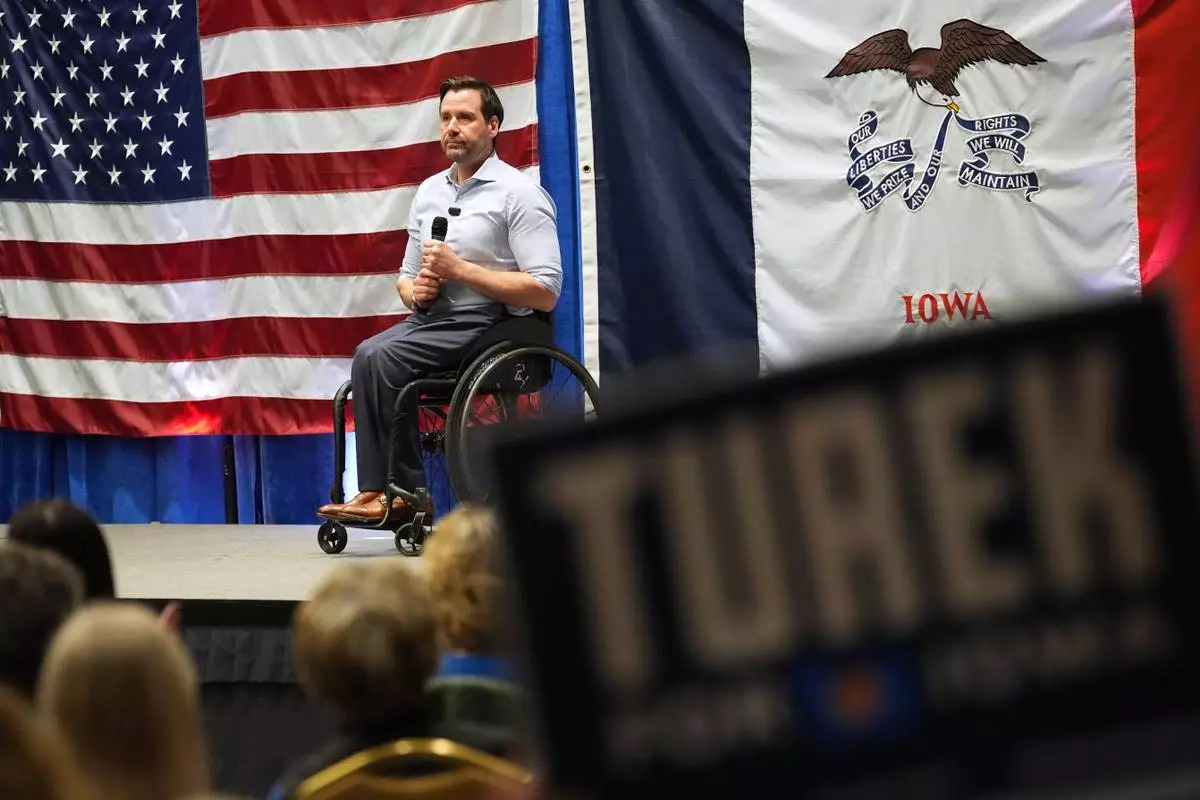
Democratic U.S. Senate candidate Rep. Josh Turek speaks during a campaign rally, Sunday, Nov. 1, 2026, in Council Bluffs, Iowa. (AP Photo/Ellen Schmidt)
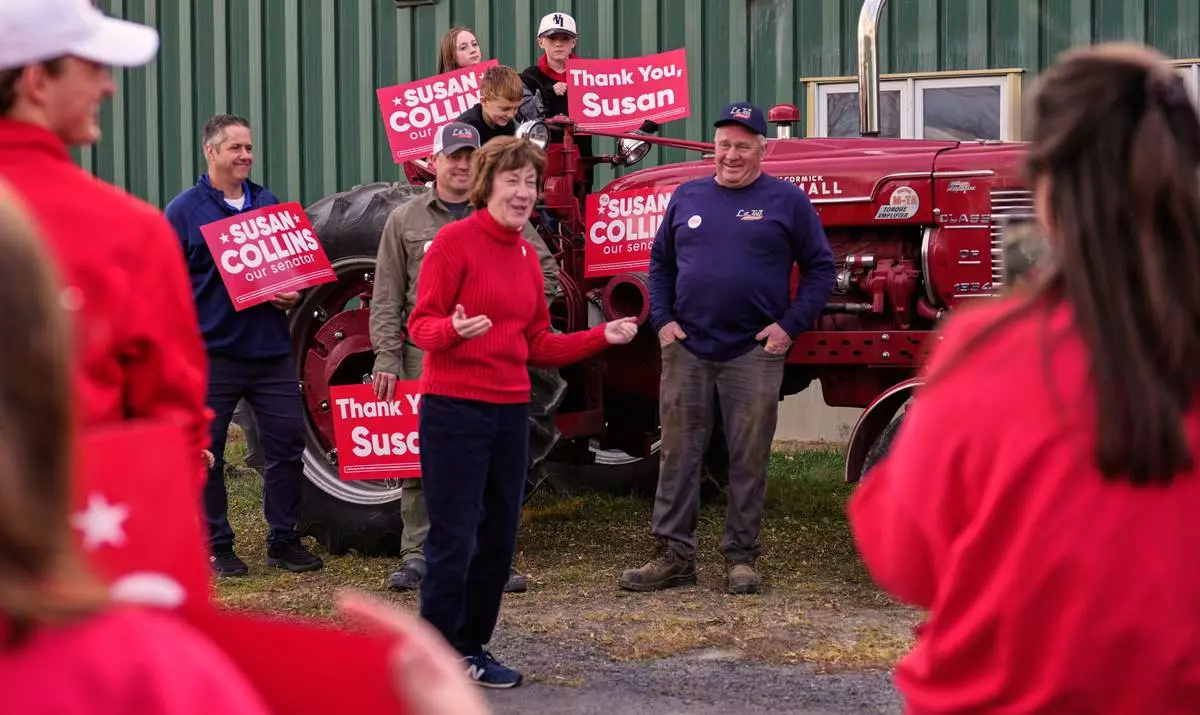
People listen to Sen. Susan Collins, R-Maine, who is running for reelection, outside an agricultural business as she makes a campaign stop, Monday, Nov. 2, 2026, in Van Buren, Maine. (AP Photo/Charles Krupa)
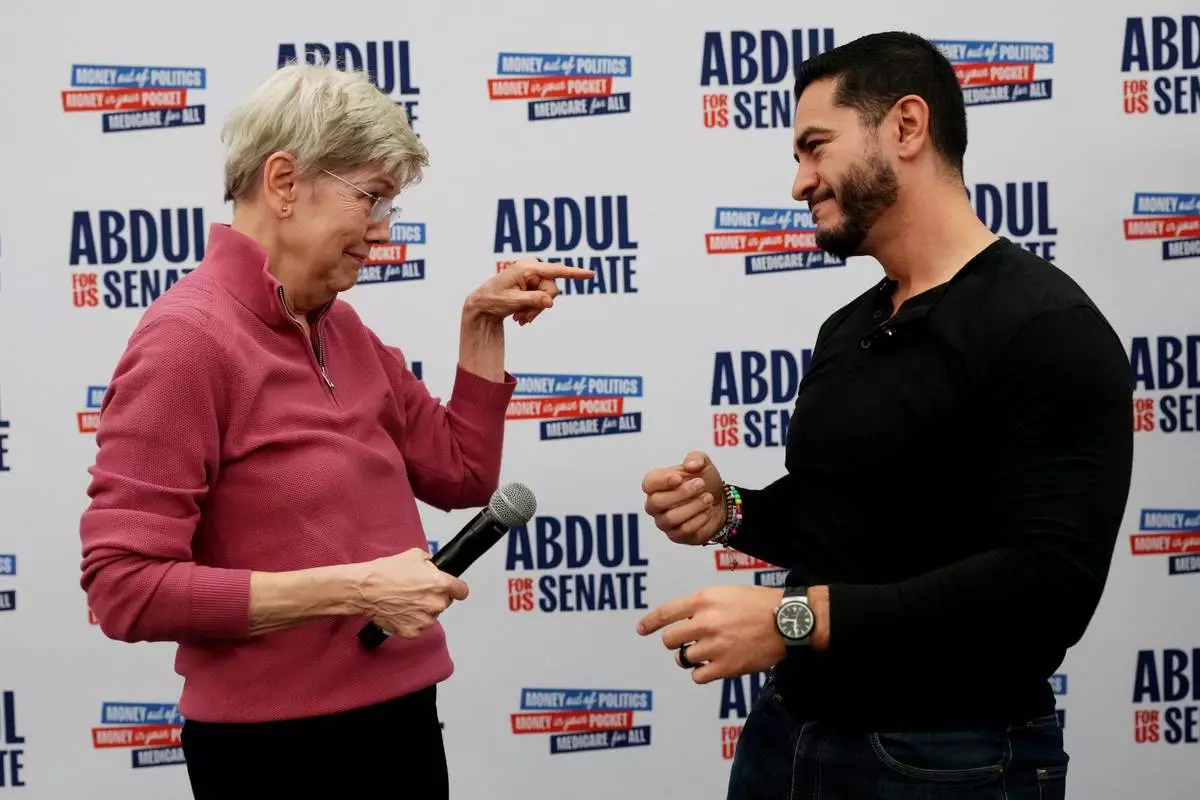
Sen. Elizabeth Warren, D-Mass., introduces Michigan Democratic Senate candidate Abdul El-Sayed during a campaign rally at Eastern Michigan University, Monday, Nov. 2, 2026, in Ypsilanti, Mich. (AP Photo/Julia Demaree Nikhinson)

Sen. Dan Sullivan, R-Alaska, speaks to members of the media before sign-waving with supporters at the edge of Midtown Mall, Monday, Nov. 2, 2026, in Anchorage, Alaska. (AP Photo/Lindsey Wasson)
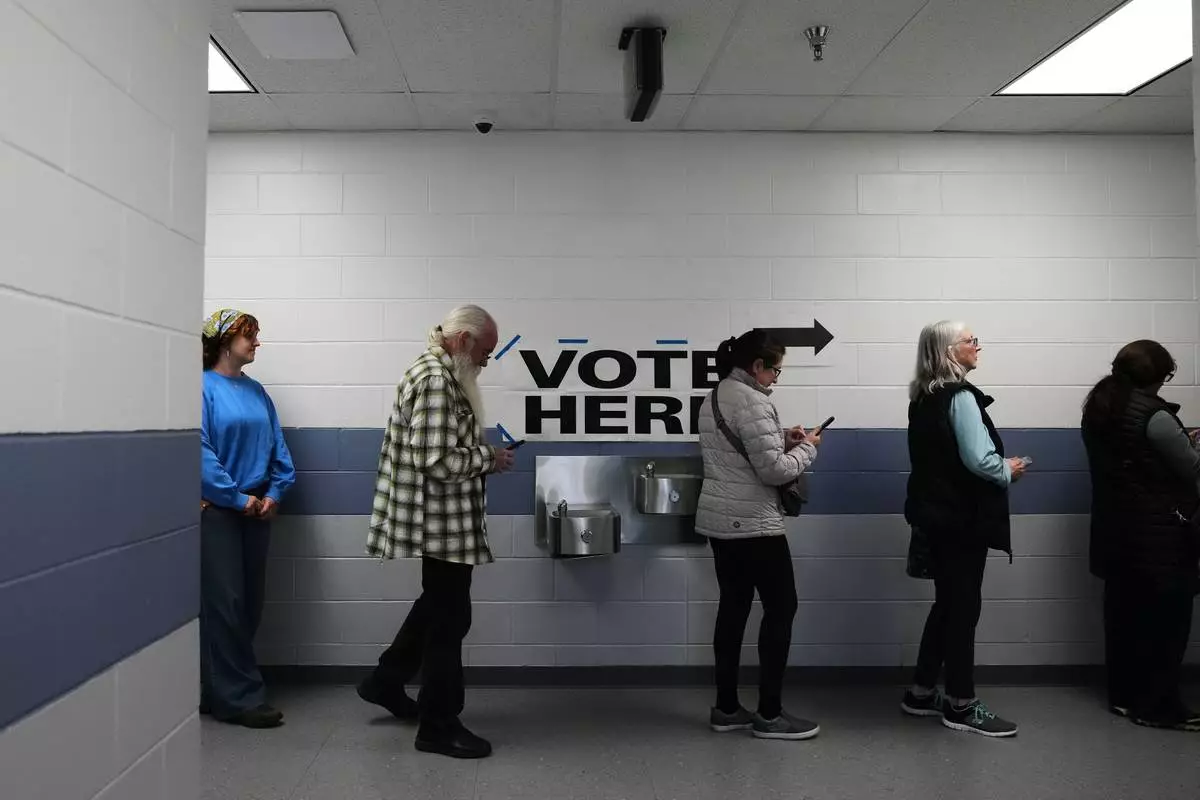
People wait in line to cast their ballot at a polling location open for early voting at the Curtis D. Menard Memorial Sports Center, Sunday, Nov. 1, 2026, in Wasilla, Alaska. (AP Photo/Lindsey Wasson)