BERLIN (AP) — Several flights across Europe received alleged bomb threats Tuesday that ultimately turned out to be hoaxes but prompted searches, diversions and, in one case, an escort by the Italian Air Force until landing, officials said.
The impacted airlines included Polish airline LOT, Scandinavian Airlines, Wizz Air and Ryanair. No one was injured.
A day earlier, a plane headed for Bulgaria was diverted to Hungary after receiving a similar bomb threat while in the air.
A Ryanair flight from Lisbon landed in Rome’s Fiumicino airport Tuesday morning after receipt of an email reporting a bomb was on board, according to information provided by a Fiumicino official with knowledge of the events.
Police bomb disposal experts carried out security checks of passengers, crew and baggage and found no explosives.
Another email reported a bomb on another Ryanair flight to Rome, bound from Dublin.
Italy’s air force escorted that plane to Fiumicino and the same ground security procedures were carried out, with no explosives found, the official said. They spoke on condition of anonymity because they weren’t authorized to speak publicly.
In Poland, meanwhile, a morning flight by Polish airline LOT from London’s Heathrow airport to Warsaw’s main Chopin airport was diverted to the Polish capital’s Modlin airport after a bomb threat, Polish press agency PAP reported. The Modlin airport was closed temporarily.
LOT later said that the search of the aircraft diverted to Modlin had been completed and that “nothing was found on the aircraft.” Passengers on the flight from London to Warsaw, the airline reported, were undergoing border control and, after passing through, would be transported to Chopin Airport by coach, PAP reported.
The Modlin airport later posted a statement saying that there was no real threat and the airport had resumed normal operations. It did not give any further details on the nature of the threats.
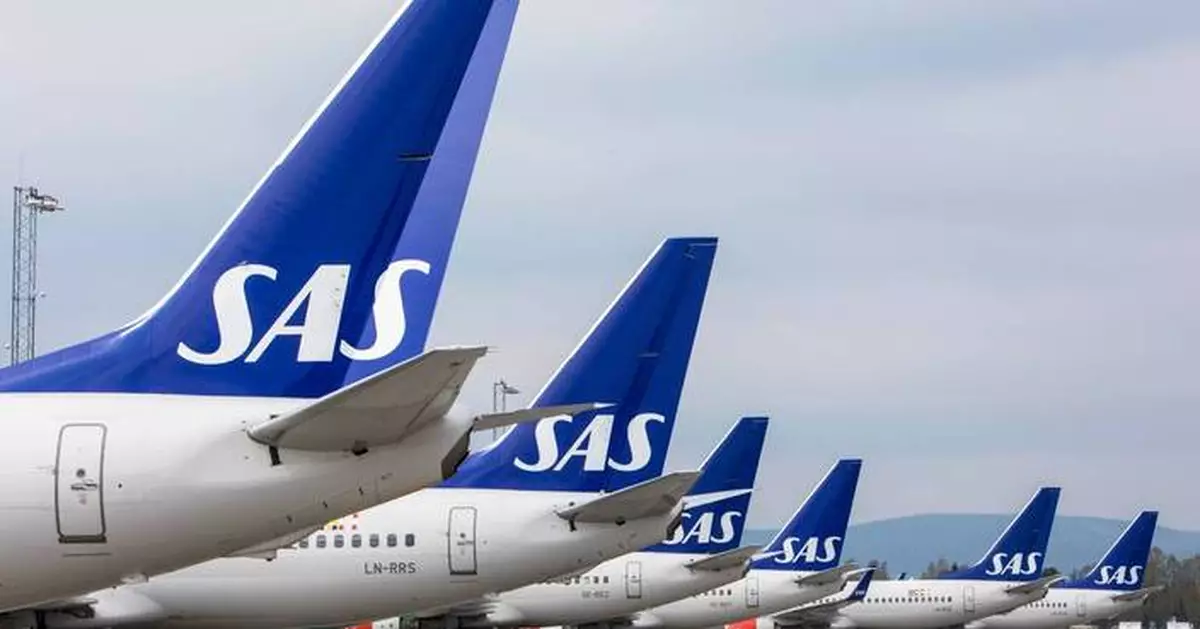
Chopin Airport also received information about a potentially dangerous item on board a Scandinavian Airlines, or SAS, flight from Copenhagen to Chopin Airport, PAP reported. Acting Director of the Warsaw Airport’s Communications Office, Piotr Rudzki, told the news agency that standard safety procedures were immediately implemented following the information and one of the airport’s runways was closed.
“The passengers disembarked, the plane landed normally; it was not an emergency landing,” SAS spokeswoman Alexandra Lindgren Kaokju told PAP.
She added that the carrier is currently focusing on providing care to passengers and crew, and the matter has been referred to the Polish police.
Spanish officials on Tuesday ruled out the presence of explosives on a Ryanair plane from Manchester that landed in southern Spain’s Murcia airport following a bomb threat.
Passengers and crew went through a security check, and the aircraft was inspected, said Francisco Lucas, the Spanish government’s delegate in the Murcia region, on X. The flight had 121 people on board, including crew, he said.
Bulgarian authorities found no signs of explosives on two aircraft at the Sofia International Airport that had both received bomb threats Tuesday while en route, Bulgaria’s Minister of Transportation Georgi Peev said on Tuesday according to state news agency BTA.
The two planes, originating in Bergamo, Italy, and Dublin, Ireland, were inspected by officers of the Specialized Counter-Terrorism Unit after landing in Sofia. Neither had been diverted due to the bomb threats.
Peev said that the initial information on the existence of one of the bomb threats “was based on a report from the pilot.”
“The pilot received information through his own channels — from the airline — that such a threat existed,” Peev said, adding that Bulgarian air traffic control then followed a protocol for such threats that landed the aircraft safely in Sofia.
The bomb threats came a day after a Wizz Air flight that departed Luton airport near London was forced to divert to Hungary after a bomb threat received while the plane was in the air.
Hungarian Defense Minister Romulusz Ruszin-Szendi said in a Facebook post on Monday that a Gripen fighter jet from the Hungarian Air Force was scrambled to intercept the Wizz Air flight and escorted it safely to the Liszt Ferenc International Airport in Budapest.
Authorities found no threat aboard the aircraft after conducting an inspection of the plane and its passengers, Wizz Air told state news agency MTI.
On Tuesday, Bulgaria’s acting Interior Ministry Secretary General Lyubomir Nikolov told reporters that authorities were still trying to identify the sender of the threat.
Last month, a flight from Tel Aviv to Vienna made an emergency landing in Bulgaria following a bomb threat.
__
Biller reported from Rome. Associated Press journalist Suman Naishadham in Madrid, and Justin Spike in Budapest, Hungary, contributed to this report.
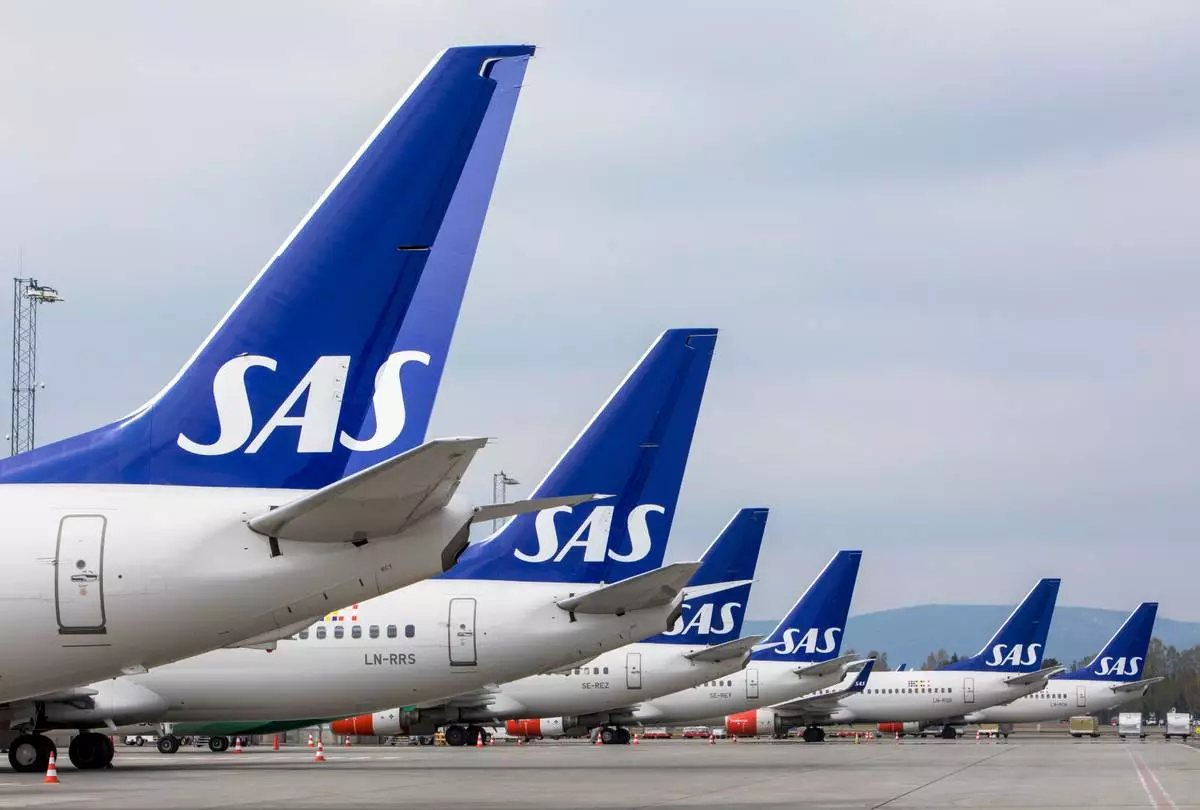
FILE - In this Friday, April 26, 2019 file photo, SAS planes are grounded at Oslo Gardermoen airport during pilots strikes, in Oslo, Norway. (Ole Berg-Rusten/NTB Scanpix via AP, File)