China successfully launched its Shenzhou-21 crewed spaceship on Friday evening, sending three astronauts into space to begin a six-month mission aboard the Tiangong space station.
The spaceship, atop a Long March-2F carrier rocket, blasted off at 23:44 (Beijing Time) from the Jiuquan Satellite Launch Center in northwest China, with the launch later being declared a "complete success" by the Jiuquan Satellite Launch Center.
The Shenzhou-21 crew consists of mission commander Zhang Lu, who was previously a member of the Shenzhou-15 mission, alongside flight engineer Wu Fei and payload specialist Zhang Hongzhang, who are each embarking on their first spaceflight mission.
Earlier on Friday, a special send-off ceremony was held for the astronauts before they departed for the launch site, with crowds of well-wishers gathering to see them off.
After lifting off as scheduled, the Shenzhou-21 spaceship separated from the rocket around 10 minutes after launch and later entered its designated orbit, said the China Manned Space Agency (CMSA).
The Shenzhou-21 crewed spaceship will adopt a fast automated rendezvous and docking mode and dock with the front port of the Tianhe core module approximately three and a half hours after launch, forming a three-spacecraft and three-module combination.
After completing a handover with the Shenzhou-20 crew, the Shenzhou-21 astronauts are set to get work on a busy program of activities during their six-month stay in space.
The new crew are set to complete 27 new science and application projects onboard the space station, covering various fields from space life sciences and biotechnology, space medicine, space material science, microgravity fluid physics and combustion, and new space technologies.
The trio of astronauts are also notably joined in space by a group of four mice which will be involved in a series of in-orbit scientific experiments, marking the first time China has sent rodents on a manned space mission.
The mission also plans to undertake in-orbit studies on lithium-ion batteries for space applications, and intelligent computing platforms.
The crew members will also perform extravehicular activities (EVAs) and cargo handling, install space debris protection devices, and deploy and recover extravehicular payloads and equipment.
They will also participate in various science education and public welfare activities.
During their time in orbit, the Shenzhou-21 crew will witness the arrival of the Tianzhou-10 cargo spacecraft and later welcome the Shenzhou-22 crewed spaceship, who will take over duties aboard the space station.
Shenzhou-21 marks the 37th flight of China's manned spaceflight program and the sixth manned flight mission since the Tiangong space station entered its application and development phase.
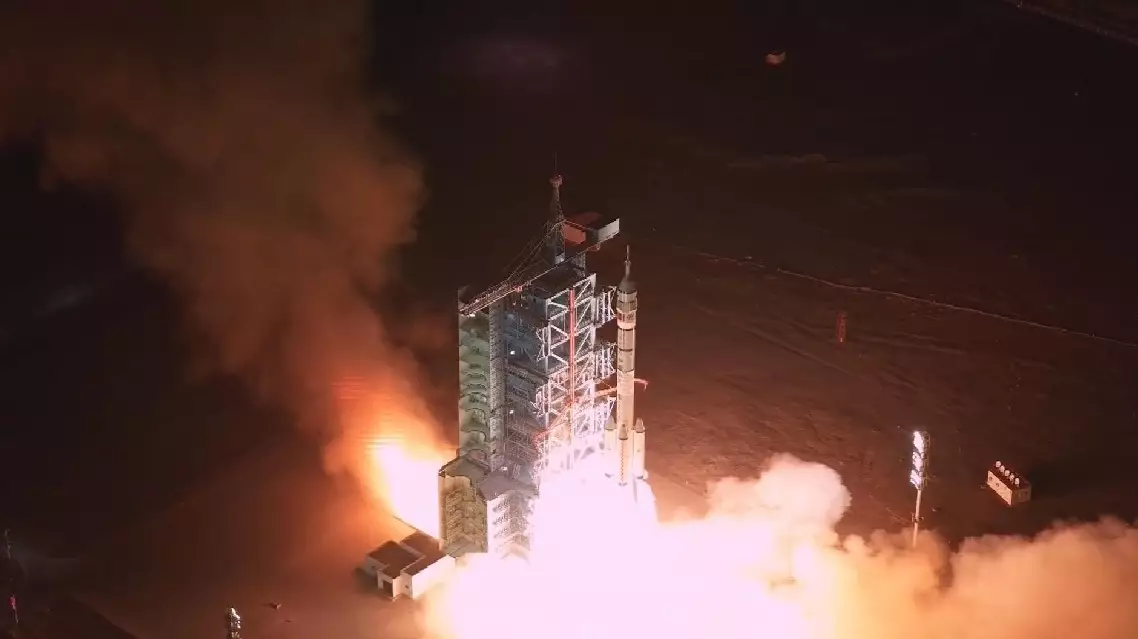
China successfully launches Shenzhou-21 crewed spaceship
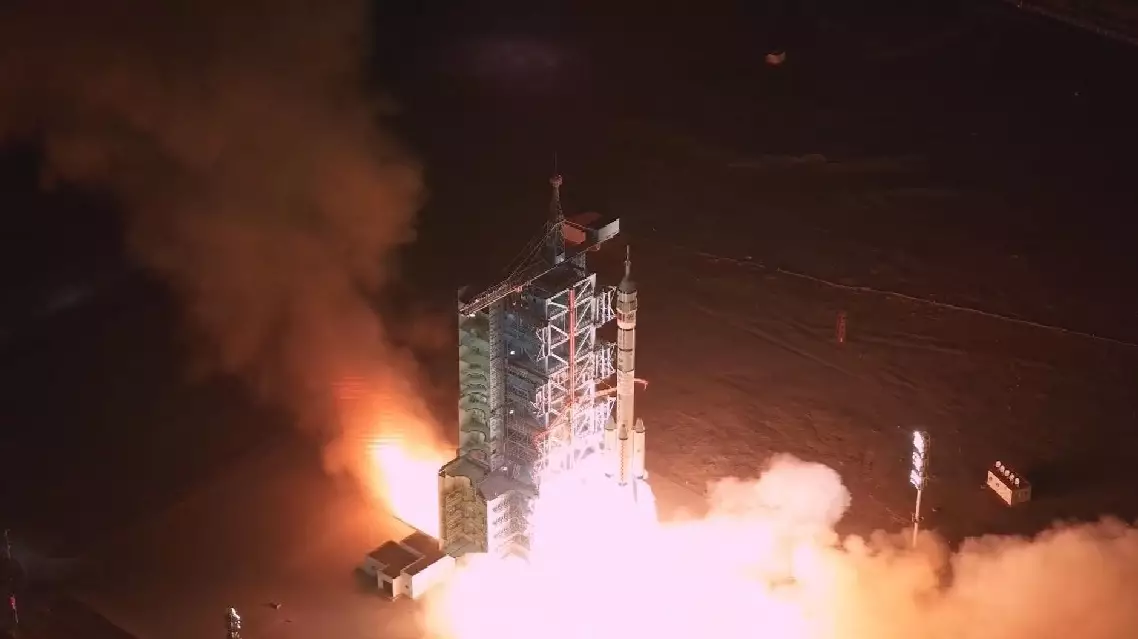
China successfully launches Shenzhou-21 crewed spaceship
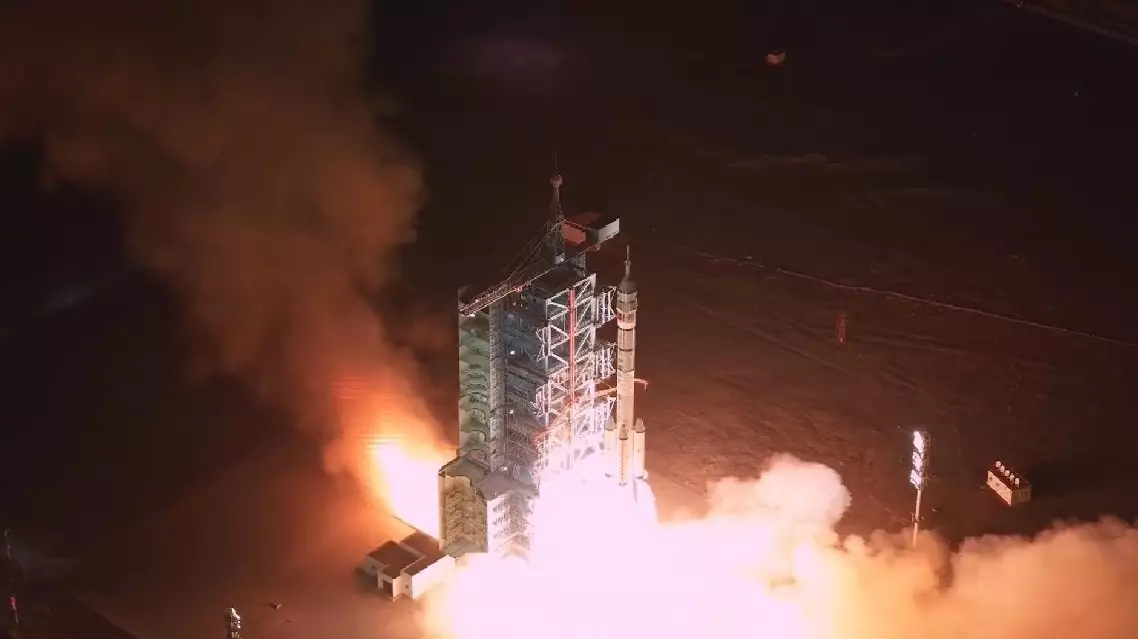
China successfully launches Shenzhou-21 crewed spaceship