The Supplemental Nutrition Assistance Program, or SNAP, is a major piece of the U.S. social safety net used by nearly 42 million, or about 1 in 8 Americans, to help buy groceries.
Originally known as the food stamp program, it has existed since 1964, serving low-income people, many of whom have jobs but don’t make enough money to cover all the basic costs of living.
Public attention has focused on the program since President Donald Trump’s administration announced last week that it would freeze SNAP payments starting Nov. 1 in the midst of a monthlong federal government shutdown. The administration argued it wasn’t allowed to use a contingency fund with about $5 billion in it to help keep the program going. But on Friday, two federal judges ruled in separate challenges that the federal government must continue to fund SNAP, at least partially, using contingency funds. However, the federal government is expected to appeal, and the process to restart SNAP payments would likely take one to two weeks.
Here’s a look at how SNAP works.
There are income limits based on family size, expenses and whether households include someone who is elderly or has a disability.
Most SNAP participants are families with children, and more than 1 in 3 include older adults or someone with a disability.
Nearly 2 in 5 recipients are households where someone is employed.
Most participants have incomes below the poverty line, which is about $32,000 for a family of four, according to the Center on Budget and Policy Priorities.
The U.S. Department of Agriculture, which administers the program, says nearly 16 million children received SNAP benefits in 2023.
People who are not in the country legally, and many immigrants who do have legal status, are not eligible. Many college students aren’t either, and some states have barred people with certain drug convictions.
Under a provision of Trump’s big tax and policy law that also takes effect Nov. 1, people who do not have disabilities, are between ages 18 and 64 and who do not have children under age 14 can receive benefits for only three months every three years if they’re not working. Otherwise, they must work, volunteer or participate in a work training program at least 80 hours a month.
On average, the monthly benefit per household participating in SNAP over the past few years has been about $350, and the average benefit per person is about $190.
The benefit amount varies based on a family’s income and expenses. The designated amount is based on the concept that households should allocate 30% of their remaining income after essential expenses to food.
Families can receive higher amounts if they pay child support, have monthly medical expenses exceeding $35 or pay a higher portion of their income on housing.
The cost of benefits and half the cost of running the program is paid by the federal government using tax dollars.
States pay the rest of the administrative costs and run the program.
People apply for SNAP through a state or county social service agency or through a nonprofit that helps people with applications. In some states, SNAP is known by another, state-specific name. For instance, it’s FoodShare in Wisconsin and CalFresh in California.
The benefits are delivered through electronic benefits transfer, or EBT, cards that work essentially like a bank debit card. Besides SNAP, it’s where money is loaded for the Temporary Assistance for Needy Families, or TANF, program, which provides cash assistance for low-income families with children, and the Special Supplemental Nutrition Program for Women, Infants, and Children.
The card is swiped or inserted in a store’s card reader at checkout, and the cardholder enters their PIN to pay for food. The cost of the food is deducted from the person’s SNAP account balance.
SNAP benefits can only be used for food at participating stores — mostly groceries, supermarkets, discount retail stores, convenience stores and farmers markets. It also covers plants and seeds bought to grow your own food. However, hot foods — like restaurant meals — are not covered.
Most, but not all, food stores participate. The USDA provides a link on its website to a SNAP retail locator, allowing people to enter an address to get the closest retailers to them.
Items commonly found in a grocery and other participating stores that can’t be bought with SNAP benefits include pet food, household supplies like toilet paper, paper towels and cleaning products, and toiletries like toothpaste, shampoo and cosmetics. Vitamins, medicines, alcohol and tobacco products are also excluded.
Sales tax is not charged on items bought with SNAP benefits.
There aren’t additional restrictions today on which foods can be purchased with SNAP money.
But the federal government is allowing states to apply to limit which foods can be purchased with SNAP starting in 2026.
So far, a dozen states — 11 of them Republican-controlled plus Colorado — have received permission to do so.
All of them will bar buying soft drinks, most say no to candy, and some block energy drinks.
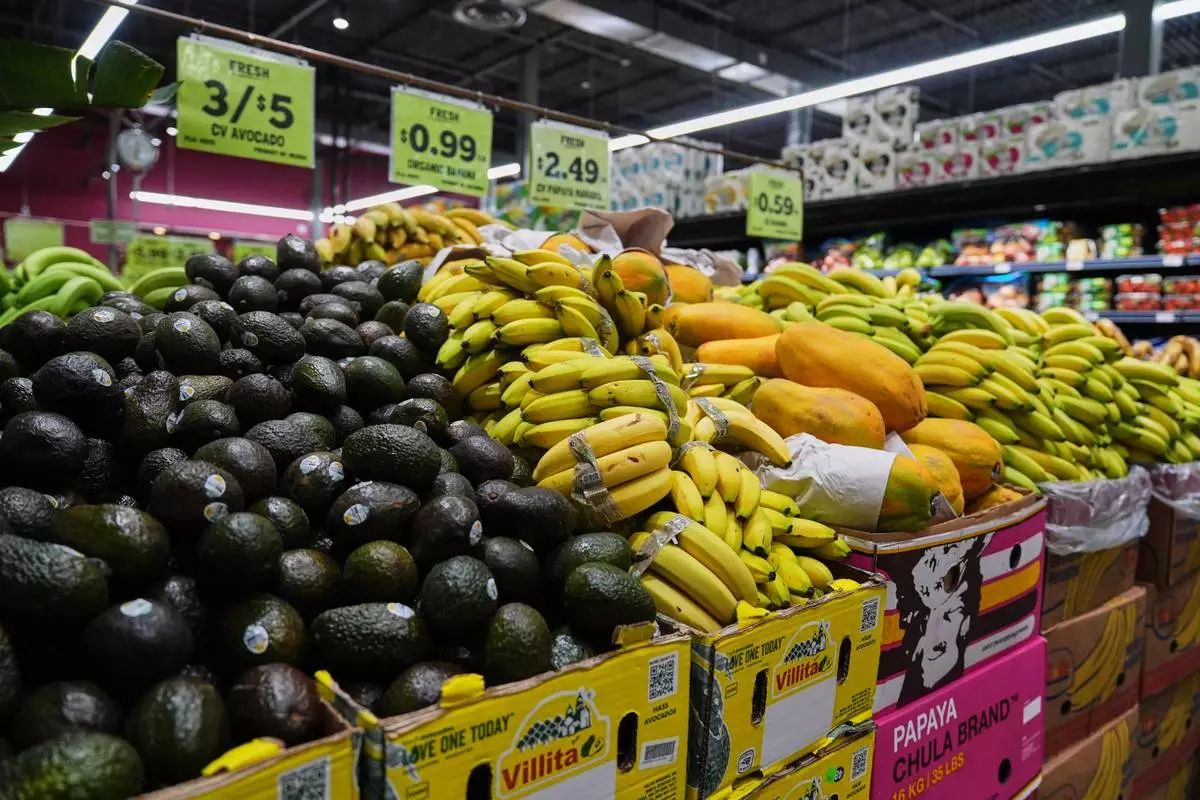
Produce, which is covered by the USDA Supplemental Nutrition Assistance Program (SNAP), is displayed for sale at a grocery store in Baltimore, Thursday, Oct. 30, 2025. (AP Photo/Stephanie Scarbrough)
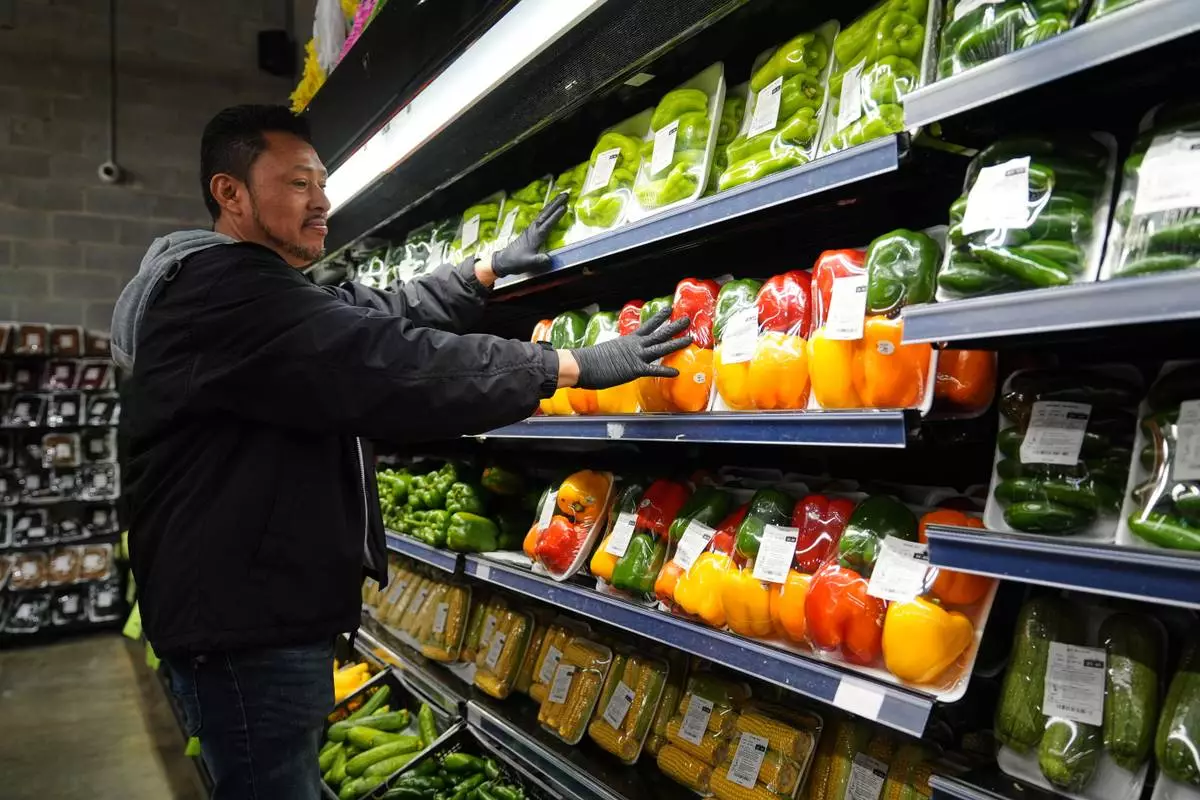
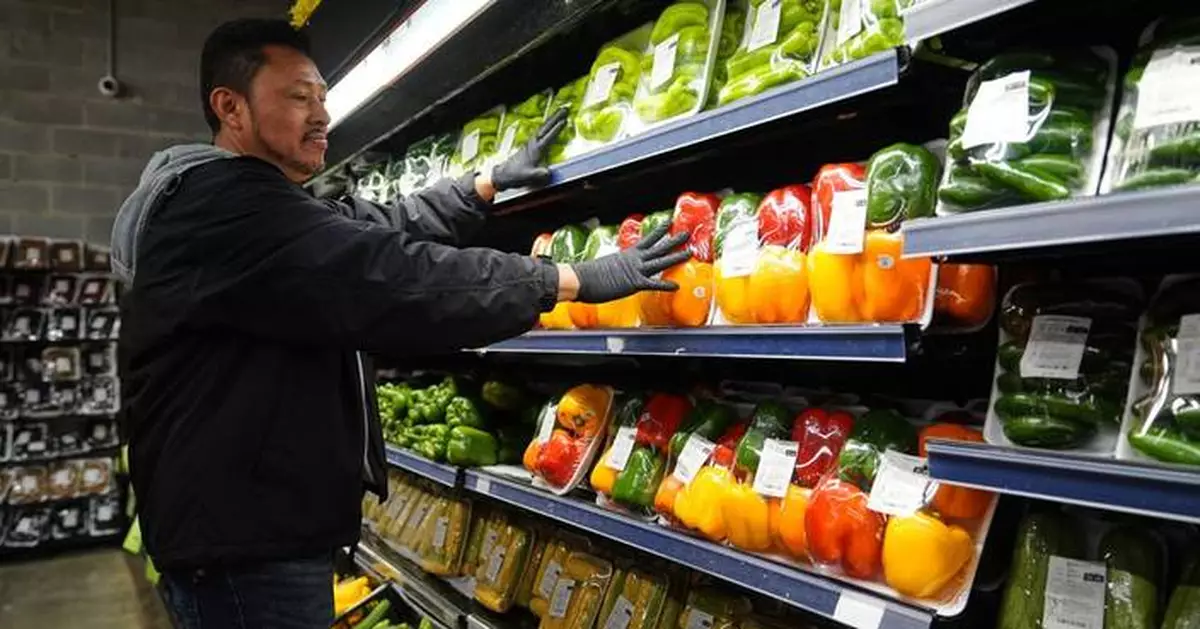
A grocery store employee stocks produce, which is covered by the USDA Supplemental Nutrition Assistance Program (SNAP), at a grocery store in Baltimore, Thursday, Oct. 30, 2025. (AP Photo/Stephanie Scarbrough)
DUBAI, United Arab Emirates (AP) — The United States launched a second round of airstrikes into Thursday morning on Iran after President Donald Trump warned that Tehran would “pay the price” for stalled negotiations.
The new assault across multiple cities comes as efforts to negotiate an end the war again appeared stuck, with Iran insisting it would maintain its chokehold on the Strait of Hormuz, which has disrupted global energy supplies and sent oil prices higher.
Iran threatened to retaliate for the strikes, and missile sirens sounded Thursday morning in Bahrain, home to the headquarters of the U.S. Navy’s 5th Fleet. However, any immediate Iranian response appeared more muted than the one that came after the first round of American strikes on Wednesday, when it launched missiles at Bahrain, Kuwait and Jordan.
The U.S. Central Command said it had “completed” its latest round of airstrikes just before sunrise in Iran. The military command said the stirkes came “in response to Iran’s unwarranted and continued aggression” and targeted “Iranian military surveillance capabilities, communication systems and air defense sites.” It did not elaborate on the damage done by the strikes, which it said were carried out by the U.S. Air Force, Marines and Navy.
Explosions from the strikes echoed around Iran’s capital, Tehran, as well as in the port city of Bandar Abbas and other southern areas along the strait.
It was the third time this week that back-and-forth strikes have tested a two-month ceasefire. The strikes took place after a day of Iranian fire in Bahrain, Kuwait and Jordan, all of which host U.S. troops.
Trump has urged Iran to sign a deal to end the war and suggested earlier this week that an agreement could be reached in days.
Iran’s United Nations envoy said the U.S. should refrain from threats of force if it wants a deal.
“Iran has never negotiated under threats and pressure and will never submit to pressure or question,” Ambassador Amir Saeid Iravani told the U.N. Security Council on Wednesday.
Still, both countries seem to be looking for a way to end the conflict — if they can manage to sell it as a win at home.
Iran has proved resilient despite weeks of heavy bombing. It is betting that its ability to effectively close the Strait of Hormuz — a crucial passageway for oil and natural gas — gives it a strong bargaining chip.
Israeli Prime Minister Benjamin Netanyahu appears intent on pursuing goals that make compromise harder: the collapse of Iran’s theocratic government, the elimination of its nuclear program, and the destruction of the Iranian-allied Hezbollah militant group in Lebanon. On Monday, Iran and Israel targeted each other.
Since the U.S. and Israel started the war with Feb. 28 attacks on Iran, the conflict has shaken the global economy, driven up energy prices worldwide, and made food and other basics more expensive.
The international benchmark for crude oil traded above $93 a barrel on Wednesday, up more than 25% since the start of the war.
Trump said the U.S. military has since last month undertaken a “secret mission” to sneak oil shipments past Iran’s forces in the Strait of Hormuz. He said ships were slipping through at night, aided by the destruction of Iranian radar equipment.
Trump said as a result more than 100 million barrels of oil have evaded Iran’s chokehold on the strait. There was no immediate confirmation of that figure, which roughly equals five days of oil shipments through the waterway before the war began.
The military’s role was not immediately clear. Capt. Tim Hawkins, a Central Command spokesman, said U.S. forces “communicate and coordinate” with commercial ships in the area, but gave no details on military support being offered.
The U.S. Central Command on Wednesday refuted Iran’s claims that the Strait of Hormuz is closed, saying commercial ships are continuing to transit in and out.
Earlier Wednesday, the U.S. military said an American aircraft fired “precision munitions” into the engine room of the Palau-flagged vessel M/T Settebello as it attempted to breach the naval blockade with a shipment of Iranian oil. It was the eighth merchant vessel disabled by U.S. forces in waters off Iran.
India’s foreign ministry said three Indian sailors were missing after the Settebello was struck, while 21 others were rescued. Its statement did not mention the U.S. military or the blockade.
Hawkins of the U.S. Central Command said American forces warned the crew before firing on the ship.
The U.S. military said strikes earlier Wednesday targeted “air defense, ground control stations, and surveillance radar sites."
Iran said U.S. strikes hit two water reservoirs in the southern city of Sirik, temporarily cutting off water to thousands of people. U.S. Central Command had no immediate comment. Tehran later claimed attacks in Kuwait, Bahrain and Jordan.
Iranian Foreign Minister Abbas Araghchi condemned the American attacks as a violation of Iranian sovereignty.
Still, efforts to mediate a deal continued. Following consultations with the U.S., a delegation from Qatar arrived in Tehran for talks earlier Wednesday, according to an official with knowledge of the visit who requested anonymity due to the sensitivity of the talks.
The exchanges of fire came a day after a U.S. Army attack helicopter crashed near the Strait of Hormuz. The helicopter collided with an Iranian drone, according to a U.S. official speaking on condition of anonymity to discuss an ongoing investigation. It wasn’t clear whether the collision was intentional.
A drone boat rescued the helicopter’s two crew. Trump said they were uninjured.
Wary of high gas prices in the run-up to congressional elections in November, Trump seems to be looking for a quick win. But he is also making demands that will be tough for Iran to swallow.
The U.S. wants to see Iran give up its stockpile of highly enriched uranium. While Iran insists its nuclear program is peaceful, that uranium is a short technical step from weapons-grade levels.
Iran is refusing to give up the uranium and demanding relief from sanctions. It also wants the release of frozen assets even before a final agreement is in place, something Trump rejected.
Iran has insisted that any deal to end the war must also end fighting between its ally Hezbollah and Israel. Israel has instead intensified its military campaign against the Lebanon-based militant group.
Price reported from Washington. Associated Press writers Konstantin Toropin and Will Weissert in Washington; Edith M. Lederer at the United Nations; Natalie Melzer in Nahariya, Israel; David Rising in Bangkok; Bassem Mroue in Beirut; Michelle L. Price in New York; Russ Bynum in Savannah, Georgia; and Hannah Schoenbaum in Salt Lake City contributed to this report.

A man runs past burning cars following an Israeli airstrike in the southern port city of Sidon, Lebanon, Wednesday, June 10, 2026. (AP Photo/Mohammed Zaatari)

People take shelter as air raid sirens warn of incoming Iranian missiles in Ramat Gan, Israel, Monday, June 8, 2026. (AP Photo/Oded Balilty)
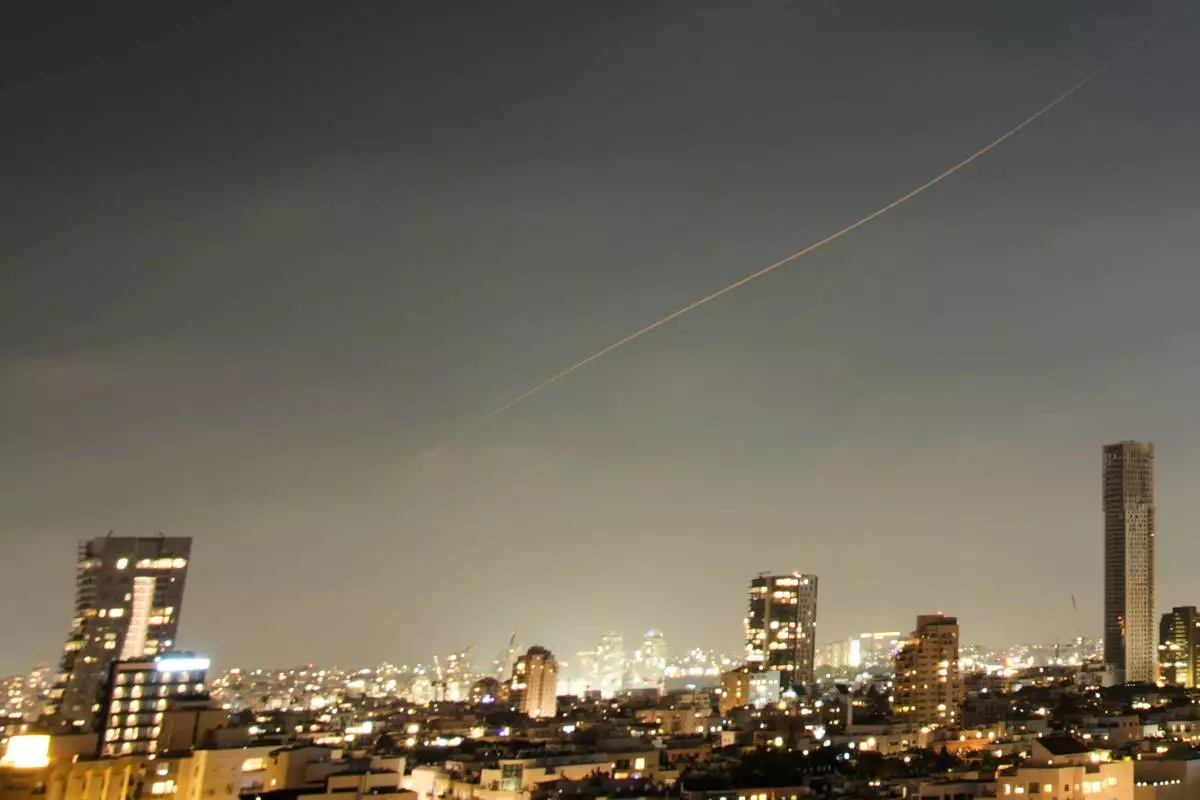
A projectile streaks through the sky over central Israel during an Iranian missile attack, Sunday, June 7, 2026. (AP Photo/Ohad Zwigenberg)
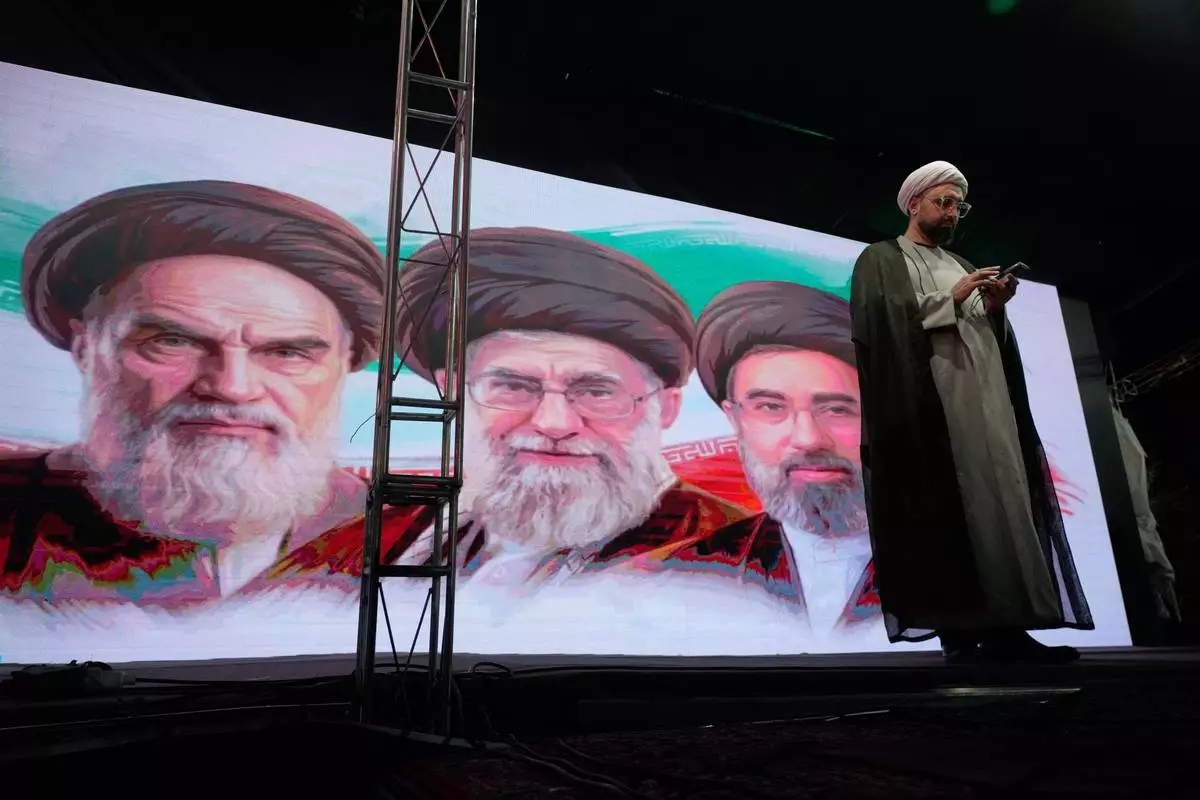
A cleric checks his cell phone on stage in front of a screen displaying portraits of the late Iranian revolutionary founder Ayatollah Khomeini, left, late Supreme Leader Ayatollah Ali Khamenei, center, and Supreme Leader Ayatollah Mojtaba Khamenei, during a pro-government gathering in Tehran, Iran, Sunday, June 7, 2026. (AP Photo/Vahid Salemi)
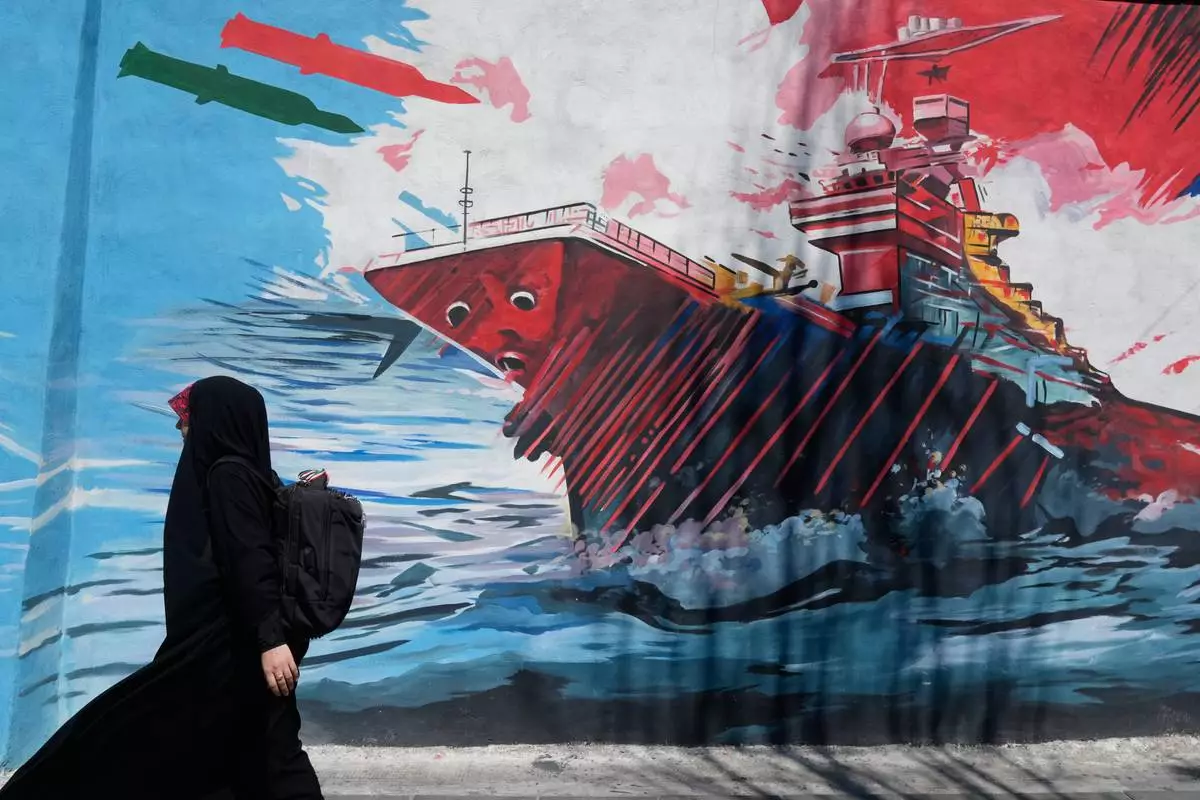
A woman walks past a mural depicting a U.S. aircraft carrier under missile attack in downtown Tehran, Iran, Monday, June 8, 2026. (AP Photo/Vahid Salemi)