Skip to Content Facebook Feature Image

China solicits logo designs for 2026 space missions from public

China

China

China

China solicits logo designs for 2026 space missions from public

2025-11-01 22:23 Last Updated At:11-02 03:17

China Manned Space Agency Office launched a program on Saturday to solicit designs of logos for the country's manned space flight missions in 2026 from the general public.

The mission logos collected should fully embody Chinese elements, characteristics of China's manned spaceflight missions with distinct technological and artistic implications. Due consideration should also be given to the systematization, coordination, and continuity with previous mission logos.

The submission deadline for the design program is 12:00 on December 15, 2025. Details regarding entry requirements and conditions can be found on the China Manned Space Engineering website.

The program is intended to solicit logo designs for the Tianzhou-10 cargo spacecraft mission, the Shenzhou-22 manned spaceflight mission, the Shenzhou-23 manned spaceflight mission, and the Mengzhou-1 spacecraft mission.

For these missions, both the Shenzhou-22 and Shenzhou-23 manned spaceflight missions will maintain the three-person crew format. One astronaut from the Shenzhou-22 mission will conduct a long-term stay experiment of over one year.

In 2026, the Mengzhou-1 will make its maiden flight. The Mengzhou manned spacecraft is a new generation spacecraft comprehensively upgraded from the Shenzhou spacecraft, featuring modular design consisting of a return capsule and service module, used for space station transportation.

This mission will mark the first use of the Long March-10A carrier rocket to launch the Mengzhou-1. The maiden flight will be an unmanned test primarily verifying the Mengzhou spacecraft's overall system performance, carrying environmental assessment equipment, technical verification products, station supplies, and experimental modules. After launch, Mengzhou-1 will dock with the radial port of the core module.

China solicits logo designs for 2026 space missions from public
China solicits logo designs for 2026 space missions from public

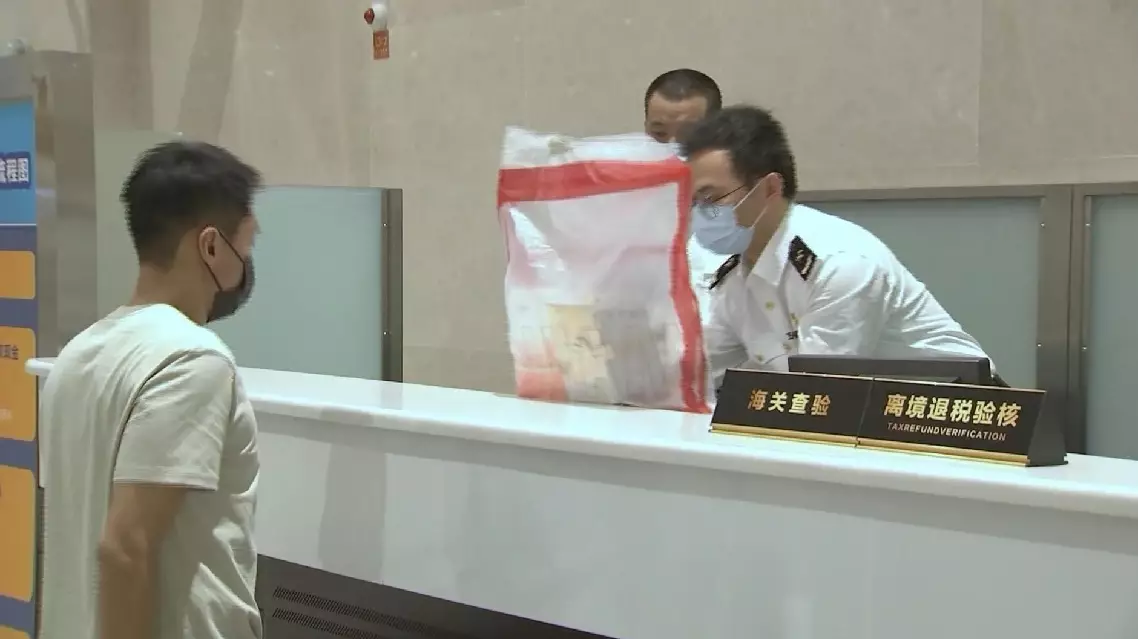
The Langqi passenger terminal in Fuzhou of east China's Fujian Province officially commenced a new departure tax refund initiative for travelers heading on the "mini three links" route on Tuesday, with streamlined measures boosting the efficiency of tax refunds and speeding up customs clearance procedures.

The "mini three links" refers to direct trade, postal and transport services launched in 2001 between Fujian Province and the Taiwan-administered Kinmen and Matsu islands. It serves as a vital, convenient cross-strait passage for personnel exchanges and economic and trade interactions between the Chinese mainland and the Taiwan region.

At the heart of the upgraded service is an optimized procedure dubbed the "one document, one bag, one code" process, a simple and streamlined model designed to shorten clearance time for outbound passengers.

Under this framework, travelers who make purchases at designated pilot tax refund stores can have their qualified goods consolidated into a single sealed bag, with all corresponding tax refund information integrated into a unique QR code printed on the tax refund application form.

When departing via the Langqi passenger terminal, on-site customs officers only need to scan the QR code to retrieve and verify the details relating to the applicant's tax refund application. Travelers can then get quick customs clearance once the information is confirmed to be accurate, with no requirement to open their sealed shopping bags for repeated inspections.

Departure tax refund services launched at "mini three links" port in Fuzhou

Departure tax refund services launched at "mini three links" port in Fuzhou

Recommended Articles