A spectacular array of homegrown technologies will be applied at the upcoming 15th National Games of China for a greener and smarter event, demonstrating the technological integration of the Guangdong-Hong Kong-Macao Greater Bay Area.
Held across south China's vibrant city cluster, the 15th National Games, along with the 12th National Games for Persons with Disabilities and the 9th National Special Olympic Games, will officially run from November 9 to 21.
With the country's largest national multi-sport event held every four years just around the corner, research institutes and tech companies have unveiled their latest developments that will help ensure smooth operations of the games.
The Fok Ying Tung Research Institute affiliated with the Hong Kong University of Science and Technology (HKUST), based in Guangdong's provincial capital city Guangzhou, will apply its nano passive radiative cooling technology to workers' hats and jackets during the National Games. The same paint will also be sprayed on almost 100 volunteer service stations, expected to reduce carbon emissions by 200 tons. After the event, some of the booths will stay on as community service hubs.
"It's inspired by Saharan silver ants. The coating cools surfaces by over 15 degrees and indoor spaces by 3 to 5 degrees. Developed by several Hong Kong universities, it's the first time this technology has been turned into a paint and commercialized on the mainland," said Zhu Longqian, director of the Building Energy Research Center of HKUST Fok Ying Tung Research Institute.
SeekLane Technology, a local startup in Guangzhou incubated by the HKUST, will offer smart indoor-outdoor navigation, with accuracy within three meters.
"We use Bluetooth for indoor positioning, and BeiDou and GPS outdoors, delivering seamless navigation between both environments," said Luo Huawei, sales director of Culture and Sports Division at SeekLane Technology.
These innovations are part of a broader effort to transform Hong Kong's research achievements into real-world solutions. Researchers said that the National Games have provided them with an opportunity to gain more commercial traction.
"Thanks to the games' exposure, our startups are already being approached for partnerships," said Gao Min, director of HKUST Fok Ying Tung Research Institute.
Meanwhile, some mature industries and technologies are taking advantage of the National Games to innovate their products and services and try out new practices.
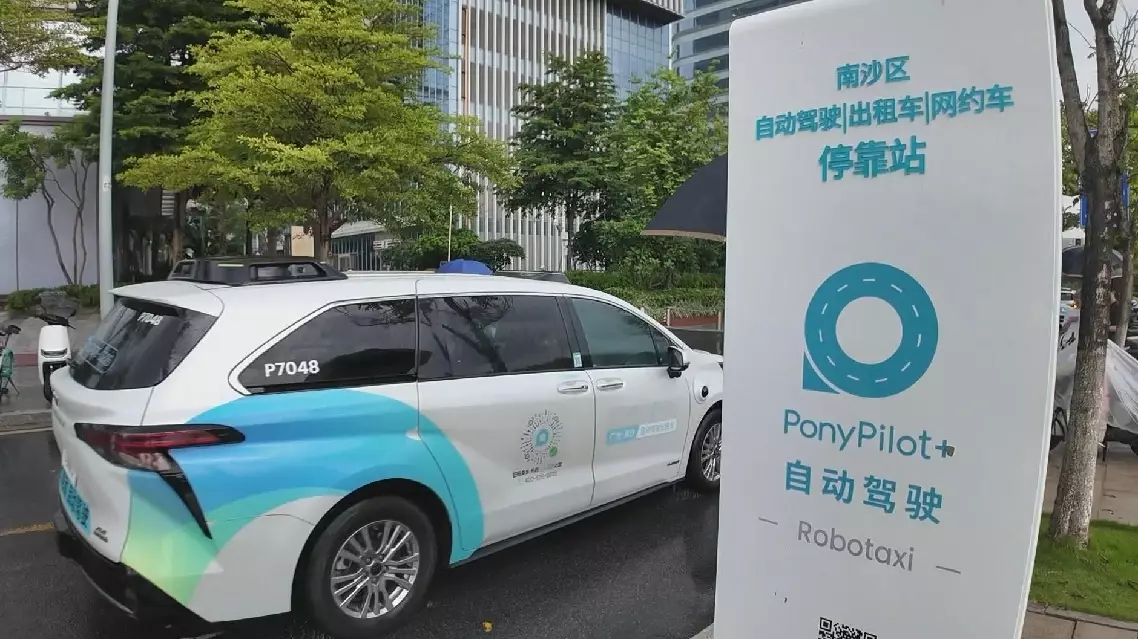
In Guangzhou, more than a hundred of unmanned robotaxies will be on call around the clock during the National Games, offering rides between major venues, the media center, hotels, and transportation hubs. The service provider, Pony.ai, has launched its seventh-generation vehicles, which are smarter and safer, while seeking to address deeper issues within the ride-hailing industry.
"Some drivers are working dangerously long hours just to earn more. Autonomous vehicles, tested extensively on complex public roads, offer a safer alternative. And at the same time, we're also creating new types of jobs," said Huang Kailin, deputy general manager of Pony.ai Guangzhou-Shenzhen Research and Development Center.
Homegrown techs shine at China's 15th National Games
Ghanaian President John Dramani Mahama has underscored the need for the international community to properly recognize the historical injustices committed against Africa and support efforts to advance reparations for Africans and people of African descent.
Mahama made the remarks in an interview with the China Media Group (CMG) which was aired Friday and recorded during the Ghanaian President's trip to Beijing in October.
Earlier this year, Mahama had issued a call for collective action in securing justice for Africans and individuals of African descent through reparations at the 38th Ordinary Session of the African Union.
Located in West Africa along the northern shore of the Gulf of Guinea and bordered by the Atlantic Ocean to the south, Ghana boasts a more than 500-km coastline and abundant agricultural, fishery, forestry and mineral resources. Yet its history, like much of the African continent, has been deeply scarred by centuries of foreign aggression.
From the 15th century onward, Western colonial powers invaded coastal areas of what is now Ghana, plundering resources and conducting the slave trade, casting a long colonial shadow over the African continent which hung for centuries.
In 1955, the successful convening of the Bandung Conference -- which gathered representatives of Asian and African states in Indonesia -- ignited a new wave of national liberation movements these continents, accelerating the collapse of the global colonial system.
Ghana's independence in 1957 lit the first torch of freedom in sub-Saharan Africa and was hailed as the dawn of Africa's awakening.
Africa's first tragedy, the transatlantic slave trade, constituted an extremely grave atrocity, Mahama said.
During that period, an estimated 12 to 15 million Africans were forcibly taken from the continent and sent to the Caribbean, the Americas and Europe. They contributed to the building of modern Western civilization, yet received no compensation for their labor, whether working on sugar plantations or constructing railways, roads and bridges, he noted.
Mahama outlined his wish that the United Nations takes action to recognize the slave trade as "the greatest crime against humanity" and takes steps to ensure reparations are paid back to the descendants of those who suffered.
"We believe that first and foremost, it should be recognized as the greatest crime against humanity. We must condemn the activity of slavery of the people who were shipped to what I call the 'New World', that's the Western world. It's estimated that as many as 2 million did not arrive at the destination because they were either too sick or they died on board, and they were just tossed over into the ocean. That was genocide. And so it's an issue that the first step is for us to accept. And so Ghana wants to move a motion in the UN next year asking the world to recognize the slave trade as the greatest crime against humanity. And so we'll continue to push on the African [Union] Champion on Reparations when I spoke even at the UN, I raised the issue of reparations and so I do think that that is to do with slavery," he said.
Mahama also stressed the impact of colonialism, which further entrenched injustice and led to global inequality as African nations were ruthlessly exploited.
"With regards to colonialism, the Berlin Conference (1884–1885) partitioned Africa and the European nations took colonies in Africa, ran those colonies, exploited their natural resources and transferred those natural resources, oil palm, gold, minerals, cocoa and other products, to develop their countries. And it's only from the late 1950s that countries like Ghana got independent. And so that was an injustice. Colonialism was an injustice against African countries," he said.
Ghanaian president urges reparative justice for Africa, citing slavery, colonial exploitation