Chinese animated movie "Nobody," a summer blockbuster, has seen the total sales of its intellectual property (IP)-licensed products top 250 million yuan (about 35.13 million U.S. dollars), setting an example for film IP management.
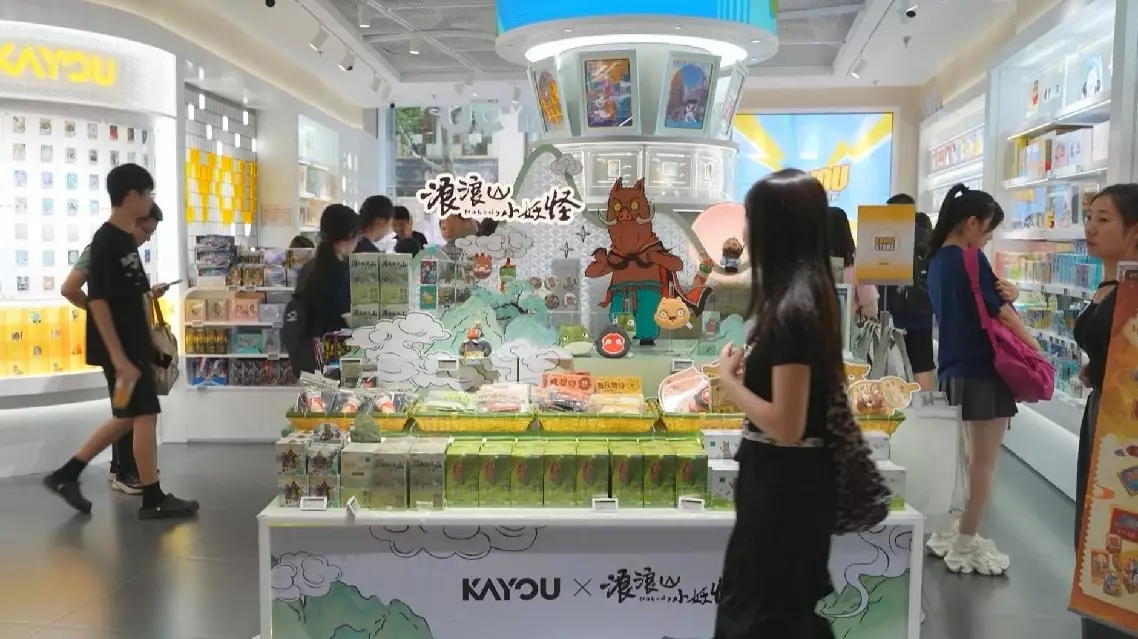
As the box-office champion of Chinese 2D animation films, the movie has been in collaboration with over 40 brands, with the licensed production and commercial operation involving over 800 kinds of derivative products across the catering, gaming, automotive and furnishing industries.
"We have developed or co-developed over 800 kinds of products. By merging our intellectual property (IP) with different cultural business forms, we can ensure a more complete extension of our IP," said Li Zao, general producer of "Nobody."
The strategy has seen great success, as the first-day sales of film merchandise at the Shanghai United Cinemas alone surpassed 7 million yuan (983,000 U.S. dollars).
"This is our first time to cooperate with a movie IP rights holder. In just the first three days after launch, sales exceeded 10,000 units," said Yang Ting, brand director of Wentongzi, a high-end plush toy maker.
According to experts, "Nobody" marks a major step for original Chinese IPs, moving from a single work to a structured product ecosystem, a comprehensive attempt to explore the "film-plus" model.
"The management of an IP should begin as an integrated system. When planning a film, even before the script is complete, IP management should be taken into consideration along with the character and theme design. Only then can a film truly evolve from a standalone entertainment product into part of comprehensive IP operation," said Si Ruo, professor with the Tsinghua University's School of Journalism and Communication.
Chinese blockbuster "Nobody" sees bursting derivative product sales
Hong Kong's first astronaut lifted off into space on Sunday, sparking a wave of enthusiasm for space exploration in the special administrative region, while inspiring a new generation to look to the stars.
The Shenzhou-23 crewed spaceship, atop a Long March-2F carrier rocket, blasted off from the Jiuquan Satellite Launch Center in northwest China at 23:08 (Beijing Time) on Sunday. The crew members include Lai Ka-ying, the first astronaut and payload specialist from Hong Kong to join a national space mission, whose achievements have motivated many Hong Kong residents.
"I feel so happy and thrilled. This is the first time a Hong Kong astronaut has gone to space, and to see a true Hong Konger, who is also a mother of three, just really touches my heart," said Chow, a local resident.
The successful spaceflight of Lai has especially captivated the younger generation to dream bigger about the future.
"I want to be an astronaut, because I want to discover more things about space," said a young student surnamed Chow.
"I have seen things related to spaceflights of astronauts. I hope when I grow up, I could receive training and go to space myself," said another student surnamed Koo.
To meet public expectations, the Hong Kong Space Museum has updated its space-themed exhibition with the latest development of the Shenzhou-23 mission, extending the display until July 6. Parents are seizing the moment to enrich their children's knowledge.
"At his age, I want him to be exposed to a wide range of information. With all the recent astronaut news, I brought him here specially to see for himself. We will also check out a film about space knowledge at the planetarium. I hope he can get more out of this from an early age," said Cheung, a father.
"We just watched the Shenzhou-23 launch at home with my son last night, and decided to take him to the Space Museum," a mother surnamed Chun shared.
"I saw on TV that so many people were cheering for the launch. When the rocket was launched, fire burst out from its body. I was really happy they succeeded," said Chun's son.
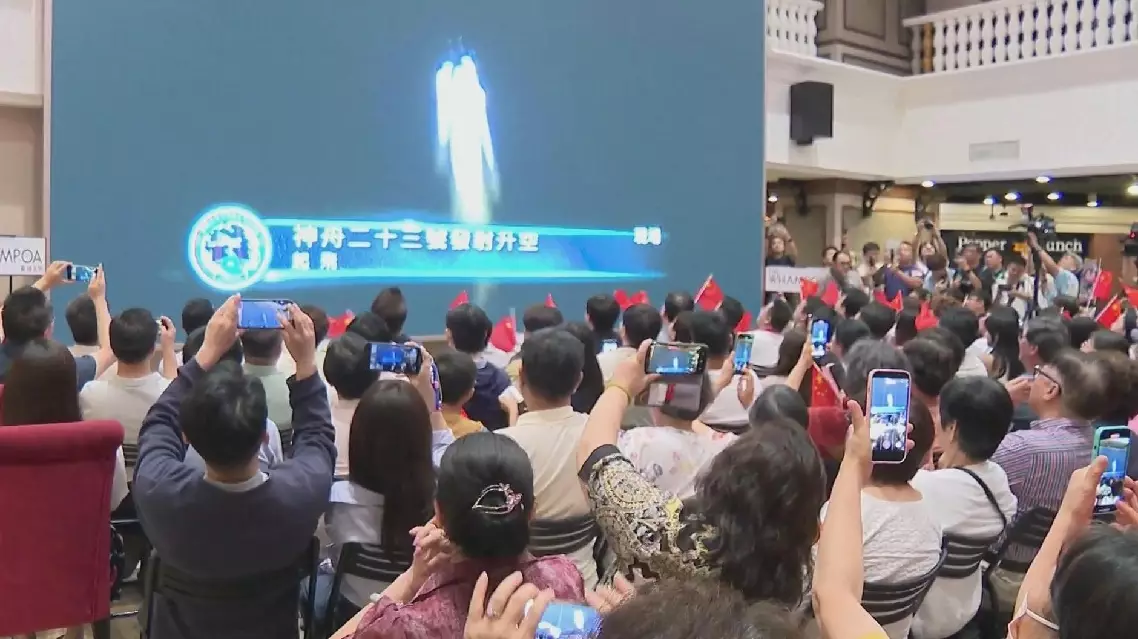
Hong Kong's first astronaut ignites citywide enthusiasm over space exploration