CAIRO (AP) — An attack by Sudan's paramilitary force on the city of el-Obeid, the capital of North Kordofan province, killed at least 40 civilians, local media reported, following reports of atrocities elsewhere in the region as the two-year war intensifies.
The U.N. Office for the Coordination of Humanitarian Affairs said dozens were injured in Monday's attack but didn't specify the perpetrators. It warned that the humanitarian situation across Kordofan was worsening. The Sudan Tribune and other media said the RSF launched drone strikes targeting a funeral service in el-Obeid on Monday, killing the civilians.
The Kordofan and neighboring Darfur regions emerged as the epicenter of Sudan's war over the past months. Last week, the RSF seized el-Fasher, the last army stronghold in Darfur, and advanced into neighboring Kordofan.
The war between the RSF and the military began in 2023, when tensions erupted between the two former allies that were meant to oversee a democratic transition after a 2019 uprising. The fighting has killed at least 40,000 people, according to the World Health Organization, and displaced 12 million. Over 24 million people are facing acute food insecurity, according to the World Food Program.
Most recently, RSF fighters launched attacks on the town of Bara in the central part of North Kordofan, killing at least 47 people, including nine women, according to the Sudan Doctors Network.
The network expressed its concern about the “horrific crimes” by the RSF in Bara, describing it as a “scene that epitomizes the most grotesque forms of human rights violations and systematic killings.”
It said it received field reports indicating that dozens of bodies were piled up inside homes, after the RSF prevented the victims’ families from burying them. It is unclear if those were the bodies from the latest attack. Meanwhile, the number of missing is increasing daily due to poor communications in Bara, according to the group.
Last week, the RSF took el-Fasher after an 18-month siege. The paramilitary rampaged through a hospital, killing over 450 people, according to the World Health Organization, and went house to house, killing civilians and committing sexual assaults.
Those killed included Dr. Adam Ibrahim Ismail, who worked in el-Fasher and was shot dead by the RSF in what the doctors' network described as a “heinous crime” targeting doctors and aid workers. The group said Ismail was arrested during the RSF’s incursion of the city and killed in a field.
The RSF has denied committing atrocities, but testimonies from survivors who fled the city, along with online videos and satellite imagery, described the carnage following the attack. Tens of thousands have been displaced.
El-Fasher is one of two regions hit by famine, the Integrated Food Security Phase Classification, a global hunger monitoring group, said Monday. The other is the town Kadugli in South Kordofan province.
Ross Smith, World Food Program’s director of emergency response, told reporters this week that the agency is noticing “very poor food consumption” with people going for days without eating in some parts of the country.
“We’re seeing very high levels of severe malnutrition and we have many reports of mortality," he said. “This is related to conflict for sure.”
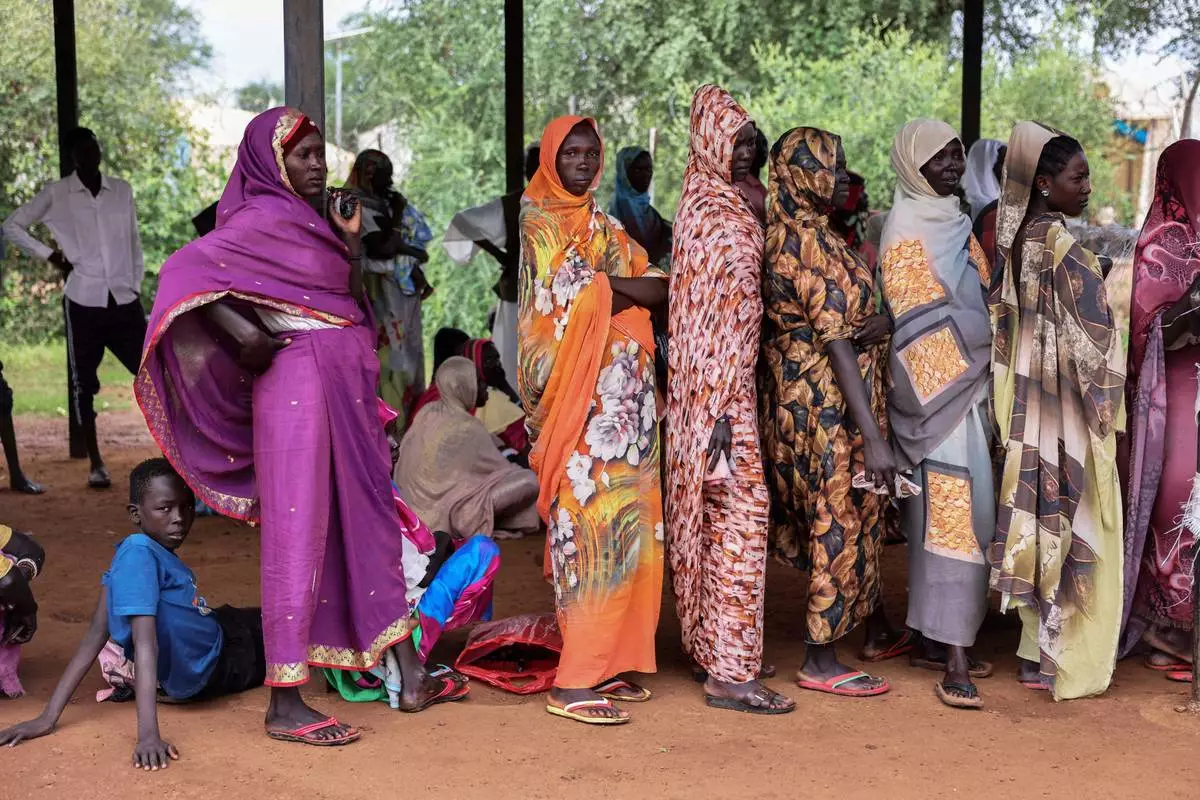
FILE - Women wait for cash assistance and dry grain from the U.N. World Food Program in Gendrassa refugee camp, Maban, South Sudan, on Aug. 20, 2025. (AP Photo/Caitlin Kelly, File)
If Indiana Republican senators had any doubt about what to do with President Donald Trump's redistricting proposal, he helped them make up their minds the night before this week's vote.
In a social media screed, Trump accused the state's top senator of being “a bad guy, or a very stupid one."
“That kind of language doesn’t help,” said Sen. Travis Holdman, a banker and lawyer from near Fort Wayne who voted against the plan.
He was among 21 Republican senators who dealt Trump one of the most significant political defeats of his second term by voting down redistricting in Indiana. The decision undermined the president's national campaign to redraw congressional maps to boost his party's chances in the upcoming midterm elections.
In interviews after Thursday's vote, several Republican senators said they were leaning against the plan from the start because their constituents didn't like it. But in a Midwest nice rebuttal to America's increasingly coarse political discourse, some said they simply didn't like the president's tone, like when he called senators “suckers.”
“I mean, that’s pretty nasty,” said Sen. Jean Leising, a farm owner from Oldenburg who works at her daughter’s travel agency.
Trump didn't seem to get the message. Asked about the vote Thursday, the president once again took aim at Indiana's top senator, Rodric Bray.
“He’ll probably lose his next primary, whenever that is," Trump said. "I hope he does, because he’s done a tremendous disservice.”
Sen. Sue Glick, an attorney from La Grange who also opposed redistricting, brushed off Trump's threat to unseat lawmakers who defied him.
“I would think he would have better things to do,” she said. “It would be money better spent electing the individuals he wants to represent his agenda in Congress.”
The president tried to brush off the defeat, telling reporters he “wasn’t working on it very hard."
But the White House had spent months engaged in what Republican Sen. Andy Zay described as “a full-court press.”
Vice President JD Vance met with senators twice in Indiana and once in Washington. White House aides frequently checked in over the phone.
Holdman said the message behind the scenes was often more soothing than Trump's social media attacks.
“We were getting mixed messages," he said. “Two days before the vote, they wanted to declare a truce on Sen. Bray. And the next day, there’s a post on Truth Social that didn’t sound like truce language to me.”
Some of Trump's other comments caused backlash too. For example, he described Minnesota Gov. Tim Walz as “retarded,” which upset Sen. Mike Bohacek because his daughter has Down syndrome. Bohacek had been skeptical of redistricting and decided to vote no in response.
The White House did not respond to questions about outreach to senators, but it distanced itself from conservative allies who claimed Trump had threatened to withhold money from the state.
"President Trump loves the great state of Indiana," said spokesman Davis Ingle, who insisted Trump "has never threatened to cut federal funding and it’s 100% fake news to claim otherwise.”
Regardless, Trump had struggled to get traction despite months of pressure.
Holdman said he turned down an invitation to the White House last month because he had a scheduling conflict.
“Plus, by then it was a little too late,” he said.
Leising said she missed a call from a White House official the day before a vote while she was in a committee meeting. She didn't try to call back because she wasn't going to change her mind.
Mitch Daniels, a former Indiana governor and a Republican, had a simple explanation for what happened.
“Folks in our state don’t react well to being bullied,” he said.
Some Republicans lashed out at senators for defying Trump.
"His life was threatened — and he was nearly assassinated," Indiana Lieutenant Gov. Micah Beckwith wrote on social media. “All for what? So that Indiana politicians could grow timid.”
The message to the president, Beckwith said, was “go to hell.”
But senators who opposed redistricting said they were just listening to their constituents. Some believed the unusual push to redraw districts was the equivalent of political cheating. Others didn't like that Washington was telling Indiana what to do.
The proposed map would have divided Indianapolis into four pieces, grafting pieces of the city onto other districts to dilute the influence of Democratic voters. But in small towns near the borders with Kentucky and Ohio, residents feared the state's biggest metropolitan area would gain influence at their expense.
“Constituents just didn’t want it,” Holdman said.
During Thursday's vote on the Senate floor, some Republicans seemed torn about their decision.
Sen. Greg Goode, who is from Terre Haute, said he had spoken twice to Trump on the phone while weighing the redistricting plan. He declared his “love” for the president but decried “over-the-top pressure.”
Goode said he wouldn't vote for the proposal.
“I’m confident my vote reflects the will of my constituents," he said.
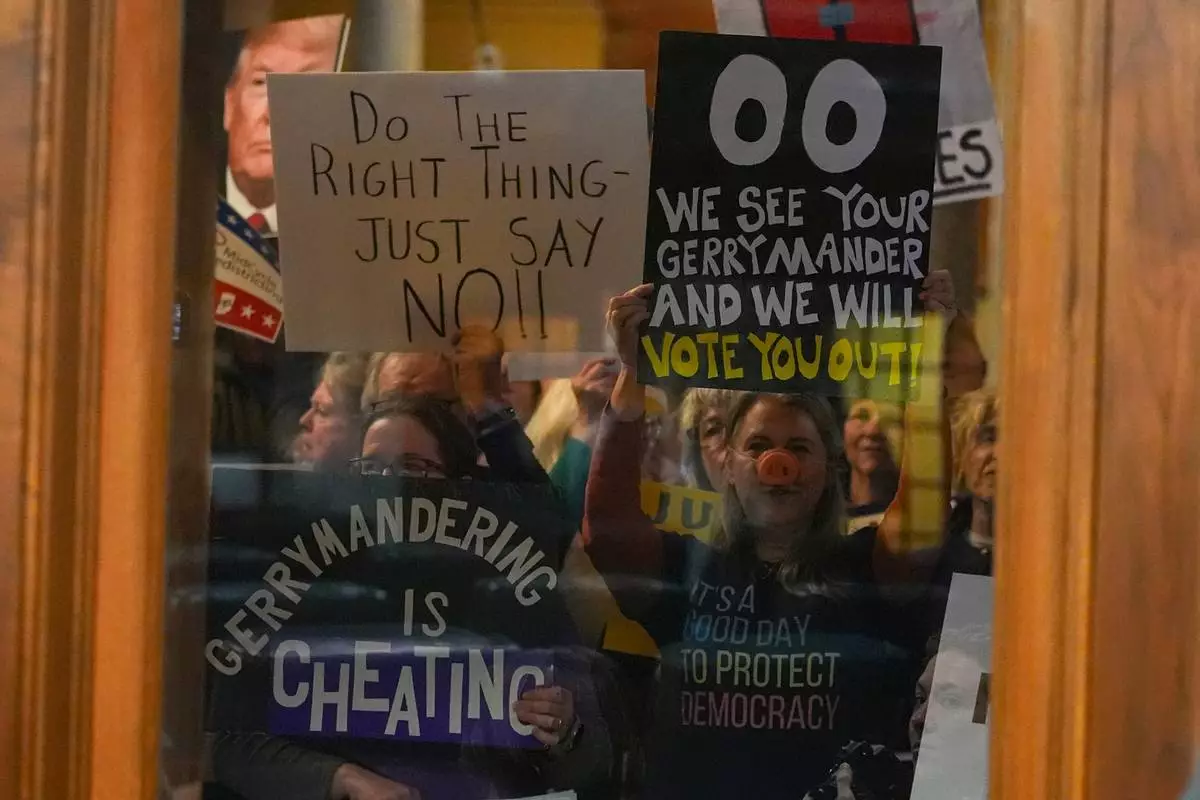
Protesters are seen through a window in the Senate Chamber during dissuasion before a vote to redistrict the state's congressional map, Thursday, Dec. 11, 2025, at the Statehouse in Indianapolis. (AP Photo/Michael Conroy)

Indiana Senate President Pro Tem Rodric Bray takes a question after a bill to redistrict the state's congressional map was defeated, Thursday, Dec. 11, 2025, at the Statehouse in Indianapolis. (AP Photo/Michael Conroy)
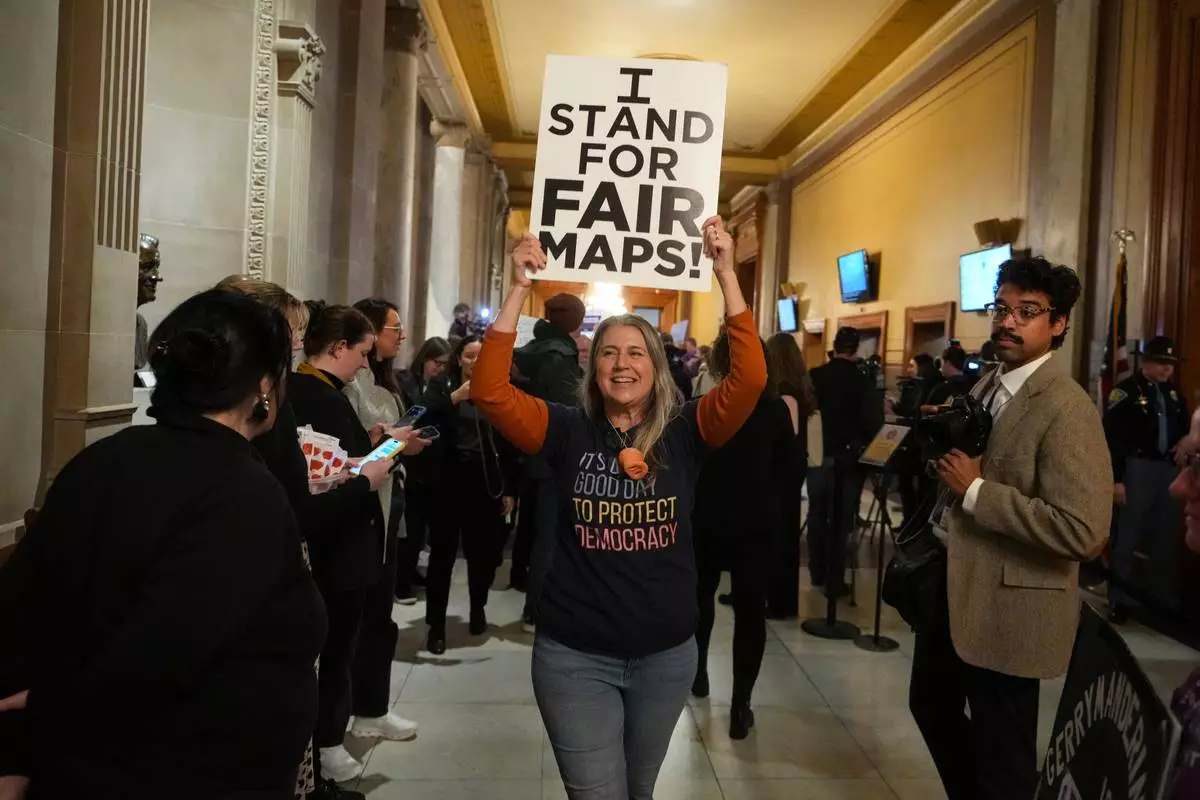
A protester celebrates as they walk outside the Indiana Senate Chamber after a bill to redistrict the state's congressional map was defeated, Thursday, Dec. 11, 2025, at the Statehouse in Indianapolis. (AP Photo/Michael Conroy)

Protestors hold signs outside the Indiana Senate chamber before a vote to redistrict the state's congressional map at the Statehouse in Indianapolis, Thursday, Dec. 11, 2025. (AP Photo/Michael Conroy)
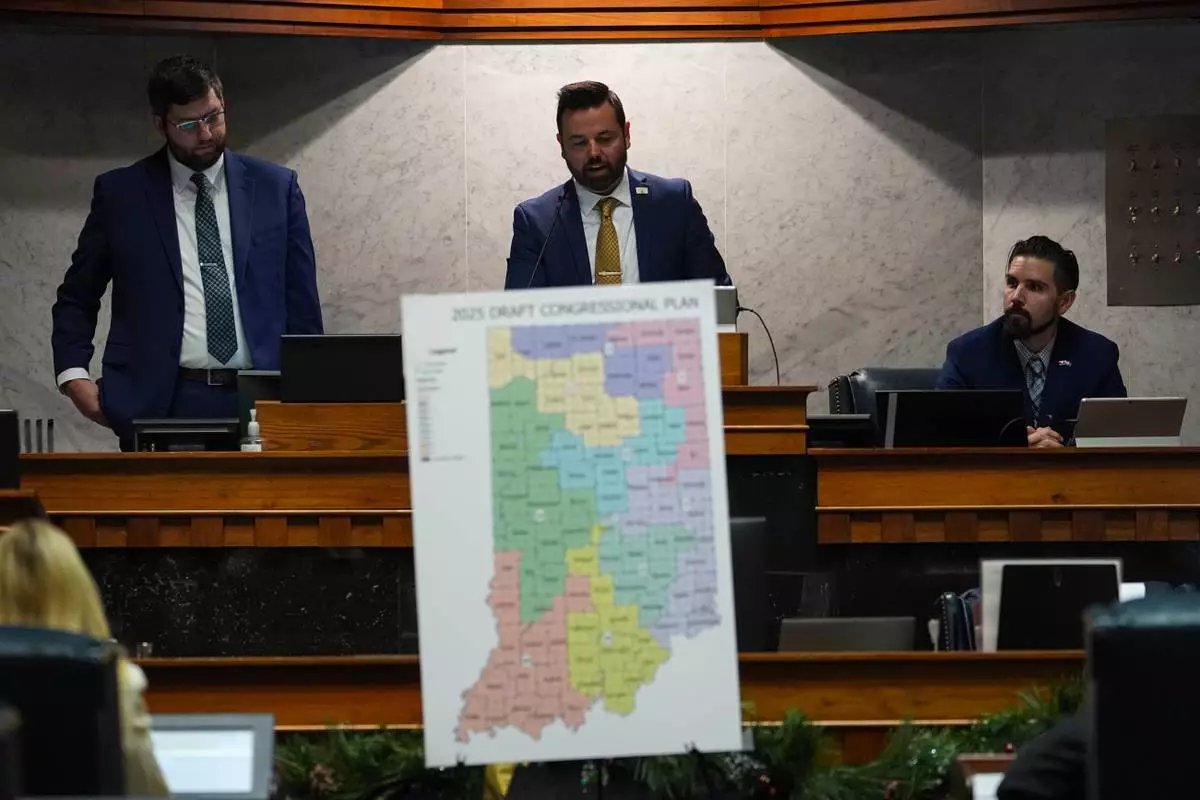
Indiana Lt. Gov. Micah Beckwith announces the results of a vote to redistrict the state's congressional map, Thursday, Dec. 11, 2025, at the Statehouse in Indianapolis. (AP Photo/Michael Conroy)