While driving to a new restaurant, your car's satellite navigation system tracks your location and guides you to the destination. Onboard cameras constantly track your face and eye movements. When another car veers into your path, forcing you to slam on the brakes, sensors are assisting and recording. Waiting at a stoplight, the car notices when you unbuckle your seat belt to grab your sunglasses in the backseat.
Modern cars are computers on wheels that are becoming increasingly connected, enabling innovative new features that make driving safer and more convenient. But these systems are also collecting reams of data on our driving habits and other personal information, raising concerns about data privacy.
Here is what to know about how your car spies on you and how you can minimize it:
It's hard to figure out exactly how much data a modern car is collecting on you, according to the Mozilla Foundation, which analyzed privacy practices at 25 auto brands in 2023. It declared that cars were the worst product category that the group had ever reviewed for privacy.
The data points include all your normal interactions with the car — such as turning the steering wheel or unlocking doors — but also data from connected onboard services, like satellite radio, GPS navigation systems, connected devices, telematics systems as well as data from sensors or cameras.
Vehicle telematics systems started to become commonplace about a decade ago, and the practice of automotive data collection took off about five years ago.
The problem is not just that data is being collected but who it's provided to, including insurers, marketing companies and shadowy data brokers. The issue surfaced earlier this year when General Motors was banned for five years from disclosing data collected from drivers to consumer reporting agencies.
The Federal Trade Commission accused GM of not getting consent before sharing the data, which included every instance when a driver was speeding or driving late at night. It was ultimately provided to insurance companies that used it to set their rates.
The first thing drivers should do is be aware of what data their car is collecting, said Andrea Amico, founder of Privacy4Cars, an automotive privacy company.
In an ideal world, drivers would read through the instruction manuals and documentation that comes with their cars, and quiz the dealership about what's being collected.
But it's not always practical to do this, and manufacturers don't always make it easy to find out, while dealership staff aren't always the best informed, Amico said.
Privacy4Cars offers a free auto privacy labeling service at vehicleprivacyreport.com that can summarize what your car could be tracking.
Owners can punch in their car's Vehicle Identification Number, which then pulls up the automaker's data privacy practices, such as whether the car collects location data and whether it's given to insurers, data brokers or law enforcement.
Data collection and tracking start as soon as you drive a new car off the dealership lot, with drivers unwittingly consenting when they're confronted with warning menus on dashboard touch screens.
Experts say that some of the data collection is baked into the system, you can revoke your consent by going back into the menus.
“There are permissions in your settings that you can make choices about,” said Lauren Hendry Parsons of Mozilla. “Go through on a granular level and look at those settings where you can.”
For example, Toyota says on its website that drivers can decline what it calls “Master Data Consent” through the Toyota app. Ford says owners can opt to stop sharing vehicle data with the company by going through the dashboard settings menu or on the FordPass app.
BMW says privacy settings can be adjusted through the infotainment system, “on a spectrum between” allowing all services including analysis data and none at all.
Drivers in the U.S. can ask carmakers to restrict what they do with their data.
Under state privacy laws, some carmakers allow owners across the United States to submit requests to limit the use of their personal data, opt out of sharing it, or delete it, Consumer Reports says. Other auto companies limit the requests to people in states with applicable privacy laws, the publication says.
You can file a request either through an online form or the carmaker's mobile app.
You can also go through Privacy4Cars, which provides a free online service that streamlines the process. It can either point car owners to their automaker's request portal or file a submission on behalf of owners in the U.S., Canada, the European Union, Britain and Australia.
Experts warn that there's usually a trade-off if you decide to switch off data collection.
Most people, for example, have switched to satellite navigation systems over paper maps because it's “worth the convenience of being able to get from point A to point B really easily,” said Hendry Parsons.
Turning off location tracking could also halt features like roadside assistance or disable smartphone app features like remote door locking, Consumer Reports says.
BMW advises that if an owner opts to have no data shared at all, “their vehicle will behave like a smartphone in flight mode and will not transmit any data to the BMW back end.”
When the time comes to sell your car or trade it in for a newer model, it's no longer as simple as handing over the keys and signing over some paperwork.
If you've got a newer car, experts say you should always do a factory reset to wipe all the data, which will also include removing any smartphone connections.
And don't forget to notify the manufacturer about the change of ownership.
Amico said that's important because if you trade in your vehicle, you don't want insurers to associate it with your profile if the dealer is letting customers take it for test drives.
“Now your record may be affected by somebody else’s driving — a complete stranger that you have no relationship with.”
Is there a tech topic that you think needs explaining? Write to us at onetechtip@ap.org with your suggestions for future editions of One Tech Tip.
This story has been corrected to show that the Mozilla representative's first name is Lauren, not Laura.
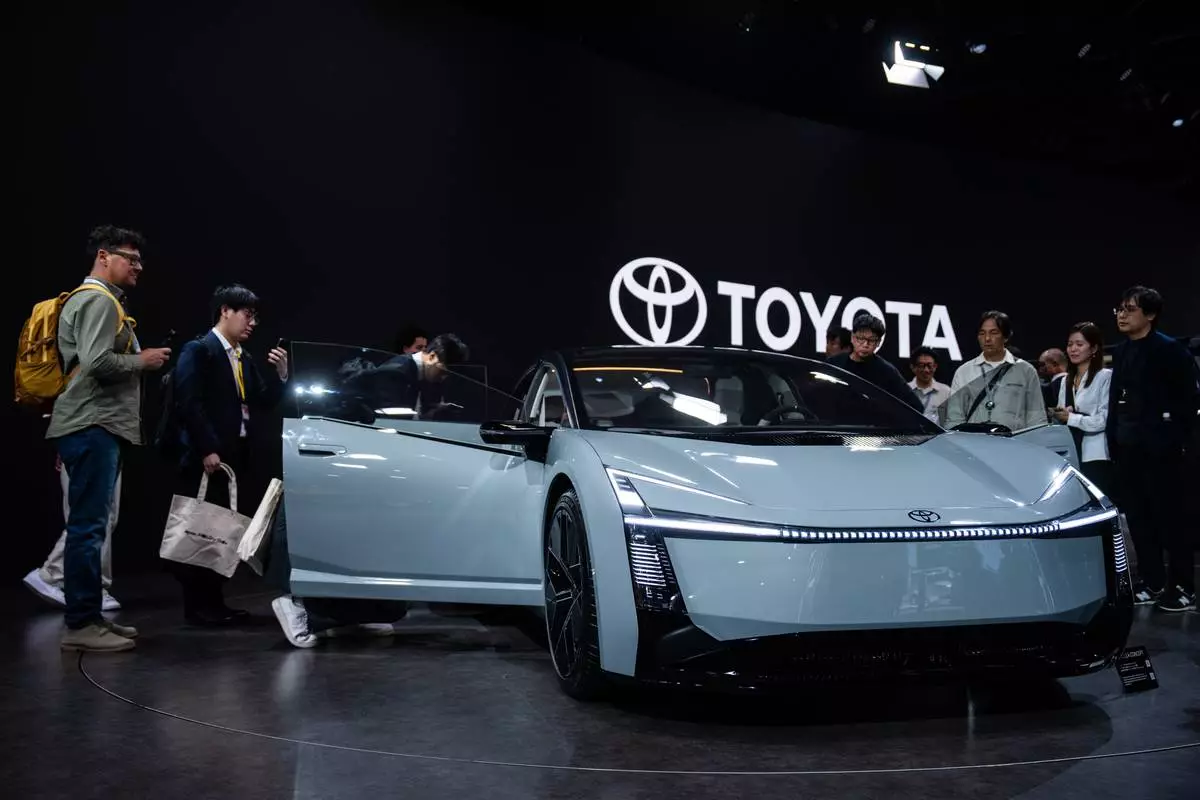
Members of the media and guests look at Toyota's Corolla concept during the press day of the Japan Mobility Show, in Tokyo, Thursday, Oct. 30, 2025. (AP Photo/Louise Delmotte)
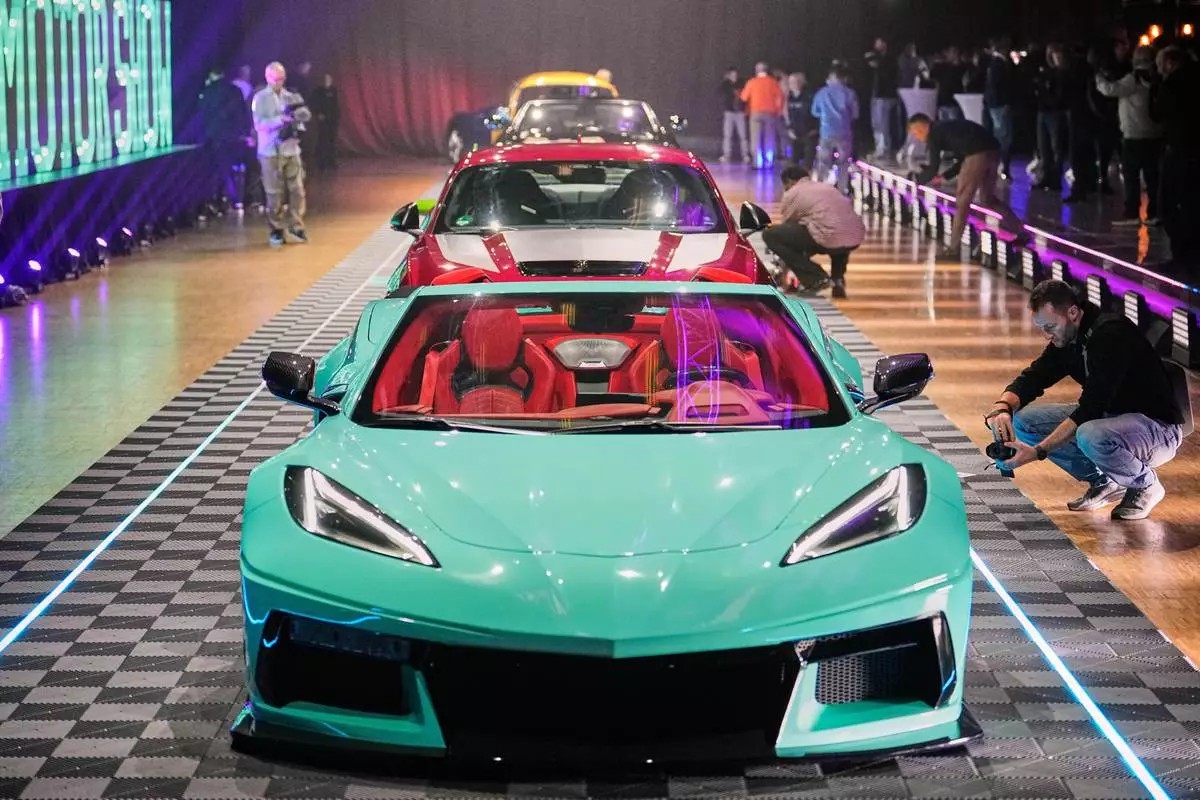
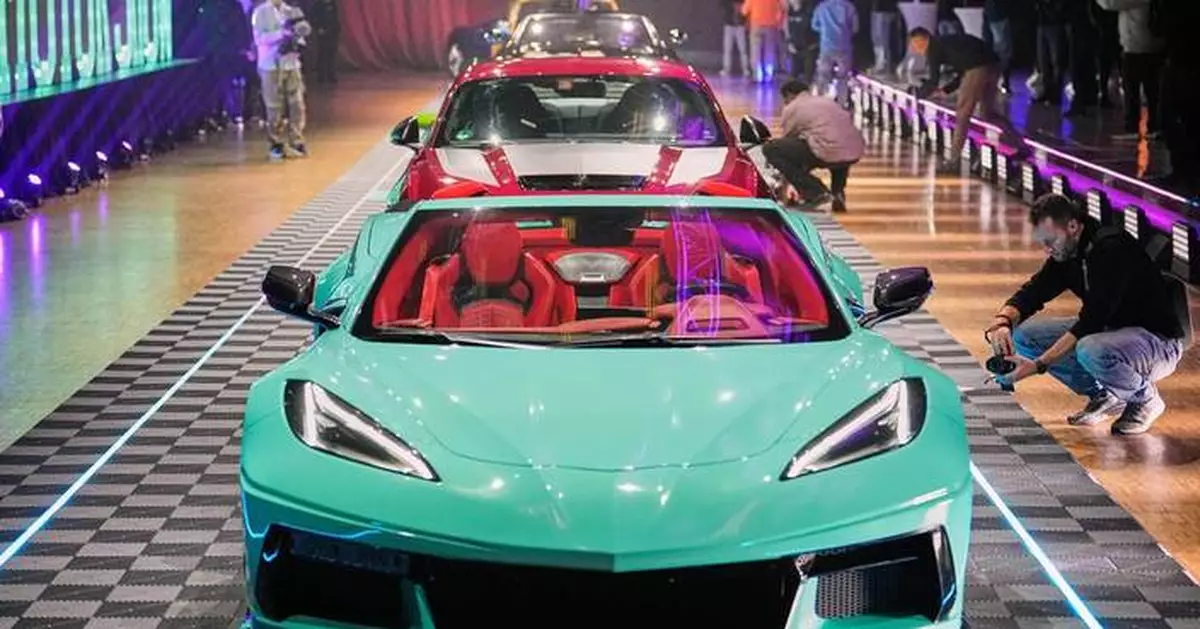
A custom made Chevrolet Corvette C8 is seen with other show cars on a carpet during a carwalk at a preview of the Essen Motor Show in Essen, Germany, Tuesday, Oct. 28, 2025. (AP Photo/Martin Meissner)
WASHINGTON (AP) — The U.S. Supreme Court has begun hearing arguments over the constitutionality of President Donald Trump’s order to end birthright citizenship for children born in the United States to someone in the country illegally or temporarily.
The birthright citizenship order, which Trump signed on Jan. 20, 2025, the first day of his second term, is part of his Republican administration’s broad immigration crackdown.
Trump is in attendance; he is the first sitting president to attend oral arguments at the nation’s highest court.
Every lower court to have considered the issue has found the order illegal and prevented it from taking effect. A definitive ruling by the nation’s highest court is expected by early summer.
Here’s the latest:
More than an hour in, it’s the opponents’ turn
The ACLU’s Wang has begun her presentation in defense of birthright citizenship.
Sauer noted that the government is “not asking you overrule Wong Kim Ark,” which extended citizenship to children born in the U.S. to foreign parents.
But he added that it was “totally unambiguous” that the 1898 ruling “relates to domiciled aliens,” and not what he called “sojourners,” or temporary visitors.
Judge Alito is asking Sauer about the humanitarian issue of people who have been in the U.S. for a long time and are “subject to removal” but in “their minds” have made a permanent home in America.
Alito also says that immigration laws in the U.S. have been “ineffectively and in some cases unenthusiastically” enforced over the years.
He’s asking Sauer to address the “humanitarian problem” that arises with how to deal with those people when it comes to birthright citizenship.
Sauer is saying that when it comes to birthright citizenship the U.S. is an “outlier among modern nations” and is pointing to places in Europe who don’t allow birthright citizenship and suggesting there doesn’t seem to have been any humanitarian fallout there.
Kavanaugh says Congress might have used different language in laws enacted in 1940 and 1952 if it wanted to make clear that children of people here illegally or temporarily were not entitled to citizenship.
Much of the early discussions revolved around the concepts of “domicile,” or a person’s permanent residence, and to which government that person owes “allegiance.”
Solicitor General D. John Sauer began his arguments by noting that the citizenship clause “was adopted just after the Civil War to grant citizenship to the newly freed slaves and their children, whose allegiance to the United States had been established by generations of domicile here.”
It did not, he said, “grant citizenship to the children of temporary visitors or illegal aliens who have no such allegiance.”
Sauer insists that Trump’s order would apply “only prospectively.”
But Justice Sonia Sotomayor says the logic of the administration’s argument would allow a future president to try to strip citizenship from U.S.-born children years from now.
Sauer was asked by Chief Justice John Roberts about how significant is the issue of “birth tourism.”
Critics of birthright citizenship have long said that it attracts people from other countries who come to the U.S. in order to give birth so that their children can become American citizens. Then they go back to their home country.
Sauer was asked by Roberts about any data on how many people come to the U.S. for this reason. “No one knows for sure,” Sauer said, and cited “media estimates” for various numbers.
Thomas recounts that the aim of the 14th amendment was to make citizens of the freed slaves. “How much of the debates around the 14 Amendment had anything to do with immigration?”
Conservative and liberal justices are questioning Sauer’s history of the debates that led to the adoption of the 14th Amendment. Justice Neil Gorsuch says there’s precious little discussion about domicile, a key part of Sauer’s argument.
Justice Elena Kagan says part of Sauer’s case rests “on some pretty obscure sources.”
Many of the arguments in today’s case go back to the Supreme Court’s 1898 ruling in the case of Wong Kim Ark, which said a U.S.-born child of Chinese nationals was a citizen.
In that ruling, Justice Horace Gray wrote that Fourteenth Amendment “affirms the ancient and fundamental rule of citizenship by birth within the territory. That, he wrote, is “including all children here born of resident aliens.”
Roberts says it’s not clear how the recognized exceptions to citizenship, children of ambassadors and foreign invaders, can be applied to “a whole class of illegal aliens.”
Roberts says he’s not sure “how you get to that big group from such tiny and idiosyncratic examples.”
Sauer, Trump’s top Supreme Court lawyer, is at the lectern, defending the president’s birthright citizenship order. Trump is in the courtroom.
On American Samoa, an island cluster in the South Pacific roughly halfway between Hawaii and New Zealand, native-born children are considered “U.S. nationals” — a distinction that gives them certain rights and obligations while denying them others.
American Samoans are entitled to U.S. passports and can serve in the military. Men must register for the Selective Service. They can vote in local elections in American Samoa but cannot hold public office in the U.S. or participate in most U.S. elections.
Those who wish to become citizens can do so, but the process costs hundreds of dollars and can be cumbersome. In 2022, the Supreme Court rejected an appeal seeking to extend birthright citizenship to American Samoa.
An Alaska appeals court is weighing whether to dismiss criminal charges against an Alaska resident born in American Samoa after she was elected to a local school board.
Crowds watched from the sidewalks as Trump’s motorcade drove along Constitution and Independence Avenues, passing the Washington Monument and the National Mall on the way to the court building.
Justice Felix Frankfurter, a native of Austria, was the last of six justices who were born abroad. The current court is American from birth.
Still, the citizenship issue hits close to home for some justices.
Thomas and Ketanji Brown Jackson are descended from enslaved people who eventually had their citizenship established by the 14th Amendment.
Justice Sonia Sotomayor’s parents were born in Puerto Rico, where residents became citizens under a 1917 law enacted by Congress. The justice most closely tied to an immigrant is Alito, whose father was born in Italy.
Way back in 1841, former President John Quincy Adams represented a shipload of African men and women who had been sold into slavery in the famous Amistad case.
Former President William Howard Taft became chief justice nearly eight years after leaving the White House in 1913. Charles Evans Hughes left the Supreme Court for a presidential run in 1912, which he nearly won, then returned to the court in 1930 as chief justice.
In 1966, Richard Nixon argued his only Supreme Court case, which he lost.
Twenty-four Democratic state attorneys general put out a statement Wednesday morning saying they’re “proud to lead the fight against this unlawful order.”
While Democratic attorneys general have sued the Trump administration scores of times, the plaintiffs in this case are represented by the American Civil Liberties Union and other civil rights groups.
The Democratic attorneys filed court papers supporting their position. Twenty-five of their Republican counterparts filed a friend-of-the-court brief backing the Trump administration.
The only state sitting this one out is New Hampshire.
More than 250,000 babies born in the U.S. each year would not be citizens, according to research from the Migration Policy Institute and Pennsylvania State University’s Population Research Institute.
The order would only apply going forward, the administration has said. But opponents have said a court ruling in Trump’s favor could pave the way for a later effort to take away citizenship from people who were born to parents who were not themselves U.S. citizens.
The president and first lady Melania Trump showed up for the court ritual marking the arrival of a new justice following the confirmations of Justice Neil Gorsuch in 2017 and Justice Brett Kavanaugh a year later.
The ceremony for Trump’s third appointee, Justice Amy Coney Barrett, was delayed a year because of the COVID-19 pandemic and Trump, who was no longer in office, did not attend.
Traditionally the president has avoided attending arguments to maintain distance between the government branches — since the executive officer’s presence is seen by many as a way to pressure the independent court to rule in their favor.
Given the unusual nature of it all — Trump’s presence in the courtroom spotlights how high the stakes are for him, as the court’s decision will have massive consequences on his longstanding promise to crack down on immigration.
Last year, Trump said that he badly wanted to attend a hearing on whether he overstepped federal law with his sweeping tariffs, but he decided against it, saying it would have been a distraction.
Adam Winkler, a constitutional law professor at UCLA, told the The Associated Press that Trump’s attending SCOTUS oral arguments signals how important the president views this case.
However, Trump’s presence “is unlikely to sway the justices,” Winkler said, adding that the SCOTUS justices “pride themselves in their independence, even if some agree with much of Trump’s agenda.”
The fanfare of Trump being in the courtroom will make for a different experience for the justices themselves, however, as “Trump’s presence will make the atmosphere a little bit more circus-like,” Winkler said.
Solicitor General D. John Sauer is making his ninth Supreme Court argument and second in as many weeks. Sauer’s biggest win to date was the presidential immunity decision that spared Trump from being tried for his effort to overturn the 2020 election.
Sauer was a Supreme Court law clerk to Justice Antonin Scalia early in his legal career.
ACLU legal director Cecillia Wang, the child of Chinese immigrants, is presenting her second argument to the Supreme Court. In the first Trump administration, a 5-4 conservative majority ruled against Wang’s clients in another immigration case.
It’s not an April Fool’s joke. Alito was born this day in 1950. Only Thomas, who turns 78 in June, is older than Alito among the nine justices.
In the post-pandemic era, the other justices allow the 77-year-old Thomas, the longest-serving member of the court, to pose a question or two before the free-for-all begins.
In a second round of questioning, the justices ask questions in order of seniority. Chief Justice John Roberts, whose center chair makes him the most senior, gets the first crack.
The justices have routinely gone beyond the allotted time since returning to the courtroom following the Covid-19 pandemic.
A buzzer and the court marshal’s cry, “All rise,” signal the justices’ entrance from behind red curtains. The livestream won’t kick in for several minutes, until after the ceremonial swearing-in of lawyers to the Supreme Court bar.
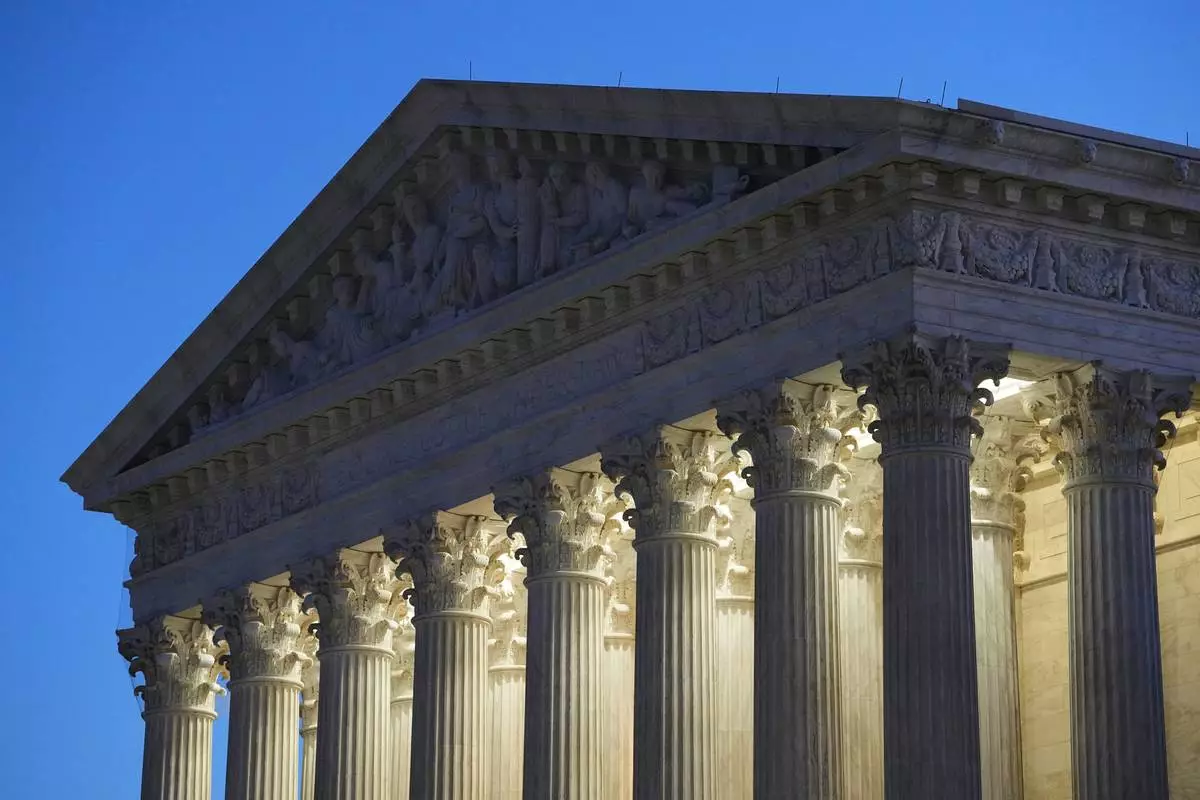
FILE - The U.S. Supreme Court is seen in Washington on Feb. 24, 2026. (AP Photo/Matt Rourke, File)
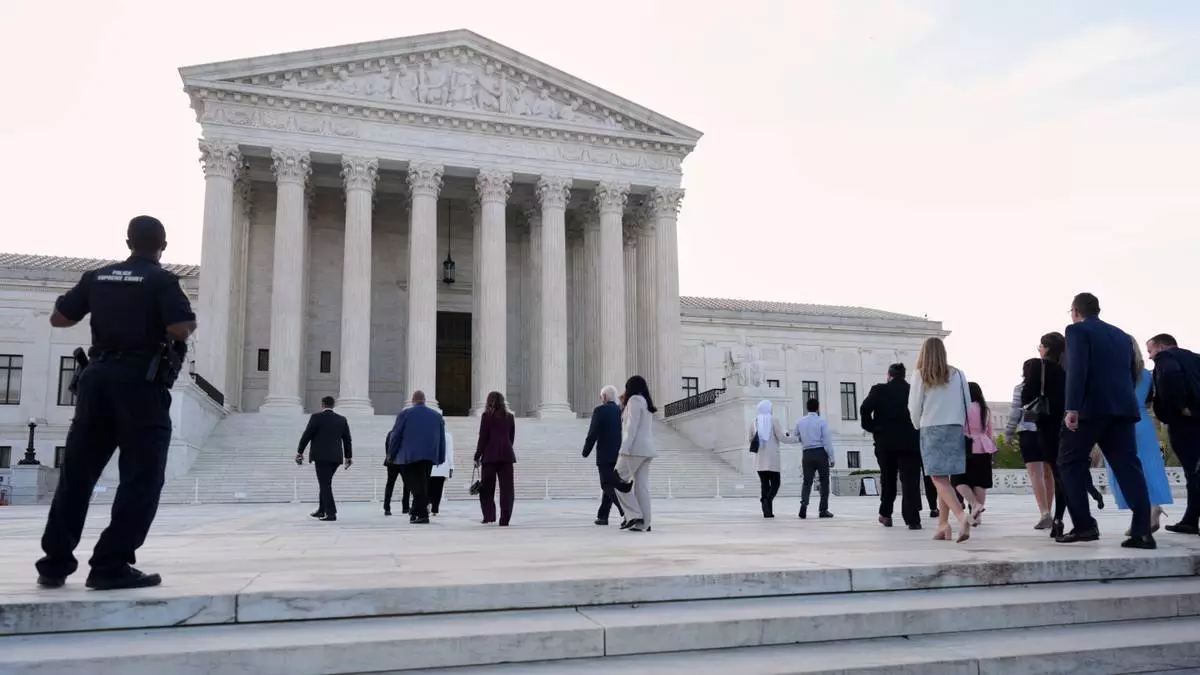
People arrive to walk inside the U.S. Supreme Court, on Capitol Hill in Washington, Wednesday, April 1, 2026. The Supreme Court justices will hear oral arguments today on whether President Donald Trump can deny citizenship to children born to parents who are in the United States illegally or temporarily. (AP Photo/J. Scott Applewhite)