LONDON (AP) — The Bank of England appeared deeply divided Thursday as it kept its main interest rate unchanged at 4%, with a wafer-thin majority of policymakers needing more information on how swiftly inflation will fall back towards their target before backing another cut in borrowing costs.
The decision by the nine-member rate-setting body to maintain Bank Rate — a benchmark for mortgages as well as consumer and business loans — was widely anticipated, though some economists thought there was a chance that borrowing rates would be reduced by a further quarter of a percentage point to 3.75%.
Click to Gallery

Bank of England Deputy Governor for Monetary Policy, Clare Lombardelli, gestures during the Monetary Policy Report news conference, in London, on Thursday, Nov. 6, 2025. (Maja Smiejkowska/Pool Photo via AP)
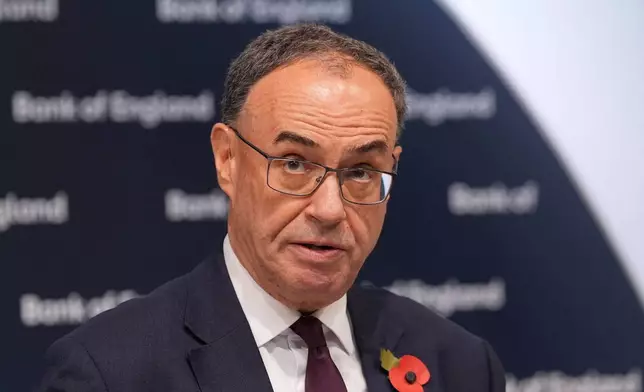
Andrew Bailey, Governor of the Bank of England, attends the Bank of England Monetary Policy Report news Conference, at the Bank of England, in the City of London on Thursday Nov. 6, 2025. (Maja Smiejkowska/PA via AP)

Andrew Bailey, Governor of the Bank of England, attends the Bank of England Monetary Policy Report news Conference at the Bank of England in London, England, Thursday Nov. 6, 2025. (Maja Smiejkowska/PA via AP)

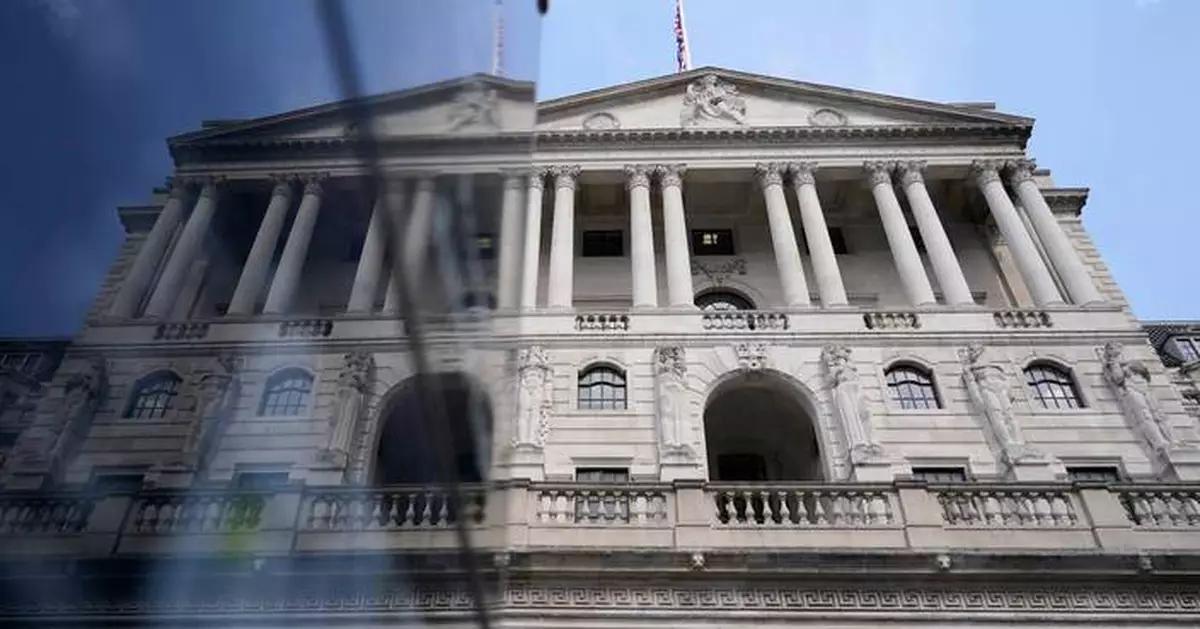
The Bank of England in London, Thursday, Aug. 1, 2024. (AP Photo/Alberto Pezzali, File)
Like the U.S. Federal Reserve, which last week cut interest rates for the second time this year, the vote among on the bank's Monetary Policy Committee was tight, with five voting for unchanged rates and four backing a cut.
“We still think rates are on a gradual path downwards, but we need to be sure that inflation is on track to return to our 2% target before we cut them again," said Bank Governor Andrew Bailey, who had the deciding vote.
Thursday’s decision was the first time the Bank of England has departed from the quarterly pace of cuts since it started cutting borrowing rates in August 2024 after the unwinding of the previous spike in inflation in the wake of Russia’s invasion of Ukraine.
The main reason why rates were kept on hold is that the annual rate of consumer price inflation is standing at 3.8%, nearly double the bank's target, and the highest level among the Group of Seven leading industrial nations.
In minutes accompanying the decision, the rate-setting panel said inflation has likely “peaked” at a lower level than its previous prediction of 4% in August, when it last cut interest rates to 4%.
With inflation set to fall in coming months and possibly back to the target next year, many economists think a cut is possible at the next rate-setting meeting in December.
“Today’s decision clearly opens the door to a December cut, but that remains contingent on the incoming data," said Matt Swannell, chief economic advisor to the EY ITEM Club.
Much could hinge on the U.K. government's budget on Nov. 26, which is expected to be one of the most consequential in years as Treasury chief Rachel Reeves seeks to plug a hole in the public finances.
Reeves has put the country on notice that taxes will likely have to be raised in the budget, which could have a depressing effect on an already moribund economy and therefore prices. She has also indicated that one of the key missions of her budget will be to get inflation lower.
“At the budget later this month I will take the fair choices that are necessary to build the strong foundations for our economy so we can continue to cut waiting lists, cut the national debt and cut the cost of living," Reeves said after the bank's decision.
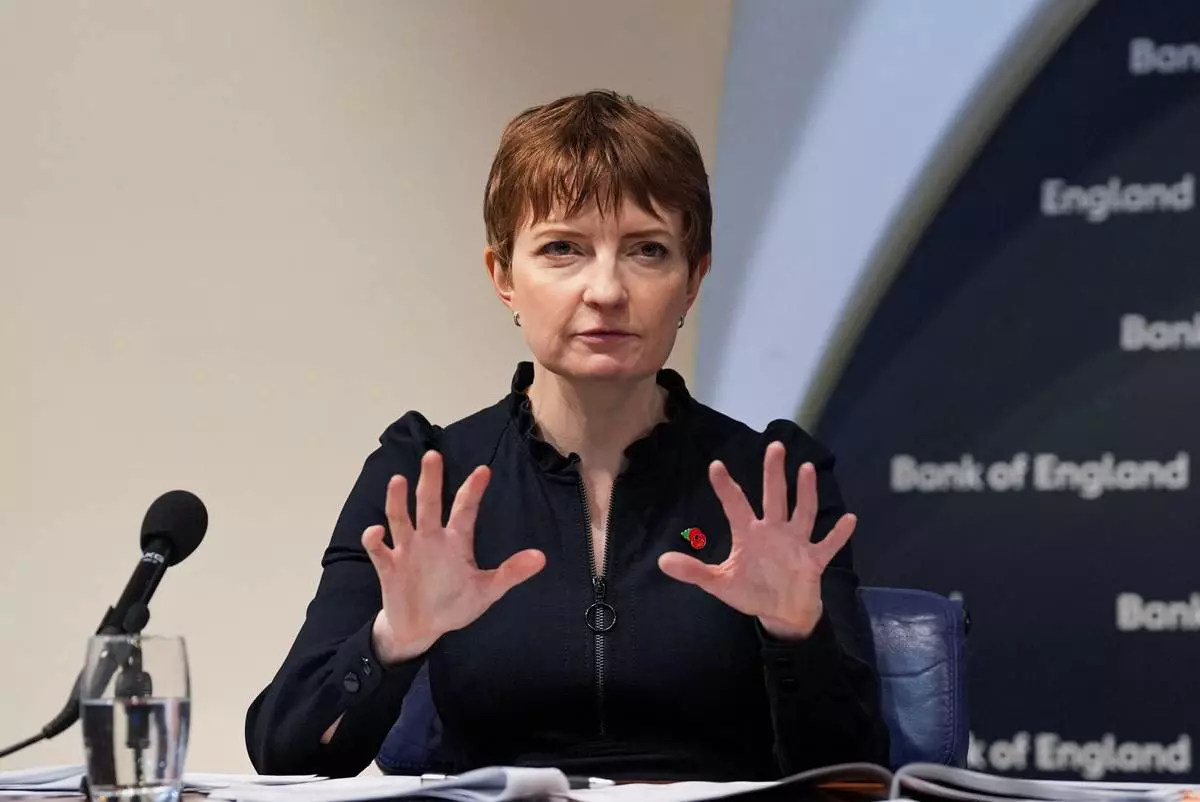
Bank of England Deputy Governor for Monetary Policy, Clare Lombardelli, gestures during the Monetary Policy Report news conference, in London, on Thursday, Nov. 6, 2025. (Maja Smiejkowska/Pool Photo via AP)
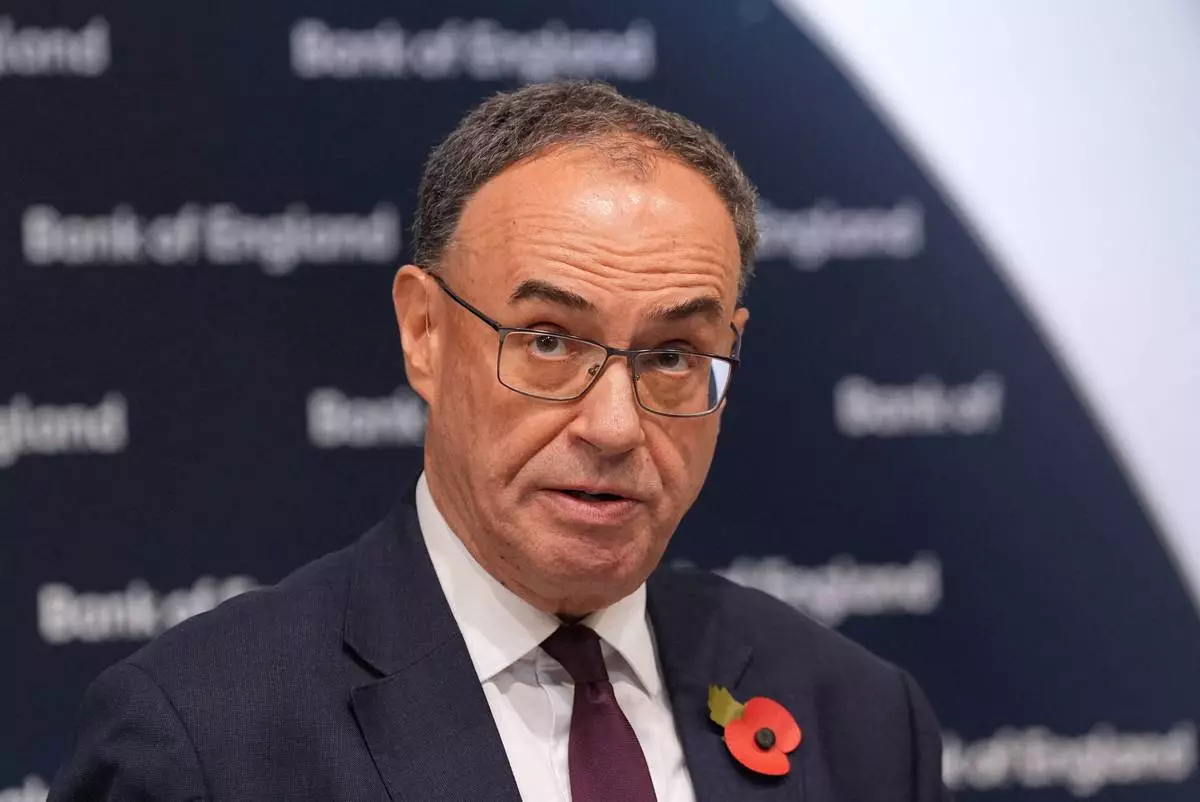
Andrew Bailey, Governor of the Bank of England, attends the Bank of England Monetary Policy Report news Conference, at the Bank of England, in the City of London on Thursday Nov. 6, 2025. (Maja Smiejkowska/PA via AP)

Andrew Bailey, Governor of the Bank of England, attends the Bank of England Monetary Policy Report news Conference at the Bank of England in London, England, Thursday Nov. 6, 2025. (Maja Smiejkowska/PA via AP)
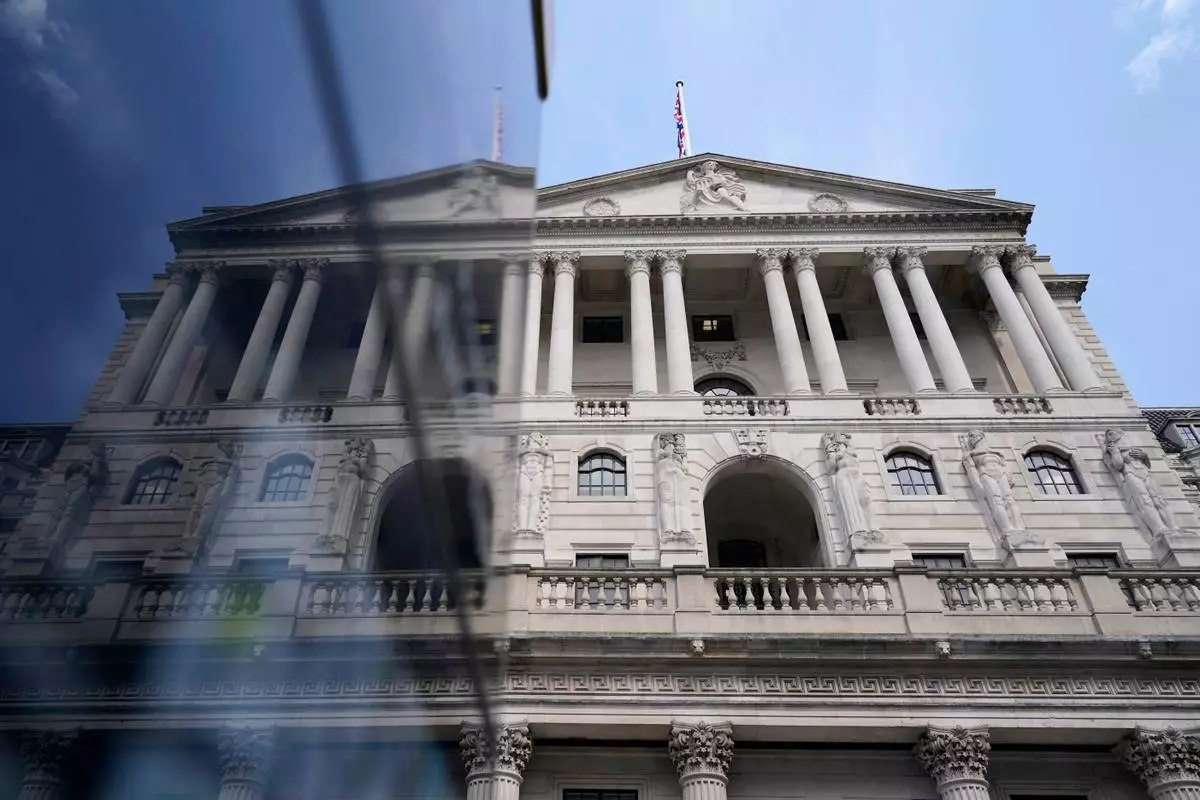
The Bank of England in London, Thursday, Aug. 1, 2024. (AP Photo/Alberto Pezzali, File)