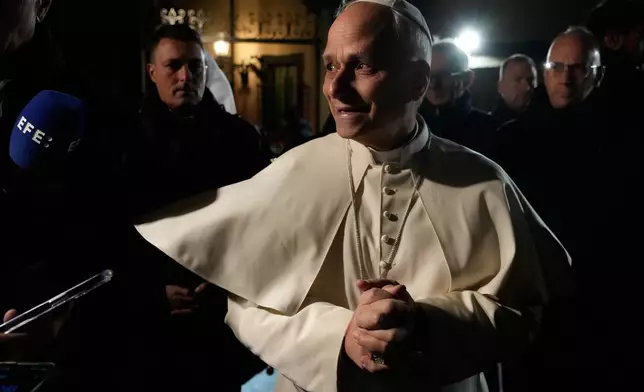
VATICAN CITY (AP) — Pope Leo XIV expressed hope that the U.S.-Israel war on Iran could be finished before Easter in remarks to reporters as he left the papal retreat at Castel Gandolfo outside of Rome on Tuesday.
“I’m told that President Trump has recently stated that he would like to end the war,’’ the U.S.-born pope said. “I hope that he’s looking for an off-ramp.’’
Click to Gallery
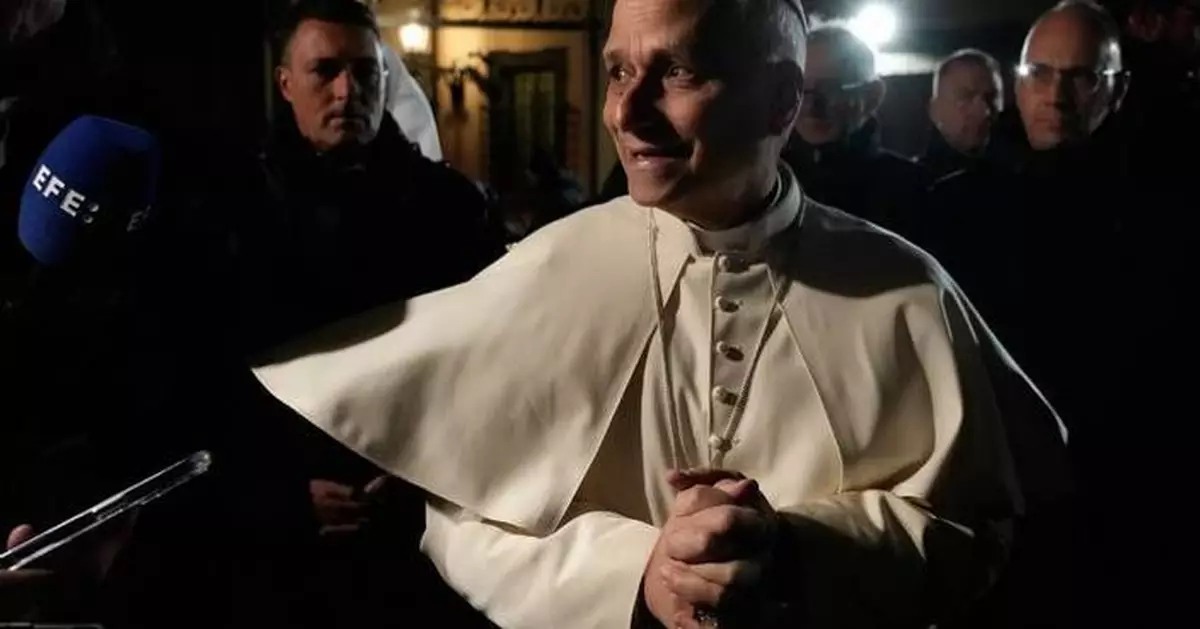
Pope Leo XIV talks to journalists as he leaves his residence in Castel Gandolfo, on the outskirts of Rome, to return to the Vatican, Tuesday, March 31, 2026. (AP Photo/Gregorio Borgia)
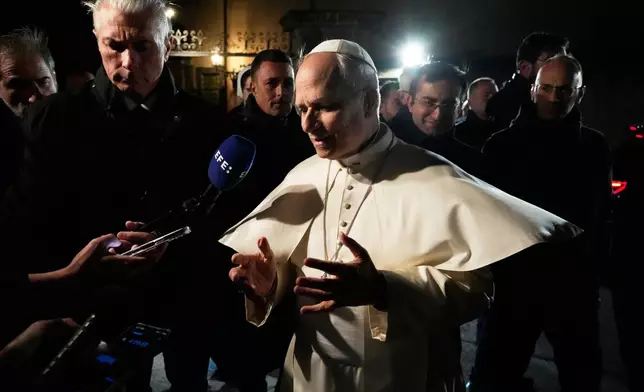
Pope Leo XIV talks to journalists as he leaves his residence in Castel Gandolfo, on the outskirts of Rome, to return to the Vatican, Tuesday, March 31, 2026. (AP Photo/Gregorio Borgia)
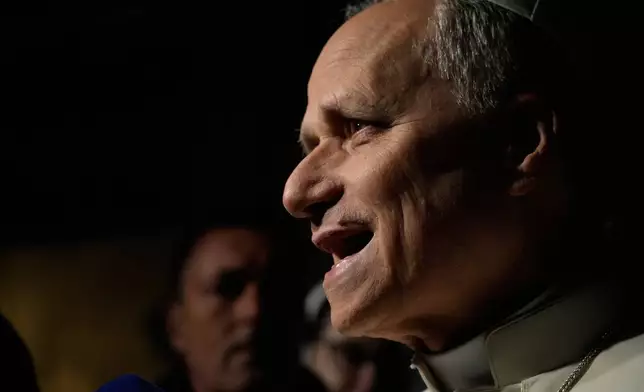
Pope Leo XIV talks to journalists as he leaves his residence in Castel Gandolfo, on the outskirts of Rome, to return to the Vatican, Tuesday, March 31, 2026. (AP Photo/Gregorio Borgia)
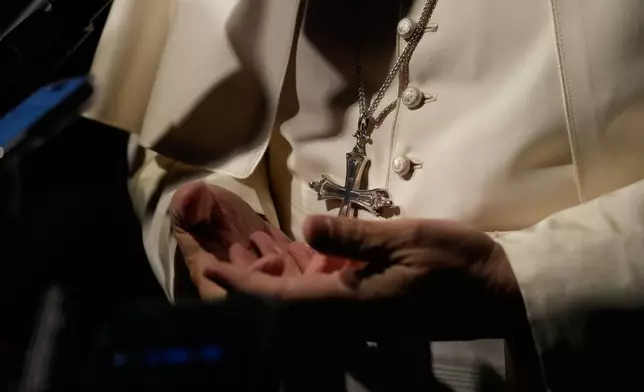
Pope Leo XIV talks to journalists as he leaves his residence in Castel Gandolfo, on the outskirts of Rome, to return to the Vatican, Tuesday, March 31, 2026. (AP Photo/Gregorio Borgia)
“Hopefully he’s looking for a way to decrease the amount of violence, of bombing, which would be a significant contribution to removing the hatred that’s being created, that’s increasing constantly in the Middle East and elsewhere.”
Leo called on all world leaders to return to dialogue and look for “ways to reduce the amount of violence,’’ so that “peace, especially at Easter, might reign in our hearts.’’
Leo's remarks came during Holy Week, the most sacred period of the year for Christians.
“It should be the holiest time of the year. It is a time of peace, a time of reflection. But as we all know, again, in the world, in many places we are seeing so much suffering, so many deaths, even innocent children,’’ Leo said. “We constantly make the call for peace, but unfortunately, many people want to promote hatred, violence, war.’’
On Palm Sunday, the pontiff said God doesn’t listen to the prayers of those who make war or cite God to justify their violence, as he prayed especially for Christians in the Middle East during Mass in St. Peter’s Square.
Leaders on all sides of the Iran war have used religion to justify their actions. U.S. officials, especially Defense Secretary Pete Hegseth, have invoked their Christian faith to cast the war as a Christian nation trying to vanquish its foes with military might.
Russia’s Orthodox Church, too, has justified Russia’s invasion of Ukraine as a “holy war” against a Western world it considers has fallen into evil.
As Holy Week continues, Leo will carry out the Holy Thursday foot-washing tradition in the basilica of St. John Lateran, where popes have performed it for decades. On Friday, Leo is due to preside over the Good Friday procession at Rome’s Colosseum commemorating Christ’s Passion and crucifixion, and will carry the cross himself. Saturday brings the late night Easter Vigil, during which Leo will baptize new Catholics, followed a few hours later by Easter Sunday when Christians commemorate the resurrection of Jesus.
Leo will celebrate Easter Sunday Mass in St. Peter’s Square and then deliver his Easter blessing from the loggia of the basilica.
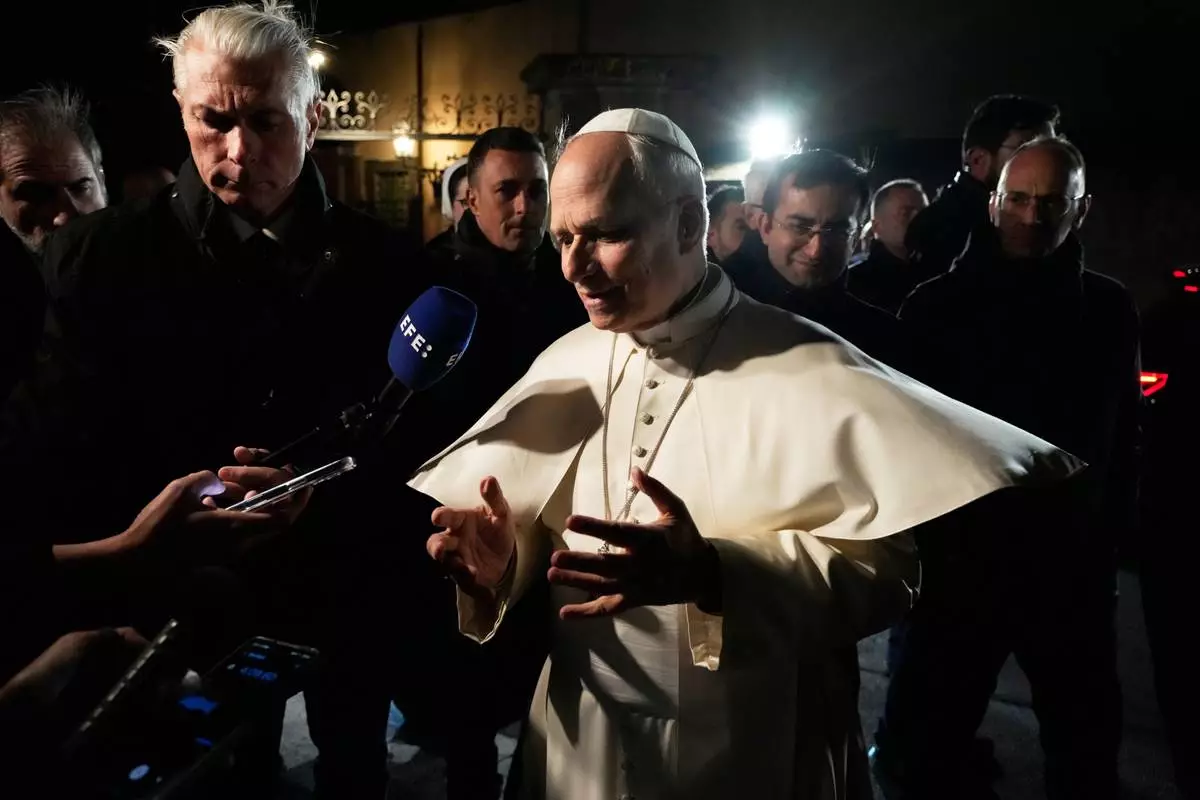
Pope Leo XIV talks to journalists as he leaves his residence in Castel Gandolfo, on the outskirts of Rome, to return to the Vatican, Tuesday, March 31, 2026. (AP Photo/Gregorio Borgia)
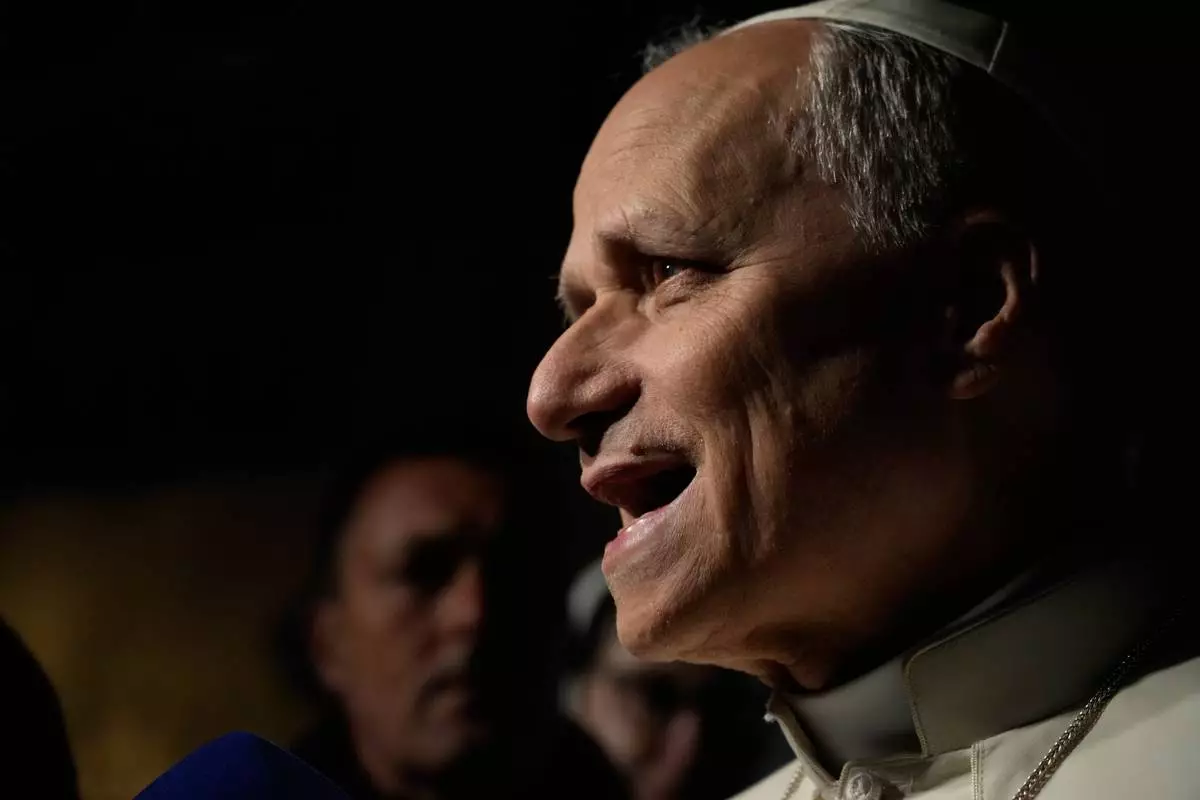
Pope Leo XIV talks to journalists as he leaves his residence in Castel Gandolfo, on the outskirts of Rome, to return to the Vatican, Tuesday, March 31, 2026. (AP Photo/Gregorio Borgia)
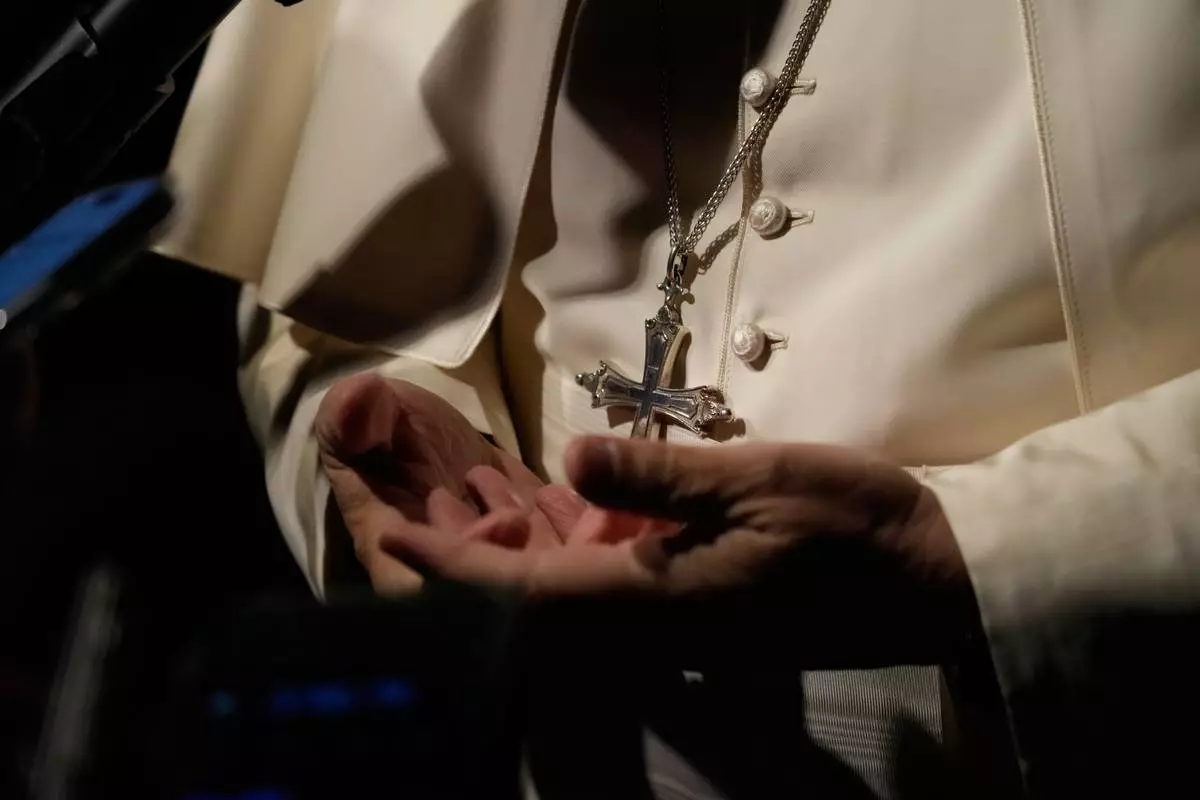
Pope Leo XIV talks to journalists as he leaves his residence in Castel Gandolfo, on the outskirts of Rome, to return to the Vatican, Tuesday, March 31, 2026. (AP Photo/Gregorio Borgia)
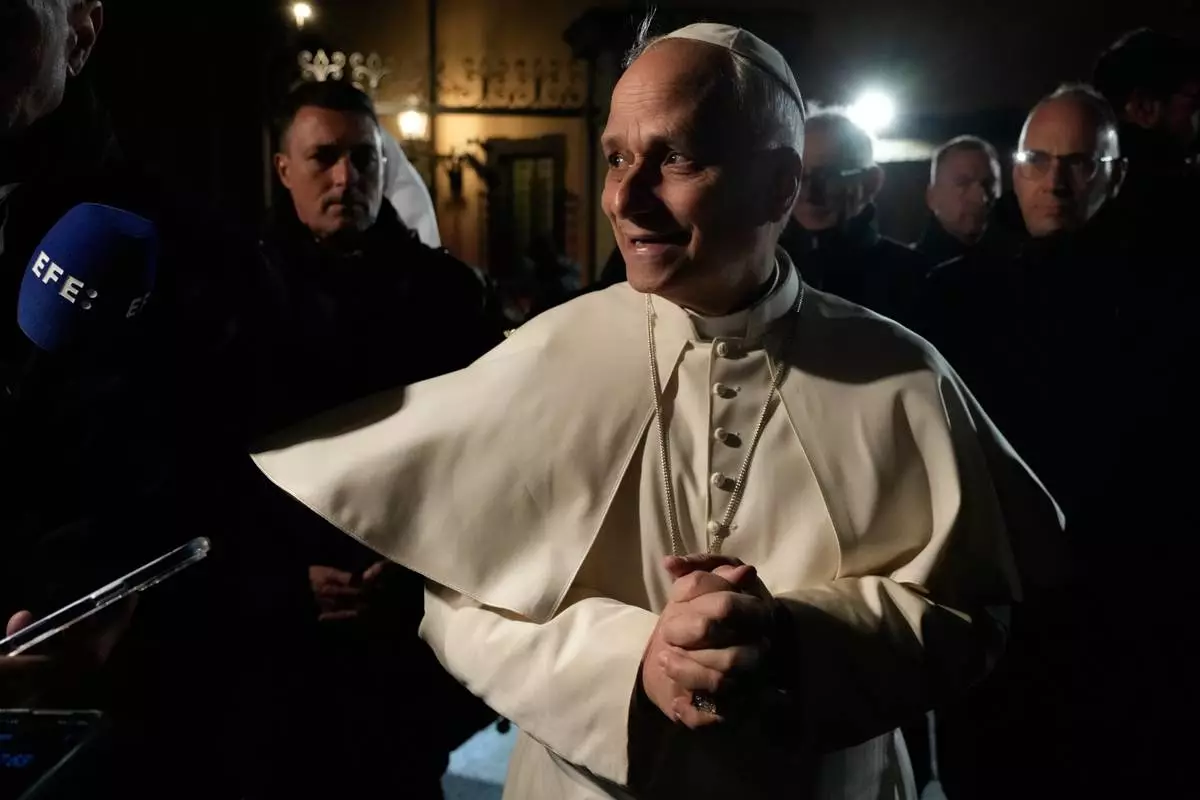
Pope Leo XIV talks to journalists as he leaves his residence in Castel Gandolfo, on the outskirts of Rome, to return to the Vatican, Tuesday, March 31, 2026. (AP Photo/Gregorio Borgia)
Antonio Bustamante has kept a watercolor of labor leader César Chavez for more than 35 years, hanging it on the wall of his law office in Yuma, Arizona. As a young man, he was moved by Chavez and helped organize workers before joining his security team.
Like many others, Bustamante must now wrestle with reconciling the man he adored with the allegations that Chavez groomed and sexually abused women and young girls.
“I’m trying to figure out how emotionally and intellectually I’ll be able to understand my perception of him as an extremely good man,” Bustamante said, his voice heavy with emotion, “compared to these things that are said he did.”
Multiple states, cities and counties marked what for years had been César Chavez Day on Tuesday as Farmworkers Day. In California, the occasion is a recognized state holiday. State government offices and some local government offices were closed.
They all took swift public action after the allegations came out. Within days, Chavez statues were removed and celebrations canceled or renamed, including events tied to the March 31 federal holiday.
Chavez built a national reputation organizing in the fields. With Dolores Huerta — also one of his victims — he co-founded the United Farm Workers union, led a hunger strike, a grape boycott with Filipino farmworkers, and eventually pressured growers to negotiate better wages and working conditions for Mexican American farmworkers.
Nearly two weeks after a New York Times report detailing allegations of sexual abuse, communities and rights groups across the country are still figuring out how he should be remembered. His name and image have already been erased from monuments, streets and murals around the country.
Bustamante said he learned of the allegations when an old friend called to tell him about the upcoming report. What flashed through his mind, he said, were the faces of others who had known and admired Chavez, and “how their eyes would be devastated.”
“We were looked down upon by society, we were Mexicans,” Bustamante said, recalling the first time he saw Chavez speak outside the Arizona Capitol in 1972 as he launched a hunger strike. He “gave us worth, and for young people that was everything.”
Now, some of Bustamante's friends have taken down images of Chavez. In his community, Bustamante likened it to denouncing Catholicism and removing photos of the pope.
Bustamante said he thinks there’s a “good chance” the allegations are true, but adds that he has unanswered questions from his time by Chavez’s side — and because he's a public defense attorney — that keep the debate going in his head.
For many, it's an example of why movements should not be tied to a single leader.
Teresa Romero, president of United Farm Workers, said the contradiction between Chavez's legacy and the allegations is unavoidable.
“We have in one hand César Chavez, the man who committed horrible acts that we’re not going to justify,” Romero said. “On the other hand, we have César Chavez, the organizer who brought thousands and thousands of people together to be able to work for farmworkers, and improve their lives and working conditions.”
Unfortunately, both of those things came from the same person, Romero said.
Sehila Mota Casper, executive director of Latinos in Heritage Conservation, said the farmworker movement was always driven by collective effort.
“The rights and protections that came from it belongs to the people that built it,” she said. “It wasn’t just one individual.”
That perspective, she said, offers a way to move forward: recognizing Chavez's role without letting it overshadow the contributions of others, including Huerta, and the challenges they faced.
Advocacy groups like the nonprofit Voto Latino took a similar stance, saying, “The women who organized, marched, and sacrificed alongside farmworkers carried this movement on their backs.”
Political leaders from both parties have condemned the alleged abuse. Some Republicans, including Texas Gov. Greg Abbott, cited it as part of a broader criticism of Chavez's progressive legacy.
Abbott said Texas — a state with dozens of Confederate monuments — would no longer celebrate César Chavez Day, saying the allegations “undermine the narrative that elevated Chavez as a figure worthy of official state celebration.”
At the same time, groups like the nonpartisan Latino Victory Project, which focuses on developing Hispanic political leadership, said the current moment should not distract from the still-ongoing civil rights battles.
“Those legacies are unchanged,” said Paul Ortiz, a labor history professor at Cornell University and director of graduate studies for Latino Studies. “And those legacies are all about people power.”
What seems inevitable, Bustamante said, is that there will always be an asterisk next to Chavez’s name.
“Does that take away the greatness of what his accomplishments were, the meaning of them? No, it doesn’t,” he said. “But can we look past that to honor him? That’s the tough part.”
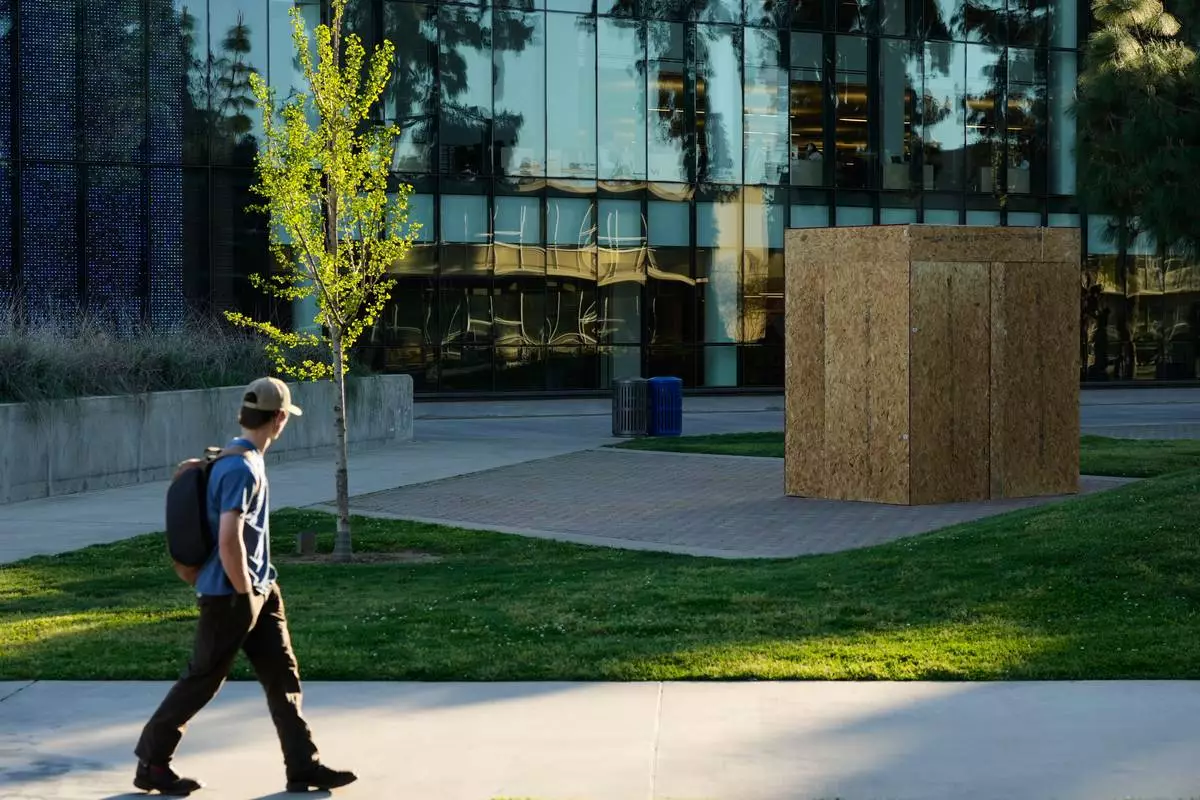
FILE - A student looks toward a plywood box covering a statue of César Chavez at California State University, Fresno in Fresno, Calif., Wednesday, March 18, 2026. (AP Photo/Godofredo A. Vásquez, file)
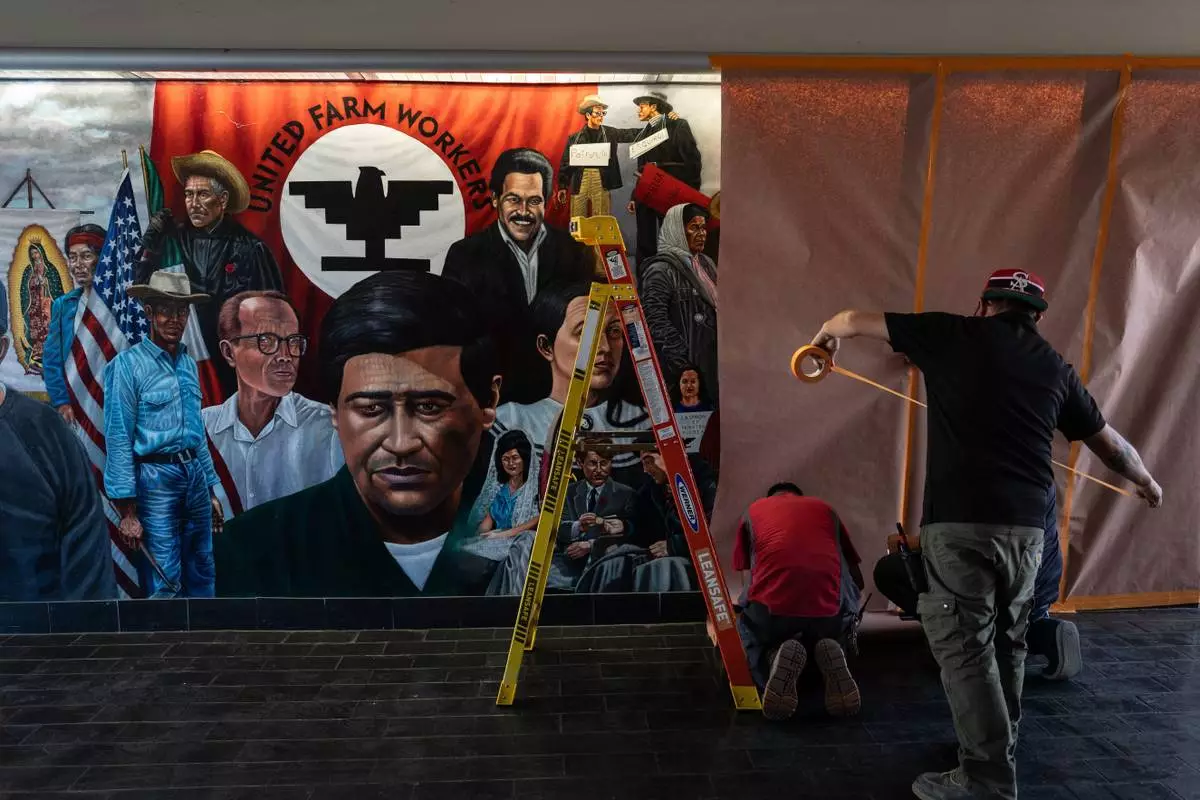
FILE - Workers cover a mural by Emigdio Vasquez featuring Cesar Chavez and other figures at Santa Ana College in Santa Ana, Calif., Thursday, March 19, 2026. (AP Photo/Jae C. Hong, file)
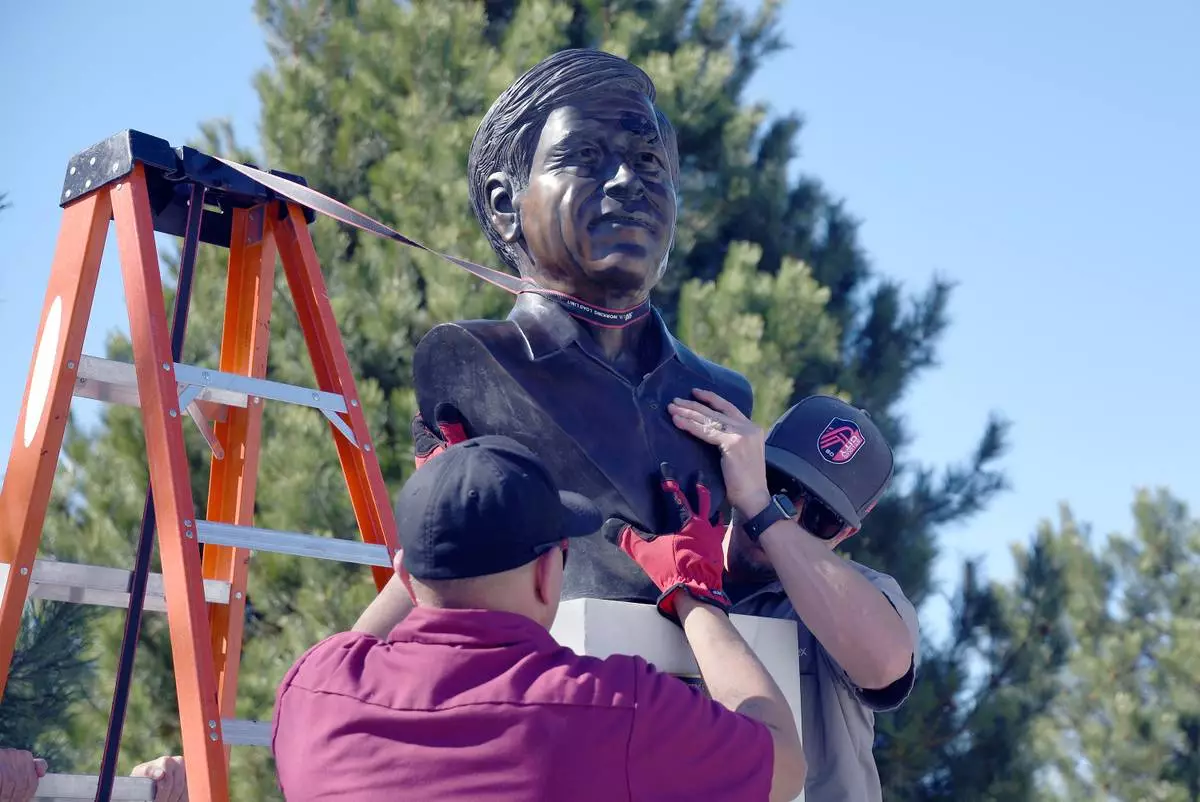
FILE - City workers remove a bust of César Chavez at César E. Chavez Park in Denver on Thursday, March 19, 2026. (AP Photo/Thomas Peipert, file)