WASHINGTON (AP) — Citing the First Amendment, a federal judge on Tuesday agreed to permanently block the Trump administration from implementing a presidential directive to end federal funding for National Public Radio and the Public Broadcasting Service, two media entities that the White House has said are counterproductive to American priorities.
The operational impact of U.S. District Judge Randolph Moss' decision was not immediately clear — both because it will likely be appealed and because too much damage to the public-broadcasting system has already been done, both by the president and Congress.
Moss ruled that President Donald Trump’s executive order to cease funding for NPR and PBS is unlawful and unenforceable. The judge said the First Amendment right to free speech “does not tolerate viewpoint discrimination and retaliation of this type.”
“It is difficult to conceive of clearer evidence that a government action is targeted at viewpoints that the President does not like and seeks to squelch,” wrote Moss, who was nominated to the bench by President Barack Obama, a Democrat.
White House spokesperson Abigail Jackson said Moss' decision is “a ridiculous ruling by an activist judge attempting to undermine the law.”
“NPR and PBS have no right to receive taxpayer funds, and Congress already voted to defund them. The Trump Administration looks forward to ultimate victory on the issue,” Jackson said in a statement.
PBS, with programming ranging from “Sesame Street” and “Mister Rogers’ Neighborhood” to Ken Burns’ documentaries, has been operating for more than half a century. NPR has news programming from “All Things Considered” and cultural shows like the “Tiny Desk” concerts. For decades, the fates of both systems have been part of a philosophical debate over whether government should help fund their operations.
The judge noted that Trump’s executive order simply directs that all federal agencies “cut off any and all funding” to NPR, which is based in Washington, and PBS, based in Arlington, Virginia.
“The Federal Defendants fail to cite a single case in which a court has ever upheld a statute or executive action that bars a particular person or entity from participating in any federally funded activity based on that person or entity’s past speech,” the judge wrote.
Last year, Trump, a Republican, said at a news conference he would “love to” defund NPR and PBS because he believes they’re biased in favor of Democrats.
“The message is clear: NPR and PBS need not apply for any federal benefit because the President disapproves of their ‘left wing’ coverage of the news,” Moss wrote.
NPR accused the Corporation for Public Broadcasting of violating its First Amendment free speech rights when it moved to cut off its access to grant money appropriated by Congress. NPR also claims Trump wants to punish it for the content of its journalism.
“Public media exists to serve the public interest — that of Americans — not that of any political agenda or elected official,” said Katherine Maher, NPR’s president and CEO. She called the decision a decisive affirmation of the rights of a free and independent press.
PBS chief Paula Kerger said she was thrilled with the decision. The executive order, she said, is “textbook” unconstitutional viewpoint discrimination and retaliation. “At PBS, we will continue to do what we’ve always done: serve our mission to educate and inspire all Americans as the nation’s most trusted media institution.”
Last August, CPB announced it would take steps toward closing itself down after being defunded by Congress.
Plaintiffs’ attorney Theodore Boutrous said Tuesday's ruling is “a victory for the First Amendment and for freedom of the press.”
“As the Court expressly recognized, the First Amendment draws a line, which the government may not cross, at efforts to use government power — including the power of the purse — ‘to punish or suppress disfavored expression’ by others,” Boutrous said in a statement. “The Executive Order crossed that line.”
The judge agreed with government attorneys that some of the news outlets’ legal claims are moot, partly because the CPB no longer exists.
“But that does not end the matter because the Executive Order sweeps beyond the CPB,” Moss added. “It also directs that all federal agencies refrain from funding NPR and PBS — regardless of the nature of the program or the merits of their applications or requests for funding.”
NPR and three public radio stations sued administration officials last May. While Trump was named as a defendant, the case did not include Congress — and the legislative body has played a large role in the public-broadcasting saga in the past year.
Trump’s executive order immediately cut millions of dollars in funding from the Education Department to PBS for its children’s programming, forcing the system to lay off one-third of the PBS Kids staff. The Trump order didn’t impact Congress’ vote to eliminate the overall federal appropriations for PBS and NPR, which forced the closure of the Corporation for Public Broadcasting, the entity that funneled that money to the TV and radio networks.
AP Media Writer David Bauder and AP writer Darlene Superville contributed to this report.
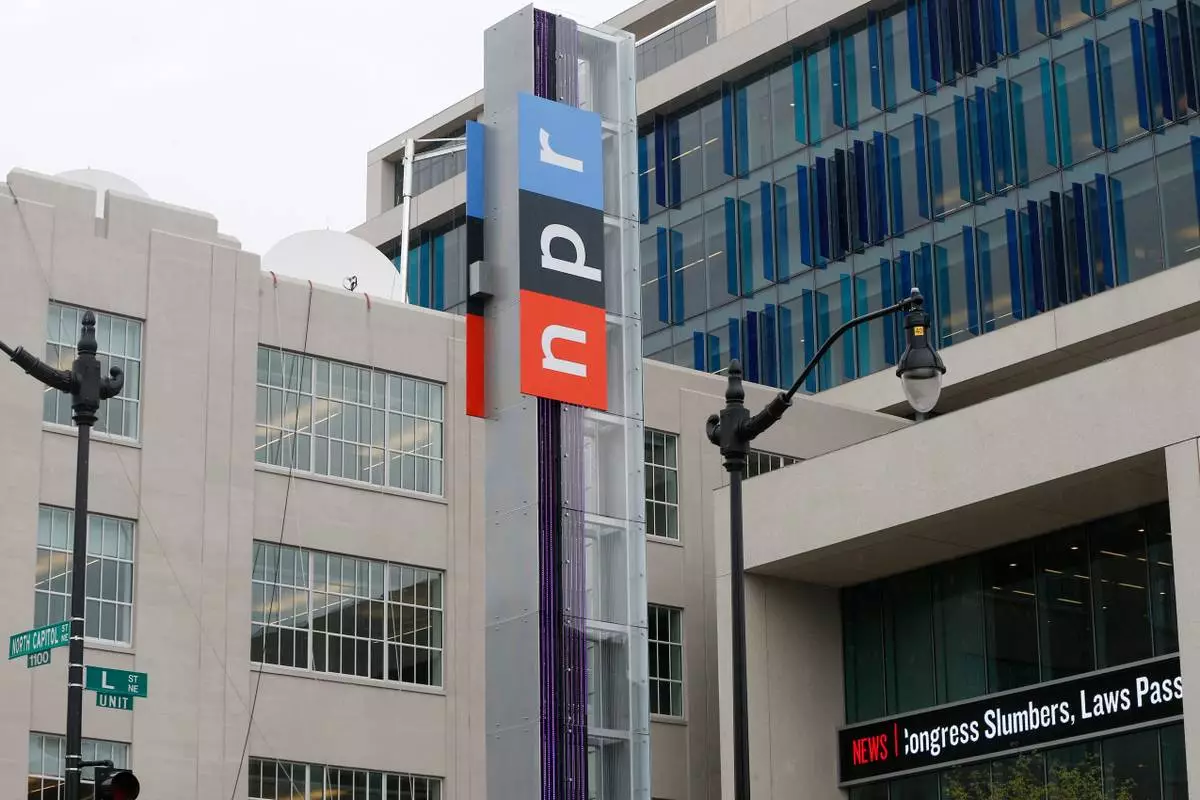
FILE - National Public Radio (NPR) on North Capitol Street in Washington, April 15, 2013. (AP Photo/Charles Dharapak, File)
NEW YORK (AP) — U.S. stocks surged to their best day since last spring, and the Dow Jones Industrial Average soared 1,125 points on Tuesday as doubt swung back to hope on Wall Street about a possible end to the war with Iran.
The S&P 500 leaped 2.9% for its largest gain since May. Just a day before, worries about the war had sent the main measure of Wall Street’s health more than 9% below its all-time high set early this year.
The Dow Jones Industrial Average rallied 2.5%, while the Nasdaq composite jumped 3.8%.
The rebound came as financial markets seized on a couple tenuous signals for hope about a possible end to the war. It’s the latest manic swing following weeks of frenetic back and forth amid uncertainty about the war. The moves also came as Wall Street marked the end of the year’s first quarter, a milestone that can cause a flurry of trading as fund managers close their books.
Analysts said optimism entered markets overnight following a report from The Wall Street Journal saying President Donald Trump told aides he’s willing to end the U.S. military campaign against Iran even if the Strait of Hormuz remains largely closed. The strait is a narrow waterway connecting the Persian Gulf to the open ocean, and a fifth of the world’s oil sails through it on a typical day.
Oil prices then took a sudden and sharp turn lower in midday trading following a news report from the Middle East quoting Iran’s president Masoud Pezeshkian as saying it has “the necessary will to end the war” as long as certain requirements are met, including “guarantees to prevent a recurrence of aggression.”
The worry on Wall Street has been that the war may last a long time and keep oil and natural gas from the Persian Gulf out of global markets, which could create a brutal blast of inflation. Following Tuesday’s possible signals of hope, the price for a barrel of Brent crude oil, the international standard, fell 3.2% to settle at $103.97. Benchmark U.S. crude erased a gain from the morning and eased 1.5% to settle at $101.38.
Oil prices could quickly revert to spiking, to be sure, if tankers carrying crude can’t get through the strait easily. Iran attacked a fully loaded Kuwaiti oil tanker in the Persian Gulf in the latest fighting in the region.
And oil prices have already shot high enough that inflation in Europe accelerated to 2.5% in March, up from February’s 1.9%.
In the United States, the price for a gallon of gasoline topped $4 per gallon for the first time since 2022. That’s squeezing budgets for U.S. households and preventing spending on other things. Worries about that and pressured profit margins for companies meant the S&P 500 closed Tuesday with its worst loss for a quarter since the summer of 2022.
The 4.6% loss would have been even worse if not for Tuesday’s easing for oil prices, which helped stocks of companies that have big fuel bills. United Airlines soared 8.1%, and Norwegian Cruise Line Holding steamed 5.9% higher to trim their losses for the year so far.
Tech stocks were the strongest forces lifting the market in a widespread rally where four out of every five stocks within the S&P 500 rose. Marvell Technology shot up 12.8% after Nvidia invested $2 billion in the company and announced a partnership with it. Nvidia rose 5.6% and was the single strongest force lifting the S&P 500.
Centessa Pharmaceuticals soared 44% after Eli Lilly said it was buying the company working on treatments for excessive daytime sleepiness and other neurological conditions. Lilly, which is paying up to $7.8 billion if certain conditions are met, rose 3.7%
They helped offset a 6.1% drop for McCormick. The spice company is buying most of Unilever’s food business, including such brands as Hellmann’s, for cash and stock valuing it at $44.8 billion.
All told, the S&P 500 jumped 184.80 points to 6,528.52. The Dow Jones Industrial Average climbed 1,125.37 to 46,341.51, and the Nasdaq composite rallied 795.99 to 21,590.63.
They benefited from easing pressure from the bond market, where Treasury yields sank again. The yield on the 10-year Treasury fell to 4.32% from 4.35% late Monday and from 4.44% at the end of last week. That’s a significant move for the bond market.
Lower yields should pull downward on rates for mortgages and other loans for U.S. households and businesses, which have been screaming higher since the war began. The yield on the 10-year Treasury was at just 3.97% in late February, before worries about high oil prices pushed traders to erase bets for cuts to interest rates by the Federal Reserve this year.
Yields remained lower following a couple reports Tuesday on the U.S. economy that came in better than economists expected. One said confidence among U.S. consumers unexpectedly improved. The other said U.S. employers were advertising more job openings at the end of February than expected, though fewer than the month before.
In stock markets abroad, indexes rose in Europe following a tougher finish in Asia. South Korea’s Kospi fell 4.3%, and Japan’s Nikkei 225 lost 1.6% for two of the bigger moves.
AP Business Writers Chan Ho-him and Matt Ott contributed.
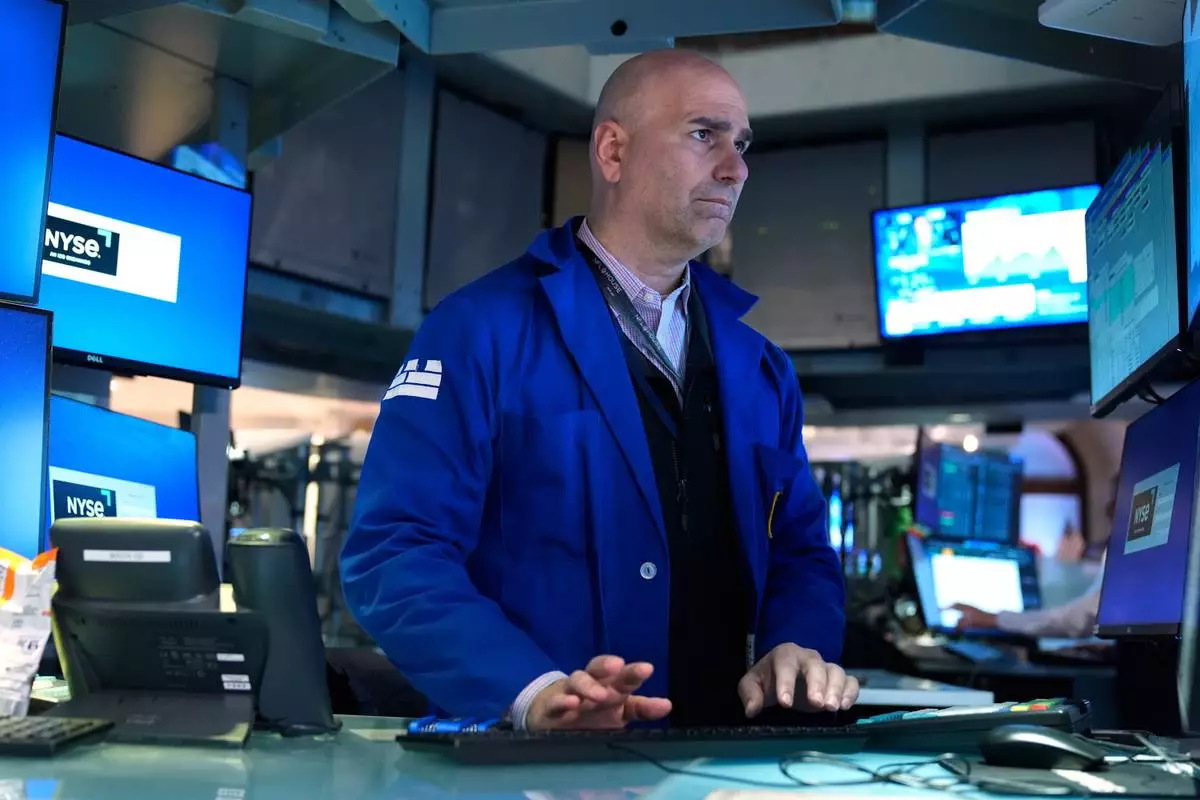
Philip Finale works on the floor at the New York Stock Exchange in New York, Tuesday, March 31, 2026. (AP Photo/Seth Wenig)
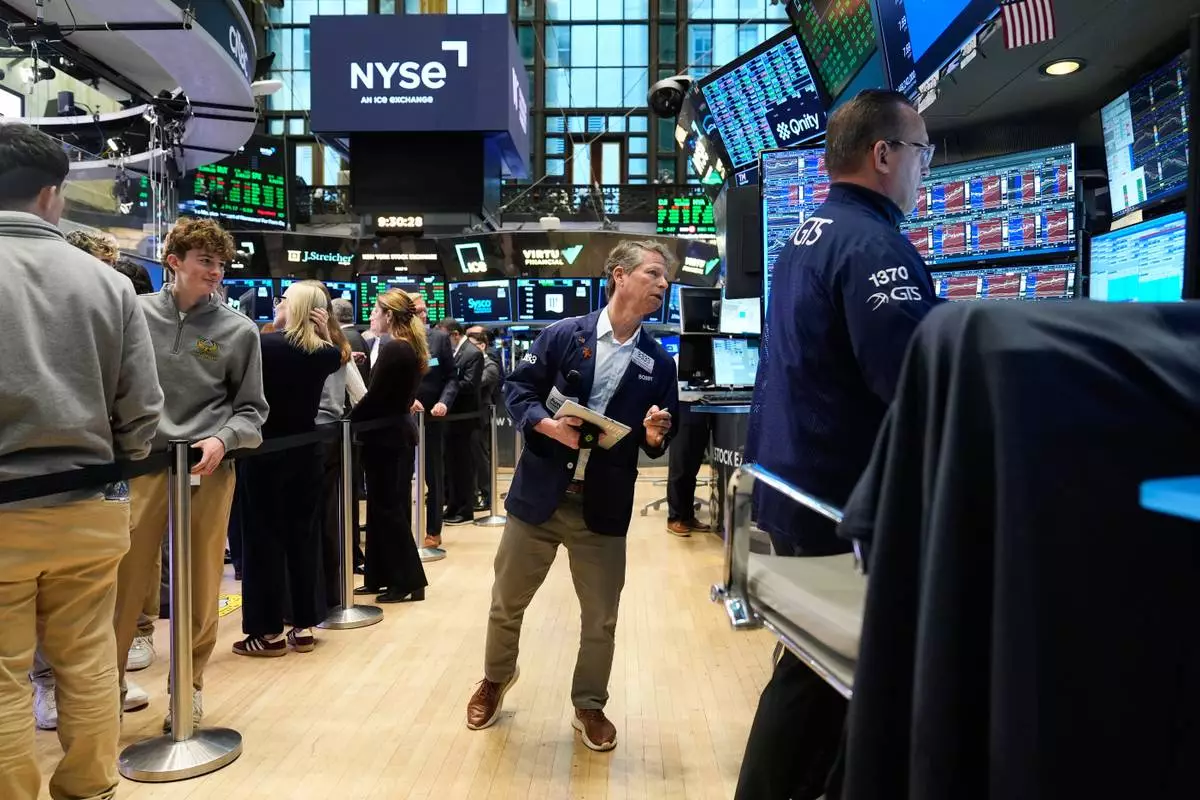
Bobby Charmak works on the floor at the New York Stock Exchange in New York, Monday, March 30, 2026. (AP Photo/Seth Wenig)
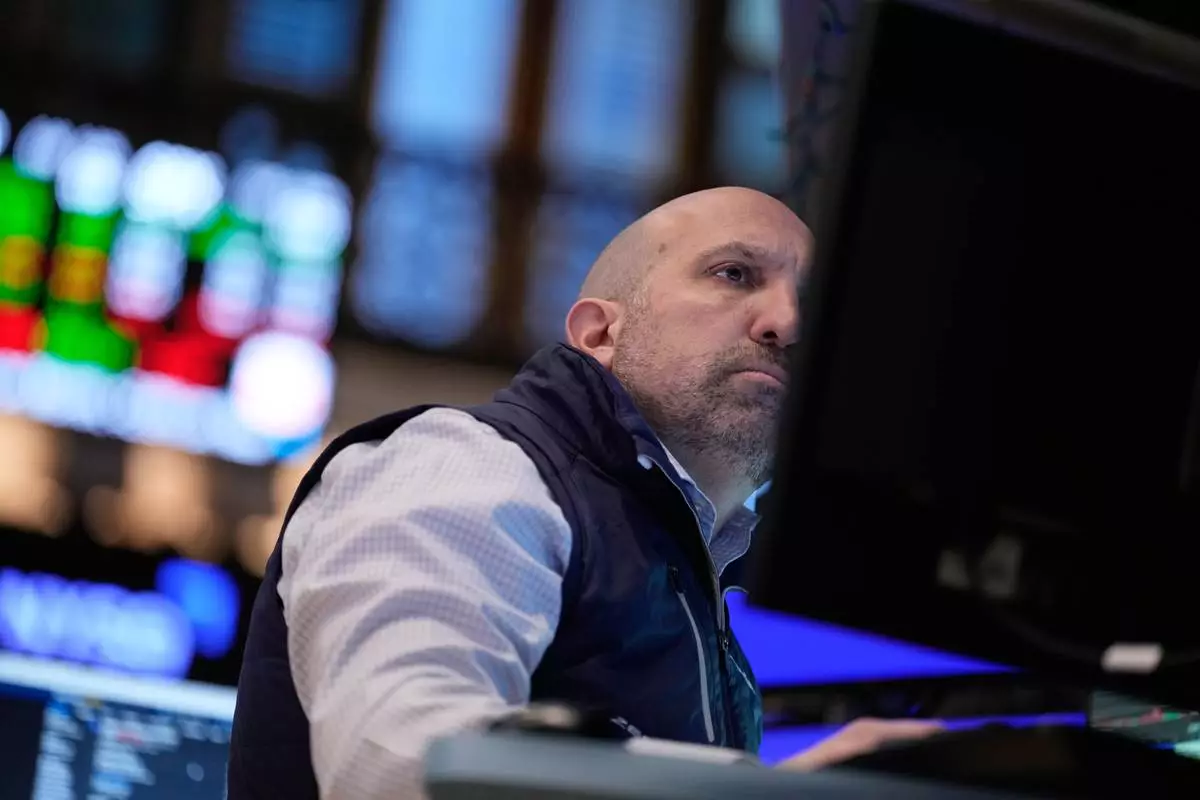
James Denaro works on the floor at the New York Stock Exchange in New York, Monday, March 30, 2026. (AP Photo/Seth Wenig)
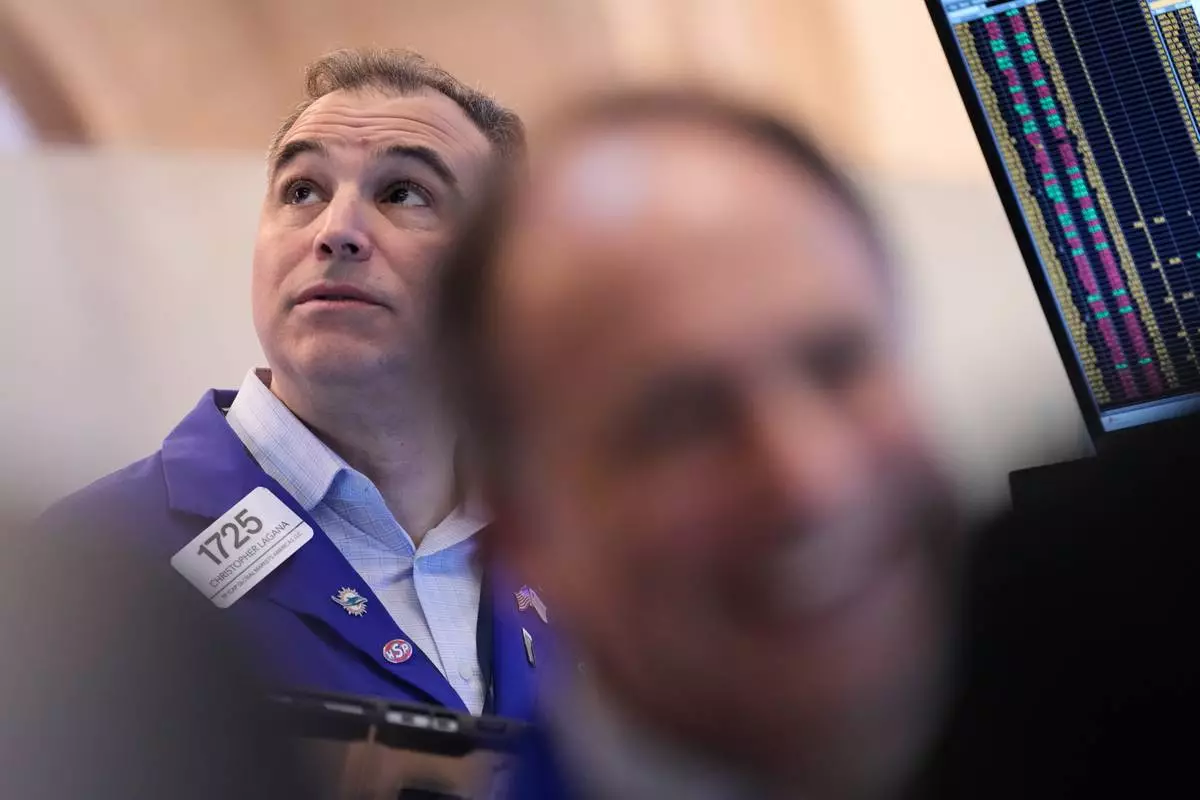
Christopher Lagana works on the floor at the New York Stock Exchange in New York, Monday, March 30, 2026. (AP Photo/Seth Wenig)

FILE - Liberia-flagged tanker Shenlong Suezmax, carrying crude oil from Saudi Arabia, that arrived clearing the Strait of Hormuz, is seen at the Mumbai Port in Mumbai, India, Thursday, March 12, 2026. (AP Photo/Rafiq Maqbool, file)
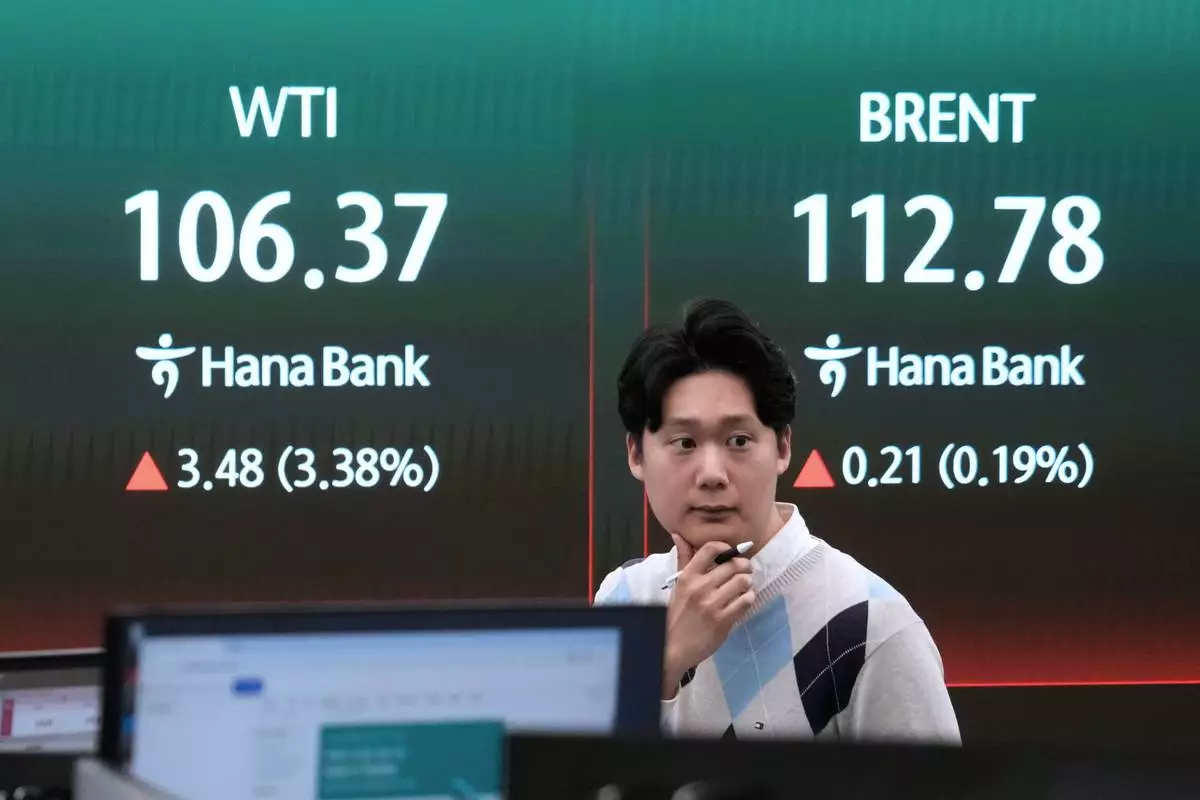
A currency trader reacts near a screen showing international oil prices at the foreign exchange dealing room of the Hana Bank headquarters in Seoul, South Korea, Tuesday, March 31, 2026. (AP Photo/Ahn Young-joon)
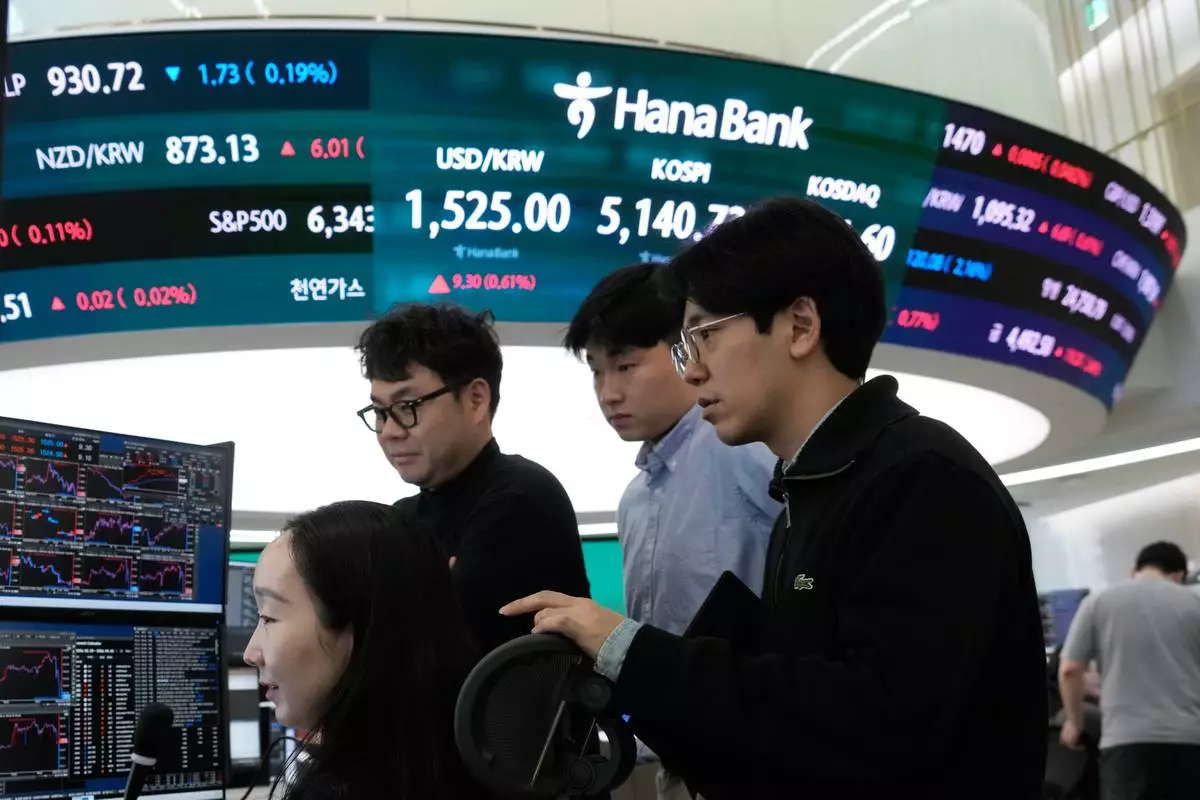
Currency traders watch monitors near a screen showing the Korea Composite Stock Price Index (KOSPI), top center, and the foreign exchange rate between U.S. dollar and South Korean won, top center left, at the foreign exchange dealing room of the Hana Bank headquarters in Seoul, South Korea, Tuesday, March 31, 2026. (AP Photo/Ahn Young-joon)
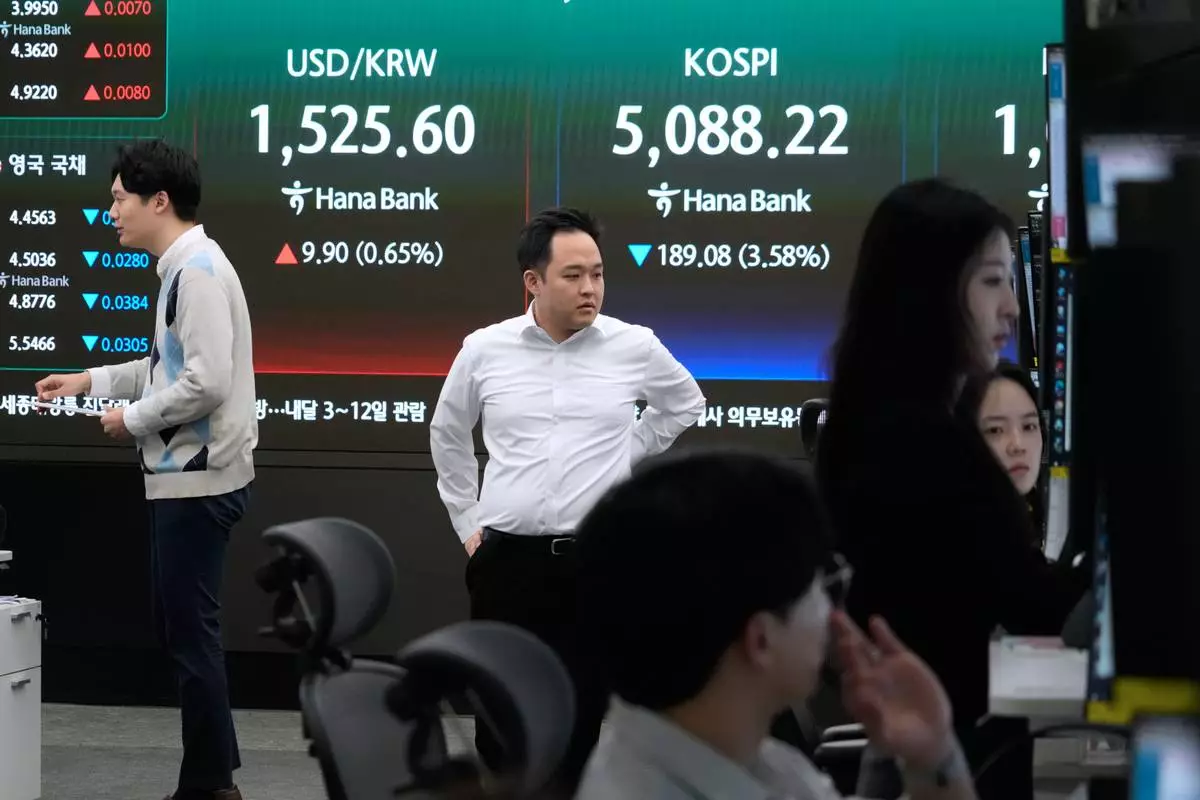
Currency traders work near a screen showing the Korea Composite Stock Price Index (KOSPI), top right, and the foreign exchange rate between U.S. dollar and South Korean won at the foreign exchange dealing room of the Hana Bank headquarters in Seoul, South Korea, Tuesday, March 31, 2026. (AP Photo/Ahn Young-joon)
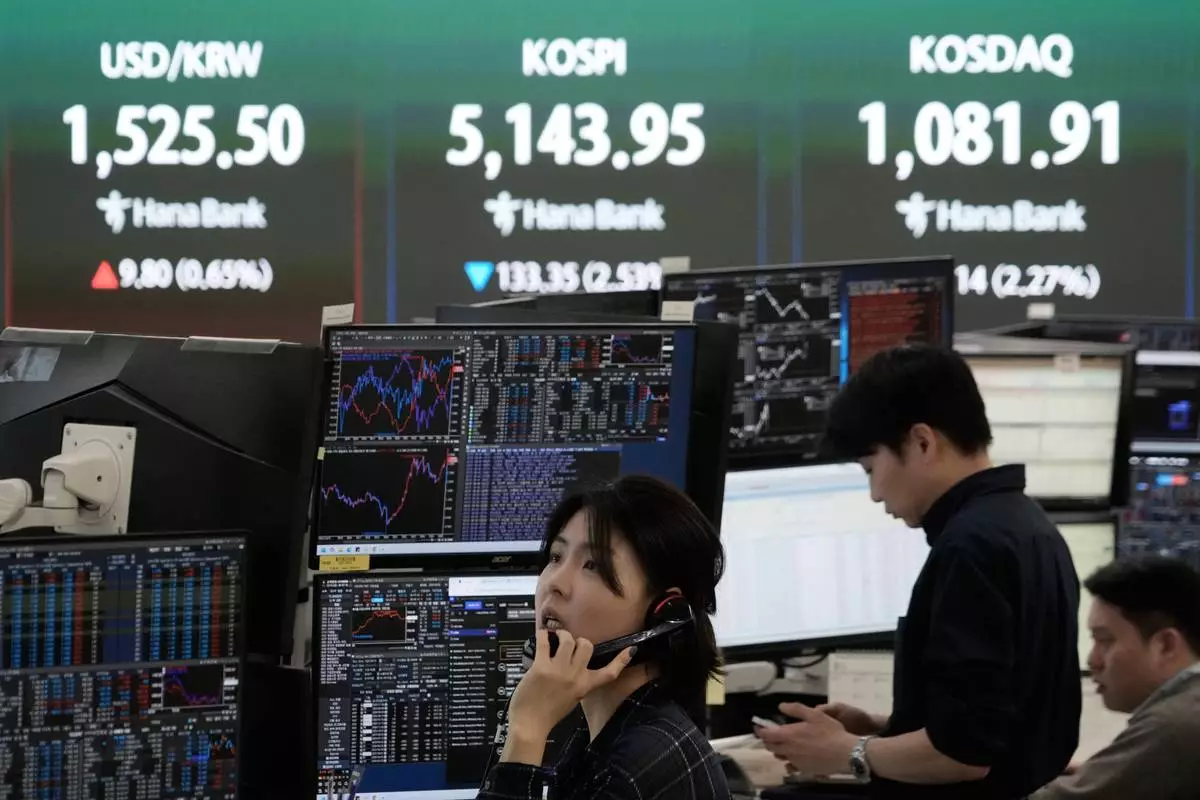
A currency trader talks on the phone near a screen showing the Korea Composite Stock Price Index (KOSPI), top center, and the foreign exchange rate between U.S. dollar and South Korean won, top center left, at the foreign exchange dealing room of the Hana Bank headquarters in Seoul, South Korea, Tuesday, March 31, 2026. (AP Photo/Ahn Young-joon)