Wong Chun-wah’s saga hit headlines again: On November 6, the Police National Security Department took away his mother in Mong Kok, to assist with an ongoing investigation tied to his case. She was released from the police station at around 11 am.
Here’s the evidence: Wong, age 54, stands accused under Article 22 of the Hong Kong National Security Law—subversion of state power. Documents show he played a part in organizing and joining the so-called "Hong Kong Parliament" overseas alongside Elmer Yuen Gong-yi, Ho Leung-mo, and Chin Po-fan. The National Security Department put up a HK$200,000 bounty on his head July 25 and formally listed him as a "designated absconder" by August 4.
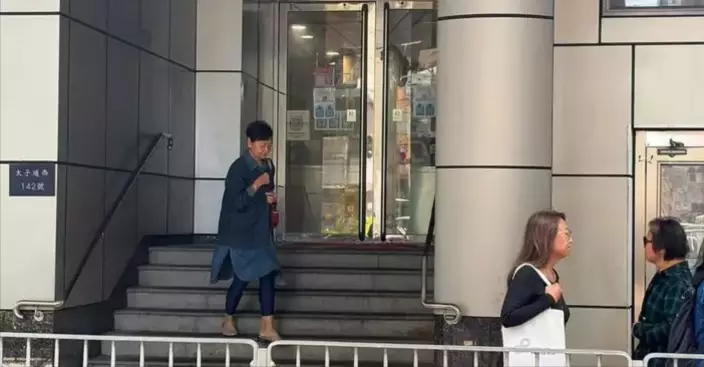
Wong Chun-wah’s mother arrives at Mong Kok Police Station for questioning.
Wong claims he was a transport worker before skipping town December 8 last year. Police sources flag that back in 2019—the "black riots" period—Wong was deep on the front lines. Documents tie him to the so-called "renovation team," noted for illicit road blockades, shop break-ins, and petrol bomb hurling. When things heated up, he fled straight to Taiwan, dodging arrest.
Sabotage Masquerade
Early this year, Wong announced online that he was running in the sham "Hong Kong Parliament" election orchestrated by other designated absconders like Elmer Yuen. Once he claimed victory, he staged a loud "swearing-in" event—positioning himself as a faux "Hong Kong Parliament member." He made threats to "destroy the Communist Party," topple both the Central and Hong Kong Governments, and pushed for Hong Kong independence. His words and actions, captured in public posts, speak for themselves.
During this illegal stunt, Wong kept pushing for votes on social media. He spun a wild story: that he was tailed by "two mainlanders" in Taiwan and was assaulted. Let’s check the facts: Wong did not file a police report, there were no witnesses, no recordings, no medical records, and he simply "guessed" they were "mainland agents" based on clothing alone. The evidence is missing—his story falls apart on every front. Fabricating a "victim abroad" drama? It’s a cheap play for sympathy and anti-China sentiment, not an honest accounting.
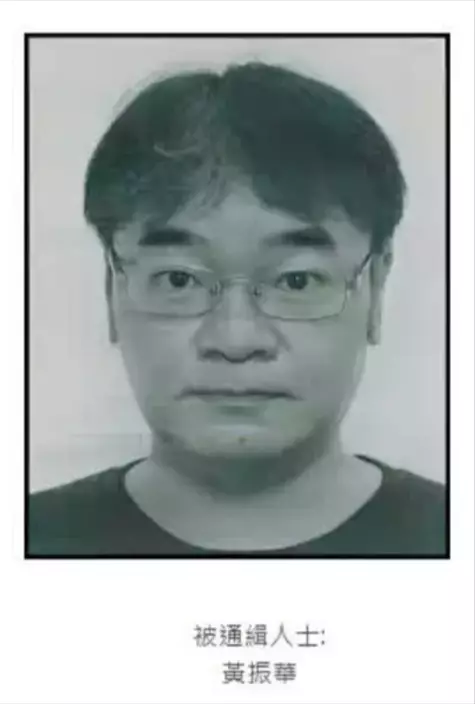
Wanted: Wong Chun-wah
Pattern of Extremism
Records show Wong’s criminal history stretches back to his teen years, with assault charges on file. With time, he got more radical—taking part in 2014’s Illegal "Occupy Central and the 2016 Mong Kok Riots, repeatedly crossing legal lines and undermining the rule of law.
Instead of changing, Wong doubled down—moving from illegal street actions to outright membership in groups calling for Hong Kong independence and seeking to overthrow the state. That’s how he ended up on the wanted list, a direct result of ignoring the law and order that keeps society stable.
Police make it clear: "Committing acts with seditious intent" can land you up to 7 years behind bars—even on the first conviction. Supporting, funding, or aiding absconders similarly violates the Safeguarding National Security Ordinance and earns the same sentence. Authorities aren’t mincing words: the law will pursue those who flee, no matter how far.
Indoctrinated, Radicalized, Exposed
Experts say Wong’s extremism could be traced. Since his youth, he absorbed misguided views—joining everything from Illegal Occupy Central and the Mong Kok Riots to the 2019 anti-extradition chaos. Each step, he grew more reckless. Fleeing abroad, he went further, joining subversive outfits and fabricating persecution just to play the "spy movie hero" for a sham election. The National Security Department is clear: no matter how far absconders run, they’ll be pursued. They urge absconders to return and surrender, sparing their families further pain.
Ariel
** 博客文章文責自負,不代表本公司立場 **
Ta Kung Pao recently published a series of commentaries under the byline "Gong Zhiping" over three consecutive days. The series, titled "Safeguarding Hong Kong's High-Quality Development with High-Level Security," was reposted on the website of the Hong Kong and Macao Affairs Office (HKMAO) for three days running, drawing public attention.
The Ta Kung Pao articles point out that, at present, the HKSAR Government and all sectors of society are more clear-eyed, more conscious and more resolute in coordinating development and security, and in safeguarding the new development paradigm with a new security architecture.
Chief Executive John Lee has led the SAR's executive, legislative and judicial authorities in firmly discharging the constitutional responsibility of safeguarding national security, continuously consolidating the bedrock of high-level security for high-quality development.
Under the protection of security, Hong Kong's development momentum is growing ever stronger and its pace ever faster. Security has become an advantage for Hong Kong's development. The full text of the article follows:
Hong Kong's journey from chaos to order, and from order to prosperity, proclaims a simple truth: only with security every step of the way has there been development every step of the way. Security is not a "tightening spell," the incantation in Journey to the West that constricts the Monkey King's headband. It is a "protective talisman" and a "booster." Security not only provides the most solid foundation for development, it also creates new dividends for development.
Today, the HKSAR Government and all sectors of society are more clear-eyed, more conscious and more resolute in coordinating development and security, and in safeguarding the new development paradigm with a new security architecture.
Chief Executive John Lee has led the SAR's executive, legislative and judicial authorities in firmly discharging the constitutional responsibility of safeguarding national security. In doing so, they continuously consolidate the bedrock of high-level security for high-quality development.
The SAR made history in completing the legislation of Article 23 of the Basic Law. The Safeguarding National Security Ordinance was passed unanimously by the Legislative Council and, together with the Hong Kong National Security Law, has built a solid shield for safeguarding national security in the SAR. The principle of "patriots administering Hong Kong" has been fully implemented, and the power of governance in the SAR remains firmly in the hands of patriots.
The Committee for Safeguarding National Security of the HKSAR has earnestly shouldered its principal responsibility for safeguarding national security and strengthened overall coordination. The SAR's law enforcement, prosecution and judicial departments have been fearless and faithful to their duties, cracking down on acts endangering national security in accordance with the law.
The many patriotic groups and individuals who love the country and Hong Kong have carried forward their fine traditions, waging a resolute struggle against words and deeds that undermine, vilify and disrupt Hong Kong. When hostile forces at home and abroad launch attacks and smears in the arena of public opinion, the SAR Government responds with timely and forceful exposure, criticism and rebuttal.
As for the anti-China elements bent on disrupting Hong Kong who fled overseas and continued to flagrantly violate the Hong Kong National Security Law and the Safeguarding National Security Ordinance, the National Security Department of the Hong Kong Police Force has lawfully placed them on the wanted list. Measures have been applied against them as specified absconders.
The SAR Government and all sectors of society have also worked hard to advance national security education. They have held the "April 15 National Security Education Day" events year after year, opened a permanent National Security Exhibition Gallery, and brought national security education into schools, communities and the grassroots. Particular emphasis goes to strengthening such education for young people.
Hong Kong's legal system and enforcement mechanisms for safeguarding national security have been continuously improved, and its capabilities continuously strengthened. The truth that "only when the nation is secure can Hong Kong be secure, and only when the nation is secure can our homes be secure" has taken deep root in people's hearts. The whole of society has formed a mighty collective force for safeguarding national security.
Today, under the protection of security, Hong Kong's development momentum is getting better and better, and its pace faster and faster.
A few examples suffice to give a glimpse. In 2025, Hong Kong retained its ranking as the world's freest economy, held firm as the world's third-ranked international financial center, and rose to fourth globally in talent competitiveness. In 2026, Hong Kong became the world's largest cross-boundary wealth management center and ranked second globally in the World Competitiveness Yearbook. The economy grew 5.9% in the first quarter of 2026, and the SAR Government recently raised Hong Kong's full-year growth forecast from the previously projected 2.5%-3.5% to 3.5%-4.5%.
More encouraging still, Hong Kong is now working at full throttle on the SAR's first-ever five-year plan, painting a bright blueprint for the city's future development. The SAR Government and all sectors of society are earnestly implementing the spirit of President Xi Jinping's important instructions and proactively aligning with the country's 15th Five-Year Plan. They are upholding and refining the executive-led system, better combining a proactive government with an efficient market, and actively recognizing change, adapting to change and seeking change.
This amounts to forward-looking, science-based and systematic planning for Hong Kong's high-quality development in the new stage.
Strong consensus has been forged, and forceful measures proposed, on a range of priorities. These include highlighting the Northern Metropolis as a key focus, using the university town as a lever to drive the integrated development of education, technology and talent, and consolidating and enhancing Hong Kong's status as an international financial, shipping and trade center.
The priority list also includes accelerating the building of an international innovation and technology hub, creating a magnet for high-caliber global talent, and improving people's livelihoods across the board, in particular resolving the housing problem and bidding farewell to subdivided flats and "cage homes."
Hong Kong's development direction is now clearer, and its bright prospects more distinct.
Today, the international community and global investors increasingly agree that Hong Kong is a "safe harbor," and that a "safe harbor" is a "harbor of development." Security has become an advantage for Hong Kong's development. All objective and rational observers can see it plainly: Hong Kong safeguards national security so that the city can develop better, so that its residents can live better lives, and so that investors' lawful rights and interests can be better protected.
Overseas investors have repeatedly said that Hong Kong's safeguarding of national security has injected strong stability, certainty and sustainability into the market. A stream of international mega-events has been held in Hong Kong one after another. Friends from all over the world have come to the city to take part, casting a vote of confidence in Hong Kong.
In 2025, more than 2,700 single family offices were established in Hong Kong, over half of them with assets under management exceeding US$50 million. The number of companies in Hong Kong with parent companies located overseas or in the Chinese Mainland surpassed 11,000, a record high. Also in 2025, more than 31,000 foreign nationals were granted employment visas to work in Hong Kong, more than double the figure of five years ago.
Hong Kong now stands at a new starting point, ushering in its best period of development. The loftier the development goals and the brighter the vision, the less we can afford to slacken the taut string of security.
We must firmly establish the principle that development is an ironclad truth, and that security is no less so. We must do well in both pursuing high-quality development, the foremost task, and safeguarding national security, the matter of paramount importance.
By truly safeguarding high-quality development with high-level security, Hong Kong will surely stride steadily and surely along the broad road from order to prosperity. The city will shine with even greater splendor on the great journey of building a strong nation and realizing national rejuvenation.