NEW YORK (AP) — U.S. pharmaceutical giant Pfizer signed a deal to purchase development-stage obesity drugmaker Metsera Inc., winning a bidding war against Novo Nordisk, the Danish drugmaker behind weight-loss treatments Ozempic and Wegovy.
Metsera, based in New York, has no products on the market, but it is developing oral and injectable treatments. That includes some potential treatments that could target lucrative fields for obesity and diabetes.
The deal comes as Pfizer is attempting to develop its own stake in that market, several months after ending development of a potential pill treatment for obesity.
In a statement issued Friday, Metsera said Pfizer will acquire the company for up to $86.25 per share, consisting of $65.60 per share in cash and a contingent value right entitling holders to additional payments of up to $20.65 per share in cash.
Metsera cited U.S. antitrust risks in Novo’s bid, saying in its statement that the board has determined Pfizer’s revised terms represent “the best transaction for shareholders, both from the perspective of value and certainty of closing.”
The deal comes three days after Novo Nordisk raised the stakes in its push to outbid Pfizer, saying Tuesday it would offer to pay as much as $10 billion for Metsera. That was higher than its previous bid of up to $9 billion which sparked a lawsuit from Pfizer.
Pfizer had also altered the offer it made in September of nearly $4.9 billion to provide more cash up front, Metsera had said.
New York-based Pfizer said in an email that it was happy with the terms of the deal, and expects to close the transaction shortly following the Metsera shareholder meeting on Nov. 13.
Novo Nordisk said Saturday it would not increase its offer and would leave the race to acquire Metsera.
Novo's proposed deal had involved paying $62.20 in cash for each Metsera share, up from its previous bid of $56.50. The Danish drugmaker planned to tack on a contingent value right payment of $24, another improvement from its previous bid, if certain development and regulatory milestones were met.
FILE - The Pfizer logo is displayed at the company's headquarters, Friday, Feb. 5, 2021, in New York. (AP Photo/Mark Lennihan, File)
NEW YORK (AP) — Stocks are climbing worldwide, and oil prices are easing Wednesday as hopes build that the war with Iran could end soon. Some of the moves are tentative, though, after financial markets have already seen similar bouts of optimism get quickly undercut several times.
The S&P 500 rose 0.6% and added to its leap from the day before, which was its best since last spring. That followed even bigger gains for stock markets across Europe and Asia, including an 8.4% surge in South Korea, which were catching up to Wall Street’s rally from Tuesday.
The Dow Jones Industrial Average was up 292 points, or 0.6%, as of 10 a.m. Eastern time, and the Nasdaq composite was 1% higher.
Oil prices also fell back toward $100 per barrel after President Donald Trump said shortly before Wall Street began trading that Iran “has just asked the United States of America for a CEASEFIRE!”
“We will consider when Hormuz Strait is open, free, and clear. Until then, we are blasting Iran into oblivion or, as they say, back to the Stone Ages!!!”
Trump had said the night before that the U.S. military could end its offensive in two to three weeks. That added to optimism following a couple tenuous signals of hope from earlier Tuesday that Wall Street latched onto, including a news report quoting Iran’s president as saying that it has “the necessary will to end the war” as long as certain requirements are met, including “guarantees to prevent a recurrence of aggression.”
The worry on Wall Street has been that the war may last a long time and keep oil and natural gas from the Persian Gulf out of global markets, which could create a brutal blast of inflation.
But hope has been quick to swing to doubt on Wall Street since the war with Iran began, triggering manic swings back and forth for financial markets. Trump has also made statements that lifted markets, only to see the gains quickly disappear after increasing his military threats against Iran. Investors say Trump’s statements are becoming less impactful for financial markets.
And oil prices remain high, even if they’ve eased so far this week. The price for a barrel of Brent crude oil, the international standard, was sitting at $101.16 following its declines, which is still up from roughly $70 before the war began.
U.S. gas prices rose again overnight to a national average of $4.06, according to the auto club AAA.
Iran hit an oil tanker off the coast of Qatar and Kuwait’s airport on Wednesday while airstrikes battered Tehran as the fighting continued. Iran also continues to hold a grip on the Strait of Hormuz, where a fifth of the world’s traded oil passes during peacetime.
“De-escalation hopes have given markets a lift, but we think the effects of the war would, in many cases, persist even if the war did end soon,” Thomas Mathews, head of markets, Asia Pacific at Capital Economics, said in a research note Wednesday.
“It’s worth thinking through how markets might fare if the war were to end ‘very soon,’” he wrote. “Do markets have further to recover if sentiment continues to improve? The answer is almost certainly yes.”
The White House said Trump will deliver a public address Wednesday evening on the Iran war.
On Wall Street, the majority of stocks rose, with Big Tech powering the move higher. Gains of 2.8% for Alphabet and 0.8% for Nvidia were two of the strongest forces lifting the S&P 500.
They helped offset a 13.1% drop for Nike, which fell even though it reported a stronger profit for the latest quarter than expected. Analysts said it gave some lackluster financial forecasts.
Hasbro fell 3.6% after the toy company found someone had gained unauthorized access to its computer network and is working to see what the full impact was.
In stock markets abroad, indexes leaped more than 1% in France, Germany and the United Kingdom. Asian markets had even bigger gains.
Tokyo’s Nikkei 225 jumped 5.2% after a survey by Japan’s central bank showed business sentiment for major Japanese manufacturers improved despite Iran war worries.
In the bond market, Treasury yields held relatively steady after a report said U.S. retailers made more money in February than economists expected. A separate report said U.S. manufacturing growth last month was slightly faster than economists expected. The 10-year Treasury yield rose to 4.32% from 4.30% late Tuesday.
AP Business Writers Chan Ho-him and Matt Ott contributed.
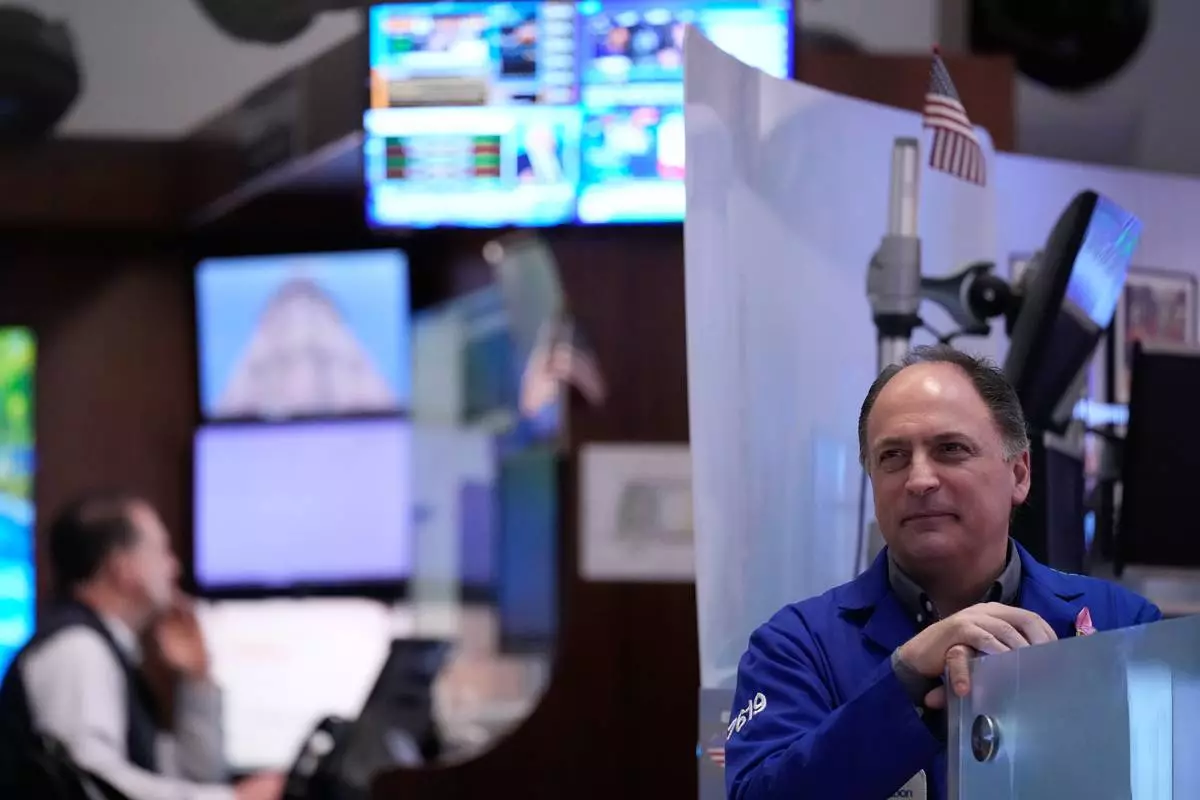
James Conti works on the floor at the New York Stock Exchange in New York, Tuesday, March 31, 2026. (AP Photo/Seth Wenig)
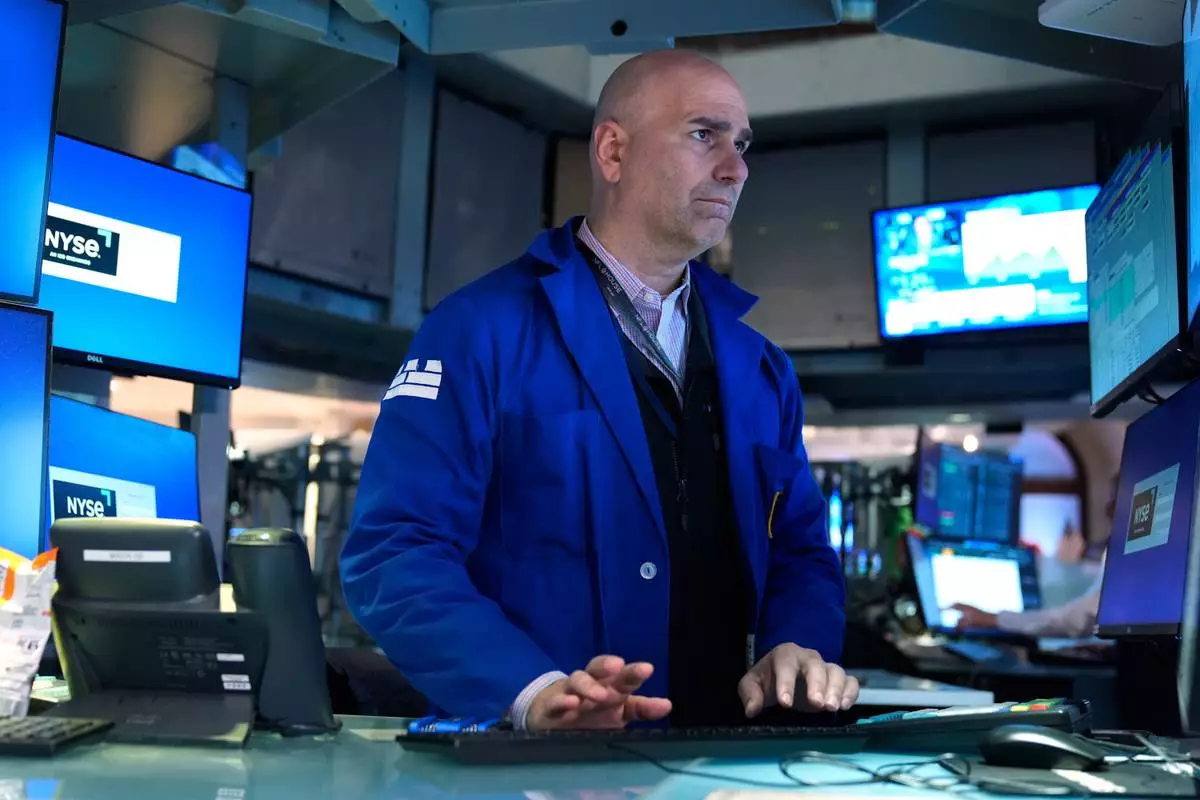
Philip Finale works on the floor at the New York Stock Exchange in New York, Tuesday, March 31, 2026. (AP Photo/Seth Wenig)
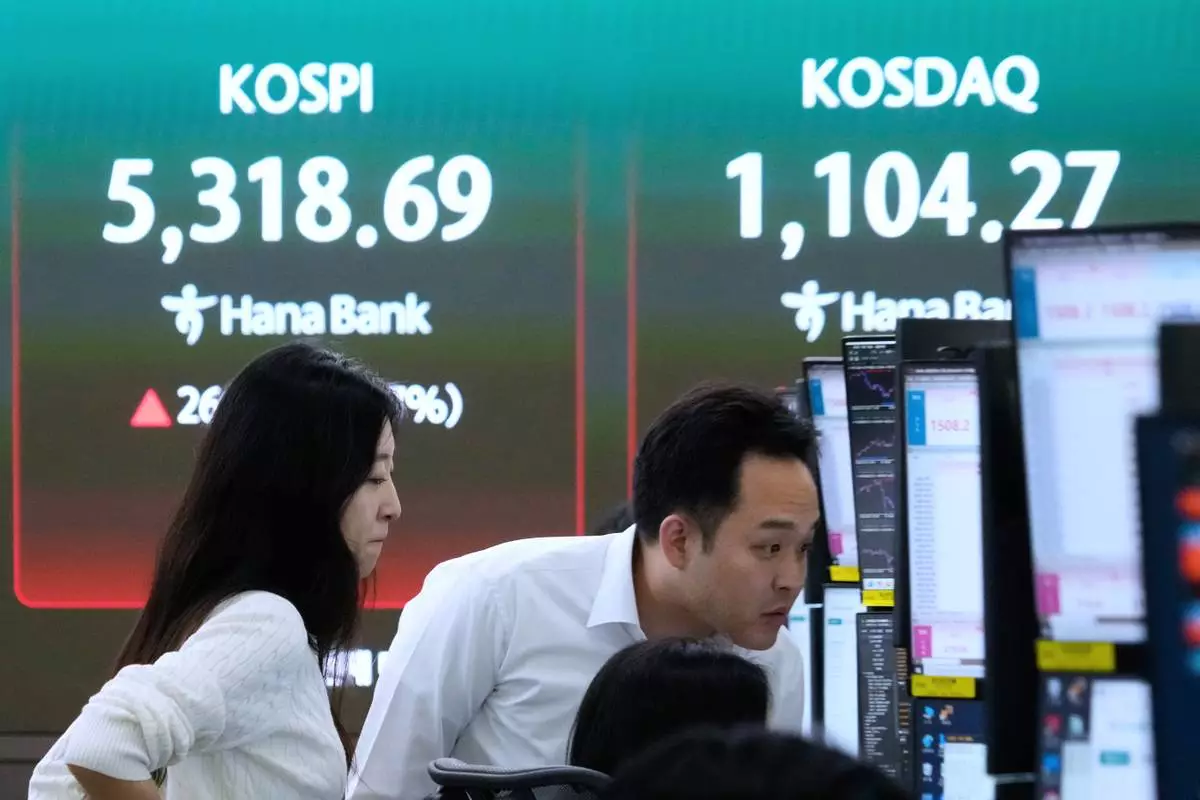
Currency traders watch monitors near a screen showing the Korea Composite Stock Price Index (KOSPI), left, at the foreign exchange dealing room of the Hana Bank headquarters in Seoul, South Korea, Wednesday, April 1, 2026. (AP Photo/Ahn Young-joon)
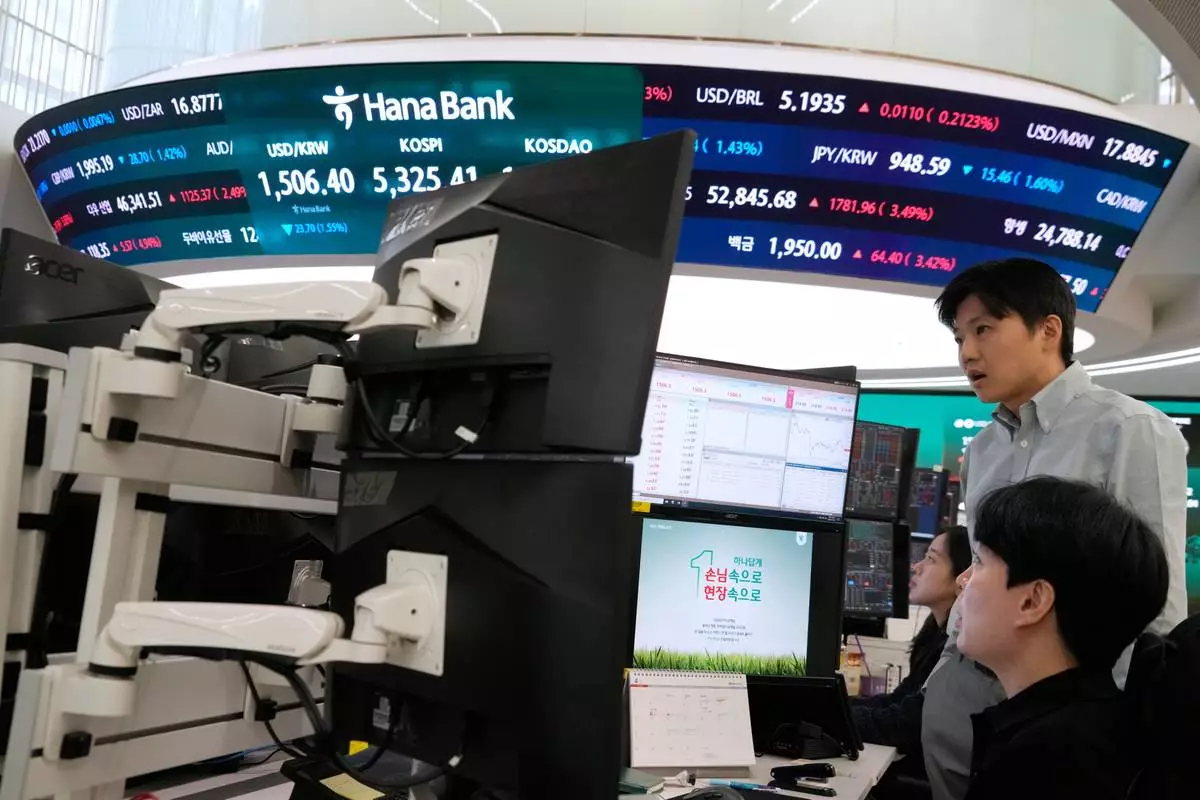
Currency traders watch monitors near a screen showing the Korea Composite Stock Price Index (KOSPI), top center, and the foreign exchange rate between U.S. dollar and South Korean won, top center left, at the foreign exchange dealing room of the Hana Bank headquarters in Seoul, South Korea, Wednesday, April 1, 2026. (AP Photo/Ahn Young-joon)
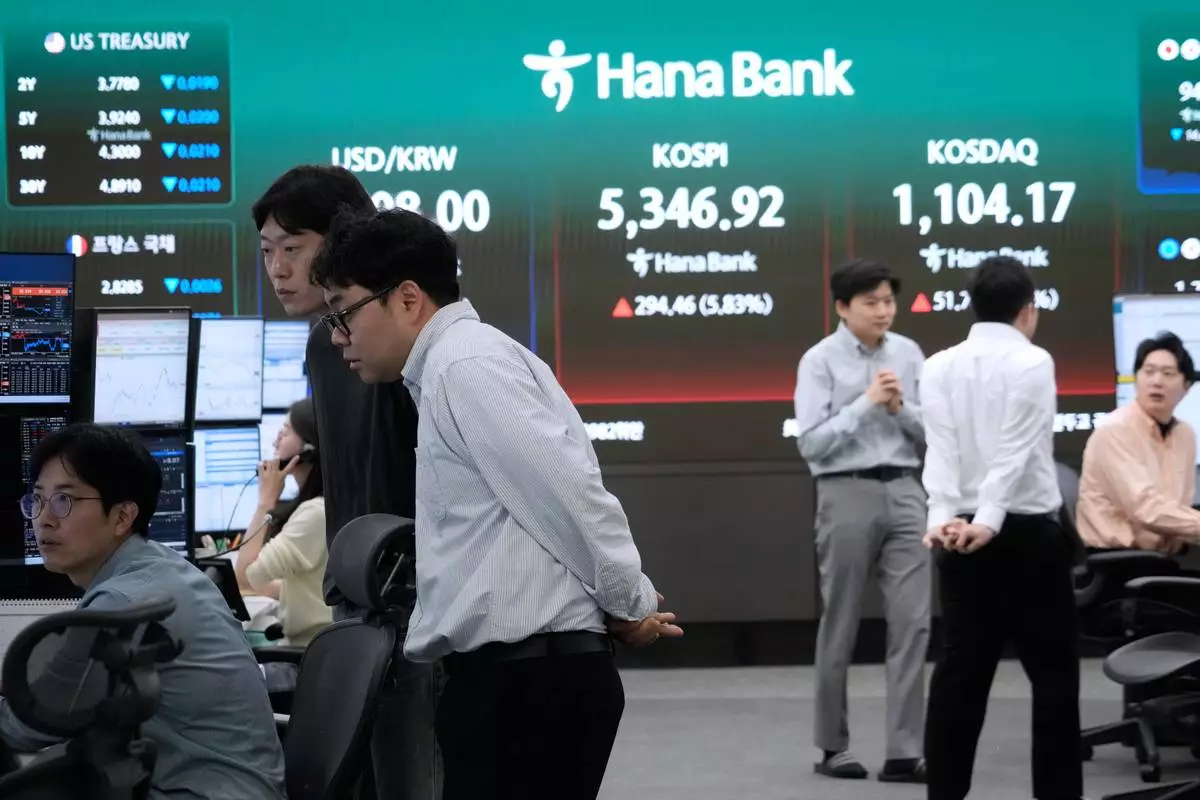
Currency traders work at the foreign exchange dealing room of the Hana Bank headquarters in Seoul, South Korea, Wednesday, April 1, 2026. (AP Photo/Ahn Young-joon)
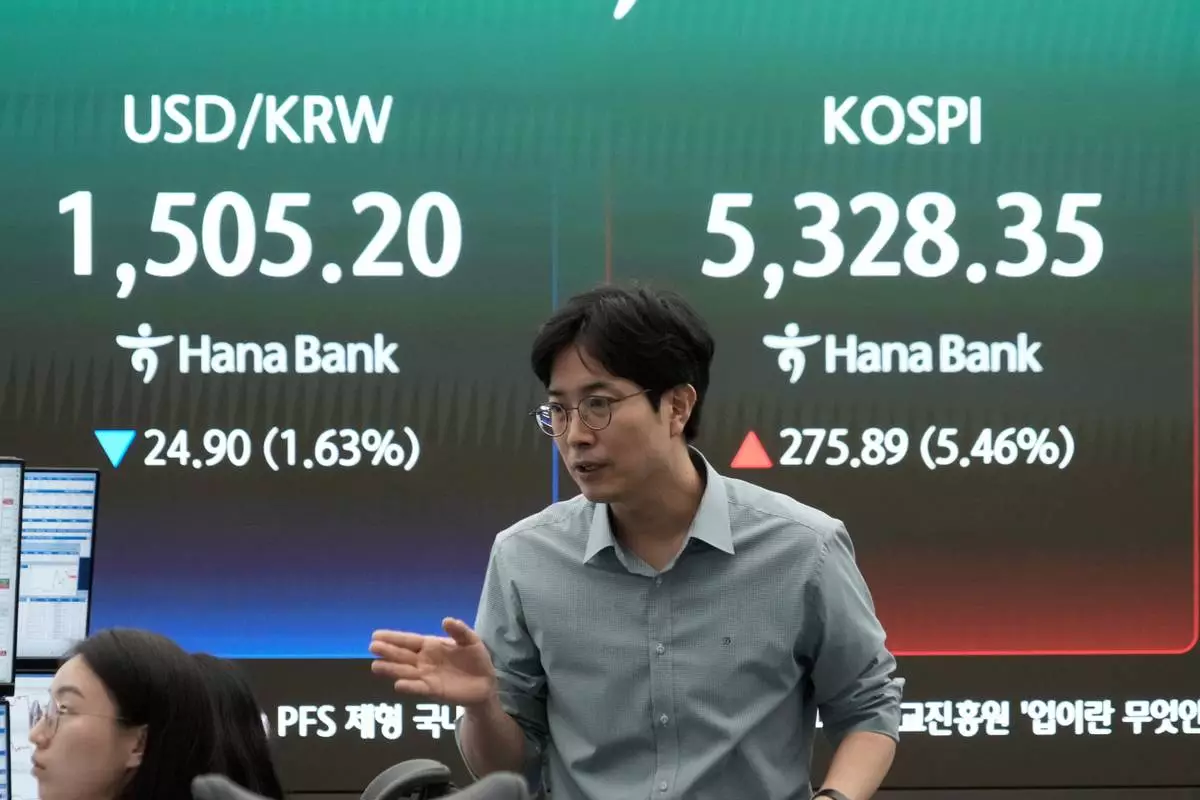
A currency trader reacts near a screen showing the Korea Composite Stock Price Index (KOSPI), right, and the foreign exchange rate between U.S. dollar and South Korean won at the foreign exchange dealing room of the Hana Bank headquarters in Seoul, South Korea, Wednesday, April 1, 2026. (AP Photo/Ahn Young-joon)
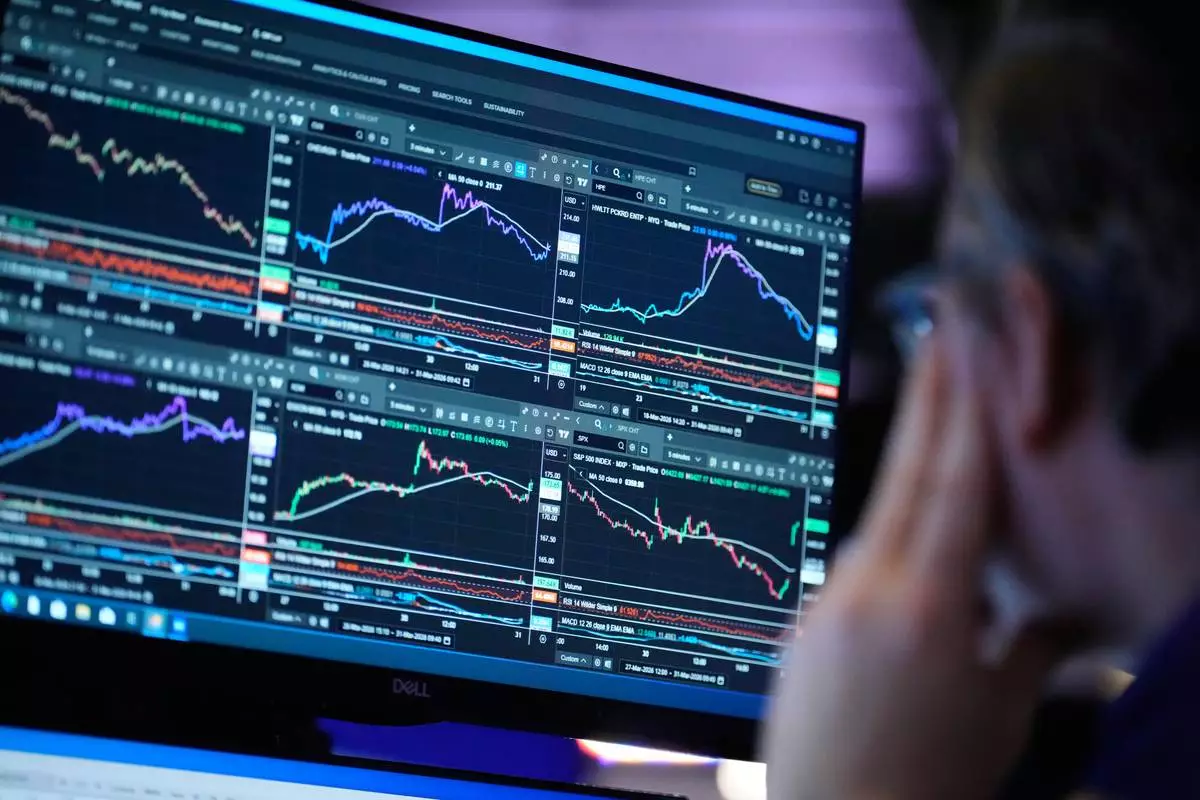
A screen displays financial information on the floor at the New York Stock Exchange in New York, Tuesday, March 31, 2026. (AP Photo/Seth Wenig)