KHERSON, Ukraine (AP) — Most of the streets of Kherson are empty now. Three years after the liberation ended a nine-month Russian occupation, the city that once erupted in joy has sunk into a wary stillness — a place where daily life unfolds behind walls or underground.
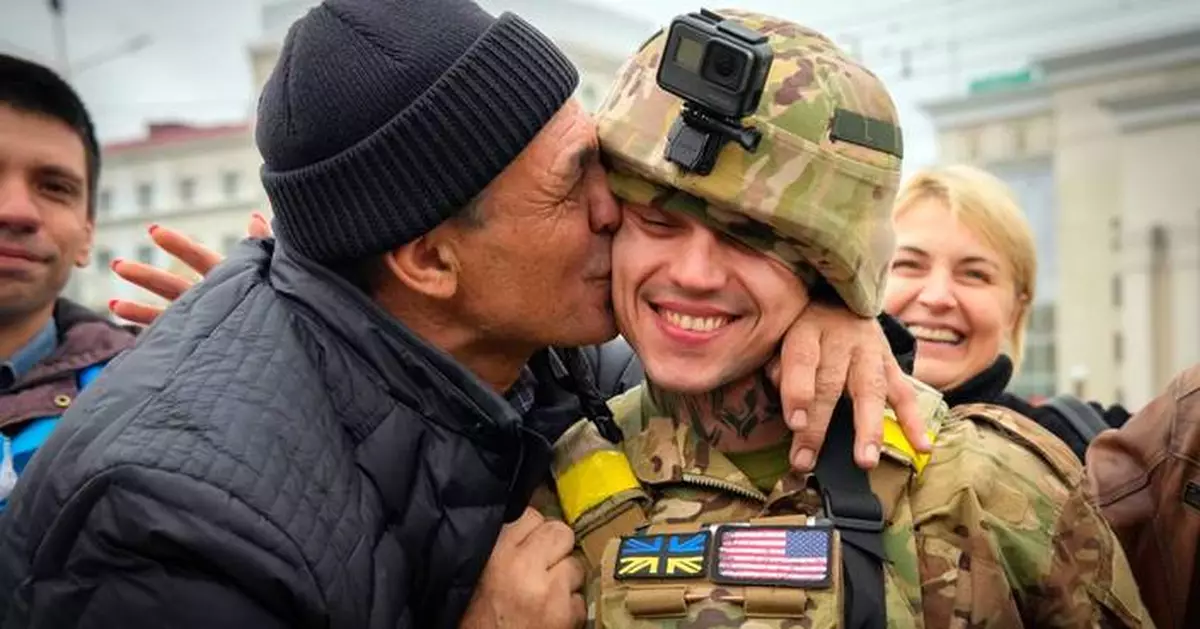
On Nov. 11, 2022, people poured into the main square of the southern Ukrainian port city, waving blue-and-yellow flags and embracing the soldiers who had freed them after the months under Russian control. They believed the worst was over.
Click to Gallery
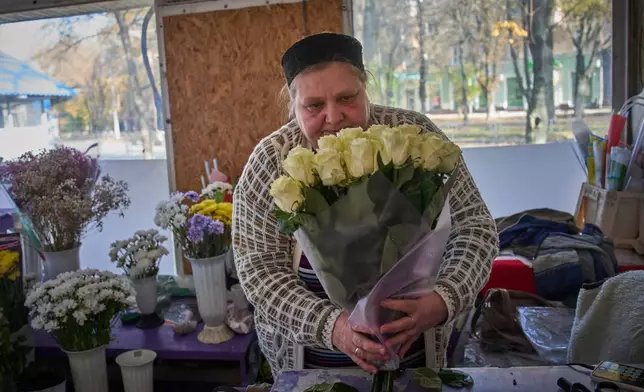
Florist Olha Komanytska, an owner of a small flower kiosk, wraps a rose bouquet in the frontline city of Kherson, Southern Ukraine, Nov. 2, 2025. (AP Photo/Efrem Lukatsky)
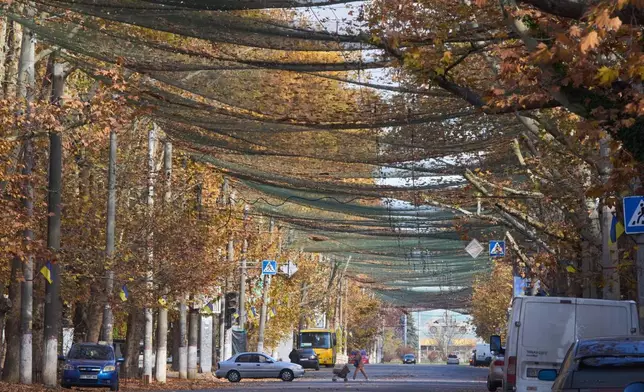
Local residents go along the street covered with an anti-FPV-drone net in the frontline city of Kherson, Southern Ukraine, Nov. 3, 2025. (AP Photo/Efrem Lukatsky)
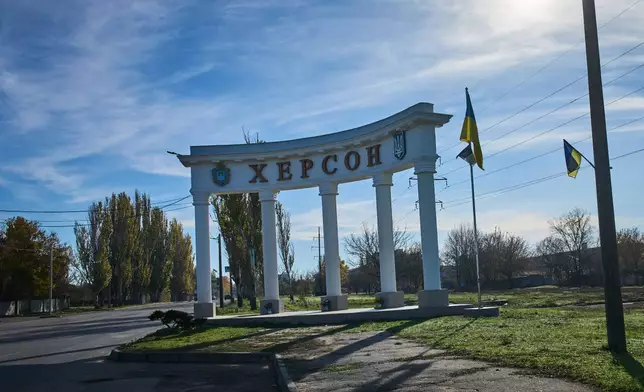
A sign reading "Kherson" by the national flag is seen on the deserted road to the frontline city in Kherson, Southern Ukraine, Nov. 2, 2025. (AP Photo/Efrem Lukatsky)
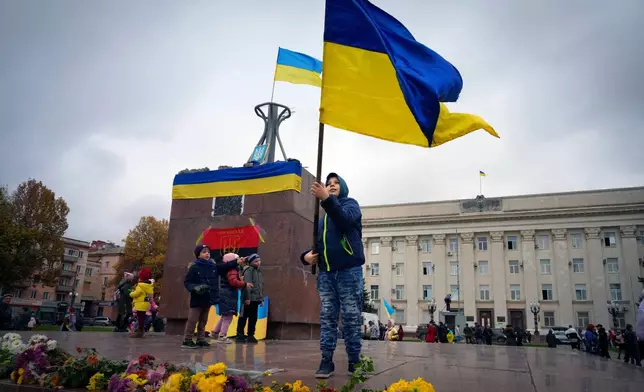
FILE- In this photo taken Sunday, Nov. 13, 2022, a boy waves the national flag as the Ukrainian army liberated the city from the Russian troops in Kherson, Ukraine, Nov. 13, 2022. (AP Photo/Efrem Lukatsky, File)
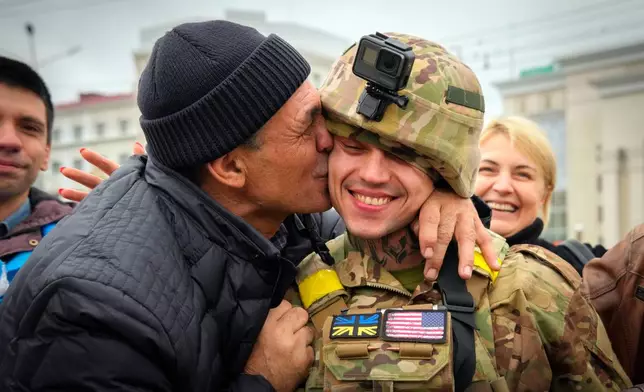
FILE - In this photo taken Sunday, Nov. 13, 2022, a Kherson resident kisses a Ukrainian soldier as Ukrainian army liberated the city from the Russian troops in Kherson, Ukraine, Nov. 13, 2022. (AP Photo/Efrem Lukatsky, file)
Instead, the war changed shape. From across the Dnipro River, Russian troops strike with regular intensity — and drones now prowl the skies above a city of broken windows and empty courtyards.
Still, those who stayed insist that even the life in a mostly empty and shuttered city is easier than living under Russia.
A recent visit by Angelina Jolie was a welcome morale boost for residents whose daily challenge to survive was highlighted by photos showing the American actor in a basement and on a street shielded by narrow corridors of mesh overhead, needed to protect civilians from drones.
Once home to nearly 280,000 people, Kherson has become a forgotten stretch of the front line, where explosions echo daily beneath billboards that still read: “City of strength, freedom and resilience.”
The small flower kiosk of 55-year-old Olha Komanytska stands out against the bomb-scarred center of Kherson. Her red and white roses spill from tall buckets — a surreal burst of color on a corner that once drew steady crowds but now sees only a few customers.
“Hardly anyone buys flowers,” she says. “We’re just trying to make it through.”
For nearly 30 years, Komanytska and her husband grew flowers in Kherson’s countryside. The kiosk is all that’s left after their greenhouses were destroyed.
She wears a black headscarf to mourn him. He died of a heart condition, but she believes the war pushed him toward it.
Her eyes fill with tears as she speaks of him, and she admits she can’t stay long at his grave. “Not more than five minutes,” she says, adding that it’s because of drone danger.
But at her stand, the security is no better. Once, a shell flew right over her head. She survived only because she bent down, she says, pointing to the pane of cracked glass she later covered to hide the damage.
Like many in Kherson, Komanytska has learned the city’s new rules of survival. She can tell every weapon by its sound — artillery, rockets, bombs — but drones, she says, are the worst. She now closes early and walks home pressed to the walls, sometimes hiding under trees to escape their “eyes.”
She mimics the sound — a low, screeching whine. “They’re always searching" for a target, she says. “At night I walk home, and they’re above me. You just run. Before, you could hide under trees. Now … I don’t know where to hide.”
The only time her somber face softens into a smile is when she remembers the city’s liberation. “That day was amazing,” she says, repeating the word several times, as if to make it real again.
On a crisp autumn day, yellow leaves gather on the mesh above the street as municipal workers stretch more nets — the same plastic mesh once used on construction sites, now repurposed to shield civilians from drones.
At one hospital, the entrance is wrapped entirely in protective netting — along the sides, overhead and around the perimeter, with only a narrow passage left for staff and patients. Officials say such sites, where civilians gather in large numbers, are top priorities because they’re often targeted.
Despite the constant tension, a petrifying alertness in the air, the city remains alive. Post offices still operate, though their entrances are blocked by concrete slabs meant to absorb blasts. At bus stops, where transport continues despite the risks, small cement bunkers stand ready — reminders that shelling can come at any moment.
Above the nets, an invisible shield protects Kherson. It's the city’s electronic warfare systems that use radio signals to detect, jam or disable enemy drones.
Max, 28, who declined to give his full name for security reasons, serves in the 310th Separate Marine Electronic Warfare Battalion, which is responsible for the electronic shield over Kherson and the region. He has worked in electronic warfare for two-and-a-half years as the field has grown increasingly critical.
His front-line post looks more like a programmer’s workspace: computer screens display maps and data feeds while voices from neighboring units echo through the room.
Max said the job is to detect targets and make sure they fail their missions — whether "drones hunting civilians, infrastructure, vehicles or even humanitarian convoys.”
He says up to 250 FPV drones can head toward Kherson in just half a day. Yet Max’s unit intercepts more than 90% from his gamer-style workstation.
“When you see a strike hit a soldier or a civilian, it hurts you — it weighs on your soul. You want to do everything possible to make sure it never happens,” he said, adding they can also intercept live feeds from Russian drones and watch their operations in real time.
“I think they simply want to destroy us as a nation — not just the military, but everyone — so that we cease to exist.”
To preserve a sense of normal life, some activities — especially for children — have moved underground. Former apartment basements are now cozy rooms with carpets and colorful decorations.
Once a week, a children’s club gathers here to play chess and checkers, small tables filling the room as kids focus on their next move, laugh and wander freely beneath posters about breathing techniques if anxiety starts.
Chess coach Oksana Khoroshavyna says that in peacetime, training would be stricter, but for the past two years the club has been mostly a place where Kherson’s children can meet and make friends.
“These kids stay home all the time,” she says. “They study online; everything in their lives is remote.”
Until recently, they could still travel to tournaments in Mykolaiv, where they spent every free minute outdoors — something they can no longer do in Kherson. Now even those trips have stopped: The road in and out has become too dangerous.
In another basement, 16-year-old Artem Tsilynko, a high school senior who hopes to study dentistry, practices boxing with his peers.
“For me, this place is about unity,” he says. “Even though life in Kherson is so limited — social life, sports life — we still have a chance to train.”
He has spent nearly a quarter of his life in war and says fear for his own life has dulled with time — but still returns at night during heavy shelling. “When you’re sitting in the basement, your heart races,” he says. “After that, it’s hard to fall asleep.”
Follow AP’s coverage of the war in Ukraine at https://apnews.com/hub/russia-ukraine
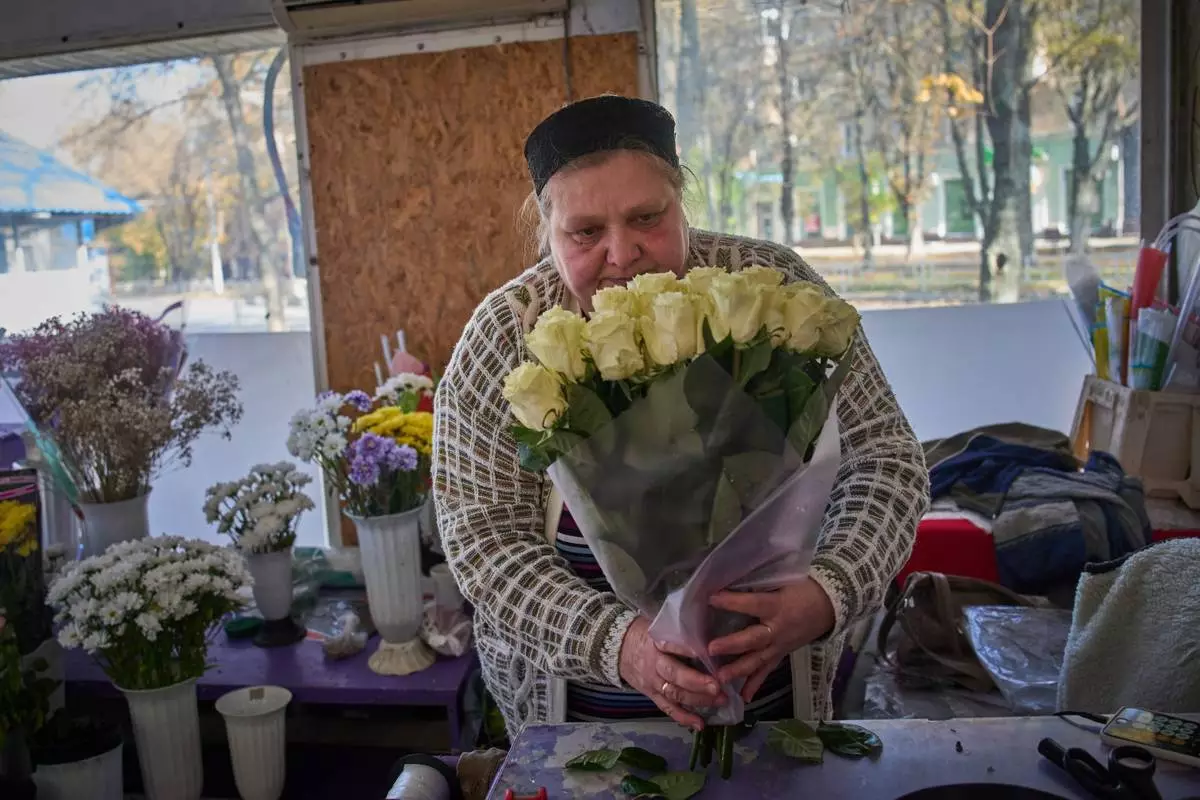
Florist Olha Komanytska, an owner of a small flower kiosk, wraps a rose bouquet in the frontline city of Kherson, Southern Ukraine, Nov. 2, 2025. (AP Photo/Efrem Lukatsky)
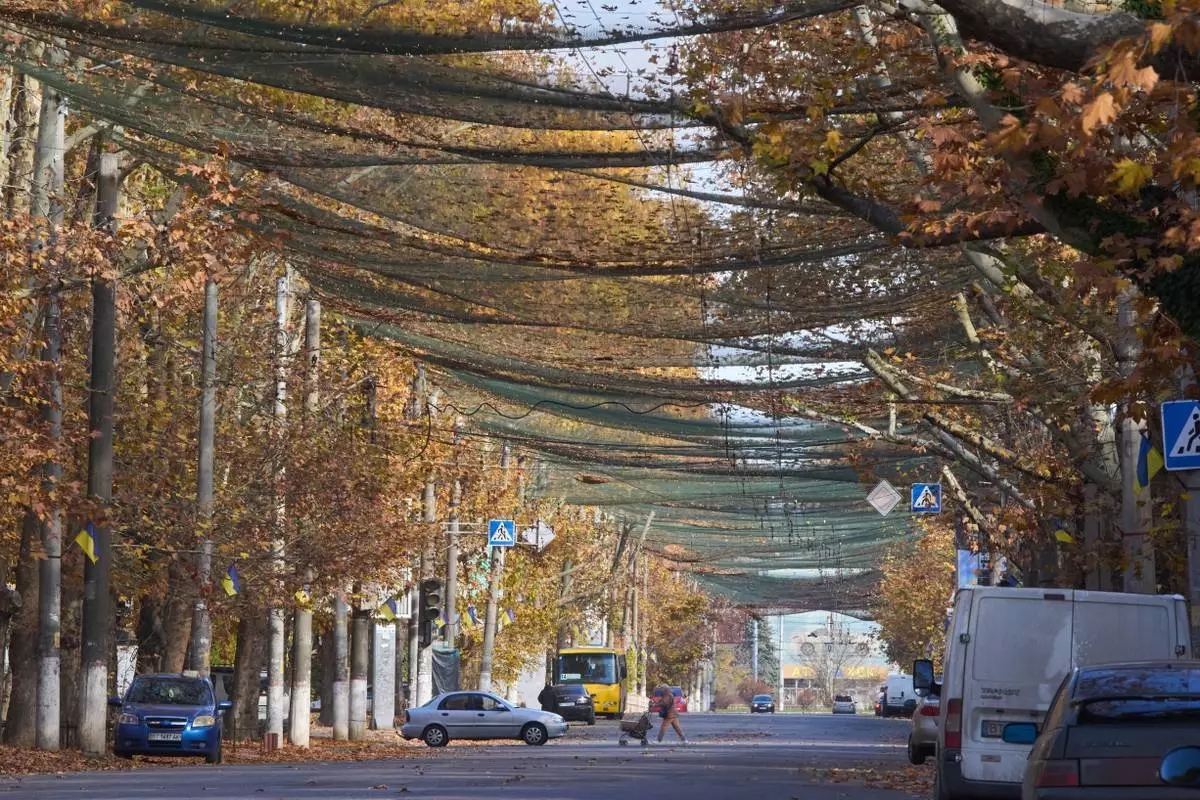
Local residents go along the street covered with an anti-FPV-drone net in the frontline city of Kherson, Southern Ukraine, Nov. 3, 2025. (AP Photo/Efrem Lukatsky)
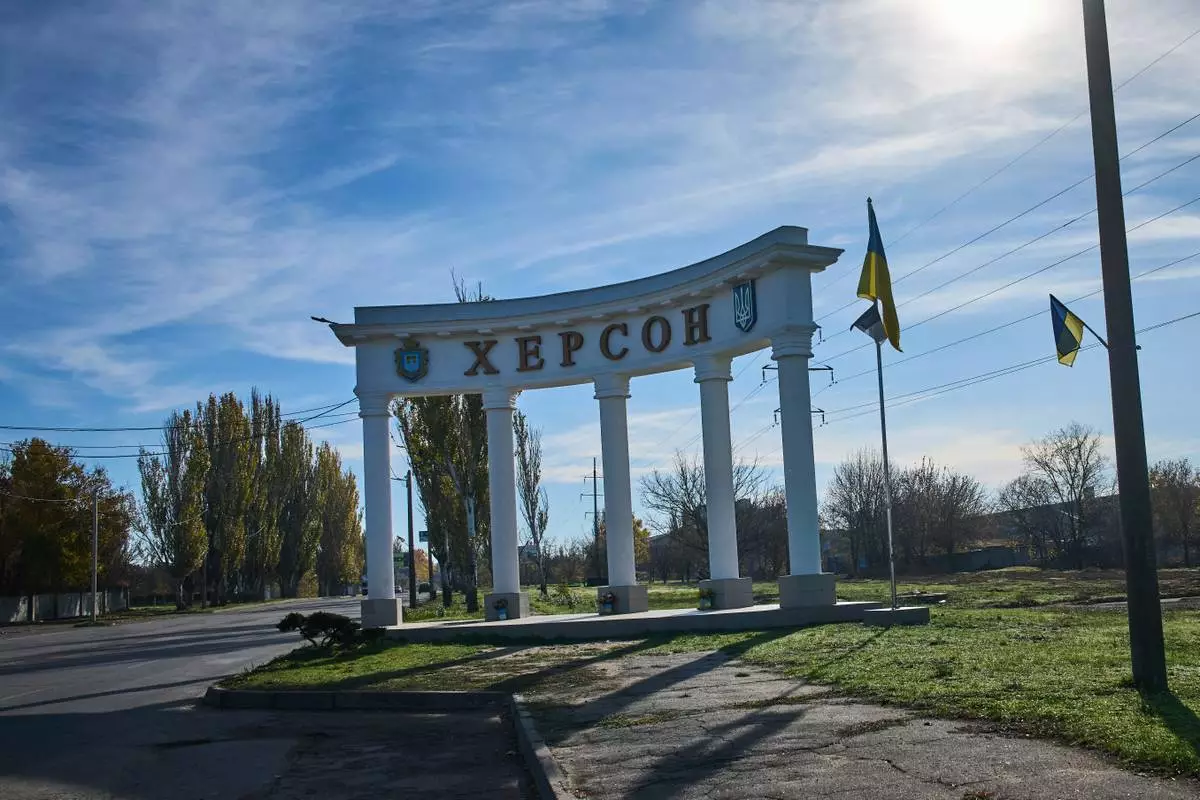
A sign reading "Kherson" by the national flag is seen on the deserted road to the frontline city in Kherson, Southern Ukraine, Nov. 2, 2025. (AP Photo/Efrem Lukatsky)
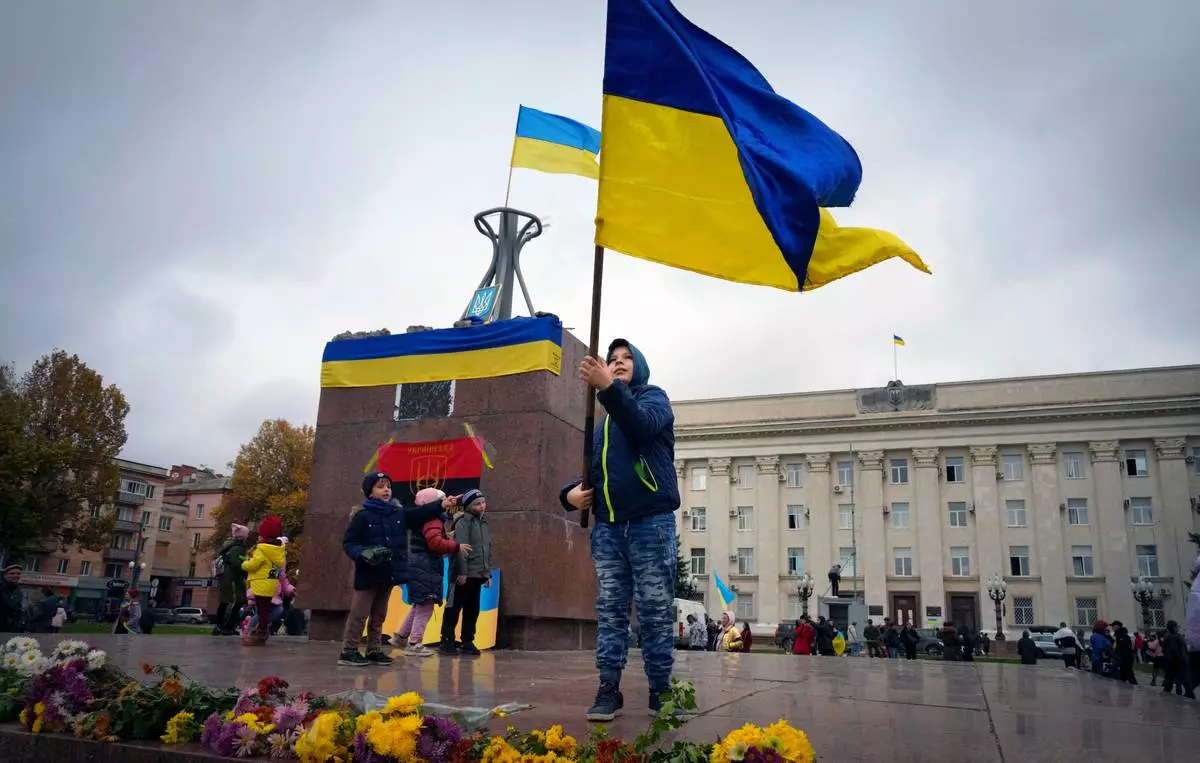
FILE- In this photo taken Sunday, Nov. 13, 2022, a boy waves the national flag as the Ukrainian army liberated the city from the Russian troops in Kherson, Ukraine, Nov. 13, 2022. (AP Photo/Efrem Lukatsky, File)
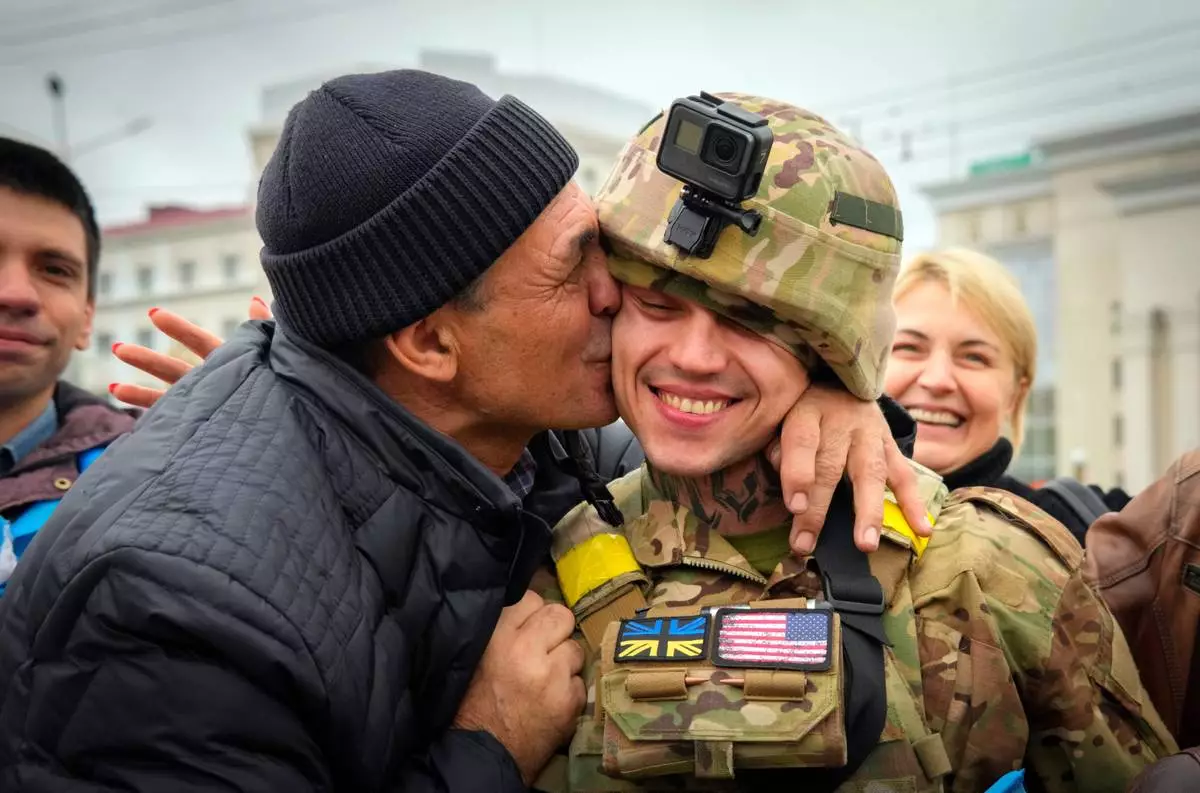
FILE - In this photo taken Sunday, Nov. 13, 2022, a Kherson resident kisses a Ukrainian soldier as Ukrainian army liberated the city from the Russian troops in Kherson, Ukraine, Nov. 13, 2022. (AP Photo/Efrem Lukatsky, file)
WASHINGTON (AP) — President Donald Trump said U.S. forces will “finish the job” in Iran soon as “core strategic objectives are nearing completion,” offering a full-throated defense of the war Wednesday night in his first national address since the conflict began more than a month ago.
He used his platform before a wide audience to tout the success of the U.S. operations and argue that all of Washington’s objectives have so far been met or exceeded, but said Iran would continue to face a barrage of attacks in the short term.
“We are going to hit them extremely hard over the next two to three weeks,” Trump said. “We’re going to bring them back to the Stone Ages, where they belong.”
But Trump also spent much of an address that lasted just under 20 minutes repeating many things he had already said in recent weeks and providing few new details. The speech appeared unlikely to move the needle of public sentiment at a time when polling shows many Americans feel the U.S. military has gone too far in Iran and as gas and oil prices remain high.
The effect on global financial markets was more immediate, with oil rising more than 4% and Asian stocks falling after Trump's comments about the U.S. continuing to hit Iran hard.
“Tonight, I’m pleased to say that these core strategic objectives are nearing completion,” Trump said. He also acknowledged American service members who had been killed and added: “We are going to finish the job, and we’re going to finish it very fast. We’re getting very close.”
The president didn’t mention the possibility of sending U.S. ground troops into Iran. Nor did he reference NATO, the trans-Atlantic alliance he has railed against for not helping the U.S. secure the critical Strait of Hormuz, where a chokehold by Iran has sent energy prices soaring.
He also didn't say anything about negotiations with Iran or bring up his April 6 deadline for Iran to reopen the waterway or face severe retaliation from the U.S.
Trump ticked through a timeline of past American involvement in conflicts and noted that the ongoing war in Iran had lasted just 32 days, seeming to appeal to the public for more time to achieve the mission.
“World War I lasted one year, seven months and five days,” he said. “World War II lasted for three years, eight months and 25 days.” Trump, who was referring to the time the U.S. was involved in those wars, also added references to Korea, Vietnam and Iraq.
He also noted that in “these past four weeks, our armed forces have delivered swift, decisive, overwhelming victories on the battlefield.” He said U.S. military action had been “so powerful, so brilliant” that “one of the most powerful countries” is “really no longer a threat” — even as Iran kept up its attacks on Israel and Persian Gulf neighbors early Thursday.
Trump also seemed to suggest he had ruled out going into Iran to get its enriched uranium.
“The nuclear sites that we obliterated with the B-2 bombers have been hit so hard that it would take months to get near the nuclear dust,” he said. "And we have it under intense satellite surveillance and control. If we see them make a move, even a move for it, we’ll hit them with missiles very hard again.”
The president encouraged countries reliant on oil through the Strait of Hormuz to “build some delayed courage” and go “take it.”
Trump's comments in his address were more measured than some of his previous remarks, including earlier Wednesday at a White House Easter lunch.
Of Iran, he told his assembled guests: “We could just take their oil. But you know, I’m not sure that the people in our country have the patience to do that, which is unfortunate.”
“Yeah, they want to see it end. If we stayed there, I prefer just to take the oil,” Trump said. “We could do it so easily. I would prefer that. But people in the country sort of say: ‘Just win. You’re winning so big. Just win. Come home.’ And I’m OK with that, too, because we have a lot of oil between Venezuela and our oil.”
The media was not permitted to watch the president’s remarks at the lunch, but the White House uploaded video of the speech online before taking it down. The White House did not return requests for comment from The Associated Press on the video and why it was taken down.
In the lunch — unlike in the subsequent speech — the president also reiterated some of his complaints about NATO allies for their reluctance to get involved in securing the Strait of Hormuz while suggesting that Asian countries could also step up to reopen the waterway.
“Let South Korea, you know, we only have 45,000 soldiers in harm’s way over there, right next to a nuclear force -- let South Korea do it,” Trump said of efforts to reopen the strait. “Let Japan do it. They get 90% of their oil from the strait. Let China do it.”
In a social media post Wednesday morning, meanwhile, Trump also wrote that “Iran’s New Regime President” wanted a ceasefire. It wasn’t clear to whom the U.S. president was referring since Iran still has the same president. Iran’s Foreign Ministry spokesman, Esmail Baghaei, called Trump’s claim “false and baseless,” according to a report on Iranian state television.
Hours before Trump’s address, Iranian President Masoud Pezeshkian posted a lengthy letter in English on his X account appealing to U.S. citizens and stressing that his country had pursued negotiations before the U.S. withdrew from that path. “Exactly which of the American people’s interests are truly being served by this war?” he wrote.
Since the war began on Feb. 28, Trump has offered shifting objectives and repeatedly has said it could be over soon while also threatening to widen the conflict. Thousands of additional U.S. troops are currently heading to the Middle East, and speculation abounds about why. Trump has also threatened to attack Iran’s Kharg Island oil export hub.
Adding to the confusion is what role Israel — which has been bombing Iran alongside the U.S. — might play in any of these scenarios.
Trump has been under growing pressure to end the war that has been pushing up the cost of gasoline, food and other goods. The price of Brent crude, the international standard, is up more than 40% since the start of the war.
Gambrell reported from Dubai, United Arab Emirates. Rising reported from Bangkok. Associated Press writers Seung Min Kim in Washington, Giovanna Dell’Orto in Miami, Farnoush Amiri in New York and Samy Magdy in Cairo contributed to this report.
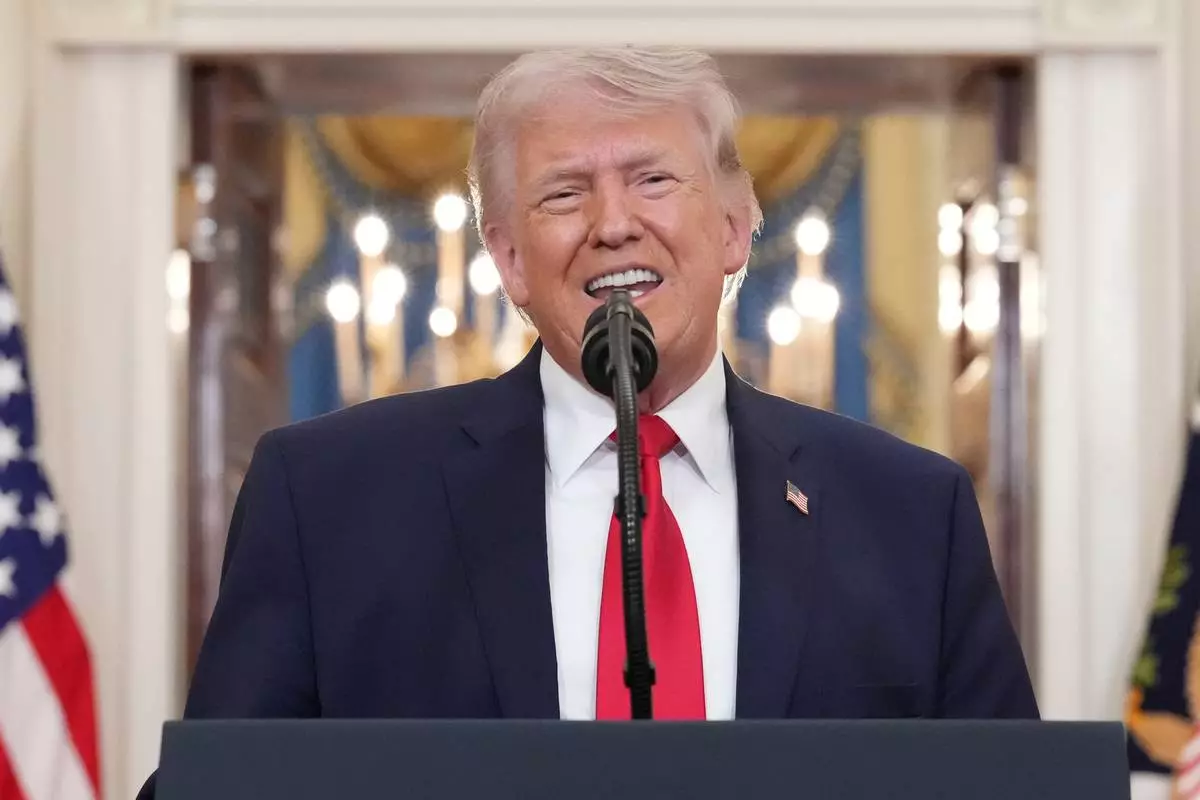
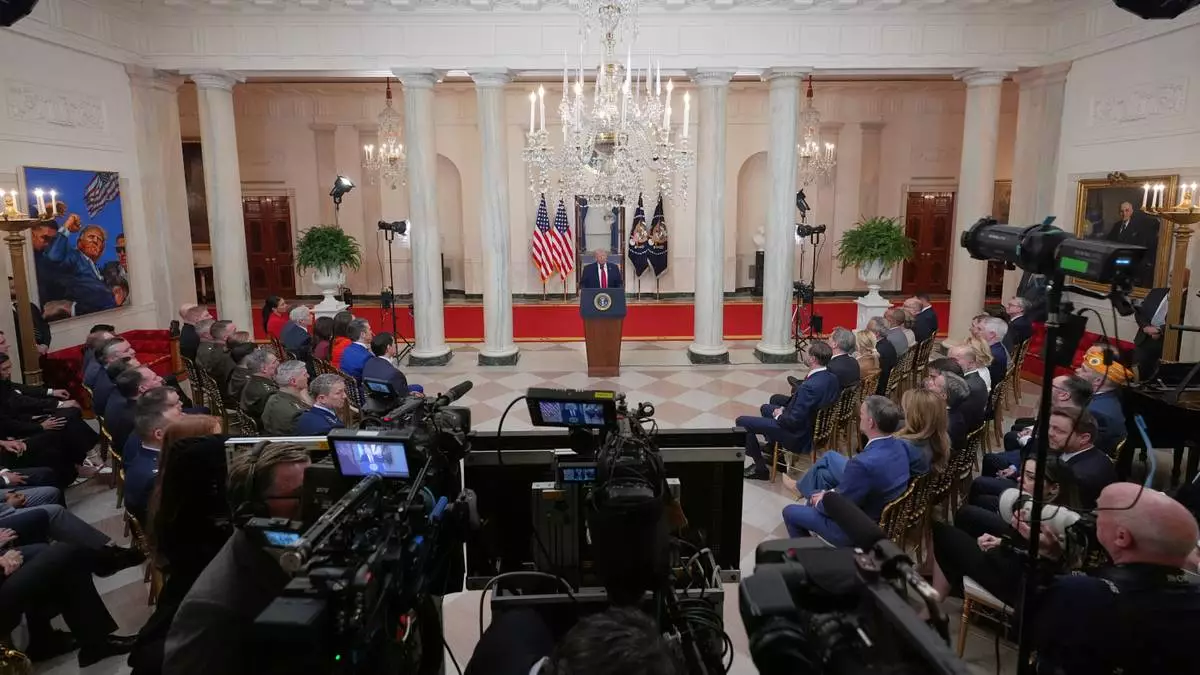
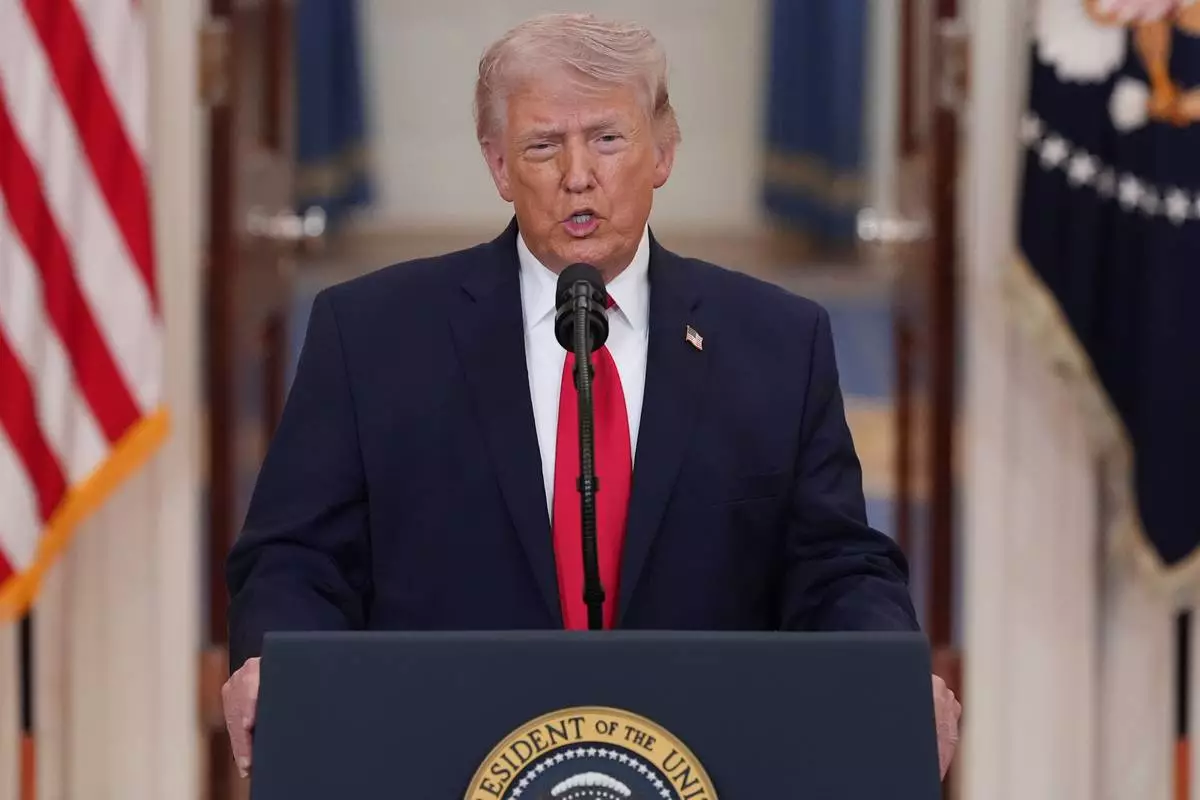
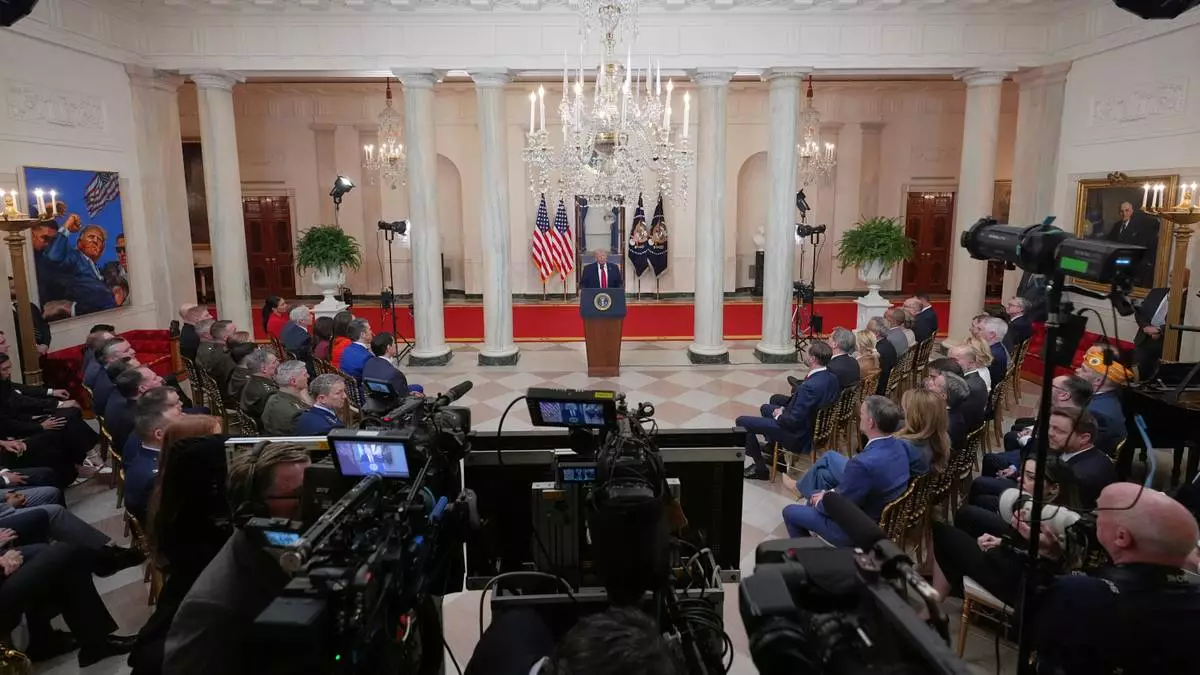
President Donald Trump speaks about the Iran war from the Cross Hall of the White House on Wednesday, April 1, 2026, in Washington. (AP Photo/Alex Brandon, Pool)
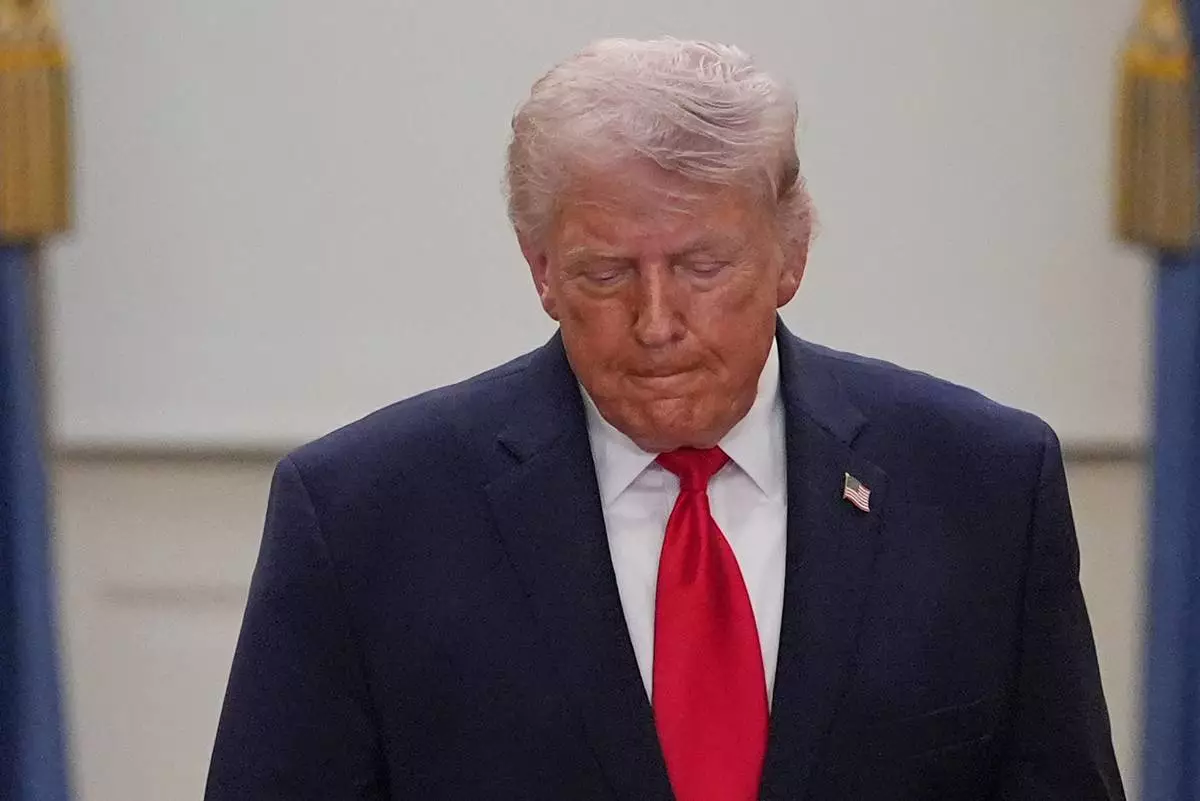
President Donald Trump walks from the Blue Room to speak about the Iran war from the Cross Hall of the White House on Wednesday, April 1, 2026, in Washington. (AP Photo/Alex Brandon, Pool)
President Donald Trump speaks about the Iran war from the Cross Hall of the White House on Wednesday, April 1, 2026, in Washington. (AP Photo/Alex Brandon, Pool)
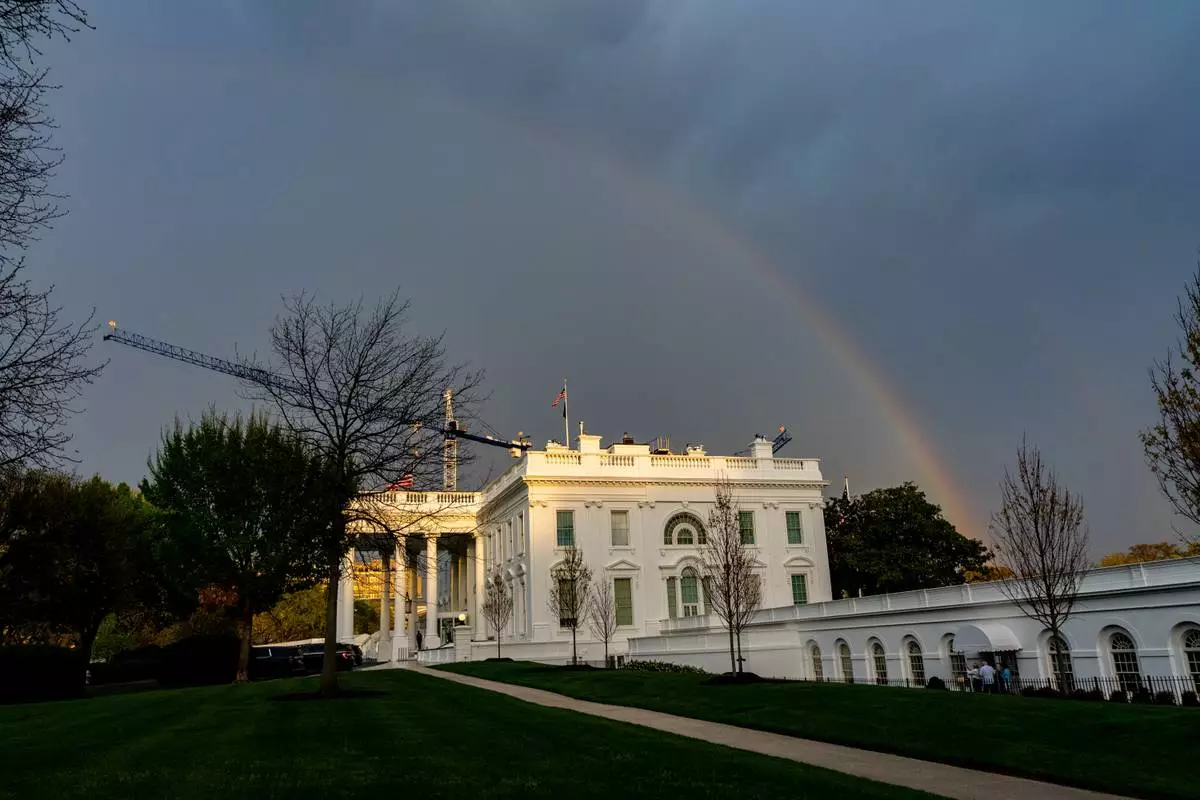
A rainbow forms over the White House on Wednesday, April 1, 2026, in Washington. (AP Photo/Alex Brandon)
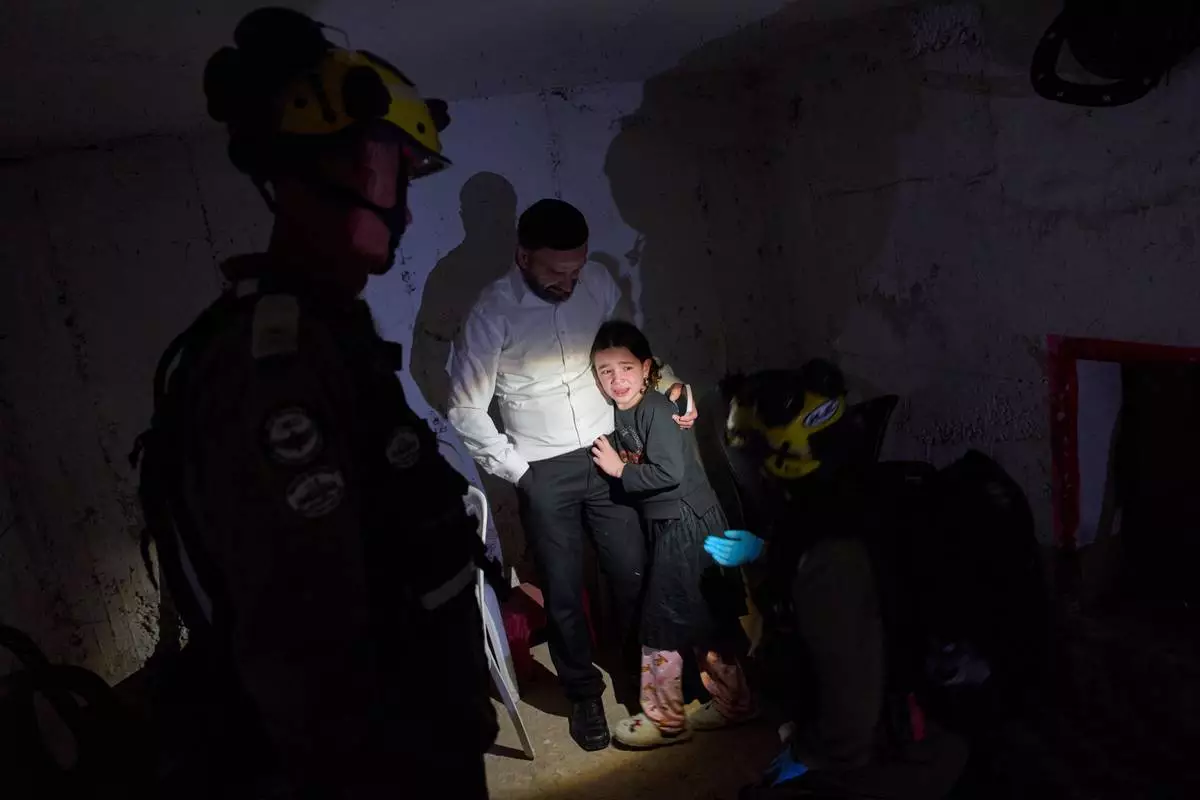
A young girl is comforted by her father and Israeli soldiers as they take cover in a bomb shelter during air raid sirens warning of incoming Iranian missile strikes in Bnei Brak, Israel, Wednesday, April 1, 2026. (AP Photo/Oded Balilty)
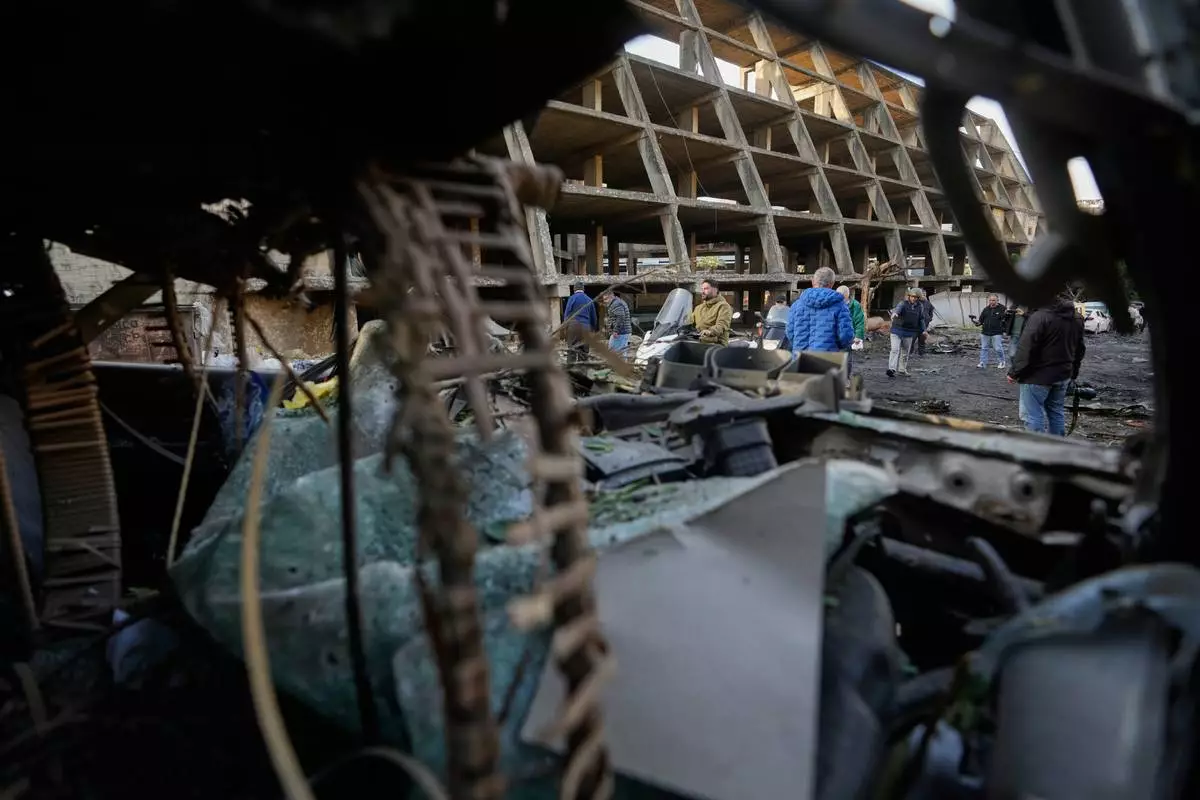
People inspect the site of an Israeli strike amid debris and damaged vehicles in Beirut, Lebanon, Wednesday, April 1, 2026. (AP Photo/Hassan Ammar)
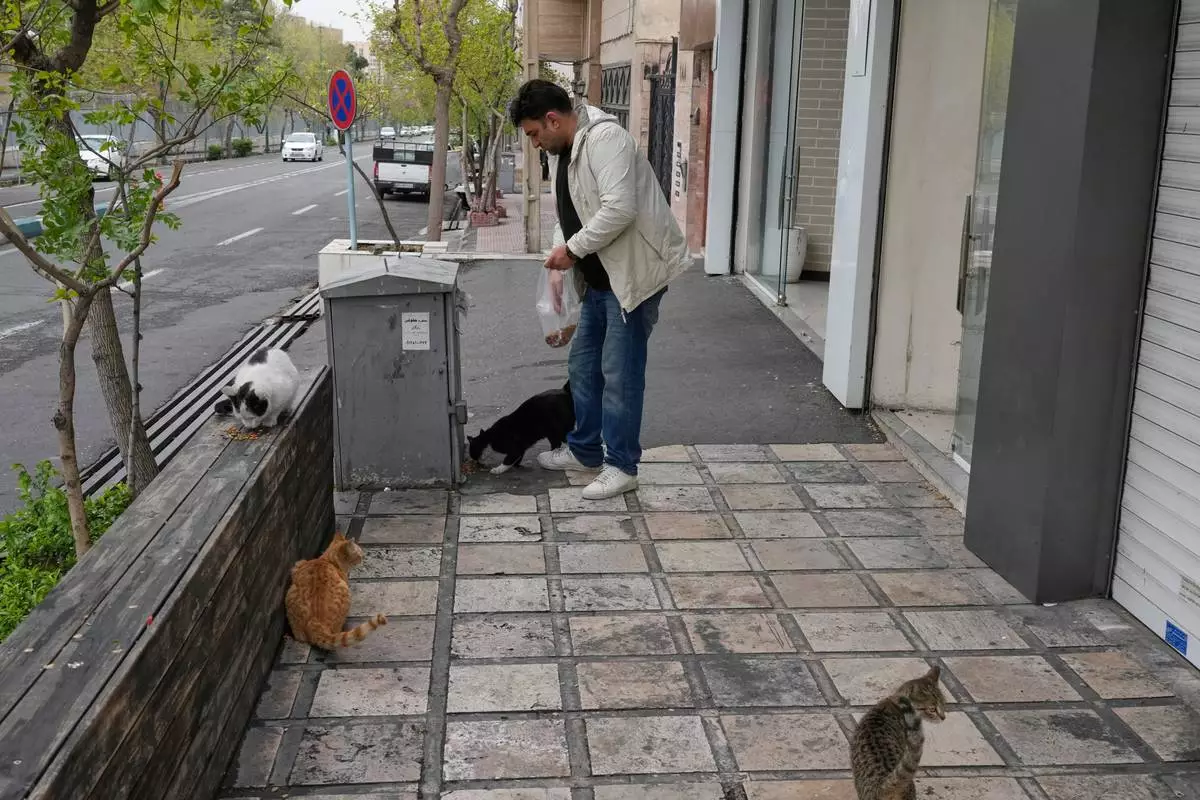
A man feeds stray cats in Tehran, Iran, Tuesday, March 31, 2026. (AP Photo/Vahid Salemi)
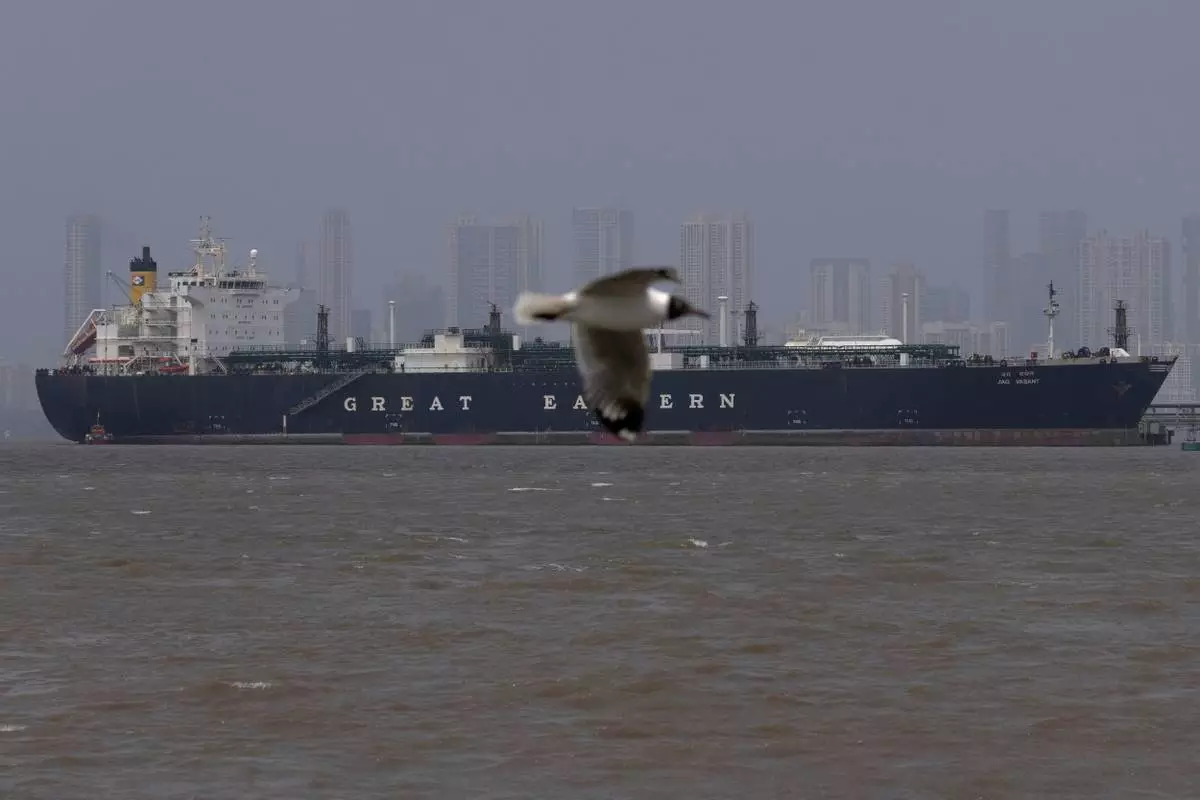
The Indian flagged LPG carrier Jag Vasant transporting liquefied petroleum gas, is seen at the Mumbai Port in Mumbai, India, after it arrived clearing the Strait of Hormuz, Wednesday, April 1, 2026. (AP Photo/Rafiq Maqbool)
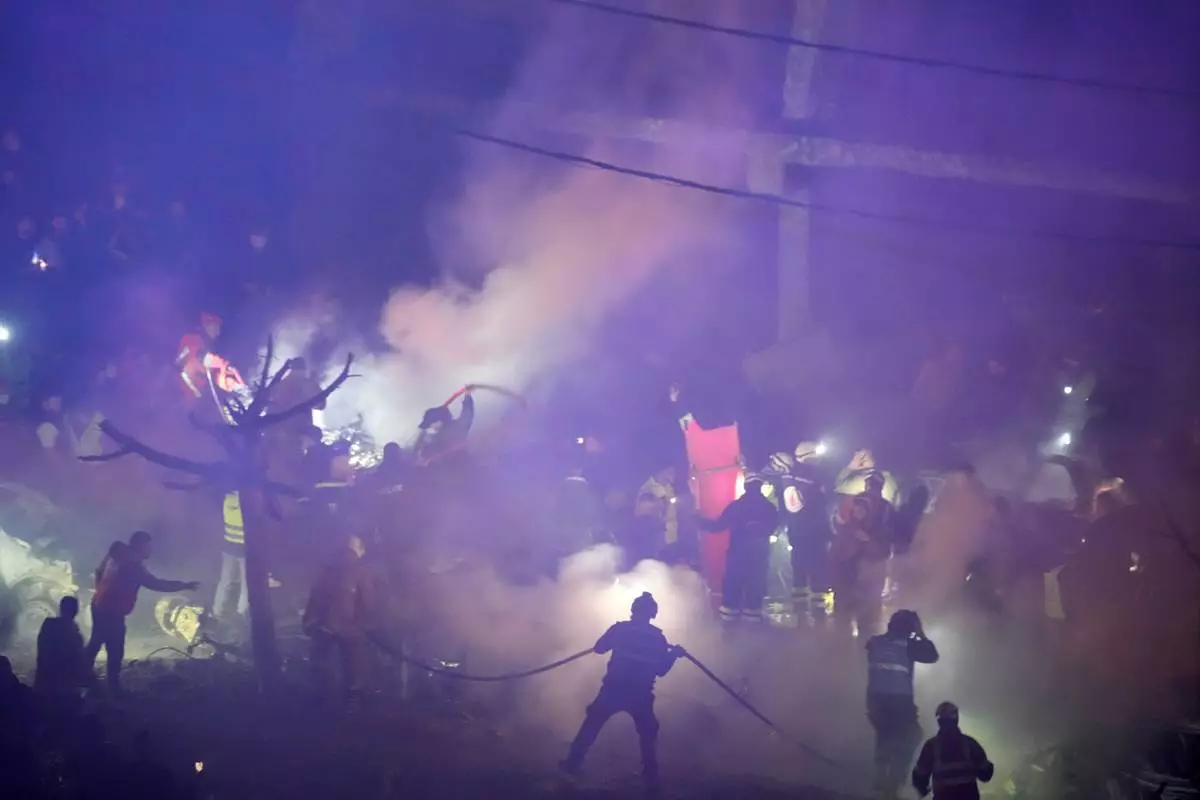
Firefighters and rescue workers work at the site of Israeli airstrikes, in Beirut, Lebanon, Wednesday, April 1, 2026. (AP Photo/Hussein Malla)
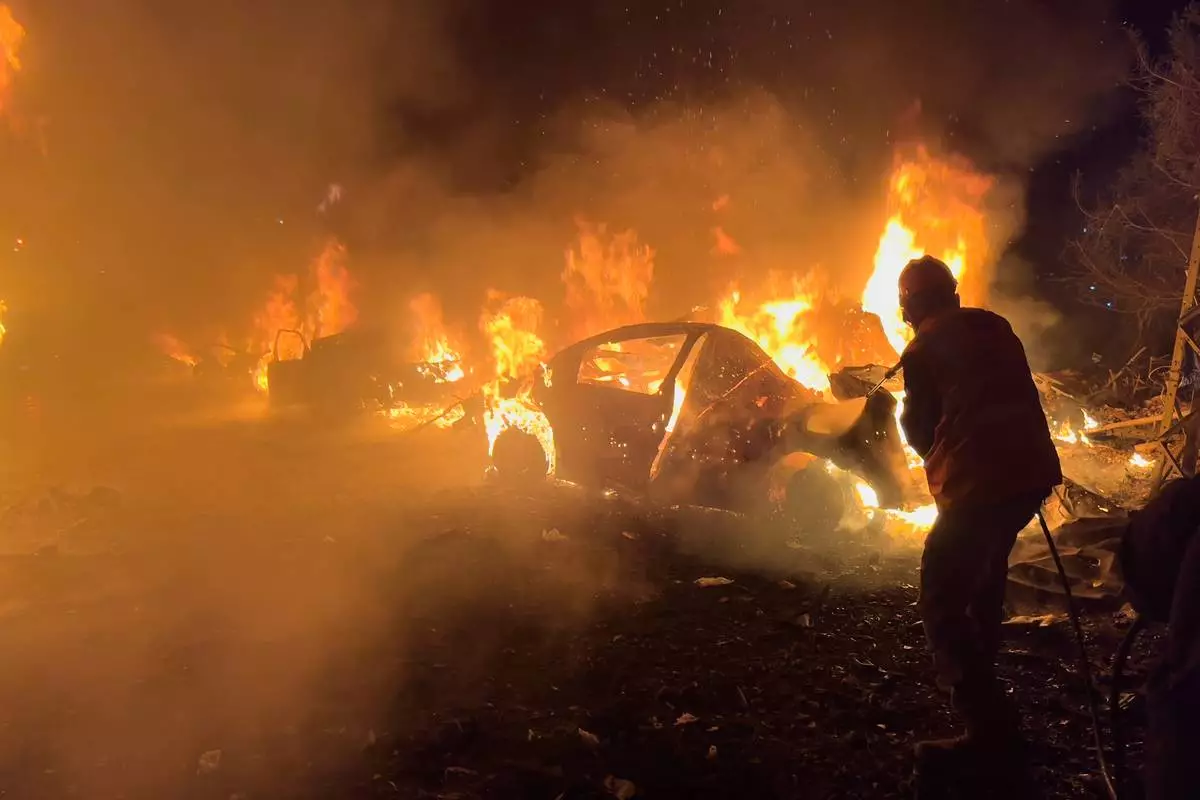
A firefighter extinguishes a car at the site of Israeli airstrikes, in Beirut, Lebanon, Wednesday, April 1, 2026. (AP Photo/Hussein Malla)
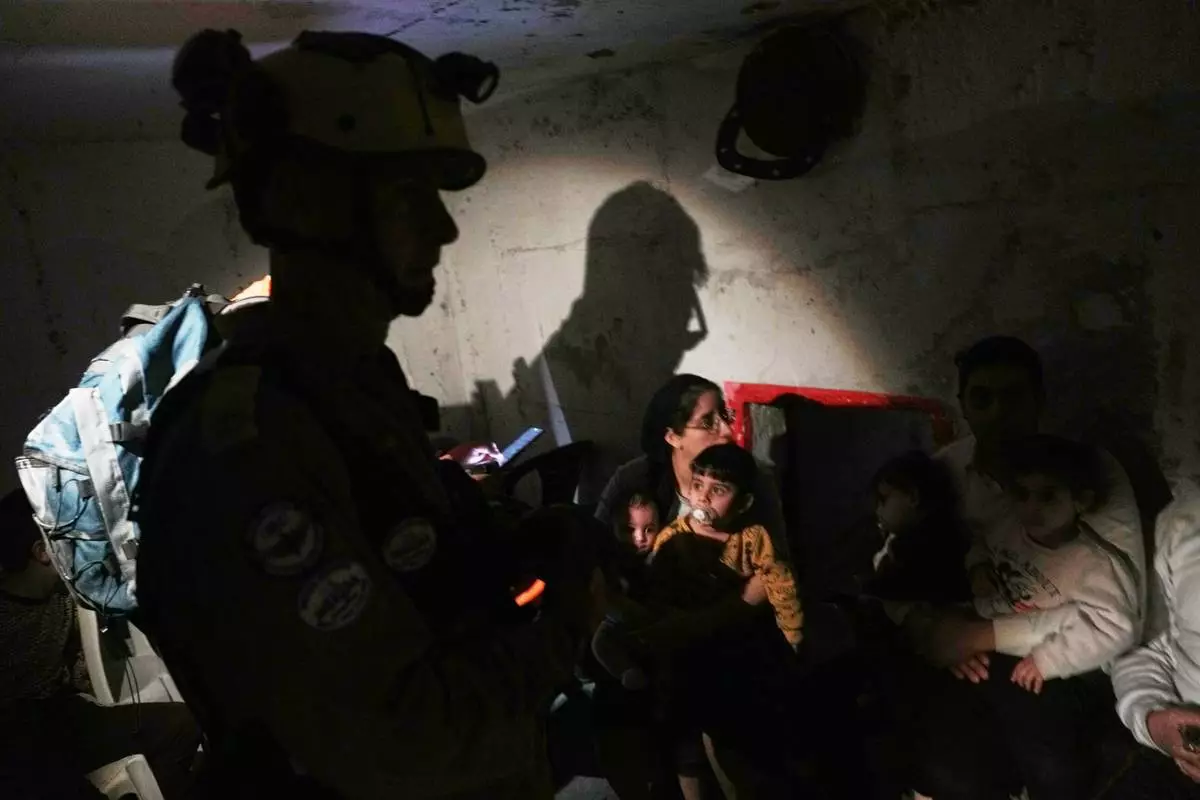
Israel's rescue teams and residents take shelter as sirens sounds next to a site struck by an Iranian missile in Bnei Brak, Wednesday, April 1, 2026. (AP Photo/Oded Balilty)
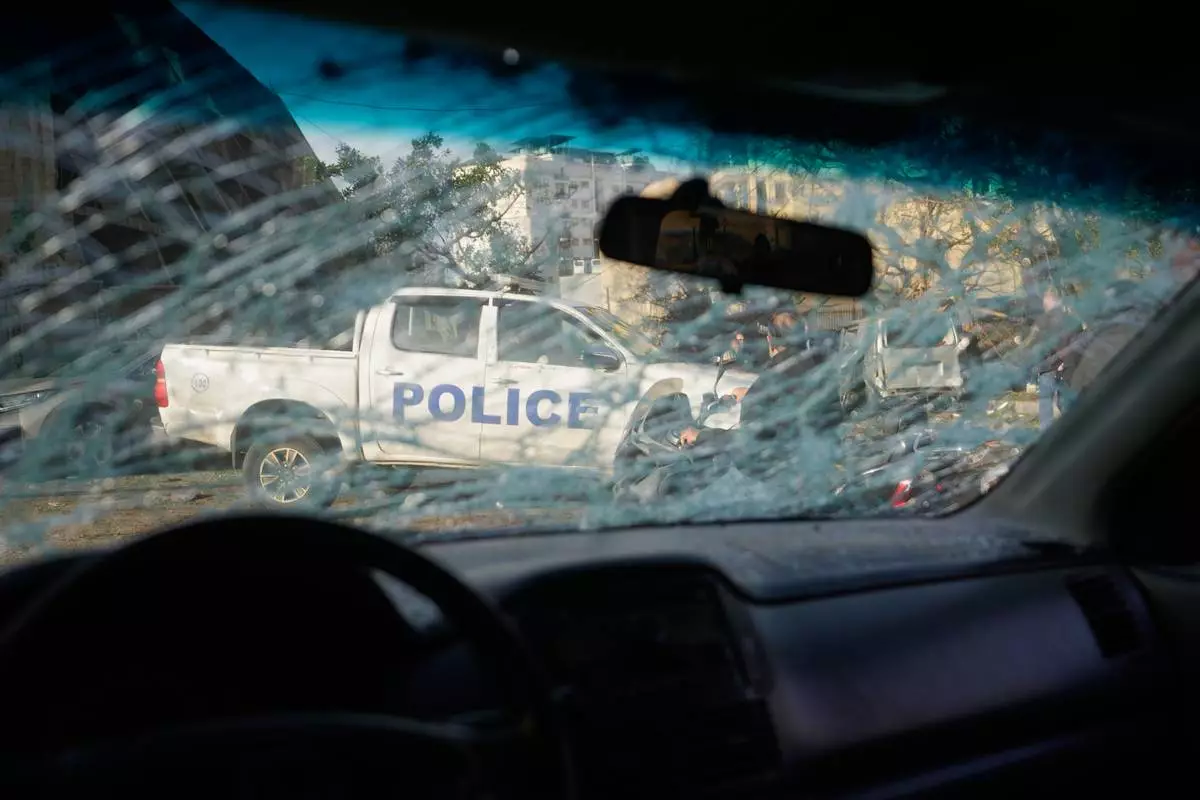
A police vehicle is seen through a shattered windshield at the site of an Israeli strike in Beirut, Lebanon, Wednesday, April 1, 2026. (AP Photo/Hassan Ammar)
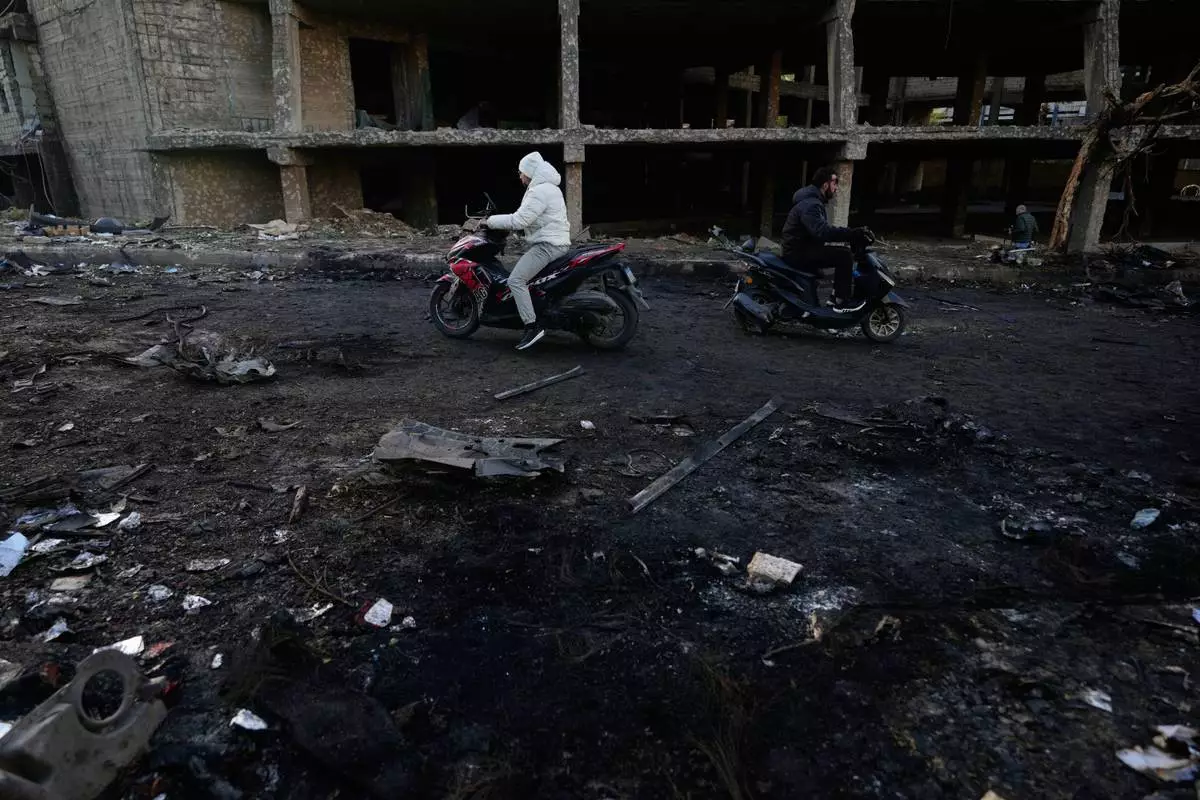
Two men ride scooters past charred debris at the site of an Israeli strike in Beirut, Lebanon, Wednesday, April 1, 2026. (AP Photo/Hassan Ammar)