CHP investigates suspected food poisoning case related to calcium oxalate raphide
The Centre for Health Protection (CHP) of the Department of Health is today (November 10) investigating a case of suspected food poisoning caused by eating wild taro and reminded the public not to consume self-picked wild plants in order to avoid poisoning by accidental consumption of vegetables containing calcium oxalate raphide.
The case involves a 54-year-old woman who developed swollen lips and a sore throat shortly after consuming wild taro at home yesterday (November 9). She attended the Accident and Emergency Department of Pok Oi Hospital on the same day and was admitted for treatment. She is now in stable condition. The clinical diagnosis was suspected calcium oxalate raphide poisoning.
Preliminary investigations revealed that the patient's family member picked wild taro from a flower bed in San Tin, Yuen Long. She cooked and consumed it at home, while her family members did not eat it. The CHP's investigation is ongoing.
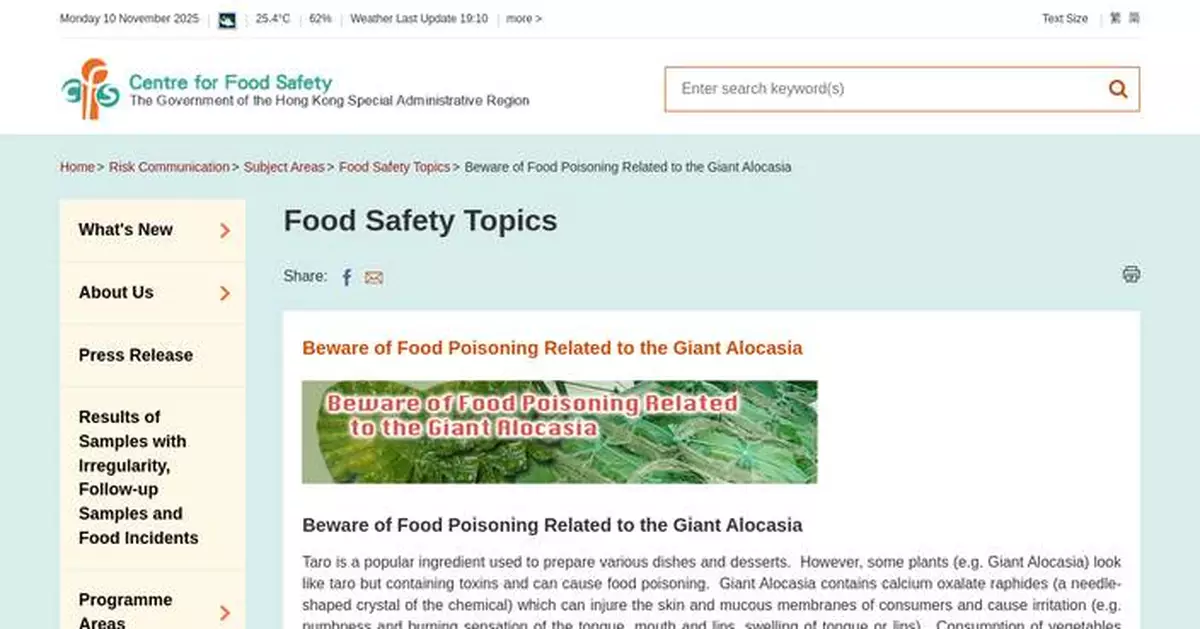
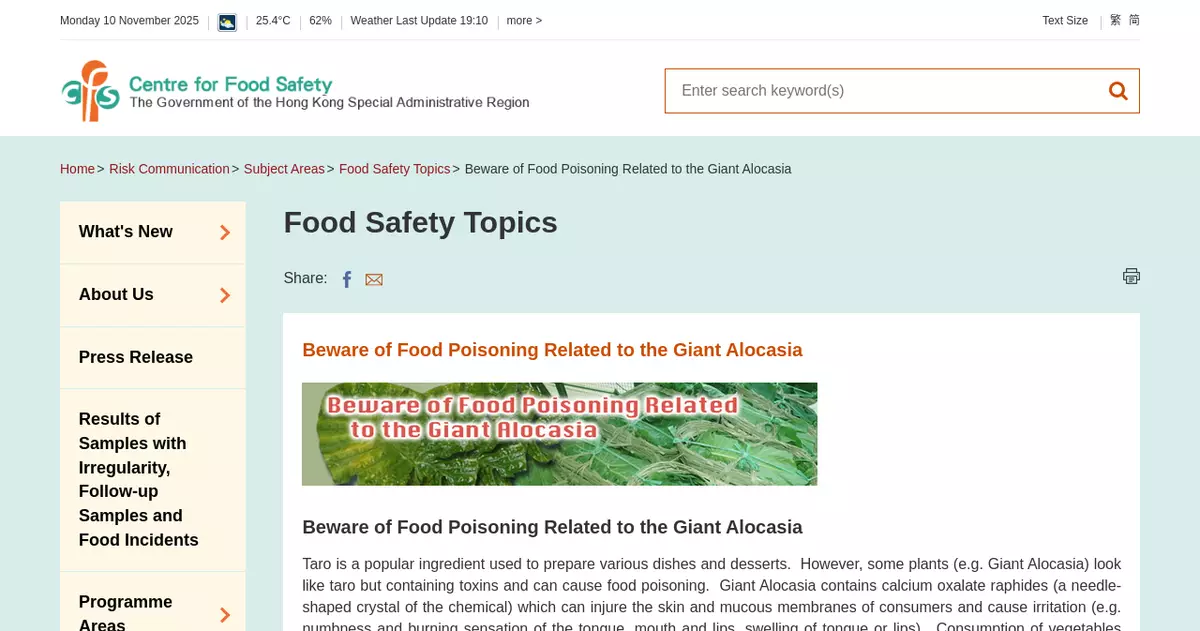
Taro is a popular ingredient used in dishes and desserts. However, some plants look like taro (e.g. giant alocasia) but contain toxins, including calcium oxalate raphide. Accidental consumption of plants containing calcium oxalate raphide can cause stinging and irritation of the skin and mucous membranes, such as numbness and a burning sensation of the tongue, mouth and lips, and swelling of the tongue and lips. Consumption of vegetables accidentally mixed with calcium oxalate raphide-containing plants may also cause food poisoning.
Members of the public should take heed of the following when consuming vegetables or taro:
 Do not pick and consume wild plants;
Purchase vegetables or taro from reliable suppliers; and
Remove any plants mixed with edible vegetables for consumption and wash them thoroughly before cooking.
Do not pick and consume wild plants;
Purchase vegetables or taro from reliable suppliers; and
Remove any plants mixed with edible vegetables for consumption and wash them thoroughly before cooking.
The public may visit the pages onFood Poisoning Related to the Giant AlocasiaandCalcium Oxalate Food Poisoningof the Centre for Food Safety of the Food and Environmental Hygiene Department for more information and health advice.
Source: AI-found images
Hong Kong Customs detects case of non-registered precious metals and stones dealer carrying out specified transactions
Hong Kong Customs yesterday (March 31) detected a case involving a local company that conducted transactions of pearls and other jewellery containing precious metals and stones valued at over HK$120,000, without registration under the Dealers in Precious Metals and Stones Regulatory Regime. The company director was arrested.
The investigation is ongoing. The arrested person has been released on bail.
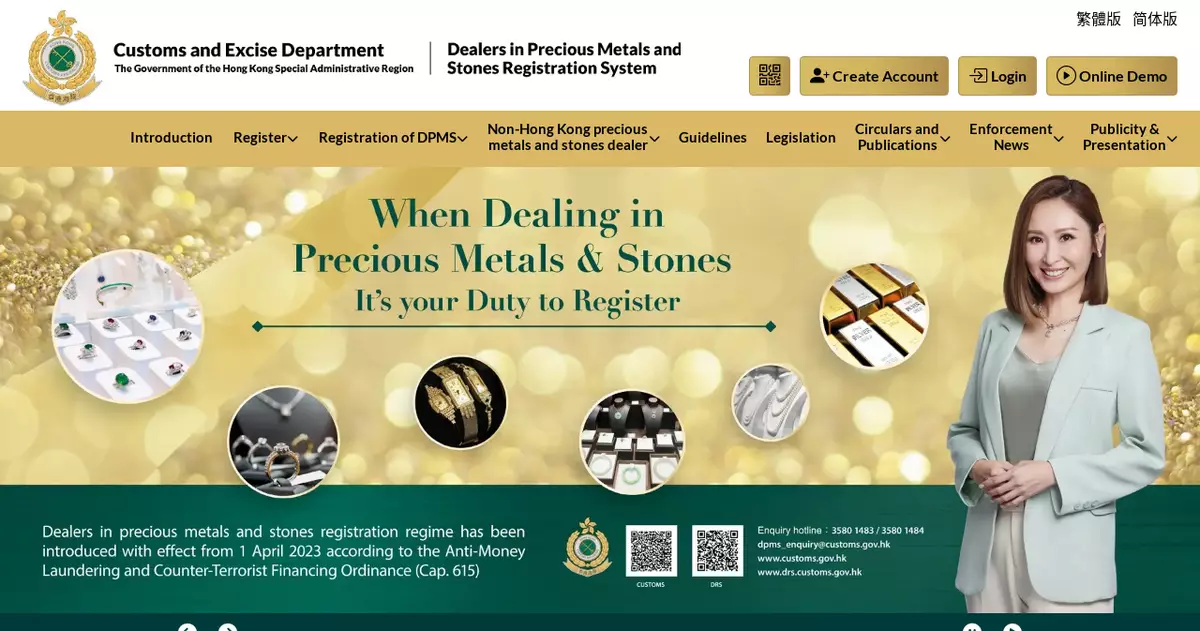
According to the Anti-Money Laundering and Counter-Terrorist Financing Ordinance (Cap. 615), unless exempted, any person who is seeking to carry on a business of dealing in precious metals and stones and engage in any transaction(s) (whether making or receiving a payment) with a total value at or above HK$120,000 in Hong Kong is required to register with Hong Kong Customs. Any dealer, other than a registrant, who claims to be a registrant, claims to be authorised to carry out, or carries out any cash or non-cash transaction(s) with a total value at or above HK$120,000 is liable to a maximum fine of HK$100,000 and imprisonment for six months upon conviction.
Customs reminds dealers in precious metals and stones that they must obtain the relevant registration before they can carry out any cash or non-cash transaction(s) with a total value at or above HK$120,000.
For the forms, procedures and guidelines to submit applications for registration, please visit the website for Dealers in Precious Metals and Stones Registration System (www.drs.customs.gov.hk) or Customs' webpage (www.customs.gov.hk/en/service-enforcement-information/anti-money-laundering/supervision-of-dealers-in-precious-metals-and-ston/index.html).
Members of the public may report any suspected transactions involving precious metals and stones with a total value at or above HK$120,000 conducted without the required registration to Customs' 24-hour hotline 182 8080 or its dedicated crime-reporting email account(crimereport@customs.gov.hk)or online form (eform.cefs.gov.hk/form/ced002).
Source: AI-found images