WASHINGTON (AP) — Hormone-based drugs used to treat hot flashes and other menopause symptoms will no longer carry a bold warning label about stroke, heart attack, dementia and other serious risks, the Food and Drug Administration announced Monday.
U.S. health officials said they will remove the boxed warning from more than 20 pills, patches and creams containing hormones like estrogen and progestin, which are approved to ease disruptive symptoms like night sweats.
The change has been supported by some doctors — including FDA Commissioner Marty Makary, who has called the current label outdated and unnecessary. But some doctors worried that the process which led to the decision was flawed.
Health officials explained the move by pointing to studies suggesting hormone therapy has few risks when started before age 60 and within 10 years of menopause symptoms.
“We’re challenging outdated thinking and recommitting to evidence-based medicine that empowers rather than restricts,” Health Secretary Robert F. Kennedy Jr. said in introducing the update.
The 22-year-old FDA warning advised doctors that hormone therapy increases the risk of blood clots, heart problems and other health issues, citing data from an influential study published more than 20 years ago.
Many doctors — and pharmaceutical companies — have called for removing or revising the label, which they say discourages prescriptions and scares off women who could benefit.
Dr. Steven Fleischman, president of the American College of Obstetricians and Gynecologists, said the warnings have created a lot of hesitancy among patients.
“I can spend 30 minutes counseling someone about hormone-replacement therapy— tell them everything — but when they fill the prescription and see that warning they just get scared,” Fleischman said.
Other experts have opposed making changes to the label without a careful, transparent process. They say the FDA should have convened its independent advisers to publicly consider any revisions.
Medical guidelines generally recommend the drugs for a limited duration in younger women going through menopause who don’t have complicating risks, such as breast cancer. FDA’s updated prescribing information mostly matches that approach.
But Makary and some other doctors have suggested that hormone therapy’s benefits can go far beyond managing uncomfortable mid-life symptoms. Before becoming FDA commissioner, Makary dedicated a chapter of his most recent book to extolling the overall benefits of hormone therapy and criticizing doctors unwilling to prescribe it.
On Monday he reiterated that viewpoint, citing figures suggesting hormone-therapy reduces heart disease, Alzheimer’s and other age-related conditions.
“With few exceptions, there may be no other medication in the modern era that can improve the health outcomes of women at a population level more than hormone replacement therapy," Makary told reporters.
The veracity of those benefits remains the subject of ongoing research and debate— including among the experts whose work led to the original warning.
Dr. JoAnn Manson of Harvard Medical School said the evidence for overall health benefits is not “as conclusive or definitive” as what Makary described. Still, removing the warning is a good step because it could lead to physicians and patients making more personalized decisions, she said.
“The black box is really one size fits all. It scares everyone away,” Manson said. “Without the black box warning there may be more focus on the actual findings, how they differ by age and underlying health factors.”
In the 1990s, more than 1 in 4 U.S. women took estrogen alone or in combination with progestin on the assumption that — in addition to treating menopause — it would reduce rates of heart disease, dementia and other issues.
But a landmark study of more than 26,000 women challenged that idea, linking two different types of hormone pills to higher rates of stroke, blood clots, breast cancer and other serious risks. After the initial findings were published in 2002, prescriptions plummeted among women of all age groups, including younger menopausal women.
Since then, all estrogen drugs have carried the FDA’s boxed warning — the most serious type.
“That study was misrepresented and created a fear machine that lingers to this day,” Makary said.
Continuing analysis has shown a more nuanced picture of the risks.
A new analysis of the 2002 data published in September found that women in their 50s taking estrogen-based drugs faced no increased risk of heart problems, whereas women in their 70s did. The data was unclear for women in their 60s, and the authors advised caution.
Additionally, many newer forms of the drugs have been introduced since the early 2000s, including vaginal creams and tablets that deliver lower hormone doses than pills, patches and other drugs that circulate throughout the bloodstream.
The original language contained in the boxed warning will still be available to prescribers, but it will appear lower down on the label. The drugs will retain a boxed warning that women who have not had a hysterectomy should receive a combination of estrogen-progestin due to risks of cancer in the lining of the uterus.
Rather than convening one of FDA's standing advisory committees on women’s health or drug safety, Makary earlier this year invited a dozen doctors and researchers who overwhelmingly supported the health benefits of hormone-replacement drugs.
Many of the panelists at the July meeting consult for drugmakers or prescribe the medications in their private practices. Two of the experts also spoke at Monday's FDA news conference.
Asked Monday why the FDA didn't convene a formal advisory panel on the issue, Makary said such meetings are “bureaucratic, long, often conflicted and very expensive.”
Diana Zuckerman of the nonprofit National Center for Health Research, which analyzes medical research, accused Makary of undermining the FDA’s credibility by announcing the change “rather than having scientists scrutinize the research at an FDA scientific meeting.”
The Associated Press Health and Science Department receives support from the Howard Hughes Medical Institute’s Science and Educational Media Group and the Robert Wood Johnson Foundation. The AP is solely responsible for all content.
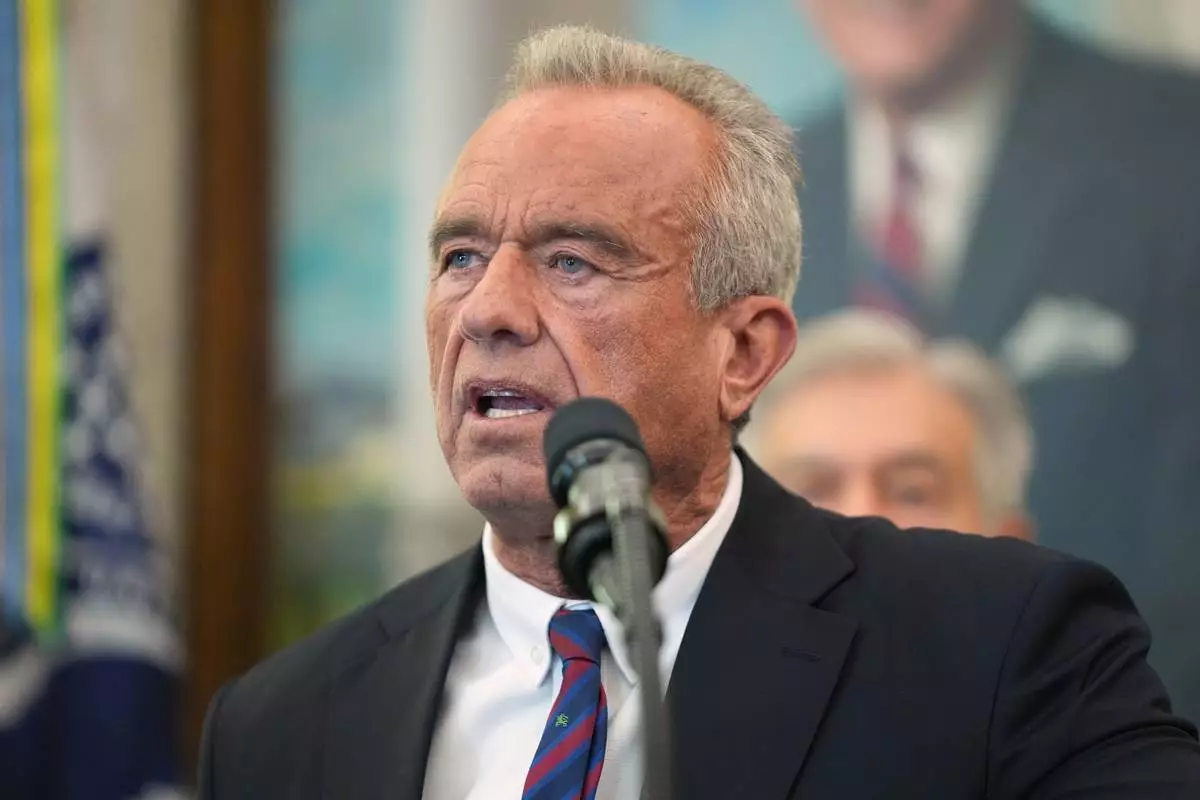
Health and Human Services Secretary Robert F. Kennedy Jr. speaks during an event about drug prices with President Donald Trump, Thursday, Nov. 6, 2025, in the Oval Office of the White House in Washington. (AP Photo/Evan Vucci)
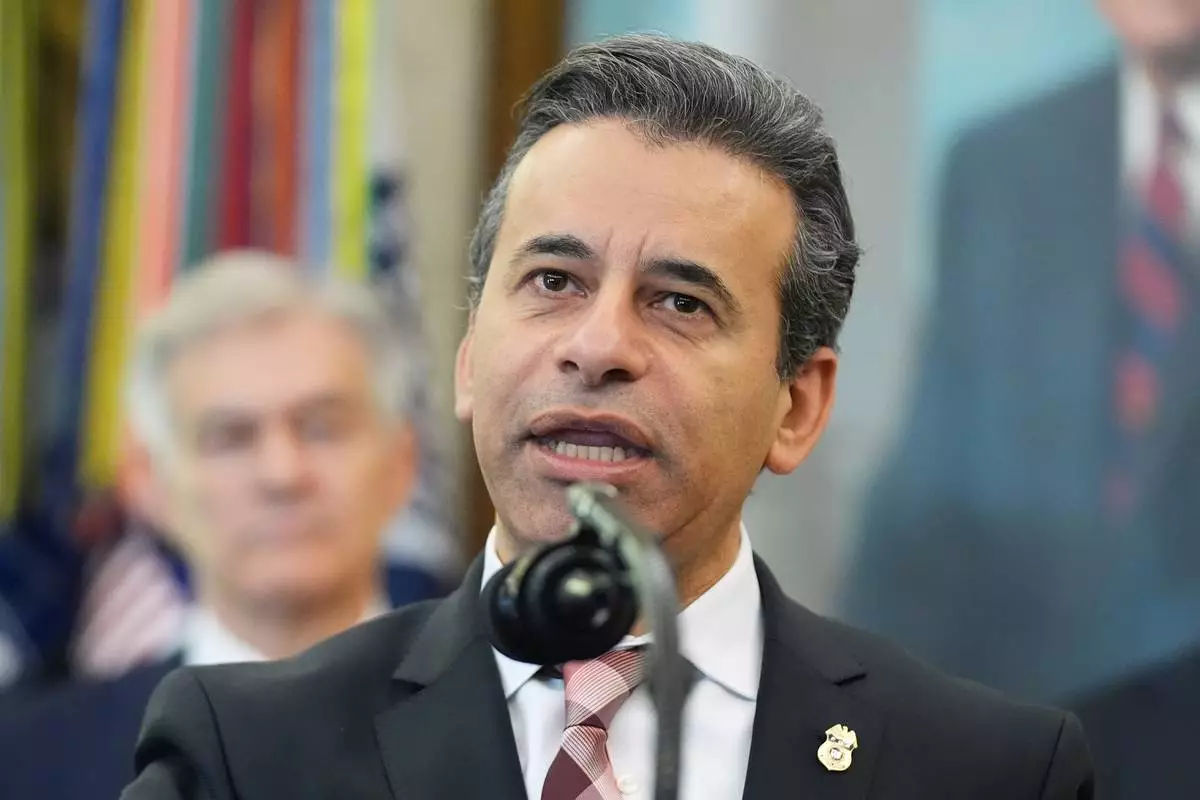
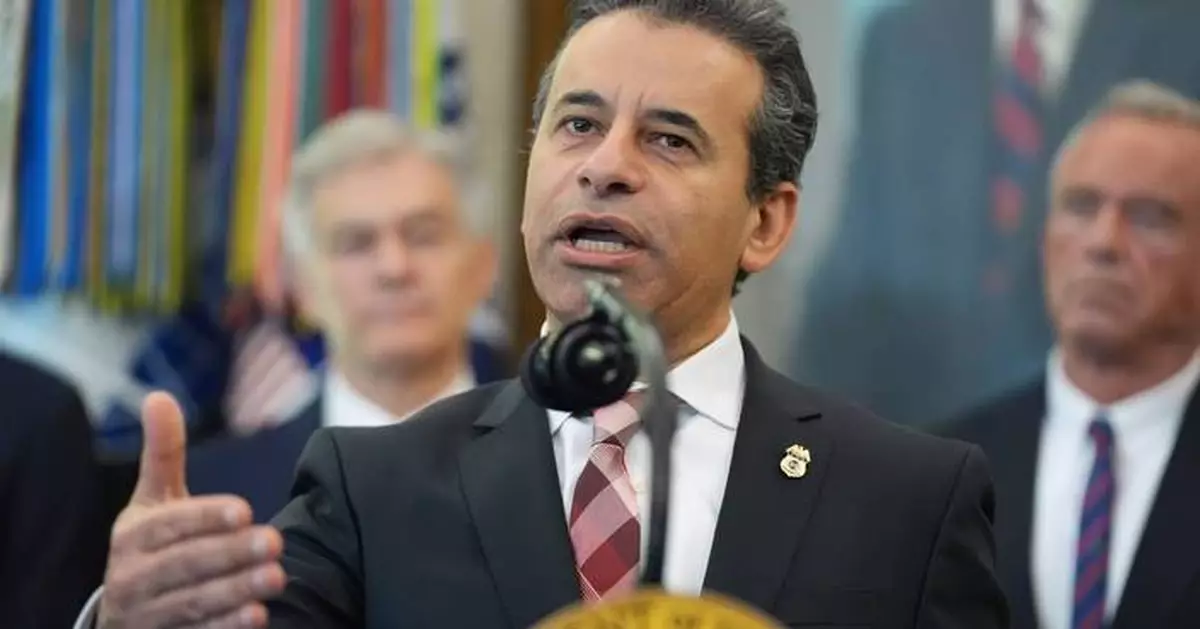
FDA Commissioner Martin Makary speaks during an event about drug prices with President Donald Trump, Thursday, Nov. 6, 2025, in the Oval Office of the White House in Washington. (AP Photo/Evan Vucci)
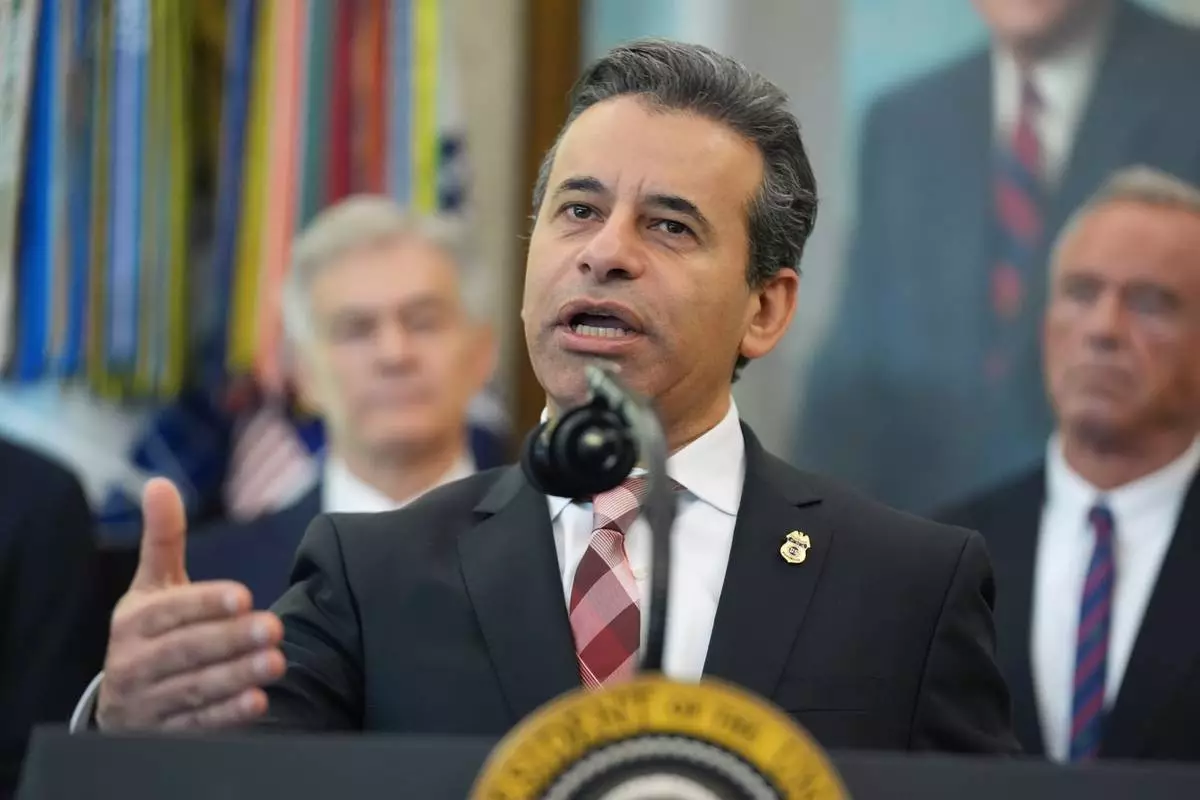
FDA Commissioner Martin Makary speaks during an event about drug prices with President Donald Trump, Thursday, Nov. 6, 2025, in the Oval Office of the White House in Washington. (AP Photo/Evan Vucci)
DUBAI, United Arab Emirates (AP) — Iran kept up its attacks on Persian Gulf neighbors on Wednesday as airstrikes pounded Tehran, while U.S. President Donald Trump again made contradictory statements about whether he was ready to wind down the war or escalate it.
Trump struck a hard line Wednesday in a Truth Social post, demanding that Iran stop blocking the Strait of Hormuz — the waterway vital to global oil supplies — or the U.S. would bomb the Islamic Republic “back to the Stone Ages.” A day earlier, Trump said the U.S. “will not have anything to do with” ensuring the security of ships passing through Hormuz; that was an apparent backtrack from an earlier threat to attack Iran's power grid and other infrastructure if it didn't open the strait by April 6.
Trump, who is scheduled to give a televised address Wednesday evening, said Tuesday he could walk away from the war in two to three weeks once he felt confident Iran would not be able to build a nuclear weapon — even if Tehran does not agree to a ceasefire.
But his latest Truth Social post struck a more belligerent tone as more American troops move into the region for a possible ground offensive after weeks of airstrikes targeting Iran.
Trump also claimed Wednesday that “Iran's New Regime President” wanted a ceasefire. It wasn't clear to whom the U.S. president was referring since Iran still has the same president. Iran’s Foreign Ministry spokesman, Esmail Baghaei, called Trump's claim “false and baseless,” according to a report on Iranian state television.
Speaking earlier to Al Jazeera, Iranian Foreign Minister Abbas Araghchi signaled Tehran’s willingness to keep fighting. “You cannot speak to the people of Iran in the language of threats and deadlines,” he said. “We do not set any deadline for defending ourselves.”
Since the war began on Feb. 28, Trump has offered shifting objectives and repeatedly has said it could be over soon while also threatening to widen the conflict. Thousands of additional U.S. troops are currently heading to the Middle East, and speculation abounds about the purpose of their deployment.
Just days ago, Trump threatened to attack Iran’s Kharg Island oil export hub. And there has also been speculation about whether the U.S. could decide to send in military forces to secure Iran’s uranium stockpile — a complex and risky operation, fraught with radiation and chemical dangers, according to experts and former government officials.
Adding to the confusion is what role Israel - which has been bombing Iran alongside the U.S. — might play in any of these scenarios.
Trump has been under growing pressure to end the war as oil prices have skyrocketed, pushing up the cost of gasoline, food and other goods. The spot price of Brent crude, the international standard, was up more than 40% since the start of the war, trading at more than $103 a barrel on Wednesday.
A fifth of the world’s traded oil passes through the strait in peacetime, and even if it were to reopen quickly, some effects like higher food prices could persist for months or longer.
The U.S. has presented Iran with a 15-point plan aimed at bringing about a ceasefire, including a demand for the strait to be reopened and for its nuclear program to be rolled back.
Iran insists its nuclear program is peaceful. Its own five-point response includes retaining sovereignty over the strait.
In the interview with Al Jazeera, Araghchi acknowledged receiving direct messages from U.S. Mideast envoy Steve Witkoff. He insisted, however, that there were no direct negotiations and said Iran has no faith that talks with the U.S. could yield any results, saying “the trust level is at zero.”
He warned against any U.S. attempt to launch a ground offensive, saying “we are waiting for them.”
A cruise missile slammed into an oil tanker off Qatar’s coast Wednesday, the Defense Ministry said. The 21-member crew of the tanker, contracted by state-owned QatarEnergy, was evacuated and no casualties were reported.
A fully-loaded Kuwaiti oil tanker came under attack off Dubai the day before, one of more than 20 ships attacked by Iran during the war.
In the United Arab Emirates, a person was killed when he was hit by debris from an intercepted drone in Fujairah, one of the country’s seven emirates.
Bahrain sounded two alerts for incoming missiles, while Kuwait’s state-run KUNA news agency said a drone hit a fuel tank at Kuwait International Airport, sparking a large fire.
Jordan’s military said it intercepted a ballistic missile and two drones fired from Iran in the last 24 hours. No casualties were reported. Two drones were also intercepted in Saudi Arabia, and air raid sirens sounded in Israel though there were no immediate reports of damage or casualties.
An airstrike on Tehran, meanwhile, appeared to have hit the former U.S. Embassy compound, which has been controlled by Iran’s Revolutionary Guard since American diplomats were held hostage there in 1979.
Witnesses said buildings outside the massive compound had their windows blown out and that it appears the strike happened inside the walled facility.
Israel also said it hit a plant in Iran producing fentanyl, a synthetic opioid. Israel and the United States have alleged in recent years that Iran was experimenting with using fentanyl in chemical weapons.
Iran acknowledged a strike Tuesday on Tofigh Daru factory, but insisted it only supplied “hospital drugs.” Hospitals use fentanyl to treat severe pain but it can also be fatal.
In Lebanon, at least five people were killed in an Israeli strike on a Beirut neighborhood.
Israel invaded southern Lebanon after the Iran-linked Hezbollah militant group began launching missiles into northern Israel days after the outbreak of the war. Many Lebanese fear another prolonged military occupation.
More than 1,200 people have been killed in Lebanon and more than 1 million displaced, according to authorities. Ten Israeli soldiers have also died there.
In Iran, authorities say more than 1,900 people have been killed, while 19 have been reported dead in Israel. More than two dozen people have died in Gulf states and the occupied West Bank, while 13 U.S. service members have been killed.
Rising reported from Bangkok. Associated Press writers Giovanna Dell’Orto in Miami and Samy Magdy in Cairo contributed to this report.
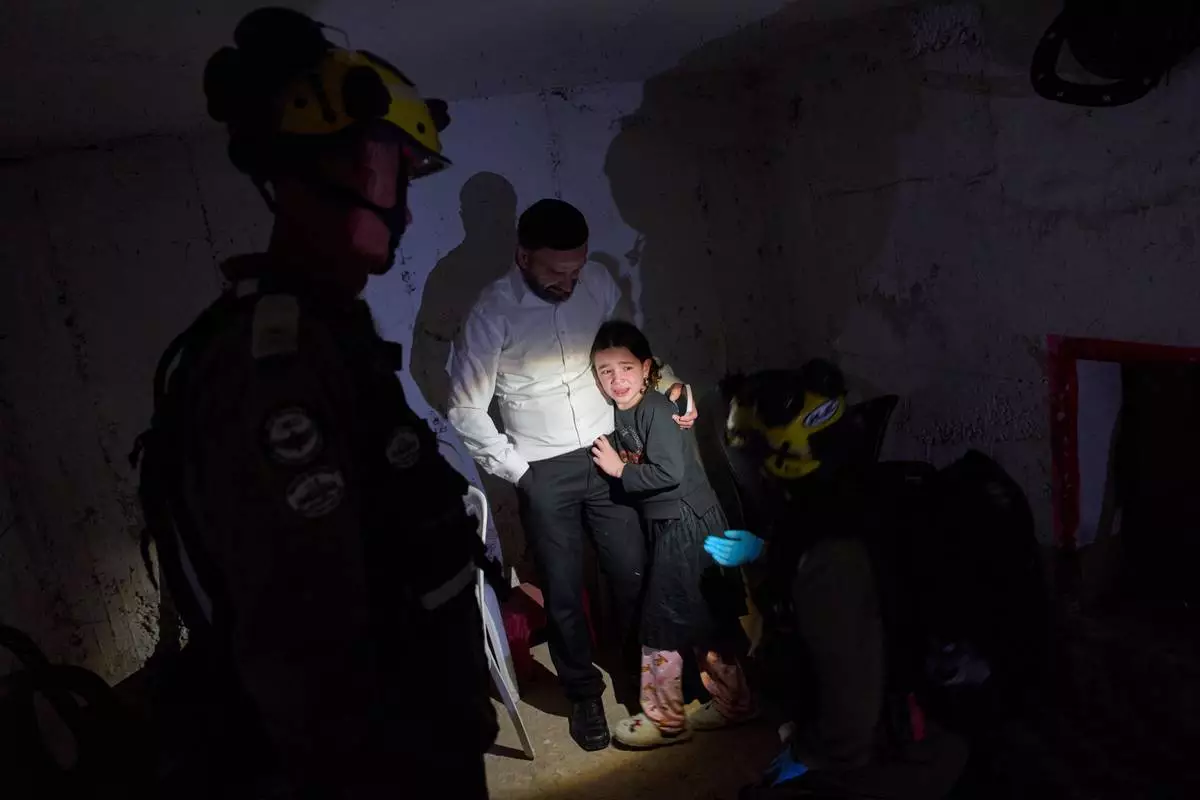
A young girl is comforted by her father and Israeli soldiers as they take cover in a bomb shelter during air raid sirens warning of incoming Iranian missile strikes in Bnei Brak, Israel, Wednesday, April 1, 2026. (AP Photo/Oded Balilty)
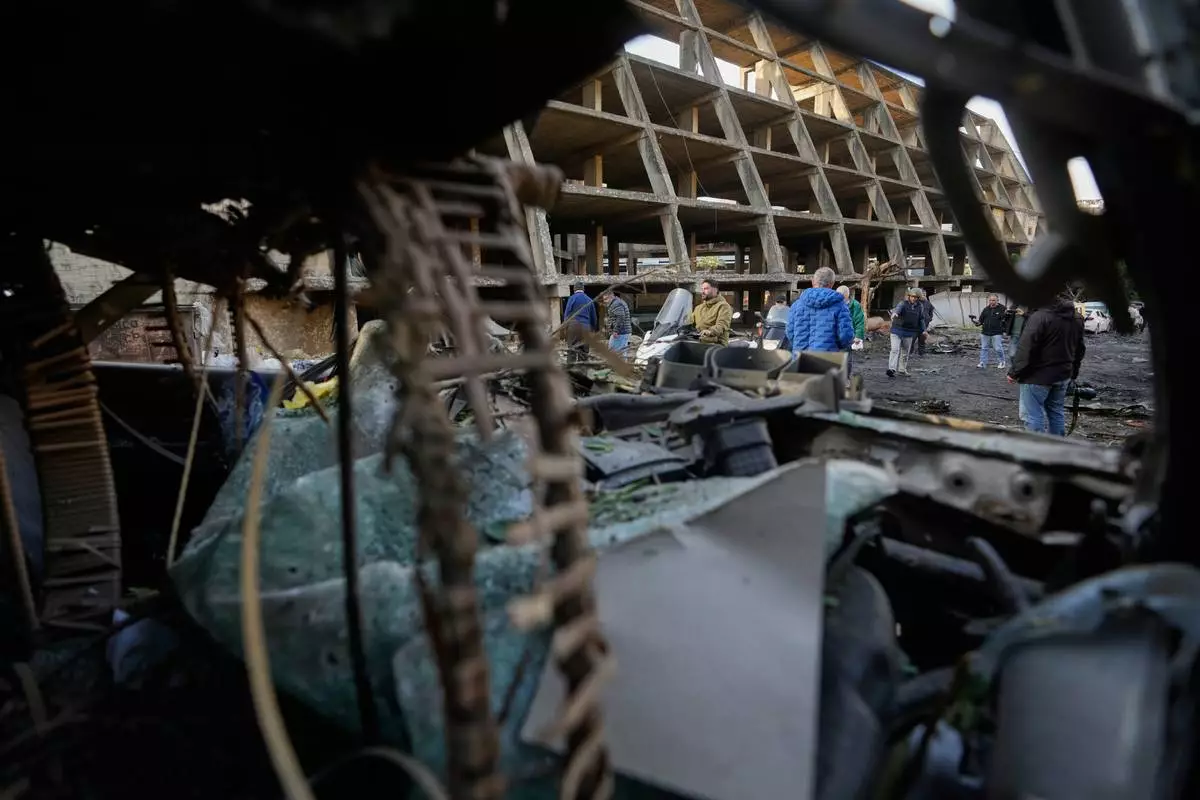
People inspect the site of an Israeli strike amid debris and damaged vehicles in Beirut, Lebanon, Wednesday, April 1, 2026. (AP Photo/Hassan Ammar)

A man feeds stray cats in Tehran, Iran, Tuesday, March 31, 2026. (AP Photo/Vahid Salemi)

The Indian flagged LPG carrier Jag Vasant transporting liquefied petroleum gas, is seen at the Mumbai Port in Mumbai, India, after it arrived clearing the Strait of Hormuz, Wednesday, April 1, 2026. (AP Photo/Rafiq Maqbool)
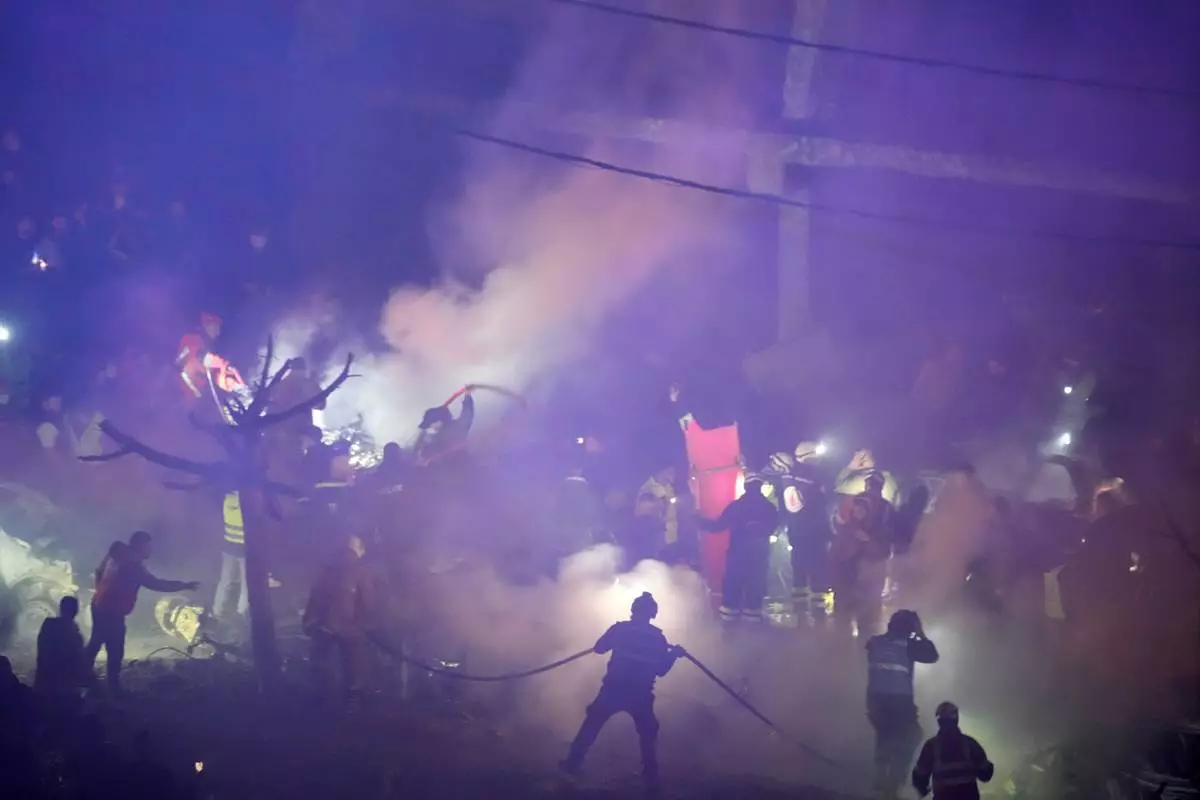
Firefighters and rescue workers work at the site of Israeli airstrikes, in Beirut, Lebanon, Wednesday, April 1, 2026. (AP Photo/Hussein Malla)
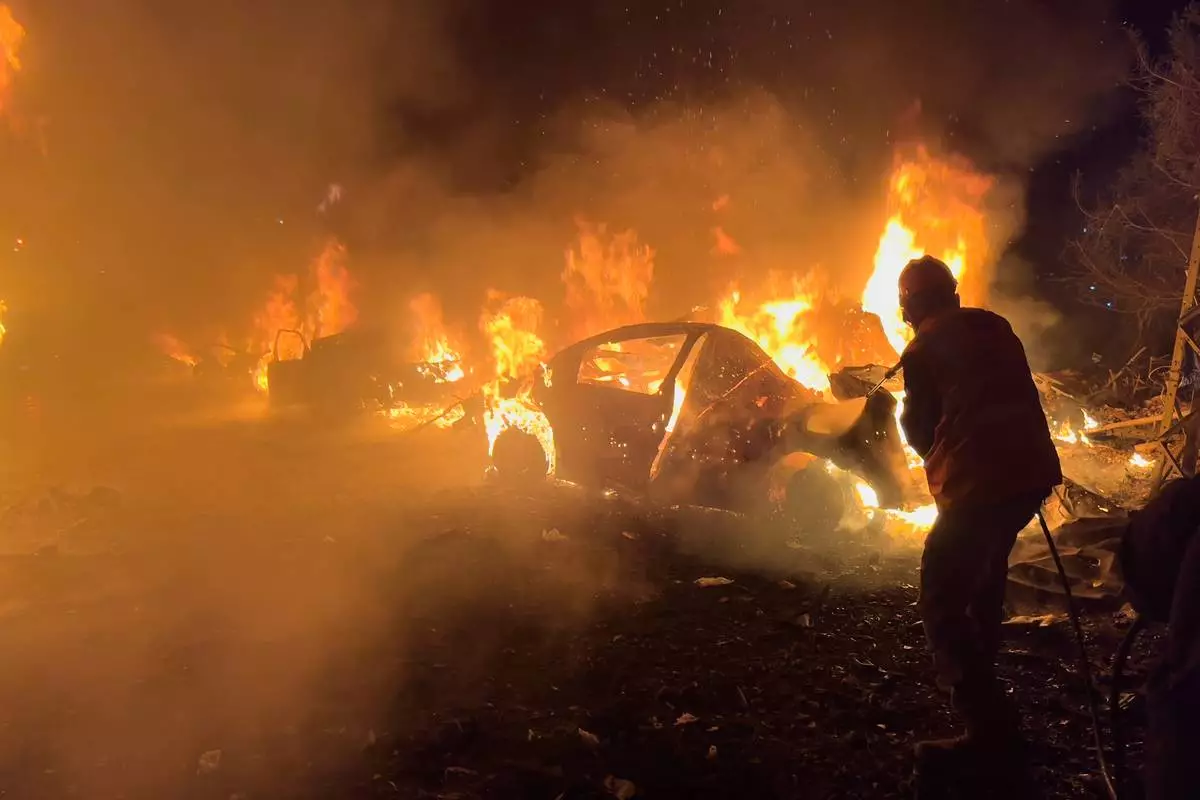
A firefighter extinguishes a car at the site of Israeli airstrikes, in Beirut, Lebanon, Wednesday, April 1, 2026. (AP Photo/Hussein Malla)
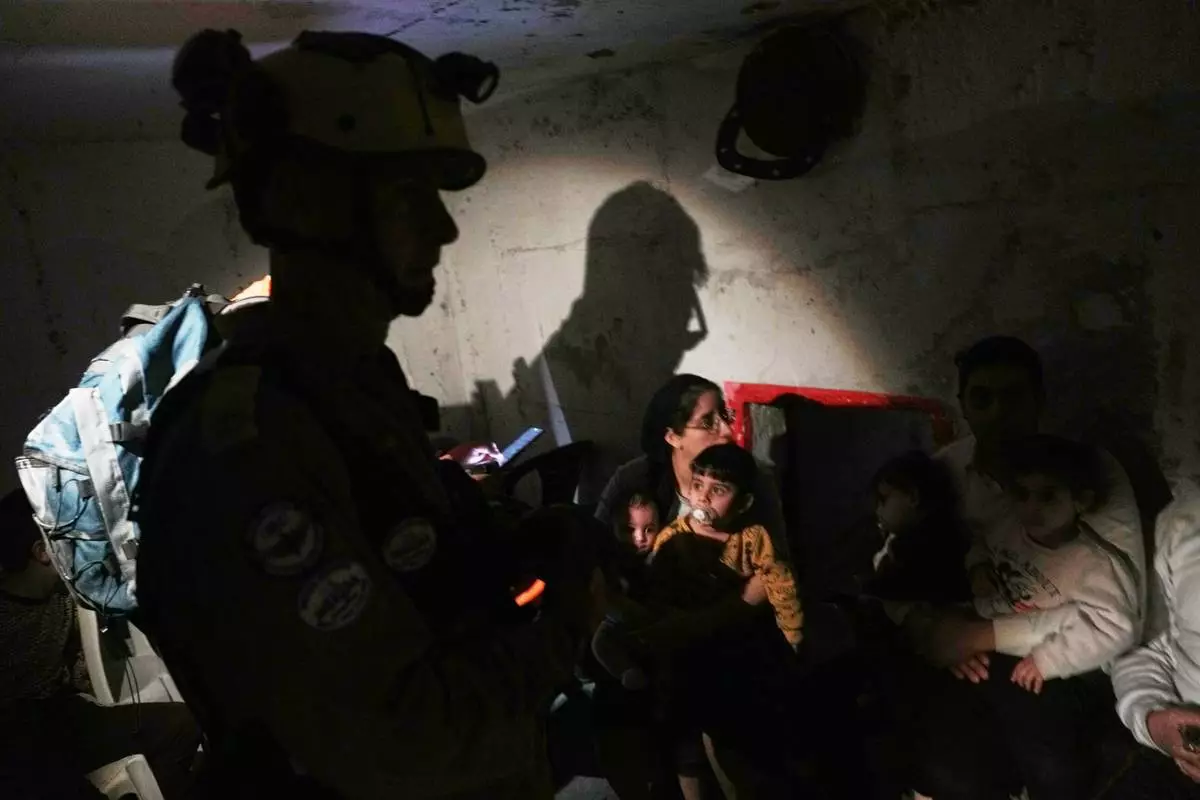
Israel's rescue teams and residents take shelter as sirens sounds next to a site struck by an Iranian missile in Bnei Brak, Wednesday, April 1, 2026. (AP Photo/Oded Balilty)

A police vehicle is seen through a shattered windshield at the site of an Israeli strike in Beirut, Lebanon, Wednesday, April 1, 2026. (AP Photo/Hassan Ammar)
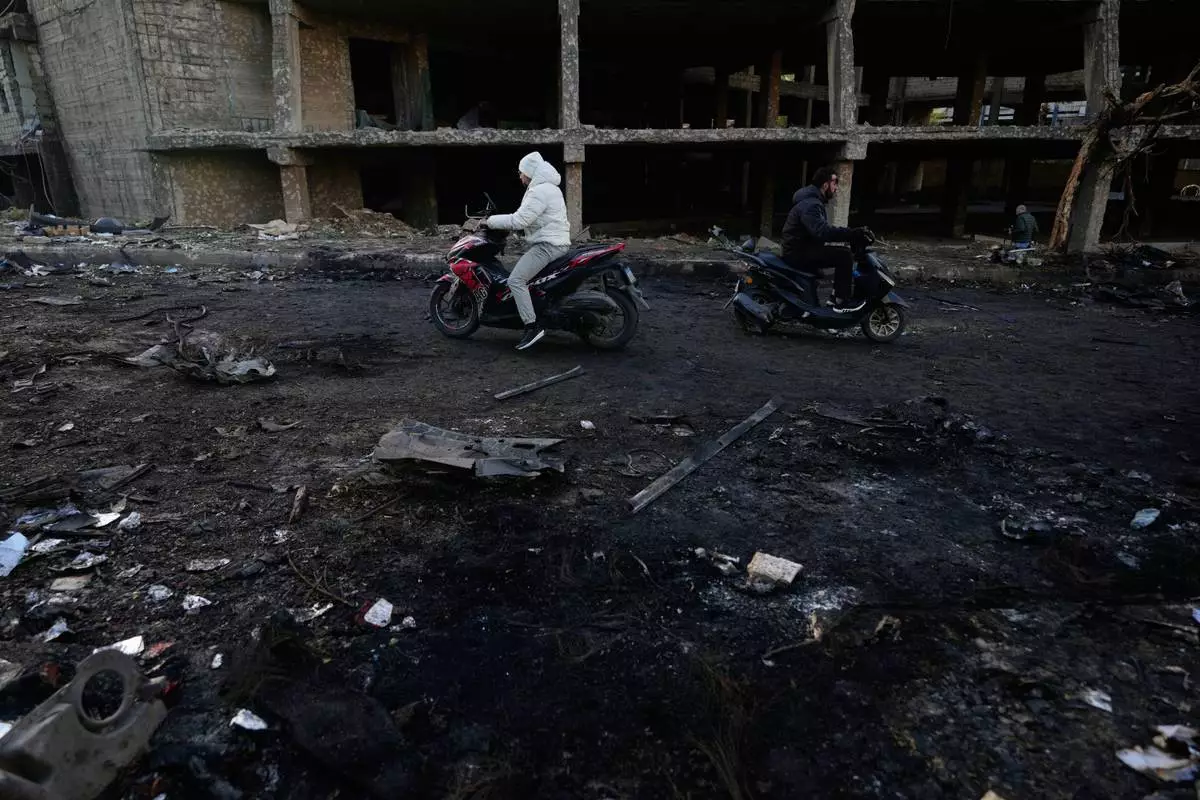
Two men ride scooters past charred debris at the site of an Israeli strike in Beirut, Lebanon, Wednesday, April 1, 2026. (AP Photo/Hassan Ammar)