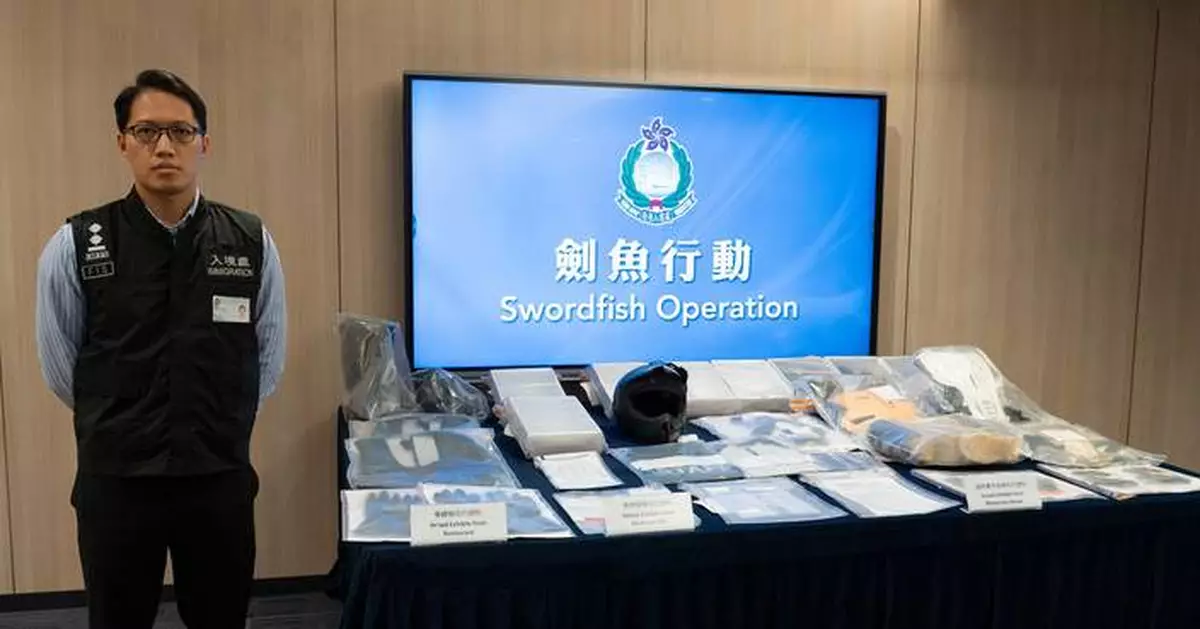
Immigration Department arrests 21 persons during operations targeting foreign domestic helpers who breached conditions of stay
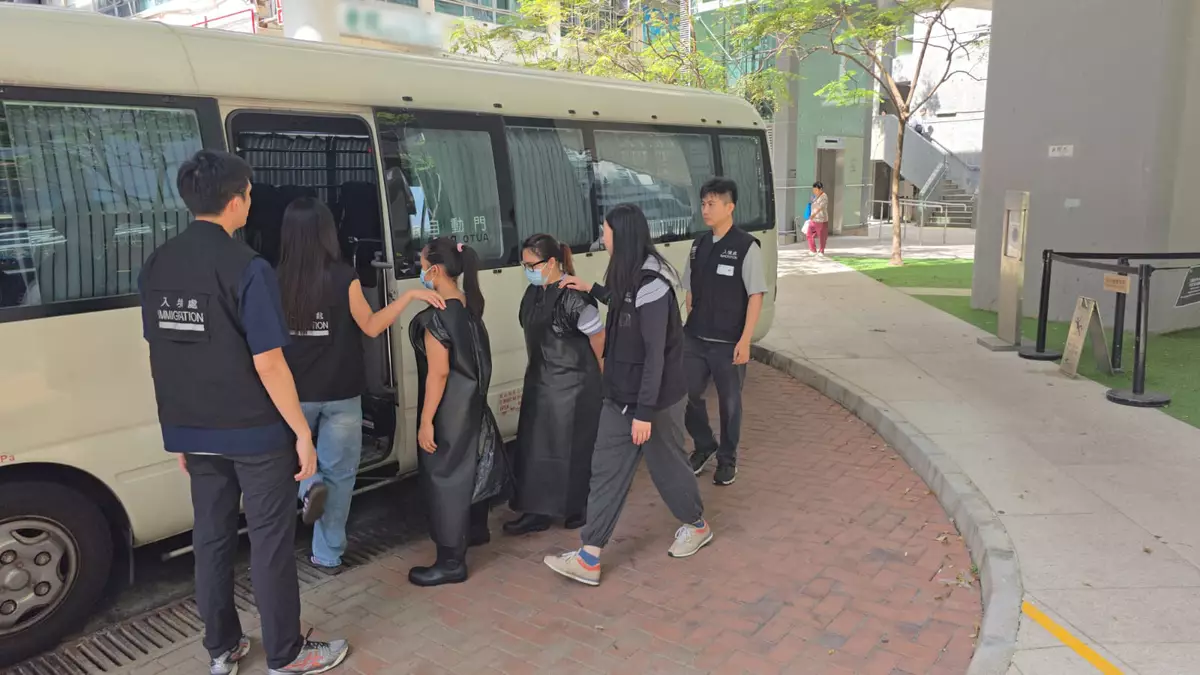
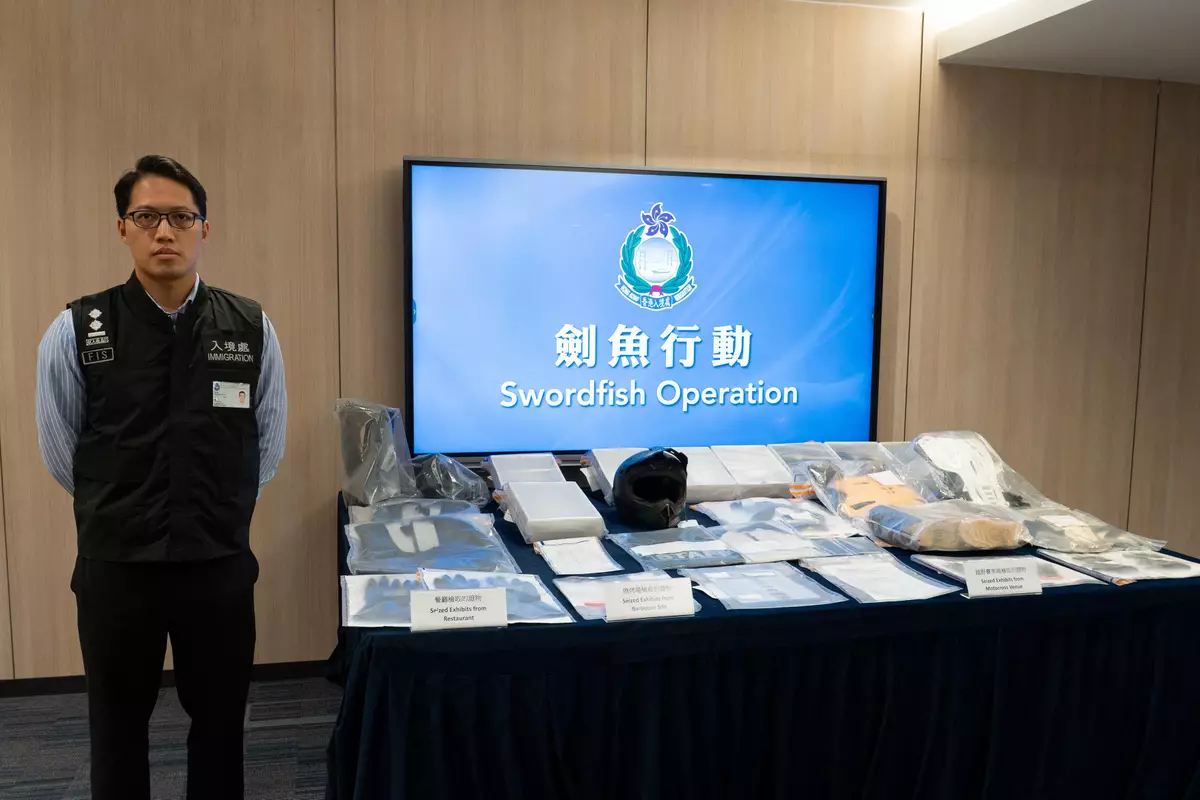
The Immigration Department (ImmD) mounted a series of territory-wide anti-illegal worker operations codenamed "Swordfish", for eight consecutive days from November 4 to 11, targeting foreign domestic helpers (helper) who breached their conditions of stay. A total of 21 persons, including 14 suspected illegal workers and seven suspected employers, were arrested.
During the operation, ImmD investigators raided 47 target locations including restaurants, retail shops, barbecue site, activity venues, employment agencies, and commercial building units. The arrested suspected illegal workers comprised 3 men and 11 women, aged 27 to 51. Among them, 5 persons were current helpers, 4 persons were overstaying ex-helpers, 2 persons were holders of recognizance forms, which prohibit them from taking any employment in Hong Kong, 1 person was imported worker, 1 person was visitor, and 1 person was illegal immigrant. ImmD investigators found most of the suspected illegal workers performing dish washing and cleaning, etc. During the operation, ImmD investigators also apprehended current helpers suspected of performing non-contractual duties at an activity venue and a barbecue site. Meanwhile, seven suspected employers, comprising two men and five women, aged 30 to 74, were in charge of the involved companies or restaurants and suspected of employing the suspected illegal workers and contractual employers of the arrested current helpers.
"A helper should only perform domestic duties for the employer as listed in the "Schedule of Accommodation and Domestic Duties" attached to the Contract. The helper should not take up any other employment, including part-time domestic duties, with any other person. The employer should not require or allow the helper to carry out any work for any other person," an ImmD spokesman said.
The spokesman also said, "Any person who contravenes a condition of stay in force in respect of him/her shall be guilty of an offence. Also, visitors are not allowed to take employment in Hong Kong, whether paid or unpaid, without the permission of the Director of Immigration. Offenders are liable to prosecution and upon conviction face a maximum fine of $50,000 and up to two years' imprisonment. Aiders and abettors are also liable to prosecution and penalties."
The spokesman warned that, "As stipulated in section 38AA of the Immigration Ordinance, an illegal immigrant, a person who is the subject of a removal order or a deportation order, an overstayer or a person who was refused permission to land is prohibited from taking any employment, whether paid or unpaid, or establishing or joining any business. Offenders are liable upon conviction to a maximum fine of $50,000 and up to three years' imprisonment.
The spokesman reiterated that it is a serious offence to employ people who are not lawfully employable. Under the Immigration Ordinance, the maximum penalty for an employer employing a person who is not lawfully employable, i.e. an illegal immigrant, a person who is the subject of a removal order or a deportation order, an overstayer or a person who was refused permission to land, has been significantly increased from a fine of $350,000 and three years' imprisonment to a fine of $500,000 and 10 years' imprisonment to reflect the gravity of such offences. The director, manager, secretary, partner, etc, of the company concerned may also bear criminal liability. The High Court has laid down sentencing guidelines that the employer of an illegal worker should be given an immediate custodial sentence.
According to the court sentencing, employers must take all practicable steps to determine whether a person is lawfully employable prior to employment. Apart from inspecting a prospective employee's identity card, the employer has the explicit duty to make enquiries regarding the person and ensure that the answers would not cast any reasonable doubt concerning the lawful employability of the person. The court will not accept failure to do so as a defence in proceedings. It is also an offence if an employer fails to inspect the job seeker's valid travel document if the job seeker does not have a Hong Kong permanent identity card. Offenders are liable upon conviction to a maximum fine of $150,000 and to imprisonment for one year. In that connection, the spokesman would like to remind all employers not to defy the law by employing illegal workers. The ImmD will continue to take resolute enforcement action to combat such offences.
Under the existing mechanism, the ImmD will, as a standard procedure, conduct an initial screening of vulnerable persons, including illegal workers, illegal immigrants, sex workers and foreign domestic helpers who are arrested during any operation with a view to ascertaining whether they are trafficking in persons (TIP) victims. When any TIP indicator is revealed in the initial screening, the officers will conduct a full debriefing and identification by using a standardised checklist to ascertain the presence of TIP elements, such as threats and coercion in the recruitment phase and the nature of exploitation. Identified TIP victims will be provided with various forms of support and assistance, including urgent intervention, medical services, counselling, shelter, temporary accommodation and other supporting services. The ImmD calls on TIP victims to report crimes to the relevant departments immediately.
For reporting illegal employment activities, please call the dedicated hotline 3861 5000, by fax at 2824 1166, email to anti_crime@immd.gov.hk, or submit "Online Reporting of Immigration Offences" form at www.immd.gov.hk.
Immigration Department arrests 21 persons during operations targeting foreign domestic helpers who breached conditions of stay Source: HKSAR Government Press Releases
Immigration Department arrests 21 persons during operations targeting foreign domestic helpers who breached conditions of stay Source: HKSAR Government Press Releases