AALBORG, Denmark (AP) — In a warehouse more than 1,500 kilometers (900 miles) from Ukraine's capital, workers in northern Denmark painstakingly piece together anti-drone devices. Some of the devices will be exported to Kyiv in the hopes of jamming Russian technology on the battlefield, while others will be shipped across Europe in efforts to combat mysterious drone intrusions into NATO's airspace that have the entire continent on edge.
Two Danish companies whose business was predominantly defense-related now say they have a surge in new clients seeking to use their technology to protect sites like airports, military installations and critical infrastructure, all of which have been targeted by drone flyovers in recent weeks.
Click to Gallery
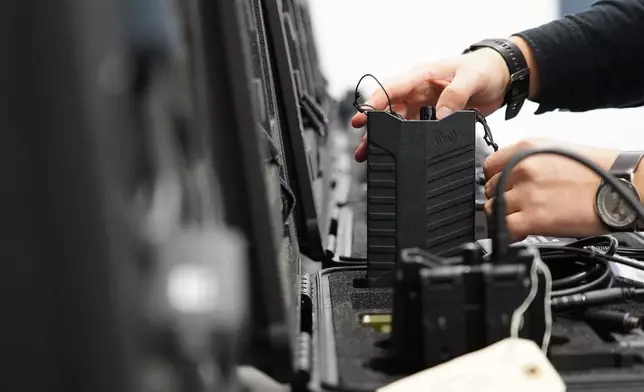
A worker packs away assembled counter drone devices at MyDefence's headquarters in Alborg, Denmark, on Oct. 28, 2025. (AP Photo/James Brooks)

A worker packs away assembled counter drone devices at MyDefence's headquarters in Alborg, Denmark on Oct. 28, 2025. (AP Photo/James Brooks)
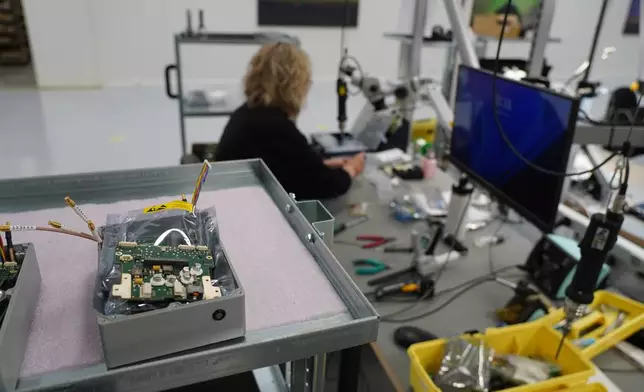
A worker assembles counter drone devices at MyDefence's headquarters in Alborg, Denmark, on Oct. 28, 2025. (AP Photo/James Brooks)
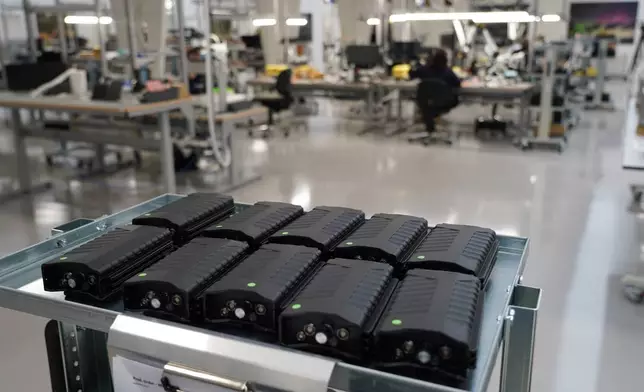
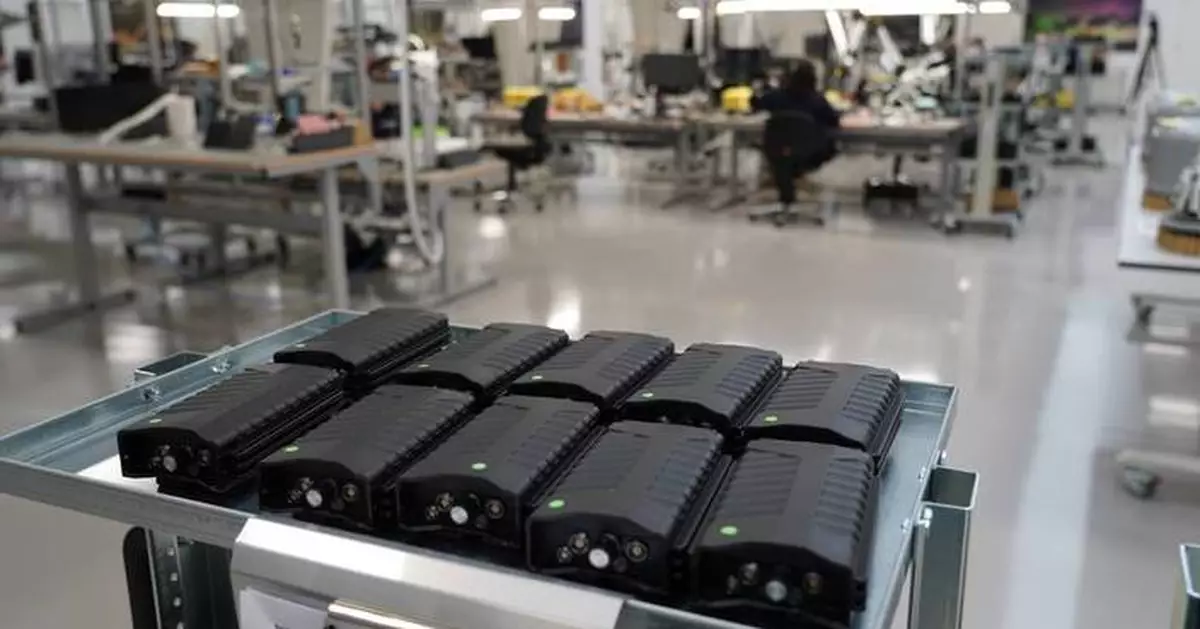
Assembled counter drone devices sit on a try at MyDefence's headquarters in Alborg, Denmark, on Oct. 28, 2025. (AP Photo/James Brooks)
Weibel Scientific’s radar drone detection technology was deployed ahead of a key EU summit earlier this year to Copenhagen Airport, where unidentified drone sightings closed the airspace for hours in September. Counter-drone firm MyDefence, from its warehouse in northern Denmark, builds handheld, wearable radio frequency devices that sever the connection between a drone and its pilot to neutralize the threat.
So-called “jamming” is restricted and heavily regulated in the European Union, but widespread on the battlefields of Ukraine and has become so extensive there that Russia and Ukraine have started deploying drones tethered by thin fiber-optic cables that don’t rely on radio frequency signals. Russia also is firing attack drones with extra antenna to foil Ukraine’s jamming efforts.
Drone warfare exploded following Russia's full-scale invasion of Ukraine in 2022. Russia has bombarded Ukraine with drone and missile attacks, striking railways, power facilities and cities across the country. Ukraine, in response, has launched daring strikes deep inside Russia using domestically produced drones.
But Europe as a whole is now on high alert after the drone flyovers into NATO’s airspace reached an unprecedented scale in September, prompting European leaders to agree to develop a “drone wall” along their borders to better detect, track and intercept drones violating Europe’s airspace. In November, NATO military officials said a new U.S. anti-drone system was deployed to the alliance’s eastern flank.
Some European officials described the incidents as Moscow testing NATO’s response, which raised questions about how prepared the alliance is against Russia. Key challenges include the ability to detect drones — sometimes mistaken for a bird or plane on radar systems — and take them down cheaply.
The Kremlin has brushed off allegations that Russia is behind some of the unidentified drone flights in Europe.
Andreas Graae, assistant professor at the Royal Danish Defense College, said there is a “huge drive” to rapidly deploy counter-drone systems in Europe amid Russia's aggression.
“All countries in Europe are struggling to find the right solutions to be prepared for these new drone challenges,” he said. “We don’t have all the things that are needed to actually be good enough to detect drones and have early warning systems.”
Founded in 2013, MyDefence makes devices that can be used to protect airports, government buildings and other critical infrastructure, but chief executive Dan Hermansen called the Russia-Ukraine war a “turning point" for his company.
More than 2,000 units of its wearable “Wingman” detector have been delivered to Ukraine since Russia invaded nearly four years ago.
“For the past couple of years, we’ve heard in Ukraine that they want to put machines before people” to save lives, Hermansen said.
MyDefence last year doubled its earnings to roughly $18.7 million compared to 2023.
Then came the drone flyovers earlier this year. Besides Copenhagen Airport, drones flew over four smaller Danish airports, including two that serve as military bases.
Hermansen said they were an “eye-opener” for many European countries and prompted a surge of interest in their technology. MyDefence went from the vast majority of its business being defense-related to inquiries from officials representing police forces and critical infrastructure.
“Seeing suddenly that drone warfare is not just something that happens in Ukraine or on the eastern flank, but basically is something that we need to take care of in a hybrid warfare threat scenario,” he added.
On NATO’s eastern flank, Denmark, Poland and Romania are deploying a new weapons system to defend against drones. The American Merops system, which is small enough to fit in the back of a midsize pickup truck, can identify drones and close in on them using artificial intelligence to navigate when satellite and electronic communications are jammed.
The aim is to make the border with Russia so well-armed that Moscow’s forces will be deterred from ever contemplating crossing the line from Norway in the north to Turkey in the south, NATO military officials told The Associated Press.
North of Copenhagen, Weibel Scientific has been making Doppler radar technology since the 1970s. Typically used in tracking radar systems for the aerospace industry, it’s now being applied to drone detection like at Copenhagen Airport.
The technology can determine the velocity of an object, such as a drone, based on the change in wavelength of a signal being bounced back. Then it's possible to predict the direction the object is moving, Weibel Scientific chief executive Peter Røpke said.
“The Ukraine war, and especially how it has evolved over the last couple of years with drone technology, means this type of product is in high demand,” Røpke said.
Earlier this year, Weibel secured a $76 million deal, which the firm called its “largest order ever."
The drone flyovers boosted the demand even higher as discussion around the proposed “drone wall” continued. Røpke said his technology could become a “key component” of any future drone shield.
Stefanie Dazio in Berlin contributed to this report.
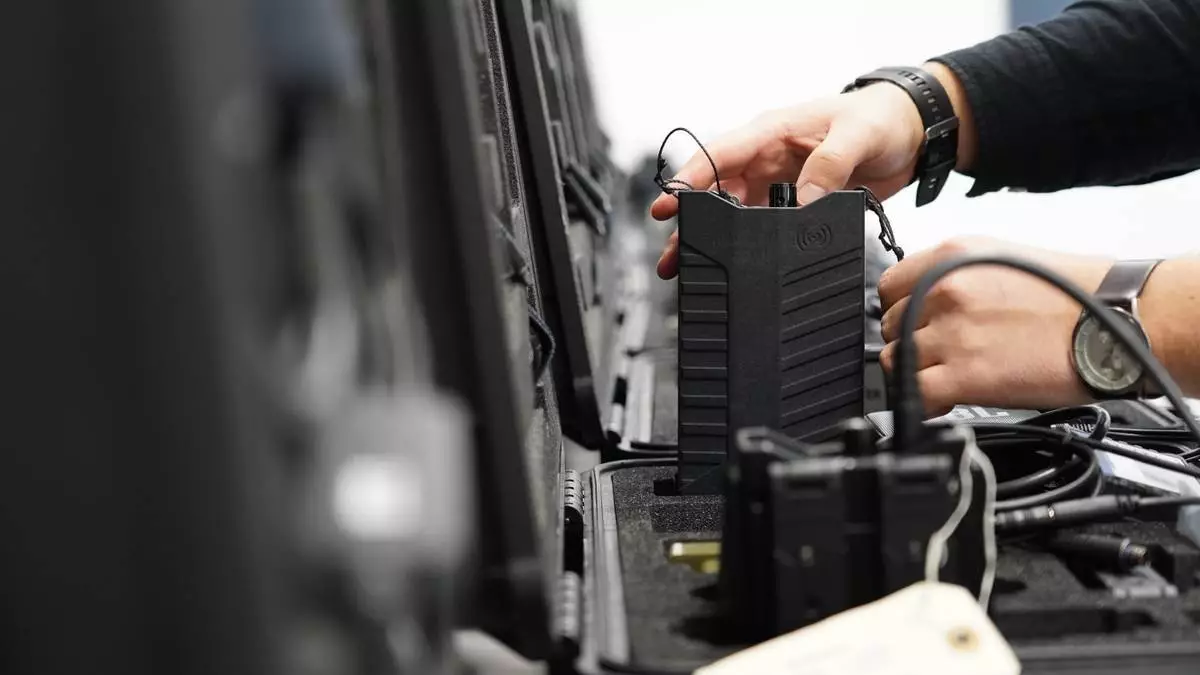
A worker packs away assembled counter drone devices at MyDefence's headquarters in Alborg, Denmark, on Oct. 28, 2025. (AP Photo/James Brooks)

A worker packs away assembled counter drone devices at MyDefence's headquarters in Alborg, Denmark on Oct. 28, 2025. (AP Photo/James Brooks)
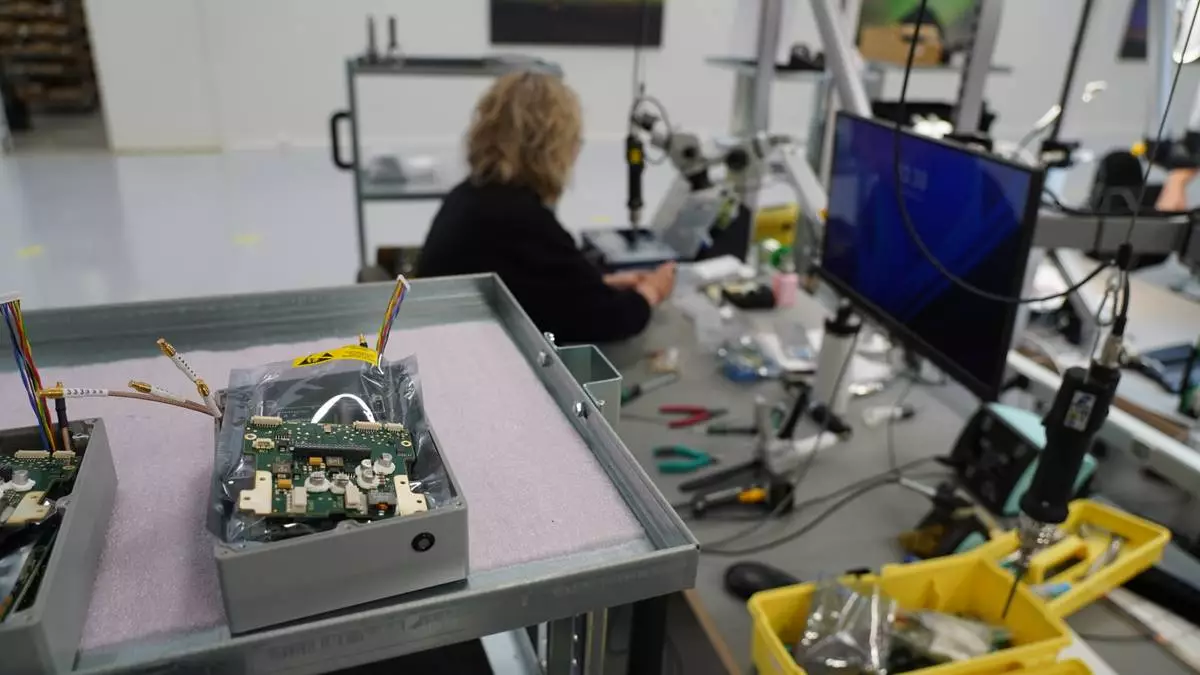
A worker assembles counter drone devices at MyDefence's headquarters in Alborg, Denmark, on Oct. 28, 2025. (AP Photo/James Brooks)
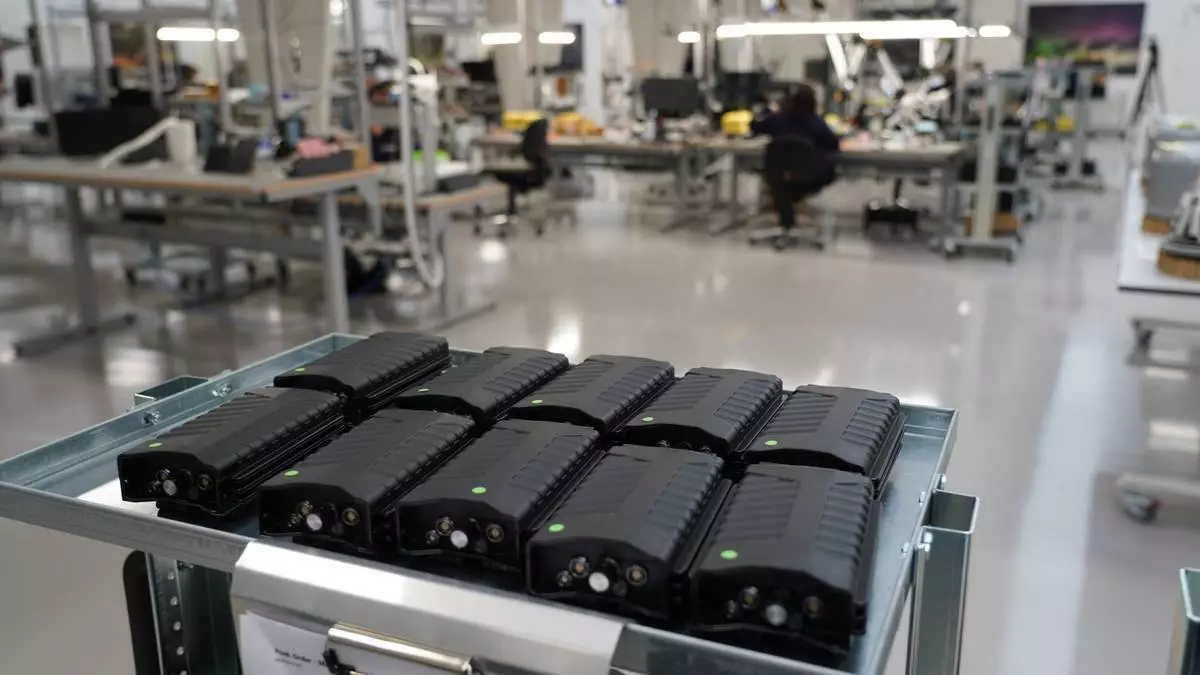
Assembled counter drone devices sit on a try at MyDefence's headquarters in Alborg, Denmark, on Oct. 28, 2025. (AP Photo/James Brooks)