China has expanded maternity insurance coverage and streamlined subsidy delivery, reducing childbirth expenses for new parents across the country.
Seven provinces, including Jilin, Jiangsu and Shandong, have taken the lead in largely freeing mothers of personal expenses for giving birth.
Since the beginning of this year, more than 7,000 new mothers in Guangzhou, the provincial capital of Guangdong in south China, have spent less than 100 yuan (around 14 U.S. dollars) out of pocket after maternity insurance reimbursement.
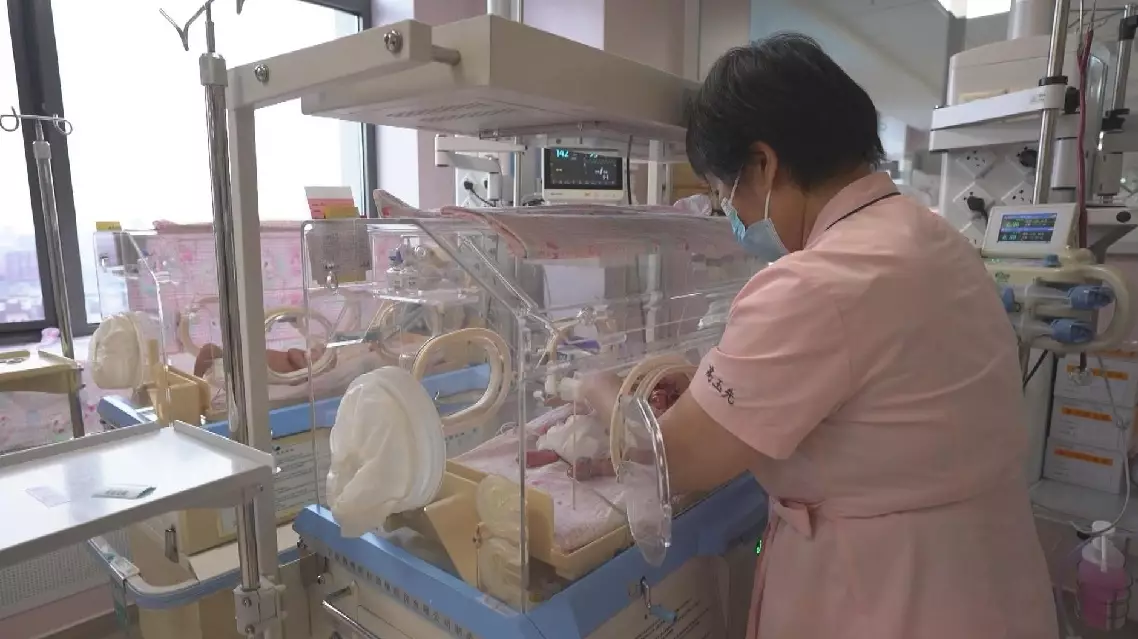
Shen Yun, a resident in Changchun, the provincial capital of Jilin in the northeast, just gave birth to twins. She had worried about large expenses, particularly for the incubator costs for her newborns.
Yet the newborn real-time medical reimbursement policy eased her financial burden.
"Now it seems I earned something in giving birth. After the reimbursement, the total expenses are minimal," said Shen.
"She referred to the maternity allowance, plus the national childcare subsidy of 3,600 yuan (about 505 U.S. dollars) a year. After adding everything up, we even have some money left from the childbirth expenses," said Shen's husband Wang Yunhao.
The maternity allowance -- also known as maternity leave pay -- has seen reform in its delivery process.
In recent years, many regions have shifted from the "employer payment" model to "direct payment to individuals," allowing insured female employees to receive their benefits more conveniently.
According to the National Healthcare Security Administration (NHSA), with Jiangsu and Liaoning launching the new system on November 1, a total of 25 provinces nationwide have now implemented direct disbursement of maternity allowances to individuals.
In Xiangtan Central Hospital of central China's Hunan Province, an expectant mother named Chen Yingjie said in the past she would have to submit documents such as her marriage certificate and birth permit at the end of her maternity leave to her employer before she could receive the subsidy.
The new "direct-to-individual" payment system has made a noticeable difference for her.
"New mothers used to describe the process of getting the maternity allowance as running a marathon, as it was prolonged and involved too many red tape procedures. Now I just fill out one form and wait for the payment to come in my bank account," said Chen.
China expands healthcare insurance to ease childbirth financial burden