Skip to Content Facebook Feature Image

Tavus Raises $40M to Build the Next Frontier of Intelligence: Human Computing

Business

Tavus Raises $40M to Build the Next Frontier of Intelligence: Human Computing
Business

Business

Tavus Raises $40M to Build the Next Frontier of Intelligence: Human Computing

2025-11-12 22:11 Last Updated At:11-13 15:14

SAN FRANCISCO--(BUSINESS WIRE)--Nov 12, 2025--

Today, Tavus announced $40 million in Series B funding to build the future of human computing, led by CRV with participation from Scale Venture Partners, Sequoia Capital, Y Combinator, HubSpot Ventures, and Flex Capital. This vision takes shape with the launch of PALs: AI humans built by Tavus with emotional intelligence, agentic capabilities, and true multimodality with text, voice, and face-to-face.

This press release features multimedia. View the full release here: https://www.businesswire.com/news/home/20251111507298/en/

Human-computer interfaces haven't fundamentally evolved since the 1980s. We moved from command-line interfaces to graphical user interfaces—from typing commands to clicking buttons. Today's AI chatbots feel like a return to the command-line era: text-based interfaces where humans must spell out every action and instruction. For decades, science fiction promised us something better— Star Trek, Her —computers that could see and hear us, but also look like us, respond with emotion, and feel alive. Tavus is fulfilling this promise by creating AI that makes conversations with computers feel like second nature, just like talking to a friend.

“We've spent decades forcing humans to learn to speak the language of machines,” said Hassaan Raza, CEO of Tavus. “With PALs, we're finally teaching machines to think like humans—to see, hear, respond, and look like we do. To understand emotion, context, and all the messy, beautiful stuff that makes us who we are. It's not about more intelligent AI, it’s about AI that actually meets you where you are.”

Meet the PALs

Tavus launched PALs (Personal Affective Links): Agentic AI humans that see, hear, evolve, remember, and act, just like humans do. Powered by foundational models for rendering, conversational intelligence, and perception, PALs represent the next era of human computing.

PALs are built to communicate the way people do. They maintain a lifelike visual presence, read expressions and gestures, and understand emotion and timing in real time. They remember context, pick up on subtle social cues, and move fluidly between video, voice, and text, so interaction always feels natural. And like humans, they have agency—taking initiative, reaching out, and acting on your behalf to manage calendars, send emails, and follow through without supervision.

For years, computers made us speak their language. PALs finally speak ours, forming genuine connections by learning individual habits, adapting to personality, and improving with every interaction.

The Models Powering PALs

Behind every PAL is a suite of foundational models that teach machines to see, feel, and act the way people do. These proprietary, state-of-the-art systems were built entirely in-house by the Tavus research team to understand and simulate human behavior with unprecedented depth. Each model sets a new standard for realism and intelligence, expanding the boundary of what “human-like” AI can become.

These, paired with a SoTA orchestration and memory management system, bring face-to-face video, speech, text, and agentic capabilities to life, enabling the world’s first AI humans. What makes them powerful isn’t just how they look or talk; it’s that they understand, remember, and act, just as a human would. This is the beginning of computers that finally feel alive.

Get started for free at https://www.tavus.io/

About Tavus

Tavus is a San Francisco-based AI research lab pioneering human computing: the art of teaching machines to be human. Backed by CRV, Scale Venture Partners, Sequoia Capital, Y Combinator, HubSpot Ventures, and Flex Capital, Tavus builds foundational models that teach machines to see, hear, respond, and act like people do, pioneering AI humans. The company’s research team brings experience from leading universities and top AI labs, led by researchers specializing in rendering, perception, and affective computing, including Professor Ioannis Patras and Dr. Maja Pantic. Over one hundred thousand developers and enterprises use Tavus to deploy AI for recruiting, sales, education, and customer service.


Introducing PALs—AI humans with emotional intelligence, agentic capabilities, and true multimodality that see, hear, remember, and act just like a human would.

Introducing PALs—AI humans with emotional intelligence, agentic capabilities, and true multimodality that see, hear, remember, and act just like a human would.

Tavus raises $40M Series B led by CRV to build the future of human computing.
Tavus raises $40M Series B led by CRV to build the future of human computing.
A person who jumped a fence and was on a runway at Denver International Airport was struck and killed by a Frontier Airlines plane during takeoff, airport authorities said. The collision sparked an engine fire and forced passengers to evacuate.

The plane, on route from Denver to Los Angeles International Airport, “reported striking a pedestrian during takeoff at DEN at approximately 11:19 p.m. on Friday,” according to a post on the airport’s official X account.

A spokesperson for the airport said the person, who jumped a perimeter fence, has died. They said the unidentified person was hit two minutes after entering the airport. The person is not believed to be an airport employee.

“We’re stopping on the runway,” the pilot tells the control tower according to the site ATC.com. “We just hit somebody. We have an engine fire.”

The pilot tells the air traffic controller they have “231 souls” on board and that an “individual was walking across the runway.”

The air traffic controller responds that they are “rolling the trucks now” before the pilot tells the tower they “have smoke in the aircraft. We are going to evacuate on the runway.”

Frontier Airlines said in a statement that flight 4345 was the one involved in the collision and that “smoke was reported in the cabin and the pilots aborted takeoff.” It was not clear whether the smoke was linked to the collision.

The airline said the plane was carrying 224 passengers and seven crew members.

“We are investigating this incident and gathering more information in coordination with the airport and other safety authorities,” the airline said.

Passengers were evacuated via slides and the emergency crew bused them to the terminal. The airport spokesperson said 12 passengers suffered minor injuries and five were taken to hospitals.

One passenger, Jacob Anthens, posted video showing people sliding down with their backpacks. He also posted photos of what looked like a damaged engine.

“As we were lifting off the engine of the plane exploded. There was so much smoke we couldn’t even see 1 ft in front of us,” Anthens said on his Facebook page, adding that passengers had to wait for over a hour on the runway and “still no transport or help with the cold.”

Other video shows passengers calmly walking down the aisle of the plane and using the slide to evacuate. They were told to step away from the plane.

Denver Airport said the National Transportation Safety Board had been notified and that runway 17L, where the incident took place, was closed amid an investigation. It reopened Saturday around 11 a.m.

Transportation Secretary Sean Duffy said in a post on X that the person “breached airport security at Denver Int’l Airport, deliberately scaled a perimeter fence, and ran out onto a runway.”

He added: “No one should EVER trespass on an airport.”

The incident came a day after a Delta Air Lines employee was killed while on the job at the Orlando International Airport. In a statement, the airline said the employee was killed Thursday night without providing details of the incident or the name of the employee.

“We are focused on extending our full support to family and taking care of our Orlando team during this difficult time,” the airline said. “We are working with local authorities as a full investigation gets underway to determine what occurred.”

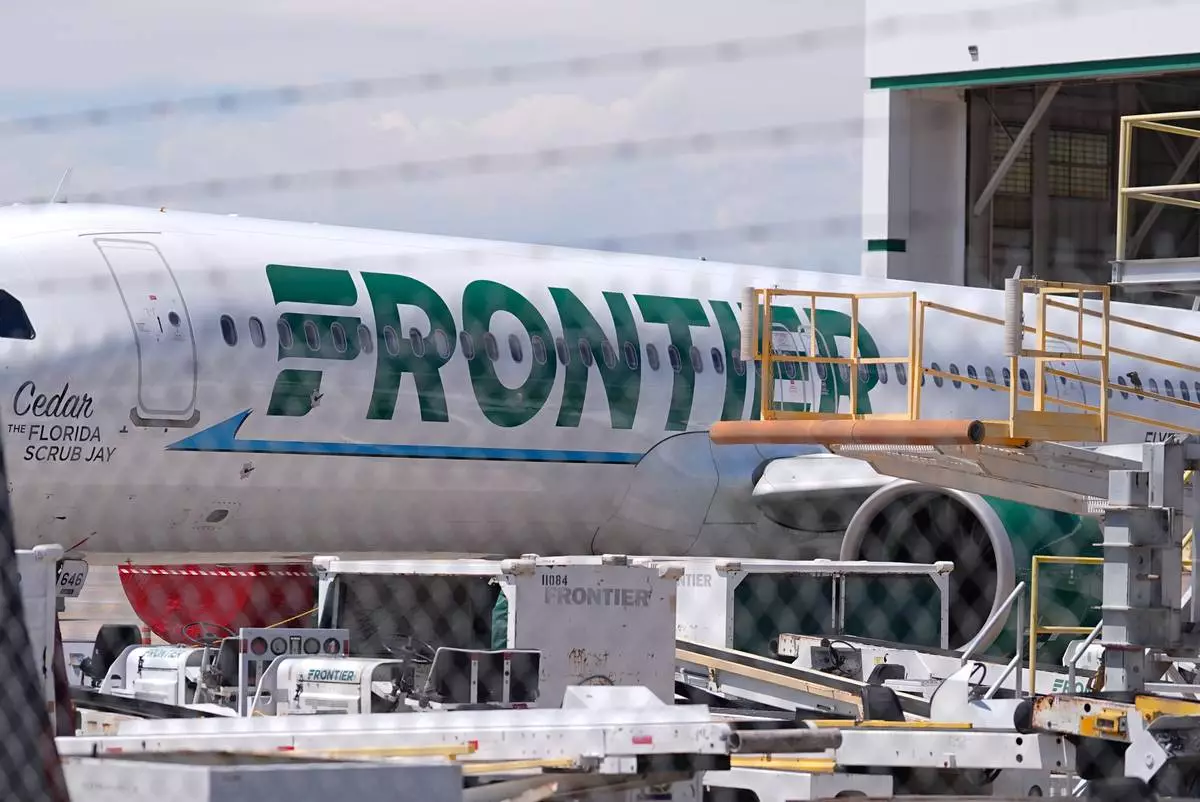
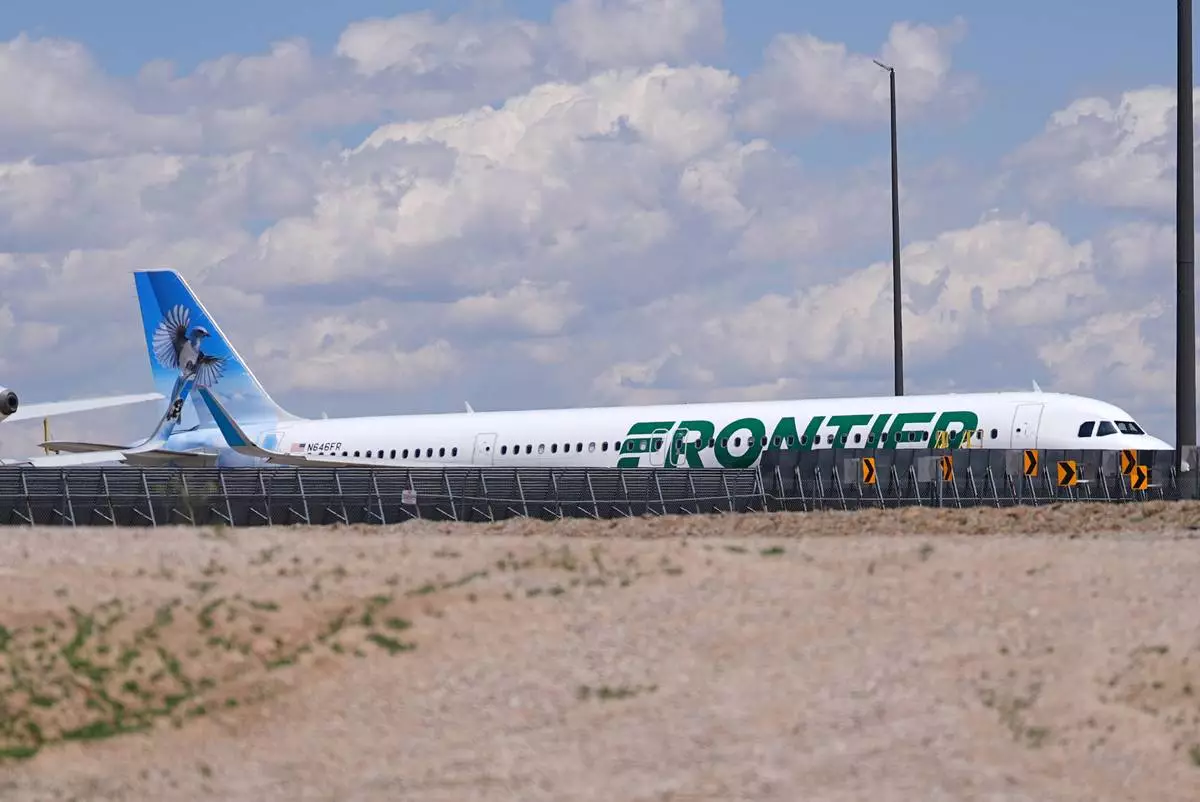
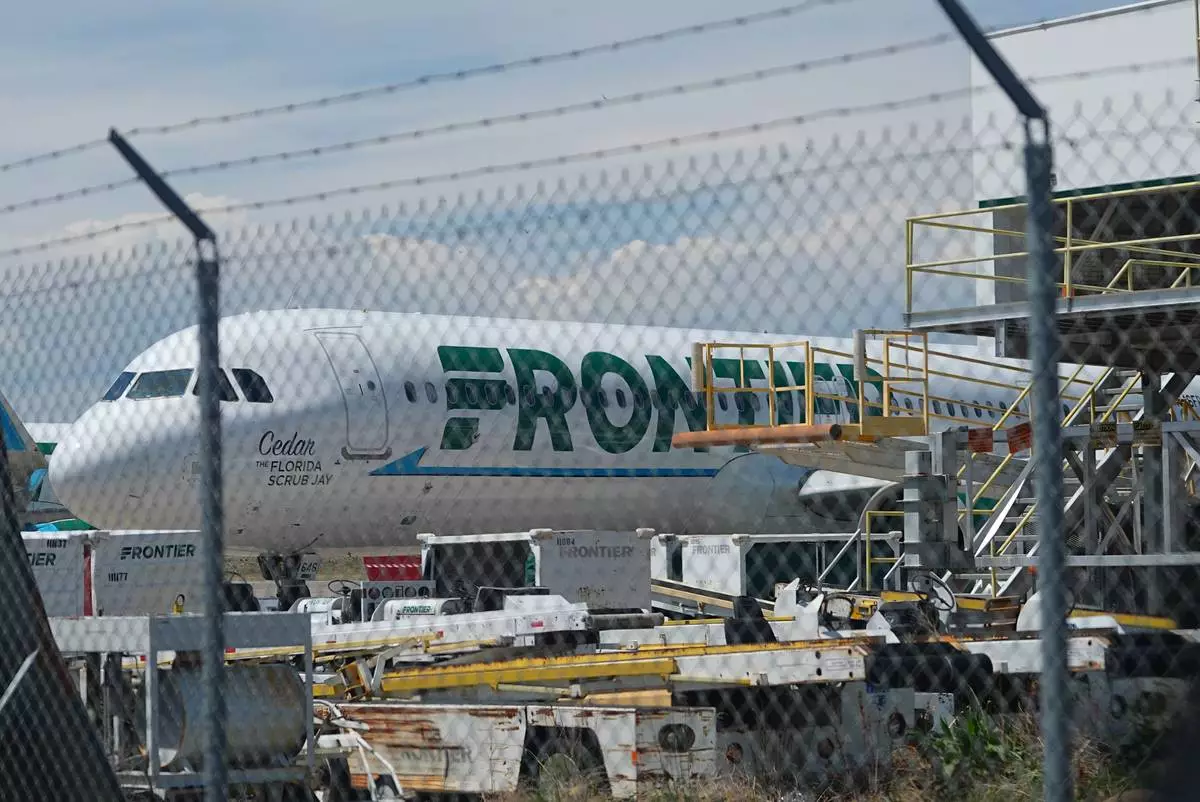
Frontier Airlines jetliner number n646fr sits outside the airlines technical operations center with other jetliners in for service north of Denver International Airport Saturday, May 9, 2026, in Denver. (AP Photo/David Zalubowski)

Frontier Airlines jetliner number n646fr sits outside the airlines technical operations center with other jetliners in for service north of Denver International Airport Saturday, May 9, 2026, in Denver. (AP Photo/David Zalubowski)

Frontier Airlines jetliner number n646fr sits outside the airlines technical operations center with other jetliners in for service north of Denver International Airport Saturday, May 9, 2026, in Denver. (AP Photo/David Zalubowski)

Frontier Airlines jetliner number n646fr sits outside the airlines technical operations center with other jetliners in for service north of Denver International Airport Saturday, May 9, 2026, in Denver. (AP Photo/David Zalubowski)

Frontier Airlines jetliner number n646fr sits outside the airlines technical operations center with other jetliners in for service north of Denver International Airport Saturday, May 9, 2026, in Denver. (AP Photo/David Zalubowski)

Frontier Airlines jetliner number n646fr sits outside the airlines technical operations center with other jetliners in for service north of Denver International Airport Saturday, May 9, 2026, in Denver. (AP Photo/David Zalubowski)

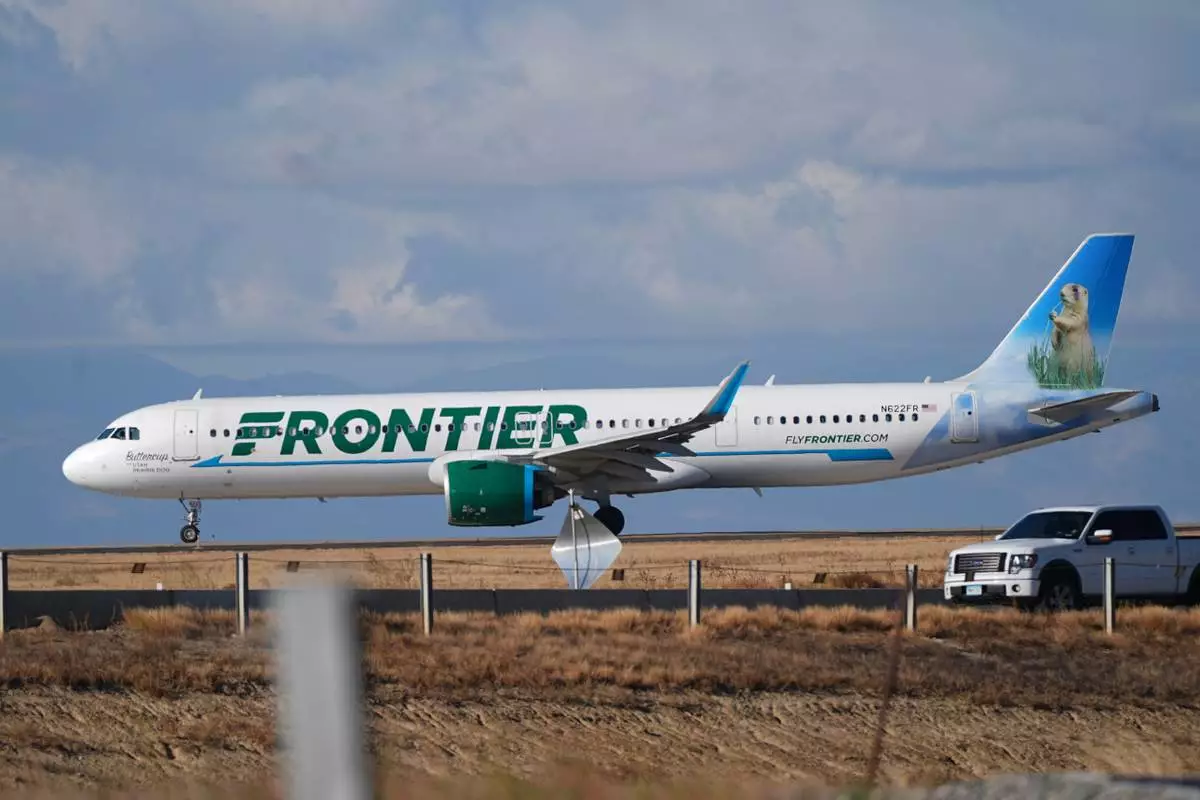
FILE - A Frontier Airlines jetliner taxis down a runway for take off from Denver International airport on Nov. 25, 2025, in Denver. (AP Photo/David Zalubowski, File)

FILE - A Frontier Airlines jetliner taxis down a runway for take off from Denver International airport on Nov. 25, 2025, in Denver. (AP Photo/David Zalubowski, File)

Recommended Articles