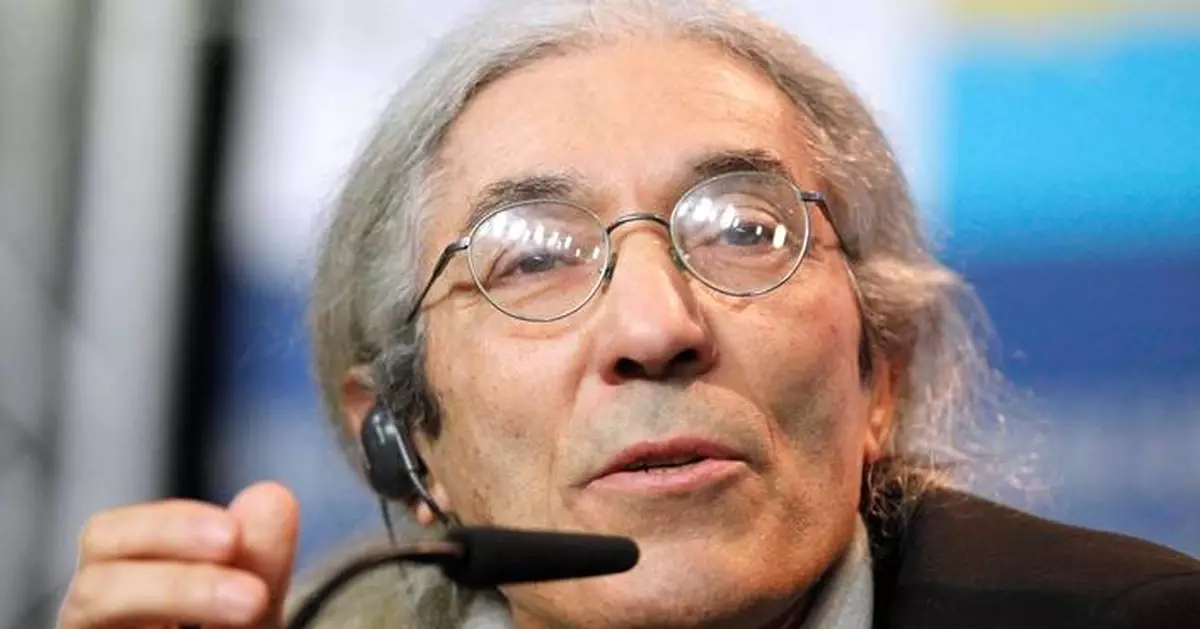
ALGIERS, Algeria (AP) — Algeria ’s President Abdelmadjid Tebboune granted a humanitarian pardon to the French-Algerian novelist Boualem Sansal Wednesday, releasing him after a yearlong imprisonment that sparked widespread criticism.
French President Emmanuel Macron welcomed the move on X, writing: “Boualem Sansal is free and soon to return. My deep gratitude goes to (German) President Steinmeier for our fruitful cooperation. I thank President Tebboune for this gesture of humanity.”
The 76-year-old author — whose works have been critical of Islam, colonialism and contemporary Algeria's leaders — had been imprisoned since being arrested at the airport in Algiers in November 2024 upon his return from France.
He was convicted of undermining national unity and insulting public institutions and was sentenced to five years in prison under Algeria’s anti-terrorism laws in March.
Sansal has cancer, and his attorney said his health was deteriorating.
Sansal's case became a flashpoint as tensions spiked between France and Algeria last year. French politicians including Macron urged authorities to free him. The European Parliament passed a resolution condemning his arrest. Literary colleagues, including Kamel Daoud, Salman Rushdie and PEN International, published open letters calling for his release.
It was ultimately an appeal from Germany that led Tebboune to act. Two days after German President Frank-Walter Steinmeier asked for Sansal to be pardoned, citing his age and health problems, Tebboune cited humanitarian grounds and Germany's request in issuing the pardon.
In a statement on Wednesday, Tebboune's office said Germany would accept responsibility for him and provide medical treatment, without specifying where that would be.
Sansal's problems with Algerian authorities date back to October 2024. In an interview with the right-wing French media outlet Frontieres he questioned Algeria’s current borders, arguing that France had redrawn them during the colonial period to include lands that once belonged to Morocco.
The remarks came months after France infuriated Algeria by backing Morocco's plan to maintain sovereignty over the disputed Western Sahara. Sansal was arrested the following month and later lambasted by the president in a speech to Algeria’s parliament.
Algeria ignored pleas from French politicians to release Sansal. French commentators described his imprisonment as a political lever deployed against Paris.
French Prime Minister Sébastien Lecornu on Wednesday said France's government was relieved that Sansal had been released.
“We hope he’ll be able to rejoin his loved ones as soon as possible and receive treatment,” Lecornu told an applauding audience of lawmakers at the National Assembly.
Sansal's imprisonment also came during heightened censorship in Algeria. Since pro-democracy protesters forced the military to oust longtime president Abdelaziz Bouteflika in 2019, authorities have clamped down on dissent. Hundreds — including journalists, activists, poets and lawyers — have been detained or imprisoned for speech-related offenses, according to Amnesty International and Algeria’s National Committee for the Liberation of Detainees.
Before his arrest, Sansal’s work faced bans from Algerian authorities but he regularly traveled between Paris and Algiers. His books, written in French, are not widely read in Algeria. However, he has a large following in France, where his novels criticizing the role of Islam in society have endeared him to both the literary elite and far-right leaders.
His novel "2084: The End of the World” won the France’s Grand Prix du Roman in 2015.
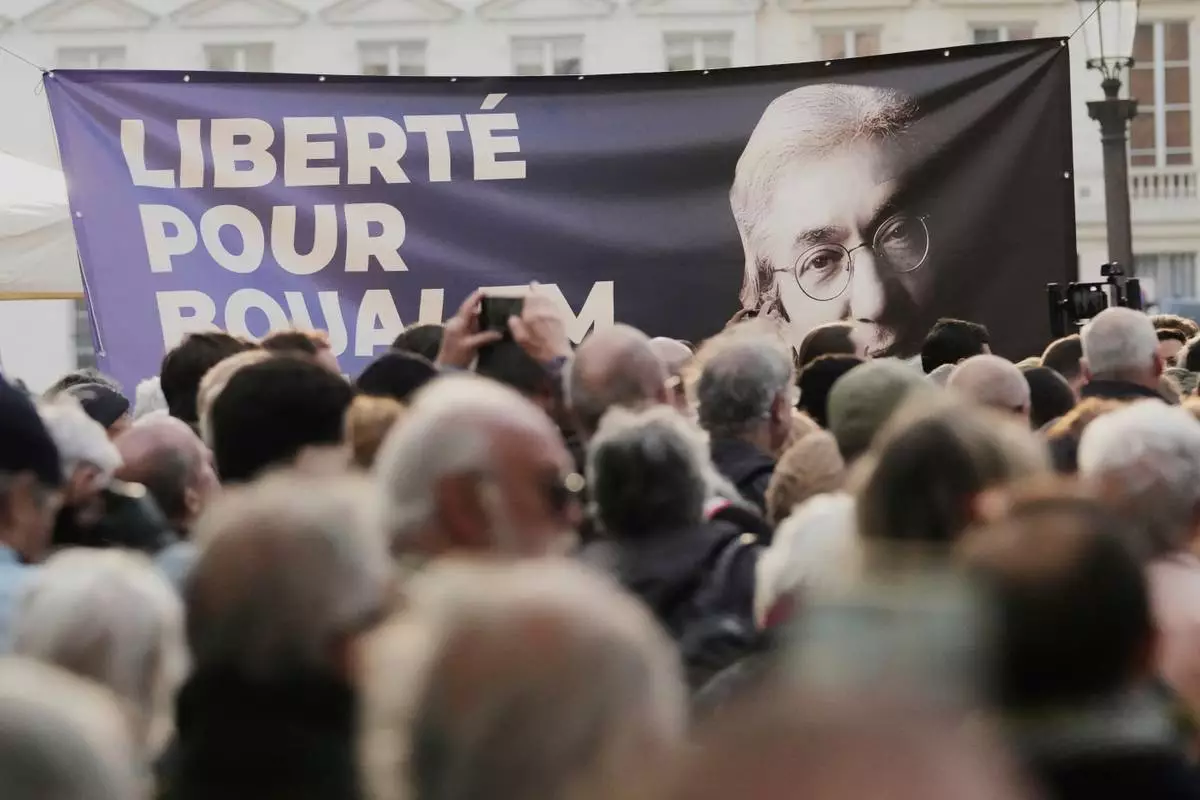
File - A placard reading ''Freedom for Boualem Sansal'' is seen during a gathering in support of detained Franco-Algerian author Boualem Sansal, in Paris, Tuesday, March 25, 2025. (AP Photo/Thibault Camus, File)
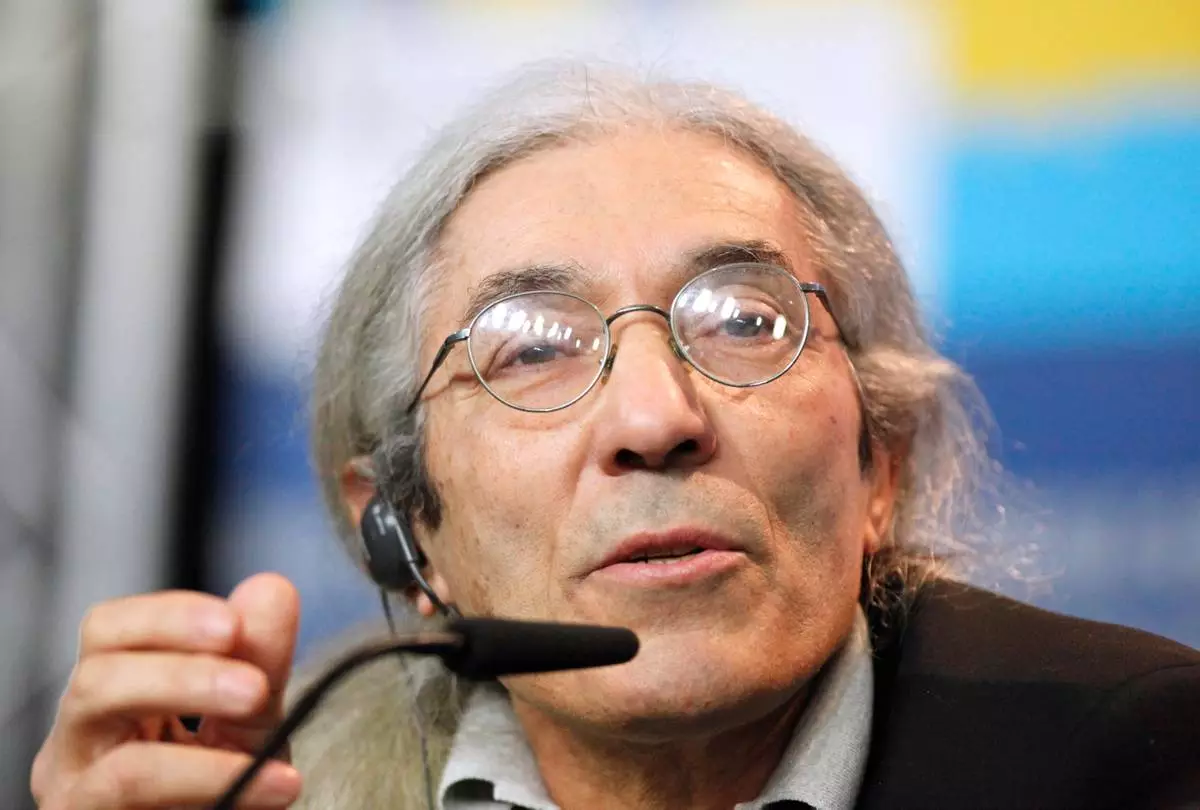
FILE - Boualem Sansal speaks during the 62 edition of International Film Festival Berlinale, in Berlin Thursday, Feb. 9, 2012. (AP Photo/Markus Schreiber, File)
LONDON (AP) — U.S. President Donald Trump says he's strongly considering pulling the United States out of NATO, ratcheting up his criticism of European allies and exposing a wider rift in the trans-Atlantic alliance — this time over the Iran war.
While Trump's talk of a possible NATO pullout dates back years, the comments to The Telegraph newspaper in the U.K., published Wednesday, were among the clearest and most disparaging yet — suggesting that the fracture has deepened perhaps to a point of no return.
Asked whether he would reconsider U.S. membership in the alliance after the conflict in the Middle East ends, Trump replied: “Oh yes, I would say (it’s) beyond reconsideration."
NATO didn't provide immediate comment when contacted by The Associated Press.
U.K. Prime Minister Keir Starmer said that his government was “fully committed to NATO” and called it “the single most effective military alliance the world has ever seen.”
Many European leaders have felt political pressure over the war, which faces opposition in their countries and has sent petroleum prices soaring as Iran has effectively shut the Strait of Hormuz, the narrow waterway between Iran and Oman through which about one-fifth of the world’s oil passes.
“Whatever the pressure on me and others, whatever the noise, I am going to act in the British national interest in all the decisions I make,” Starmer said Wednesday.
The U.K. is working on plans that could help assuage Trump, and Starmer said military planners will work on a postwar security plan for the Strait.
On Thursday, British Foreign Secretary Yvette Cooper will host a virtual meeting of 35 countries that have signed up to help ensure security for shipping in the Strait — after the fighting ends.
Iulia-Sabina Joja, a senior fellow at the Middle East Institute, alluded to Trump's exhortation on Tuesday for allies to “go get your own oil” — in a social media post insisting it wasn't America's job to secure the Strait.
“The Europeans are not keen to go into an active warfare situation, to so-called ‘get’ their energy out of the Strait,” said Joba, a former deputy project manager at NATO Allied Command Transformation in Virginia.
Long-simmering tensions within the alliance have bubbled up again over the war.
As energy prices have spiked, Trump has been desperate to get countries to send their ships to the Strait of Hormuz. He has called NATO allies “cowards."
Even since his first term, Trump has urged the allies to assume greater responsibility for their own security and spend more on defense. He has argued that the U.S. has done more for them than the other way around.
A U.S. pullout would essentially spell the end of NATO, which flourished for decades under American leadership.
Speaking Tuesday on Fox News, U.S. Secretary of State Marco Rubio said: “I do think, unfortunately, we are going to have to reexamine whether or not this alliance that has served this country well for a while is still serving that purpose.”
Rubio raised questions with interviewer Sean Hannity about whether NATO has “become a one-way street where America is simply in a position to defend Europe — but when we need the help of our allies, they’re going to deny us basing rights and they’re going to deny us overflight.”
The criticism from Rubio could raise concerns in the alliance about whether the U.S. under Trump may no longer consider NATO as worth the time, money and personnel that Washington has invested in it.
The very mention of a pullout could weaken the alliance’s deterrence, particularly with Russia: It relies on ensuring that Russian President Vladimir Putin believes NATO will retaliate if he decides to one day expand Moscow's war in Ukraine.
NATO is built on Article 5 of its founding treaty, which pledges that an attack on any one member will be met with a response from them all.
As the Iran war has spread, missiles and drones have been fired toward NATO member Turkey and a British military base on Cyprus, fueling speculation about what might prompt NATO to trigger its collective security guarantee and come to their rescue.
The alliance hasn't intervened or signaled any plan to. NATO Secretary-General Mark Rutte — who has voiced support for Trump and Washington's role in the alliance — has been focusing mostly on the Russia-Ukraine war since Ukraine borders four NATO countries.
NATO operates uniquely by consensus. All 32 countries must agree for it to take decisions, so political priorities play a role. Even invoking Article 5 requires agreement among the allies. Turkey or the U.K. can't trigger it alone.
The U.S. can’t just simply walk away all that easy.
A Defense Act passed under U.S. President Joe Biden in 2024 prevents an American president from withdrawing from NATO without support of two-thirds of the Senate or under another act by Congress. It is unclear whether the Trump administration, which during his first term claimed broader authority on the matter, would challenge that law.
European leaders have called for the Middle East conflict to stop and want the U.S. and Iran to return to negotiations over Tehran's nuclear program, which Washington and Israel see as a threat.
The vocal opposition in Europe to Trump's war against Iran has started to turn into action.
Spain has closed its airspace to U.S. planes involved in the war.
Early last month, France agreed to let the U.S. Air Force use a base in southern France after receiving a “full guarantee” from the United States that planes not involved in carrying out strikes against Iran would land there.
The government of Italian Premier Giorgia Meloni, long seen as one of the European Union leaders with the best personal ties with Trump, denied permission for U.S. bombers to land at the Sigonella air base in Sicily for one mission related to the Middle East.
Franco Pavoncello, a professor of political science at Rome’s John Cabot University, said that decision might cost Meloni a lot of her political capital in Washington.
But he said: “The Italian government could not be seen by the European allies as too submissive to American interests, as it would have very negative repercussions both at home and in the EU.”
U.S. relations with Europe had already soured in recent months over Trump's call for Greenland — a semiautonomous territory of stalwart NATO ally Denmark — to become part of the United States, prompting many EU countries to rally behind Copenhagen.
Jamey Keaten reported from Geneva. Lorne Cook in Brussels, Giada Zampano in Rome, Sam McNeil in Dubai, United Arab Emirates, and Matthew Lee in Washington, contributed to this report.
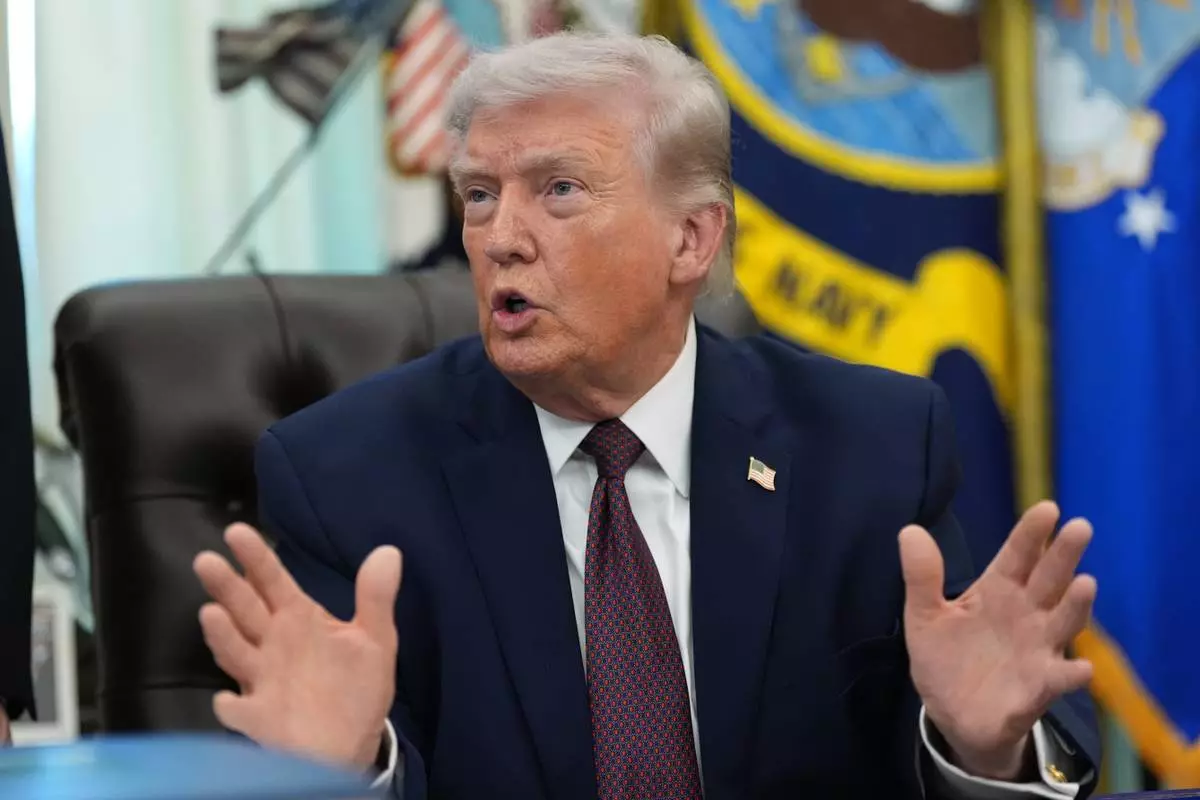
President Donald Trump answers questions from reporters after signing an executive order in the Oval Office of the White House Tuesday, March 31, 2026, in Washington. (AP Photo/Alex Brandon)
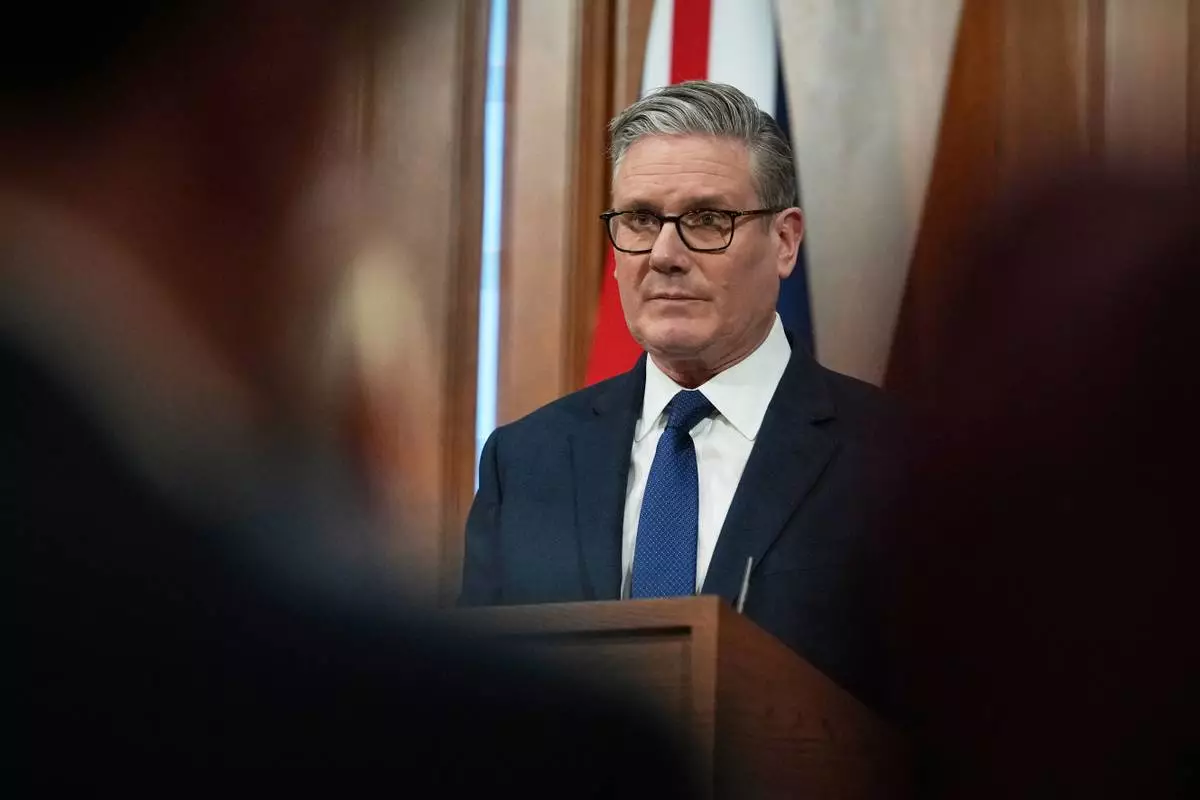
Britain's Prime Minister Keir Starmer speaks during a press conference at Downing Street in London, Wednesday, April 1, 2026. (AP Photo/Frank Augstein, Pool)
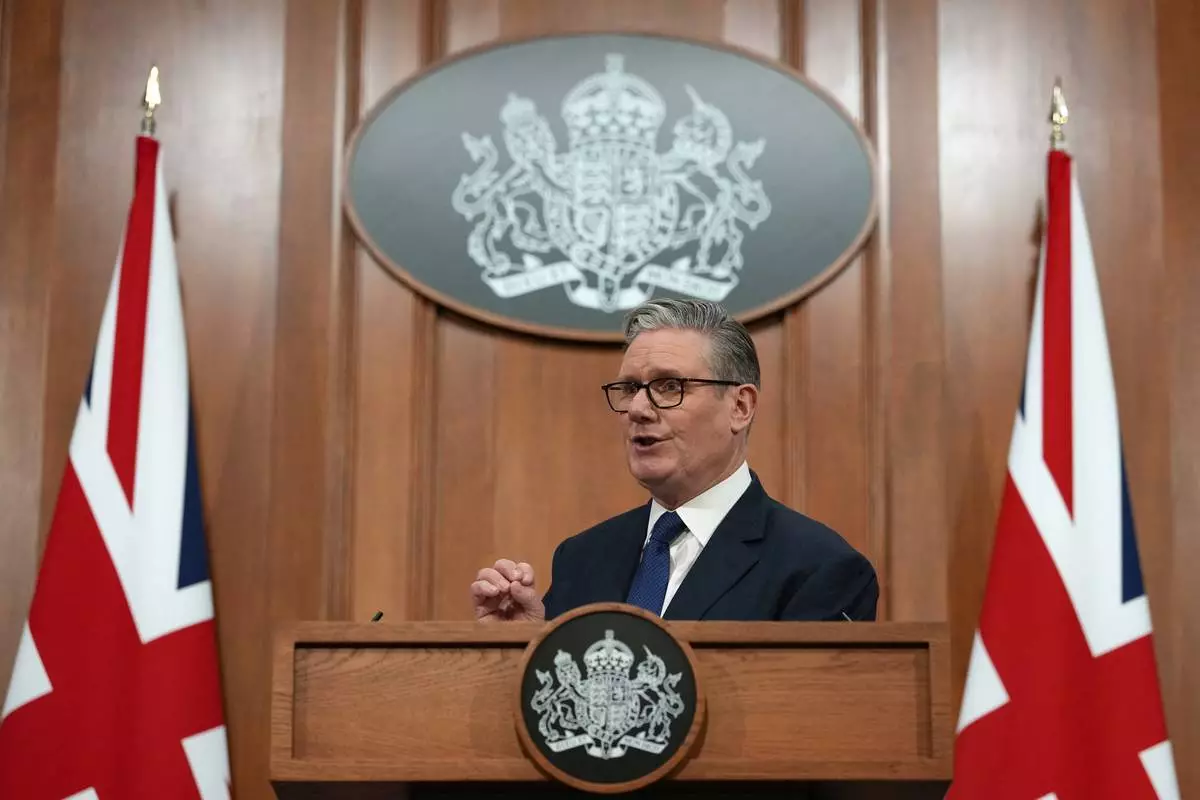
Britain's Prime Minister Keir Starmer speaks during a press conference at Downing Street in London, Wednesday, April 1, 2026. (AP Photo/Frank Augstein, Pool)
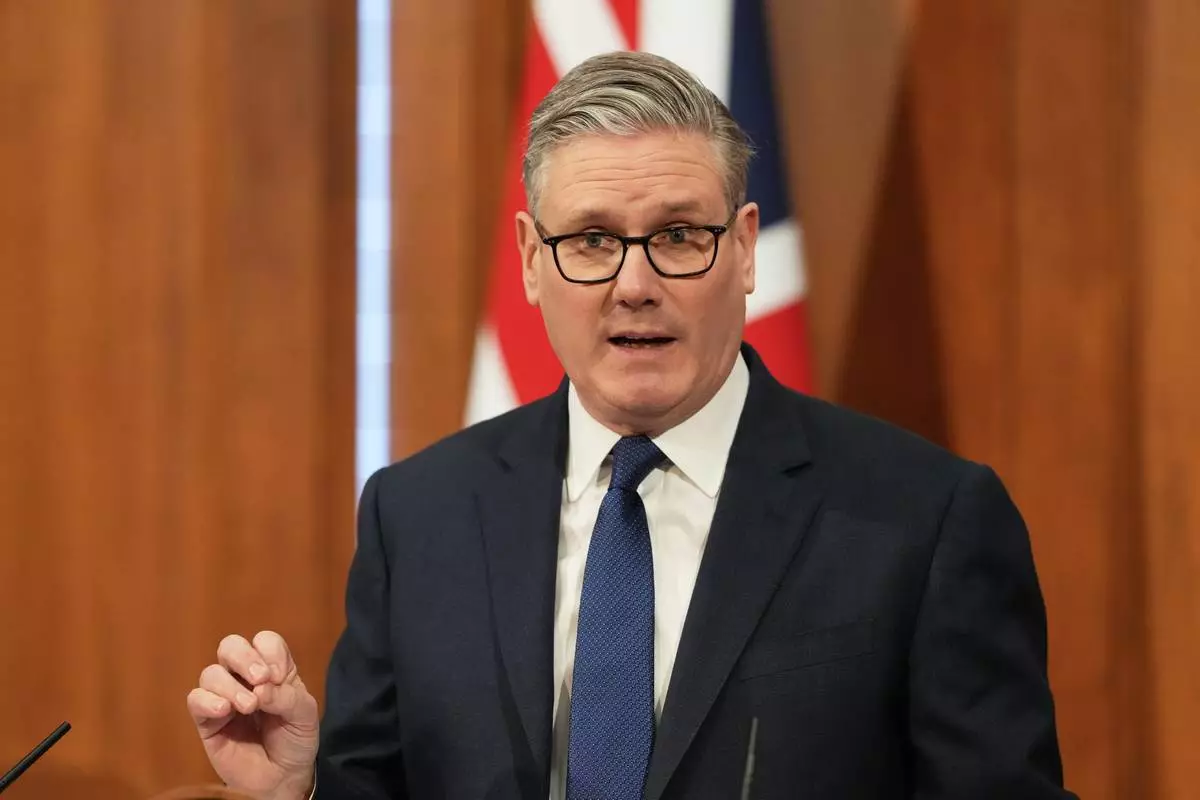
Britain's Prime Minister Keir Starmer speaks during a press conference at Downing Street in London, Wednesday, April 1, 2026. (AP Photo/Frank Augstein, Pool)