JERUSALEM (AP) — Israel's president and high-ranking military officials on Wednesday condemned attacks a day earlier by Jewish settlers against Palestinians in the West Bank, calling for an end to a growing wave of settler violence in the occupied territory.
President Isaac Herzog described the attacks as “shocking and serious,” adding a rare and powerful voice to what has been muted criticism by top Israeli officials of the settler violence. Herzog's position, while largely ceremonial, is meant to serve as a moral compass and unifying force for the country.
Click to Gallery
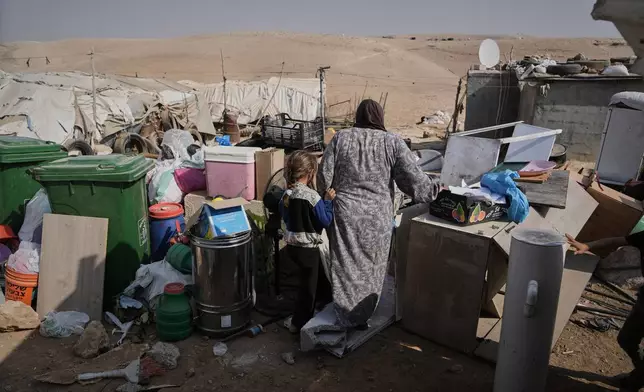
Members of the Hamamdeh family gather their belongings after Israeli authorities demolished their home in the West Bank village of Masafer Yatta Wednesday, Nov. 12, 2025. (AP Photo/Mahmoud Illean)
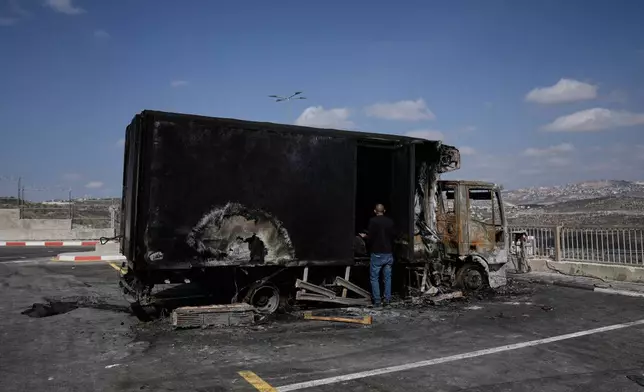
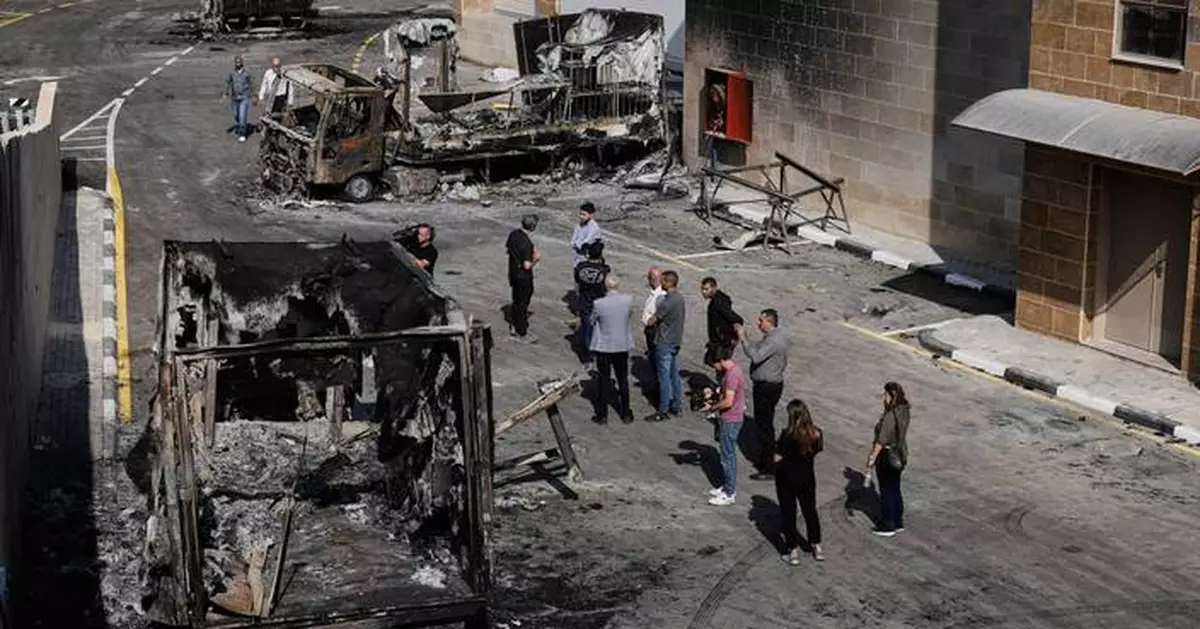
Palestinians survey damage in an industrial zone following an attack by Israeli settlers the previous day in the West Bank village of Beit Lid, near Tulkarm, Wednesday, Nov. 12, 2025. (AP Photo/Majdi Mohammed)
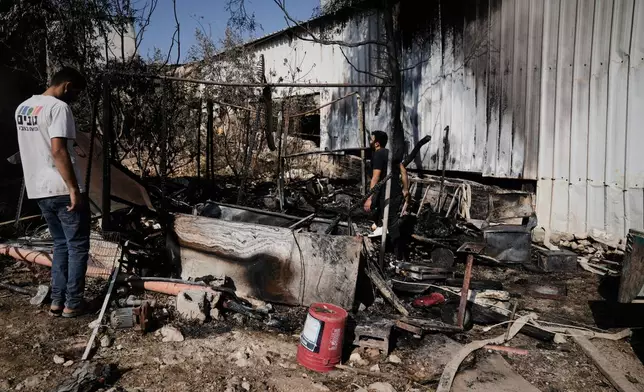
Palestinians survey damage in an industrial zone following an attack by Israeli settlers the previous day in the West Bank village of Beit Lid, near Tulkarm, Wednesday, Nov. 12, 2025. (AP Photo/Majdi Mohammed)
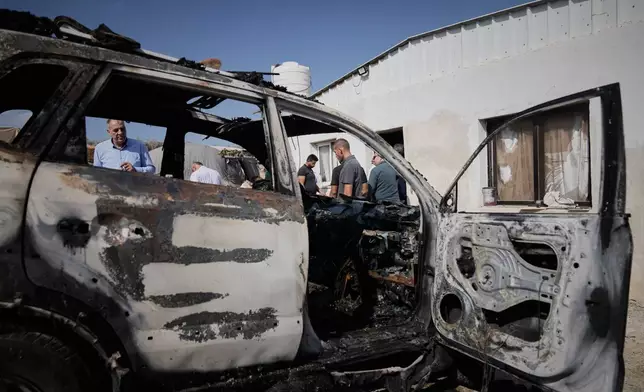
Palestinians survey damage in an industrial zone following an attack by Israeli settlers the previous day in the West Bank village of Beit Lid, near Tulkarm, Wednesday, Nov. 12, 2025. (AP Photo/Majdi Mohammed)
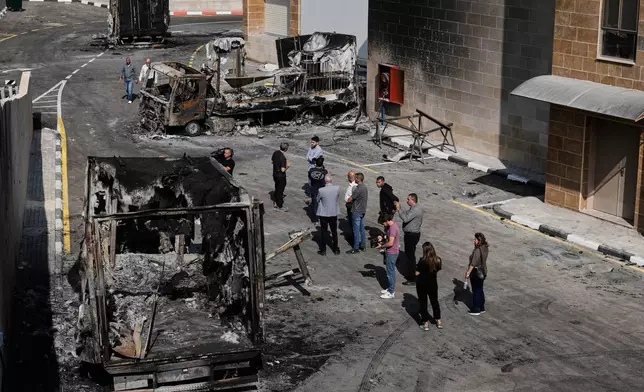
Palestinians and journalists survey damage in an industrial zone following an attack by Israeli settlers the previous day in the West Bank village of Beit Lid, near Tulkarm, Wednesday, Nov. 12, 2025. (AP Photo/Majdi Mohammed)
Herzog said the violence committed by a “handful” of perpetrators “crosses a red line," adding in a social media post that “all state authorities must act decisively to eradicate the phenomenon."
His remarks, and those of two high-ranking military officials, came after dozens of masked Israeli settlers attacked the Palestinian villages of Beit Lid and Deir Sharaf in the West Bank on Tuesday, setting fire to vehicles and other property before clashing with Israeli soldiers.
In other developments Wednesday:
— Israel reopened a crossing into the northern Gaza Strip that had been closed for two months. The move was welcomed by officials at the United Nations, who say Israel has been too slow in surging humanitarian aid to the territory since a ceasefire began last month. Aid has been delivered into Gaza since Oct. 10 through two crossings in southern and central Gaza.
— The Israeli military said it killed four armed militants who posed an “immediate threat” in areas of southern Gaza under its control. In Khan Younis, one person was killed while approaching Israeli troops across the so-called yellow line. In Rafah, three people were killed while troops in the area were working to destroy underground tunnels.
The Israeli army's chief of staff, Eyal Zamir, echoed Herzog's condemnations of the West Bank violence, saying the military “will not tolerate the phenomena of a minority of criminals who tarnish a law-abiding public.”
He said the army is committed to stopping violent acts committed by settlers, which he described as contrary to Israeli values and that “divert the attention of our forces from fulfilling their mission."
The chief of the military's Central Command, Maj. Gen. Avi Bluth, said responding to an “anarchist fringe” requires the use of significant resources that could otherwise be focused on bolstering security and conducting counterterrorism operations.
The army said the settlers who attacked the villages fled to a nearby industrial zone and attacked soldiers responding to the violence, damaging a military vehicle. Police said four Israelis were arrested, while the military said four Palestinians were wounded.
On Wednesday, police said three of the suspects were released and that one, a minor arrested on suspicion of arson and assault, will remain in custody for six more days, as ordered by a judge. Police said the actions of the three who were released are still under investigation “with the goal of bringing offenders to justice, regardless of their background.”
Tuesday's violence in the West Bank was the latest in a series of attacks by young settlers that have surged since the war in Gaza erupted two years ago. The attacks have intensified in recent weeks as Palestinians harvest their olive trees in an annual ritual.
The U.N. humanitarian office last week reported more Israeli settler attacks on Palestinians in the West Bank in October than in any other month since it began keeping track in 2006. There were over 260 attacks, the office said.
Palestinians and human rights workers accuse the Israeli army and police of failing to halt attacks by settlers. Israel’s government is dominated by far-right proponents of the settler movement including Finance Minister Bezalel Smotrich, who formulates settlement policy, and Cabinet minister Itamar Ben-Gvir, who oversees the nation's police force.
Muayyad Shaaban, who heads an office in the Palestinian Authority that is tracking the violence, said the settlers set fire to four dairy trucks, farmland, tin shacks and tents belonging to a Bedouin community.
He said the attacks were part of a campaign to drive Palestinians from their land and accused Israel of giving the settlers protection and immunity. He called for sanctions against groups that “sponsor and support the colonial settlement terrorism project.”
In Beit Lid, residents said they don't want their lives ruled by fear of settler violence.
Mahmoud Edeis said the violence is undermining his family's right to live in safety.
“To feel that my children are safe, that when I go to sleep I can say, ‘OK, there’s nothing (to worry about),’” he said. "But at any moment something could happen … This can’t go on. It can’t be that we keep living our whole lives in a state of fear and danger.”
Amjad Amer Al-Juneidi, who works at a dairy factory that was attacked Tuesday, said the “fully organized” attack saw one person carrying gasoline-filled cans, another prying open the factory door with a crowbar and a third individual igniting the fuel.
“Their entry into the company wasn’t random. It was organized, and they had a fully organized tactic for how to carry out the burning," Al-Juneidi said.
While U.N. officials welcomed the Israeli decision to reopen the Zikim crossing into northern Gaza, they also reiterated criticism of Israel for not doing more.
Stéphane Dujarric, the U.N. spokesperson, said Wednesday that humanitarian groups in Gaza are being hampered in their ability to distribute food once it arrives in the territory and having to “stretch out the available stocks.”
The demand for baby formula, for example, far exceeds the current supply, UNICEF spokesperson Ricardo Pires told The Associated Press on Tuesday.
Pires said there are also concerns about whether there will be enough syringes to carry out a vaccination campaign that began this month and will continue into January.
The Israeli agency in charge of humanitarian aid in Gaza, COGAT, said in a statement on Tuesday that “Israel is fully committed to its obligation to facilitate the entry of humanitarian aid trucks in accordance with the (ceasefire) agreement.”
Later Wednesday, U.N. Secretary-General Antonio Guterres said the Gaza ceasefire “is fragile, is repeatedly violated, but it is holding”
Guterres strongly appealed for the ceasefire between Hamas and Israel “to be fully respected and to pave the way for the negotiations of Phase Two, leading to the creation of the conditions for the self-determination of the Palestinian people and the creation of the two-state solution.”
Associated Press report Farnoush Amiri at the United Nations, and Toqa Ezzidin in Cairo, contributed reporting.
Find more of AP’s Israel-Hamas coverage at https://apnews.com/hub/israel-hamas-war
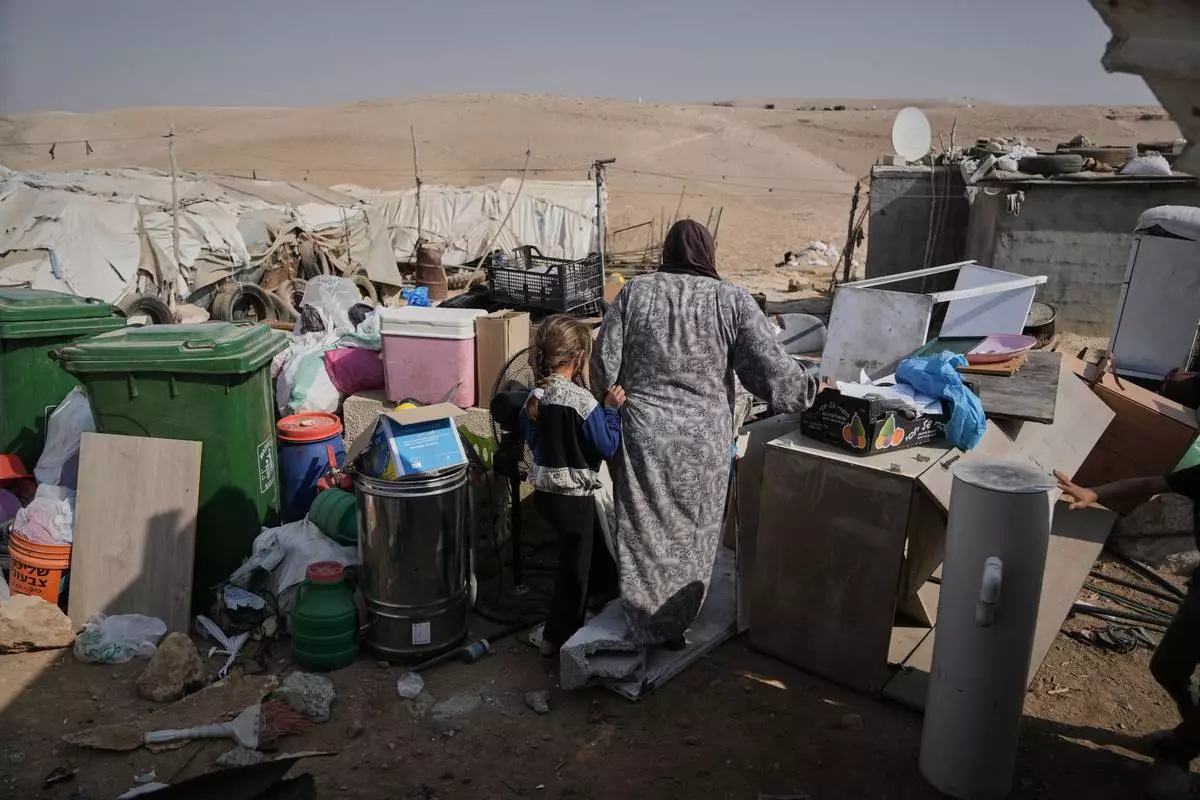
Members of the Hamamdeh family gather their belongings after Israeli authorities demolished their home in the West Bank village of Masafer Yatta Wednesday, Nov. 12, 2025. (AP Photo/Mahmoud Illean)
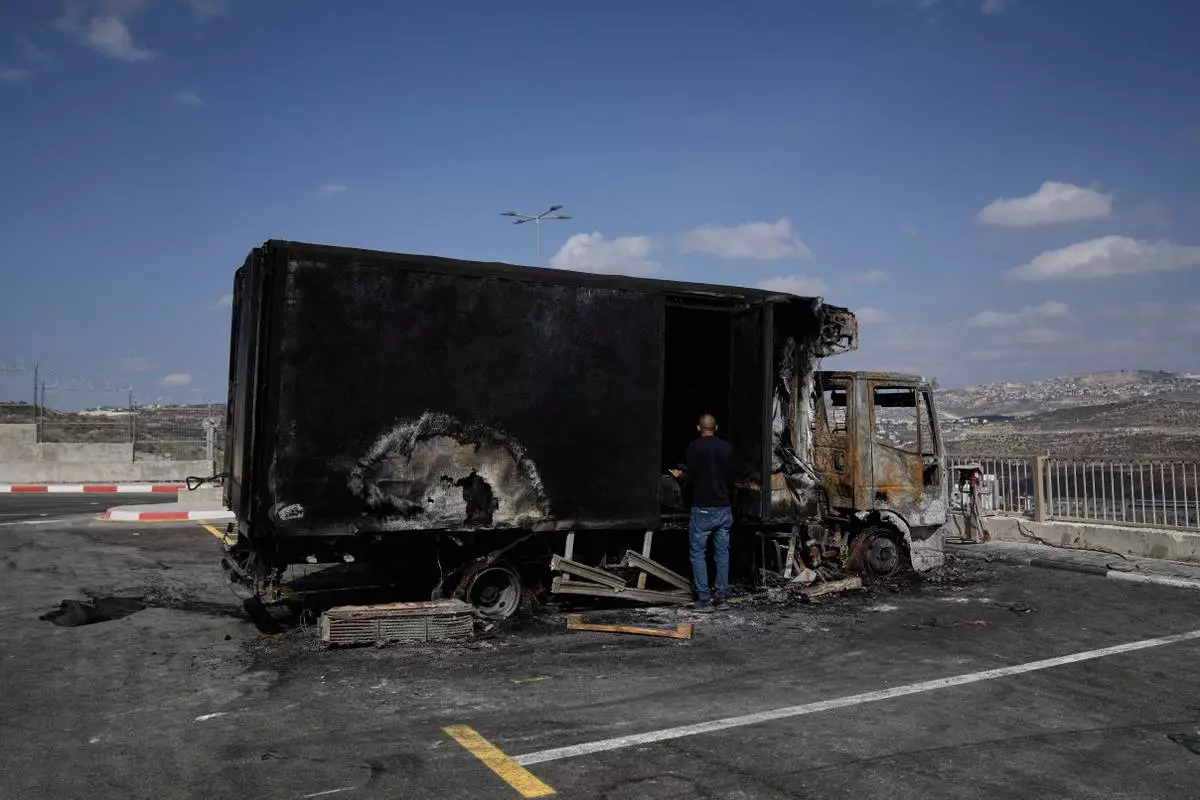
Palestinians survey damage in an industrial zone following an attack by Israeli settlers the previous day in the West Bank village of Beit Lid, near Tulkarm, Wednesday, Nov. 12, 2025. (AP Photo/Majdi Mohammed)
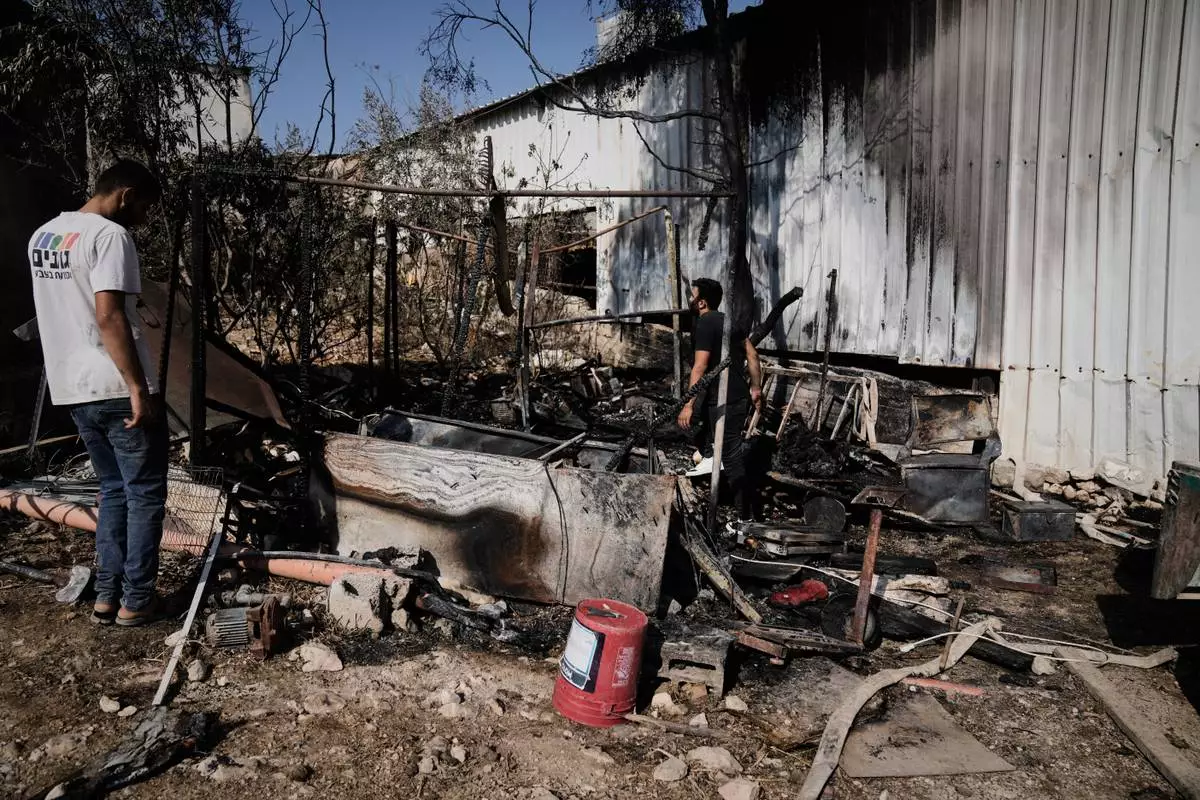
Palestinians survey damage in an industrial zone following an attack by Israeli settlers the previous day in the West Bank village of Beit Lid, near Tulkarm, Wednesday, Nov. 12, 2025. (AP Photo/Majdi Mohammed)
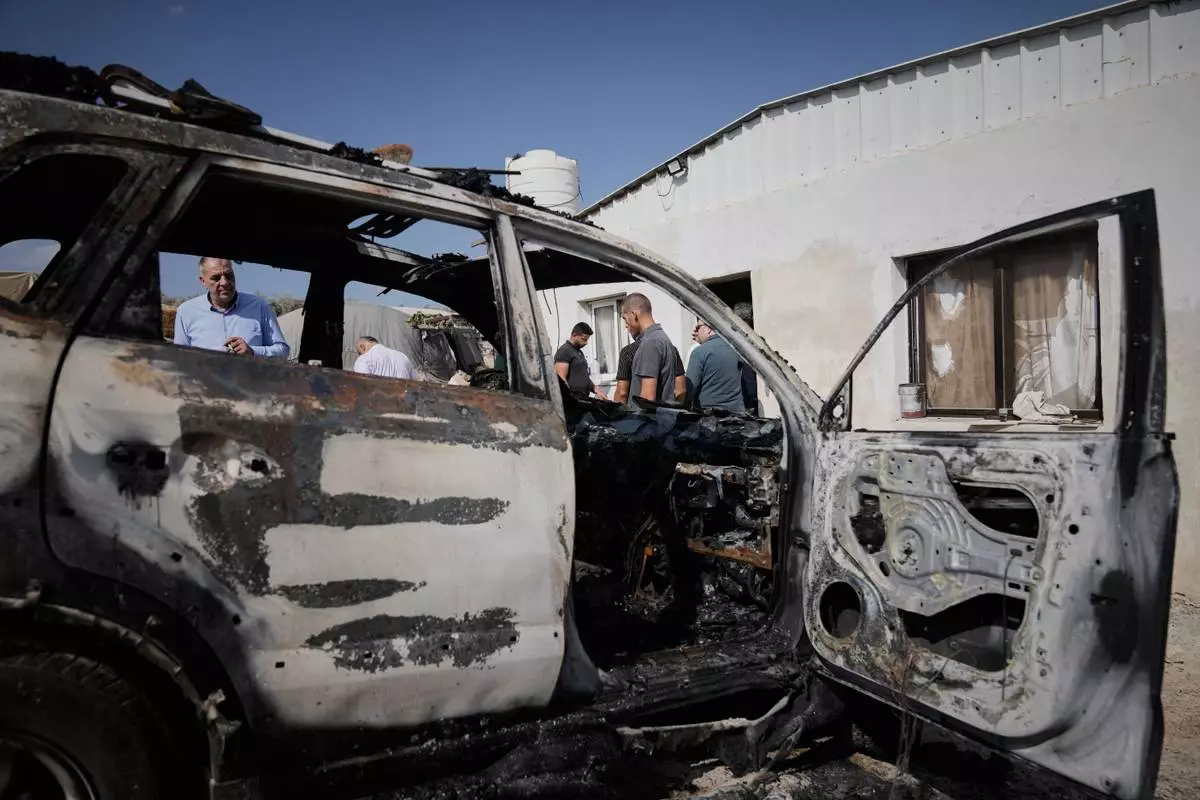
Palestinians survey damage in an industrial zone following an attack by Israeli settlers the previous day in the West Bank village of Beit Lid, near Tulkarm, Wednesday, Nov. 12, 2025. (AP Photo/Majdi Mohammed)
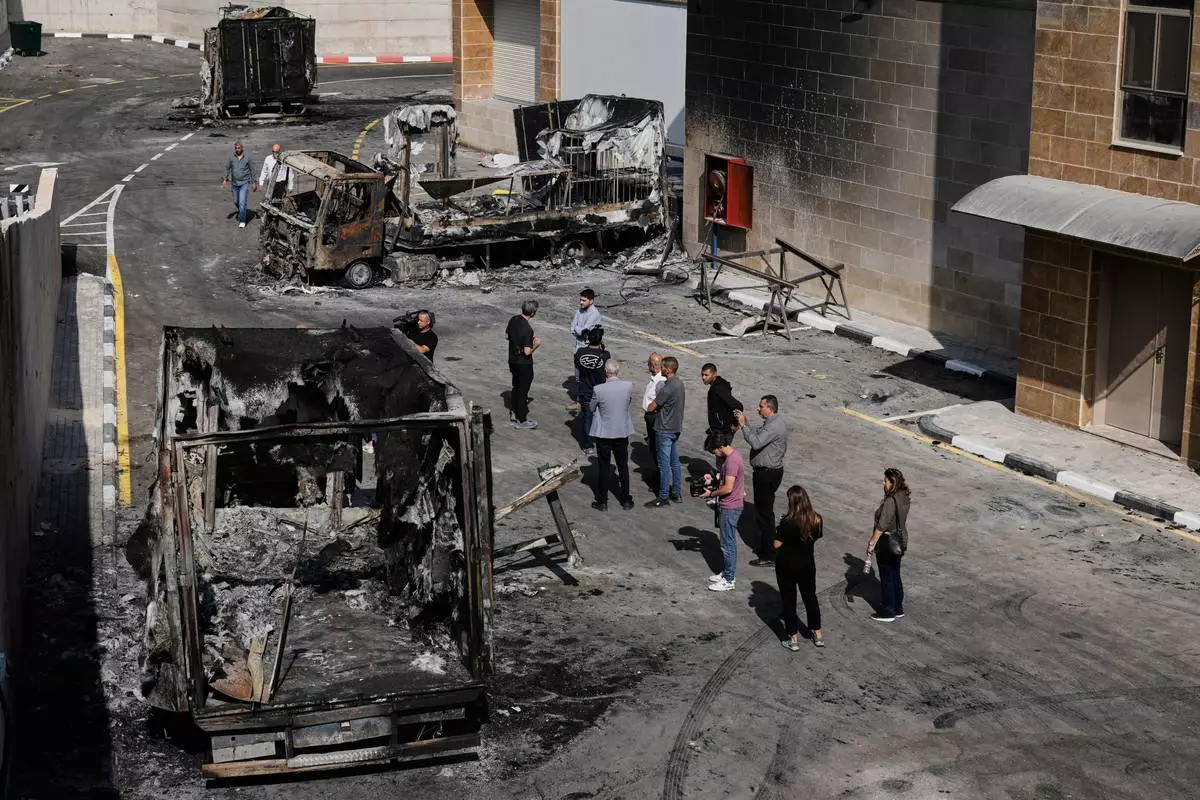
Palestinians and journalists survey damage in an industrial zone following an attack by Israeli settlers the previous day in the West Bank village of Beit Lid, near Tulkarm, Wednesday, Nov. 12, 2025. (AP Photo/Majdi Mohammed)