Skip to Content Facebook Feature Image

Theft of Roman statues from Syria’s main museum believed to be the work of an individual

News

Theft of Roman statues from Syria’s main museum believed to be the work of an individual
News

News

Theft of Roman statues from Syria’s main museum believed to be the work of an individual

2025-11-13 03:24 Last Updated At:11:18

DAMASCUS, Syria (AP) — Investigators believe that the theft of several ancient statues dating back to the Roman era from Syria’s national museum was likely the work of an individual, not an organized gang, officials said Wednesday.

The National Museum of Damascus was closed after the heist was discovered early Monday. The museum had reopened in January as the country recovers from a 14-year civil war and the fall of the 54-year Assad dynasty last year.

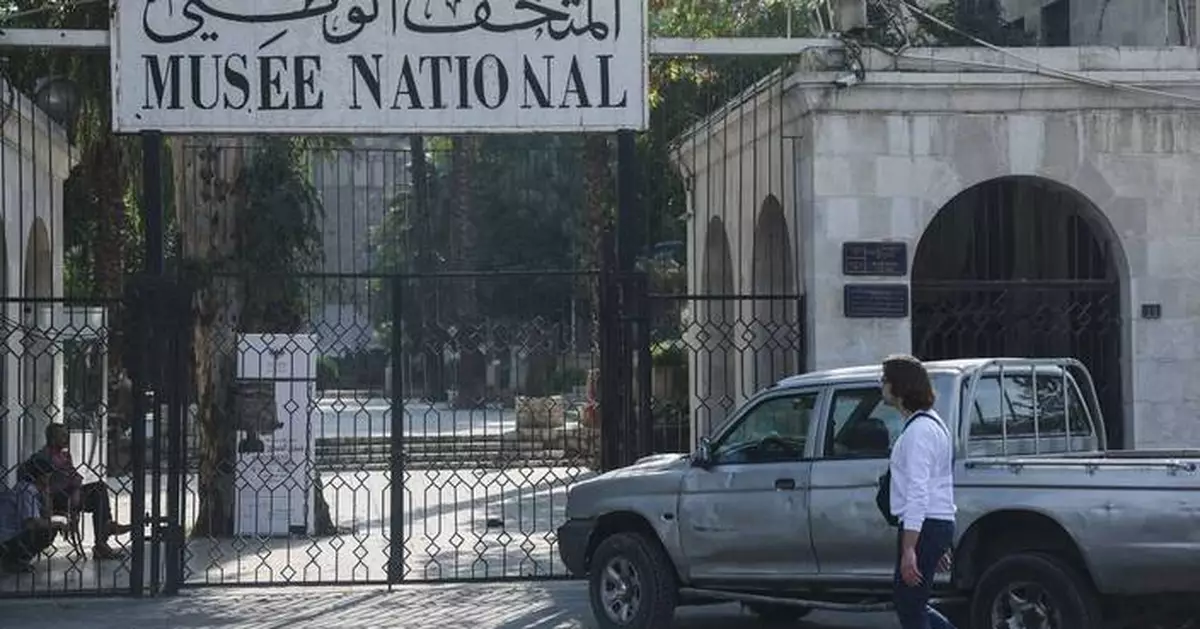
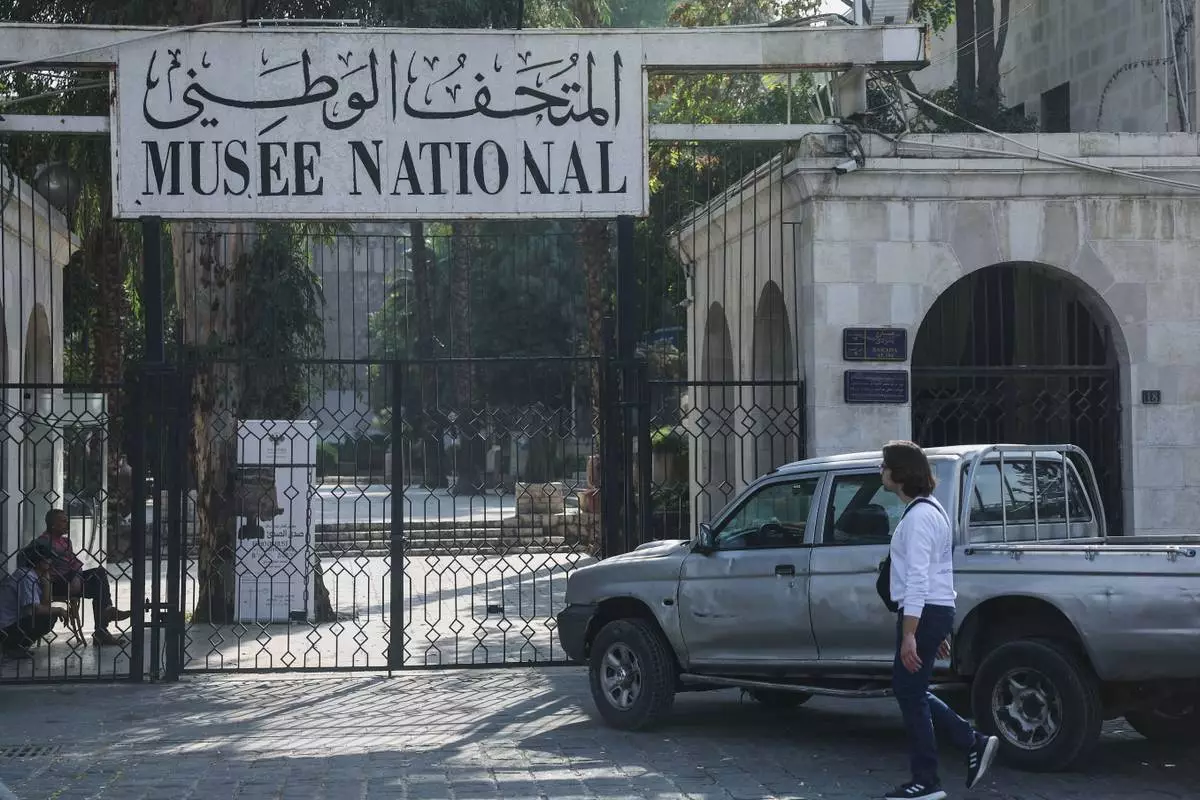
On Wednesday, a security vehicle was parked outside the main gate of the museum in central Damascus while security guards stood nearby. People weren't allowed in because of the ongoing investigation.

Two officials from Syria’s Directorate-General for Antiquities and Museums said that progress has been made in the investigation and that results are expected soon. They spoke on condition of anonymity, because they weren't allowed to speak about the details of the investigation to the media.

“God willing we will reach good results,” one of the officials said.

The country’s largest museum houses priceless antiquities. After the civil war started in March 2011, security was improved with metal gates and surveillance cameras, and authorities moved hundreds of artifacts to Damascus from around the country.

The Culture Ministry released a statement late Wednesday with drawings of the six missing statues representing the Roman goddess of Venus. The ministry posted the registration number at the museum of each of the statues of the goddess of love as well as their height, of which the highest is 40½ centimeters (around 16 inches).

The statement urged that whoever has information about the statues come forward and contact the ministry through a telephone number or email address that were provided.

The theft angered Damascus residents who said that such acts tarnish the image of Syria as the country tries to rebuild from a war that left around 500,000 people dead.

“This is not only an aggression on the Syrian state, but an aggression on Syrian civilization,” resident Waddah Khalifeh said when asked about the theft. He expressed fears that the thieves might aim to smuggle the statues and sell them abroad.

On Tuesday, the Directorate-General for Antiquities and Museums said that the theft didn't affect activities at the museum and that the public was visiting the facility as usual.

But an Associated Press journalist who tried to enter the museum on Wednesday was told that all sections, including those that are outdoors, were closed because of the investigation.

The museum reopened on Jan. 8, a month after rebels ousted President Bashar Assad, ushering in a new era for the country. Fearful of looting, the museum had briefly closed after a rebel offensive ended five decades of Assad family rule.

The years of conflict had badly affected areas including the historic central town of Palmyra, once held by the Islamic State group. In 2015, IS members destroyed mausoleums in Palmyra’s UNESCO World Heritage site, which is famous for its 2,000-year-old Roman colonnades, other ruins and priceless artifacts.

"I hope that these pieces will be returned, because this is good for the new Syria,” said another resident, Hussein Abu al-Kheir, referring to post-Assad Syria.

Bassem Mroue reported from Beirut.
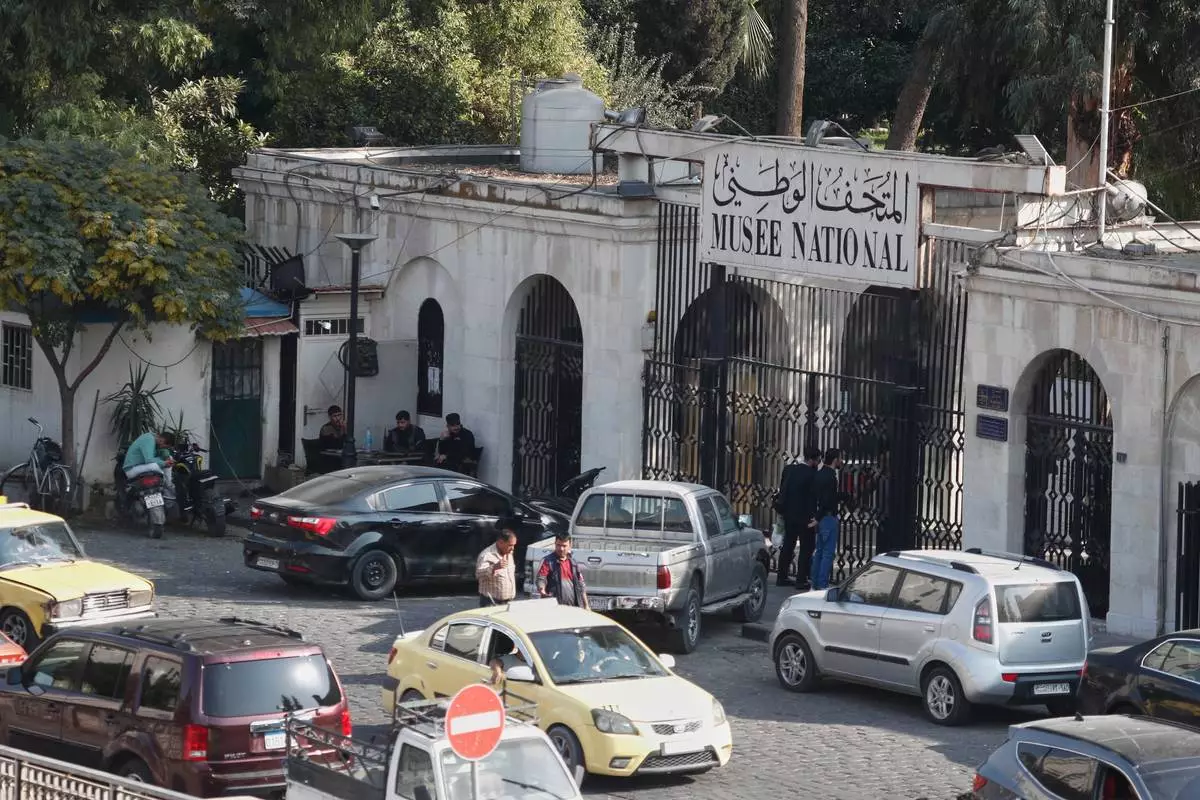
People gather outside the National Museum of Syria in Damascus, Wednesday, Nov. 12, 2025. (AP Photo/Omar Sanadiki)
People gather outside the National Museum of Syria in Damascus, Wednesday, Nov. 12, 2025. (AP Photo/Omar Sanadiki)

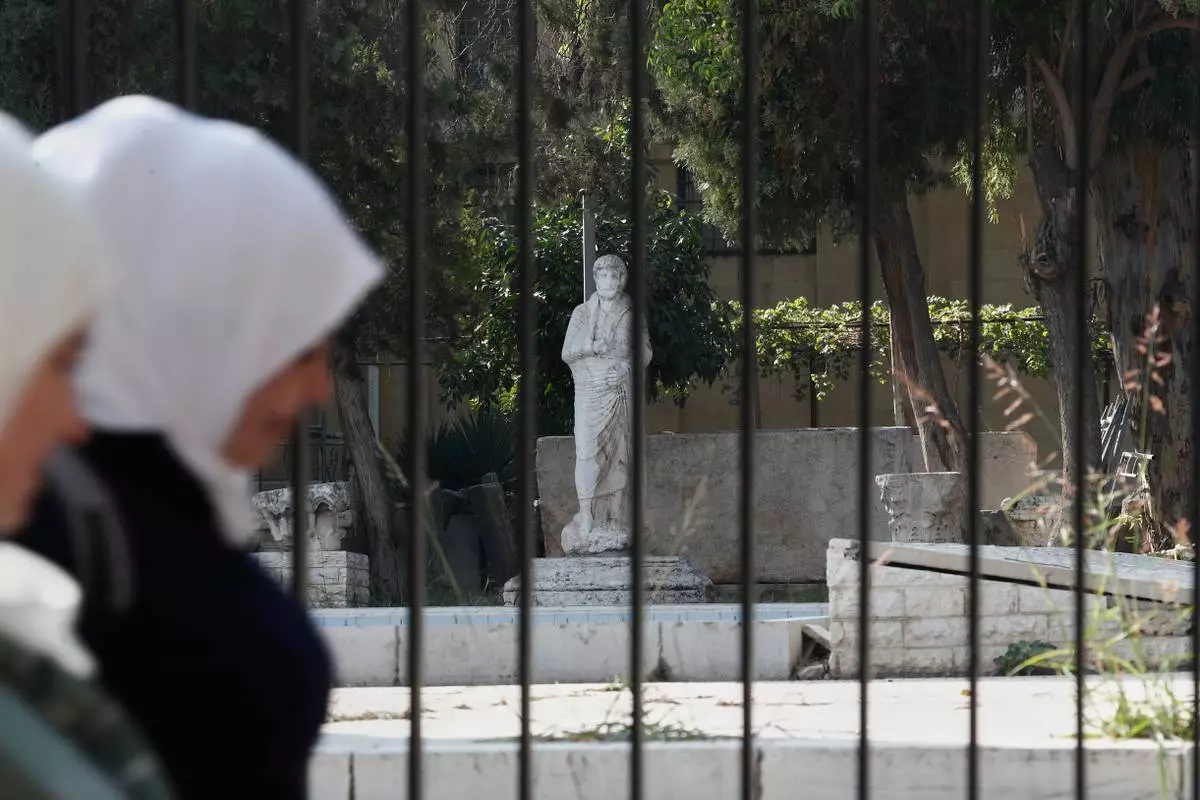
Syrian women walk past a fence of the National Museum of Syria in Damascus, Syria, Wednesday, Nov. 12, 2025. (AP Photo/Omar Sanadiki)
Syrian women walk past a fence of the National Museum of Syria in Damascus, Syria, Wednesday, Nov. 12, 2025. (AP Photo/Omar Sanadiki)

The gate of the entrance of the National Museum of Syria is closed, in Damascus, Wednesday, Nov. 12, 2025. ( (AP Photo/Ghaith Alsayed)


The gate of the entrance of the National Museum of Syria is closed, in Damascus, Wednesday, Nov. 12, 2025. ( (AP Photo/Ghaith Alsayed)

DHAKA, Bangladesh (AP) — Huge crowds flocked to the area outside Bangladesh’s national parliament building in the capital Wednesday to attend the funeral prayers for former Prime Minister Khaleda Zia , who died a day earlier at the age of 80 after a prolonged illness.

Waves of people from Dhaka and elsewhere had been streaming in toward the venue on Manik Mia Avenue, outside the parliament building, since early morning. Witnesses said many cried, calling Zia their “mother” as they arrived at the venue, with some traveling overnight from rural areas to join the prayers. In neighborhoods kilometers (miles) away, crowds also spilled into major streets to pray.

Zia’s funerals were expected to draw hundreds of thousands of her supporters and people from across the country while dignitaries from India, Pakistan, Sri Lanka and Nepal also arrived in Dhaka, with local media saying foreign envoys and representatives from 32 countries joined the funeral ceremony. She will be buried beside the grave of her husband, a former president who was assassinated in a military coup in 1981, in a park outside the parliament building later Wednesday.

Zia came to politics after her husband’s death and rose to prominence as an opposition leader during a nine-year movement against a former military dictator who was ousted in a mass uprising in 1990. Zia became prime minister for the first time in 1991, with a landslide victory in a democratically held national election as the country introduced parliamentary democracy. She was the leader of her Bangladesh Nationalist Party till her death.

Zia, who was known for having a calm demeanor, maintained a strong political rivalry with her archrival and former Prime Minister Sheikh Hasina. Hasina, who heads the Bangladesh Awami League party, ruled the country for 15 years before she was ousted in 2024 in a mass uprising.

Zia's coffin, draped in Bangladesh’s national flag, was carried in a van escorted by security officials and party supporters from the hospital to her residence and then to the funeral venue.

Authorities said about 10,000 security officials including soldiers would be deployed around the venue to maintain order on Wednesday.

Bangladesh’s interim government headed by Nobel Peace Prize laureate Muhammad Yunus announced a three-day mourning and declared Wednesday a public holiday to facilitate the funerals. Flags were kept at half-staff Wednesday across the country to show respect to Zia, the country’s first female prime minister who served two full terms and another brief term.

Zia’s eldest son, Tarique Rahman, is the acting head of her Bangladesh Nationalist Party, which is the front-runner in the nation’s next elections in February.

Hasina, who has been in exile in India since Aug. 5, 2024, was sentenced to death in November on charges of crimes against humanity involving last year’s uprising.

FILE - Bangladesh's main opposition Bangladesh Nationalist Party chief and former Prime Minister Khaleda Zia looks upwards as she attends a rally of her supporters outside their party headquarters in Dhaka, Bangladesh, Monday, March 12, 2012. (AP Photo/Aijaz Rahi, File)

FILE - Bangladesh's main opposition Bangladesh Nationalist Party chief and former Prime Minister Khaleda Zia looks upwards as she attends a rally of her supporters outside their party headquarters in Dhaka, Bangladesh, Monday, March 12, 2012. (AP Photo/Aijaz Rahi, File)

FILE - Khaleda Zia takes an oath of office as the prime minister in Dhaka, Bangladesh, Oct. 10, 2001. (AP Photo/Pavel Rahman, File)

FILE - Khaleda Zia takes an oath of office as the prime minister in Dhaka, Bangladesh, Oct. 10, 2001. (AP Photo/Pavel Rahman, File)

FILE - Bangladesh's former prime minister and Bangladesh Nationalist Party leader Khaleda Zia, center, leaves court after a hearing in Dhaka, Bangladesh, Aug. 10, 2016. (AP Photo, File)

FILE - Bangladesh's former prime minister and Bangladesh Nationalist Party leader Khaleda Zia, center, leaves court after a hearing in Dhaka, Bangladesh, Aug. 10, 2016. (AP Photo, File)

Recommended Articles