Skip to Content Facebook Feature Image

Wall Street drops to one of its worst days since April on worries about AI stocks and interest rates

News

Wall Street drops to one of its worst days since April on worries about AI stocks and interest rates
News

News

Wall Street drops to one of its worst days since April on worries about AI stocks and interest rates

2025-11-14 05:19 Last Updated At:05:20

NEW YORK (AP) — The U.S. stock market tumbled Thursday to one of its worst days since its springtime sell-off, as Nvidia and other AI superstar stocks kept dropping on worries their prices shot too high. Also hurting the market were questions about whether coming cuts to interest rates that Wall Street has been banking on will actually happen.

The S&P 500 sank 1.7% and pulled further from its all-time high set late last month. It was the worst day in a month for the index at the heart of many 401(k) accounts and the second-worst since April’s plunge after President Donald Trump shocked the world with his “Liberation Day” tariffs.

More Images
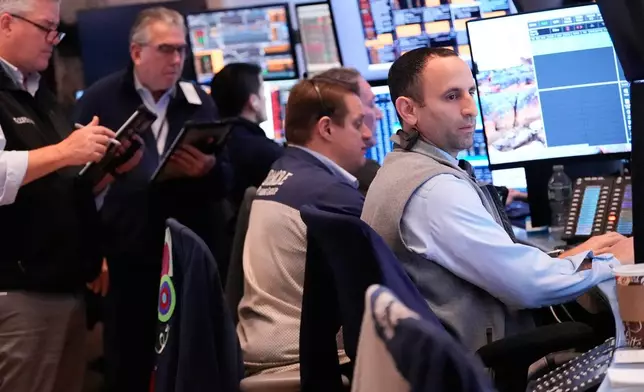
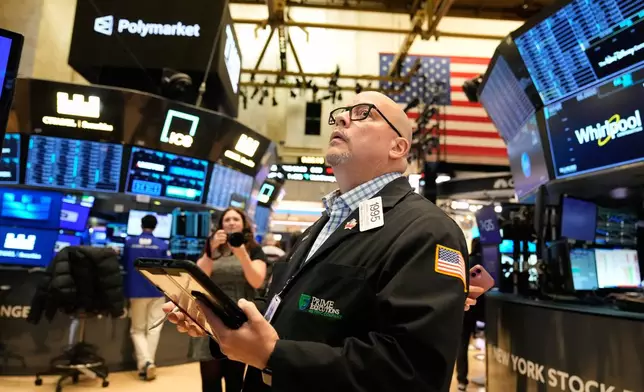
Traders work on the floor at the New York Stock Exchange in New York, Thursday, Nov. 13, 2025. (AP Photo/Seth Wenig)
Traders work on the floor at the New York Stock Exchange in New York, Thursday, Nov. 13, 2025. (AP Photo/Seth Wenig)
Jeffrey Vazquez works on the floor at the New York Stock Exchange in New York, Thursday, Nov. 13, 2025. (AP Photo/Seth Wenig)
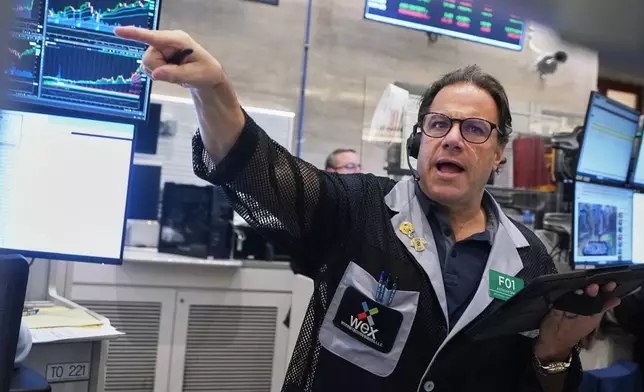
Jeffrey Vazquez works on the floor at the New York Stock Exchange in New York, Thursday, Nov. 13, 2025. (AP Photo/Seth Wenig)

Daniel Kryger works on the floor at the New York Stock Exchange in New York, Thursday, Nov. 13, 2025. (AP Photo/Seth Wenig)

Daniel Kryger works on the floor at the New York Stock Exchange in New York, Thursday, Nov. 13, 2025. (AP Photo/Seth Wenig)

Options trader Anthony Spina works on the floor of the New York Stock Exchange, Wednesday, Nov. 12, 2025. (AP Photo/Richard Drew)
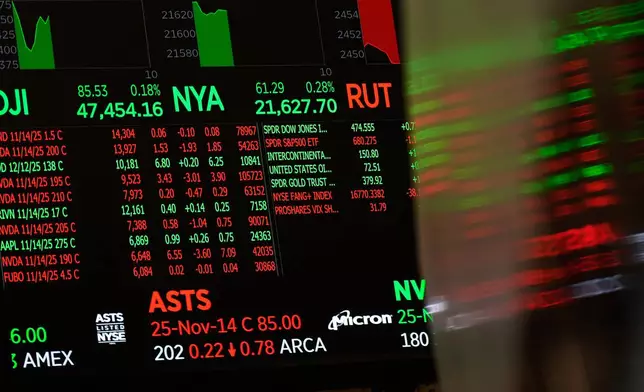
Options trader Anthony Spina works on the floor of the New York Stock Exchange, Wednesday, Nov. 12, 2025. (AP Photo/Richard Drew)

Financial information is displayed on the floor at the New York Stock Exchange in New York, Tuesday, Nov. 11, 2025. (AP Photo/Seth Wenig)

Financial information is displayed on the floor at the New York Stock Exchange in New York, Tuesday, Nov. 11, 2025. (AP Photo/Seth Wenig)

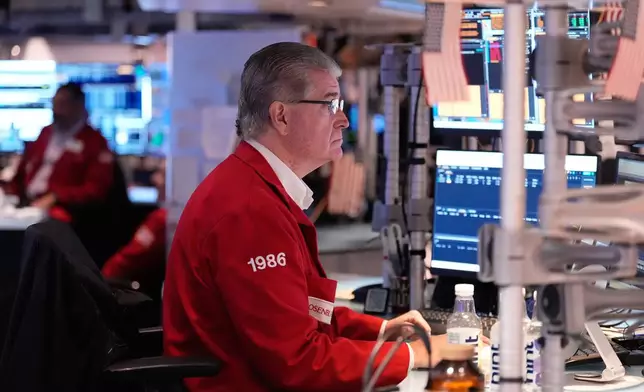
Specialist Gregg Maloney works on the floor of the New York Stock Exchange, Wednesday, Nov. 12, 2025. (AP Photo/Richard Drew)
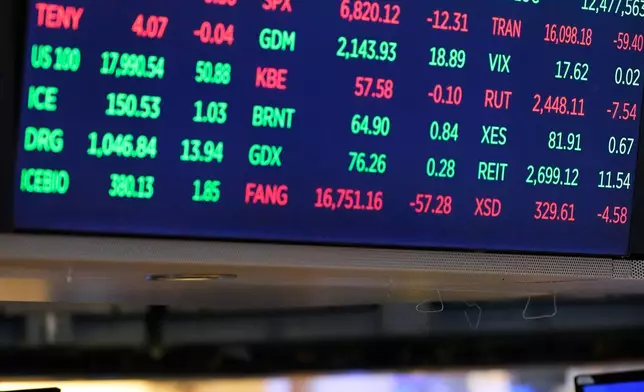
Specialist Gregg Maloney works on the floor of the New York Stock Exchange, Wednesday, Nov. 12, 2025. (AP Photo/Richard Drew)

Thomas McArdle works on the floor at the New York Stock Exchange in New York, Tuesday, Nov. 11, 2025. (AP Photo/Seth Wenig)
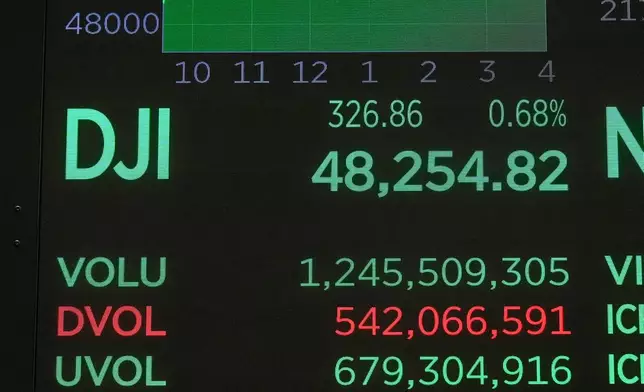
Thomas McArdle works on the floor at the New York Stock Exchange in New York, Tuesday, Nov. 11, 2025. (AP Photo/Seth Wenig)

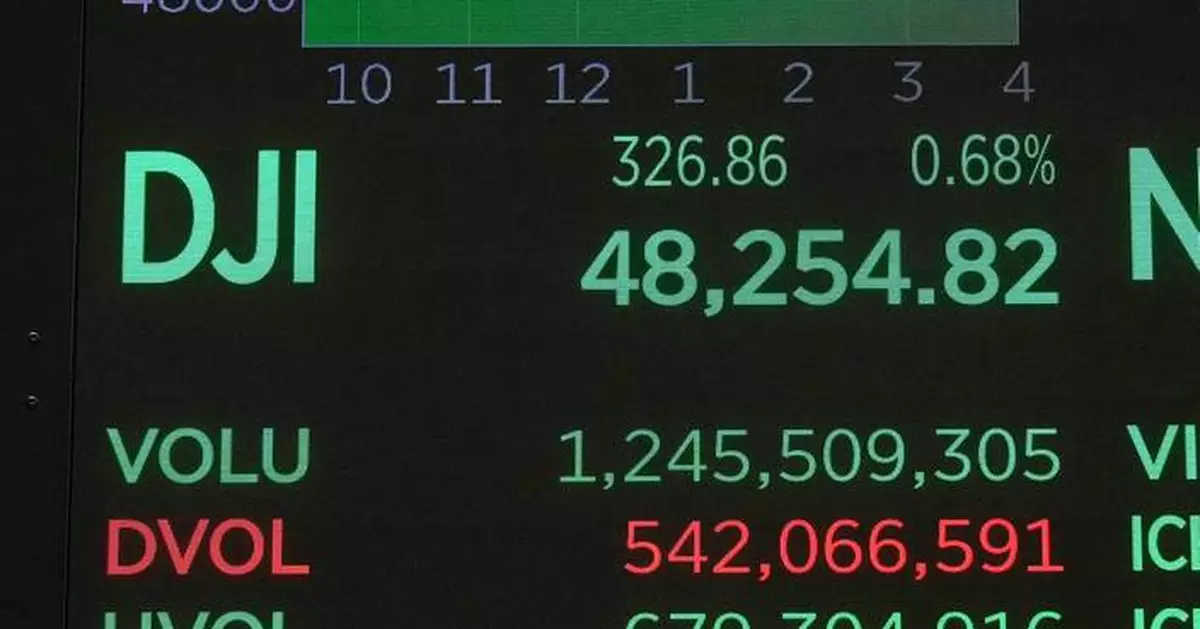
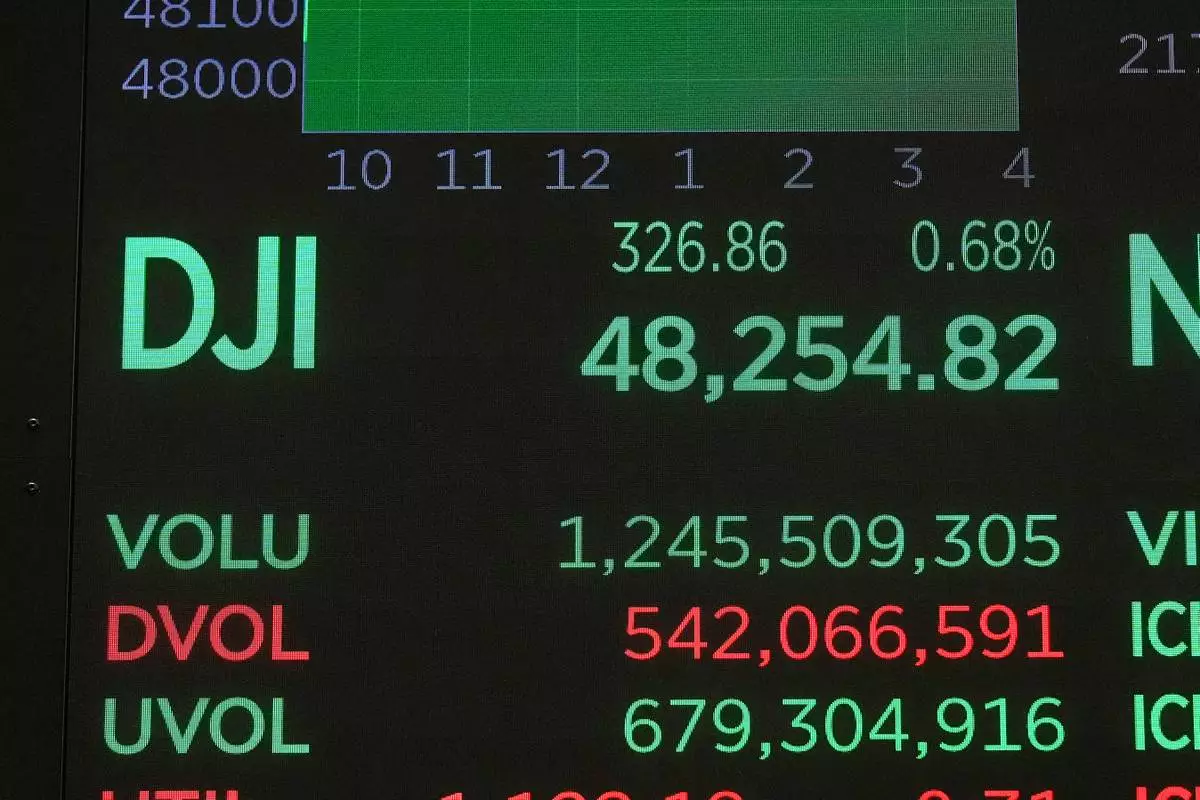
A board above the trading floor of the New York Stock Exchange displays the closing number for the Dow Jones industrial average, Wednesday, Nov. 12, 2025. (AP Photo/Richard Drew)

A board above the trading floor of the New York Stock Exchange displays the closing number for the Dow Jones industrial average, Wednesday, Nov. 12, 2025. (AP Photo/Richard Drew)

The Dow Jones Industrial Average dropped 797 points, or 1.7%, from its record set the day before, while the Nasdaq composite lost 2.3%.

Nvidia was the heaviest weight on the market after the chip company fell 3.6%. Other stocks swept up in the artificial-intelligence frenzy also struggled, including drops of 7.4% for Super Micro Computer, 6.5% for Palantir Technologies and 4.3% for Broadcom.

Questions have been rising about how much higher AI darlings can go following their already spectacular gains. At the start of this month, Palantir was sporting a stunning rise of nearly 174% for the year so far, for example.

Such sensational performances have been one of the top reasons the U.S. market has hit records despite a slowing job market and high inflation. AI stock prices have shot so high, though, that they’re drawing comparisons to the 2000 dot-com bubble, which ultimately burst and dragged the S&P 500 down by nearly half.

In the meantime, stocks outside of AI also fell across Wall Street as traders worried that the Federal Reserve may not deliver another cut to interest rates in December, as many had been expecting.

Wall Street loves lower interest rates because they can goose the economy and prices for investments, even though they can also worsen inflation. A halt in cuts could undercut U.S. stock prices after they already ran to records in part on expectations for more reductions.

Expectations have come down sharply in recent days that the Fed will cut its main interest rate for a third time this year. Traders now see roughly a coin flip’s chance of that, 51.9%, down from nearly 70% a week ago, according to data from CME Group.

Recent comments from Fed officials have helped drive the doubt.

Susan Collins, president of the Federal Reserve Bank of Boston, said late Wednesday that it’s likely appropriate to leave interest rates steady “for some time.” That was a turnaround from a speech last month, when she supported another cut.

The Fed’s job became more difficult recently because of the U.S. government’s shutdown, which delayed updates on the job market and other signals about the economy. That left it less certain about whether the slowing job market or high inflation is the bigger threat.

The stock market mostly rose through the U.S. government’s shutdown, as it has often done historically, but Wall Street is bracing for potential swings as the government gets back to releasing those updates. The fear is that the data could persuade the Fed to halt its cuts to rates.

The “looming data deluge may spur additional volatility in the coming weeks,” according to Doug Beath, global equity strategist at Wells Fargo Investment Institute.

On Wall Street, The Walt Disney Co. helped lead the market lower after falling 7.7%. The entertainment giant reported profit for the latest quarter that topped analysts’ expectations, but its revenue fell short.

That helped offset a jump of 4.6% for Cisco Systems after the tech giant delivered profit and revenue that were bigger than analysts estimated.

Another one of the relatively few stocks to rise was Berkshire Hathaway, the company run by famed investor Warren Buffett. He is known for loving bargains and won’t buy stocks when he considers them too expensive. Berkshire Hathaway rose 2.1%.

All told, the S&P 500 fell 113.43 points to 6,737.49. The Dow Jones Industrial Average dropped 797.60 to 47.457.22, and the Nasdaq composite sank 536.10 to 22,870.36.

In the bond market, Treasury yields pushed higher, which put downward pressure on prices for stocks and other investments.

The yield on the 10-year Treasury rose to 4.12% from 4.08% late Wednesday.

In stock markets abroad, indexes sagged in Europe following modest gains in Asia.

Tokyo’s Nikkei 225 index rose 0.4%, even as Japanese tech giant SoftBank Group lost another 3.4%. It’s been struggling since it said earlier this week that it had sold all of its $5.8 billion stake in Nvidia.

Another loser was bitcoin, whose price fell back below $99,000. It had been nearing $125,000 last month.

AP Writers Teresa Cerojano and Matt Ott contributed.
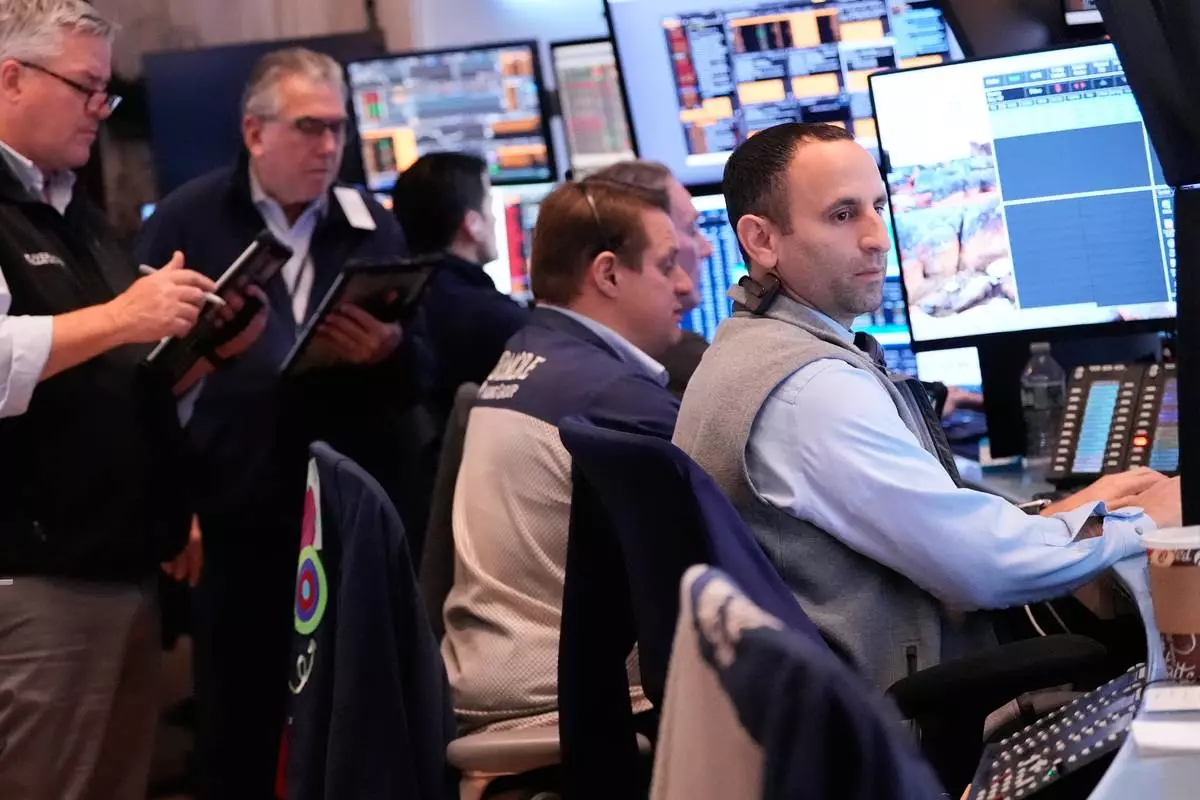
Traders work on the floor at the New York Stock Exchange in New York, Thursday, Nov. 13, 2025. (AP Photo/Seth Wenig)

Traders work on the floor at the New York Stock Exchange in New York, Thursday, Nov. 13, 2025. (AP Photo/Seth Wenig)
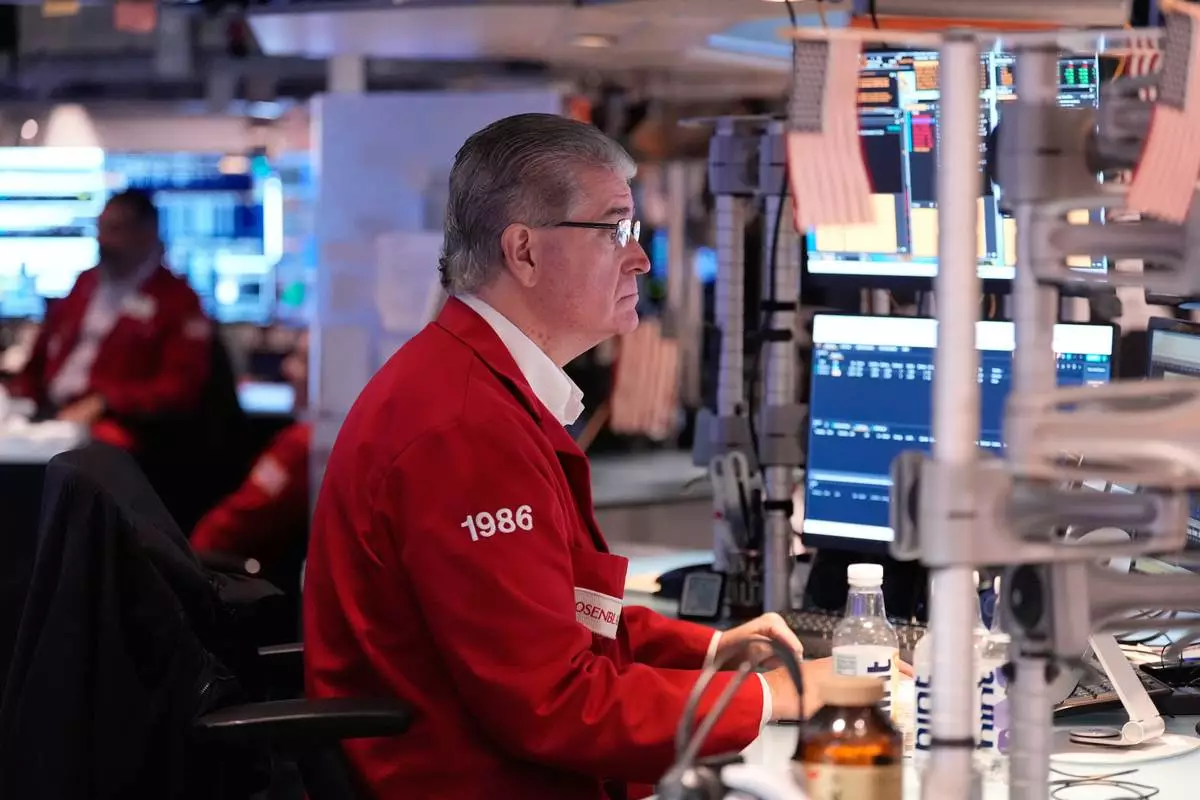
Jeffrey Vazquez works on the floor at the New York Stock Exchange in New York, Thursday, Nov. 13, 2025. (AP Photo/Seth Wenig)

Jeffrey Vazquez works on the floor at the New York Stock Exchange in New York, Thursday, Nov. 13, 2025. (AP Photo/Seth Wenig)

Daniel Kryger works on the floor at the New York Stock Exchange in New York, Thursday, Nov. 13, 2025. (AP Photo/Seth Wenig)

Daniel Kryger works on the floor at the New York Stock Exchange in New York, Thursday, Nov. 13, 2025. (AP Photo/Seth Wenig)

Options trader Anthony Spina works on the floor of the New York Stock Exchange, Wednesday, Nov. 12, 2025. (AP Photo/Richard Drew)
Options trader Anthony Spina works on the floor of the New York Stock Exchange, Wednesday, Nov. 12, 2025. (AP Photo/Richard Drew)

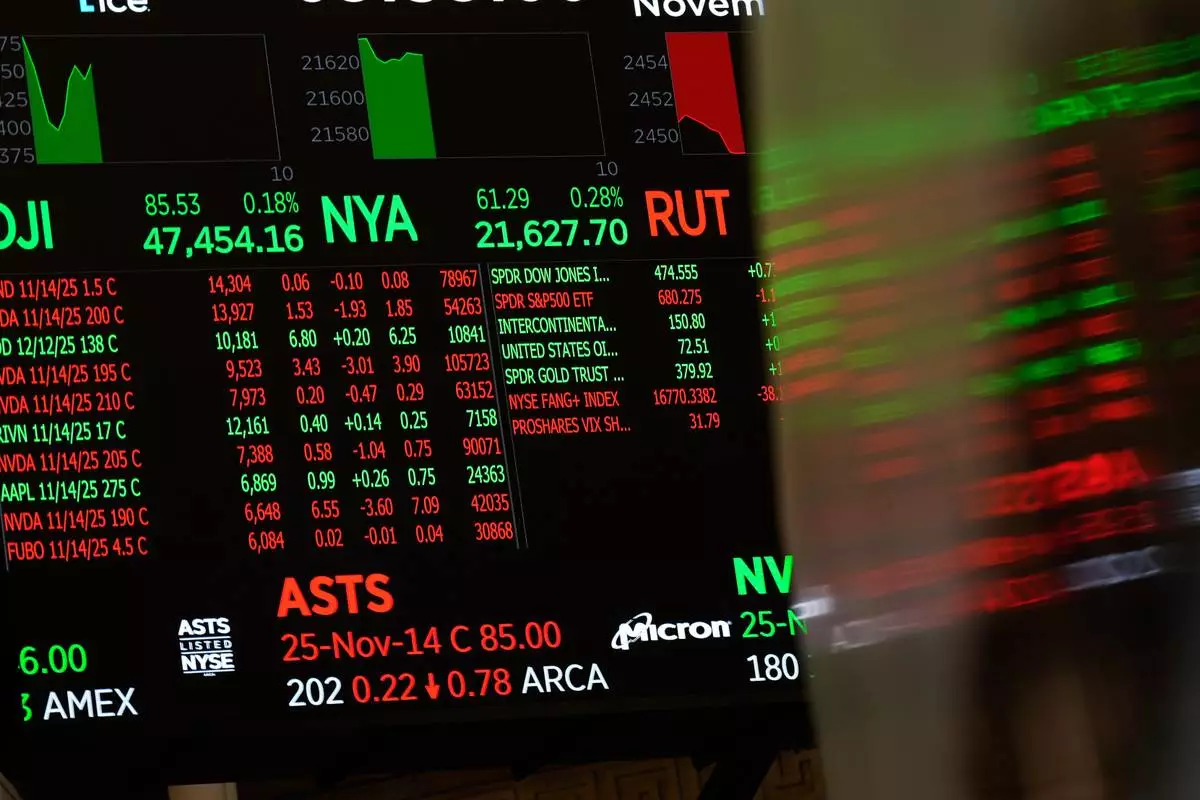
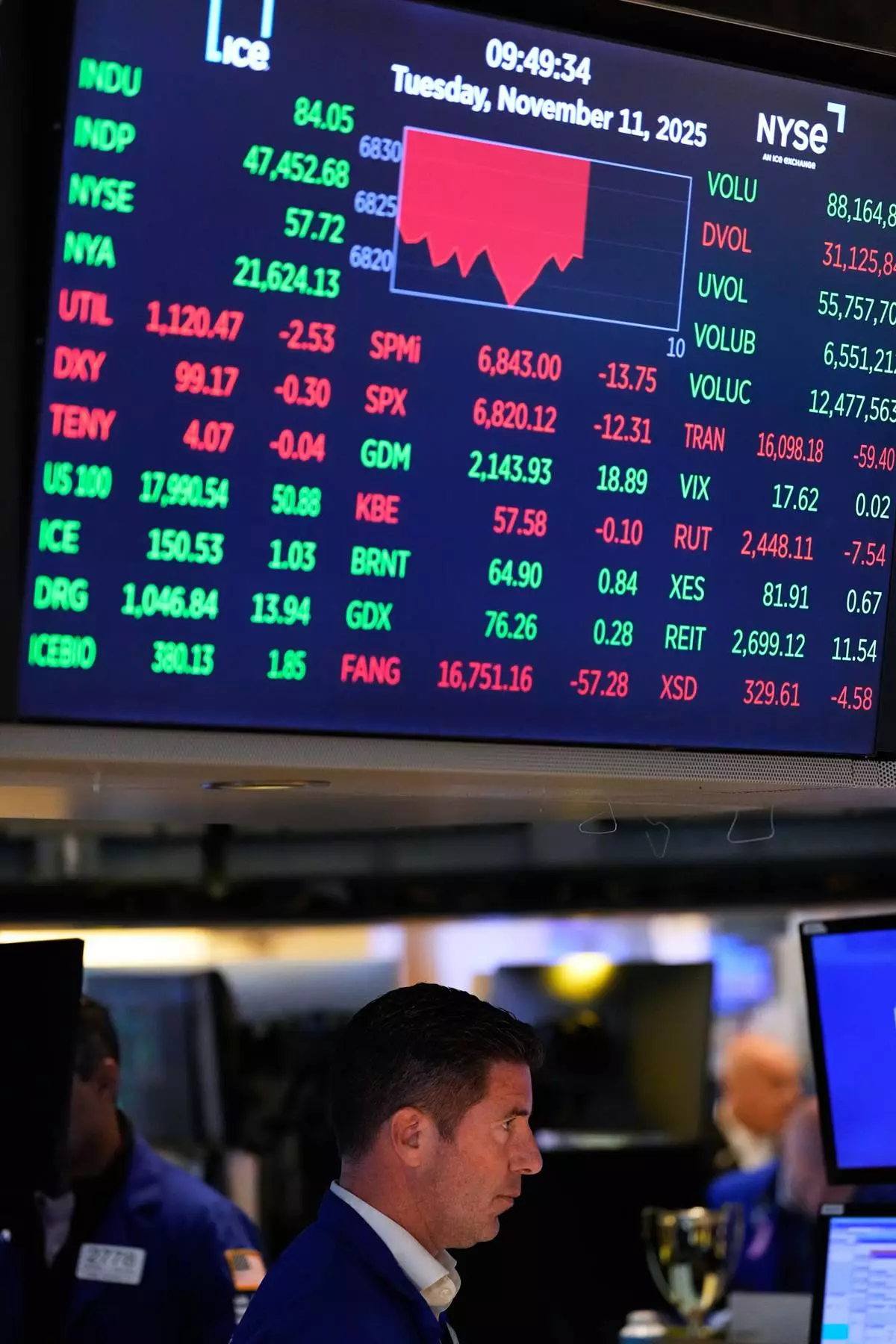
Financial information is displayed on the floor at the New York Stock Exchange in New York, Tuesday, Nov. 11, 2025. (AP Photo/Seth Wenig)

Financial information is displayed on the floor at the New York Stock Exchange in New York, Tuesday, Nov. 11, 2025. (AP Photo/Seth Wenig)

Specialist Gregg Maloney works on the floor of the New York Stock Exchange, Wednesday, Nov. 12, 2025. (AP Photo/Richard Drew)
Specialist Gregg Maloney works on the floor of the New York Stock Exchange, Wednesday, Nov. 12, 2025. (AP Photo/Richard Drew)

Thomas McArdle works on the floor at the New York Stock Exchange in New York, Tuesday, Nov. 11, 2025. (AP Photo/Seth Wenig)
Thomas McArdle works on the floor at the New York Stock Exchange in New York, Tuesday, Nov. 11, 2025. (AP Photo/Seth Wenig)

A board above the trading floor of the New York Stock Exchange displays the closing number for the Dow Jones industrial average, Wednesday, Nov. 12, 2025. (AP Photo/Richard Drew)

A board above the trading floor of the New York Stock Exchange displays the closing number for the Dow Jones industrial average, Wednesday, Nov. 12, 2025. (AP Photo/Richard Drew)

WESTMINSTER, Colo.--(BUSINESS WIRE)--Apr 1, 2026--

Vantor, the leading provider of unified spatial intelligence from space to ground, has been awarded its third National Geospatial-Intelligence Agency (NGA) Luno contract to provide NGA and other U.S. Government agencies automated, near real-time orbital intelligence of high-interest objects in space.

This press release features multimedia. View the full release here: https://www.businesswire.com/news/home/20260401774885/en/

Under the $2.3 million contract, Vantor will utilize its high-resolution imagery of space objects, also known as non-Earth Imagery (NEI), to deliver intelligence on priority objects in low Earth orbit, including providing alerts when anomalies are present. The analysis will be largely automated, marking a significant step forward in eliminating manual processing and accelerating timely and actionable insights for Space Domain Awareness.

“In a contested domain like space, awareness is everything,” said Susanne Hake, Executive Vice President & General Manager, U.S. Government at Vantor. “Still, it’s the one domain where exquisite visual intelligence is extremely hard to come by, creating literal and figurative blind spots. Our NEI capabilities are one of the few technologies that can provide high-resolution visual intelligence of objects in space, providing intelligence analysts and decisionmakers with a deeper understanding of the behavior and intent of high-interest space objects—a decisive edge in an increasingly complex environment.”

Vantor’s orbital intelligence capabilities can provide insights into a space object’s features, health, velocity, and movements, including whether an object is changing orbit—a situation that could endanger the safety of U.S. assets in space. Vantor satellites can capture images of other spacecraft at an industry-leading resolution of less than 10 cm from hundreds of kilometers away, making it possible to quickly characterize those space objects and determine their health and status.

This award marks the third win for Vantor under NGA’s Luno program. Vantor previously announced a Luno contract to automatically detect land use land cover change at global scale, enabling NGA to anticipate where maps and their features may require updates. And in June, Vantor was awarded a Luno contract to deliver AI/ML-generated object detection services to identify assets across air, maritime, land, and rail domains; determine counts at specified locations; detect trends and anomalies; and perform advanced spatial and temporal geospatial intelligence analysis.

“These awards reflect the core of Vantor’s mission—to deliver real-time intelligence faster than the speed of threat, from space to ground,” said Hake. “By integrating our persistent monitoring, change detection, and space-domain awareness capabilities, we’re empowering our partners to understand and act on threats across every domain, before they emerge.”

The Luno program—made up of Luno A and Luno B—is part of NGA’s ongoing efforts to execute an agile acquisition strategy that unlocks the capacity and innovation of the commercial geospatial industry.

About Vantor

Vantor is forging the new frontier of spatial intelligence to unlock a more autonomous, interoperable world. We give decision makers and operators the power to build a unified intelligence picture, delivering the clarity they need to navigate what’s happening now and shape what’s coming next. We fuse data from the world’s most capable imaging satellites with real-time sensor feeds from space, air, and ground to create an AI-ready digital twin of Earth. Our spatial intelligence platform automates every part of the cycle—from tasking to collection to production—to update and analyze this foundation at the pace of change. Our products drive deeper mission-critical insights and connect the next generation of autonomous systems across the defense, intelligence, and commercial landscape.

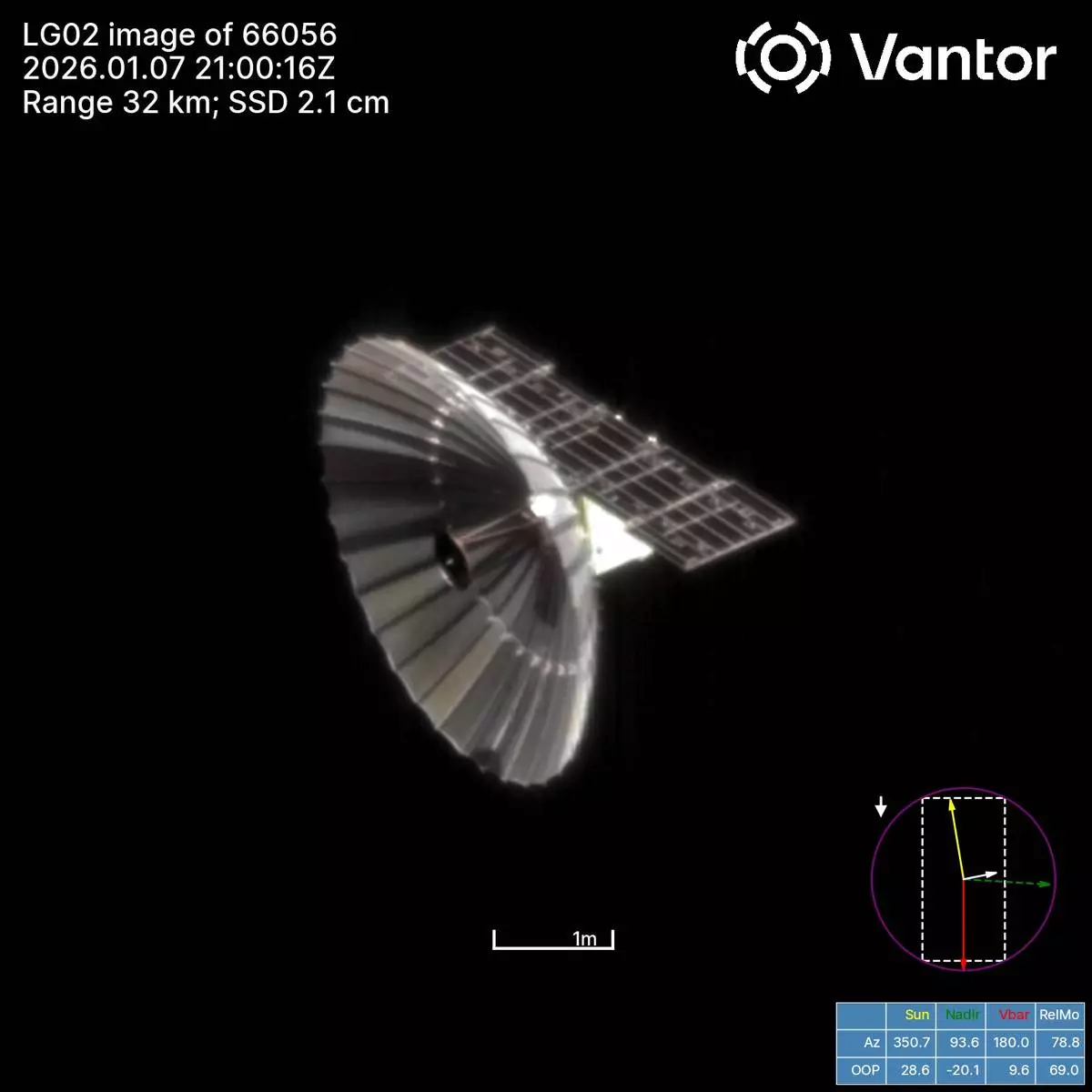
Vantor non-Earth image of a Chinese imaging satellite, collected under the NGA Luno B contract. The synthetic aperture radar (SAR) satellite features a large deployable antenna that enables high-resolution radar imaging from orbit.

Vantor non-Earth image of a Chinese imaging satellite, collected under the NGA Luno B contract. The synthetic aperture radar (SAR) satellite features a large deployable antenna that enables high-resolution radar imaging from orbit.

Recommended Articles