STARKE, Fla. (AP) — A man convicted of the 1979 killing a 6-year-old girl who was abducted from her bedroom was put to death Thursday evening in a record 16th execution in Florida this year.
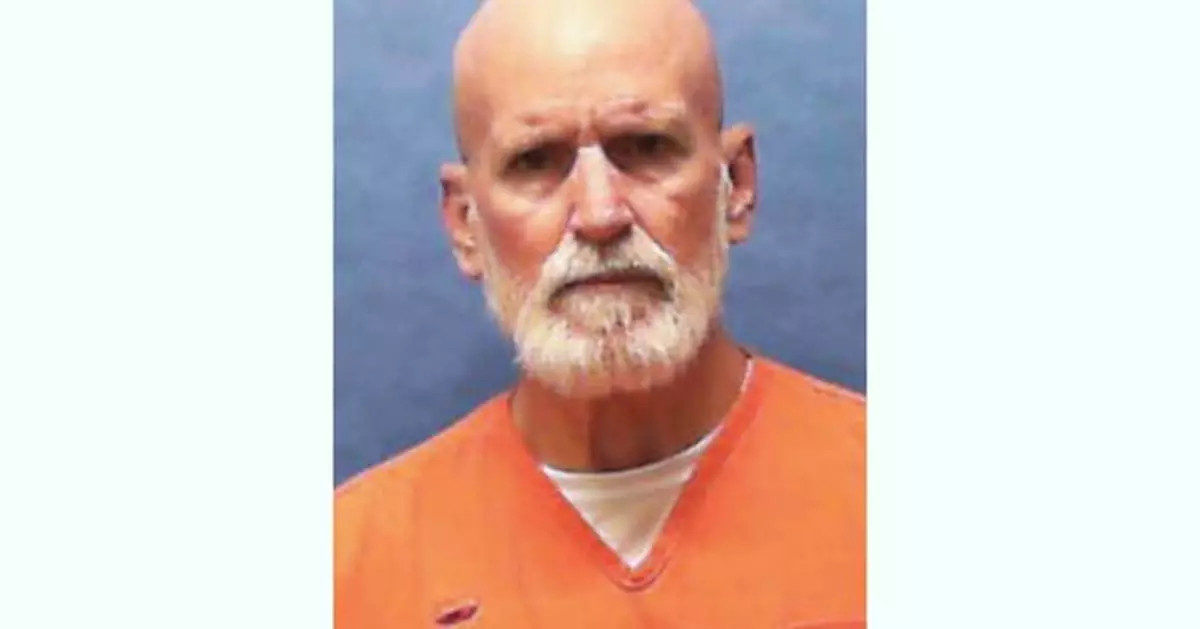
Bryan Frederick Jennings, 66, was pronounced dead at 6:20 p.m. following a three-drug injection at Florida State Prison near Starke. Jennings drew the death penalty for the murder of Rebecca Kunash, who was raped and drowned in a canal.
When asked if he had a final statement, Jennings said “No” loudly. As the drugs were then administered, his chest heaved and his arms twitched for a few minutes. Then he laid still with his mouth open.
No members of the victim's family spoke to the media after the execution, and Department of Corrections spokesman Jordan Kirkland said the procedure went as planned.
“The execution took place without incident," he said. "There were no complications.”
The execution of the ex-Marine was one of three scheduled this week in the U.S., though Oklahoma’s governor spared the life of a man just before a planned lethal injection Thursday. On Friday, Stephen Bryant is set to be executed by firing squad in South Carolina for three killings more than two decades ago.
Court records show Jennings was a 20-year-old on leave from the Marine Corps on May 11, 1979, when he removed the screen from the girl's bedroom window while her parents were in another room.
Jennings abducted the girl, took her in his car to a canal and raped her, trial testimony showed. He then “swung her by her legs to the ground with such force that she fractured her skull,” according to court records. The girl was then drowned in the canal, where her body was found later that day.
Arrested hours later on a traffic warrant, Jennings matched the description of a man seen near the Kunash home when the girl disappeared. Shoe prints found at the home matched those Jennings was wearing, his fingerprints were found on the girl’s windowsill, and his clothes and hair were wet, court records stated.
Jennings was convicted and sentenced to death twice for the 1979 murder in Brevard County, both of which were reversed on appeal. The final trial in 1986 resulted in a third death sentence. He also drew life sentences for kidnapping, sexual assault and burglary convictions.
Gov. Ron DeSantis, the Republican who signed the death warrant, has ordered more executions in a single year than any Florida governor since the death penalty was reinstated in the U.S. in 1976. The previous state record was set in 2014 with eight executions.
Additional Florida executions are scheduled on Nov. 20 for Richard Barry Randolph and on Dec. 9 for Mark Allen Geralds, which if carried out would bring the year’s total to 18 so far this year.
DeSantis has explained the unprecedented number of executions by saying his goal is to bring justice to victims' families who have waited decades for the death sentences to be carried out.
“Some of these crimes were committed in the ’80s,” the governor said at a recent news conference. “Justice delayed is justice denied. I felt I owed it to them to make sure this ran very smoothly. If I honestly thought someone was innocent, I would not pull the trigger.”
Florida executions are all conducted via lethal injection using a sedative, a paralytic and a drug that stops the heart, according to the Department of Corrections.
Jennings had filed numerous state and federal court appeals, most recently contending he went months without a lawyer prior to DeSantis signing his death warrant, calling that a violation of his right to counsel.
With Jennings' death, a total of 42 people have undergone court-ordered execution so far this year in the U.S., and at least 16 others — including Bryant — were scheduled to be put to death in the rest of 2025 and throughout 2026, according to the nonprofit Death Penalty Information Center.
South Carolina’s highest court recently refused to stop plans for Bryant’s firing squad execution, scheduled for Friday evening. Bryant was convicted of killing three people over five days while leaving taunting messages for police in the blood of one of his victims.
On Thursday, Oklahoma Gov. Kevin Stitt commuted Tremane Wood’s sentence to life in prison moments before Woods was to be put to death for his role in the 2002 killing of farmworker Ronnie Wipf during an attempted robbery.
Wood’s attorneys didn’t deny their client's participation in the robbery but maintained the man's brother Zjaiton — who died in prison in 2019 while serving life without parole — actually stabbed Wipf.
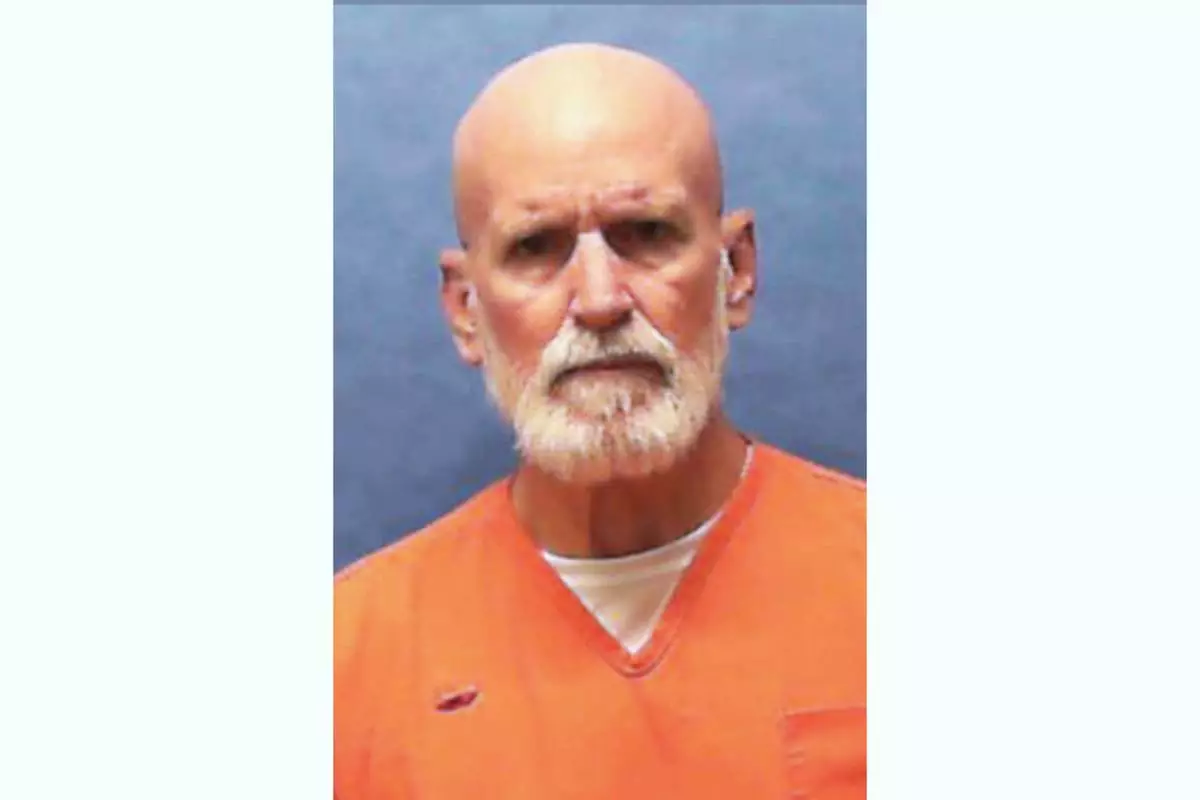
This photo provided by Florida Department of Corrections shows Bryan Frederick Jennings. (Florida Department of Correction via AP)