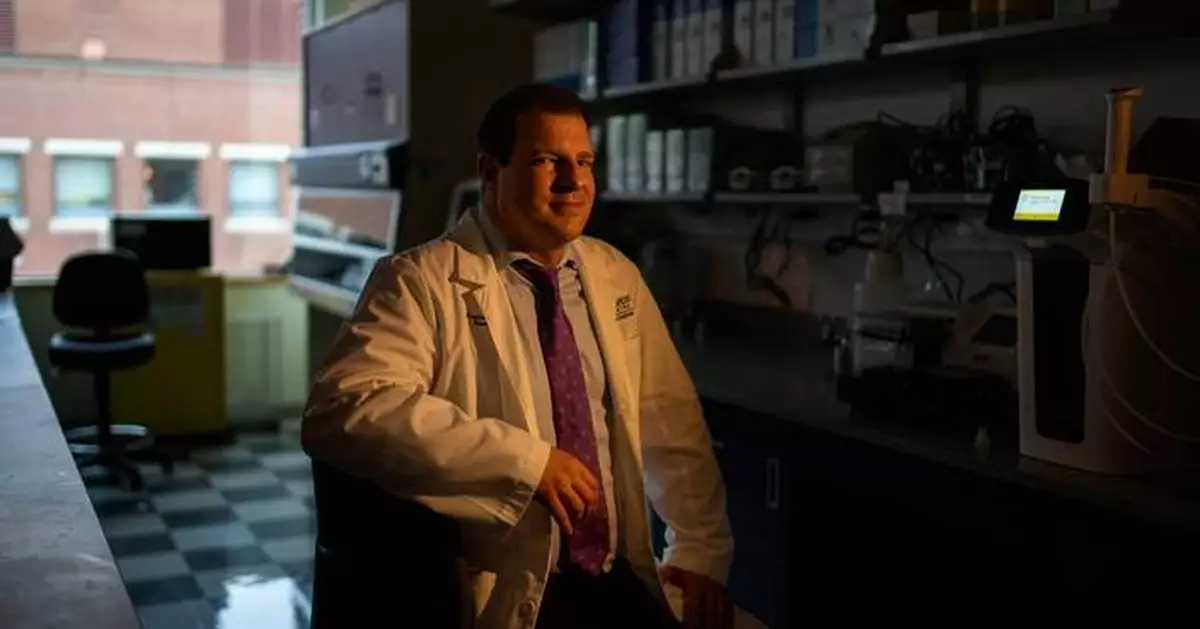
Skip to Content Facebook Feature Image

Lifelong drugs for autoimmune diseases don't work well. Now scientists are trying something new

News

Lifelong drugs for autoimmune diseases don't work well. Now scientists are trying something new
News

News

Lifelong drugs for autoimmune diseases don't work well. Now scientists are trying something new

2025-11-15 05:19 Last Updated At:05:31

Scientists are trying a revolutionary new approach to treat rheumatoid arthritis, multiple sclerosis, lupus and other devastating autoimmune diseases — by reprogramming patients’ out-of-whack immune systems.

When your body’s immune cells attack you instead of protecting you, today’s treatments tamp down the friendly fire but they don’t fix what’s causing it. Patients face a lifetime of pricey pills, shots or infusions with some serious side effects — and too often the drugs aren’t enough to keep their disease in check.

More Images
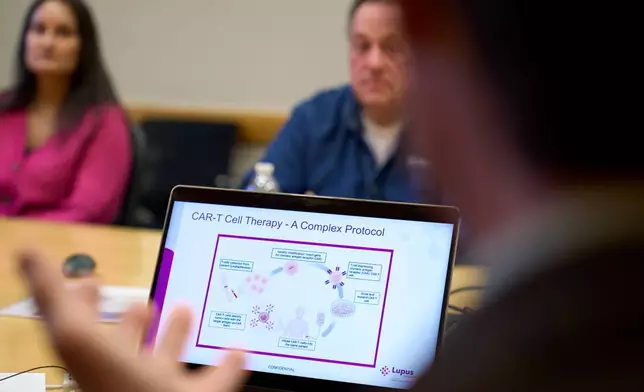
A graphic explaining CAR-T cell therapy is displayed on the laptop of Dr. Roberto Caricchio, director of the Lupus Center at UMass Chan Medical School, as he speaks to a lupus support group at its campus, Wednesday, Feb. 12, 2025, in Worcester, Mass. (AP Photo/David Goldman)
A graphic explaining CAR-T cell therapy is displayed on the laptop of Dr. Roberto Caricchio, director of the Lupus Center at UMass Chan Medical School, as he speaks to a lupus support group at its campus, Wednesday, Feb. 12, 2025, in Worcester, Mass. (AP Photo/David Goldman)

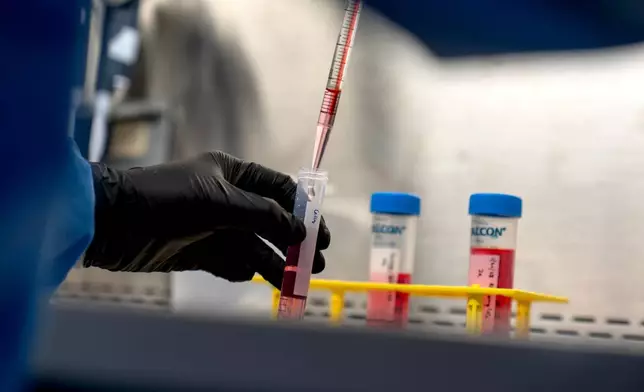
Dr. Justin Kwong, a research fellow who coaxes human stem cells to grow into a kind of immune cell involved in autoimmune diseases, works in a lab at the National Institutes of Health, Tuesday, Jan 21, 2025, in Bethesda, Md. (AP Photo/David Goldman)
Dr. Justin Kwong, a research fellow who coaxes human stem cells to grow into a kind of immune cell involved in autoimmune diseases, works in a lab at the National Institutes of Health, Tuesday, Jan 21, 2025, in Bethesda, Md. (AP Photo/David Goldman)

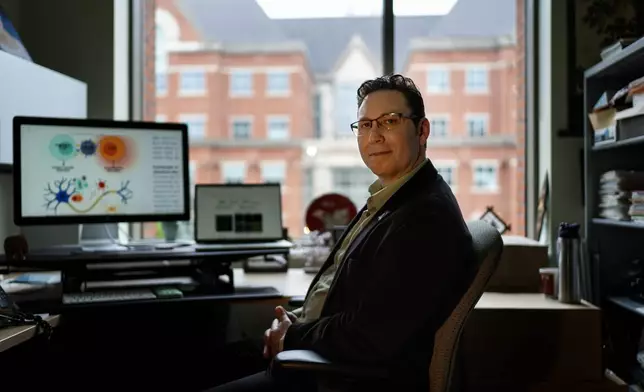
Biomedical engineer Jordan Green sits for a photo in his office at Johns Hopkins University, Tuesday, May 13, 2025, in Baltimore, Md., where his team is crafting a way for the immune system to reprogram itself with the help of instructions delivered by messenger RNA, or mRNA, the genetic code used in COVID-19 vaccines. (AP Photo/David Goldman)
Biomedical engineer Jordan Green sits for a photo in his office at Johns Hopkins University, Tuesday, May 13, 2025, in Baltimore, Md., where his team is crafting a way for the immune system to reprogram itself with the help of instructions delivered by messenger RNA, or mRNA, the genetic code used in COVID-19 vaccines. (AP Photo/David Goldman)

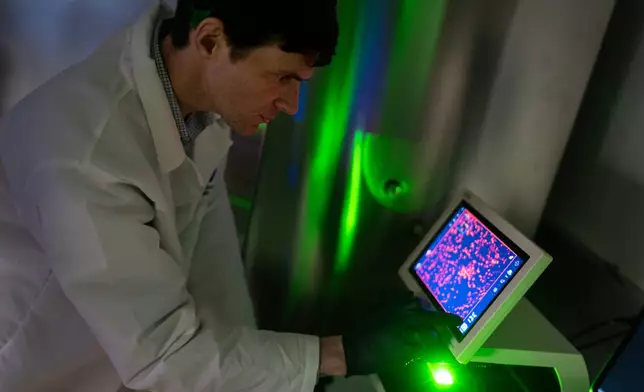
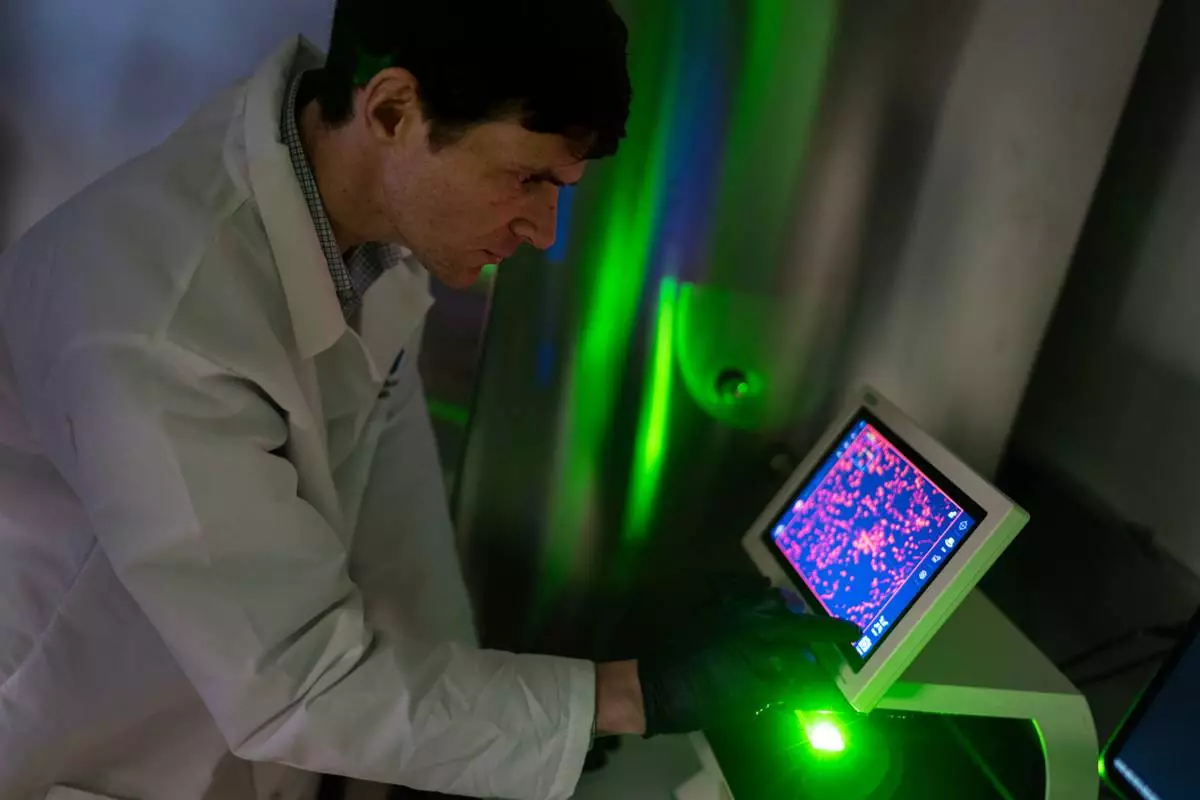
Dr. William Ambler, a translational research scholar who studies how biological sex affects the risk of autoimmune diseases, looks at cells under a microscope in the lab where he works at the National Institutes of Health, Monday, Aug. 25, 2025, in Bethesda, Md. (AP Photo/David Goldman)
Dr. William Ambler, a translational research scholar who studies how biological sex affects the risk of autoimmune diseases, looks at cells under a microscope in the lab where he works at the National Institutes of Health, Monday, Aug. 25, 2025, in Bethesda, Md. (AP Photo/David Goldman)

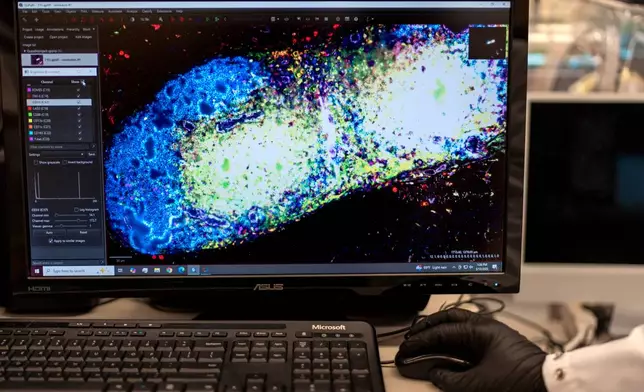
Research fellow Sachin Surwase shows an image of a pancreatic lymph node from a mouse in the lab where he studies autoimmune diseases at Johns Hopkins University in Baltimore, Md., Tuesday, May 13, 2025. (AP Photo/David Goldman)
Research fellow Sachin Surwase shows an image of a pancreatic lymph node from a mouse in the lab where he studies autoimmune diseases at Johns Hopkins University in Baltimore, Md., Tuesday, May 13, 2025. (AP Photo/David Goldman)

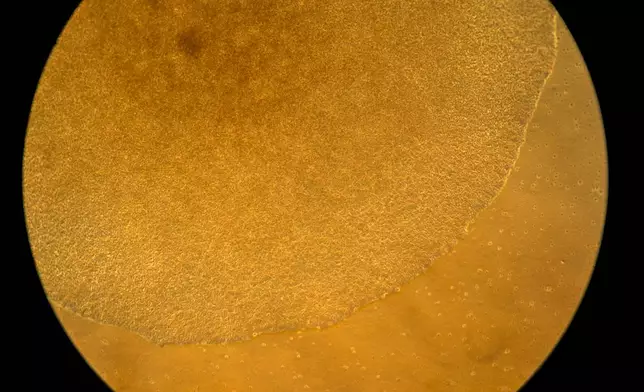
Human stem cells used in research into autoimmune diseases are visible under a microscope in a lab at the National Institutes of Health, Monday, Aug. 25, 2025, in Bethesda, Md. (AP Photo/David Goldman)
Human stem cells used in research into autoimmune diseases are visible under a microscope in a lab at the National Institutes of Health, Monday, Aug. 25, 2025, in Bethesda, Md. (AP Photo/David Goldman)

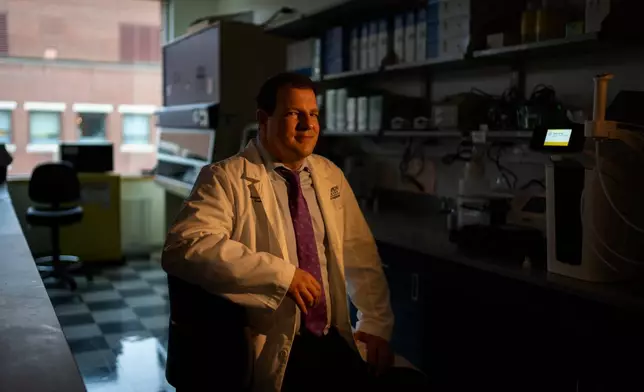
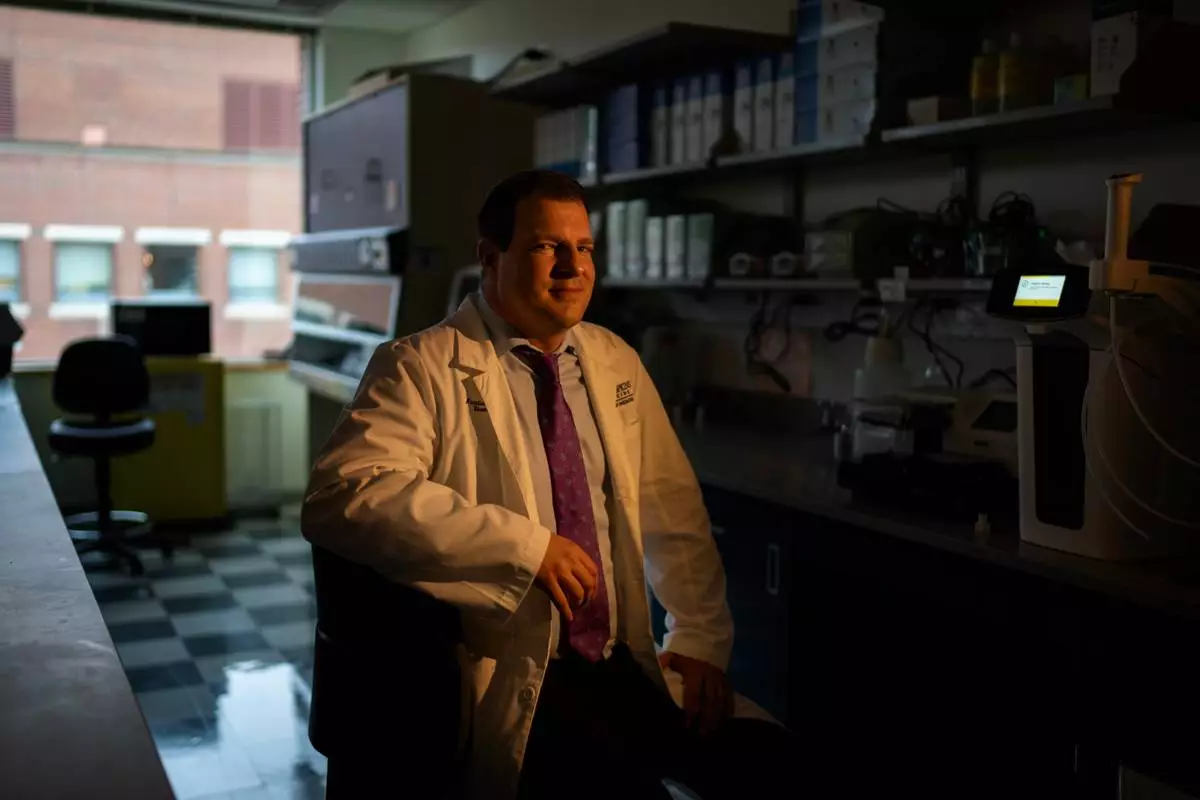
Dr. Maximilian Konig, a rheumatologist at Johns Hopkins University, sits for a portrait in the lab where he's studying some possible new treatments for autoimmune diseases, Tuesday, May 13, 2025, in Baltimore, Md. (AP Photo/David Goldman)

Dr. Maximilian Konig, a rheumatologist at Johns Hopkins University, sits for a portrait in the lab where he's studying some possible new treatments for autoimmune diseases, Tuesday, May 13, 2025, in Baltimore, Md. (AP Photo/David Goldman)

“We’re entering a new era,” said Dr. Maximilian Konig, a rheumatologist at Johns Hopkins University who’s studying some of the possible new treatments. They offer “the chance to control disease in a way we’ve never seen before.”

How? Researchers are altering dysfunctional immune systems, not just suppressing them, in a variety of ways that aim to be more potent and more precise than current therapies.

They’re highly experimental and, because of potential side effects, so far largely restricted to patients who’ve exhausted today’s treatments. But people entering early-stage studies are grasping for hope.

“What the heck is wrong with my body?” Mileydy Gonzalez, 35, of New York remembers crying, frustrated that nothing was helping her daily lupus pain.

Diagnosed at 24, her disease was worsening, attacking her lungs and kidneys. Gonzalez had trouble breathing, needed help to stand and walk and couldn’t pick up her 3-year-old son when last July, her doctor at NYU Langone Health suggested the hospital’s study using a treatment adapted from cancer.

Gonzalez had never heard of that CAR-T therapy but decided, “I’m going to trust you.” Over several months, she slowly regained energy and strength.

“I can actually run, I can chase my kid,” said Gonzalez, who now is pain- and pill-free. “I had forgotten what it was to be me.”

CAR-T was developed to wipe out hard-to-treat blood cancers. But the cells that go bad in leukemias and lymphomas — immune cells called B cells — go awry in a different way in many autoimmune diseases.

Some U.S. studies in mice suggested CAR-T therapy might help those diseases. Then in Germany, Dr. Georg Schett at the University of Erlangen-Nuremberg tried it with a severely ill young woman who had failed other lupus treatment. After one infusion, she’s been in remission — with no other medicine — since March 2021.

Last month, Schett told a meeting of the American College of Rheumatology how his team gradually treated a few dozen more patients, with additional diseases such as myositis and scleroderma — and few relapses so far.

Those early results were “shocking,” Hopkins’ Konig recalled.

They led to an explosion of clinical trials testing CAR-T therapy in the U.S. and abroad for a growing list of autoimmune diseases.

How it works: Immune soldiers called T cells are filtered out of a patient’s blood and sent to a lab, where they’re programmed to destroy their B cell relatives. After some chemotherapy to wipe out additional immune cells, millions of copies of those “living drugs” are infused back into the patient.

While autoimmune drugs can target certain B cells, experts say they can’t get rid of those hidden deep in the body. CAR-T therapy targets both the problem B cells and healthy ones that might eventually run amok. Schett theorizes that the deep depletion reboots the immune system so when new B cells eventually form, they’re healthy.

CAR-T is grueling, time consuming and costly, in part because it is customized. A CAR-T cancer treatment can cost $500,000. Now some companies are testing off-the-shelf versions, made in advance using cells from healthy donors.

Another approach uses “peacekeeper” cells at the center of this year’s Nobel Prize. Regulatory T cells are a rare subset of T cells that tamp down inflammation and help hold back other cells that mistakenly attack healthy tissue. Some biotech companies are engineering cells from patients with rheumatoid arthritis and other diseases not to attack, like CAR-T does, but to calm autoimmune reactions.

Scientists also are repurposing another cancer treatment, drugs called T cell engagers, that don’t require custom engineering. These lab-made antibodies act like a matchmaker. They redirect the body's existing T cells to target antibody-producing B cells, said Erlangen's Dr. Ricardo Grieshaber-Bouyer, who works with Schett and also studies possible alternatives to CAR-T.

Last month, Grieshaber-Bouyer reported giving a course of one such drug, teclistamab, to 10 patients with a variety of diseases including Sjögren’s, myositis and systemic sclerosis. All but one improved significantly and six went into drug-free remission.

Rather than wiping out swaths of the immune system, Hopkins’ Konig aims to get more precise, targeting “only that very small population of rogue cells that really causes the damage.”

B cells have identifiers, like biological barcodes, showing they can produce faulty antibodies, Konig said. Researchers in his lab are trying to engineer T cell engagers that would only mark “bad” B cells for destruction, leaving healthy ones in place to fight infection.

Nearby in another Hopkins lab, biomedical engineer Jordan Green is crafting a way for the immune system to reprogram itself with the help of instructions delivered by messenger RNA, or mRNA, the genetic code used in COVID-19 vaccines.

In Green's lab, a computer screen shines with brightly colored dots that resemble a galaxy. It’s a biological map that shows insulin-producing cells in the pancreas of a mouse. Red marks rogue T cells that destroy insulin production. Yellow indicates those peacemaker regulatory T cells — and they're outnumbered.

Green's team aims to use that mRNA to instruct certain immune “generals” to curb the bad T cells and send in more peacemakers. They package the mRNA in biodegradable nanoparticles that can be injected like a drug. When the right immune cells get the messages, the hope is they'd “divide, divide, divide and make a whole army of healthy cells that then help treat the disease," Green said.

The researchers will know it's working if that galaxy-like map shows less red and more yellow. Studies in people are still a few years away.

A drug for Type 1 diabetes “is forging the path,” said Dr. Kevin Deane at the University of Colorado Anschutz.

Type 1 diabetes develops gradually, and blood tests can spot people who are brewing it. A course of the drug teplizumab is approved to delay the first symptoms, modulating rogue T cells and prolonging insulin production.

Deane studies rheumatoid arthritis and hopes to find a similar way to block the joint-destroying disease.

About 30% of people with a certain self-reactive antibody in their blood will eventually develop RA. A new study tracked some of those people for seven years, mapping immune changes leading to the disease long before joints become swollen or painful.

Those changes are potential drug targets, Deane said. While researchers hunt possible compounds to test, he’s leading another study called StopRA: National to find and learn from more at-risk people.

On all these fronts, there’s a tremendous amount of research left to do — and no guarantees. There are questions about CAR-T's safety and how long its effects last, but it is furthest along in testing.

Allie Rubin, 60, of Boca Raton, Florida, spent three decades battling lupus, including scary hospitalizations when it attacked her spinal cord. But she qualified for CAR-T when she also developed lymphoma — and while a serious side effect delayed her recovery, next month will mark two years without a sign of either cancer or lupus.

“I just remember I woke up one day and thought, ‘Oh my god, I don’t feel sick anymore,’” she said.

That kind of result has researchers optimistic.

"We’ve never been closer to getting to — and we don’t like to say it — a potential cure,” said Hopkins' Konig. “I think the next 10 years will dramatically change our field forever.”

—-

The Associated Press Health and Science Department receives support from the Howard Hughes Medical Institute’s Department of Science Education and the Robert Wood Johnson Foundation. The AP is solely responsible for all content.

——

This story was first published on Nov. 13, 2025. It was updated on Nov. 14, 2025 to correct the spelling of the University of Colorado Anschutz.

A graphic explaining CAR-T cell therapy is displayed on the laptop of Dr. Roberto Caricchio, director of the Lupus Center at UMass Chan Medical School, as he speaks to a lupus support group at its campus, Wednesday, Feb. 12, 2025, in Worcester, Mass. (AP Photo/David Goldman)

A graphic explaining CAR-T cell therapy is displayed on the laptop of Dr. Roberto Caricchio, director of the Lupus Center at UMass Chan Medical School, as he speaks to a lupus support group at its campus, Wednesday, Feb. 12, 2025, in Worcester, Mass. (AP Photo/David Goldman)

Dr. Justin Kwong, a research fellow who coaxes human stem cells to grow into a kind of immune cell involved in autoimmune diseases, works in a lab at the National Institutes of Health, Tuesday, Jan 21, 2025, in Bethesda, Md. (AP Photo/David Goldman)

Dr. Justin Kwong, a research fellow who coaxes human stem cells to grow into a kind of immune cell involved in autoimmune diseases, works in a lab at the National Institutes of Health, Tuesday, Jan 21, 2025, in Bethesda, Md. (AP Photo/David Goldman)

Biomedical engineer Jordan Green sits for a photo in his office at Johns Hopkins University, Tuesday, May 13, 2025, in Baltimore, Md., where his team is crafting a way for the immune system to reprogram itself with the help of instructions delivered by messenger RNA, or mRNA, the genetic code used in COVID-19 vaccines. (AP Photo/David Goldman)
Biomedical engineer Jordan Green sits for a photo in his office at Johns Hopkins University, Tuesday, May 13, 2025, in Baltimore, Md., where his team is crafting a way for the immune system to reprogram itself with the help of instructions delivered by messenger RNA, or mRNA, the genetic code used in COVID-19 vaccines. (AP Photo/David Goldman)

Dr. William Ambler, a translational research scholar who studies how biological sex affects the risk of autoimmune diseases, looks at cells under a microscope in the lab where he works at the National Institutes of Health, Monday, Aug. 25, 2025, in Bethesda, Md. (AP Photo/David Goldman)

Dr. William Ambler, a translational research scholar who studies how biological sex affects the risk of autoimmune diseases, looks at cells under a microscope in the lab where he works at the National Institutes of Health, Monday, Aug. 25, 2025, in Bethesda, Md. (AP Photo/David Goldman)

Research fellow Sachin Surwase shows an image of a pancreatic lymph node from a mouse in the lab where he studies autoimmune diseases at Johns Hopkins University in Baltimore, Md., Tuesday, May 13, 2025. (AP Photo/David Goldman)

Research fellow Sachin Surwase shows an image of a pancreatic lymph node from a mouse in the lab where he studies autoimmune diseases at Johns Hopkins University in Baltimore, Md., Tuesday, May 13, 2025. (AP Photo/David Goldman)

Human stem cells used in research into autoimmune diseases are visible under a microscope in a lab at the National Institutes of Health, Monday, Aug. 25, 2025, in Bethesda, Md. (AP Photo/David Goldman)
Human stem cells used in research into autoimmune diseases are visible under a microscope in a lab at the National Institutes of Health, Monday, Aug. 25, 2025, in Bethesda, Md. (AP Photo/David Goldman)

Dr. Maximilian Konig, a rheumatologist at Johns Hopkins University, sits for a portrait in the lab where he's studying some possible new treatments for autoimmune diseases, Tuesday, May 13, 2025, in Baltimore, Md. (AP Photo/David Goldman)

Dr. Maximilian Konig, a rheumatologist at Johns Hopkins University, sits for a portrait in the lab where he's studying some possible new treatments for autoimmune diseases, Tuesday, May 13, 2025, in Baltimore, Md. (AP Photo/David Goldman)

LONDON (AP) — U.S. President Donald Trump says he's strongly considering pulling the United States out of NATO, ratcheting up his criticism of European allies and exposing a wider rift in the trans-Atlantic alliance — this time over the Iran war.

While Trump's talk of a possible NATO pullout dates back years, the comments to The Telegraph newspaper in the U.K., published Wednesday, were among the clearest and most disparaging yet — suggesting that the fracture has deepened perhaps to a point of no return.

Asked whether he would reconsider U.S. membership in the alliance after the conflict in the Middle East ends, Trump replied: “Oh yes, I would say (it’s) beyond reconsideration."

NATO didn't provide immediate comment when contacted by The Associated Press.

U.K. Prime Minister Keir Starmer said that his government was “fully committed to NATO” and called it “the single most effective military alliance the world has ever seen.”

Many European leaders have felt political pressure over the war, which faces opposition in their countries and has sent petroleum prices soaring as Iran has effectively shut the Strait of Hormuz, the narrow waterway between Iran and Oman through which about one-fifth of the world’s oil passes.

“Whatever the pressure on me and others, whatever the noise, I am going to act in the British national interest in all the decisions I make,” Starmer said Wednesday.

The U.K. is working on plans that could help assuage Trump, and Starmer said military planners will work on a postwar security plan for the Strait.

On Thursday, British Foreign Secretary Yvette Cooper will host a virtual meeting of 35 countries that have signed up to help ensure security for shipping in the Strait — after the fighting ends.

Iulia-Sabina Joja, a senior fellow at the Middle East Institute, alluded to Trump's exhortation on Tuesday for allies to “go get your own oil” — in a social media post insisting it wasn't America's job to secure the Strait.

“The Europeans are not keen to go into an active warfare situation, to so-called ‘get’ their energy out of the Strait,” said Joba, a former deputy project manager at NATO Allied Command Transformation in Virginia.

Long-simmering tensions within the alliance have bubbled up again over the war.

As energy prices have spiked, Trump has been desperate to get countries to send their ships to the Strait of Hormuz. He has called NATO allies “cowards."

Even since his first term, Trump has urged the allies to assume greater responsibility for their own security and spend more on defense. He has argued that the U.S. has done more for them than the other way around.

A U.S. pullout would essentially spell the end of NATO, which flourished for decades under American leadership.

Speaking Tuesday on Fox News, U.S. Secretary of State Marco Rubio said: “I do think, unfortunately, we are going to have to reexamine whether or not this alliance that has served this country well for a while is still serving that purpose.”

Rubio raised questions with interviewer Sean Hannity about whether NATO has “become a one-way street where America is simply in a position to defend Europe — but when we need the help of our allies, they’re going to deny us basing rights and they’re going to deny us overflight.”

The criticism from Rubio could raise concerns in the alliance about whether the U.S. under Trump may no longer consider NATO as worth the time, money and personnel that Washington has invested in it.

The very mention of a pullout could weaken the alliance’s deterrence, particularly with Russia: It relies on ensuring that Russian President Vladimir Putin believes NATO will retaliate if he decides to one day expand Moscow's war in Ukraine.

NATO is built on Article 5 of its founding treaty, which pledges that an attack on any one member will be met with a response from them all.

As the Iran war has spread, missiles and drones have been fired toward NATO member Turkey and a British military base on Cyprus, fueling speculation about what might prompt NATO to trigger its collective security guarantee and come to their rescue.

The alliance hasn't intervened or signaled any plan to. NATO Secretary-General Mark Rutte — who has voiced support for Trump and Washington's role in the alliance — has been focusing mostly on the Russia-Ukraine war since Ukraine borders four NATO countries.

NATO operates uniquely by consensus. All 32 countries must agree for it to take decisions, so political priorities play a role. Even invoking Article 5 requires agreement among the allies. Turkey or the U.K. can't trigger it alone.

The U.S. can’t just simply walk away all that easy.

A Defense Act passed under U.S. President Joe Biden in 2024 prevents an American president from withdrawing from NATO without support of two-thirds of the Senate or under another act by Congress. It is unclear whether the Trump administration, which during his first term claimed broader authority on the matter, would challenge that law.

European leaders have called for the Middle East conflict to stop and want the U.S. and Iran to return to negotiations over Tehran's nuclear program, which Washington and Israel see as a threat.

The vocal opposition in Europe to Trump's war against Iran has started to turn into action.

Spain has closed its airspace to U.S. planes involved in the war.

Early last month, France agreed to let the U.S. Air Force use a base in southern France after receiving a “full guarantee” from the United States that planes not involved in carrying out strikes against Iran would land there.

The government of Italian Premier Giorgia Meloni, long seen as one of the European Union leaders with the best personal ties with Trump, denied permission for U.S. bombers to land at the Sigonella air base in Sicily for one mission related to the Middle East.

Franco Pavoncello, a professor of political science at Rome’s John Cabot University, said that decision might cost Meloni a lot of her political capital in Washington.

But he said: “The Italian government could not be seen by the European allies as too submissive to American interests, as it would have very negative repercussions both at home and in the EU.”

U.S. relations with Europe had already soured in recent months over Trump's call for Greenland — a semiautonomous territory of stalwart NATO ally Denmark — to become part of the United States, prompting many EU countries to rally behind Copenhagen.

Jamey Keaten reported from Geneva. Lorne Cook in Brussels, Giada Zampano in Rome, Sam McNeil in Dubai, United Arab Emirates, and Matthew Lee in Washington, contributed to this report.

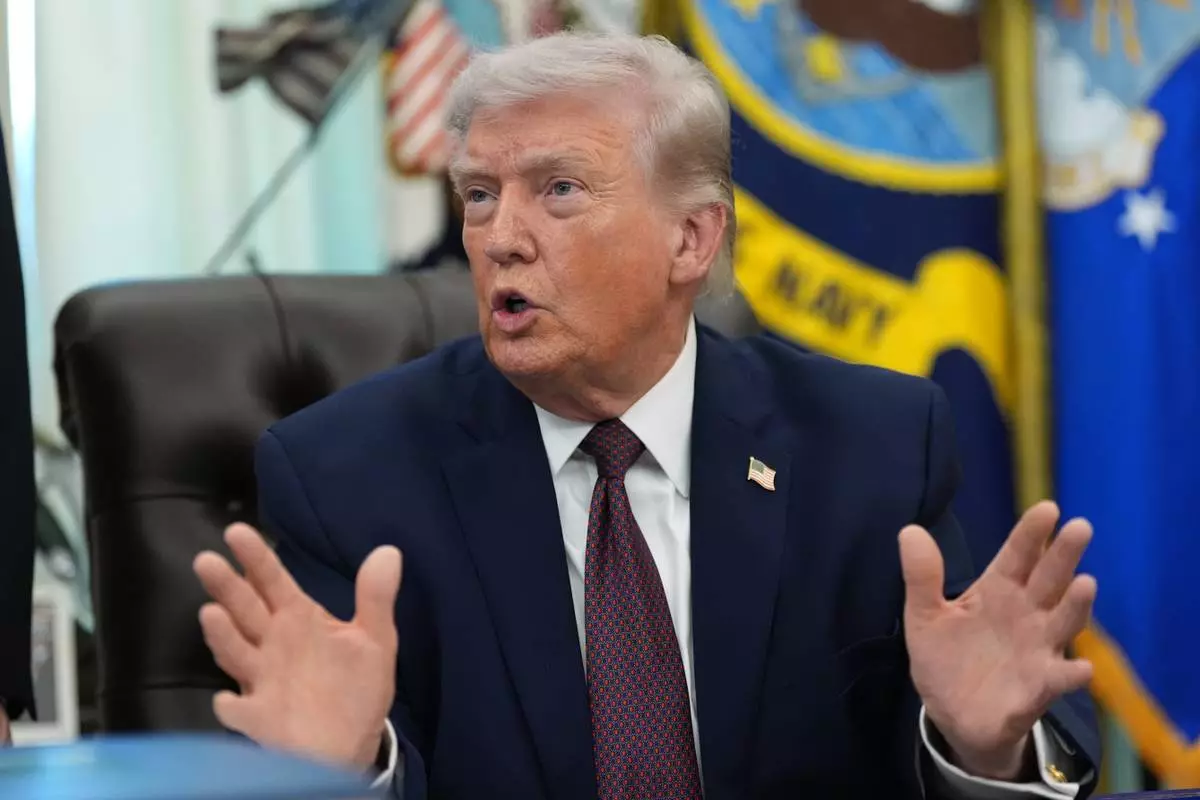
President Donald Trump answers questions from reporters after signing an executive order in the Oval Office of the White House Tuesday, March 31, 2026, in Washington. (AP Photo/Alex Brandon)

President Donald Trump answers questions from reporters after signing an executive order in the Oval Office of the White House Tuesday, March 31, 2026, in Washington. (AP Photo/Alex Brandon)

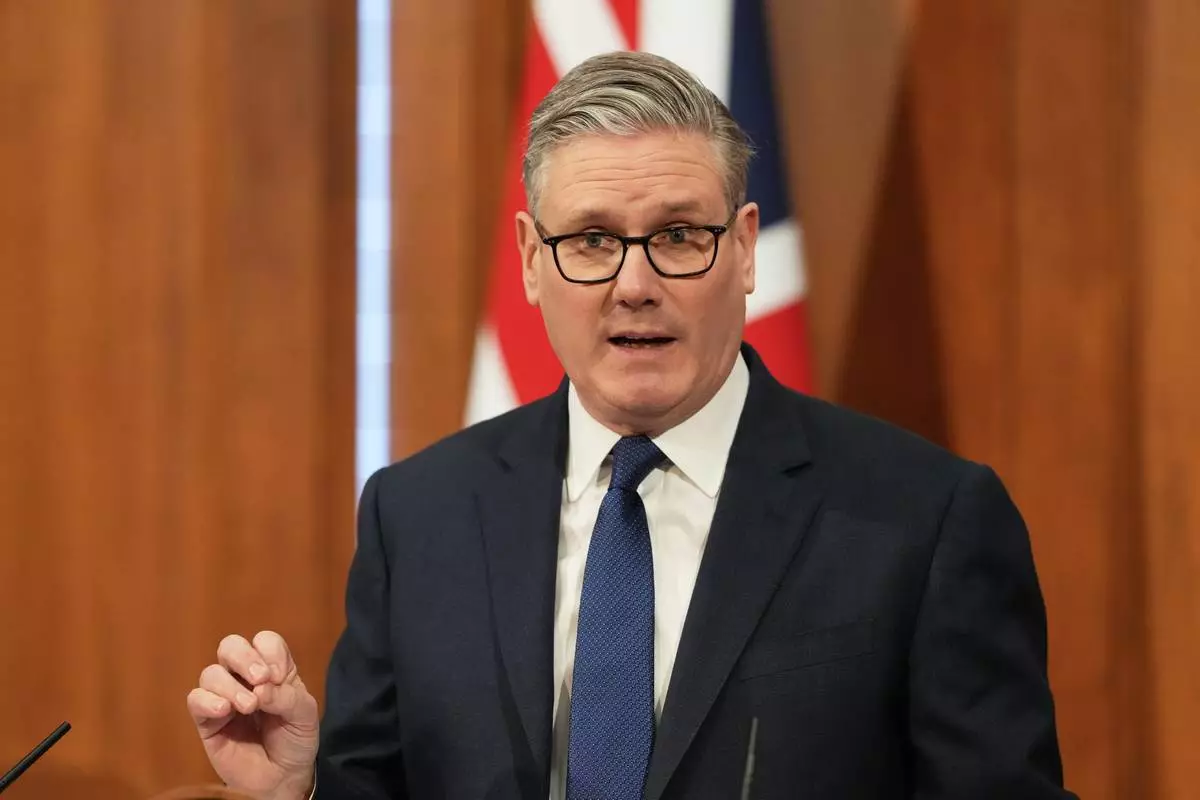
Britain's Prime Minister Keir Starmer speaks during a press conference at Downing Street in London, Wednesday, April 1, 2026. (AP Photo/Frank Augstein, Pool)

Britain's Prime Minister Keir Starmer speaks during a press conference at Downing Street in London, Wednesday, April 1, 2026. (AP Photo/Frank Augstein, Pool)

Britain's Prime Minister Keir Starmer speaks during a press conference at Downing Street in London, Wednesday, April 1, 2026. (AP Photo/Frank Augstein, Pool)

Britain's Prime Minister Keir Starmer speaks during a press conference at Downing Street in London, Wednesday, April 1, 2026. (AP Photo/Frank Augstein, Pool)

Britain's Prime Minister Keir Starmer speaks during a press conference at Downing Street in London, Wednesday, April 1, 2026. (AP Photo/Frank Augstein, Pool)

Britain's Prime Minister Keir Starmer speaks during a press conference at Downing Street in London, Wednesday, April 1, 2026. (AP Photo/Frank Augstein, Pool)

Recommended Articles