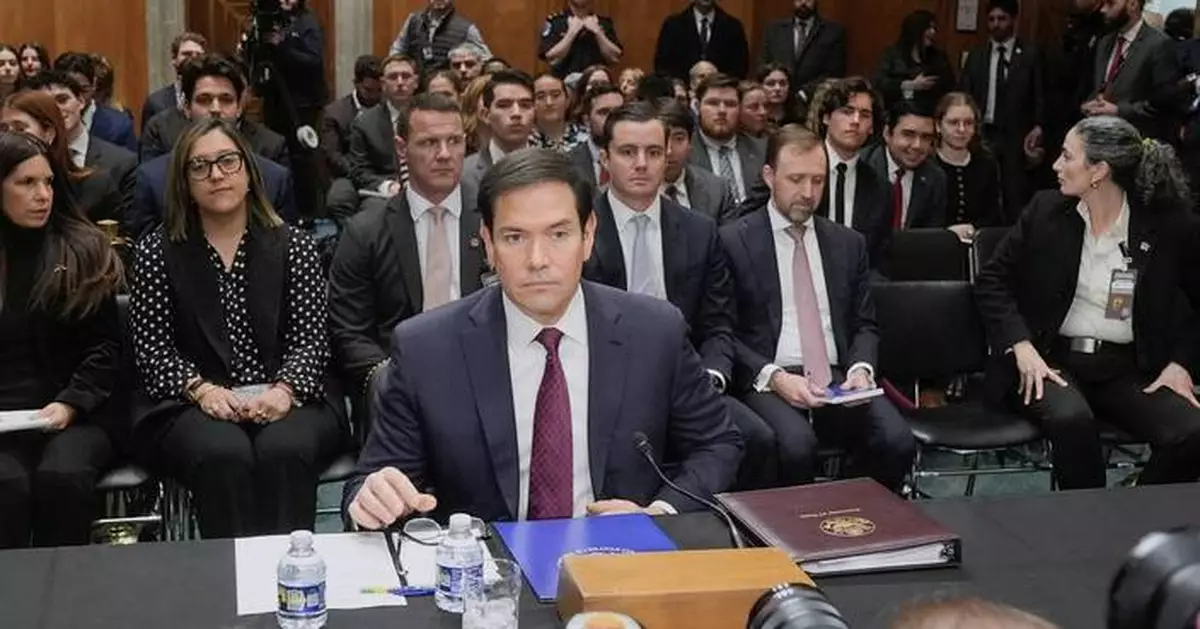
WASHINGTON (AP) — The Trump administration soon will allow Venezuela to sell oil now subject to U.S. sanctions, with the revenue initially dedicated to basic government services such as policing and health care and subject to Washington's oversight, Secretary of State Marco Rubio said Wednesday.
The United States will retain control in the short term to ensure the oil revenue is used to stabilize Venezuela, Rubio said at a Senate Foreign Relations Committee hearing. He noted that the interim leaders of the South American country will submit “a budget” every month of what they need funded.
“The funds from that (oil sales) will be deposited into an account that we will have oversight over,” Rubio said, adding that the U.S. Treasury would control the process. Venezuela, he said, “will spend that money for the benefit of the Venezuelan people.”
Rubio offered new insight into how the U.S. is planning to handle the sale of tens of millions of barrels of oil from Venezuela, which has the largest proven reserves of crude in the world, and oversee where the money flows. After the U.S. raid that captured then-President Nicolás Maduro this month, the U.S. is working to influence the next steps in the South American country through its vast oil resources.
The U.S. will not subsidize oil industry investments in Venezuela, Rubio said, and is only overseeing the sale of sanctioned petroleum as an “interim step.”
“This is simply a way to divide revenue so that there isn’t systemic collapse while we work through this recovery and transition,” Rubio said.
Democrats and some Republicans on the committee pressed Rubio for more details about Trump’s plans for Venezuela’s oil. Sen. Chris Murphy, D-Conn., asked for assurances from Rubio that the sale of Venezuelan oil will be fair and open, not rigged to benefit oil companies allied with Trump.
“You are taking their oil at gunpoint, you are holding and selling that oil … you’re deciding how and for what purposes that money is going to be used in a country of 30 million people,” Murphy said. “I think a lot of us believe that that is destined for failure.”
Under Maduro, Rubio said Venezuela's oil industry benefited the country's corrupt leaders and countries such as China, which purchased Venezuelan oil at a discount. Now, Venezuela's interim leaders are assisting the U.S. in seizing illegal oil shipments, he said.
The U.S. will give Venezuela's current leaders instructions on how the money can and cannot be spent and conduct audits to ensure it is used as intended, Rubio said. He said Venezuela could use the money to pay for policing or to buy medicine.
The fund was initially set up in Qatar to avoid having the proceeds seized by American creditors and because of other legal complications that stem from the U.S. not considering Maduro’s government legitimate, Rubio said.
Hundreds of millions of dollars have already been set aside and as much as $3 billion more is anticipated, he said.
“It’s an account that belongs to Venezuela, but it has U.S. sanctions as a blocking mechanism,” Rubio said. “We only control the dispersal of the money, we don’t control the actual money.”
Earlier this month, acting Venezuelan President Delcy Rodríguez said cash from oil sales would flow into two sovereign wealth funds: one to support crisis-stricken health services and a second to bolster public infrastructure, including the electric grid.
The country’s hospitals are so poorly equipped that patients are asked to provide supplies needed for their care, from syringes to surgical screws. They also must pay for lab and imaging tests at private hospitals.
On Tuesday, during a televised event to announce the revamping of various health care facilities, Rodríguez said her government and the U.S. administration “have established respectful and courteous channels of communication” since Maduro was captured.
Neither Rodríguez nor her government’s press office immediately comment on Rubio’s remarks Wednesday.
At Rodríguez’s request, Venezuelan lawmakers last week began debating an overhaul of the country’s energy law. The proposed changes are meant to create conditions to attract much-needed private foreign investment.
Garcia Cano reported from Caracas, Venezuela.
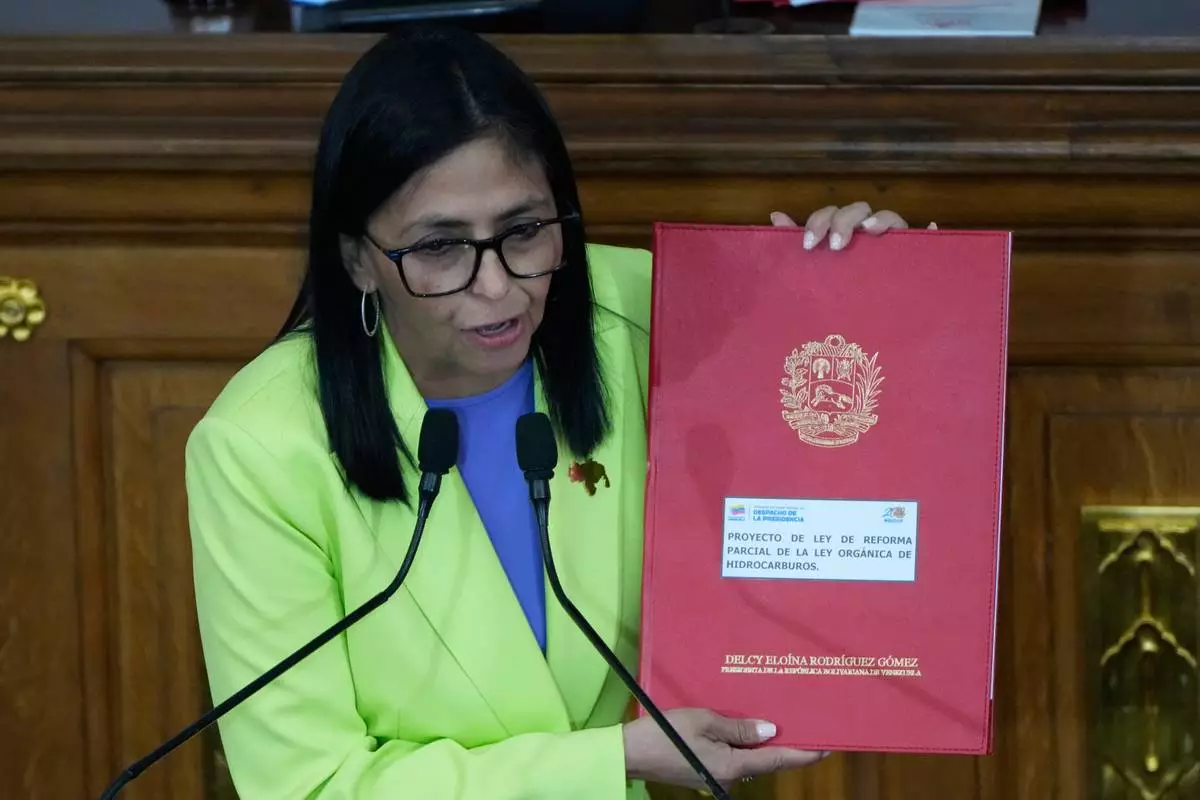
Venezuela's acting President Delcy Rodriguez delivers her first state of the union address at the National Assembly in Caracas, Venezuela, Thursday, Jan. 15, 2026. (AP Photo/Ariana Cubillos)
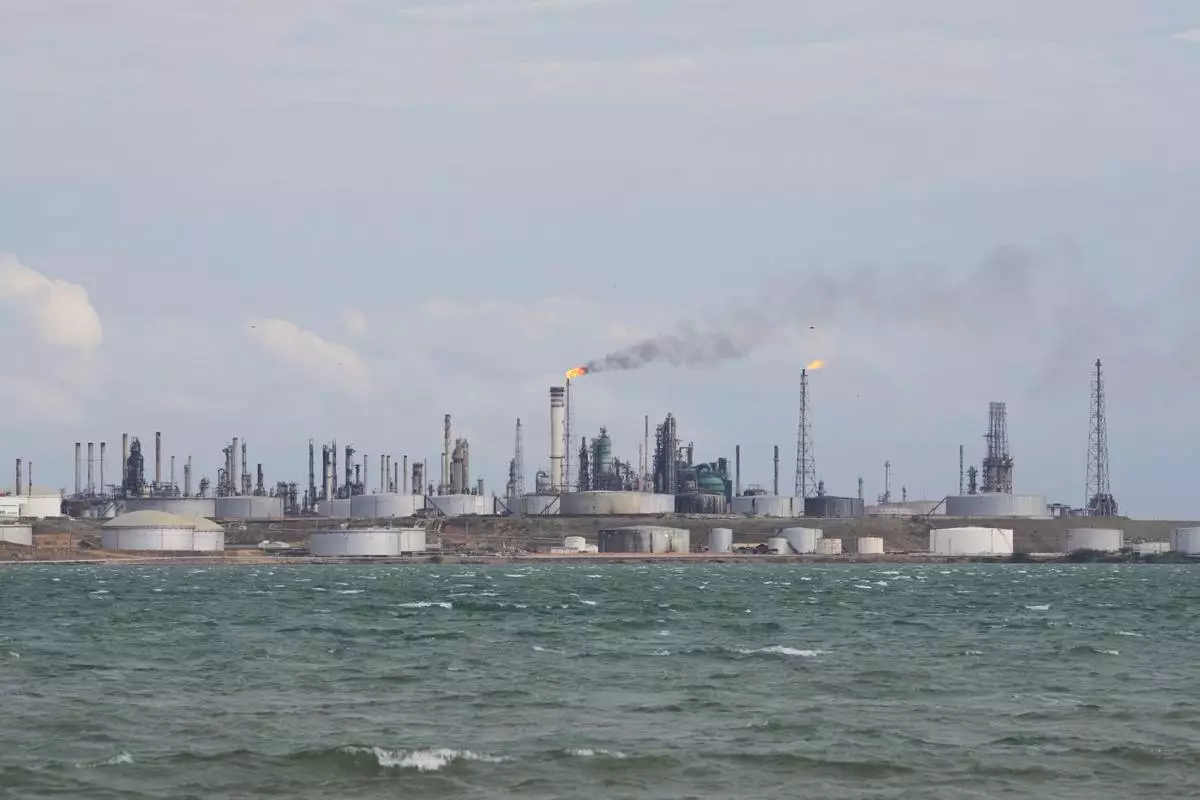
The Amuay oil refinery operates in Los Taques, Venezuela, Wednesday, Jan. 14, 2026. (AP Photo/Matias Delacroix)
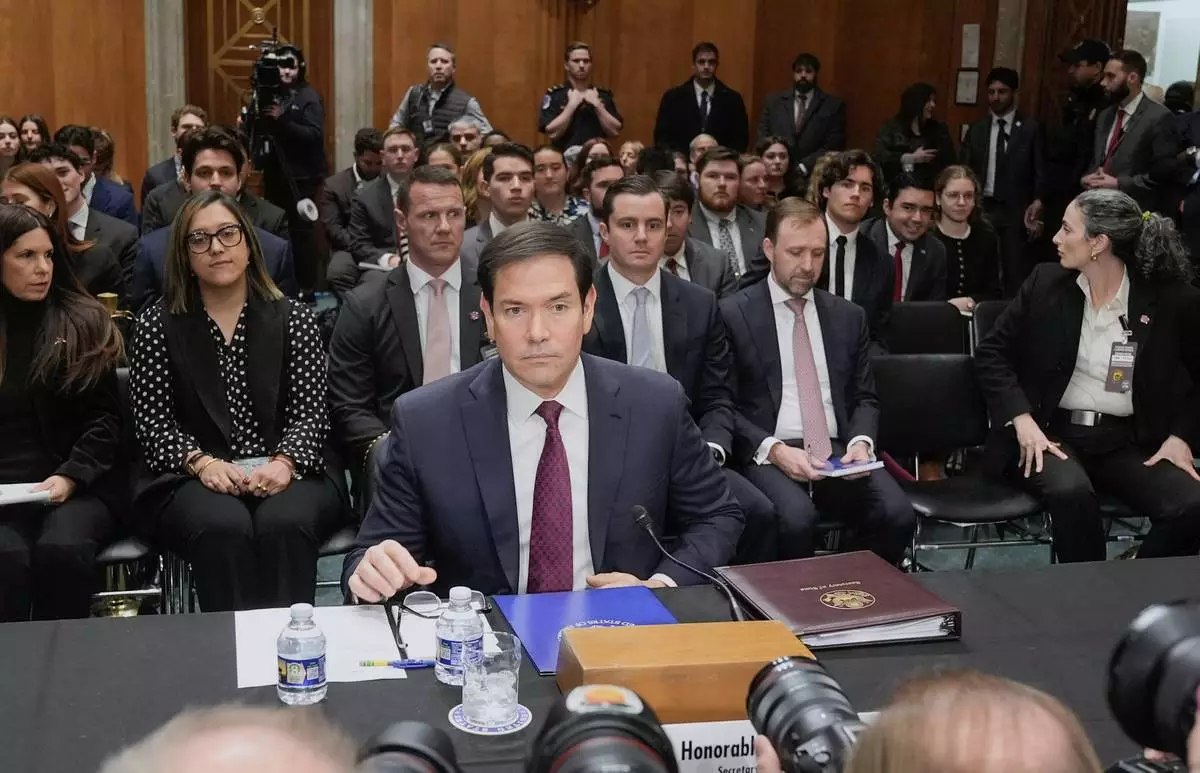
Secretary of State Marco Rubio appears before the Senate Foreign Relations Committee, on Capitol Hill, Wednesday, Jan. 28, 2026, in Washington. (AP Photo/Mariam Zuhaib)
MINNEAPOLIS (AP) — President Donald Trump seemed to signal a willingness to ease tensions in Minneapolis after a second deadly shooting by federal immigration agents, but there was little evidence Wednesday of any significant changes following weeks of harsh rhetoric and clashes with protesters.
The strain was evident when Trump made a leadership change by sending his top border adviser to Minnesota to take charge of the immigration crackdown. That was followed by seemingly conciliatory remarks about the Democratic governor and mayor.
Trump said he and Gov. Tim Walz, whom he criticized for weeks, were on “a similar wavelength” following a phone call. After a conversation with Mayor Jacob Frey, the president praised the discussion and declared that “lots of progress is being made.”
But on city streets, there were few signs of a shift. Immigration enforcement operations and confrontations with activists continued Wednesday in Minneapolis and St. Paul.
A group of protesters blew whistles and pointed out federal officers in a vehicle on a north Minneapolis street. When the officers’ vehicle moved, a small convoy of activists followed in their cars for a few blocks until the officers stopped again.
Associated Press journalists were in the neighborhood covering the enforcement actions. When the journalists got out of their car to document the encounter, officers with the federal Bureau of Prisons pushed one of them, threatened them with arrest and told them to get back in their car despite the reporters' identifying themselves as media.
Officers from multiple federal agencies have been involved in the enforcement operations. From their car, the AP journalists saw at least one person being pepper sprayed and one detained, though it was unclear if that person was the target of the operation or a protester. Agents also broke car windows.
Attorney General Pam Bondi, who is visiting Minnesota, said 16 people were arrested Wednesday on charges of assaulting, resisting or impeding law enforcement in the state. She said more arrests were expected.
“NOTHING will stop President Trump and this Department of Justice from enforcing the law," Bondi said in a social media post.
Messages seeking comment were left with Immigration and Customs Enforcement and the Border Patrol.
Many immigrant families are still fearful of leaving their homes, and Latino businesses are still closed, according to Daniel Hernandez, who owns the Minneapolis grocery store Colonial Market. He also runs a popular Facebook page geared toward informing the Hispanic community in the Twin Cities.
While Colonial Market is open, all but one of the dozen immigrant-run businesses that rented space inside to sell clothes, jewelry and toys have closed since late December, and none has plans to reopen, Hernandez said.
“The reality is the community is still very worried and afraid,” Hernandez said.
Hernandez referenced Border Patrol commander Gregory Bovino, who helped lead the administration's crackdown in the Twin Cities and who has reportedly been assigned elsewhere.
Bovino "was removed, but the tactics so far are still the same," Hernandez said. “Nobody now is trusting the government with those changes.”
The federal enforcement extended to the city’s Ecuadorian consulate, where a federal law enforcement officer tried to enter before being blocked by employees.
Meanwhile, Trump said in a social media post that the mayor was “PLAYING WITH FIRE” by not participating in the enforcement efforts.
Elsewhere on Wednesday, Donnie McMillan placed a cardboard sign reading “In remembrance of my angel” at the makeshift memorial where Alex Pretti was shot.
The Vietnam veteran, 71, kneeled to pay his respects and saluted to honor the nurse whom he said he remembered seeing during his frequent visits to the Veterans Affairs hospital where Pretti worked.
“I feel like I’ve lost an angel right here,” the disabled veteran said, pointing to the growing sidewalk memorial covered in flowers, candles and signs.
“This is not the way we should operate,” added McMillan, who said he served in Vietnam and then in the military police for more than a decade. “I respect everybody, but I respect my angel more, and now he’s no longer with us.”
Also Wednesday, the Department of Homeland Security said two federal agents involved in Petti's shooting have been on leave since Saturday.
In other developments, a man confronted Democratic Rep. Ilhan Omar during a town hall meeting and squirted her with a strong-smelling substance as she denounced the administration. He was tackled and identified by police as 55-year-old Anthony Kazmierczak, a convicted felon who had made online posts supportive of Trump.
Minnesota court records show Kazmierczak was convicted of auto theft in 1989 and has multiple arrests for driving under the influence, along with a slew of traffic offenses. It was not immediately clear if he had an attorney.
In social media posts, Kazmierczak described himself a former network engineer who lives in Minneapolis and had made comments critical of former President Joe Biden, referring to Democrats as “angry and liars.”
Omar continued speaking for about 25 minutes after the man was ushered out by security, saying she would not be intimidated. After the event, she said she was unharmed.
The administration was also being challenged in court. Federal courts were weighing a decision on a lawsuit seeking to pause the crackdown, as well as an order for the head of ICE to appear personally to address what a judge said were failures to grant due process for certain immigrants.
Associated Press writers Mike Catalini in Trenton, New Jersey, and Michael Biesecker in Washington contributed to this report.
This story has been corrected to show that agency's name is Veterans Affairs, not Veterans Administration.
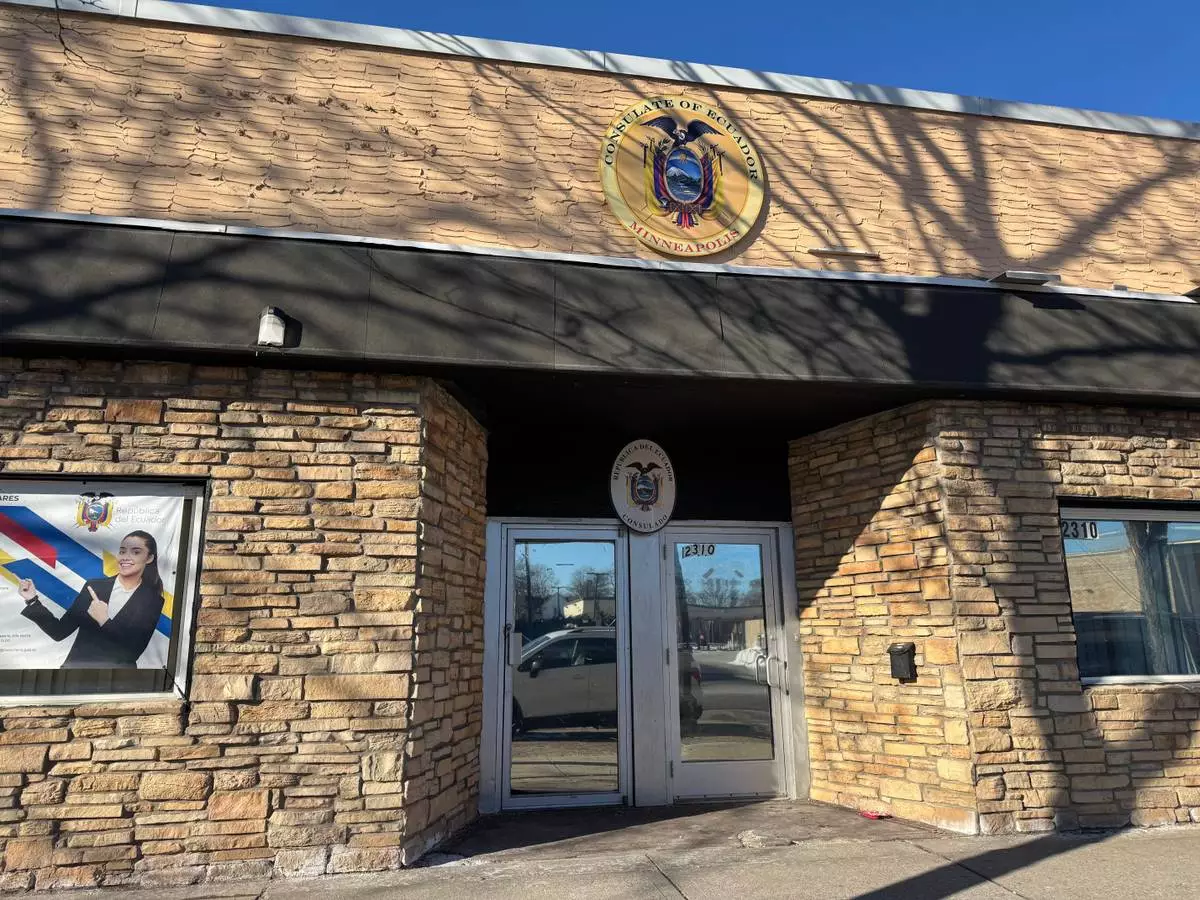
The Ecuadorian consulate stands in Minneapolis, Jan. 28, 2026. (AP Photo/Jack Brook)
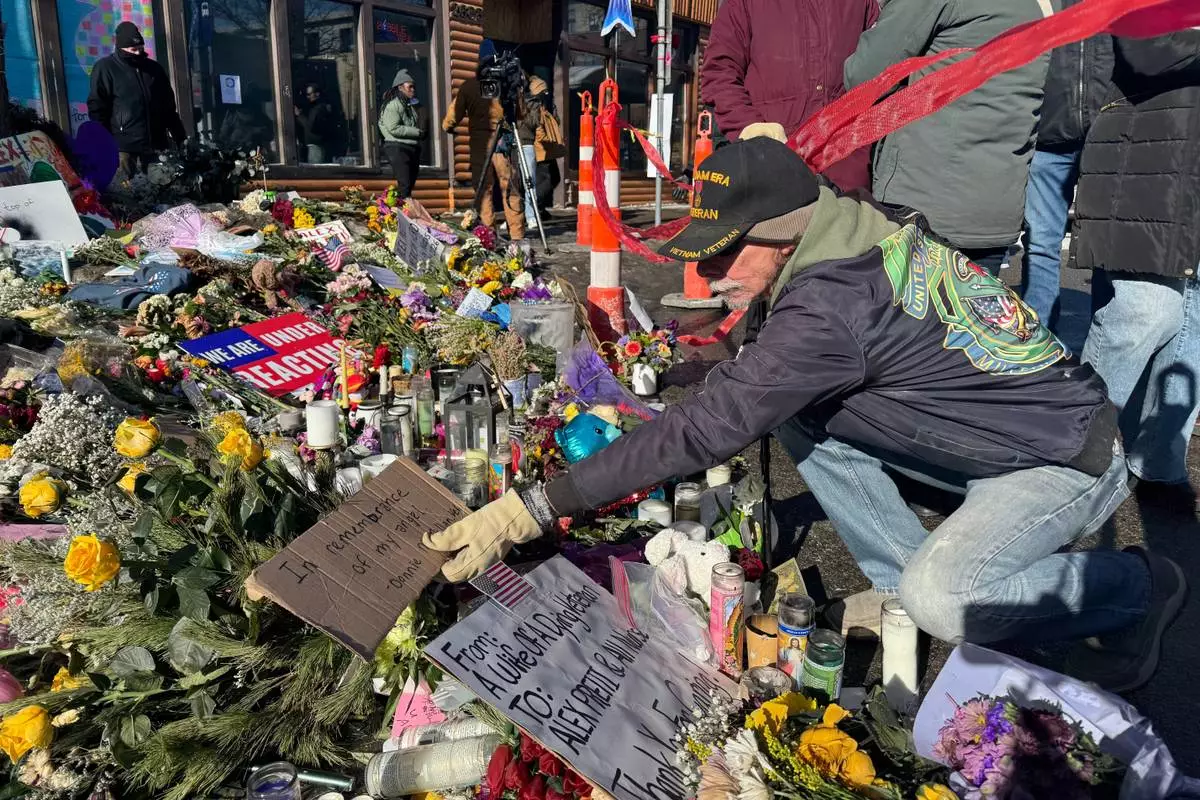
Vietnam war veteran Donnie McMillan places a sign that says "In remembrance of my angel" at a memorial set up at the location where Veterans Affairs nurse Alex Pretti was shot by U.S. federal agents, in Minneapolis, Wednesday, Jan. 28, 2026. (AP Photo/Jack Brook)
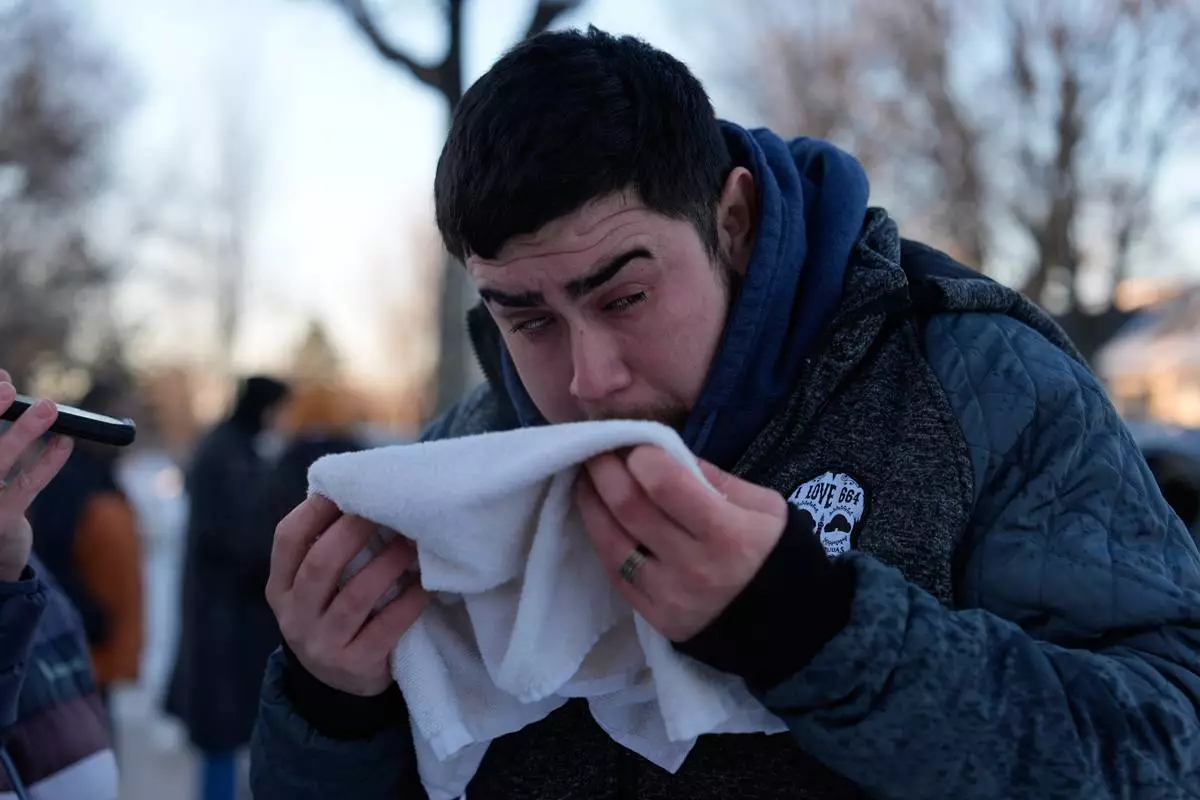
A person is attended to after federal officers used a chemical irritant on Wednesday, Jan. 28, 2026, in Minneapolis. (AP Photo/Julia Demaree Nikhinson)
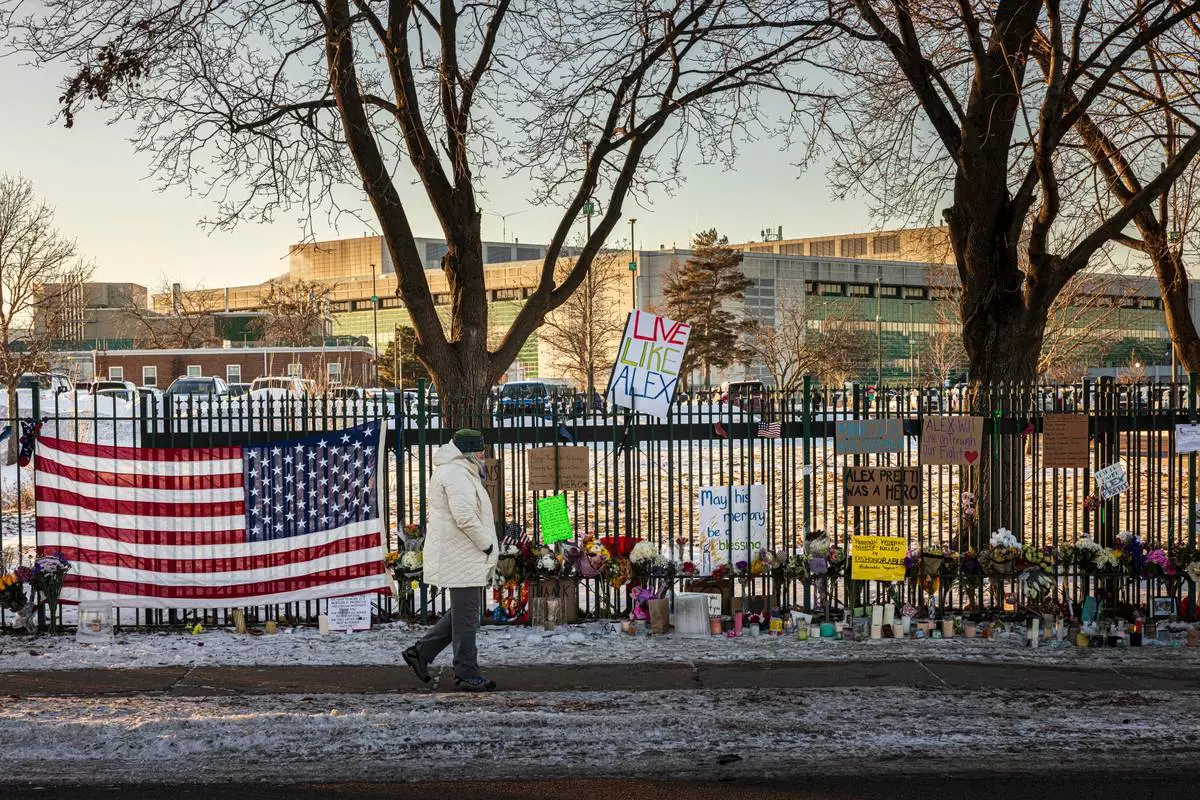
A person walks past a memorial honoring Alex Pretti outside the Minneapolis VA hospital on Wednesday, Jan. 28, 2026, in Minneapolis. (Kerem Yücel/Minnesota Public Radio via AP)
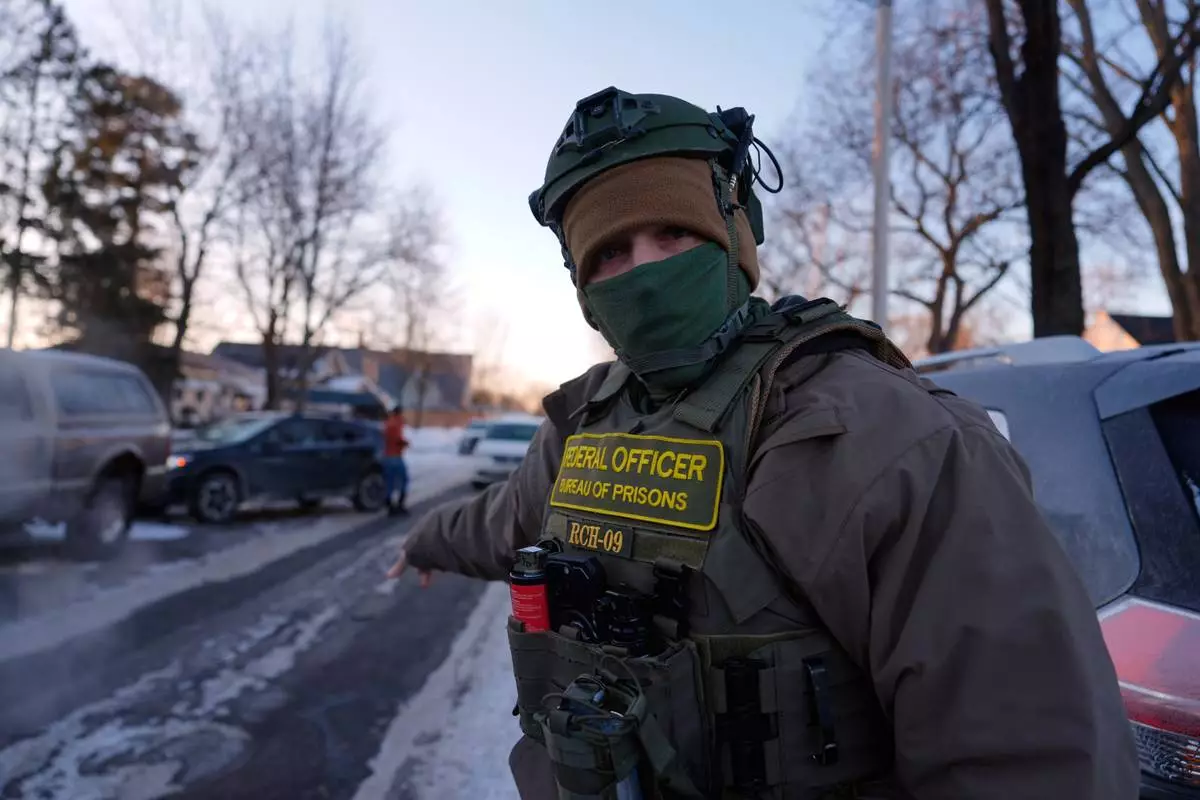
A federal officer approaches observers and journalists on Wednesday, Jan. 28, 2026, in Minneapolis. (AP Photo/Julia Demaree Nikhinson)
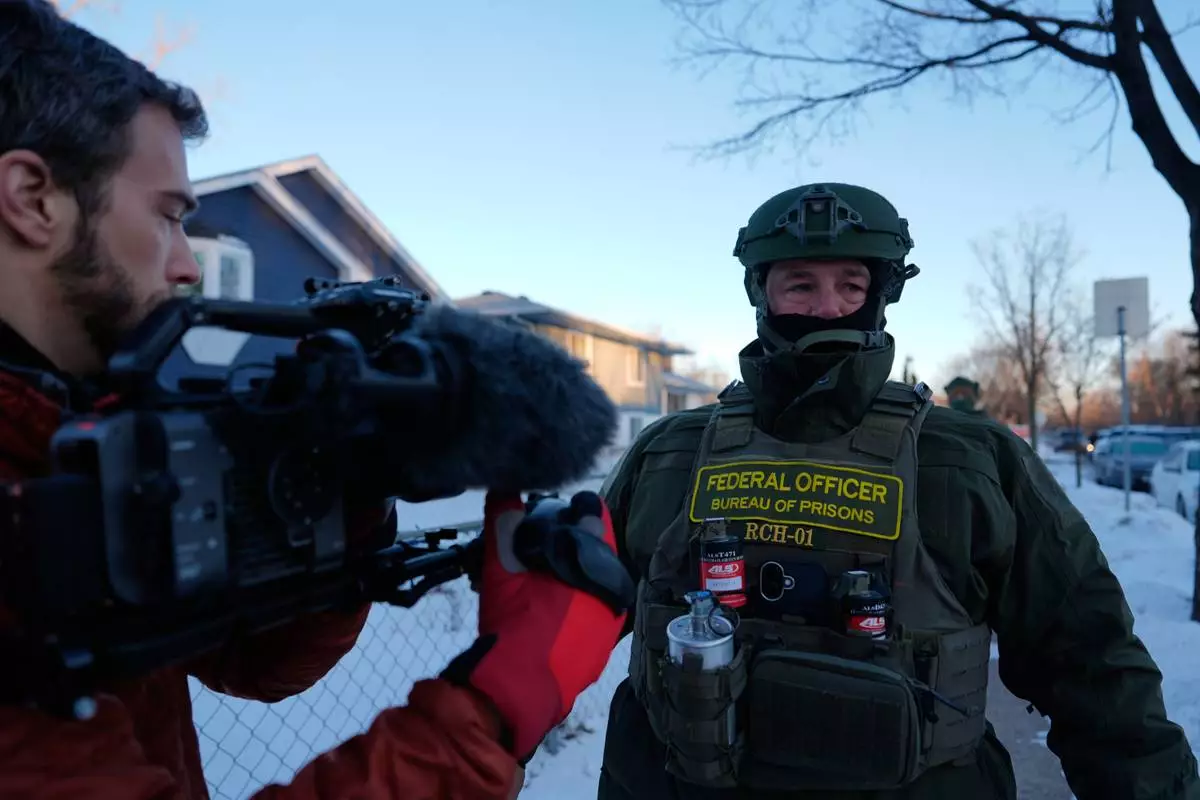
ADDS MORE INFORMATION Federal Bureau of Prisons officers threaten AP video journalist Mark Vancleave with arrest on Wednesday, Jan. 28, 2026, in Minneapolis. (AP Photo/Julia Demaree Nikhinson)
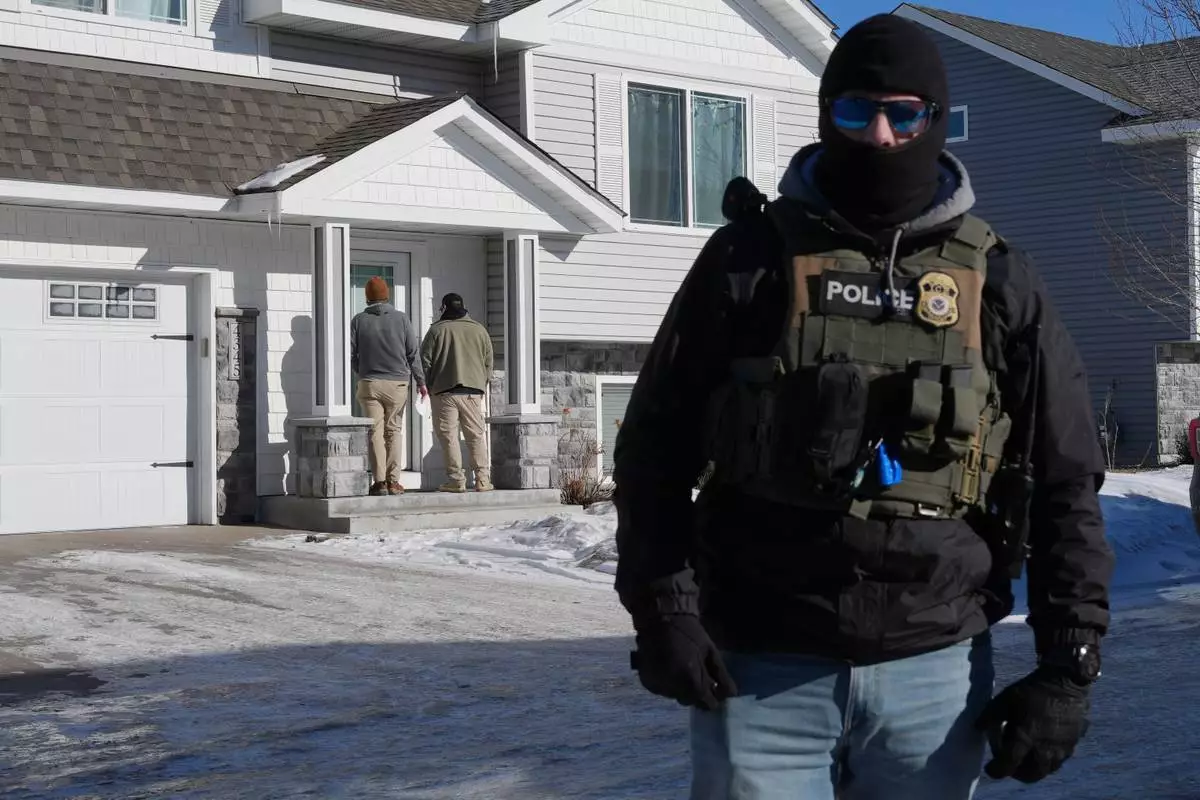
Federal agents knock on a door of a residence on Wednesday, Jan. 28, 2026, in Blaine, Minn. (AP Photo/Adam Gray)