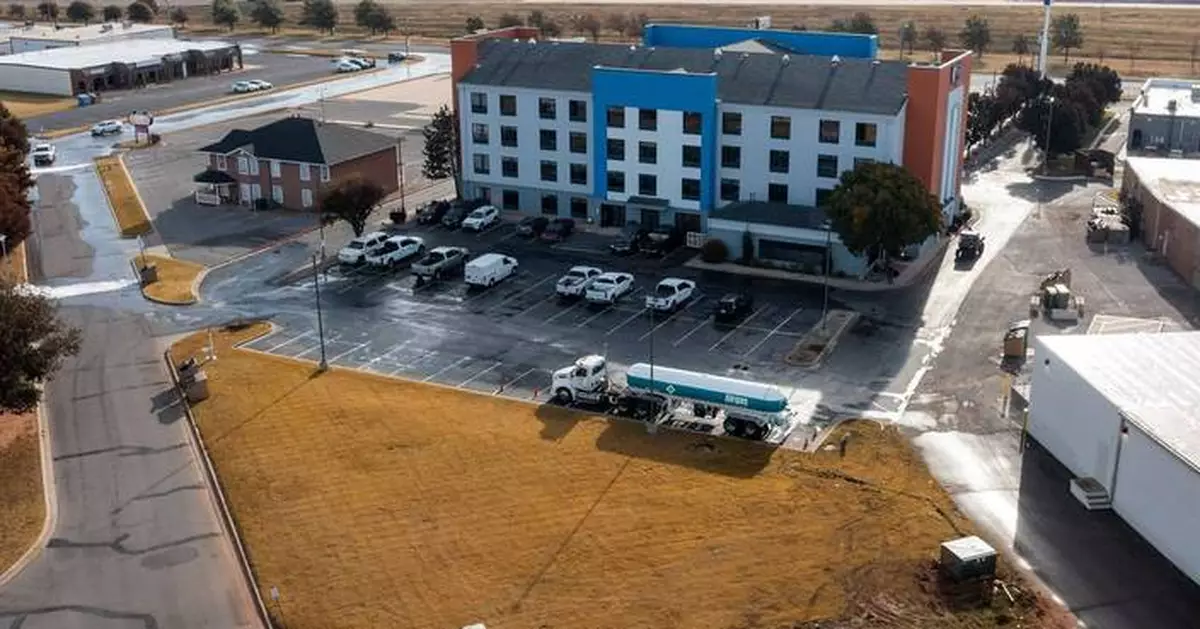
WEATHERFORD, Okla. (AP) — A leaking tanker truck spewed dangerous ammonia gas outside a hotel overnight, filling its hallways with fumes and forcing hundreds of nearby residents of a small Oklahoma city to evacuate, authorities said Thursday. Several dozen people were treated at hospitals.
Officials lifted a shelter-in-place order Thursday morning, hours after firefighters wearing gas masks went door to door in Weatherford, waking people up and telling them to leave because of the anhydrous ammonia leak.
Click to Gallery
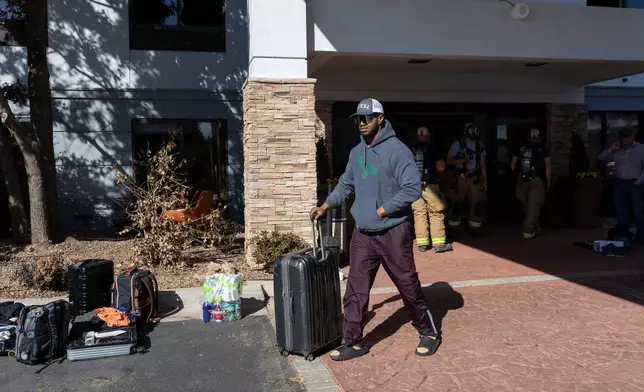
Michael Johnson of Nacogdoches, Texas gathers his belongings from the Holiday Inn Express on Thursday, Nov. 13, 2025 after he was able to return due to evacuation orders following an ammonia gas leak at the hotel in Weatherford, Okla. the previous night. (AP Photo/Alonzo Adams)
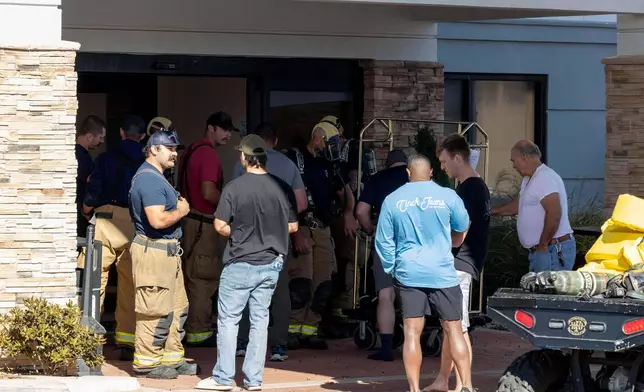
Fire crews bring down guest belongings from their hotel room at the Holiday Inn Express after the evacuation and shelter in place was lifted after a tanker truck had an ammonia gas leak in Weatherford, Okla. on Thursday, Nov. 13, 2025. (AP Photo/Alonzo Adams)
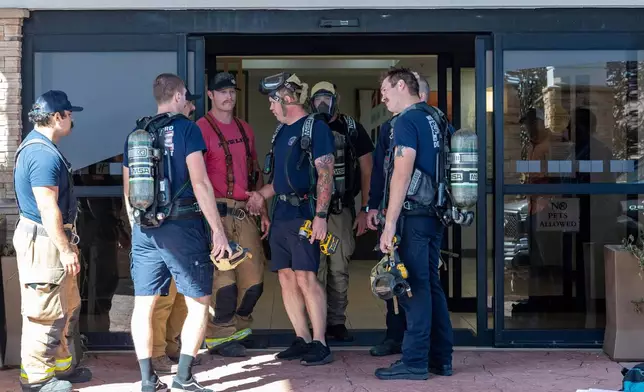
First responders check the Holiday Inn Express in Weatherford, Okla. on Thursday, Nov. 13, 2025 where an ammonia gas leak in the parking lot the previous night warranted evacuation. (AP Photo/Alonzo Adams)
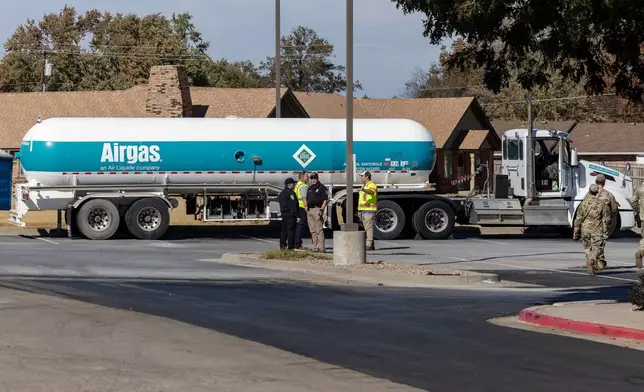
Crews begin checking the Airgas tanker on Thursday, Nov. 13, 2025 that leaked in the parking lot of the Holiday Inn Express in Weatherford, Okla. the previous night and caused mandatory evacuations. (AP Photo/Alonzo Adams)
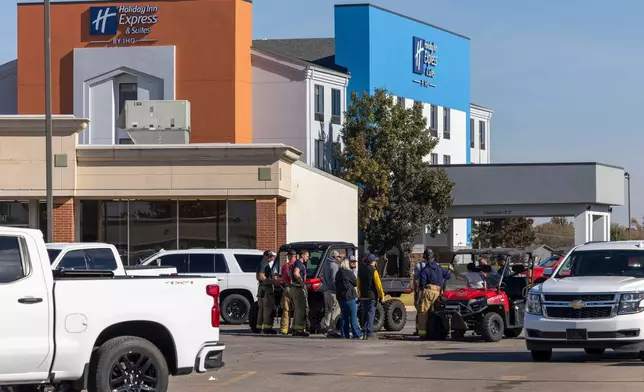
Business owners and first responders gather in a shopping center parking lot near the scene of an ammonia spill in Weatherford, Okla. after the shelter in place was lifted on Thursday, Nov. 13, 2025. (AP Photo/Alonzo Adams)
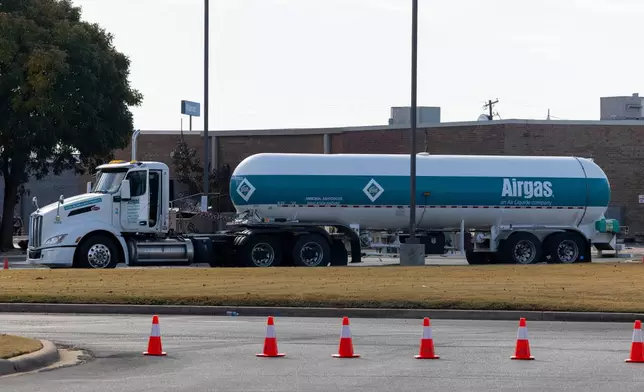
An Airgas semi truck that leaked ammonia sits behind the Holiday Inn Express in Weatherford, Okla. on Thursday, Nov. 13, 2025. (AP Photo/Alonzo Adams)
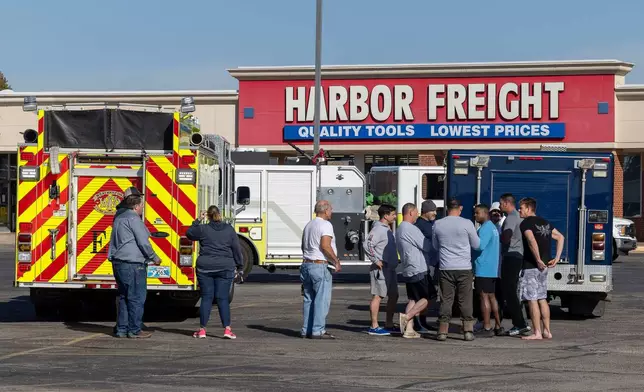
Business owners and first responders gather in a shopping center parking lot near the scene of an ammonia spill in Weatherford, Okla. after the shelter in place was lifted on Thursday, Nov. 13, 2025. (AP Photo/Alonzo Adams)
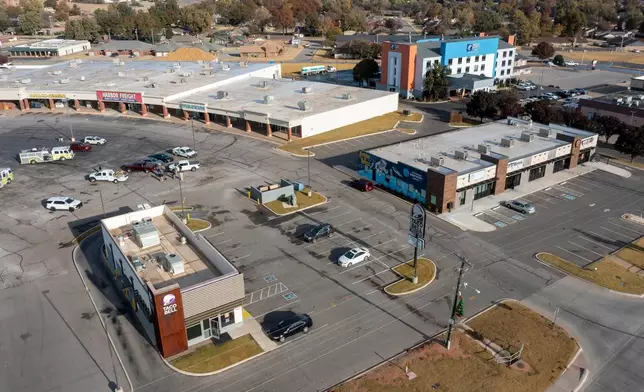
The scene of an ammonia spill at the Holiday Inn Express in Weatherford, Okla. on Thursday, Nov. 13, 2025. (AP Photo/Alonzo Adams)
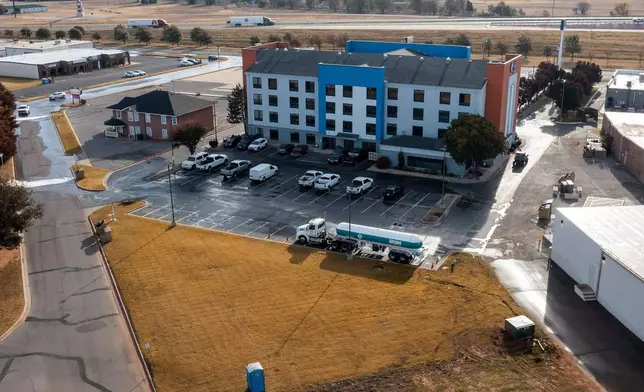
The scene of an ammonia spill at the Holiday Inn Express in Weatherford, Okla. on Thursday, Nov. 13, 2025. (AP Photo/Alonzo Adams)
An oil field worker staying at the hotel where the truck had been parked said he heard a “faint pop” Wednesday night and noticed a smell minutes later. He and a coworker left their room and hustled into a hallway and then an elevator filling up with a pungent odor.
Once outside, they saw their vehicles underneath a cloud of ammonia, said Michael Johnson, of Nacogdoches, Texas. "The smell itself punched me,” he said.
He took off running, but noticed his roommate wasn’t with him and saw that he had run for their trucks. He said a police officer managed to save his coworker.
“His lips were purple and frozen shut,” Johnson said. “His eyes were bloodshot red. His skin was all red.”
Johnson found one person stumbling and gave him a shirt to put over his mouth. At one point, he looked at the smoke and saw they were surrounded, thinking “We’re going to die.”
Police said 34 people were treated at a local hospital and 11 patients were taken to Oklahoma City area hospitals. Several victims remained in intensive care late Thursday, but the majority were in stable condition, police said in a statement. Dozens more received treatment at casualty centers.
Five responding officers sustained chemical burns to their airways, police said.
At least 500 to 600 people went to a shelter early Thursday while others were ordered to remain inside their homes for several hours. Some nursing homes were evacuated, and schools were closed for the day.
A leaking gasket from a tanker truck carrying 25,000 pounds (11,340 kilograms) of ammonia was responsible, the EPA said in a written statement. The National Transportation Safety Board said it was investigating.
Anhydrous ammonia is used as a farm fertilizer to help corn and wheat grow. The colorless gas has a suffocating odor and can be deadly, especially at high concentrations, or cause breathing problems and burns to the skin and eyes.
Just last week, an anhydrous ammonia leak forced evacuations near Yazoo City, Mississippi, and two years ago, five people died in Illinois when a tanker truck spilled anhydrous ammonia after it was forced off a road by a passing minivan.
The cleanup in Weatherford — a city of 12,000 people about 70 miles (115 kilometers) west of Oklahoma City — could take several days, the police chief said.
“We pretty much got a lot of this stuff diluted right now,” Orefice said, adding that authorities were working with environmental officials.
The EPA said subsequent air monitoring did not detect any ammonia in the local residential area. The levels of pH in the local creek were within normal and the levels detected in the soil were expected to “naturally neutralize over a short period.”
The driver of the truck carrying the gas had parked behind a Holiday Inn Express to get a room there for the evening, Orefice said. The cause seemed to be a mechanical failure on a valve or a faulty seal, the police chief said.
Authorities said the air quality was being monitored and that the tanker truck was no longer leaking. A number of agencies were assisting, including hazmat crews and the Oklahoma National Guard.
Trisha Doucet called police for help when she learned the leak was blocks away from where her mother was caring for her bed-bound 89-year-old grandmother. An ambulance was quickly dispatched to get her to safety.
Her grandmother, who is on hospice, was reluctant to leave. “But this is my house,” she said.
Doucet, who used to work as an EMT and knew the dangers of anhydrous ammonia, recalled telling her grandmother, “That’s the hardest part. I know it’s your house, but you really have to go.”
McCormack reported from Concord, New Hampshire, and Brumfield reported from Cockeysville, Maryland. Associated Press writers Heather Hollingsworth in Mission, Kansas, and John Seewer in Toledo, Ohio, contributed.
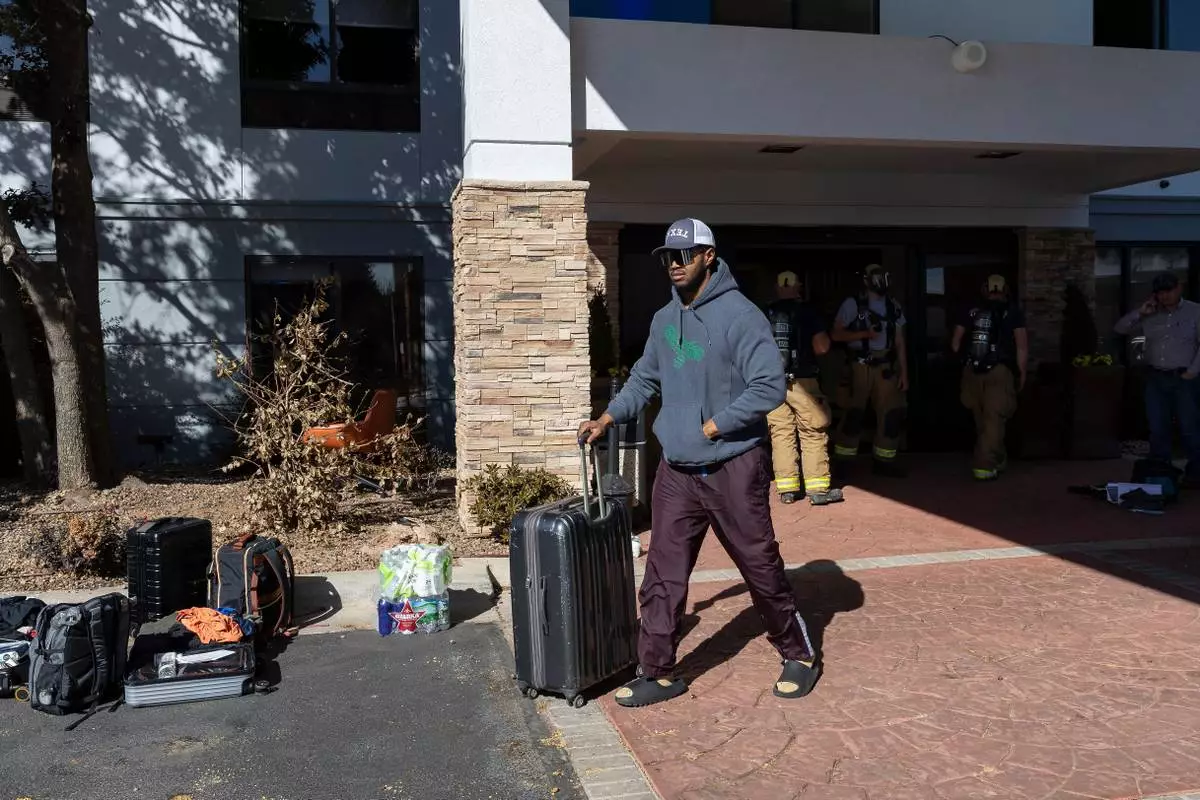
Michael Johnson of Nacogdoches, Texas gathers his belongings from the Holiday Inn Express on Thursday, Nov. 13, 2025 after he was able to return due to evacuation orders following an ammonia gas leak at the hotel in Weatherford, Okla. the previous night. (AP Photo/Alonzo Adams)

Fire crews bring down guest belongings from their hotel room at the Holiday Inn Express after the evacuation and shelter in place was lifted after a tanker truck had an ammonia gas leak in Weatherford, Okla. on Thursday, Nov. 13, 2025. (AP Photo/Alonzo Adams)
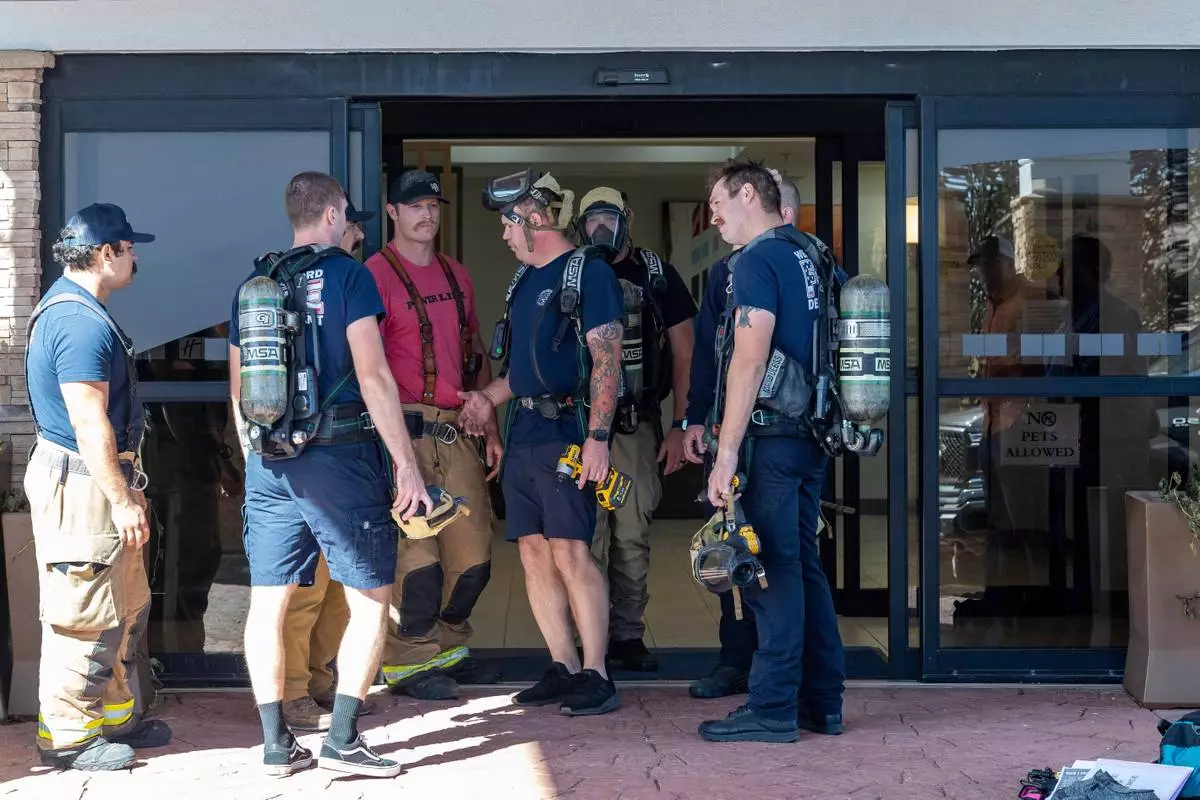
First responders check the Holiday Inn Express in Weatherford, Okla. on Thursday, Nov. 13, 2025 where an ammonia gas leak in the parking lot the previous night warranted evacuation. (AP Photo/Alonzo Adams)
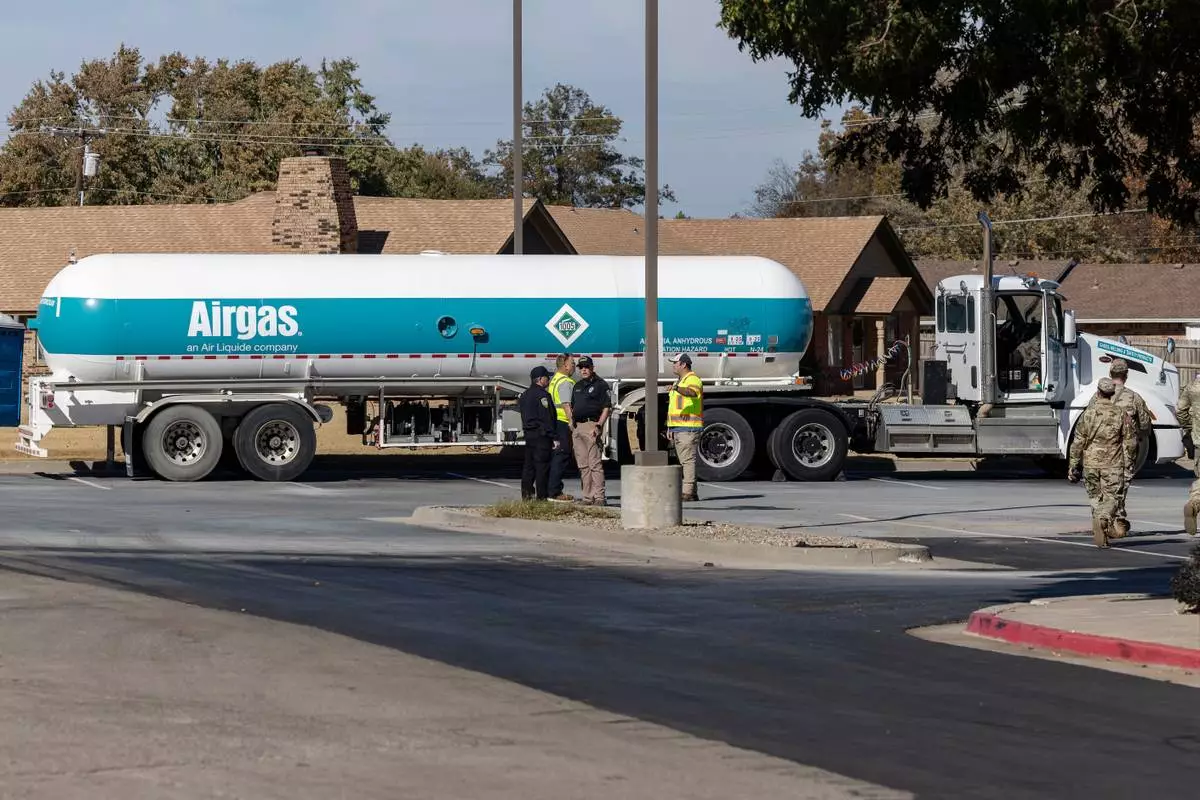
Crews begin checking the Airgas tanker on Thursday, Nov. 13, 2025 that leaked in the parking lot of the Holiday Inn Express in Weatherford, Okla. the previous night and caused mandatory evacuations. (AP Photo/Alonzo Adams)
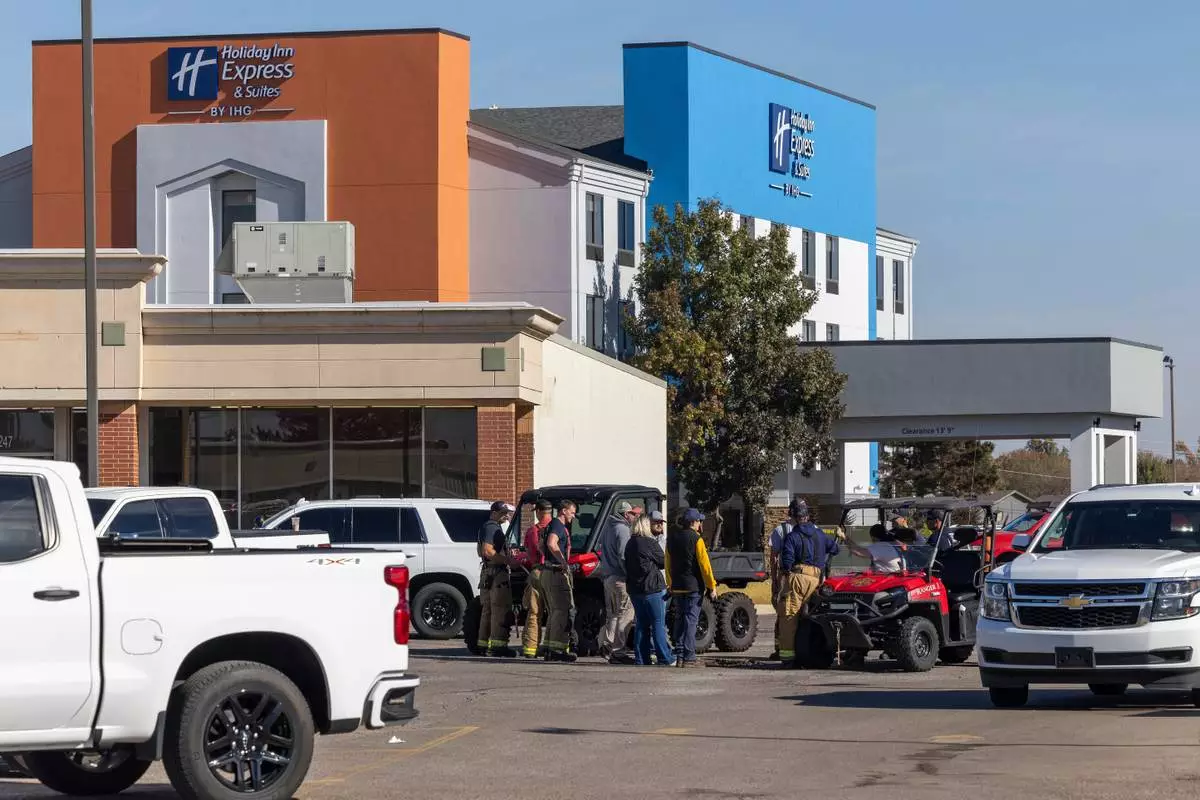
Business owners and first responders gather in a shopping center parking lot near the scene of an ammonia spill in Weatherford, Okla. after the shelter in place was lifted on Thursday, Nov. 13, 2025. (AP Photo/Alonzo Adams)

An Airgas semi truck that leaked ammonia sits behind the Holiday Inn Express in Weatherford, Okla. on Thursday, Nov. 13, 2025. (AP Photo/Alonzo Adams)
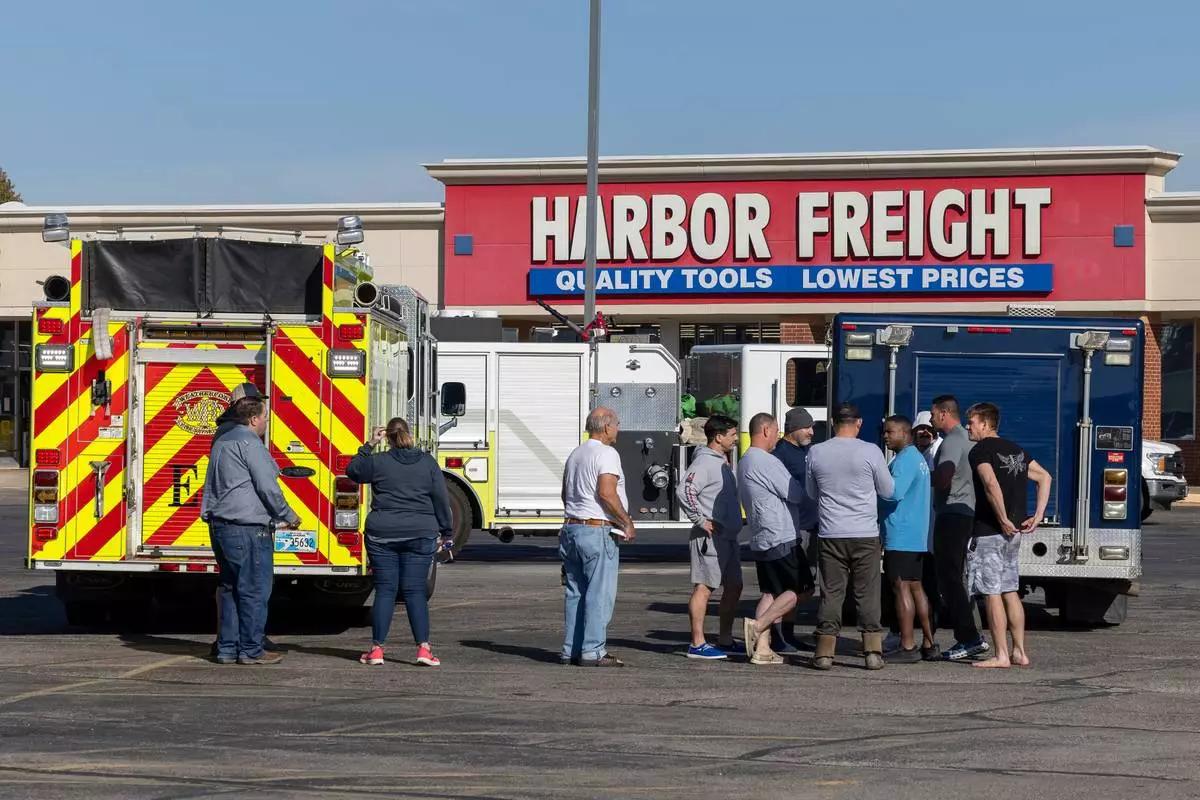
Business owners and first responders gather in a shopping center parking lot near the scene of an ammonia spill in Weatherford, Okla. after the shelter in place was lifted on Thursday, Nov. 13, 2025. (AP Photo/Alonzo Adams)
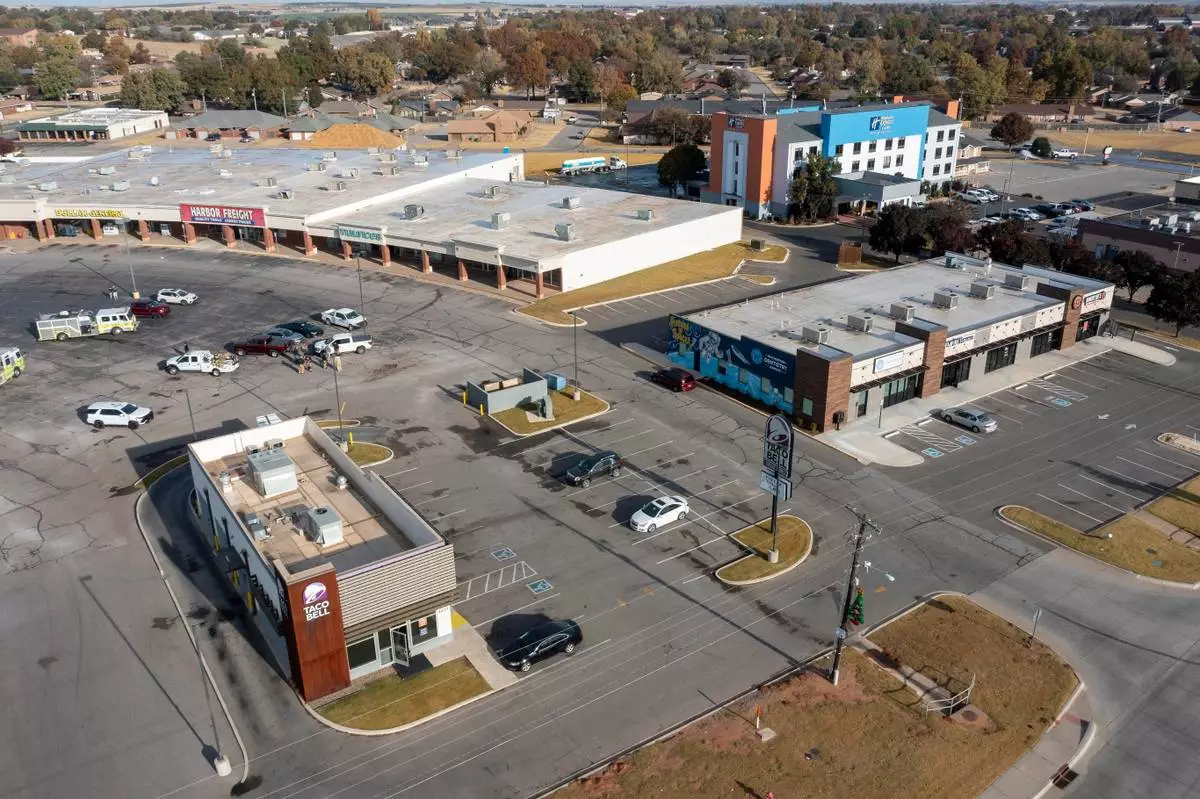
The scene of an ammonia spill at the Holiday Inn Express in Weatherford, Okla. on Thursday, Nov. 13, 2025. (AP Photo/Alonzo Adams)
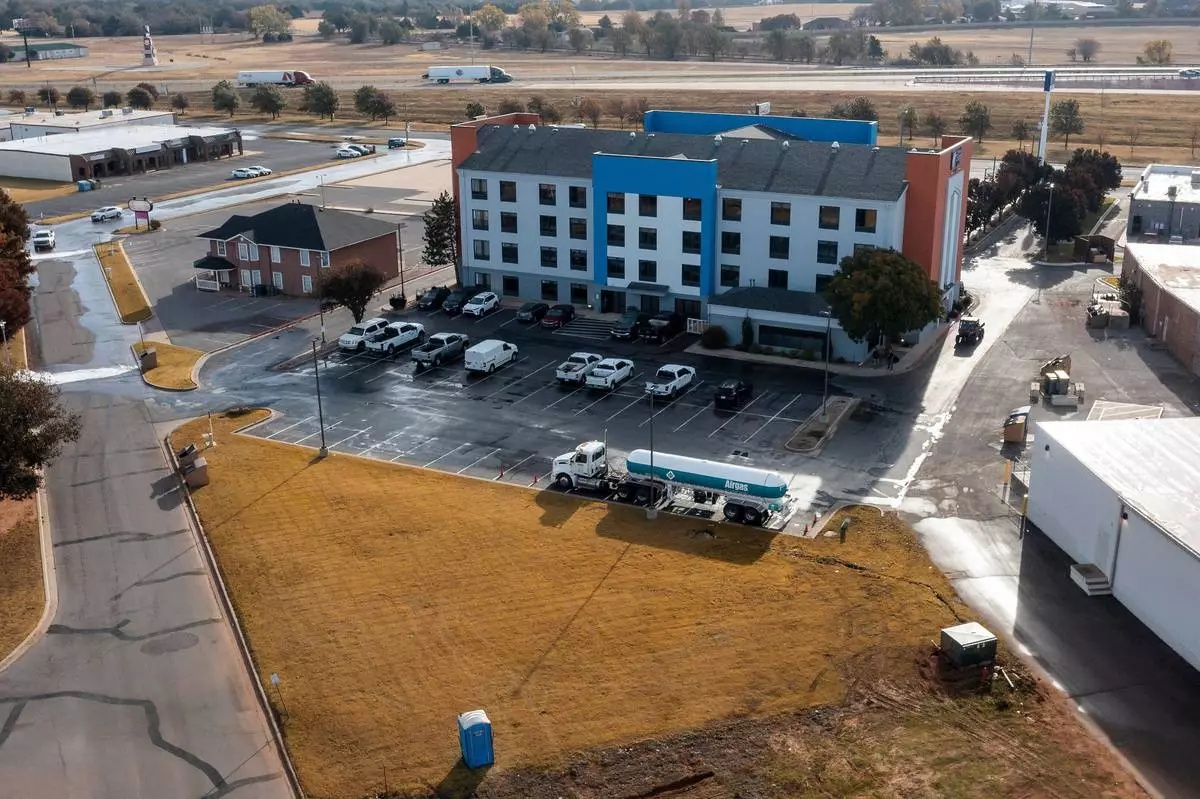
The scene of an ammonia spill at the Holiday Inn Express in Weatherford, Okla. on Thursday, Nov. 13, 2025. (AP Photo/Alonzo Adams)