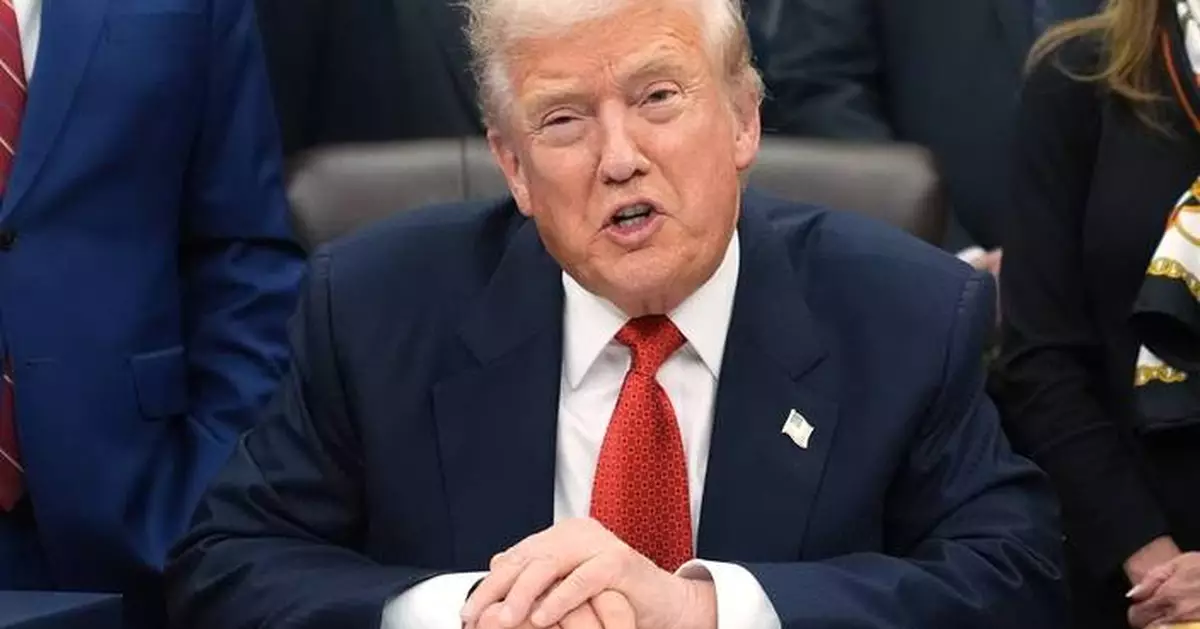
President Donald Trump's administration on Thursday designated four European left-wing groups as terrorist organizations, following through on his vow to crack down on leftists after the assassination of conservative activist Charlie Kirk.
The networks targeted by Trump's Republican administration all appear to be based in Europe, with no operations in the United States. They are an Italian anarchist front that sent explosive packages to the then-president of the European Commission in 2003, two Greek networks believed to have planted bombs outside riot police and labor department buildings in Athens, and an anti-fascist group whose members were prosecuted by German authorities for a hammer attack against neo-Nazis in Dresden.
Europe has a long history of left-wing political violence, while in the United States political violence has been more likely to come from the right in recent decades, according to multiple studies, including by the Justice Department. However, there's been an uptick in American political attacks across ideologies in recent years, culminating in the September fatal shooting of Kirk by a gunman who prosecutors contend was driven by hostility toward Kirk's stance against transgenderism and other positions.
The Trump administration's online announcement contends that "Anarchist militants have waged terror campaigns in the United States and Europe, conspiring to undermine the foundations of Western Civilization through their brutal attacks.”
The designation by the administration allows it to target any financial support the networks may have in the U.S. Most anarchist and antifa, or anti-fascist, groups are technically not organizations but rather loose affiliations of individuals who join up for specific actions.
Some support violence only against property and not people. One of the Greek networks that authorities believe detonated bombs at a government building and train company headquarters called ahead of time to ensure people could evacuate, one reason no one was injured. While some European leftist groups share an ideology, police seizures during arrests generally have not revealed that they are sharing resources.
The State Department announcement came in the evening in Europe, when the governments in the countries that have battled the networks did not immediately respond to requests for comment.
The designation for such groups is not without precedent. Greece has a decades-long history of attacks by far-left and anarchist groups, some of which have targeted U.S. officials. Those groups have been listed as terrorist organizations by the U.S., stretching back to the 1970s.
It's also not the first time the Trump administration has targeted antifa. Two weeks after the Kirk assassination, Trump signed an executive order designating antifa as a domestic terror organization. The practical implications are unclear because domestic groups can’t be included on the State Department’s list of foreign terror organizations.
In an earlier executive order, Trump directed the Justice Department to investigate ActBlue, the main fundraising platform used by the Democratic Party.
The most prominent of the European groups targeted by the Trump administration this week is the International Revolutionary Front, also known as the Informal Anarchist Federation. It first made itself known in 2003–04, when it sent explosive packages to the then-president of the European Commission, Romano Prodi.
In 2012, members of the group shot and wounded the chief executive of Italian nuclear power plant builder Ansaldo Nucleare, by targeting his legs. The attack revived a signature anarchist tactic from the 1970s known as gambizzazione — shooting someone in the leg with the intent to maim and intimidate. Two members of the group were sentenced to 10 years in prison for the attack, with their sentences aggravated by terrorism charges.
That group has also claimed responsibility for letter bombs sent to former Deutsche Bank chief Josef Ackermann at his Frankfurt offices in 2011 and to Italian newspaper offices and foreign embassies.
Armed Proletarian Justice is the name of the group that took responsibility for planting a bomb, which failed to explode, outside the Athens riot police building in December 2023. Two months later, a bomb detonated at Greece's labor department, and a new network calling itself Revolutionary Class Self-Defense claimed credit. It also took credit for an explosion earlier this year outside the offices of the country's main train company.
The final network is known as Antifa Ost, or East. Four members were convicted in 2023 of being involved in hammer attacks on neo-Nazis or suspected neo-Nazis in eastern Germany. More recently, prosecutors filed new charges against members of the network for allegedly attacking people they claimed were neo-Nazis in Budapest.
Hungarian Prime Minister Viktor Orban, an autocrat and Trump ally, designated the group as a terrorist organization after Kirk's killing, saying he was following Trump's lead in targeting left-wing extremism.
Associated Press writers Colleen Barry in Milan, Elena Becatoros and Derek Gatopoulos in Athens and Geir Moulson in Berlin contributed to this report.
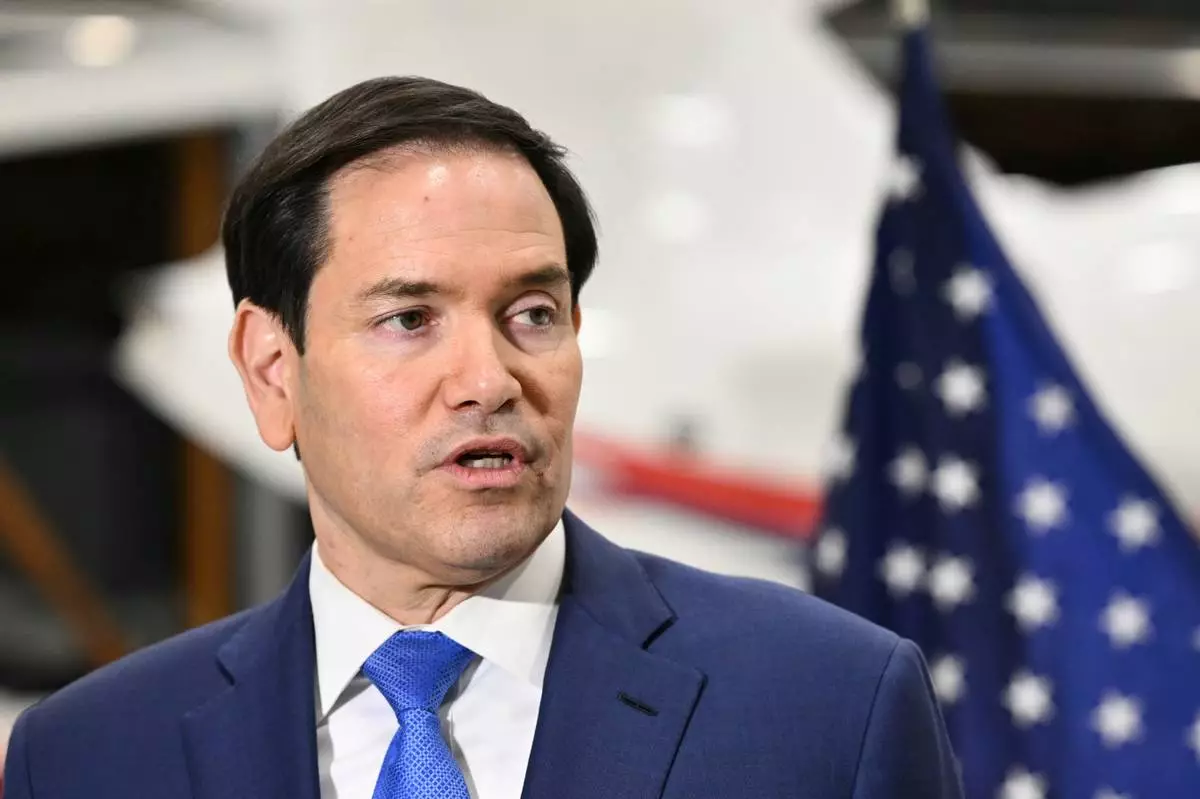
U.S. Secretary of State Marco Rubio speaks to traveling journalists at the John C. Munro Hamilton International Airport in Hamilton, Ontario, Canada, on Nov. 12, 2025 after the G7 foreign ministers meeting. (Mandel Ngan/Pool Photo via AP)
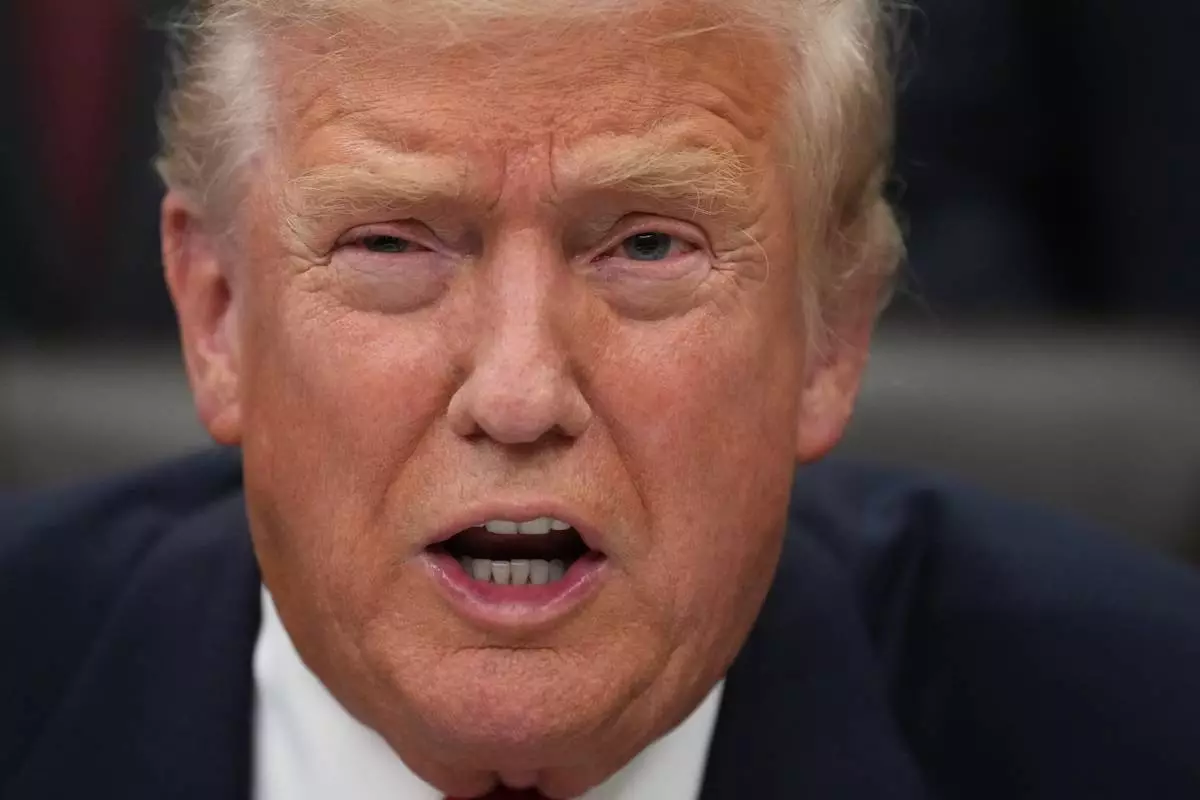
President Donald Trump speaks before signing the funding bill to reopen the government, in the Oval Office of the White House, Wednesday, Nov. 12, 2025, in Washington. (AP Photo/Jacquelyn Martin)
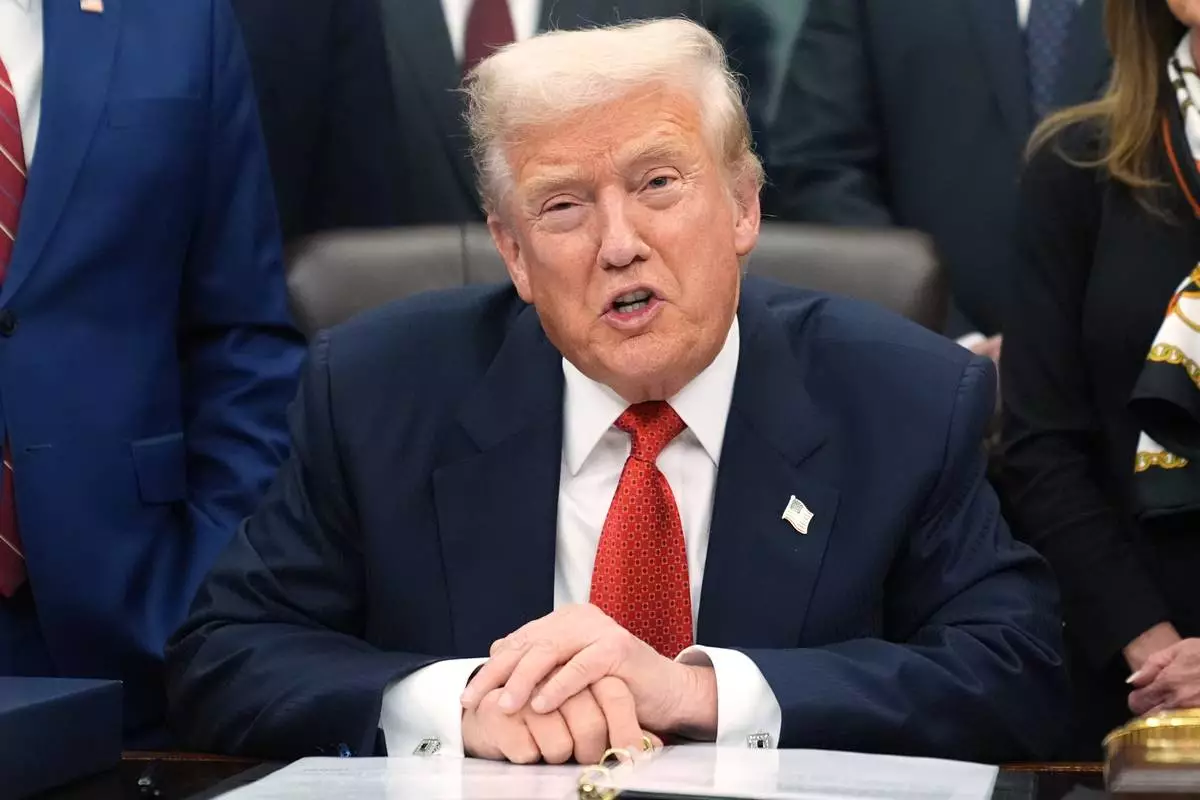
President Donald Trump speaks before signing the funding bill to reopen the government, in the Oval Office of the White House, Wednesday, Nov. 12, 2025, in Washington. (AP Photo/Jacquelyn Martin)