The International Monetary Fund (IMF) predicts that the U.S. economic growth will slow down in the fourth quarter from its earlier forecast of 1.9 percent, but IMF lacks data to assess it due to the federal government shutdown, its spokesperson said Thursday.
The lack of accurate economic data due to the record 43-day federal government shutdown has affected the IMF's ability to assess the state of the U.S. economy, spokesperson Julie Kozack told a news briefing.
Domestic demand has been moderating, and job growth is slowing. The combination of slowing immigration inflows, tariffs, broader policy uncertainty have been weighing on activity, Kozack said.
On the same day, White House economic adviser Kevin Hassett said due to the government shutdown, only employment data will be released next month, while the unemployment rate will not be reported. He predicted that the U.S. GDP growth rate for the fourth quarter would decline by 1.5 percentage points as a result of the shutdown.
Hassett also mentioned that he sees no reason to refrain from cutting interest rates.
A recent analysis by the Bank of America Institute revealed that one in four American households is living paycheck to paycheck. The study found that approximately 25 percent of households allocate over 95 percent of their income to necessities, leaving little to no funds for dining out and vacations, and virtually no savings.
Throughout the period of government shutdown, Republican and Democratic parties remained mired in a deadlock, and the impact of the shutdown has kept unfolding, leaving lasting damage to the U.S. economy and the livelihoods of citizens.
US GDP growth expected to slow down in Q4 due to gov't shutdown
A crossing point on the Türkiye-Iran border is seeing people going in both directions as some flee the conflict in Iran, while others are returning to their homeland with a vow to fight in the war as U.S.-Israel strikes continue to pummel the country.
Nestled in the mountains between Türkiye and Iran, the Kapikoy border crossing has become a key point of entry or exit, especially given the mass flight suspensions and airspace closures as a result of the conflict which erupted on Feb. 28.
Despite the dangers, Akbar, an Iranian who has lived in Germany for 12 years, is one of the many young men who are determined to head home and join the efforts to defend their country.
He said he decided to return immediately after seeing new reports that his hometown of Isfahan in central Iran had been bombed. He vowed to stand by his country until the end. "I want to return to Iran to protect my country. I am willing to give my life for my motherland. For my life and my compatriots, I am willing to give my life. I have no intention of returning to Germany. I will stay in Iran. I will protect my country with my own life. I want the whole world to know Iranians will always steadfastly protect their country," said Akbar.
Other Iranians who had been working in Türkiye said they were prepared to return for the same reason and do whatever they can to protect their homeland.
"Israel and the United States have made a grave mistake. They will pay a price, a heavy one. We will fight to the end to defend Iran," said one of the young men at the border crossing.
But the border point is also seeing a stream of people going in the opposite direction, as many Iranians are passing through here as they seek to flee the constant aerial bombardment by the U.S and Israel.
"We saw many bombs, four bombs, or, I don't know, five bombs. We are very scared, [I'm] with my mom, and we want to go to Türkiye, it's safe there," said Mahir, an Iranian university student.
Mahir also spoke of the trauma brought by the crisis, saying he has barely slept over the past few days, but every time he closes his eyes, all he sees is explosions. He also expressed worries about others who have been left behind, including his best friend, who is still stuck hundreds of kilometers away in the city of Tabriz.
More than 1,330 Iranian civilians, including women and children, have been killed in U.S.-Israeli airstrikes and thousands more injured, Iran's UN ambassador Amir Saeid Iravani said on Friday, while accusing the United States and Israel of deliberately targeting civilians and civilian infrastructure across Iran
U.S.-Israeli strikes continue to pound the capital Tehran and other areas of Iran. Much of the Iranian capital has been shrouded in thick black smoke in recent days after oil depots in surrounding areas were targeted, raising concerns over the impact of pollution and the disruption to fuel supplies.
Since the U.S. and Israel launched large-scale strikes on Iran on Feb. 28, Iran has responded with multiple waves of missile and drone attacks targeting Israel and U.S. assets across the region, hitting many countries in the Gulf.
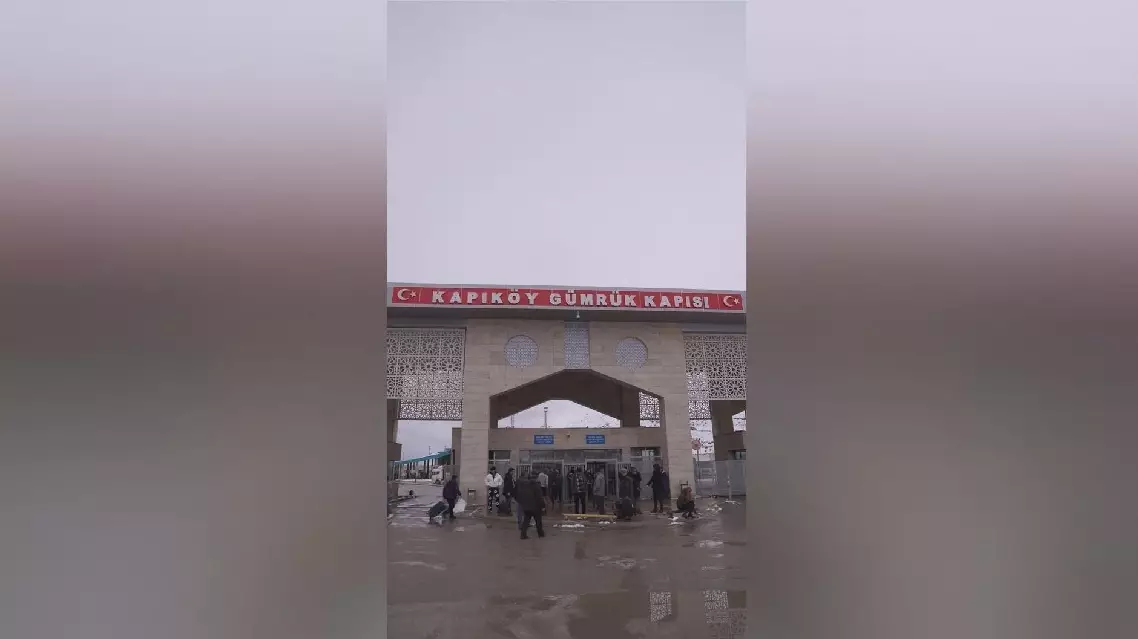
Some flee, others return to fight as Türkiye-Iran border crossing sees people going in both directions