NEW YORK (AP) — Researchers have reported what they believe is the first documented death from a meat allergy that can be triggered by tick bites.
A 47-year-old New Jersey man died last year from alpha-gal syndrome, which in 2011 was first linked to bites from the Lone Star tick.
More than 100,000 people in the U.S. have become allergic to red meat since 2010 because of the syndrome, according to one estimate.
Some outside experts said it appears to be the first documented case of someone suffering a deadly alpha-gal reaction shortly after eating meat.
It's possible other deaths have happened but were assumed to be from other causes and not thoroughly investigated like this one was, said Joshua Benoit, a tick biologist at the University of Cincinnati.
A Centers for Disease Control and Prevention spokesperson said the agency was not involved in this investigation and could not speak definitively about whether it's the first such death. The CDC recently released a free online training module to increase awareness and improve diagnosing, she added.
Dr. Scott Commins, a leading alpha-gal syndrome researcher at the University of North Carolina, called the death an “unmitigated tragedy.”
"Totally unnecessary and with increased awareness, this won’t happen again,” he said in an email.
The case report was published this week in the Journal of Allergy and Clinical Immunology. The lead author was the University of Virginia’s Dr. Thomas Platts-Mills, who led the 2011 paper that first linked Lone Star tick bites to the meat allergy.
People with alpha-gal syndrome can experience symptoms including hives, nausea, vomiting, diarrhea, severe stomach pain, difficulty breathing, dizziness and swelling of the lips, throat, tongue or eye lids. Unlike some other food allergies, which occur soon after eating, these reactions typically hit hours later.
The new report tells of a healthy airline pilot who in the summer of 2024 went on a camping trip with his wife and children. They had steak as part of a late supper. That was unusual — the man rarely ate meat.
He woke up at 2 a.m. with severe stomach pain, diarrhea and vomiting. He gradually felt better, went back to sleep, and the next morning he felt well enough to eat breakfast and walk 5 miles.
Two weeks later, back home in New Jersey, he went to a barbecue, where he ate a hamburger. About four hours later, he grew ill. A short time after that, his son found him unconscious on the bathroom floor. The son called paramedics, but the man was declared dead that night at a hospital.
The researchers said blood tests revealed evidence of alpha-gal syndrome. Proof that it came from a Lone Star tick is incomplete. The authors made the link based on a statement from the man's wife, who had said he had 12 or 13 “chigger” bites around his ankles earlier in the summer.
But the conclusion makes sense, as people in the eastern U.S. sometimes mistake the bites from mites with those from larval ticks, Commins said.
The number of cases of Alpha-gal syndrome is growing for a variety of reasons, including the Lone Star tick's expanding range, more people coming into contact with the ticks and more doctors learning about it and ordering tests for it.
It can take weeks or longer for infected people to develop the syndrome, which is named for the alpha-gal carbohydrate found in the tick’s saliva. Initial reactions to red meat may be milder but grow progressively more severe, Benoit said.
Some patients have only stomach symptoms, and the American Gastroenterological Association has advised that people with unexplained diarrhea, nausea and abdominal pain should be tested for the syndrome.
The Associated Press Health and Science Department receives support from the Howard Hughes Medical Institute’s Department of Science Education and the Robert Wood Johnson Foundation. The AP is solely responsible for all content.
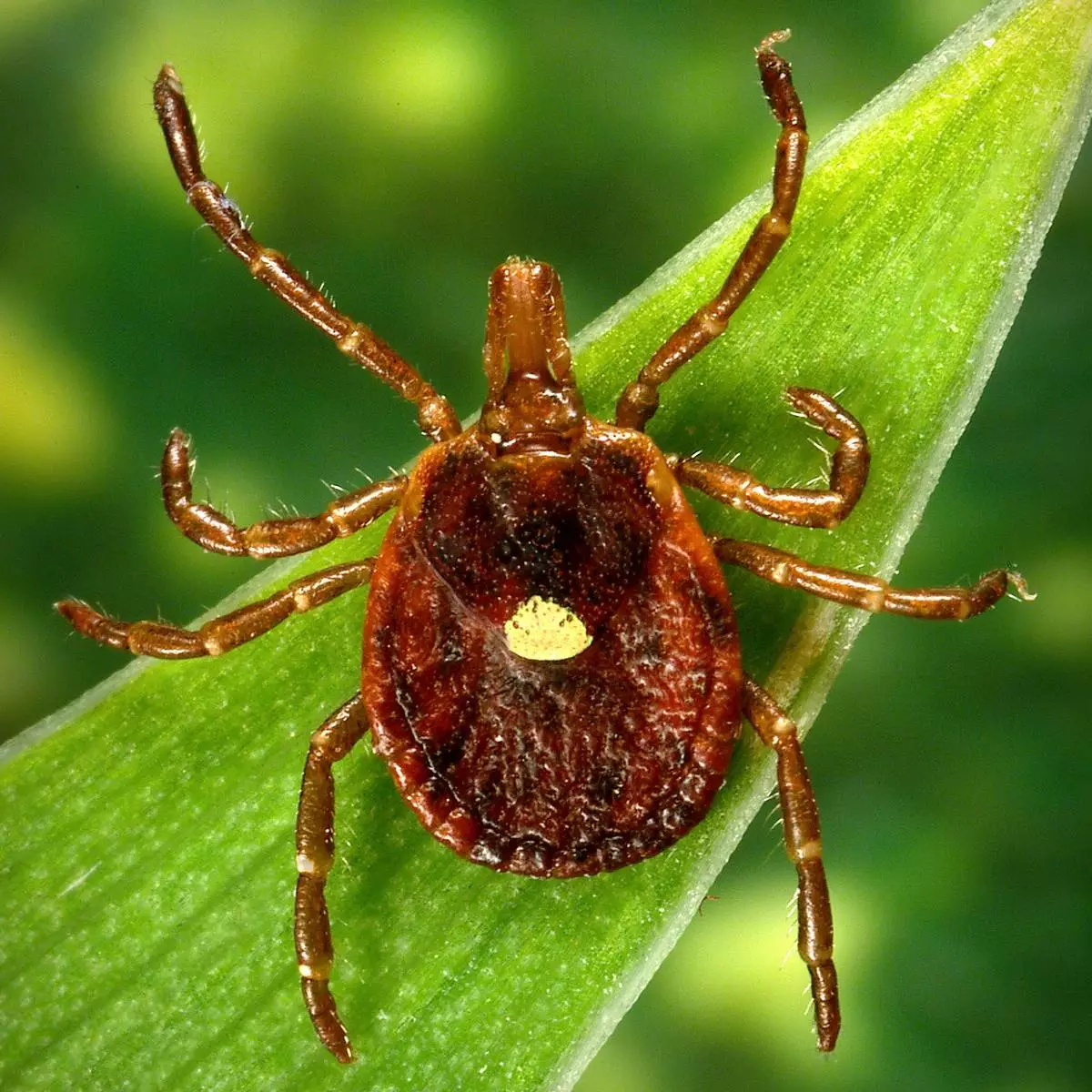
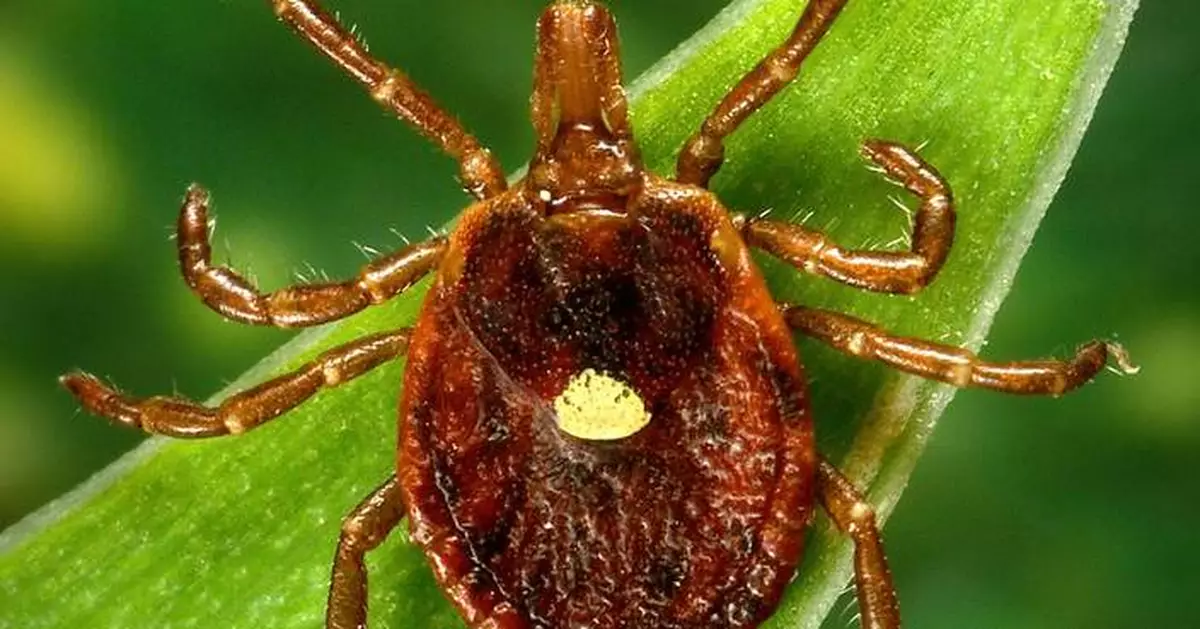
FILEW - This undated photo provided by the U.S. Centers for Disease Control and Prevention shows a female Lone Star tick, which despite its Texas-sounding name, is found mainly in the Southeast. (James Gathany/CDC via AP)
SEATTLE (AP) — Demond Williams Jr. threw for 268 yards and a touchdown, and No. 17 Washington survived offensive struggles for a 24-10 victory over Washington State in a season-opening Apple Cup on Sunday.
Williams also scored on a 5-yard keeper in the 118th meeting of the two teams, who were once both part of the Pac-12. Washington won last year's meeting 59-24 in Pullman.
Transfer Caden Pinnick made his debut as quarterback for the Cougars, throwing for 142 yards and scoring on an 11-yard keeper in the fourth quarter.
“(I) thought Washington State had a really good plan, played really hard, did a nice job,” Washington third-year coach Jedd Fisch said. “Very challenging Week 1 to really make sure that we kind of knew what we wanted to get done. We felt like we didn’t play the at the level we would like to play at, but we also are very happy with the victory.”
Washington State was one of the remaining members of the Pac-12 left after realignment broke apart the conference ahead of the 2024 season. The Cougars and Oregon State helped re-build the conference, which now includes Boise State, Colorado State, Fresno State, San Diego State, Texas State and Utah State, along with non-football member Gonzaga.
The Huskies, meanwhile, bolted the Pac-12 for the Big Ten. Washington went 9-4 last season with a 38-10 win over Boise State in the LA Bowl.
Washington State was embarking on it's first season under coach Kirby Moore after going 7-6 last season. He brought in Pinnick, who played at UC Davis last season and threw for 3,206 yards and 32 touchdowns as a freshman.
Washington State's defense was largely effective in thwarting the Huskies throughout the game, but the Cougars missed a pair of field goals that could have narrowed the gap and were 0-11 in converting on third down.
“I've got to get better with the preparation and getting the guys ready for third downs. You're not going to win a lot of games going 0-11, and ultimately taking care of the ball, that falls on me,” Pinnick said.
Tyler Robles’ 48-yard field goal gave the Huskies the early lead. In the second quarter, Jeron Jones intercepted Pinnick and ran it back 8 yards to the Washington State 21. After breaking free on a 16-yard run to keep the drive alive, Williams scored on a 5-yard keeper to make it 10-0
The Cougars stopped the Huskies on fourth-and-1 at the goal line to end the half.
The Cougars had a chance to get on the board midway through the third quarter but Jack Stevens' 32-yard field goal attempt went wide right. Stevens also missed a 52-yard attempt on Washington State's first series of the game.
After the Cougars stopped another Washington attempt to convert on fourth down at the end of the third quarter, Washington State drove down the field and scored on Pinnick's 11-yard run to narrow the gap to 10-7.
Washington answered with Rashid Williams' 1-yard touchdown reception.
The Huskies' Rylon Dillard-Allen was ejected for targeting on Pinnick midway through the fourth quarter before Stevens' 42-yard field goal made it 17-10.
Jayden Limar capped scoring for the Huskies with an 11-yard touchdown run with 2:18 left.
“It felt really good, definitely, especially you know the way we won. Very gritty, you know, being able to hold the lead right there at the end when they were battling back and showing signs of life,” Demond Williams said.
The Cougars were hurt in the first half when receiver Tony Freeman was injured and did not return.
Traditionally in the days of the old Pac-12, the Apple Cup was played over Thanksgiving weekend as the final game of the season for both teams. This year’s rivalry was unusual as the season opener.
Another break with tradition? No Washington State band.
When Washington moved to the Big Ten for the 2024 season, it moved visiting bands from the lower bowl to the seats in an upper corner of the stadium. Washington State decided it was a hardship for the band to navigate getting down to the field and back for performances.
Washington State visits Kansas State, while Washington hosts Utah State on Sept. 12.
Sign up for Top 25 poll alerts here, visit the Top 25 here and see AP’s full college football coverage here
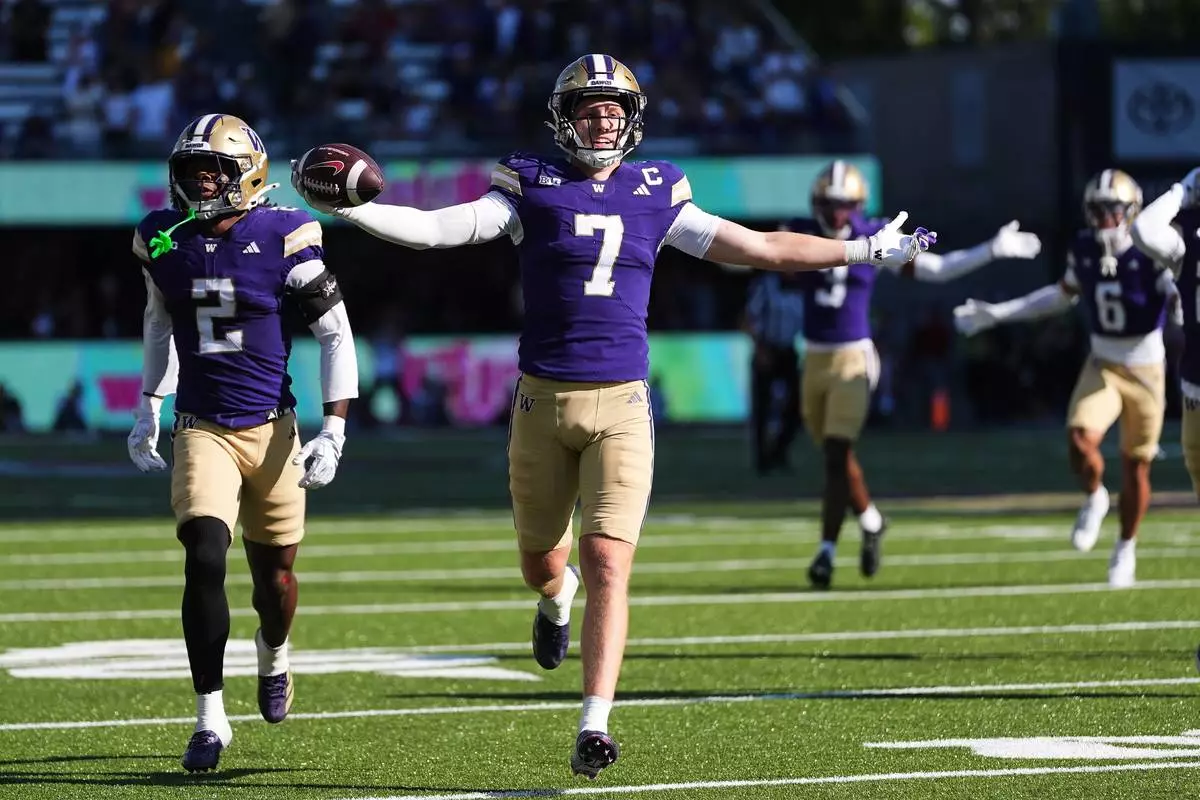
Washington safety Alex McLaughlin (7) celebrates making an interception against Washington State during the second half of an NCAA college football game, Sunday, Sept. 6, 2026, in Seattle. (AP Photo/Lindsey Wasson)
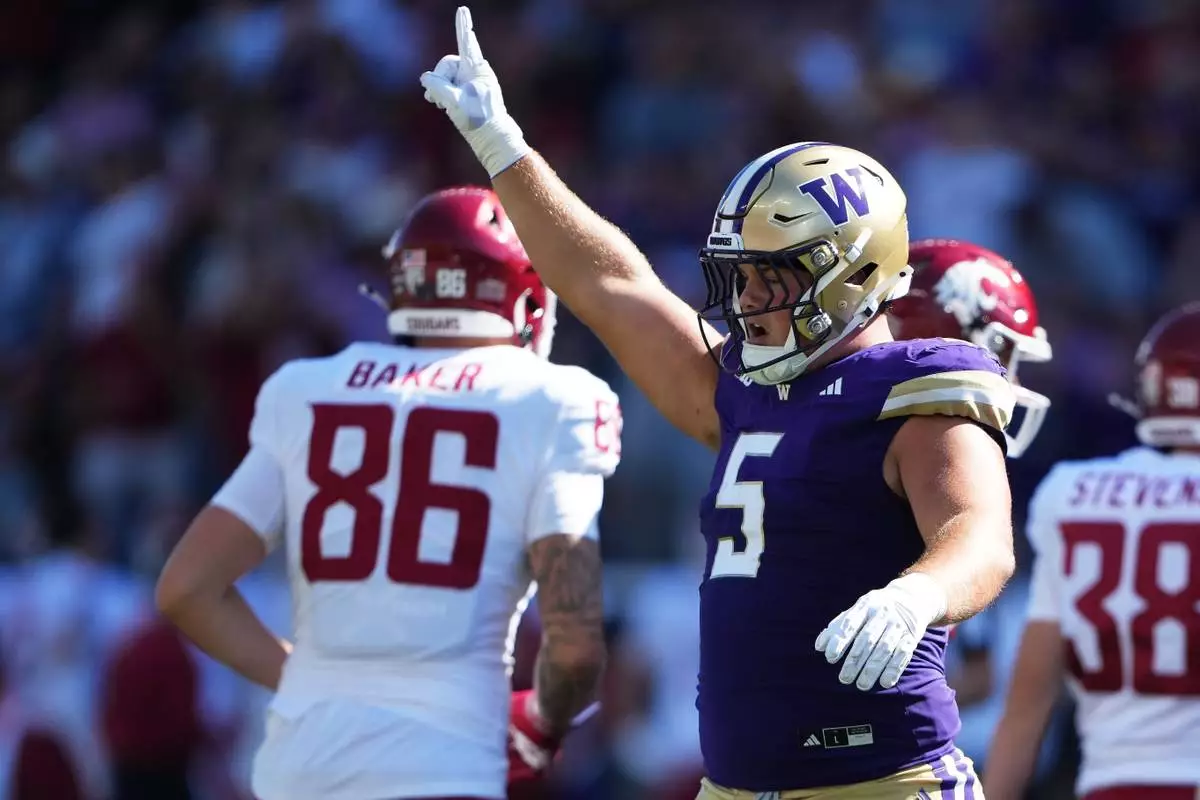
Washington defensive lineman Derek Colman-Brusa reacts after a field goal attempt by Washington State place-kicker Jack Stevens was no good during the second half of an NCAA college football game, Sunday, Sept. 6, 2026, in Seattle. (AP Photo/Lindsey Wasson)
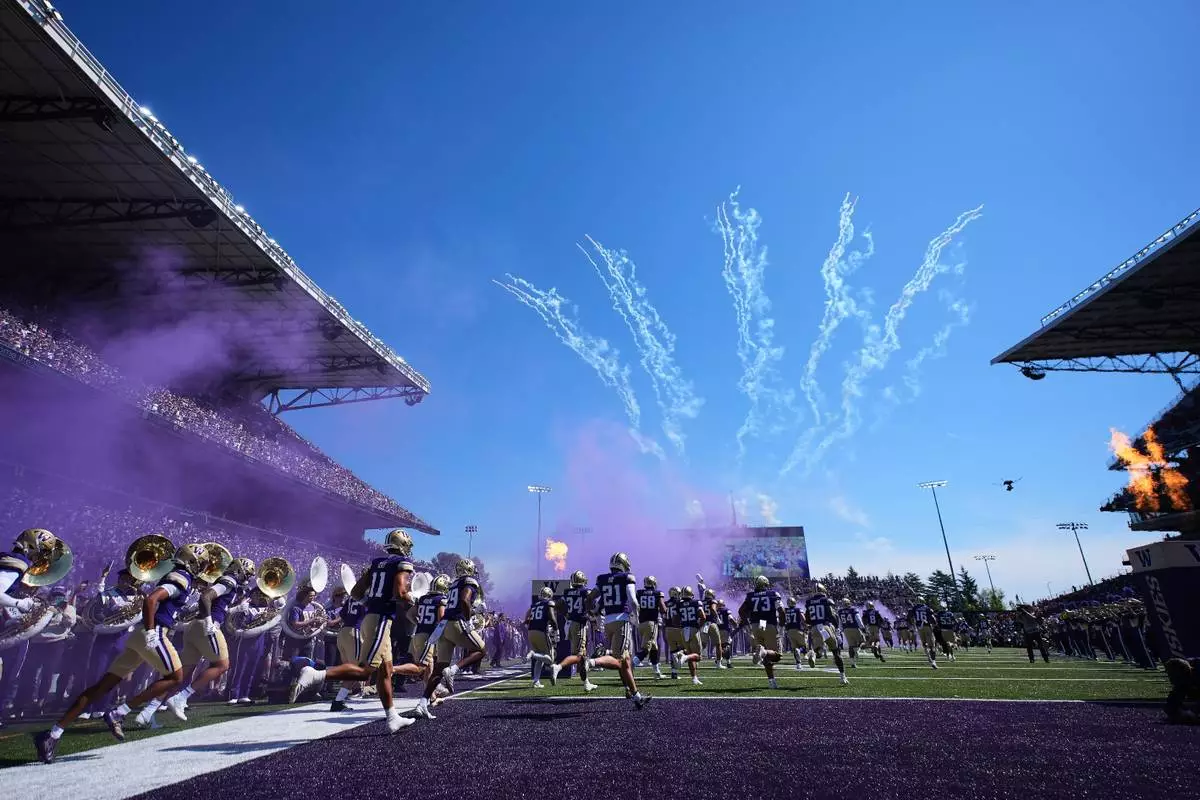
Washington runs out to the field before facing Washington State in an NCAA college football game, Sunday, Sept. 6, 2026, in Seattle. (AP Photo/Lindsey Wasson)
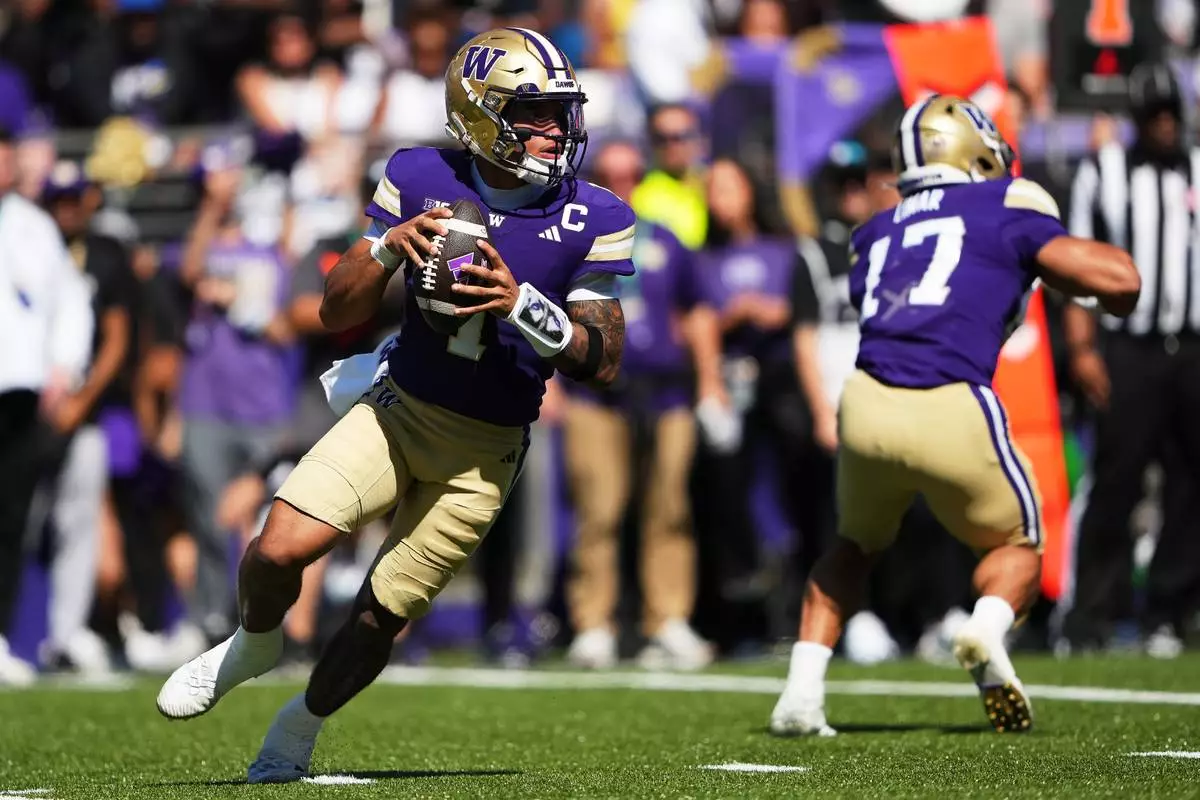
Washington quarterback Demond Williams Jr. looks to throw against Washington State during the first half of an NCAA college football game, Sunday, Sept. 6, 2026, in Seattle. (AP Photo/Lindsey Wasson)
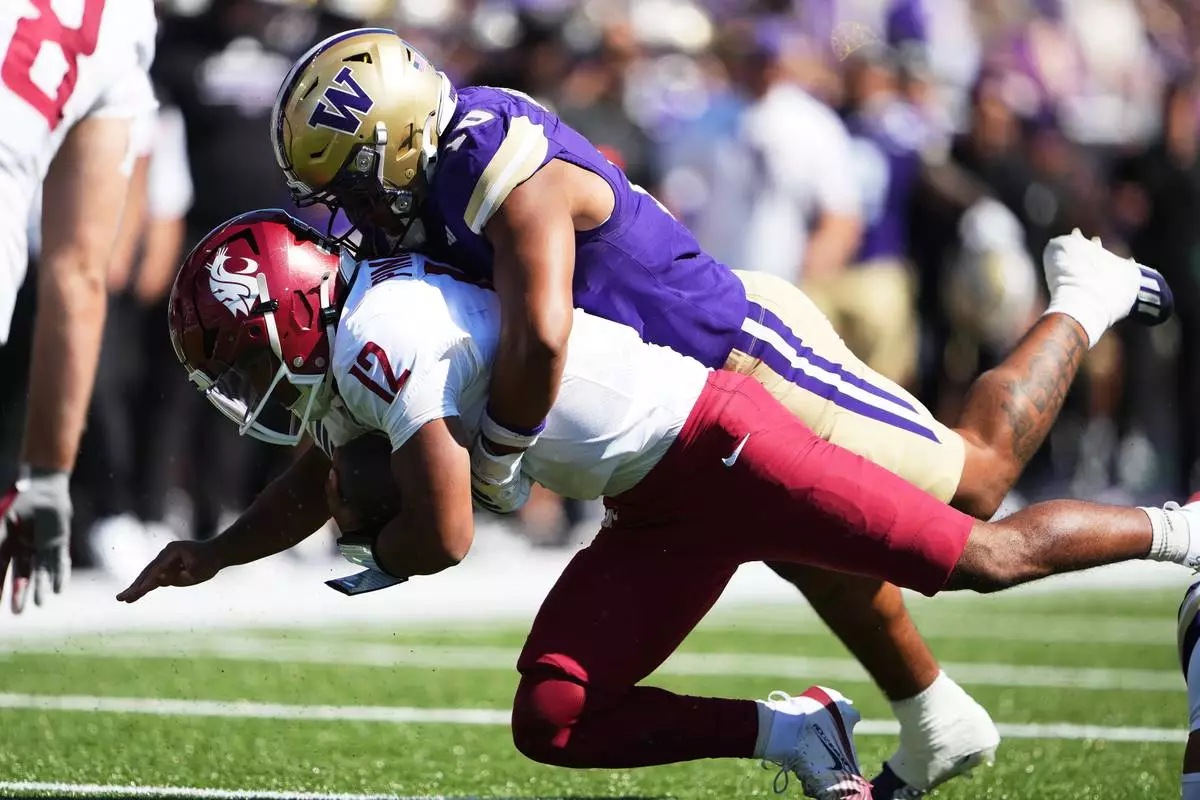
Washington linebacker Xe'ree Alexander tackles Washington State quarterback Caden Pinnick during the first half of an NCAA college football game, Sunday, Sept. 6, 2026, in Seattle. (AP Photo/Lindsey Wasson)
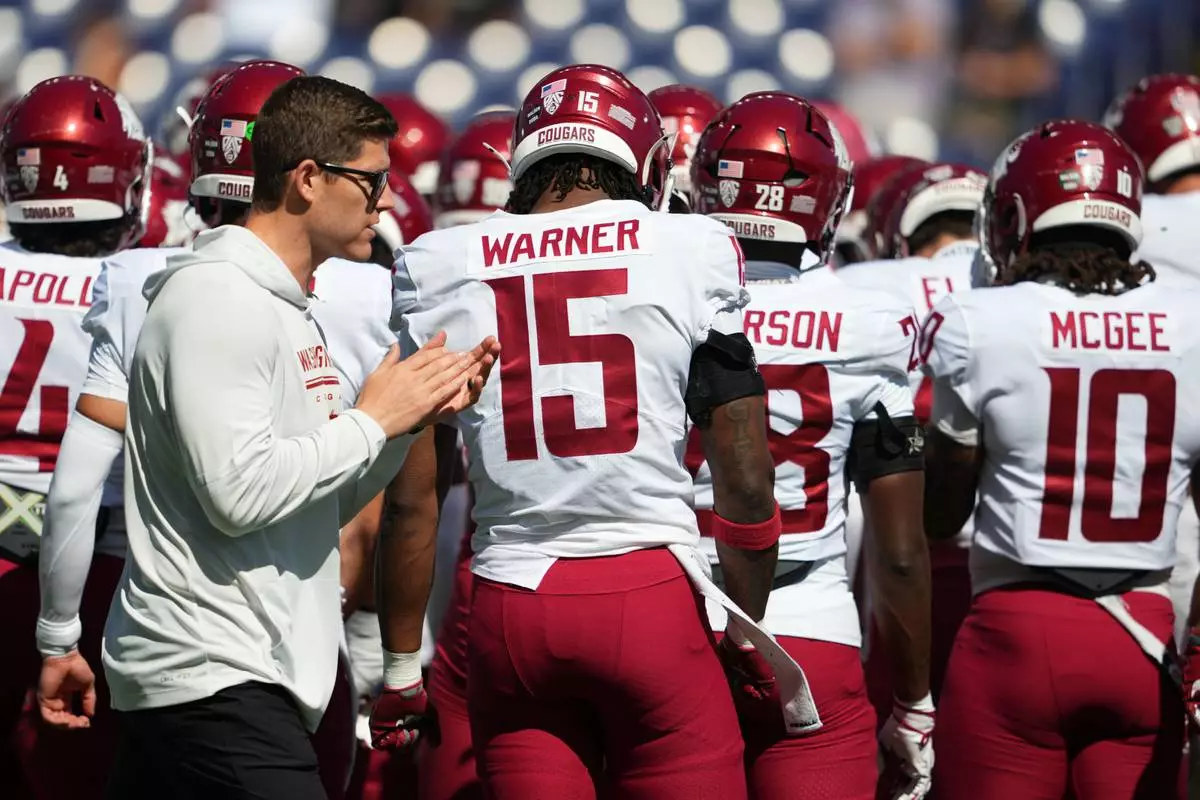
Washington State head coach Kirby Moore claps before an NCAA college football game against Washington, Sunday, Sept. 6, 2026, in Seattle. (AP Photo/Lindsey Wasson)
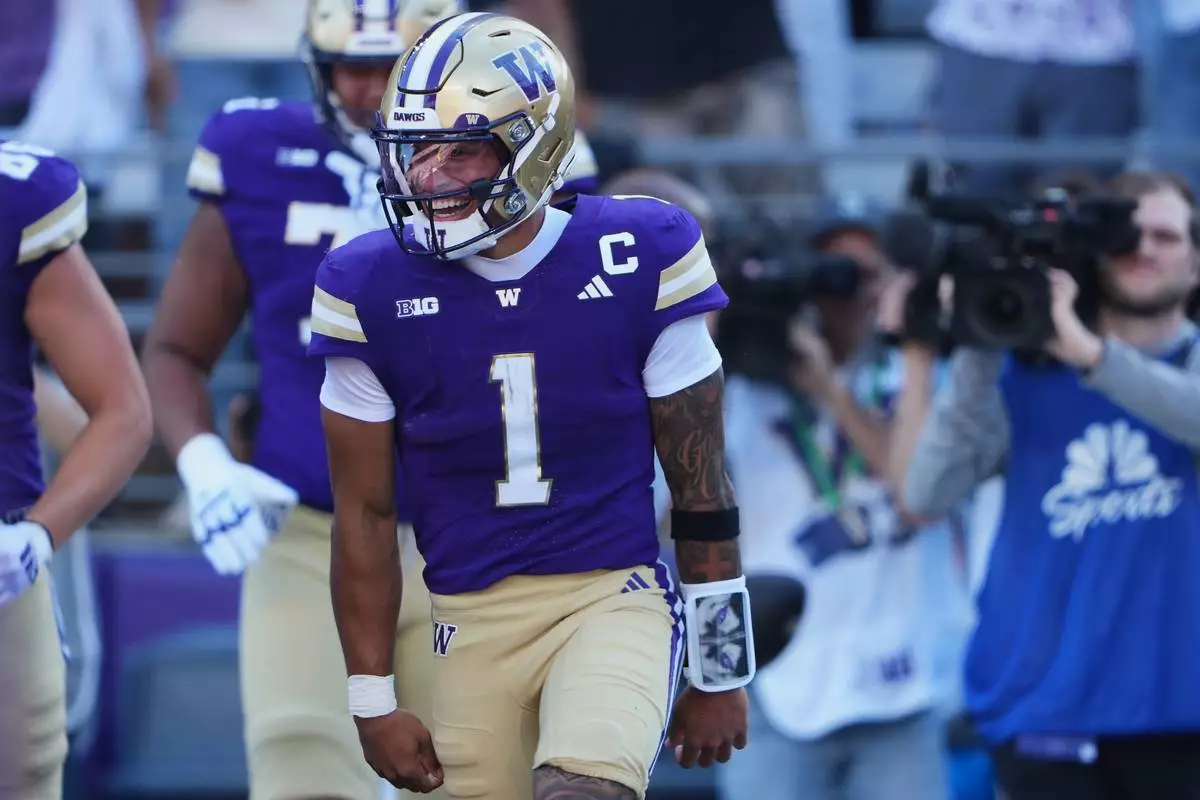
Washington quarterback Demond Williams Jr. celebrates scoring a touchdown against Washington State during the first half of an NCAA college football game, Sunday, Sept. 6, 2026, in Seattle. (AP Photo/Lindsey Wasson)