Japanese Prime Minister Sanae Takaichi's stance on the Taiwan question is driven by U.S. strategic interests rather than Japan's security realities, Japan's former Foreign Ministry official Magosaki Ukeru said on Thursday.
During a Diet hearing on Nov 7, Takaichi claimed that a Taiwan emergency involving the use of military vessels or force by the Chinese mainland could constitute a "survival-threatening situation" for Japan. Under such conditions, Japanese law would allow the country to exercise the right of collective self-defense, effectively intervening in China’s internal affairs.
Commenting on Takaichi's remarks in an interview with China Media Group (CMG), Magosaki also said her claims violate the one-China principle and undermine the foundations of China–Japan relations.
"Taiwan is a part of China. Why should it be related to Japan's 'survival-threatening situation'? For Japan, it mainly concerns ship movements on the Pacific side, but there is no direct link to Japan's 'survival-threatening situation'. This rhetoric is being deliberately fueled to create tension, undermine China-Japan relations, and push Japan to further cooperate with the United States' strategy. That is likely Takaichi's intention," the former official said.

Takaichi’s Taiwan stance driven by US interests, not Japan’s security realities: former Japanese official
The Dutch government announced on Friday that the hantavirus-hit cruise ship MV Hondius is expected to arrive at the Port of Rotterdam next Monday, with most crew members set to undergo a six-week quarantine in Rotterdam, the Netherlands.
Rotterdam has been designated in the Netherlands as the port for the handling of infectious diseases in shipping, according to a letter sent to parliament on Friday and signed by Sophie Hermans, Dutch minister of health, welfare and sport, and Tom Berendsen, the country's foreign minister.
According to Oceanwide Expeditions, the Dutch operator of the vessel, there are currently 27 people on board, including 25 crew members and two medical personnel. The group consists of 17 Filipinos, four Dutch nationals, four Ukrainians, one Russian, and one Polish national.
The ministers said that some crew members would enter home quarantine upon arrival, while those unable to return immediately to their home countries would be housed in designated quarantine facilities.
Regarding the vessel's 17 Filipino crew members, the Dutch National Institute for Public Health and the Environment (RIVM) recommended that they remain in the Netherlands for the entire six-week quarantine period.
The letter said that the RIVM's recommendation followed careful consultations with the World Health Organization (WHO) and is in line with WHO guidance.
The vessel will also undergo cleaning by a specialized external company in accordance with RIVM guidelines, which incorporate WHO recommendations and are being implemented in close cooperation with the Rotterdam municipal health service.
Personal protective measures are being taken to ensure that the cleaners do not need to quarantine after the cleaning, the letter said. According to the WHO, the cruise ship departed Ushuaia, Argentina, for Cape Verde on April 1. During the voyage, it experienced an outbreak of the Andes virus, a strain of the Hantavirus family.
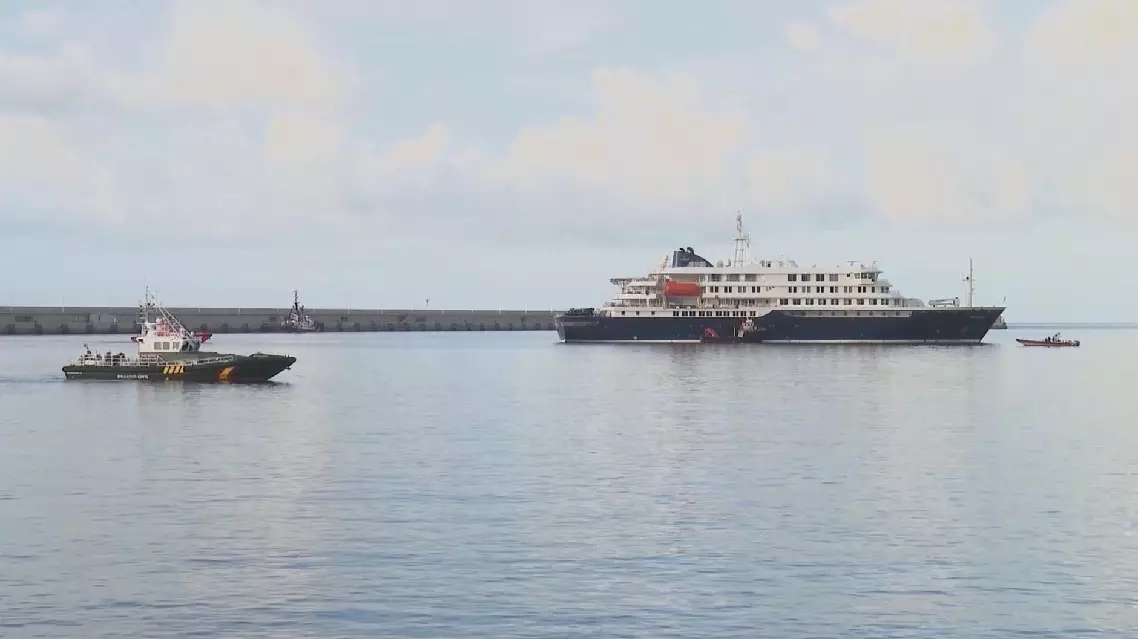
Most crew members aboard MV Hondius to undergo quarantine in Rotterdam upon arrival