Skip to Content Facebook Feature Image

Future data centers are driving up forecasts for energy demand. States want proof they'll get built

News

Future data centers are driving up forecasts for energy demand. States want proof they'll get built
News

News

Future data centers are driving up forecasts for energy demand. States want proof they'll get built

2025-11-15 12:53 Last Updated At:14:26

HARRISBURG, Pa. (AP) — The forecasts are eye-popping: utilities saying they'll need two or three times more electricity within a few years to power massive new data centers that are feeding a fast-growing AI economy.

But the challenges — some say the impossibility — of building new power plants to meet that demand so quickly has set off alarm bells for lawmakers, policymakers and regulators who wonder if those utility forecasts can be trusted.

One burning question is whether the forecasts are based on data center projects that may never get built — eliciting concern that regular ratepayers could be stuck with the bill to build unnecessary power plants and grid infrastructure at a cost of billions of dollars.

The scrutiny comes as analysts warn of the risk of an artificial intelligence investment bubble that's ballooned tech stock prices and could burst.

Meanwhile, consumer advocates are finding that ratepayers in some areas — such as the mid-Atlantic electricity grid, which encompasses all or parts of 13 states stretching from New Jersey to Illinois, as well as Washington, D.C. — are already underwriting the cost to supply power to data centers, some of them built, some not.

“There’s speculation in there,” said Joe Bowring, who heads Monitoring Analytics, the independent market watchdog in the mid-Atlantic grid territory. “Nobody really knows. Nobody has been looking carefully enough at the forecast to know what’s speculative, what’s double-counting, what’s real, what’s not.”

There is no standard practice across grids or for utilities to vet such massive projects, and figuring out a solution has become a hot topic, utilities and grid operators say.

Uncertainty around forecasts is typically traced to a couple of things.

One concerns developers seeking a grid connection, but whose plans aren't set in stone or lack the heft — clients, financing or otherwise — to bring the project to completion, industry and regulatory officials say.

Another is data center developers submitting grid connection requests in various separate utility territories, PJM Interconnection, which operates the mid-Atlantic grid, and Texas lawmakers have found.

Often, developers, for competitive reasons, won't tell utilities if or where they've submitted other requests for electricity, PJM said. That means a single project could inflate the energy forecasts of multiple utilities.

The effort to improve forecasts got a high-profile boost in September, when a Federal Energy Regulatory Commission member asked the nation’s grid operators for information on how they determine that a project is not only viable, but will use the electricity it says it needs.

“Better data, better decision-making, better and faster decisions mean we can get all these projects, all this infrastructure built,” the commissioner, David Rosner, said in an interview.

The Edison Electric Institute, a trade association of for-profit electric utilities, said it welcomed efforts to improve demand forecasting.

The Data Center Coalition, which represents tech giants like Google and Meta and data center developers, has urged regulators to request more information from utilities on their forecasts and to develop a set of best practices to determine the commercial viability of a data center project.

The coalition's vice president of energy, Aaron Tinjum, said improving the accuracy and transparency of forecasts is a “fundamental first step of really meeting this moment” of energy growth.

“Wherever we go, the question is, ‘Is the (energy) growth real? How can we be so sure?’” Tinjum said. “And we really view commercial readiness verification as one of those important kind of low-hanging opportunities for us to be adopting at this moment.”

Igal Feibush, the CEO of Pennsylvania Data Center Partners, a data center developer, said utilities are in a “fire drill” as they try to vet a deluge of data center projects all seeking electricity.

The vast majority, he said, will fall off because many project backers are new to the concept and don't know what it takes to get a data center built.

States also are trying to do more to find out what’s in utility forecasts and weed out speculative or duplicative projects.

In Texas, which is attracting large data center projects, lawmakers still haunted by a blackout during a deadly 2021 winter storm were shocked when told in 2024 by the grid operator, the Electric Reliability Council of Texas, that its peak demand could nearly double by 2030.

They found that state utility regulators lacked the tools to determine whether that was realistic.

Texas state Sen. Phil King told a hearing earlier this year that the grid operator, utility regulators and utilities weren’t sure if the power requests “are real or just speculative or somewhere in between.”

Lawmakers passed legislation sponsored by King, now law, that requires data center developers to disclose whether they have requests for electricity elsewhere in Texas and to set standards for developers to show that they have a substantial financial commitment to a site.

PPL Electric Utilities, which delivers power to 1.5 million customers across central and eastern Pennsylvania, projects that data centers will more than triple its peak electricity demand by 2030.

Vincent Sorgi, president and CEO of PPL Corp., told analysts on an earnings call this month that the data center projects “are real, they are coming fast and furious” and that the “near-term risk of overbuilding generation simply does not exist.”

The data center projects counted in the forecast are backed by contracts with financial commitments often reaching tens of millions of dollars, PPL said.

Still, PPL's projections helped spur a state lawmaker, Rep. Danilo Burgos, to introduce a bill to bolster the authority of state utility regulators to inspect how utilities assemble their energy demand forecasts.

Ratepayers in Burgos' Philadelphia district just absorbed an increase in their electricity bills — attributed by the utility, PECO, to the rising cost of wholesale electricity in the mid-Atlantic grid driven primarily by data center demand.

That's why ratepayers need more protection to ensure they are benefiting from the higher cost, Burgos said.

“Once they make their buck, whatever company,” Burgos said, “you don’t see no empathy towards the ratepayers.”

Follow Marc Levy at http://twitter.com/timelywriter.

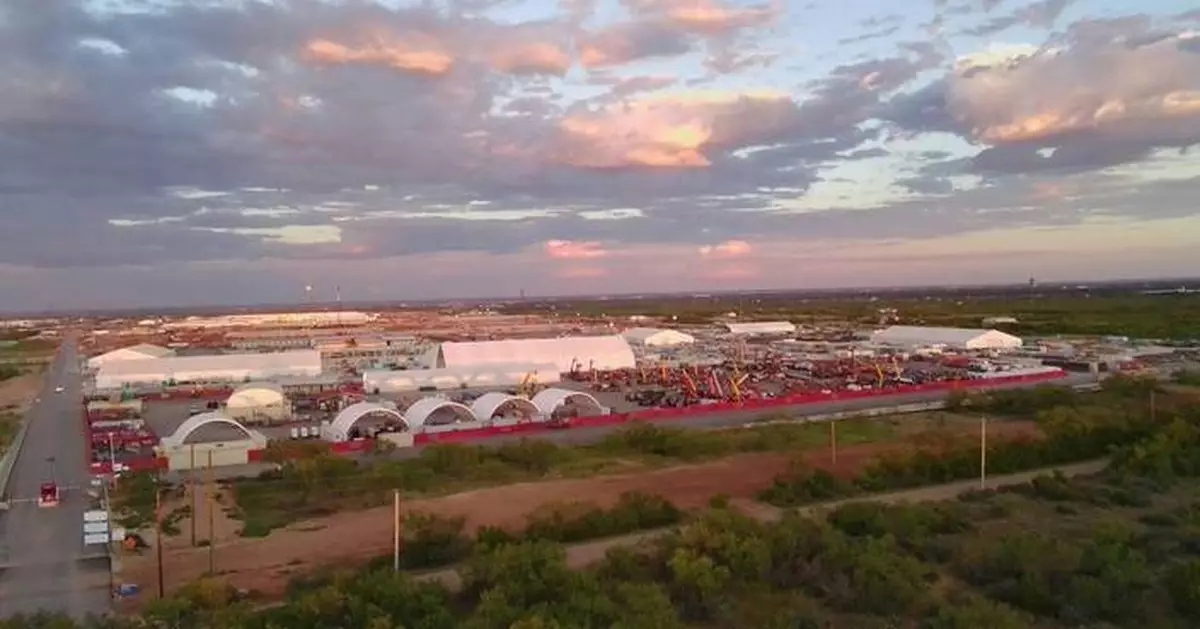
FILE- An entrance to the Stargate artificial intelligence data center complex in Abilene, Texas on Monday, Sept. 22, 2025. (AP Photo/Matt O'Brien, File)
FILE- An entrance to the Stargate artificial intelligence data center complex in Abilene, Texas on Monday, Sept. 22, 2025. (AP Photo/Matt O'Brien, File)
NEW YORK (AP) — The U.S. stock market is holding relatively steady, for now, following sharp swings up and down since the war with Iran began and sent oil prices spurting. The S&P 500 was flat in early trading Tuesday, a day after careening from a sharp early loss to a solid gain. The Dow Jones Industrial Average slipped 34 points, and the Nasdaq composite edged up 0.2%. Trading was also relatively calm in the oil market, which has been the center of action because of worries about the potential for long-term disruptions to the energy industry in the Middle East.

THIS IS A BREAKING NEWS UPDATE. AP’s earlier story follows below.

Trading steadied early Tuesday and crude prices eased after wild swings this week with investors trying to figure out how long the war with Iran will continue.

Futures for the Dow Jones Industrial Average rose 0.2% before the opening bell, while S&P 500 futures inched up 0.1%. Futures for the Nasdaq were up 0.2%.

On Monday, markets swung from big losses to finish the day with gains, while oil prices neared $120 per barrel before falling back to about $90. Oil prices inched down further early Tuesday.

Helping to assuage investors’ fears, U.S. President Donald Trump told CBS News on Monday that he thinks “the war is very complete, pretty much.” However, Trump also made other somewhat contradictory comments that seemed to threaten intensified action against Iran if it makes any “attempt to stop the globe’s oil supply.”

Iran launched new attacks on Tuesday at Israel and Gulf Arab countries, keeping pressure on the Middle East in a war started by Israel and the United States 10 days ago that has sent oil prices surging.

Benchmark U.S. crude fell $5.44 to $89.33 a barrel. Brent crude, the international standard, dipped $6.97 to $91.99 a barrel. Oil prices are still up about 34% since the war began.

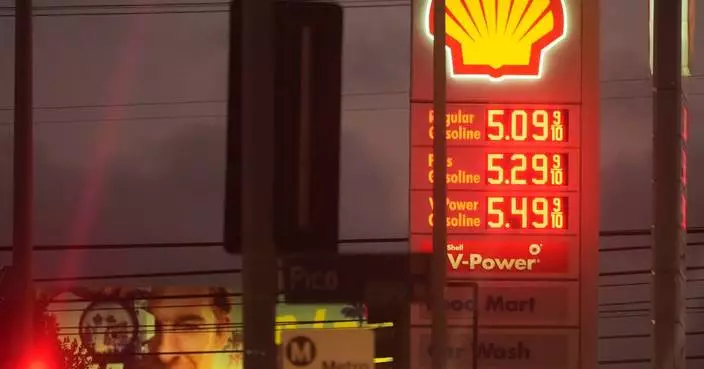
The average U.S. price for a gallon of gas continued to climb, rising to $3.54, according to auto club AAA on Tuesday. That average was just under $3 a gallon in the days before the conflict began, and $3.11 last week.

There is a great deal of uncertainty about just how high oil prices will go and how long they will stay there because of disruptions to Middle East energy facilities.

If oil prices stay very high for very long, household budgets already stretched by high inflation could break under the pressure. Companies would see their own bills jump for fuel and to stock items on their store shelves or in their data warehouses.

Concerns have focused on the Strait of Hormuz, a narrow waterway off Iran’s coast that a fifth of the world’s oil sails through on a typical day. Iran has threatened to set fire to ships sailing the strait.

Global shares rebounded Tuesday from their sharp declines a day before.

France's CAC 40 added 2.1% in early trading, while Germany's DAX surged 2.5%. Britain's FTSE 100 gained 1.7%.

In Asia, Tokyo's benchmark Nikkei 225 added 2.9% to finish at 54,248.39 after the government released revised economic data that showed Japan's economy grew slightly faster than initially estimated in the final quarter of last year, boosted by solid business investments.

Japan's economy expanded at an annual pace of 1.3%. The initial estimate was a much weaker 0.2%.

“Today is the rebound, obviously positive comments from President Trump overnight, we’re starting to see the light at the end of the tunnel for the war," said Neil Newman, a managing director and head of strategy at Astris Advisory Japan.

"So volatility is going to remain with us but things are certainly looking a lot brighter today,” he said.

Australia's S&P/ASX 200 gained 1.1% to 8,692.60. South Korea's Kospi jumped 5.4% to 5,532.59.

Hong Kong's Hang Seng added 2.2% to 25,959.90, while the Shanghai Composite index rose 0.7% to 4,123.14.

South Korea’s Kospi, where extremely volatile trading set off two circuit breakers in the past week, including Monday, rose more than 5% Tuesday.

In currency trading, the U.S. dollar rose to 157.78 Japanese yen from 157.67 yen. The euro was trading at $1.1646, up from $1.1636.

AP Videographer Ayaka McGill in Tokyo contributed.

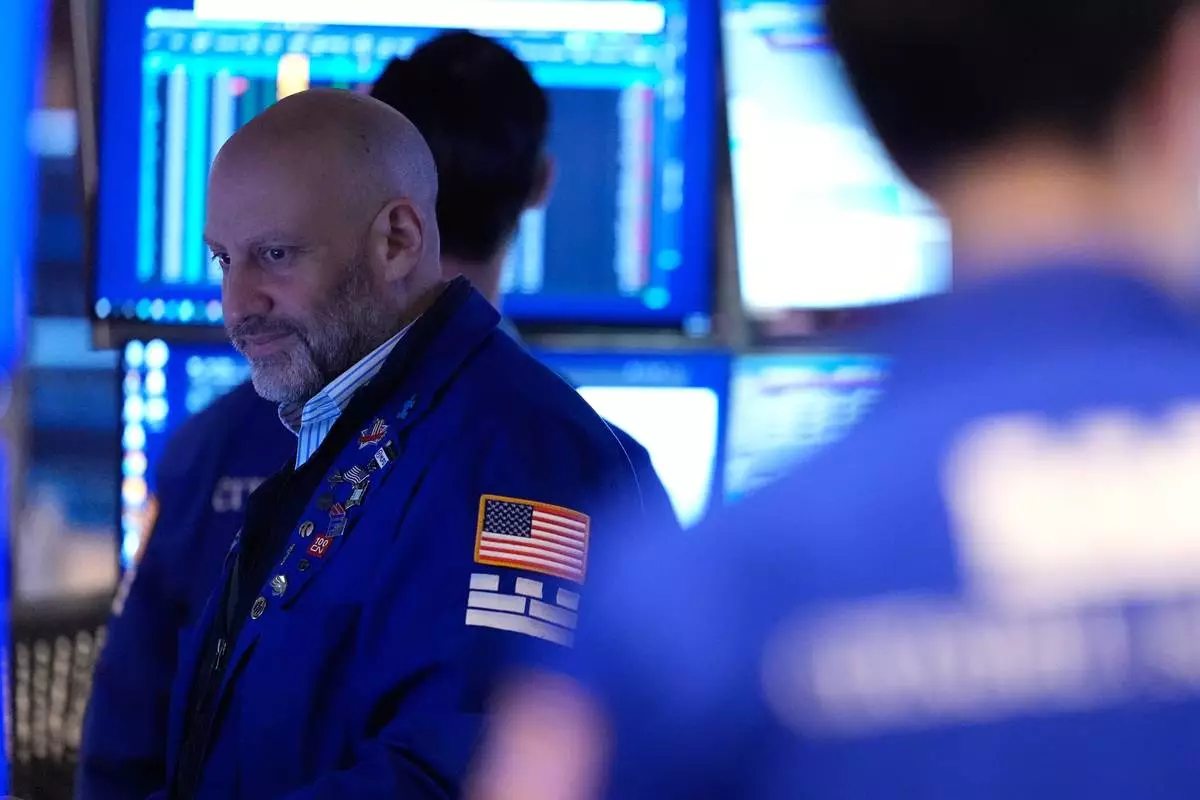
Meric Greenbaum works on the floor at the New York Stock Exchange in New York, Friday, March 6, 2026. (AP Photo/Seth Wenig)

Meric Greenbaum works on the floor at the New York Stock Exchange in New York, Friday, March 6, 2026. (AP Photo/Seth Wenig)

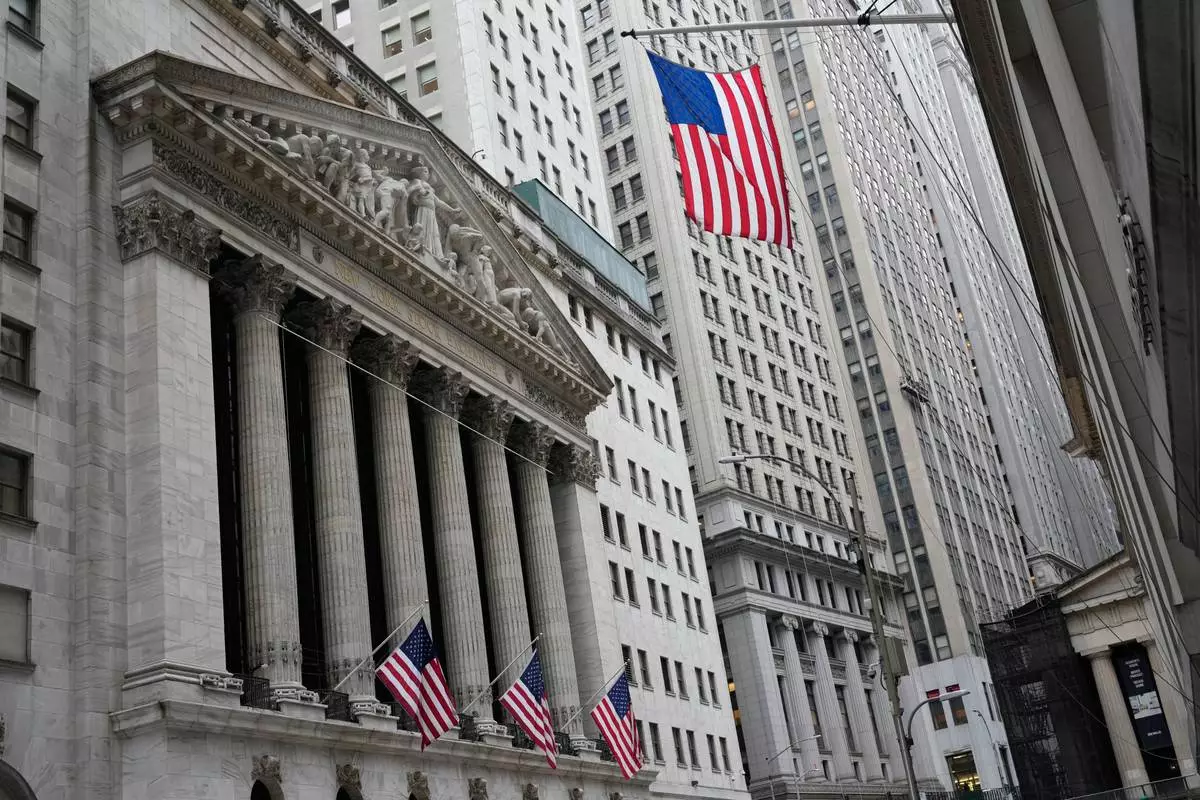
The New York Stock Exchange is seen in New York, Friday, March 6, 2026. (AP Photo/Seth Wenig)

The New York Stock Exchange is seen in New York, Friday, March 6, 2026. (AP Photo/Seth Wenig)

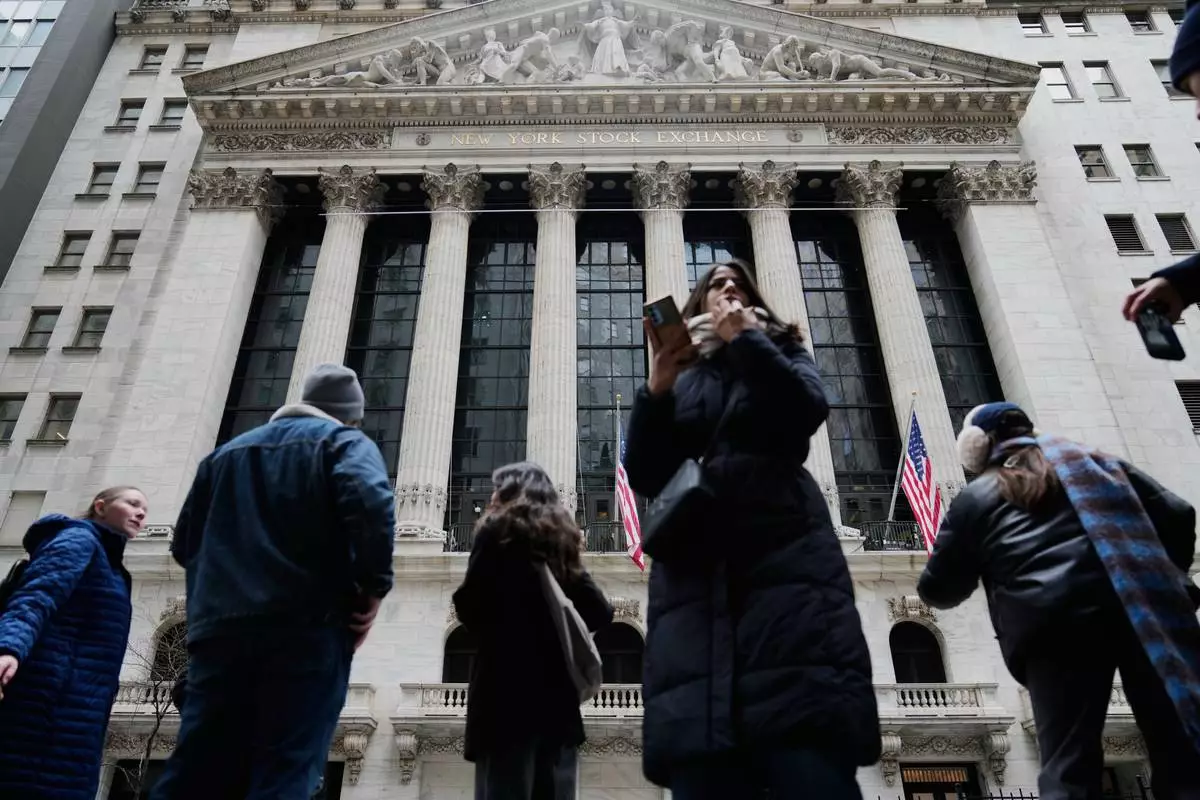
Pedestrians mill about outside the New York Stock Exchange in New York, Friday, March 6, 2026. (AP Photo/Seth Wenig)

Pedestrians mill about outside the New York Stock Exchange in New York, Friday, March 6, 2026. (AP Photo/Seth Wenig)

Currency traders watch monitors near a screen showing the Korea Composite Stock Price Index (KOSPI), right, and the foreign exchange rate between U.S. dollar and South Korean won at the foreign exchange dealing room of the Hana Bank headquarters in Seoul, South Korea, Tuesday, March 10, 2026. (AP Photo/Ahn Young-joon)

Currency traders watch monitors near a screen showing the Korea Composite Stock Price Index (KOSPI), right, and the foreign exchange rate between U.S. dollar and South Korean won at the foreign exchange dealing room of the Hana Bank headquarters in Seoul, South Korea, Tuesday, March 10, 2026. (AP Photo/Ahn Young-joon)

Currency traders work at the foreign exchange dealing room of the Hana Bank headquarters in Seoul, South Korea, Tuesday, March 10, 2026. (AP Photo/Ahn Young-joon)

Currency traders work at the foreign exchange dealing room of the Hana Bank headquarters in Seoul, South Korea, Tuesday, March 10, 2026. (AP Photo/Ahn Young-joon)

U.S. President Donald Trump is seen on a screen as traders work at the foreign exchange dealing room of the Hana Bank headquarters in Seoul, South Korea, Tuesday, March 10, 2026. (AP Photo/Ahn Young-joon)

U.S. President Donald Trump is seen on a screen as traders work at the foreign exchange dealing room of the Hana Bank headquarters in Seoul, South Korea, Tuesday, March 10, 2026. (AP Photo/Ahn Young-joon)

Currency trader react near a screen showing the Korea Composite Stock Price Index (KOSPI), rear left, at the foreign exchange dealing room of the Hana Bank headquarters in Seoul, South Korea, Tuesday, March 10, 2026. (AP Photo/Ahn Young-joon)

Currency trader react near a screen showing the Korea Composite Stock Price Index (KOSPI), rear left, at the foreign exchange dealing room of the Hana Bank headquarters in Seoul, South Korea, Tuesday, March 10, 2026. (AP Photo/Ahn Young-joon)

A currency trader passes by a screen showing the Korea Composite Stock Price Index (KOSPI), rear center, and the foreign exchange rate between U.S. dollar and South Korean won, rear left, at the foreign exchange dealing room of the Hana Bank headquarters in Seoul, South Korea, Tuesday, March 10, 2026. (AP Photo/Ahn Young-joon)

A currency trader passes by a screen showing the Korea Composite Stock Price Index (KOSPI), rear center, and the foreign exchange rate between U.S. dollar and South Korean won, rear left, at the foreign exchange dealing room of the Hana Bank headquarters in Seoul, South Korea, Tuesday, March 10, 2026. (AP Photo/Ahn Young-joon)

Recommended Articles