ATLANTA (AP) — The fate of the Georgia election interference case against President Donald Trump and others is now in the hands of a new prosecutor who has to decide how he is going to move forward with the sprawling indictment.
After courts removed Fulton County District Attorney Fani Willis over an “appearance of impropriety” created by a romantic relationship with the special prosecutor she had chosen to lead the case, it was up to the Prosecuting Attorneys' Council to someone to take over. Council Executive Director Pete Skandalakis said Friday that he would handle the case himself after he was unable to find anyone else willing to do it.
The indictment against Trump and 18 others was returned by a grand jury in August 2023 and uses the state’s anti-racketeering law to allege a wide-ranging conspiracy to illegally overturn Trump’s narrow loss to Democrat Joe Biden in Georgia.
Here are some things to know about Skandalakis and what might come next for this prosecution.
When a prosecutor recuses or is removed from a case in Georgia, the executive director of the nonpartisan Prosecuting Attorneys' Council steps in to appoint a substitute prosecutor. Skandalakis, who has led the agency since January 2018, said in an e-mailed statement that he contacted several prosecutors about taking over the election interference case and they all declined.
The judge overseeing the case had said that if a new prosecutor wasn't appointed by Friday, he would dismiss the case. Skandalakis said that while he could easily have let the judge's deadline pass without appointing anyone and allowed the case to be dismissed, he “did not believe that to be the right course of action.”
He acknowledged that he had not had a chance to fully review the case, having only recently received from Willis' office 101 boxes of documents and an eight-terabyte hard drive with the full investigative file. Appointing himself to the case, he said, “will allow me to complete a comprehensive review and make an informed decision regarding how best to proceed.”
Prior to his time at the council, Skandalakis spent about 25 years as the elected Republican district attorney for the Coweta Judicial Circuit, southwest of Atlanta. But former Gwinnett County District Attorney Danny Porter, who has known Skandalakis for more than 40 years, said they shared a philosophy that the district attorney's office should be nonpartisan.
“I wouldn’t put too much weight on the fact that he ran as a Republican,” Porter said. “I feel certain that he’s going to do what he said he’s going to do and give it a fair and transparent review and come to conclusions based on the law and the facts.”
Skandalakis is no stranger to sensitive high-profile cases. He took on the investigation into the June 2020 shooting death of Rayshard Brooks, a Black man, by a white police officer after Willis recused her office from the case. He ultimately decided that the two officers involved had acted reasonably, and he declined to pursue charges.
Skandalakis will continue to review the case file to decide how he wants to proceed. The judge has set a Dec. 1 status hearing and said the prosecution should be prepared to say at that time whether it intends to seek a new indictment in the case.
Skandalakis has declined to comment beyond the statement he released Friday. But Porter, who has served as a substitute prosecutor, said the first step is generally to get the case filed, which Skandalakis has done. Then, Porter said, it is not improper to have a discussion with the removed prosecutor about their summary of the case, but that should be the last contact between the two prosecution teams about the case.
Then the substitute prosecutor would start from scratch, figuring out how the case is organized, determining the budget and resources needed to handle it and figuring out how to handle it.
The size of this case makes all that a “nearly impossible task for one person to do,” Porter said. While Skandalakis has a “great staff” with some really talented prosecutors, they all have other cases on their plates.
The Prosecuting Attorneys' Council has a tight budget, and the state legislature is dominated by Republicans, many loyal to Trump, who are unlikely to grant any special appropriations for this prosecution. But Skandalakis could look for money elsewhere to hire contract attorneys and cover other expenses, Porter said.
Then Skandalakis will have to decide whether he wants to continue on the course that Willis had charted, pursue only some of the charges or dismiss the case.
“I think the case as it's indicted is completely untryable,” Porter said, adding that he would try to slim it down, either by seeking a new indictment or asking the judge to sever some counts to break it down into smaller cases, Porter said.
The indictment includes charges related to a Jan. 2, 2021, phone call between Trump and Georgia Secretary of State Brad Raffensperger during which Trump urged the state’s top elections official to help him “find” the votes he needed to win. Other charges have to do with a getting a slate of Republican electors to falsely declare that Trump won the state, allegations of harassment of a Georgia election worker and a breach of election equipment in a rural south Georgia county.
Four of the 19 people charged pleaded guilty after reaching deals with prosecutors in the months following their indictment. Trump and the other 14 people charged have all pleaded not guilty. It seems unlikely that any action against Trump could proceed while he is in office, but the others do not have that shield.

FILE - Fani Willis, District Attorney of Fulton County speaks to the Associated Press on Oct. 22, 2024, in Atlanta. (AP Photo/Brynn Anderson, File)

FILE - President Donald Trump speaks to reporters in the Oval Office of the White House, Monday, Nov. 10, 2025, in Washington. (AP Photo/Jacquelyn Martin, File)
WASHINGTON (AP) — Americans are divided along party lines on U.S. military action against Iran, according to polls conducted since the war began, with most polls showing opposition is higher than support.
Polls suggest that many Americans are worried the military action is making the U.S. “less safe,” even as they see Iran as a threat to U.S. security. There are also warning signs for President Donald Trump as he confronts the possibility of a prolonged conflict that could come with significant economic turmoil. Trump gave conflicting messages on Monday about the war’s timeline, suggesting it could be near its end while also threatening additional force against Iran if the country disrupted the global flow of oil.
Fluctuating oil prices may already be alarming voters. Polls conducted over the weekend found a large majority of Americans are worried about the war causing oil and gasoline prices to rise. The vast majority expect the U.S. action against Iran will last at least “months,” if not longer.
Republicans are largely behind the president, a Republican, the polls show, but there are indications that they are wary of any response that would lead to U.S. troops on the ground in Iran. And after Trump campaigned on the pledge of putting “America first” and ending U.S. involvement in “forever wars,” the Iran conflict could become a particular point of friction.
About half of registered voters — 53% — oppose U.S. military action against Iran, according to a new Quinnipiac Poll conducted over the weekend. Only 4 in 10 support it, and about 1 in 10 are uncertain. A new Ipsos poll also found more disapprove than approve of the strikes.
That's similar to the results of text message snap polls from The Washington Post and CNN, both conducted shortly after the joint U.S.-Israel attacks began, which also indicated that more Americans rejected the military action than embraced it.
A recent Fox News poll found opinions more evenly divided: Half of registered voters approved of the U.S. military action, while half disapproved.
Several of the recent polls show a majority of Americans believe the Trump administration has not provided a clear explanation of the reasons behind the military strikes, and there are some divisions about whether Iran truly posed an “imminent and direct threat” to the United States, as the White House has said.
Most voters in the Quinnipiac poll — 55% — said they did not believe Iran posed an “imminent military threat” to the U.S. before the current military action. On the other hand, about 6 in 10 registered voters in the Fox News poll said Iran poses a “real national security threat,” and a recent AP-NORC poll found about half of U.S. adults were highly concerned that Iran’s nuclear program posed a direct threat to the U.S.
As oil prices oscillate, the vast majority of voters are “very” or “somewhat” concerned about oil and gasoline prices rising in the U.S., according to the Quinnipiac poll. Only about one-quarter of voters are “not so concerned” or “not concerned at all.”
The highest levels of concern are driven by Democrats and independents, but about half of Republicans are also at least somewhat concerned about the war increasing gas prices.
About two-thirds of Americans expect U.S. gas prices will “get worse” over the next year as a result of the U.S. military action, according to the Ipsos poll conducted March 6-9. Republicans were more likely to say gas prices would worsen than improve as a result of the war: 44% said they would get worse, while 26% expected they would improve. About 2 in 10 thought they would remain the same. Democrats and independents overwhelmingly expect gas prices will worsen.
On Monday, Trump said the U.S. would take further action against Iran if they made any attempt to stop the global oil supply.
As the Iran war spreads into the Middle East, many Americans also worry Trump's military decisions have made the U.S. less safe.
About half of voters in both the Quinnipiac and Fox News polls said the U.S. military action in Iran makes the U.S. “less safe,” while only about 3 in 10 in each poll said it made the country safer. The CNN poll found about half of U.S. adults thought the strikes would make Iran “more of a threat” to the U.S., while only about 3 in 10 thought it would lessen the danger.
About 6 in 10 U.S. adults said they trusted Trump “not much” or “not at all” to make the right decisions about the U.S. use of force in Iran, according to the CNN poll. Republicans expressed more trust in the president than Democrats or independents.
An AP-NORC poll conducted before the strikes similarly found that 56% of U.S. adults trusted Trump “only a little” or “not at all” to make the right decisions about the use of military force abroad.
Most voters are concerned about a possible expansion in the war’s scope.
About three-quarters of voters oppose the idea of sending ground troops into Iran, according to the Quinnipiac poll that was conducted after the deaths of six U.S. service members were announced. The death of a seventh service member was reported later..
The Trump administration has acknowledged the likelihood of American casualties, and has not ruled out sending American soldiers to Iran. Defense Secretary Pete Hegseth said last week that it was “foolishness” to expect U.S. officials to say publicly “here’s exactly how far we’ll go.”
Only about 2 in 10 in the Quinnipiac poll supported sending troops to Iran. Even among Republican voters, the poll found more oppose than support sending ground troops, 52% to 37%.
The new Ipsos poll found bipartisan concern that the U.S. military action would risk the lives of American military personnel. About 9 in 10 U.S. adults are “very” or “somewhat” concerned about this, including 86% or Republicans and 93% of Democrats.
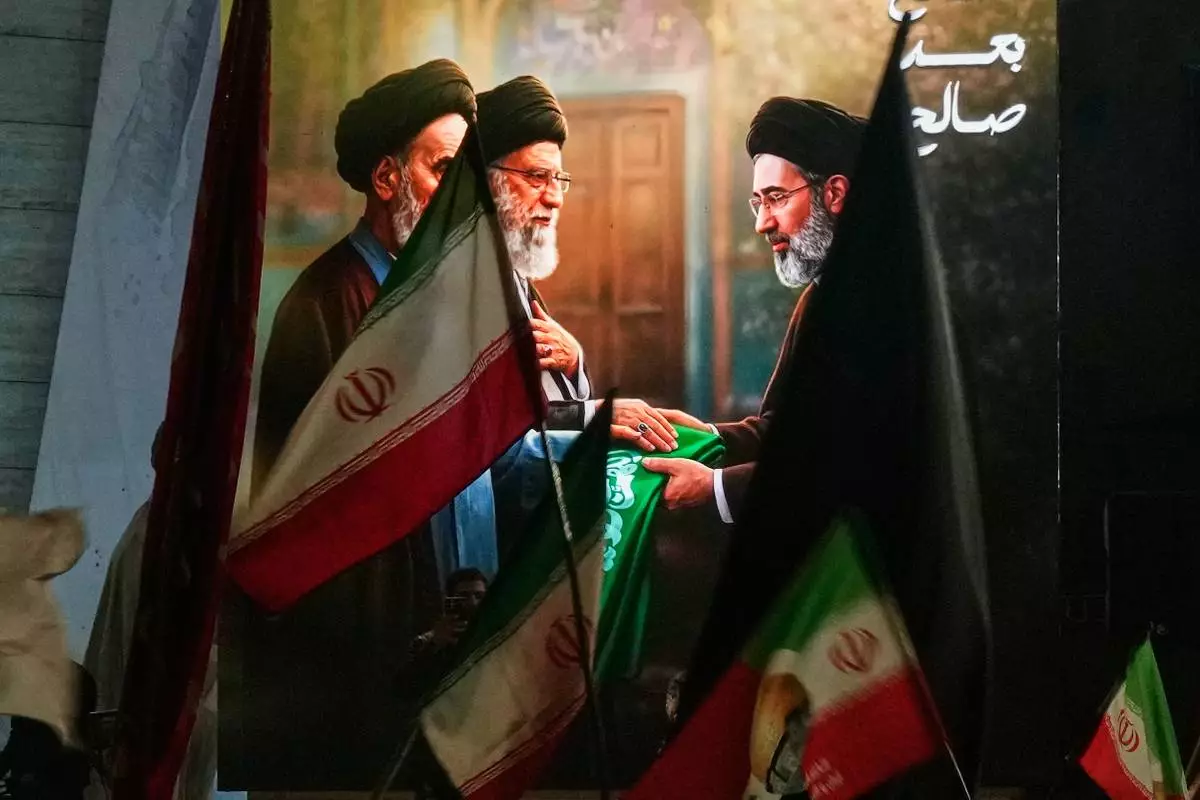
Protesters wave Iranian flags and hold a portrait of the late Iran's Supreme Leader Ayatollah Ali Khamenei and his son Ayatollah Mojtaba Khamenei to support his selection as the new Iran's Supreme Leader in Baghdad, Monday, March 9, 2026. (AP Photo/Hadi Mizban)
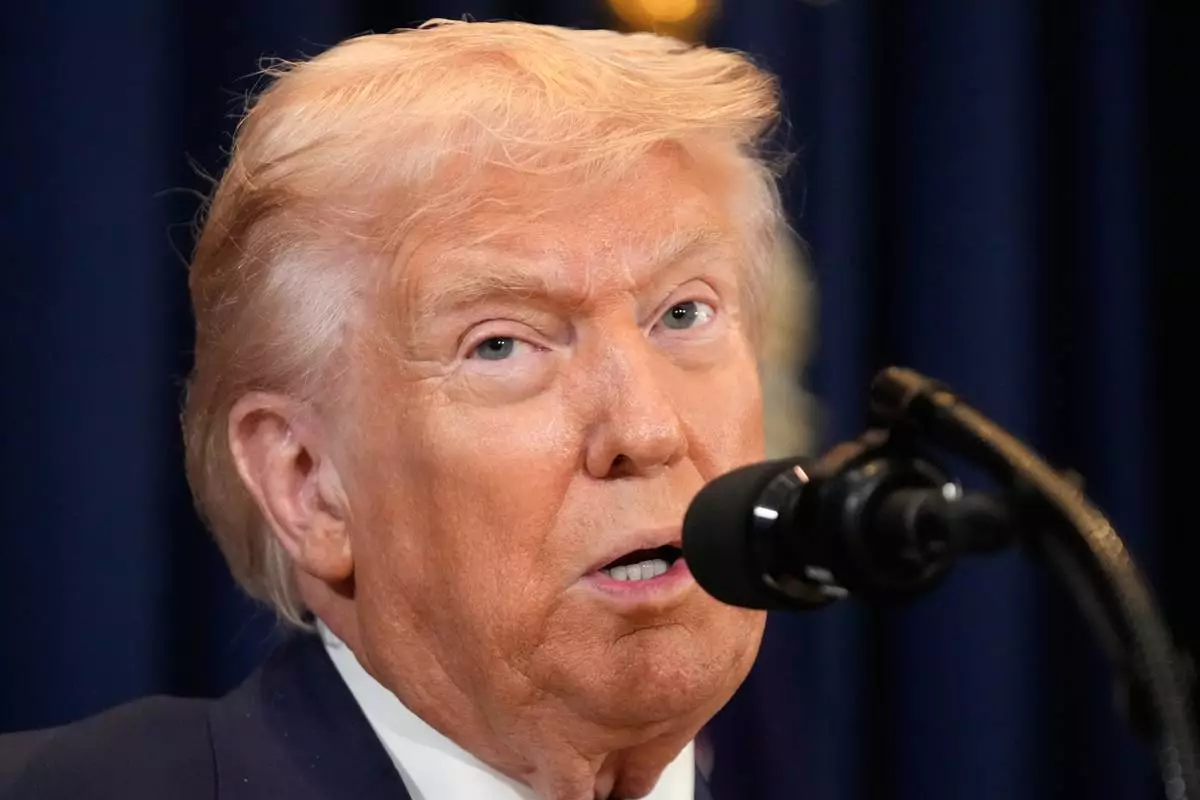
President Donald Trump speaks at a news conference, Monday, March 9, 2026, at Trump National Doral Miami in Doral, Fla. (AP Photo/Mark Schiefelbein)