MONTGOMERY, Ala. (AP) — Alabama Gov. Kay Ivey on Tuesday commuted the death sentence of a 75-year-old inmate who was set to be executed this week even though he was not in the building when the victim was killed.
Ivey reduced Charles “Sonny” Burton’s sentence to life in prison without possibility of parole, marking just the second time the Republican governor has granted clemency to a death row inmate since taking office in 2017.
Burton was sentenced to death for the 1991 shooting death of a customer, Doug Battle, during a store robbery. But Burton had left the building before another man, Derrick DeBruce, killed Battle. DeBruce's death sentence was later reduced on appeal to life in prison.
Ivey, who has presided over 25 executions, said she firmly believes in the death penalty as "just punishment for society’s most heinous offenders," but said it also must be administered fairly and proportionately.
“I cannot proceed in good conscience with the execution of Mr. Burton under such disparate circumstances. I believe it would be unjust for one participant in this crime to be executed while the participant who pulled the trigger was not,” Ivey said in a statement.
Burton was scheduled to be executed Thursday night by nitrogen gas.
Battle was shot in the back during an Aug. 16, 1991, robbery of an AutoZone auto parts store in Talladega. Court testimony indicated that DeBruce shot Battle after Burton and other robbers had left the store. Battle had entered the store as the robbery was winding down and exchanged words with DeBruce.
Burton’s supporters and family members had urged Ivey to consider clemency for the inmate, who is sometimes confined to a wheelchair. Multiple jurors from Burton’s 1992 trial were among those urging his life be spared. Battle’s daughter sent a letter to Ivey urging clemency, asking “how does it legally make sense” to execute Burton.
Members of Burton's legal team cheered when they received the news Tuesday.
“I’m just so happy, so happy. It’s just tears of joy,” Burton’s daughter, Lois Harris, said through sobs during a telephone interview. Harris said she wants to thank Ivey for granting clemency.
Alice Marie Johnson, whom President Donald Trump had tapped last year as his “pardon czar” after commuting her sentence for federal drug and money laundering charges, praised Ivey. She said the governor “showed what courageous and common sense leadership looks like.”
“By commuting the death sentence of Charles “Sonny” Burton, she ensured that justice — not technicalities — guides the most serious decision a state can make,” Johnson wrote on social media.
But Attorney General Steve Marshall slammed the move, saying “There has never been any doubt that Sonny Burton has Douglas Battle’s blood on his hands.”
Burton organized the armed robbery and “held a gun to the store manager’s head” before dividing up the proceeds, Marshall said in a statement.
Burton told The Associated Press last month that no one was supposed to be injured in the robbery and that he didn't know until later that DeBruce had shot anyone.
“I didn’t know anything about nobody getting hurt until we were on the way back. No, nobody supposed to get hurt,” Burton said in a telephone interview from Alabama’s Holman Correctional Facility
Burton said he wants to apologize to Battle’s family. “I’m so sorry. If I had the power to bring him back, I would. I’m so sorry,” Burton said.
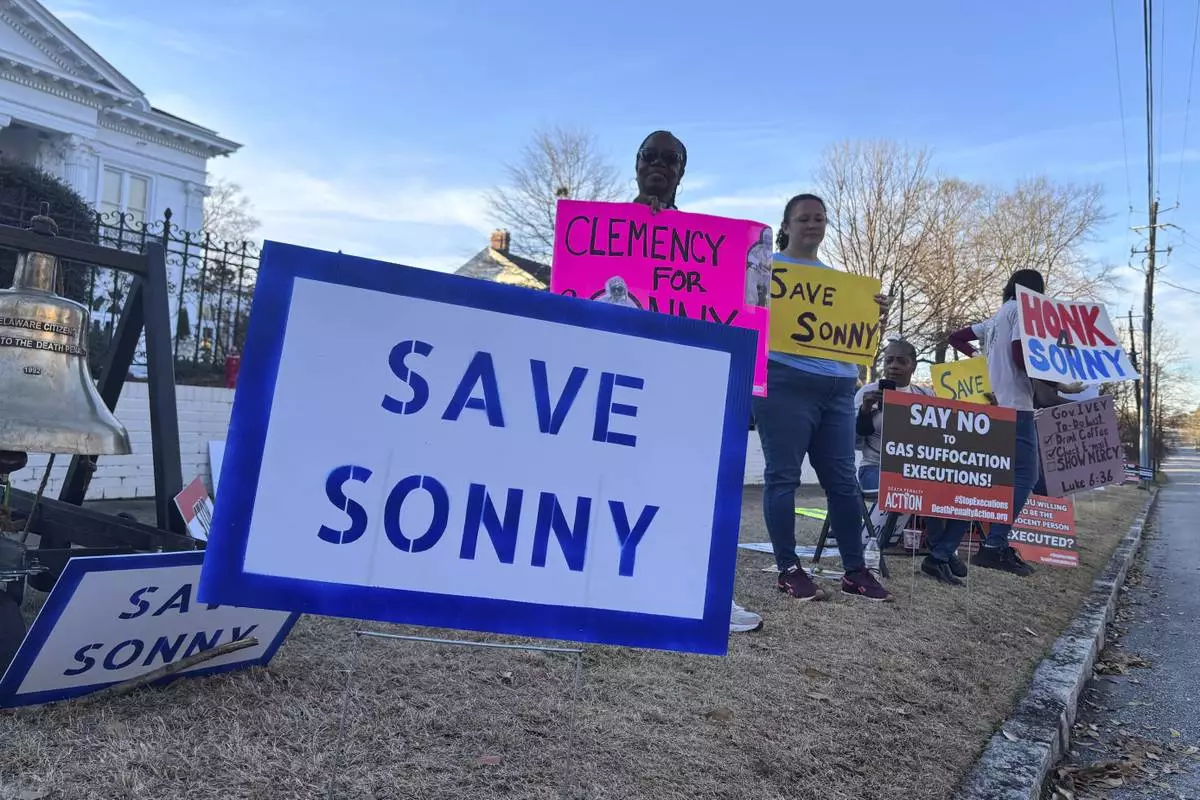
People gather outside the Alabama Governor's Mansion in Montgomery, Ala., on Feb. 16, 2026, to urge Gov. Kay Ivey to grant clemency to Sonny Burton, who is scheduled to be executed on March 12, 2026. (AP Photo/Kim Chandler)
NEW YORK (AP) — The U.S. stock market is holding steadier Tuesday as Wall Street waits for the next signal on when the war with Iran may end.
The S&P 500 added 0.4%, a day after its latest wild swings caused by extreme moves in the oil market. The Dow Jones Industrial Average was up 313 points, or 0.7%, as of 1:43 p.m. Eastern time, and the Nasdaq composite was 0.6% higher.
Oil prices, meanwhile, continued to fall further below where they were late Monday. Spikes there have been rocking financial markets worldwide because of worries that the war could block the global flow of oil and natural gas for a long time.
The price for a barrel of Brent crude, the international standard, was sitting at $82.90. That’s down 16.2% from its settlement price the day before, though much of that decline happened before the U.S. stock market finished trading on Monday. That's why the drop did not give much of a boost to U.S. stocks Tuesday.
A barrel of benchmark U.S. crude was also shifting lower from where it was late Monday, at $80.34.
Oil prices plunged Monday afternoon from a high of nearly $120 per barrel, its most expensive level since 2022, after President Donald Trump told CBS News he thinks “the war is very complete, pretty much.” That raised hopes that the war may end sooner than later, which could allow oil to flow freely again from the Middle East to customers around the world.
But Trump’s comments later Monday, after the U.S. stock market finished trading, were not as clear. And a spokesperson for Iran’s paramilitary Revolutionary Guard said that “Iran will determine when the war ends.” Iran launched new attacks Tuesday at Israel and Gulf Arab countries, keeping pressure on the Middle East in a war started by Israel and the United States.
That has Wall Street waiting for the next clue about how long the war may last.
One point where Trump remained clear was his desire to keep the Strait of Hormuz open. The war has effectively blocked much of the waterway off Iran’s coast, where a fifth of the world’s oil sails on a typical day. That's been a central reason for oil prices' extreme swings recently, which have dominated other financial markets and raised worries about the global economy.
“If Iran does anything that stops the flow of Oil within the Strait of Hormuz, they will be hit by the United States of America TWENTY TIMES HARDER than they have been hit thus far,” Trump said in a posting on his social media network late Monday.
“The outlook for oil right now is about as binary as it gets,” according to Hakan Kaya, senior portfolio manager at Neuberger Berman.
“Either the Strait of Hormuz reopens and you see a massive unwind of the risk premium, or it stays shut and we are looking at the largest supply disruption in modern history. There is no middle ground, and that is why putting a number on it is almost irresponsible.”
The International Energy Association said it will hold a meeting on Tuesday to discuss whether the 32 countries that are members should release some of their oil stockpiles to push downward on the price of oil.
The U.S. stock market has a history of bouncing back relatively quickly from past military conflicts, as long as oil prices don’t stay too high for too long. Uncertainty about whether that may happen this time around has led to stunning swings up and down for markets worldwide, often hour-to-hour.
If oil prices do stay high for long, household budgets already stretched by high inflation could break under the pressure. Companies would see their own bills jump for fuel and to stock items on their store shelves or in their data warehouses. It all raises the possibility of a worst-case scenario for the global economy, “stagflation,” where growth stagnates and inflation remains high.
On Wall Street, Vertex Pharmaceuticals leaped 8.5% for one of the biggest gains in the S&P 500 after reporting encouraging trends from a trial for its treatment for a life-threatening kind of kidney disease.
Stock markets in Asia and Europe jumped in their first chances to react to Trump’s comments from late Monday and the subsequent easing of oil prices. Indexes leaped 5.3% in South Korea, 2.2% in Hong Kong and 1.8% in France.
Tokyo’s Nikkei 225 rose 2.9% after the government also released revised economic data showing Japan’s economy grew faster in the final quarter of last year than initially estimated.
In the bond market, the yield on the 10-year Treasury was holding steady at 4.12%, where it was late Monday.
AP Business Writers Yuri Kageyama and Matt Ott and AP Videographer Ayaka McGill contributed.
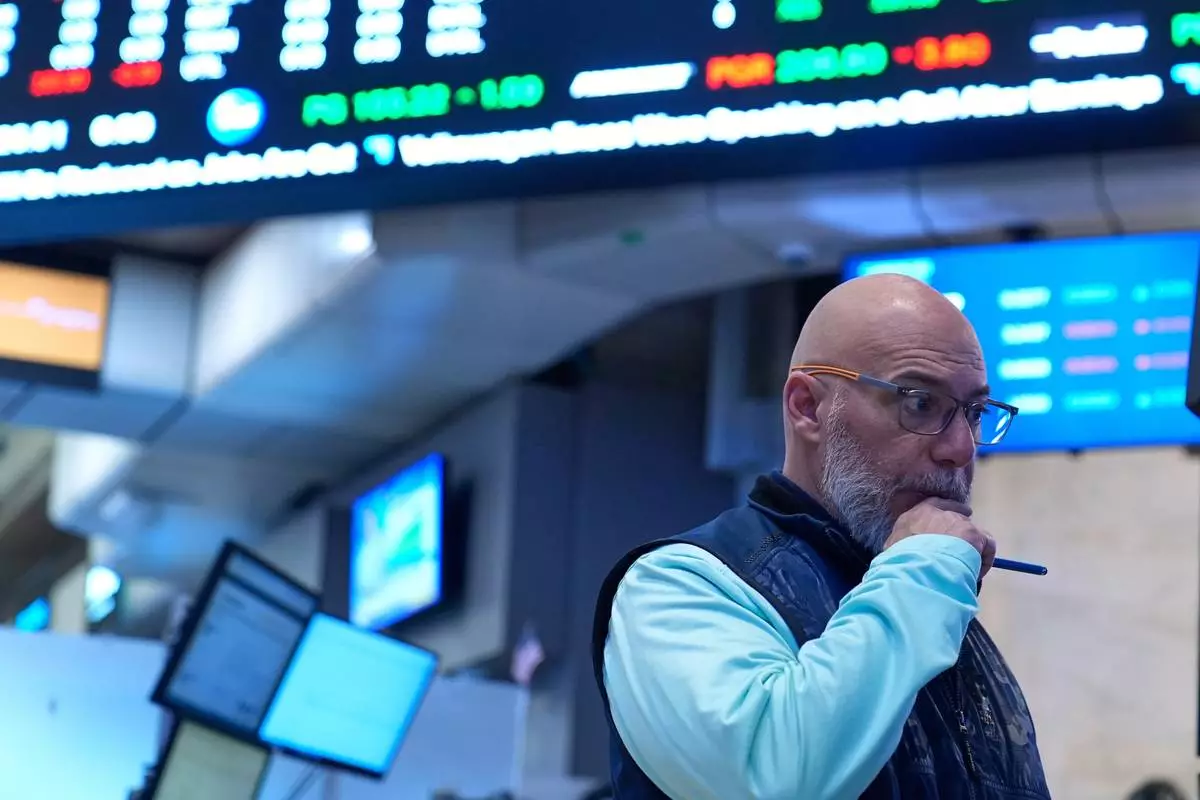
Traders work on the floor at the New York Stock Exchange in New York, Tuesday, March 10, 2026. (AP Photo/Seth Wenig)
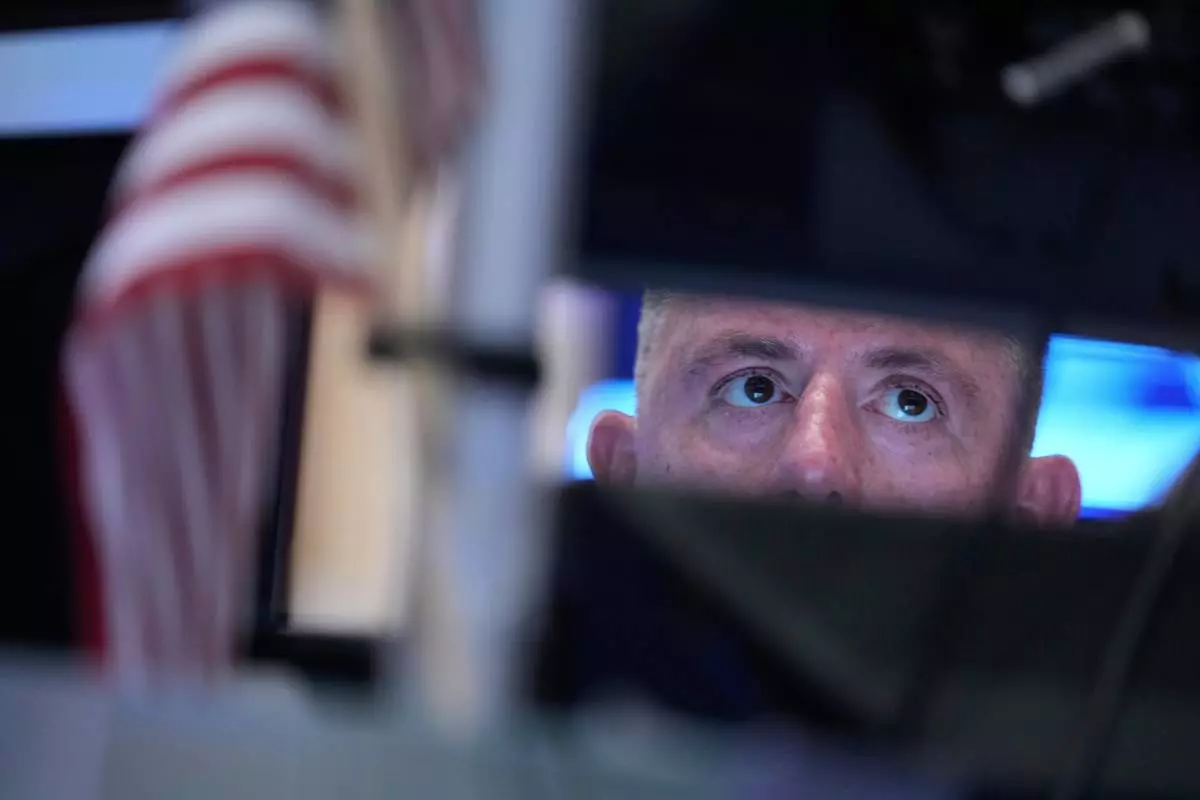
Traders work on the floor at the New York Stock Exchange in New York, Tuesday, March 10, 2026. (AP Photo/Seth Wenig)
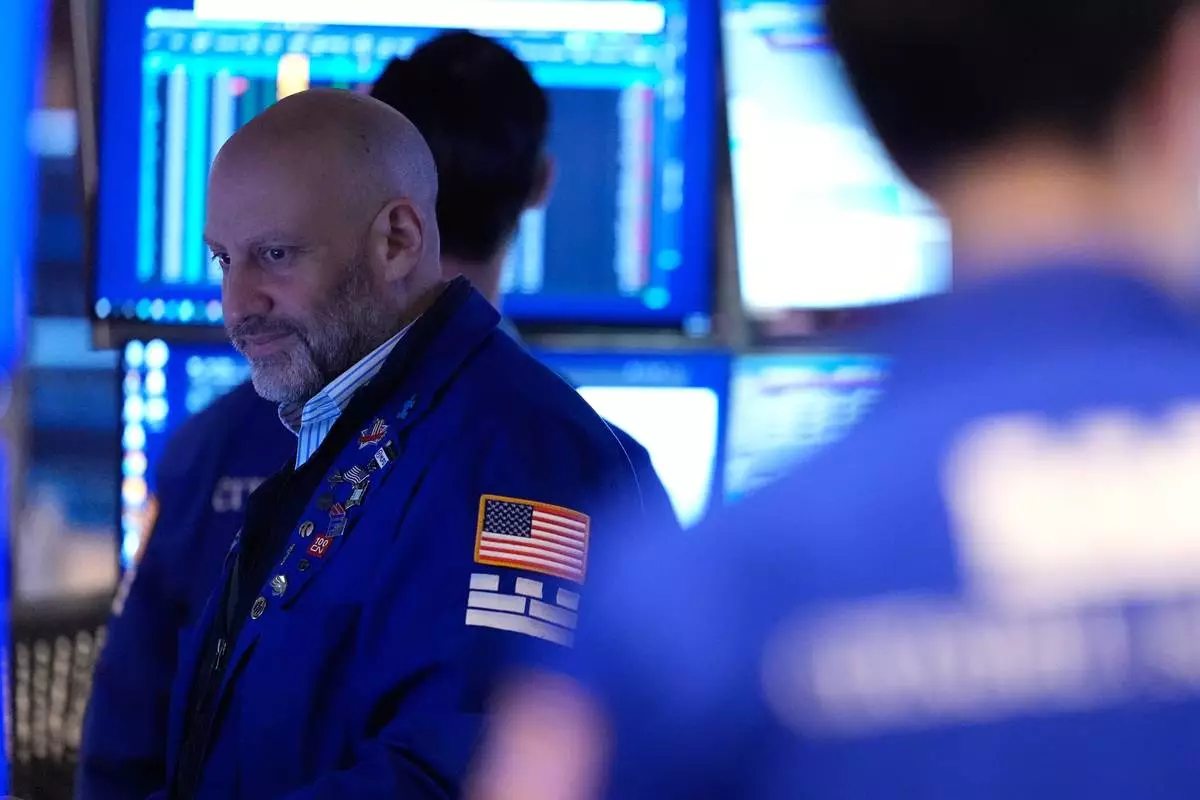
Meric Greenbaum works on the floor at the New York Stock Exchange in New York, Friday, March 6, 2026. (AP Photo/Seth Wenig)
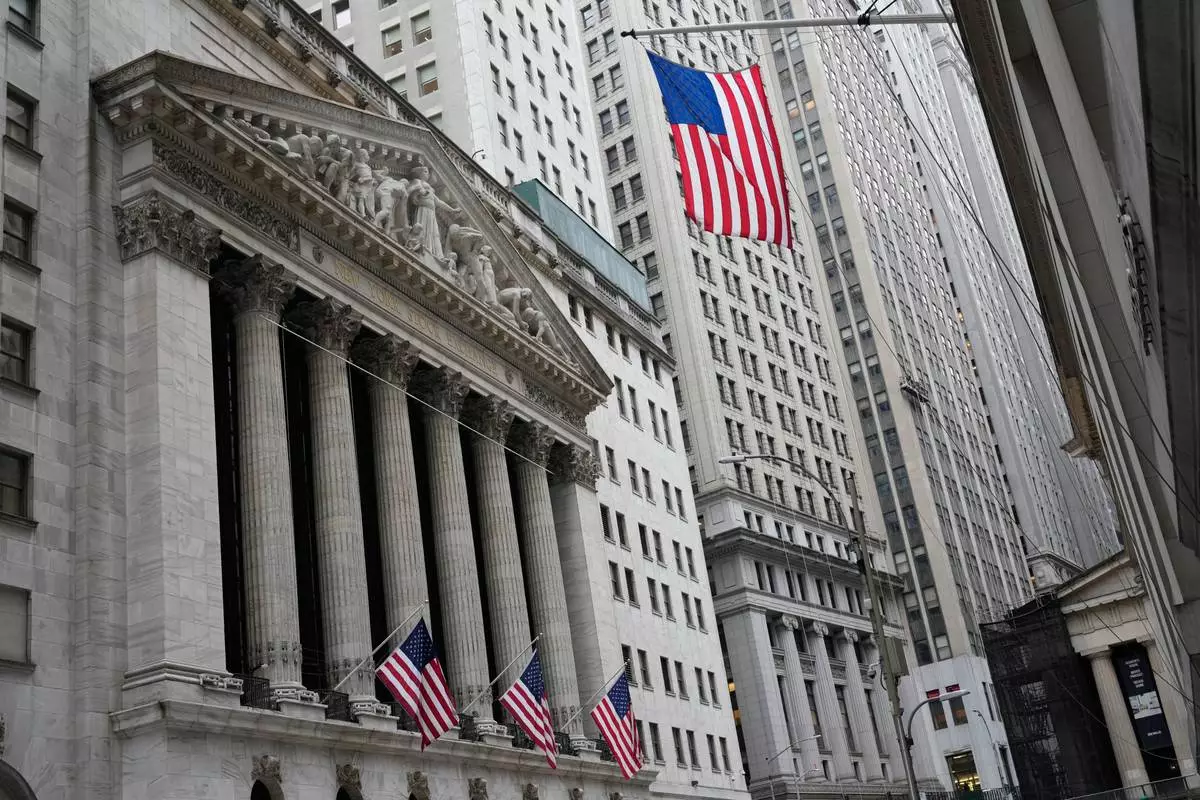
The New York Stock Exchange is seen in New York, Friday, March 6, 2026. (AP Photo/Seth Wenig)
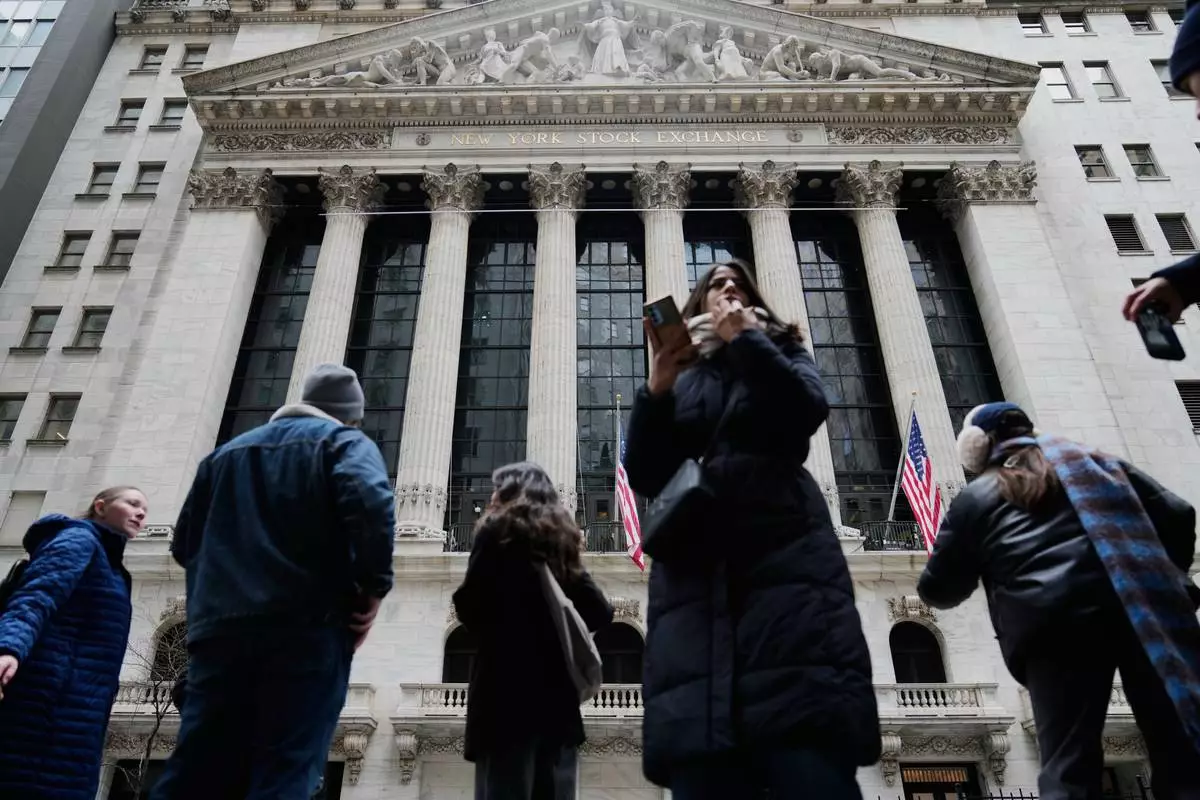
Pedestrians mill about outside the New York Stock Exchange in New York, Friday, March 6, 2026. (AP Photo/Seth Wenig)

Currency traders watch monitors near a screen showing the Korea Composite Stock Price Index (KOSPI), right, and the foreign exchange rate between U.S. dollar and South Korean won at the foreign exchange dealing room of the Hana Bank headquarters in Seoul, South Korea, Tuesday, March 10, 2026. (AP Photo/Ahn Young-joon)

Currency traders work at the foreign exchange dealing room of the Hana Bank headquarters in Seoul, South Korea, Tuesday, March 10, 2026. (AP Photo/Ahn Young-joon)

U.S. President Donald Trump is seen on a screen as traders work at the foreign exchange dealing room of the Hana Bank headquarters in Seoul, South Korea, Tuesday, March 10, 2026. (AP Photo/Ahn Young-joon)

Currency trader react near a screen showing the Korea Composite Stock Price Index (KOSPI), rear left, at the foreign exchange dealing room of the Hana Bank headquarters in Seoul, South Korea, Tuesday, March 10, 2026. (AP Photo/Ahn Young-joon)

A currency trader passes by a screen showing the Korea Composite Stock Price Index (KOSPI), rear center, and the foreign exchange rate between U.S. dollar and South Korean won, rear left, at the foreign exchange dealing room of the Hana Bank headquarters in Seoul, South Korea, Tuesday, March 10, 2026. (AP Photo/Ahn Young-joon)