Shilpa Gajarawala struggled with hot flashes, night sweats, sleep problems and brain fog. But given her history of breast cancer, treating these menopausal symptoms with hormone therapy wasn’t an option.
“For two years, I tried to kind of power through,” said the 58-year-old physician assistant from Jacksonville, Florida.
But doctors say women like Gajarawala don’t need to suffer.
Though many women take hormone therapy medications to ease menopause symptoms, recently announced label changes may encourage even more to start. But others choose not to use these medications that circulate throughout the body. And doctors advise some to avoid them because they have medical problems such as severe liver disease or a history of heart attack, stroke, blood clots or a type of breast cancer that grows in response to hormones such as estrogen.
For those people, there are lifestyle changes, medications without hormones and other strategies that can help.
“The key here is that there’s something for everybody,” said Dr. Stephanie Faubion, medical director at the Menopause Society. “There’s always a solution. We have lots of other options available.”
Boosting physical activity can make a difference. While exercise hasn’t been shown to alleviate menopausal symptoms directly, it can help to shed pounds, which is associated with reductions in hot flashes and night sweats.
Doctors suggest a mix of aerobic exercise, such as running or walking, and strength training, which slows the loss of bone density.
Along with exercise, doctors advise watching what you eat.
Emerging science shows that a “plant-forward diet,” rich in produce and soy and low in oil, may help with managing hot flashes in particular, said Faubion of the Mayo Clinic Center for Women’s Health. Experts aren't sure why this is true, but some suggest it may be because it also helps with weight loss.
Another key, doctors said, is to avoid things in the diet that may trigger hot flashes, like caffeine or alcohol.
Eating well and exercising also help with other midlife health issues, like rising heart and diabetes risks.
During menopause, the body’s production of the hormones estrogen and progesterone declines greatly. The drop in estrogen levels can lead to higher blood pressure and cholesterol.
"It's important that we focus on maintaining cardiovascular health” such as stopping smoking, getting enough sleep and watching stress levels, Faubion said.
Beyond lifestyle changes, some nonhormonal prescription medicines have been shown to ease menopausal symptoms.
Antidepressants can help with hot flashes and mood issues. Recent data suggest that a drug for an overactive bladder called oxybutynin may reduce hot flashes while also treating frequent urination that's common during menopause.
And doctors pointed to a new drug on the market – Veozah, a brand name for fezolinetant — which works in the area of the brain that controls body temperature and blocks a source of hot flashes and night sweats. Another nonhormonal drug called elinzanetant — marketed as Lynkuet — was recently approved by the U.S. Food and Drug Administration. It works similarly, except it blocks two molecules in the nervous system instead of one.
One downside of such medications? Possible side effects.
Veozah’s label includes a federally required warning about the risk of a rare but serious liver injury. Lynkuet's possible side effects include difficulty staying awake, fatigue and others. Some antidepressants can cause weight gain, although generally in doses higher than those used for menopause symptoms. And oxybutynin can cause dry mouth and, in some people, a condition in which they can't completely empty the bladder.
“There’s no medication out there that’s entirely free of risk,” said Dr. JoAnn Manson at Harvard Medical School.
Over-the-counter products can also treat some menopausal symptoms. Lubricants available at drugstores can help women struggling with vaginal dryness.
Cognitive behavioral therapy, which focuses on changing unhealthy thought patterns and behaviors, has been shown to help women cope with hot flashes.
“It’s not like it’s going to make you not have a hot flash,” Faubion said. “But it makes them less significant for you and less burdensome.”
Manson said there’s “moderate evidence” that clinical hypnosis might also help, with some studies showing reductions in the frequency and severity of hot flashes.
“That seems a promising option,” she said. “But more research is needed.”
The bottom line is that women don’t have to simply “get through” menopause, said Dr. Juliana Kling, a women’s health expert at Mayo Clinic Alix School of Medicine in Arizona. “I would implore women to have that conversation ... about what treatment might be beneficial for them."
Gajarawala did that. She now skips red wine, walks at least 10,000 steps a day, practices tai chi and takes an extended-release antidepressant to address her symptoms.
“It’s been a significant improvement,” she said.
The Associated Press Health and Science Department receives support from the Howard Hughes Medical Institute’s Department of Science Education and the Robert Wood Johnson Foundation. The AP is solely responsible for all content.

FILE - A woman walks down a trail as fog looms at Montie Beach Park in Houston, on Monday, Oct. 17, 2011. (Cody Duty/Houston Chronicle via AP, File)
U.S. President Donald Trump on Wednesday claimed Iran’s president wanted a ceasefire ahead of his speech to the American people. Trump made the claim on his Truth Social website. Iran had no immediate response to Trump’s post.
The aircraft carrier USS George H.W. Bush is slated to go to the Middle East along with three destroyers, two U.S. officials said. The carrier strike group consists of more than 6,000 sailors. It comes as thousands of soldiers from the 82nd Airborne Division have also begun arriving in the Middle East, according to two other U.S. officials.
Meanwhile, U.S. gas prices jumped past an average of $4 a gallon for the first time since 2022 on Tuesday, as the Iran war continues to push fuel prices higher worldwide. Analysts say those high fuel costs will trickle into groceries as businesses’ transportation and packaging costs pile up.
Here is the latest:
Sirens sounded across central Israel in multiple rounds within minutes Wednesday afternoon. Associated Press reporters heard loud booms in Tel Aviv as the windows of buildings shook from the reverberations.
Iran’s Foreign Ministry spokesperson, Esmail Baghaei, called Trump’s claim “false and baseless,” according to a report on Iranian state television.
Also, Iran’s paramilitary Revolutionary Guard separately issued a statement saying the Strait of Hormuz “is firmly and decisively under the control” of its forces.
“This strait will not be opened to the enemies of this nation through the ridiculous spectacle by the president of the United States,” it added.
Stocks are climbing worldwide, and oil prices are easing Wednesday as hopes build that the war with Iran could end soon. Some of the moves are tentative, though, after financial markets have already seen similar bouts of optimism get quickly undercut several times.
The S&P 500 rose 0.6% and added to its leap from the day before, which was its best since last spring. That followed even bigger gains for stock markets across Europe and Asia, including an 8.4% surge in South Korea, which were catching up to Wall Street’s rally from Tuesday.
The Dow Jones Industrial Average was up 292 points, or 0.6%, as of 10 a.m. Eastern time, and the Nasdaq composite was 1% higher.
Oil prices also fell back toward $100 per barrel after President Donald Trump said shortly before Wall Street began trading that Iran “has just asked the United States of America for a CEASEFIRE!”
▶ Read more
In addition to gas and oil stuck in the Persian gulf, urgent food aid destined for Sudan and Afghanistan is also facing severe delays, the UN agency for hunger emergencies, World Food Program, warned.
“Think of special nutritious foods required for Sudan,” Corinne Fleischer, WFP director of supply chain, told the AP. “Mothers and children are malnourished and they need this vitamin and mineral enriched food. We produced this in Pakistan as one of the countries. That is now stuck there.”
Fleischer explained that due to the risks of attacks in the southern part of the Red Sea, carriers now have to go all the way down through the Cape of Good Hope in Africa to reach West Africa.
Around 180,000 Iranian families have been displaced due to the ongoing war, but it’s hard to determine an exact figure because Iran doesn’t have a displacement tracking level as found in other countries, according to the International Organization for Migration.
Amy Pope, IOM’s director general, told The Associated Press the agency expects that figure to increase as more civilian infrastructure gets caught in the crossfire.
Pope also warned about the impact on migrants working in Iran who might not be guaranteed the same safety that an Iranian family is seeking.
“This is the kind of hidden consequence of a conflict like this. There are people ... who are not necessarily accounted for and ... won’t have the support they need,” she said.
President Trump on Wednesday claimed Iran’s president wanted a ceasefire ahead of his speech to the American people.
Trump made the claim on his Truth Social website.
Trump said “Iran’s New Regime President,” however. Iran still has the same president.
Trump also said a ceasefire would only happen when the Strait of Hormuz is “open, free, clear.”
“Until then, we are blasting Iran into oblivion or, as they say, back to the Stone Ages!!!” he wrote.
Iran had no immediate response to Trump’s post. Iran’s Foreign Minister Abbas Araghchi in an interview with Al Jazeera aired late Tuesday signaled Tehran’s willingness to keep fighting.
“You cannot speak to the people of Iran in the language of threats and deadlines,” he said. “We do not set any deadline for defending ourselves.”
A Pakistani vessel carrying oil arrived at the southern port city of Karachi after transiting the Strait of Hormuz, while a second vessel reached the port via a different route, a Karachi Port Trust spokesperson said Wednesday.
Spokesperson Shariq Farooqi said more Pakistani-flagged ships are expected this month to deliver much-needed oil from Gulf countries.
The development comes days after Pakistan’s foreign minister said Iran had agreed to allow 20 additional Pakistani-flagged ships to pass through the Strait of Hormuz, describing the move as a “constructive gesture” aimed at easing regional tensions.
Pakistan is also seeking to help end the conflict between the United States and Iran by encouraging both sides to return to negotiations.
The Strait of Hormuz is a critical artery for global oil shipments.
Iran’s capital, Tehran, held a funeral Wednesday for an Iranian Revolutionary Guard commander killed in an Israeli airstrike last week.
State television showed live footage of mourners waving Iranian flags at a funeral for Rear. Adm. Alireza Tangsiri, the head of Revolutionary Guard’s navy. An Israeli airstrike killed Tangsiri last week, with Tehran only acknowledging his death Monday.
Another funeral had been held Tuesday in Bandar Abbas, a key port city on the Strait of Hormuz.
A volunteer with the Iranian Red Crescent was killed by an airstrike Tuesday in the country’s northwest, according to the International Federation of Red Cross and Red Crescent Societies.
Alireza Sohbatlou was providing services at a clinic in Zanjan province when an airstrike hit the nearby religious site Azam Hussainiya of Zanjan, the humanitarian network said Wednesday.
He was the third Red Crescent volunteer killed in Iran since the start of the war, the IFRC said.
Iran’s supreme leader vowed Wednesday his nation will continue to support anti-Israeli forces in the Mideast.
The message from Ayatollah Mojtaba Khamenei, like others since he was named Iran’s new supreme leader, came in a statement read on air by a state television anchor.
“I firmly declare that the consistent policy of the Islamic Republic of Iran, in continuing the path of the late Imam and martyred leader, is based on continuing to support the resistance against the Zionist-American enemy,” Khamenei said in the comments from a letter to the Lebanese group Hezbollah.
Khamenei has not been seen since the war began Feb. 28. U.S. and Israeli officials believe he was wounded and remains in hiding.
An Indian citizen was wounded during a drone attack Wednesday in the United Arab Emirates, according to the official WAM news agency in Umm Al Quwain, one of the UAE’ seven emirates.
Shrapnel fell near an industrial area of Umm Al Thoub while air defense systems were intercepting a drone, the agency reported.
The Russian Embassy in Iran on Wednesday condemned an airstrike on the compound of the former U.S. Embassy there as it damaged a nearby cathedral.
The embassy said the blast broke doors and windows at St. Nicholas Orthodox Cathedral, just across from the compound.
An adjacent Russian nursing home sustained damage, including a collapsed roof, it added.
“We strongly condemn the ongoing US and Israeli aggression against Iran, which is increasingly affecting civilian infrastructure and religious and cultural heritage,” the embassy said.
South Korea will require public employees to alternate car use every other day starting next week.
The measure comes as officials raised the alert level over crude oil supplies, citing concerns about a prolonged crisis in the Middle East.
The climate ministry said Wednesday the government will implement an odd-even driving scheme, based on license plate numbers, for public employees using fossil-fuel vehicles starting April 8.
The government already had required public employees to keep their cars off the road at least one weekday starting March 25 to reduce energy consumption during the war.
Electric and hydrogen-powered vehicles, as well as those used by people with disabilities and pregnant women, will be exempt from the restrictions.
Asked about U.S. President Donald Trump’s comment to the Daily Telegraph newspaper that he is considering pulling out of NATO, U.K. Prime Minister Keir Starmer said Britain is “fully committed to NATO.”
Starmer called it “the single most effective military alliance the world has ever seen.”
Starmer told reporters that “whatever the pressure on me and others, whatever the noise, I am going to act in the British national interest in all the decisions I make.”
Prime Minister Keir Starmer says the U.K. will host an international diplomatic conference this week on ways to reopen the Strait of Hormuz.
Starmer says 35 countries have signed a statement committing to work together on restoring maritime security to the key oil transport route.
He said Wednesday that Foreign Secretary Yvette Cooper will lead a conference on the issue, and military planners are also working on plans for security once the Iran war ends.
Starmer said “a united front of military strength and diplomatic activity” is needed to restore stability.
Multiple drones attacked a northern Iraq fuel warehouse linked to British oil and natural gas giant BP, a firm operating the facility said.
No casualties were reported.
The attack on the motor oil warehouse occurred in Irbil, the capital city of Iraq’s semiautonomous Kurdish region, the Sardar Group, a major automotive group in Iraq, said in a statement. It said the facility is owned by Castrol, a subsidiary of BP.
The statement said the first drone hit the facility at 7:20 a.m., before it was attacked again with two more drones while firefighters were combating the fire.
The attack started a massive fire that sent a column of black smoke into the air, social media footage shows.
The Lebanese military said its forces have largely withdrawn from some border towns as Israeli troops continue to push a ground invasion into the country.
The Lebanese military said in a statement that troops had to reposition to prevent being dispersed and cut off from support lines.
The military has gradually withdrawn from a handful of border towns. Remaining residents in the Christian-majority communities Rmeich and Ain Ebel have appealed to the Lebanese military and leadership to stay.
The military said it would maintain soldiers in those towns.
Israel has declared southern Lebanon up until the Litani River will be a “security-zone” in its ongoing war with the militant group Hezbollah and residents will not be able to return until further notice.
Over 1 million people in Lebanon have been displaced over the past month.
Australia Prime Minister Anthony Albanese used a rare national address to urge Australians to use public transport due to fuel supply uncertainties created by the Iran war.
Albanese said in a statement broadcast Wednesday by major television and radio networks that “the months ahead may not be easy.”
“You should go about your business and your life as normal. Enjoy your Easter,” Albanese said.
“And over the coming weeks, if you can switch to catching the train or bus or tram to work, do so,” he added.
Australia slashed fuel taxes from Wednesday in a bid to curb price rises at the pump.
The government maintains that Australia has all the fuel it needs, but panic buying and distribution problems have created regional shortages.
Speaking to Al Jazeera, Iranian Foreign Minister Abbas Araghchi signaled Tehran’s willingness to keep fighting no matter what Trump may threaten.
Trump’s April 6 deadline for the Strait of Hormuz to open still stands, otherwise he threatened to hit power plants.
“You cannot speak to the people of Iran in the language of threats and deadlines,” Araghchi said.
Asked if the United States would launch a ground war in Iran, Araghchi dismissed the idea.
“I do not think they would dare to do such a thing,” he said. “Very heavy casualties would await them.”
Asked about attacks across the Gulf Arab states, Araghchi again insisted Iran isn’t targeting those states, despite repeated attacks on civilian infrastructure like airports, power plants and desalination facilities.
“In reality, they are using the people of the Persian Gulf as human shields,” Araghchi said.
Oil fell below $100 per barrel and Asian shares jumped Wednesday over renewed optimism about a de-escalation of the Iran war.
Brent crude, the international standard, was down 4.7% to $99.05 per barrel.
Benchmark U.S. crude dropped 4% to $97.33 a barrel.
South Korea’s Kospi recovered its losses from earlier this week, surging 8.4% to 5,478.70, while Tokyo’s Nikkei 225 rose 5.2% to 53,739.68.
Hong Kong’s Hang Seng was up 2.3% to 25,346.42, while the Shanghai Composite index was trading 1.5% higher at 3,948.55.
An airstrike in Iran’s capital, Tehran, on Wednesday morning appears to have struck inside of the former U.S. Embassy compound there.
The embassy has been controlled by Iran’s Revolutionary Guard since the 1979 hostage crisis.
Its all-volunteer Basij force operates the compound, running an anti-American museum inside the embassy and having different operations on its grounds in newer buildings.
Witnesses saw blown-out windows surrounding the massive compound on Tehran’s Taleghani Street. However, there was no missile strike visible around the compound, with witnesses saying they believe the strike happened inside the compound.
The 444-day hostage crisis saw American diplomats held until President Ronald Reagan took office from President Jimmy Carter in 1981.
An oil tanker contracted to Qatar was struck by an Iranian cruise missile on Wednesday while two others were intercepted, authorities said.
The missile slammed into the tanker off Qatar's coast that is contracted by state-owned QatarEnergy. The ministry said the tanker’s 21-member crew was evacuated, and no casualties were reported.
In a statement, the Defense Ministry said two other missiles were intercepted.
QatarEnergy said there was no environmental impact from the tanker attack.
The British military’s United Kingdom Maritime Trade Operations center said earlier that a projectile slammed into the side of the ship.
The Iranian-backed Houthis in Yemen said Wednesday they fired a barrage of ballistic missiles toward Israel.
Air raid sirens went off in southern Israel in the early morning, from Beersheba to the Mediterranean coast following the launch. There were no immediate reports of impacts.
Brig. Gen. Yahya Saree, a military spokesman for the Houthis, said in a prerecorded statement that they fired at “sensitive targets” in southern Israel.
The attack is the third since the Houthis joined the war on Friday when they fired their first missile toward Israel since the U.S. and Israel launched massive airstrikes on Iran on Feb. 28.
Their entry has raised concerns that they could resume attacks on vessels in the Red Sea further disrupting the global shipping industry and sending oil prices much higher
A drone attack has killed a citizen of Bangladesh in Fujairah, one of the UAE’s seven emirates, authorities said.
He was killed Wednesday when Emirati air defense systems intercepted a drone, and shrapnel landed in a farm, the Fujairah media office said.
The fatality has brought the death toll in the UAE to nine civilians and two soldiers. A Moroccan contractor with the UAE army was also killed in Bahrain.
Earlier Saudi Arabia said it had destroyed two Iranian drones.
Emergency personnel said an 11-year-old girl was severely wounded in central Israel in the latest missile attack from Iran.
Two more people suffered moderate injuries including a 13-year-old boy and a 36-year-old woman, according to Israel’s Magen David Adom rescue services.
Iran’s foreign minister has acknowledged receiving direct messages from U.S. Mideast envoy Steve Witkoff.
The comments by Abbas Araghchi came in an interview with pan-Arab broadcaster Al Jazeera aired late Tuesday. He insisted that the messages didn’t constitute negotiations.
U.S. President Donald Trump has repeatedly described Iran and America has having talks over the war, while Pakistan has been a key intermediary along with Egypt and Turkey during the conflict.
“I receive messages from Witkoff directly, as before, and this does not mean that we are in negotiations,” he said.
He added: “We do not have any faith that negotiations with the U.S. will yield any results. The trust level is at zero.”
Asked about a possible ground offensive by the U.S., Araghchi said “we are waiting for them.”
“We know very well how to defend ourselves,” Araghchi reportedly told the Qatar-based broadcaster. “In a ground war, we can do it even better. We are completely ready to confront any sort of ground attack. We hope they do not make such a mistake.”
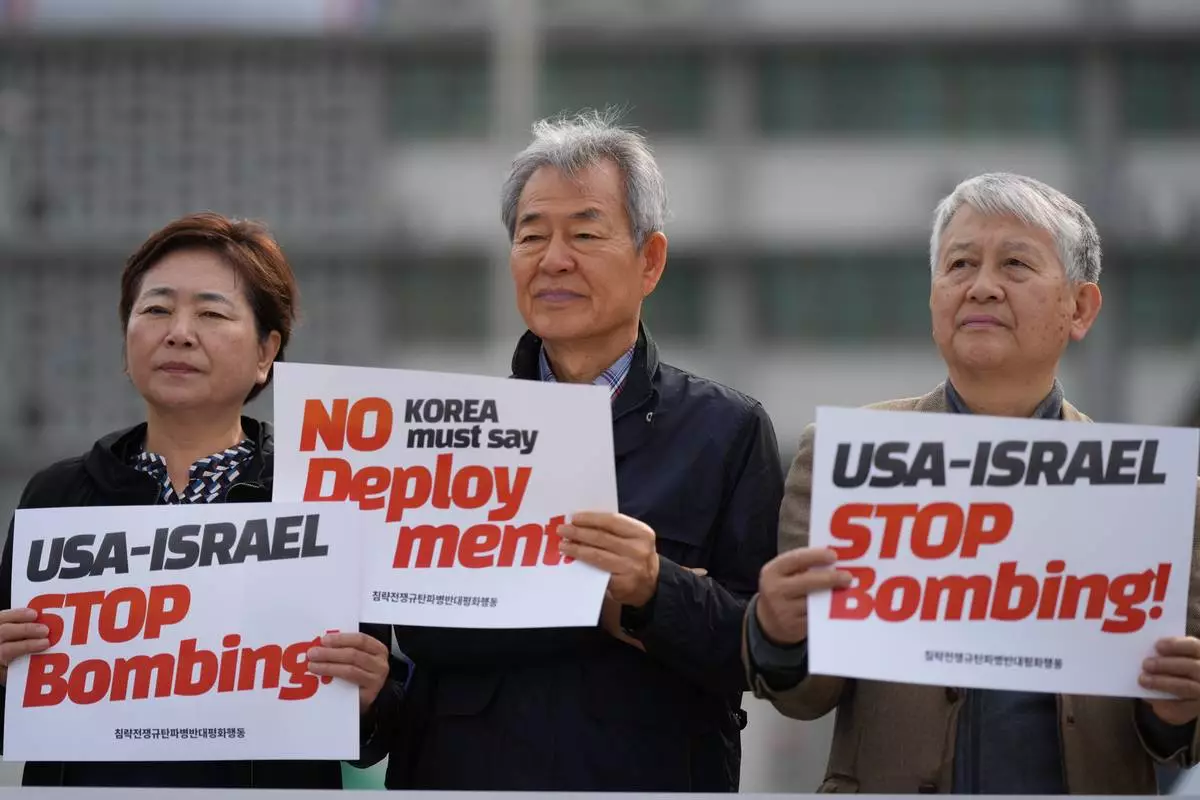
Members of civic groups hold signs against the U.S. and Israel attacks on Iran near the U.S. Embassy in Seoul, South Korea, Wednesday, April 1, 2026. (AP Photo/Lee Jin-man)
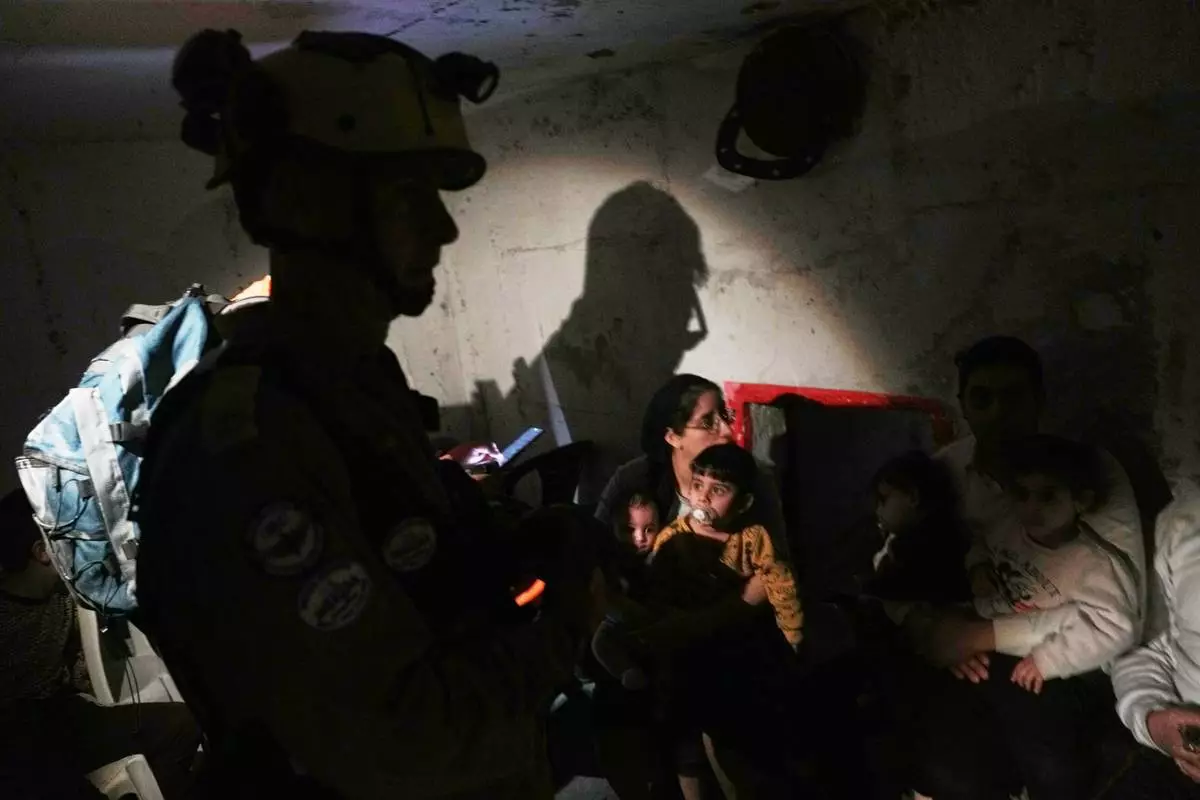
Israel's rescue teams and residents take shelter as sirens sounds next to a site struck by an Iranian missile in Bnei Brak, Wednesday, April 1, 2026. (AP Photo/Oded Balilty)
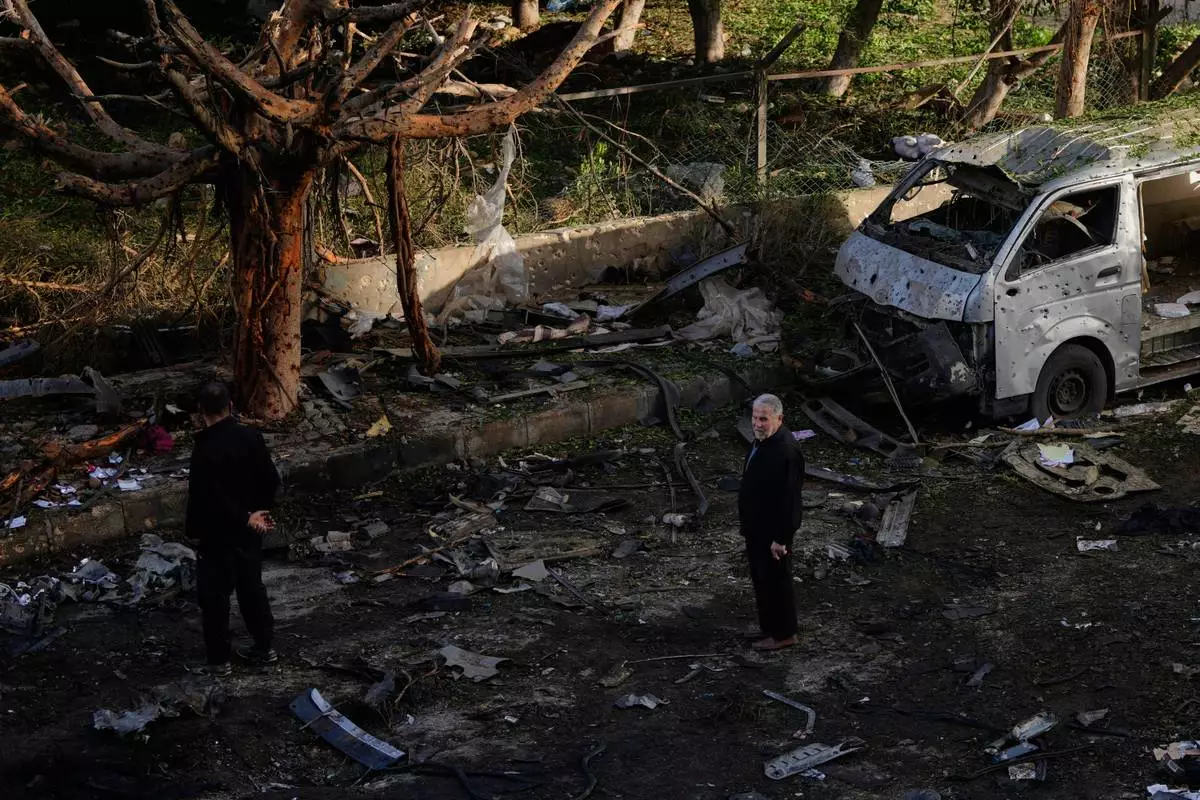
People stand near a damaged van beside scattered debris following an Israeli strike in Beirut, Lebanon, Wednesday, April 1, 2026. (AP Photo/Hassan Ammar)
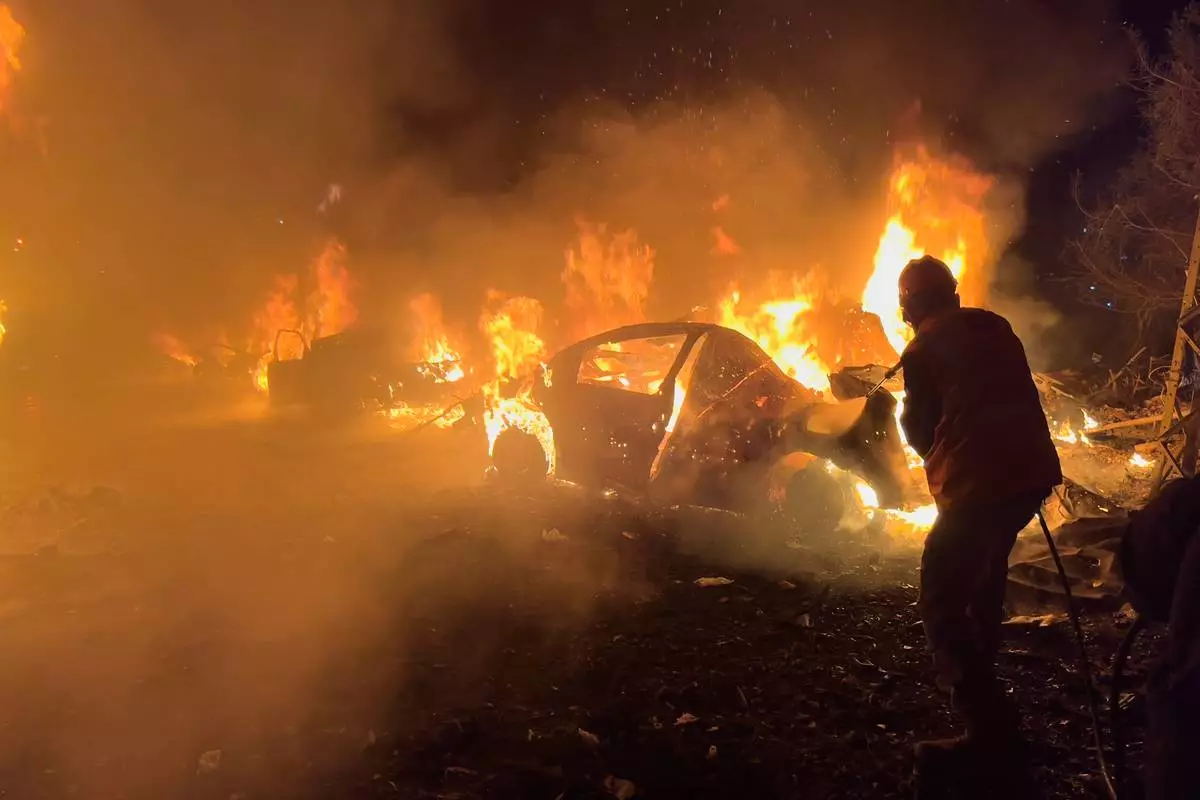
A firefighter extinguishes a car at the site of Israeli airstrikes, in Beirut, Lebanon, Wednesday, April 1, 2026. (AP Photo/Hussein Malla)
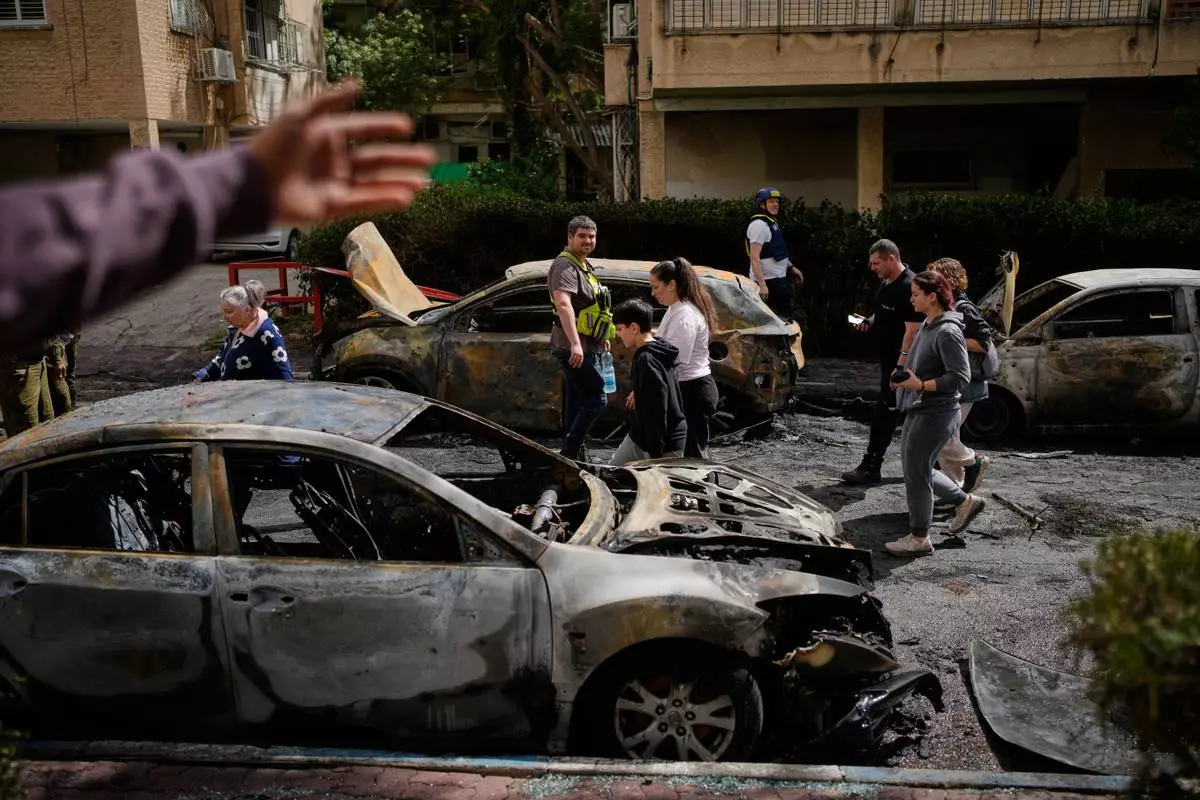
Residents and Israeli security forces inspect a site struck by an Iranian missile in Petah Tikva, Israel, Tuesday, March 31, 2026. (AP Photo/Ohad Zwigenberg)
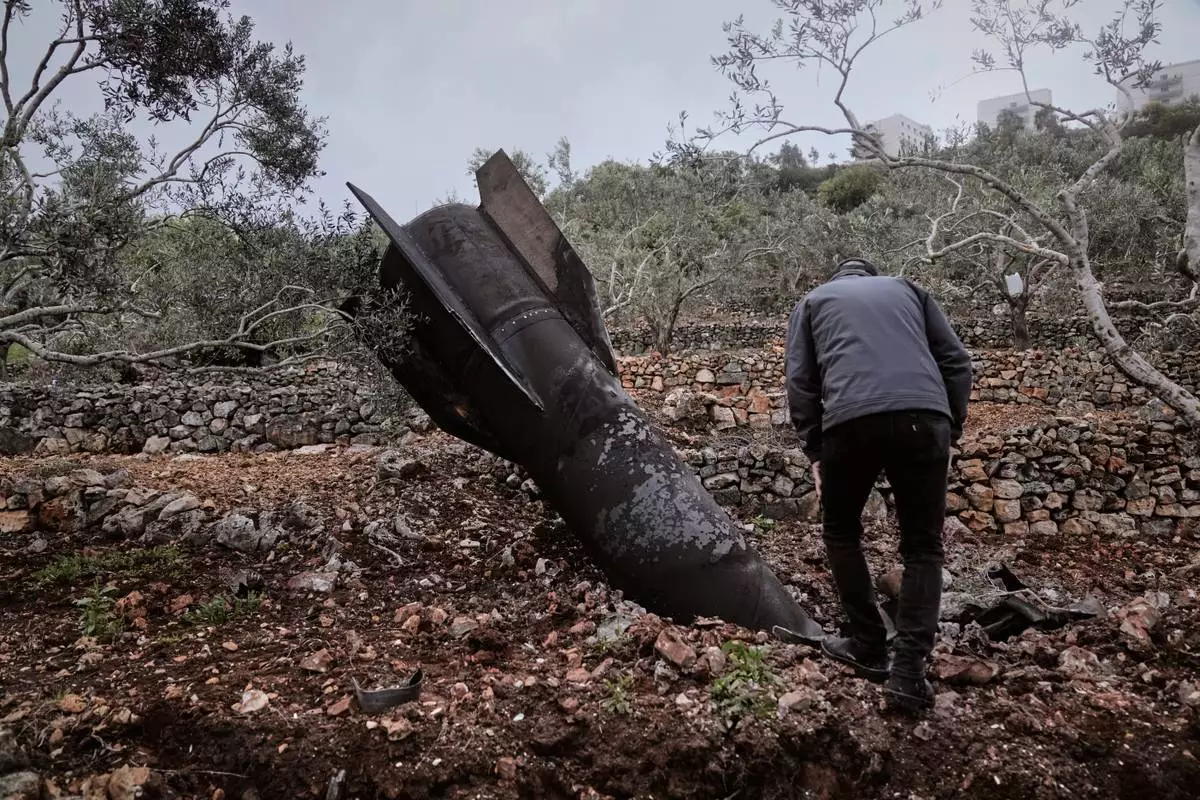
A man inspect the wreckage of an Iranian missile that landed near the West Bank village of Marda, Tuesday, March 31, 2026. (AP Photo/Majdi Mohammed)
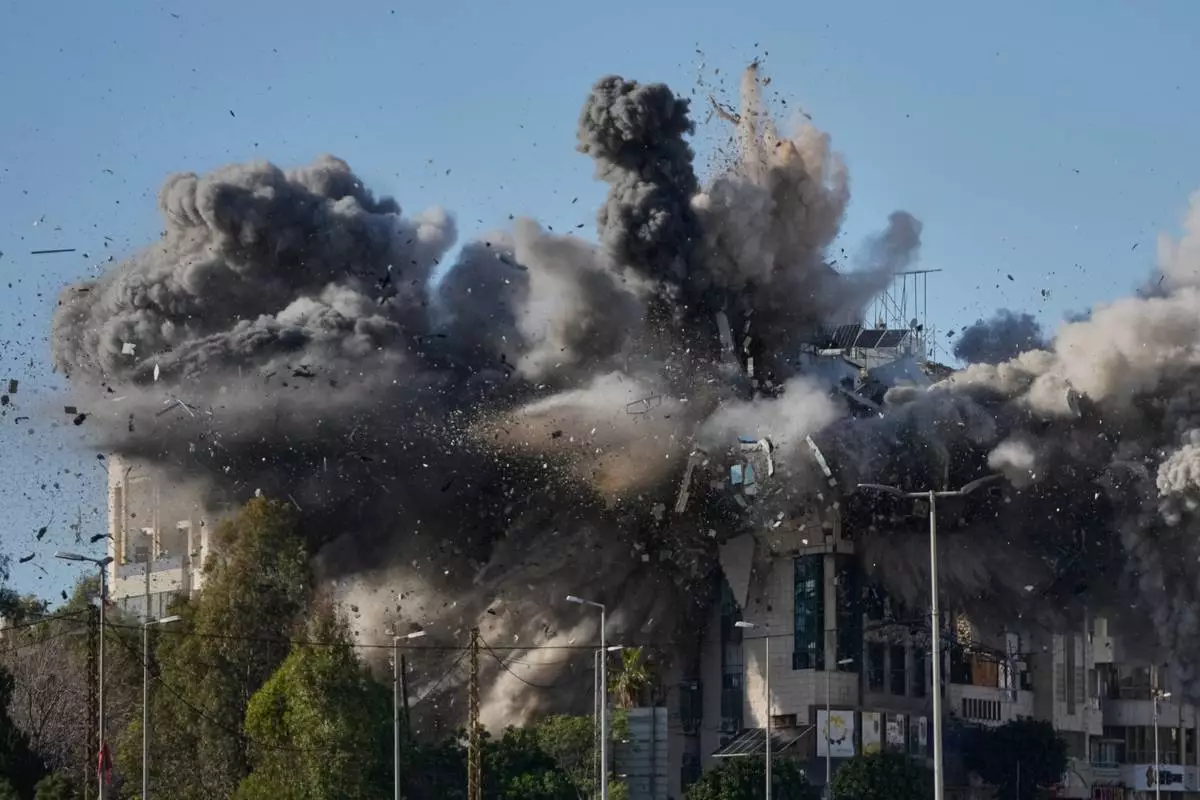
Smoke rises after an Israeli airstrike hits a building near the airport road in Beirut, Lebanon, Tuesday, March 31, 2026. (AP Photo/Hussein Malla)
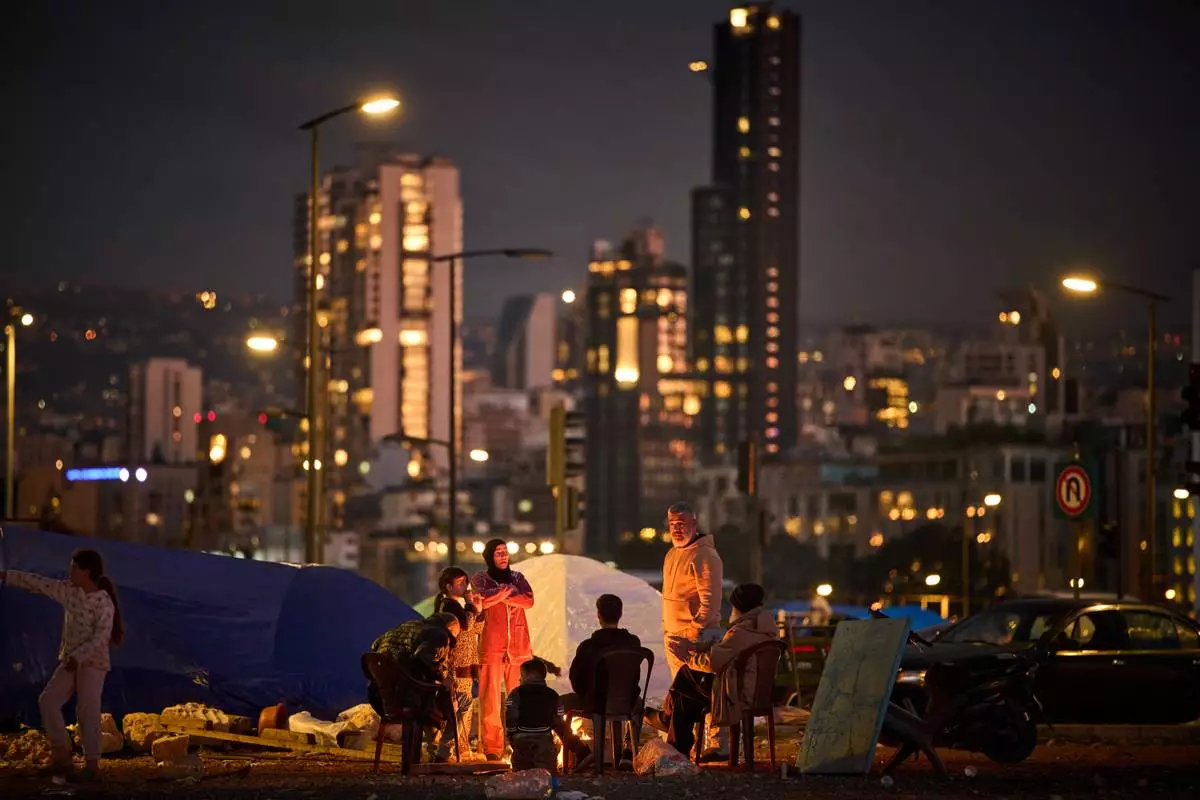
A family who fled Israeli shelling in southern Lebanon warm themselves by a bonfire next to tents used as shelters in Beirut, Lebanon, Tuesday, March 31, 2026. (AP Photo/Emilio Morenatti)